From Reliable Sources

Today major news organizations are reporting that, according to the IUCN, the Western Black Rhino is officially extinct.  The BBC, CNN and others must have received a press release that is not yet available on the IUCN website (as of my writing and posting this), but if you search on the terms IUCN and rhino you will find a link to the following video that provides a good visual definition of melancholic beauty:

When I see news like this, I fight the natural inclination toward depression and channel the emotional energy as best I can, using the news as a reminder of how slowly we are working at the various tasks mentioned in a string of earlier posts.  It is another example of the feeling I seem to have with increasing frequency: being late.
Continue reading

Tourism: A Potential Economic Pillar for South Sudan?

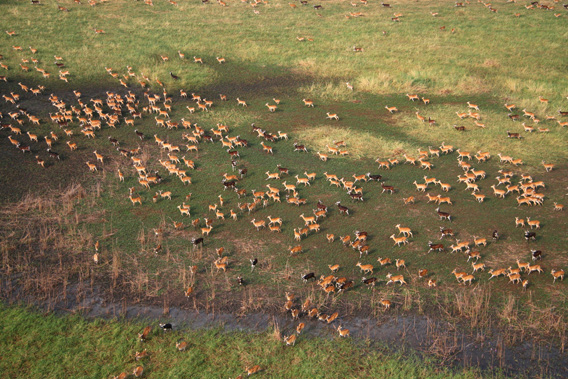
A few weeks ago, I attended a Rotary Club meeting on tourism development in South Sudan. Bishop Lanogwa and Mr. Olindo Perez of South Sudan’s Ministry of Wildlife Conservation and Tourism led an exciting conversation and inspired all of us in the room to think of South Sudan’s tourism potential. As a new nation reliant on oil as its main economic engine, the ministry believes tourism can be South Sudan’s second economic pillar. South Sudan boasts six national parks and thirteen reserves. The nation has arguably the largest wildlife migration in Africa. Although the second Civil War (which lasted over two decades) negatively affected wildlife, South Sudan is still home to large populations of beautiful kobs, giraffes, elephants, chimpanzees, and other wildlife.

Kob Migration in South Sudan

I believe tourism is a very powerful economic tool; however, its social and environmental consequences can be both negative and positive. Continue reading

2011 Sustainability Roundtable at the Hotel School

Last week, I had the pleasure of attending the 3rd annual Sustainability Roundtable at Cornell University. The roundtable was attended by several notable industry executives from Marriott, InterContinental, Starwood, and Wyndham. It covered five topics: sustainability across global platforms, standardizing environmental footprints of hotel stays, customer choices, sustainability in the meetings/events sector, and leveraging trends and overcoming barriers in sustainability. Participants came from a wide variety of backgrounds; hospitality franchisors, owners, operators, suppliers, consultants, utility providers, investors, and researchers were all represented. In short, it was a meeting of the best, most passionate minds in sustainable hospitality. Although their discussion covered a wide range of important issues, the session that I found most interesting was “Sustainability and Customer Choices,” which I’ll briefly touch on.

Roger Simons, Manager from Meeting Professionals International (MPI); AJ Singh, Associate Professor of Michigan State University; and Ted Saunders, Director of Sustainability for Saunders Hotel Group partake in a lively discussion at the roundtable that the Center for Hospitality Research hosted.

Continue reading

Revisiting The Tiger Trail

When I send emails to friends, colleagues, and others about this website, and the objectives of Raxa Collective, I normally add links to a few posts that I think are representative.
Almost always, this one is included.  Michael captured the moment well.

As we continue adding contributors to this site, and the diversity of topics and locations we pay attention to expands, for some reason I still come back to the Tiger Trail as a favored topic because it is such a good example of what we care about.

That tendency to return, at least in thought, led me to reconnect with a “lost” member of our Tiger Trail entourage. Continue reading

And the “Fourth R Award” Goes to….

This slideshow requires JavaScript.

Two months ago I wrote about British restaurateur Arthur Potts Dawson and his closed loop restaurant concepts and social enterprise food cooperatives here.   When I came across the Greenhouse I found the perfect follow up.  One would not be amiss to call the Australia based designer/builder/environmentalist Joost Bakker “green-blooded”.  His Dutch flower growing heritage helped forge a lifelong passion with growing things and plant inspired structures, such as greenhouses and conservatories.  His greenery walls invoke the power of nature creeping back into urban environments, making them simultaneously comforting and edgy. Continue reading

Paying for Ecosystem Services

Tim Chen has covered ecosystem services as they relate to ecotourism; below I’ve written some additional information on how the process might work on the market.

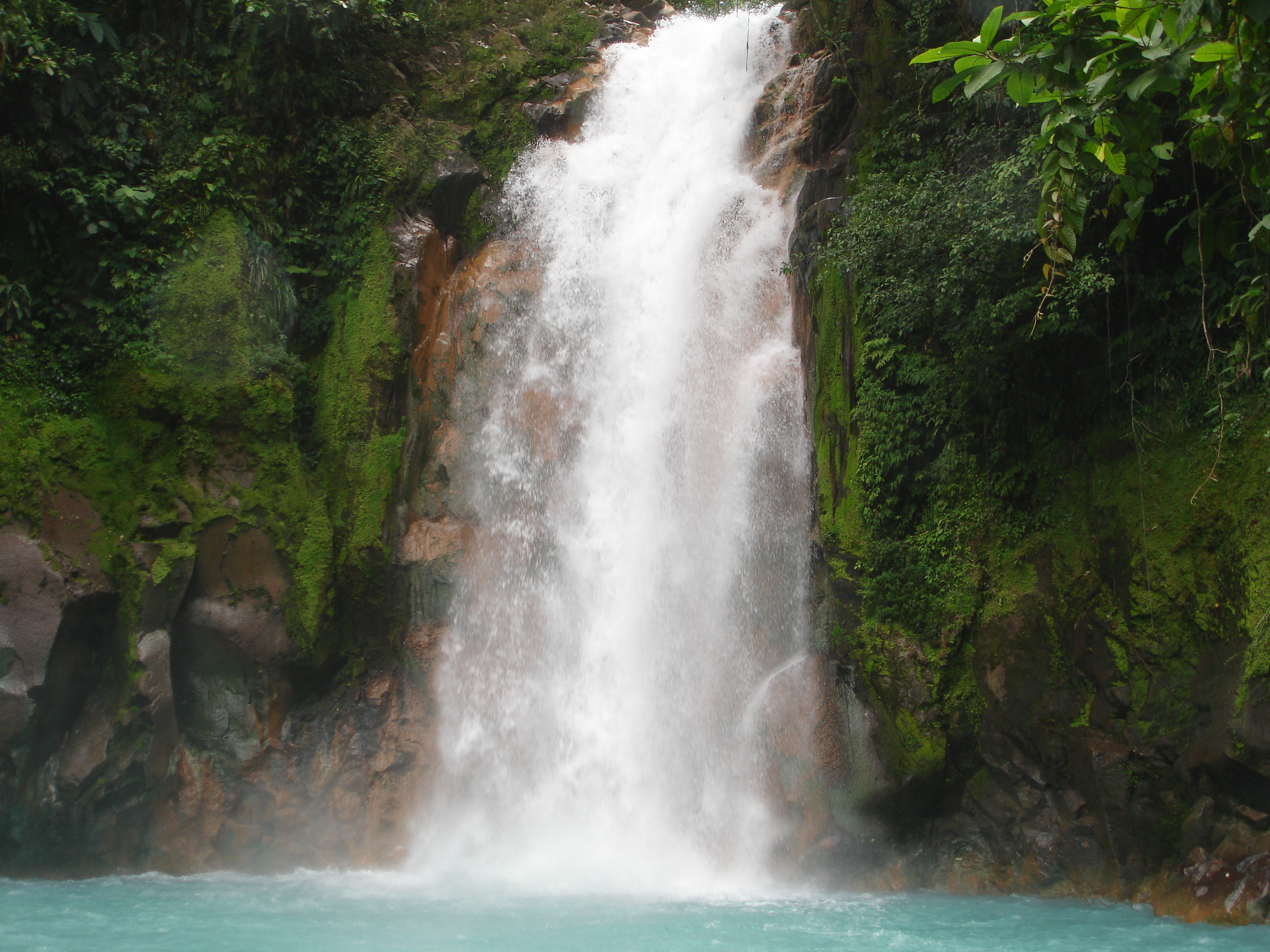
Sulfur-rich waterfall in Costa Rica

As developing countries increasingly convert natural ecosystems to areas controlled by humans, ecosystem services (e.g., waste absorption, water purification, soil conservation) are being lost. In order to prevent these shifts, people who live in urban areas or have no close relationship with, for example, their sources of drinking water are often willing to pay people who do have direct impacts on the watersheds. Payment for ecosystem services (PES) has become a measure by which higher-resource groups can induce lower-resource communities or individuals to protect local wetlands, forests, or other areas in order to maintain the ecosystem services that support a particular standard of living. Before such payment schemes can be established, however, certain scientific analyses must be carried out to determine the most efficient allocation of resources and facilitate the selection of the right service providers. Continue reading

Scraping Hell’s Attic

The Sulphur-Bottom Whale

The sulphur-bottom whale is the largest mammal on (or under) the earth’s surface; many speculate that it might be the largest animal ever to have inhabited our terraqueous globe. These immense creatures can typically grow to between eighty and a hundred feet long, with the largest specimens caught suggesting that the whales might exceed one hundred and ten feet in length! The weight of the sulphur-bottom whale is commensurate with its size: they can weigh between one hundred and one hundred and fifty tons. For comparison, the largest elephant ever recorded weighed a mere twelve tons. If the sulphur-bottom whale rolled over in its sleep Continue reading

A Well-Rounded Adventure

“Mists, ah, very problem!”

I glanced sideways at the boisterous Mallu man driving the jeep along the winding mountain road. Like his passengers, he was peering out of the vehicle at the steep slopes around us, scanning them for wildlife, abetted by the pre-dawn lighting and the heavy mists.

If any elephants or bison were grazing upon the high hills we drove through, they were impossible to see thanks to the cotton-thick mists blanketing the tall grass and trees that covered the terrain. As the vehicle banged and clunked over potholes at high speeds, I held determinedly onto the railing for dear life, occasionally risking freeing my hands for a photograph of the scenery speeding past.

Some ways down the road, once the sun had risen above the horizon, the jeep rolled to a stop under a densely canopied corridor. My eyes began to search the trees for the reason of our stop to no avail – the driver pointed to what I had previously taken for a pile of rocks, proclaiming it to be a tribal temple. Upon a second look, I realized that the blocks of granite were hewn into rough rectangles, and while in no particular order, they were indeed surrounding a small garlanded icon. Continue reading

Galapagos Education #3/3

This blurry photo was taken in the town square the same evening as my visit to the school.  It was a musical and cultural show the school had orchestrated for the townspeople.  While school productions such as this may be universal, I was still struck by something: in none of my work visits from 1998-2003 had I seen such a display of community.  The men who play volleyball in the town square every evening respectfully halted their fiercely contested games, and many took a seat to watch and listen.

And while perhaps universal, this show in such a place had some magic beyond the music and dance steps: it was a sign of progress in the sustainable development of the islands.

Galapagos Education #2/3

This slideshow requires JavaScript.

Reyna walked me through the school and explained the transformation it has undergone in the last few years.  The transformation began with the realization that children in these islands were in the midst of amazing nature, but that nature was not incorporated into the education they received.  Nor was sustainability.  Going from school room to school room I could see that this was corrected, and then some.  No unnecessary paving, nor walls where they were not needed.  Many classrooms are literally open air.  Kids do not have to lean out a window to see what is happening in the trees.  The science classroom looks familiar, yet better. Continue reading

Galapagos Education #1/3

There were several reasons for the visit to the Galapagos Islands that I just completed.  I have known Reyna and Roberto for 15 years, since the time Reyna and I worked on a research project together.  One reason for the visit was to understand what has changed on the islands since my last visit, from the perspective of locals.  The biggest news, perhaps, was the radical improvement in the quality of education.  The photos below show the name of the school, and generous sponsors, from a sign at its entry; two children climbing over the wall from their home to the school grounds at the start of the day; a bit of sport; and the pathway from one classroom to the next.

This slideshow requires JavaScript.

Iguana Charisma

The lovely finch tells a story, aesthetic and scientific, that most of us accept as the gospel truth, about adaptation and evolution.  A good interpretive guide can help the average lay person understand the story.  Charles Darwin penciled out some of the first notes that guides use to explain why finches vary in color, beak size, behaviors, etc. and plenty of very smart people have contributed to the evolution of those explanations.  So we continue to learn.

This slideshow requires JavaScript.

A visit to the Galapagos Islands should include attention to the finch, considering the role they played in the ability we now have to understand some of the mysteries of the natural world.  Continue reading

Darker Shade Of Green

Summer '11 by Elle Grace Miller

As people around the world attempt to work their economies out of doldrums (or whatever you call this moment in history), those who can are reconsidering how they distribute their budgets.  Some who previously didn’t use cost as the deciding factor in their purchases, whether for food, household products like toilet paper or cleaners, or big ticket items like cars or construction materials, etc. are now beginning to think twice about their choices. This holds true for items carrying labels such as organic, green, eco-friendly, shade grown, etc…the bigger the budget bite, the more likely the convictions that drive these decisions are put to the  test. Continue reading

Eight Year Echo Of Hope

When I described, a couple weeks ago, the echo of hope emanating from the Gulf of California it is fair to say I was pleasantly surprised.  That may be putting it too mildly, especially in hindsight now that I have seen a major new entrepreneurial initiative come to life there.  I will be writing more about that in the coming days.

But for now, I am in the Galapagos Islands and another echo is resonating.  In this case, for me, the echo is an eight year feedback.  As mentioned in this earlier post I had worked here on and off over several years, and the last time I was here there were some challenges that seemed intractable.  Today, upon arrival and for the remainder of the day, I had the opposite feeling of the last time I was here.  The photos below show the first thing I did with Reyna and Roberto after leaving the airport.  In the first photo you can see, as I did, just a simple conversation between them and one of the workers; then slowly a parade of otherworldly creatures crept into the photos…

This slideshow requires JavaScript.

Continue reading

Putting Kashmir On The Map

Guest Author: CJ Fonzi

I recently received this link from a Facebook friend.  One of those Facebook friends that you meet on an adventure somewhere, instantly bond with, keep in touch with forever.  This particular guy is an oil engineer from Norway- an unlikely friend of a sustainable business consultant in New York City.  But that is what travel and exploration are all about.

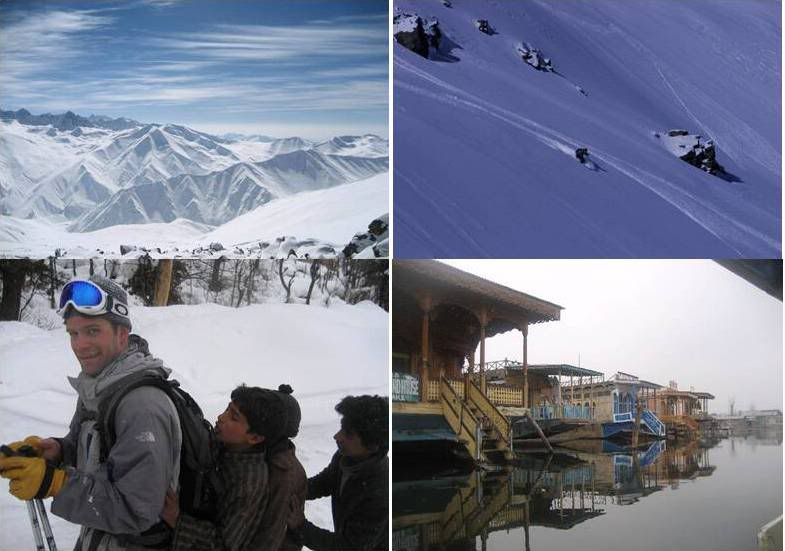
Kashmir- the name brings images of war, struggle, and International politics.  But to those of us who have been there the images that come to mind are more like the ones shown here.

The village is called Gulmarg and it hands down has the best skiing in the world.  Continue reading

Crunch

Hans Gigginger photo from The New Yorker

I consider myself a pretty adventurous eater.  In fact, I will easily go so far as to call myself a “foodie”.  I’ve spent my adult life living on various continents, trying to understand the history and culture of the cuisine wherever I was living.  I’ve patiently explained my dinner party plans to vendors at Parisian fromageries (in hopes they will approve and allow me to complete my purchase).  I’ve “mastered” what I like to call Kitchen Croatian, or a knowledge of food nouns in that language, to be able to market and somewhat communicate recipes to kitchen staff while living there.  Malayalam still totally eludes me, but it is one of the world’s most difficult languages after all, so please don’t hold that against me.

But to the best of my knowledge, I’ve never eaten a bug Continue reading

Gulf Of California

I had not been exposed to the corridor known as La Giganta, which you can see in the background of the above photo, when I carried out my work on behalf of WWF several years ago.  Now that I have, over the last week, I can only say that it had such an impact on me that I am still processing it.  It is partially the geology of this portion of the peninsula known as Baja California Sur.  It is partially how that geology intersects with the marine ecosystem. But it is mostly–and here I refer to the impressions I am still processing–the intersection of local people with those two natural wonders that really got to me.  The photo above looks from the back of a panga (the type of boat local fishermen use) as we departed a property that is best described as an oasis. Continue reading

Breaking News! Prices of Old Newspapers Soar!

Guest Author: Diwia Thomas

While asking around for newspaper donations, I often meet with reluctance and wondered why?  Ten years ago a kilo of old newspaper fetched only a meagre Rs 3/- , today the raddi-wala (the guy down the road who buys scrap) pays an enticing and irresistible Rs 7/- per kg.  I promptly made a trip down there to broker a deal with him for a steady supply of newspaper for our paper bags. He tells me that newsprint companies in India have begun to recycle old newspaper into newsprint. In the past newspaper was recycled into boards or brown coloured paper for packaging and boxes because recycled newsprint turns a dull greyish colour unsuitable for printing. Indian newspaper companies have found ways to deink newsprint pulp and retain its brightness for printing purposes. Mammoth deinking machines do this job. Featured here is a small one, just to demonstrate the process. Continue reading

Le Vélo Bambou? Le Wow!

Bicycles are ubiquitous forms of transportation in my part of the world.  Previously I’ve posted how they can mean more than the sum of their parts, or in the urban art example, they can represent only their parts!

So what happens when form and function converge with sustainability, balance and simplicity? Continue reading

Resilience, or Failure?

It is said that our early experiences create connections in our brains that last throughout our lives. In one particular case I know this to be true: visiting Tikal and Copan as a child filled me with a lifelong awe and interest in the Mayans. So in my current studies it is an easy leap from that simple interest to a more scholarly one.

For hundreds of years human civilizations have looked back on previous societies and wondered why they made certain decisions, how they coped with diverse problems, and what caused them to change. In his popular book Collapse: How Societies Choose to Fail or Succeed, Pulitzer-winning author Jared Diamond examines societies that he claims had unsustainable relationships with their ecosystems, and describes how their actions largely led to their demise. He also refers to some current communities, such as those of modern-day Rwanda, but for my purposes I will only address the past societies (the most academically pertinent and personally interesting to me being the Mayans, because their disappearance from their grandiose cities–Tikal and Copán, for example–has historically been mysterious, and may be closely related to environmental stresses). Continue reading