K-12 Growth

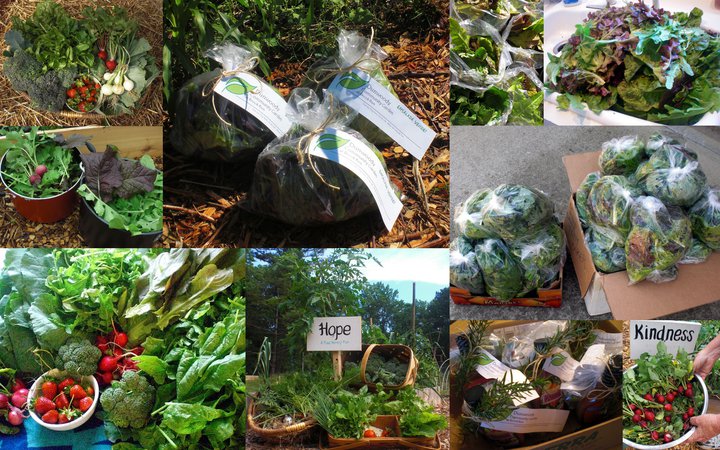
Last month I wrote about the Dunwoody Community Garden, and commented on my surprise at its seemingly exponential rate of growth and improvement. I also promised to check out Dunwoody High School’s (DHS) current involvement with the community garden, and I can finally deliver on that one:

Grow Dunwoody is a community enterprise designed to bring gardens directly to Dunwoody’s schools. According to Danny Kanso, a senior at DHS, the purpose of the program is

to integrate hands-on learning into science, wellness, and special education, to produce renewable classroom and community resources, and to instill sustainable practices and values within our student body.

Continue reading

EZ Water Fountain

From the side the water fountain looks like most others: a spigot shoots arcs of water from a corner when you press a button somewhere. But when you face the EZH2O water station — a bottle-filling station — you see that the spigot in the corner is not the only mechanism on the wall.

I’ve been carrying around aluminum or hard plastic bottles for years, and am always annoyed when I have to replenish from a water fountain that doesn’t shoot water in a high enough arc so that my bottle can fill to the brim. With the EZH2O, all you have to do is place a bottle in front of the motion sensor in the back panel, or simply stand it on the grey plastic platform, and water will come down in a straight and soft stream.

As your bottle fills, a little meter in the top corner of the panel tallies how many plastic bottles have been saved by using reusable bottles. Also, the bottle filling station has a WaterSentry filter (and a light in the top right corner that shows when it needs to be replaced). So far, I have only seen these in Cornell’s Olin Library, both in the stacks and the basement. Hopefully they will spread to every building at Cornell.

Water Harvesting & Accumulated Wisdom

As Gourvjit pointed out in an early post, Cardamom County is in the process of revamping its water management systems.  The search is still on for learning resources.  Besides an accent and wit that are mesmerizing, this man’s stories and visual accompaniments are stunning.  Learning is sometimes a simple matter of respecting elders.  Especially those who are so at ease on a stage as big as this one.

Honey, Hope & Future Cod

Milo’s post yesterday is of special interest to various initiatives we support related to food.  We will have much more to say on bees (and honey), but for now, it gets us thinking. Combined with Seth’s recent post, touching on the subject of overfishing (do read Mark Kurlansky’s books related to food, in addition to Cod), provide a reminder to stop and take a breath.  In a world full of challenges that daunting, how do we keep our wits about us?  How do we remain, fundamentally, hopeful?  An answer, but not necessarily with explanation, can be found sometimes in art (defined as you choose).  If we do not solve the tragedy of the commons with fisheries, might we still hope for a beautiful future for marine life that looks something like this?

Honeybee Mystery: Solved?

For years now, scientists have been trying to determine why honeybees are suddenly falling off the face of the earth, and activists have been demanding a solution. Honeybees don’t just provide us with the sticky sweetener Winnie the Pooh loved so much – they are essential pollinators for many of our most important crops. Without pollinators, it is impossible for the agriculture of certain plants to occur on the scale necessary to sustain our population. This team of French scientists has apparently pinpointed the widespread use of insecticides as the cause of dwindling honeybee populations. Why has the production of fruits and vegetables come to these drastic measures? Are they really necessary? In the past, natural solutions were the only ones available for natural problems – to me it seems that reverting to the old ways (with a few possible improvements) is the only viable option if we want to save the bees (and therefore ourselves).

Can Your University Do This With Paper?

Originally motivated by the Big Ideas article, and further motivated by looking into Cornell University’s many resources to try to get answers to those questions, now Seth’s mention of banana paper deserves a pointer to the amazing university that got that movement started.  If you visit Costa Rica, you should visit EARTH University, which is oddly modest in mentioning its history with regard to banana paper.  If you are not on your way to Costa Rica, but live in the United States, try to find a Whole Foods supermarket if for no other reason that to purchase one of several EARTH-branded products.  EARTH is our idea of the perfect mix of practical education, entrepreneurial conservation initiatives, and quality outcomes–things we care deeply about–so purchasing their products may lead to the next breakthrough innovation in sustainable agriculture.

Environotes

While shopping for notebooks at Cornell University’s bookstore yesterday I came across a brand that I hadn’t seen before. The cover of the dark, forest-green notebook said “Environotes sustainable paper products” in the lower right corner, and a removable card-stock label declared the paper to be a “green” product.

I was somewhat skeptical, because I know how many trees are cut down in the US to provide Americans with paper (about a billion a year) and the only sustainable mass-produced paper I’d ever seen was the banana leaf paper sold in Central America.

Then I saw that the one of the companies behind the notebooks was called Cane Fields, and that the paper was not only made from sugar cane fiber, but the fiber left over from the sugar-making process. This reduces landfill waste, is recyclable, and saves trees! To make it even better, the manufacturing process is powered by wind and biomass renewable energy, doesn’t use acid or chlorine bleaches, and is carbon-neutral through carbon trading. Needless to say, I purchased one of these notebooks, and got a 3-subject one to save space.

I’m glad that the Cornell Store carries these sorts of products; just today when I stopped back at the Store to get small pocket notepads, I found notebooks made by one of Cane Fields’ partners, Roaring Spring Paper Products. With 60 sheets of recycled 5″ by 3″ paper, the so-called “little green book” has a nice little recycling symbol on the front. I bought two.

“I just want to say one word to you. Just one word….Plastics” *

Yes, Plastics.  That ubiquitous, universal petroleum product that no one but a Hottentot can pass a day without touching.

It’s impossible to conceive of a world completely devoid of plastics, but we certainly can conceive of alternatives to at least some of its uses.  Forums such as Fortune’s Brainstorm Green bring together innovators and day dreamers with tangible results.

Eben Bayer and Gavin McIntyre, co-founders of Ecovative Design, aren’t much older than Benjamin Braddock *  was when he received that erstwhile advice. Continue reading

The Gadus Commons

William Bradford, governor of Plymouth Colony in Massachusetts for much of the first half of the 1600s, from whom North Americans  have inherited the notion of  communal Thanksgiving (and incidentally my grandfather 26 generations removed) noted:

The major part [of the Pilgrims] inclined to go to Plymouth chiefly for the hope of present profit to be made by the fish that was found in that country (Cod; 67).

Fast forward a few centuries.  Bottom trawling, longlining, and gillnetting during the 19th and 20th Centuries were probably the most responsible for cod’s population decline in North America. Faced with the same great abundance that had helped bring settlers to Cape Cod, huge fishing companies acted rationally to maximize their own gain, taking advantage of the bountiful commons, and this led to ruin. With the near disappearance of cod came the absence of herring, capelin, humpback whales, and squid. Continue reading

Cool, Cool Water

Our quest to find new, ever-more effective ways to live well and responsibly (simultaneously), if not Big Ideas, sometimes leads us to counter-trendy moments of truth.  It feels right to discuss sustainable development using the language that has been in circulation for 25 years or so:

meet the needs of the present without compromising the ability of future generations to meet their own needs

Yet, it was a refreshing splash of water on the face, a dash of realism, to read the last line of this brief profile:

…Lassoie’s personal belief that no one wants to sacrifice their present condition for the condition of future generations.

“I’ve never met anybody anywhere who would sacrifice their children for their unborn grandchildren,” he said.

Read the article to understand the context, and you may find yourself thinking about returning to graduate school if you consider this kind of conundrum (truly good statements contrasted with realistically true statements) fascinating, as we do.  Finding this profile was an extension of our investigation into the resources at Cornell University related to sustainable development and conservation, which previously led us here.

A Brief Overview of Sustainable Guestroom Attributes

A recent article from the Cornell Hospitality Quarterly, titled “Hotel Guests’ Preferences for Green Guestroom Attributes,” caught my eye just a couple days ago. Written by Michelle Millar and Seyhmus Baloglu of the University of San Francisco and the University of Las Vegas, respectively (both institutions have well established programs in hospitality), the study analyzed a set of hotel room amenities/features and attempted to find out which ones guests thought were the most important. I was especially interested in this study—among the many studies on guestroom attributes—because I have some pretty strong opinions about the best things that hotels can do in their guestrooms to enhance sustainability.

Respondents ranked sustainable shampoo amenities among the most important attributes. Refillable shampoo dispensers, shown above, are widely used in cruise ships but have not yet gained traction in the majority of American hotels.

Continue reading

Where the Sidewalk Ends

During my two final years of high school, I became involved with the Dunwoody Community Garden (previously mentioned here). We joined the group while the Garden was still in the process of being set up, and my family would help out on weekends, digging holes or laying out lines to create a grid for the 4×8 foot garden plots. At some point around this time, I became one of the officers for Dunwoody High School’s National Honor Society (NHS). Since the officers were always looking for community service projects to suggest to NHS members, I recommended sending Dunwoody NHS students to help build the Community Garden during a time when so much grunt-work was needed.

A handful of high school students was exactly what was needed to speedily complete the garden. A good adult leadership team was already in place, and energetic teenagers were eager to help, spreading newspaper and mulch to lay the foundation for fertile land. Once the plots were all set out, NHS purchased one so that students could raise flowers and vegetables to give away.

Since then, the Garden has only grown. Over 3,200 square feet have been added to the original land, creating more than 25 new plots for Dunwoody community members. In addition to the privately owned plots, DCG maintains several plots for economically stressed families (10% of the cultivable garden), and gives away another 10% of produce to the Atlanta Community Food Bank. To learn more, I’d recommend visiting DCG’s blog or the DunwoodyPatch.

This slideshow requires JavaScript.

In the next few days I’ll try to learn more about what Dunwoody High School has done to stay involved with the Community Garden.

Remembering Culture Shock

Lago Deseado

It’s been almost 2 years since I first moved to South America, and as its winter here right now, the grey weather and cold temperatures have fostered a more contemplative lifestyle in me, and has often made me think about my first experiences in southern Chile.  When I arrived in Punta Arenas it was not only the first time in Chile for me, but also the first time in a Spanish speaking part of South America (I had visited Brazil the year prior).  I remember being apprehensive about my virtually non-existent Spanish speaking skills, and thinking that with French and German already in my arsenal, I perhaps will be a faster learner, and therefore, “it won’t be so bad.”  Then came the connecting flight in Santiago…I was in the airport and every word being spoken around me seemed utterly foreign.  Luckily I began to understand relatively quickly and became accustomed to the barrier.

Thinking about this made me check some old emails I had written to friends back home when I first arrived in Patagonia. Below I’ve posted an email that garnered a lot of attention, due to its comedic nature.  I’ve also included some photos I took while in Patagonia, which I have recently been revisiting because I find them peaceful, tranquil, and in accordance with my recent moods. Continue reading

Foraging for Plenty

When I lived in either tropical or Mediterranean environments it was never surprising (but always exciting) to see trees and bushes laden with fruit in their season; mangoes, citrus, and papaya in Costa Rica, or figs, pomegranates and lemons on a Croatian island.  But when we temporarily relocated to Atlanta I was happy to discover similar levels of abundance in both urban and suburban environments.  In some cases there were trees that looked like they had outlived what some in the neighborhood are wont to call “the war of northern aggression”, such as the pear trees owned by the Dunwoody Preservation Trust, while in others it was a fresh commitment to collective action like the Dunwoody Community Garden where food pantry harvesters pick, wash and bag lbs of produce from donation plots to distribute to a local food bank. (Current estimates for these initiatives are over 1,500 lbs of produce plus 567 lbs of pears to be exact!)

In a time of disparity between the amounts of fresh food produced in the world and the number of people who go without it, I am happy to participate in and proselytize about programs that help alleviate this  imbalance. In the United States Community gardens are springing up around the country on both public and private land, in likely places such as empty lots, school yards and church yards, as well as surprise locations like urban rooftops.  And while those gardens are used by individuals to allow food security for their families, a large portion of them also plant with surplus in mind in order to donate to local food banks.  Continue reading

From The Galapagos Islands

I am joining Raxa Collective from the Galapagos Islands with the objective of sharing my daily life, project initiatives and global perspectives from this small piece of land that happens to be one of the few places on Earth where sustainable development is still a feasible concept to implement.

But how did I arrive to the Evolution Paradise where Charles Darwin spent important days during his voyage of the Beagle? After getting my B.Sc. in Ecology and Natural Resources Management from Universidad San Francisco de Quito I decided to take a sabbatical year from university studies and became a naturalist guide in the Galapagos. Islanders say that when you drink water from Pelican Bay (a small Bay in Santa Cruz Islands), you will never leave the Islands again. And guess what?…..  It happened to me with the exception that I left the Islands for several years before deciding that this is the place where I want to spend the rest of my life. I am lucky enough to be one of the Ecuadorians that have legal permanent residency in the Islands so I was able to act on that decision. But that is a completely different topic that will be the subject of one of my next dispatches. Continue reading

On Urban Farming

Hydroponic gardening isn’t for everyone: the handiwork, plant nutritional knowledge, and electrical setup can be daunting to beginners. When I set out to create my very first hydroponic setup, I had essentially zero knowledge in any of those fields. Nonetheless, with a very small budget, I was able to establish a functioning hydroponic garden within a few days.

Continue reading

A Model for Success: The Story of Amani Ya Juu

A friend of mine told me about a shop outside the center city of Nairobi that I had to check out. Anyone who knows me knows I’m a bit of a shop-a-holic, so I took a taxi over to Amani Ya Juu. To my delight, Amani Ya Juu is so much more than a store; it is a reconciliation project, a gathering center for marginalized woman, a place of hard work, and an entrepreneurial dream realized. Amani started in a garage with three eager refugee women, two from South Sudan and one from Mozambique. They used their stitching skills to develop a training program and a “fair trade” business. At Amani, fair trade means the women are paid not only a living wage, but enough to send their children to school, and provide for adequate housing and basic healthcare needs.  They also value local culture, traditions, and procure materials locally. Now fifteen years later, Amani Ya Juu exports to the US, staffs over seventy marginalized women, and  proves to be a self-sustaining and profitable project.

From the exterior, the shop looks like an adorable guest house with a quaint outdoor garden café to its right.  Upon stepping into the shop, I’m greeted by a woman in the back sewing a mushroom pattern on a canvas pillow. She welcomed me and asked if I’d like a tour of the production center. Continue reading

Easy Tips for City Living

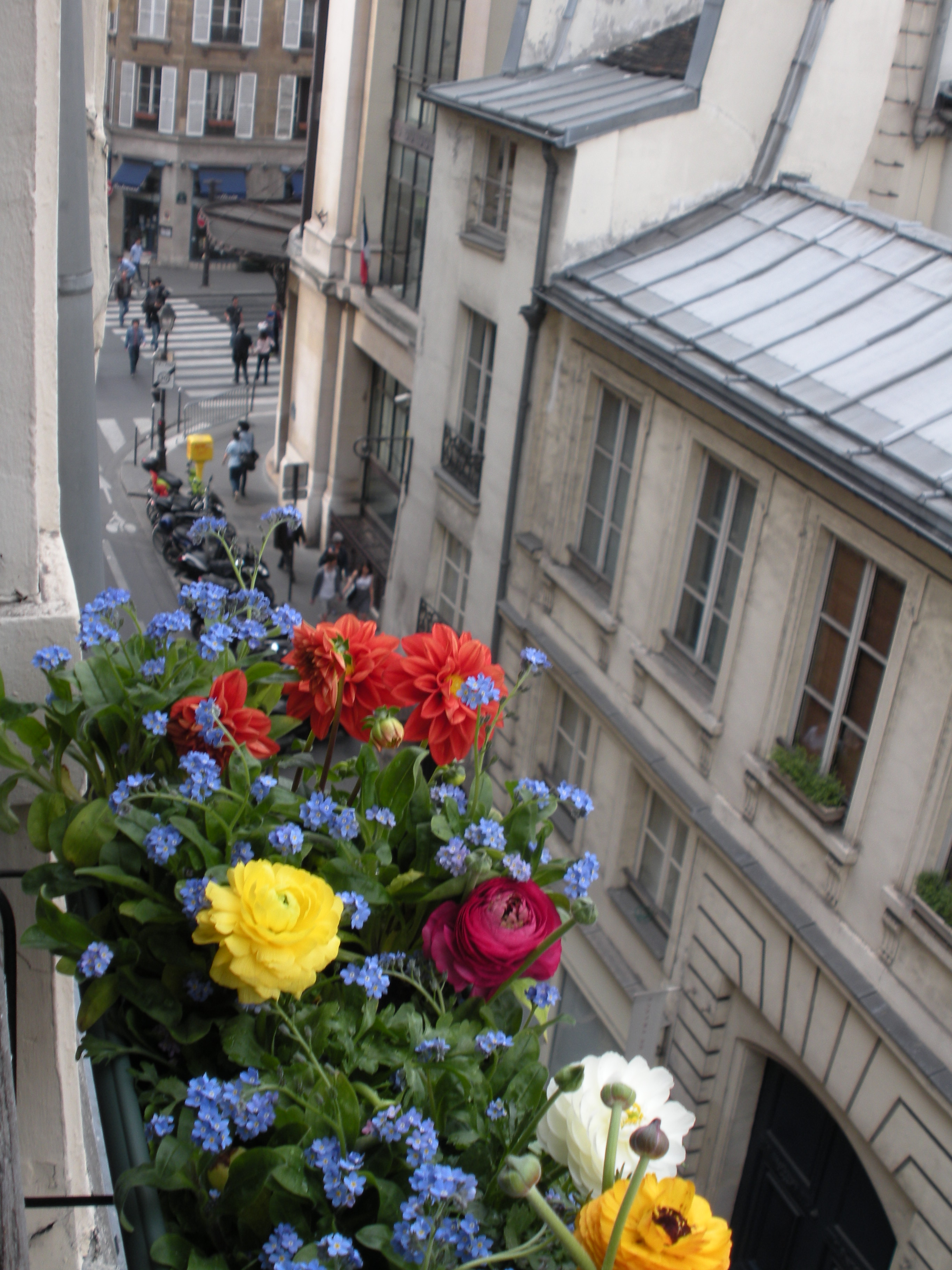
As I eagerly prepare to head to Cardomom County in a few days to contribute some of my time and efforts to Raxa Collective on site, I’m packing up my apartment in Paris and thinking of the irony of leaving my little pot of coriander in the window for fields of spices in Kumily. I was growing coriander, basil and parsley – and before that, these lovely flowers my mother got me during her visit several months ago.

Growing my own herbs was a fun way to keep the kitchen an innovative little atelier. Basil was a must for anything remotely Italian, or Thai if I got so daring; parsley was hard to know what to do with at times but got its fair share of dicing in with many miscellaneous creations; and then of course there’s coriander, my preferred name for which is cilantro as I grew up with the herb in its Mexican context of carne asada tacos and guacamole. An absolute favorite flavored flora of mine.

In some countries, the mores of a city-dweller’s everyday life can somehow keep “environmental friendliness” in those darned quotation marks, and make the concept seem as remote as the rainforest. Continue reading

Wordsmithing: Entrepreneurial Conservation

Two previous posts about words pointed out how common usage can alter the course of their meaning over time in surprising ways. We might not even recognize the original meaning today, some perishing in dungeons and others flying too high for their own good. The risk of writing these particular posts is when their intent seems anything other than constructive. Who wants to cast a stone, first or otherwise? We live in glass houses, and all that. In the spirit of focusing on that intent, this quick post draws together two words: entrepreneurial conservation.

As any phrase should, these words together build something more valuable, more effective, than either could on its own. If words can be cousins, as implied in a previous post, then phrases can be part of an extended family too: these two words, as a phrase, share linguistic DNA with social enterprise, but OED does not know it yet. The phrase (and our work) recognizes that for all the heroic efforts of traditional conservation organizations—The Nature Conservancy, WWF, Conservation International, etc.—not to mention incredible government commitments to national and state parks throughout the world in the last century, there is still a deficit of conservation.

The world still loses more wilderness than it protects. Ditto for intangibles in the domain of cultural heritage. So, what else to do other than pitch in and see what we can do? And if it can be shown that conservation is good business, then more people and organizations will pitch in. Watch Adrien’s posts for more on this in Patagonia, and Reyna’s upcoming posts from the Galapagos Islands. Those are two pristine natural wonderlands with limited human populations. But also watch for posts from Kerala, India — where the story is more complex with regard to population growth and wilderness conservation. Or from Nicaragua, where we feel Morgan’s Rock is leading the way in Central America with a robust mixed-use model that makes use of each idea we have put on the anvil so far: resort (old meaning), luxury (new meaning), entrepreneurial and conservation (combined meaning).


Carbon Emissions Series: Vacationers’ Diets

The hospitality industry is, by nature, one that encourages indulgence. I have seen this mindset manifested through many examples: travelers insisting on using a new towel every day, taking more than they can possibly eat at buffet lines, and drinking ungodly amounts of alcohol at hotel and restaurant bars. Today, tourists excuse themselves from their diets—and some, their environmental principles—when they go on vacation. They expect opulence and excess (a quick look at Las Vegas will confirm all of this). Firms that strive for sustainability are therefore in a hard spot, as they must meet the expectations of guests while providing products and services that do not degrade the environment.

This crude energy pyramid shows that only approximately 10% of energy is transferred between upward steps in the food chain. The higher up you eat, the more energy your diet requires.

I thought it appropriate to look at this paradox more in depth by explaining the findings of an interesting report that the Environmental Working Group (EWG) released recently. Titled Meat Eater’s Guide to Climate Change and Health, this study conducts life cycle analyses

Continue reading