Riverford, A Model Of Organic Farming In The UK

We first heard the name of the farmer on a favored music-oriented podcast, and then the name of his farm. After listening to his story, and his musical tastes, we had to learn more:

guy-singh-watson-4.jpgSelf-confessed veg nerd, Guy Singh-Watson has over the last 30 years taken Riverford from one man and a wheelbarrow delivering homegrown organic veg to friends, to a national veg box scheme delivering to around 50,000 customers a week.

Guy is an inspirational, passionate, opinionated and admired figure in the world of organic farming, who still spends more time in the fields than in the boardroom. Continue reading

Greening Indian Cities

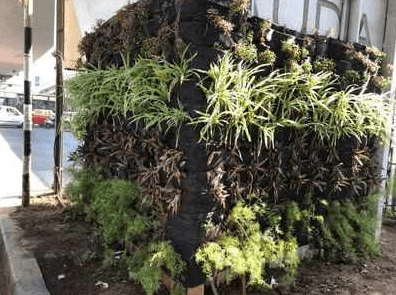
Another creative commitment to Green Innovation. Thanks to the Times of India for this story about how Ahmedabad embraces green walls, goes vertical:

Aapnu Amdavad has a lot to boast about. From being the first city to have been declared India’s first Unesco World Heritage City to being home to some prime educational institutes, this city has gained prominence on the global map. Having said that, the city has its share of dark spots too. The fast diminishing green cover in the city is one of them. India’s fifth largest city has a tree cover of approximately 35 crores (as per a 2017 census), which although is 13% more than the number of trees in 2013, is still not enough. The ongoing metro project has also led to a lot of felling of trees. Taking into consideration all this, Ahmedabad Municipal Corporation (AMC) has decided to build vertical gardens in the city. It recently set up a small vertical garden along one of the pillars at the flyover at Helmet crossroads.

What are vertical gardens? Essentially vertical gardens are the kind of gardens that grow vertically, along walls or pillars, with the help of trellis (which are wooden frames) or similar support systems. Continue reading

Behavioral Science & Green Innovation

5749.jpg

Green registration plates are already in use in China. Photograph: Roman Pilipey/EPA-EFE/Rex/Shutterstock

The UK, whatever other challenges it may be experiencing, is proving itself creatively committed to green innovation:

Green number plates ‘could boost sales of electric cars’ in UK

Behavioural insights unit proposes new colour for registration plates to help ‘normalise the idea of clean vehicles’

Wind Powering 590,000 Homes

WindFarm.jpg

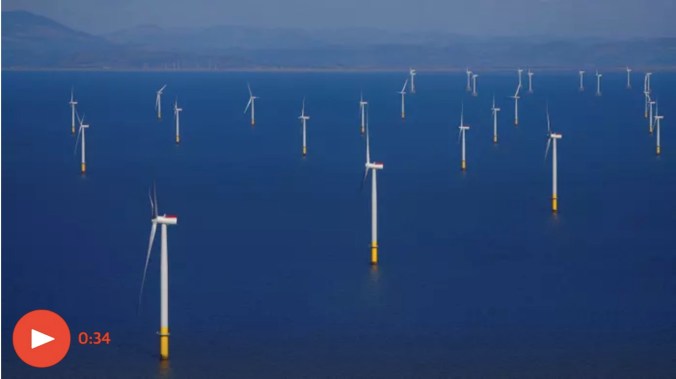
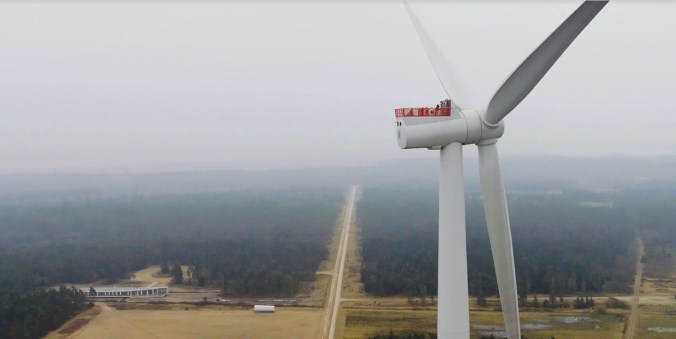
 Drone footage shows world’s largest offshore windfarm – video

Thanks to the Guardian for this news about harnessing wind at a record scale:

World’s largest offshore windfarm opens off Cumbrian coast

Walney Extension will power 590,000 homes amid fears Brexit could stifle growth

ChartWind.jpg

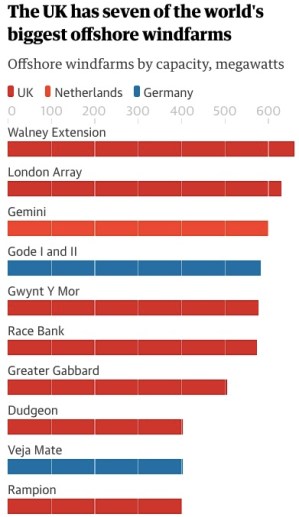
Guardian Graphic | Source: Renewable

The world’s biggest offshore windfarm has officially opened in the Irish Sea, amid warnings that Brexit could increase costs for future projects.

Walney Extension, off the Cumbrian coast, spans an area the size of 20,000 football pitches and has a capacity of 659 megawatts, enough to power the equivalent of 590,000 homes.

The project is a sign of how dramatically wind technology has progressed in the past five years since the previous biggest, the London Array, was finished.

The new windfarm uses less than half the number of turbines but is more powerful.

Matthew Wright, the UK managing director of Danish energy firm Ørsted, the project’s developer, said: “It’s another benchmark in terms of the scale. This – bigger turbines, with fewer positions and a bit further out – is really the shape of projects going forward.” Continue reading

A Time and Place for the Public Service Announcement

One of the many Advocacy Priorities of the National Association of Clean Water Agencies (NACWA)

While indoor plumbing is more or less taken for granted, not everything that can flush, should. Thanks to the NYTimes for clarifying the basics.

Should I Flush It? Most Often, the Answer Is No

It might seem harmless at first: a thread of dental floss tossed in the toilet, a contact lens swirling down the drain of the bathroom sink. But even the tiniest of items can contaminate waterways.

The small fragments of plastic contact lenses are believed to be contributing to the growing problem of microplastic pollution. Pharmaceuticals, which are also frequently flushed down the drain, have been found in our drinking water, and the consequences are not fully known.

Larger products like wipes and tampons are also clogging sewer systems, resulting in billions of dollars in maintenance and repair costs.

Wondering what’s safe to flush or wash down the drain? We spoke with several wastewater management experts who explained why many frequently disposed items belong in a garbage can, not the toilet. Continue reading

Off Halogen, On With LED

Switching to LEDs has been estimated to save consumers up to £112 a year. Photograph: imageBroker/Rex/Shutterstock

Arthur Neslen at the Guardian shares the news, in Europe to ban halogen lightbulbs, that we have been waiting to hear for years:

After nearly 60 years of lighting homes halogens will be replaced with more energy efficient LEDs

After nearly 60 years of brightening our homes and streets, halogen lightbulbs will finally be banned across Europe on 1 September.

The lights will dim gradually for halogen. Remaining stocks may still be sold, and capsules, linear and low voltage incandescents used in oven lights will be exempted. But a continent-wide switchover to light-emitting diodes (LEDs) is underway that will slash emissions and energy bills, according to industry, campaigners and experts.

LEDs consume five times less energy than halogen bulbs and their phase-out will prevent more than 15m tonnes of carbon emissions a year, an amount equal to Portugal’s annual electricity usage. Continue reading

The Aha Moment Explaining One Challenge To Recycling

15Fixes-jumbo.jpg

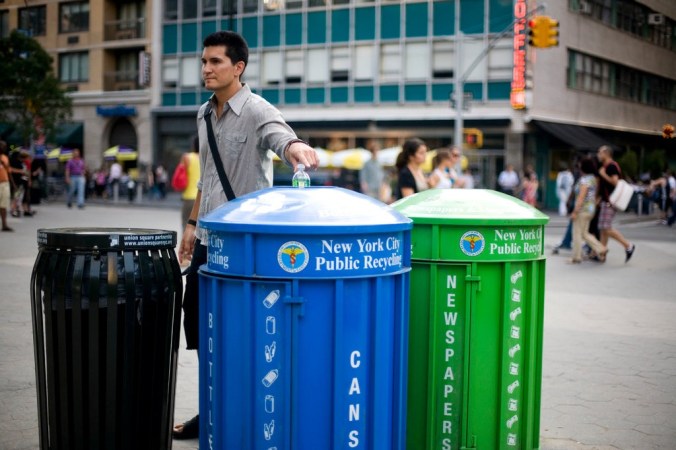
Color-coordinated waste baskets for waste recycling in New York City. Credit Ramin Talaie/Corbis, via Getty Images

Thanks for this interview full of incisive interview quetions by David Bornstein, who is co-founder of the Solutions Journalism Network, which supports rigorous reporting about responses to social problems. Thanks to Mitch Hedlund, executive director of Recycle Across America, for the explanatory answers in the interview that follows:

The Conflict of Interest That Is Killing Recycling

Some of the biggest recycling operations are owned by landfill companies whose profits improve when recycling doesn’t work well.

15fixes2-articleLarge.jpg

Mitch Hedlund, executive director of Recycle Across America. Credit Shelly Mosman/Recycle Across America

In the past few years, one of the core pillars of the environmental movement — recycling — has fallen on hard times. News dispatches reveal hundreds of cities and counties scaling back their recycling programs because of the high costs associated with processing recyclables and the lack of demand for the materials. A new conventional wisdom is gaining ground suggesting that recycling may not be worth the effort.

But is that true? And has recycling ever gotten a fair shake? After decades, less than a third of municipal solid waste is recycled — and much of that is contaminated with garbage, which diminishes or destroys its value. Almost 50 years after the first Earth Day, are we really ready to admit defeat and return to the “Mad Men”-era ethos of the “throwaway society”?

There may be another way. For most of the past decade, Recycle Across America, a nonprofit organization I covered in this column six years ago, has been demonstrating that it’s quite possible to get people to recycle properly, just as it’s possible to get most people to wear seatbelts, quit smoking and stop driving drunk. But the recycling industry has never taken the logical steps needed to create a successful societywide recycling habit — and today it may not be in the economic interest of some of the big recycling companies to build it. Recently, I spoke with Mitch Hedlund, the founder of Recycle Across America, about this dilemma and the possibility that a recycling collapse can be avoided. Continue reading

Plant-Based Diets Boost UK Chia Farming

5760 (1).jpg

Thanks to Rebecca Smithers, consumer affairs correspondent for the Guardian, for this:

First UK-grown chia seeds to go on sale this week

The popularity of plant-based diets has created huge demand for the oil-rich seeds, prompting a farm in Essex to plant a crop

1653

Essex grown Chia seeds by Peter Fairs for Hodmedod’s Photograph: Rebecca Noakes/Courtesy of Hodmedod’s

The first UK-grown chia seeds go on sale this week, as demand for the plant native to the Americas is fuelled by the explosion in the popularity of plant-based diets.

The company Hodmedod, pioneers of British-grown pulses, grains and seeds, has been working with farmers Peter and Andrew Fairs, of Great Tey in Essex, to bring the new British crop to market.  Continue reading

Sustainability & Land-Use Choices

e5ff336b-bd2f-4ce2-a2ba-2b4dfcc82edc-3944c6eeace218b5f8c8a63c4fa8191550f3f63c-s1400-c85.jpg

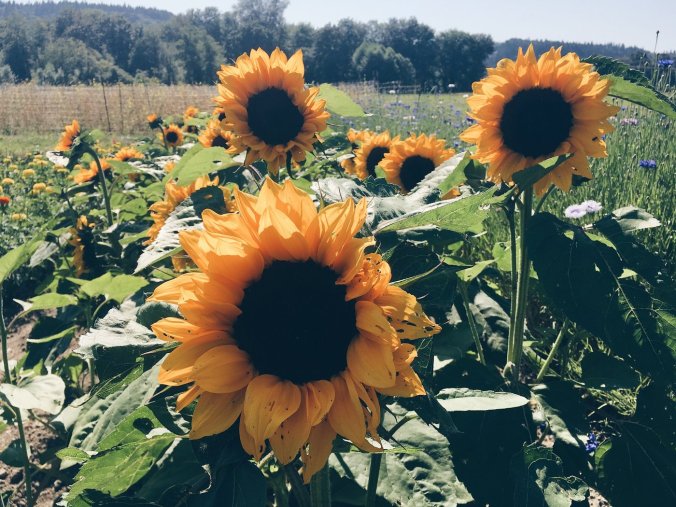
Along the back of this field of sugar snap peas, sunflowers and bachelor buttons at Oxbow Farm & Conservation Center is a buffer of maturing big-leaf maples and red-osier dogwoods. It’s a combination of forest and thicket that the farm has left standing to help protect water quality in the river and aquifer. Oxbow Farm & Conservation Center

Another day, another sunflower because, why not? But this story is about much more than the overwhelming attractiveness of sunflowers:

Which Vision Of Farming Is Better For The Planet?

OxbowFarmers face a growing dilemma. Specifically, a food-growing dilemma.

How do you feed an increasing number of people without harming the environment?

As it turns out, growing as much food as possible in a small area may be our best bet for sustainably feeding the world’s population, according to new research.

It all comes down to how we manage greenhouse gases and climate change. Continue reading

Wilderness, Massive Infrastructure Projects & Changing Global Norms

NairobiNtlPark_ChinaKenyaRailroad_Getty_web.jpg

Construction of the second phase of the Chinese-financed Standard Gauge Railway in Kenya crosses through Nairobi National Park, as pictured here in June. YASUYOSHI CHIBA/ AFP/ GETTY IMAGES

Thanks to William Laurance for this informative opinion essay that gives a bit of hope for wilderness preservation:

Is the Global Era of Massive Infrastructure Projects Coming to an End?

The world’s wild places have been badly carved up by decades of roadbuilding, dam construction, energy exploitation, and other megaprojects. Now, as the financial community, environmental groups, and local citizens increasingly oppose big infrastructure development, the tide of environmental destruction may be turning.

AP_MalaysiaChinaRailroad_web.jpg

Malaysia’s former Prime Minster Najib Razak, third from left, looks at a model of the China-backed East Coast Rail Link in 2017. Malaysia has since canceled the project due to mounting costs. AP PHOTO

We are living in the most explosive era of infrastructure expansion in human history. To meet the United Nations’ development goals, we would need to invest tens of trillions of dollars in new roads, railways, energy ventures, ports, and other projects by 2030 — dramatically amplifying an infrastructure tsunami that is already shattering the world’s biologically richest ecosystems. But this great wave of infrastructure development is suddenly looking shaky — and it might just be the best outcome for nature and humanity alike. Continue reading

Helping Plants Make Their Own Nitrogen

img_20171013_133748571_hdr-3-bab7de57d14653c47b66cf3afc9fa586b3731b9c-s1400-c85.jpg

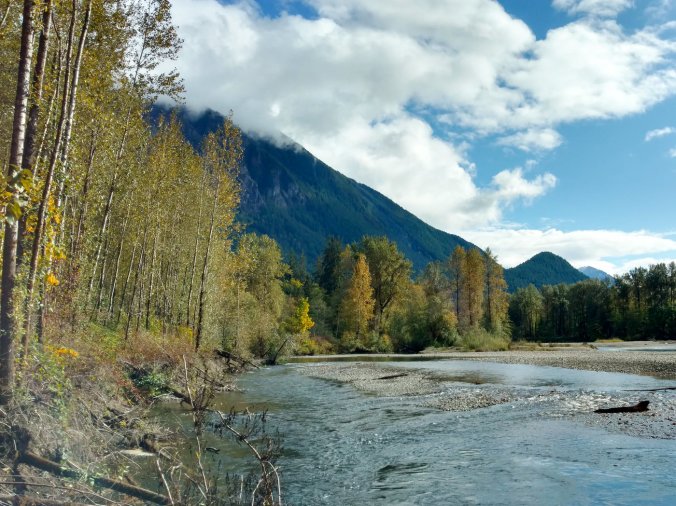
Poplar trees at the Snoqualmie River in Washington State. The river is fed mostly by snow melt and is extremely low in nitrogen, yet the trees thrive thanks to endophytes. Sharon Doty

Thanks to our friends at the salt, and National Public Radio (USA) for this:

Microbial Magic Could Help Slash Your Dinner’s Carbon Footprint

m1_zstack4-1-18cd73a7dc27353a90c3aeda47317503af40edca-s1400-c85.jpg

Endophytes are microbes that live inside plants — the ones tagged with a fluorescent dye in this image are found in poplars. The microbes gather nitrogen from the air, turning it into a form plants can use, a process called nitrogen fixation. Researchers are looking at how these microbes could be used to help crops like rice and corn make their own fertilizer.
Sam Scharffenberger

If you’re interested in sustainability, you’ve probably thought about how to reduce your carbon footprint, from how you fuel your car to how you heat your home. But what about carbon emissions from growing the food you eat?

Most of the crops in the United States are grown using chemical fertilizer – a lot of it: American farmers used over 24 billion pounds of nitrogen fertilizer in 2011. And making nitrogen fertilizer requires fossil fuels like natural gas or coal. Continue reading

Rise Products Reduce Waste


merlin_136683216_717972aa-9b50-4c20-a0e1-7823ac25f3e8-jumbo.jpg

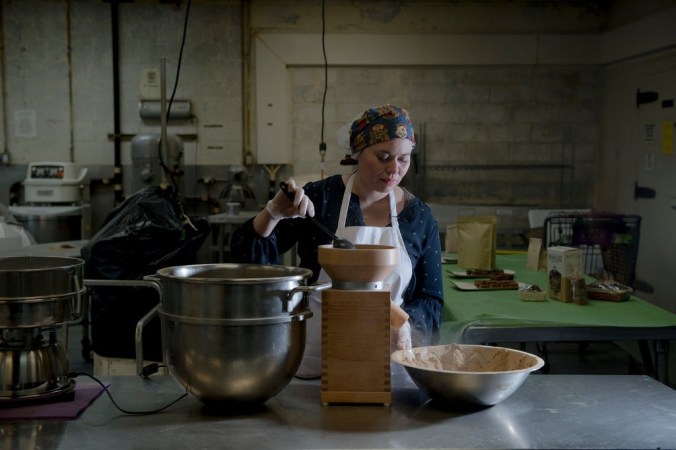
Bertha Jimenez milling flour at Rise Products’ temporary kitchen in Long Island City, Queens.
Ms. Jimenez, an Ecuadorean immigrant with a doctorate in engineering, helped develop a method for making flour from the grain left over after brewing beer. 
George Etheredge for The New York Times

Thanks to Larissa Zimberoff for this:

From Brewery to Bakery: A Flour That Fights Waste

merlin_136683021_001d3c91-70a2-4942-bbef-c40181c31510-jumbo.jpg

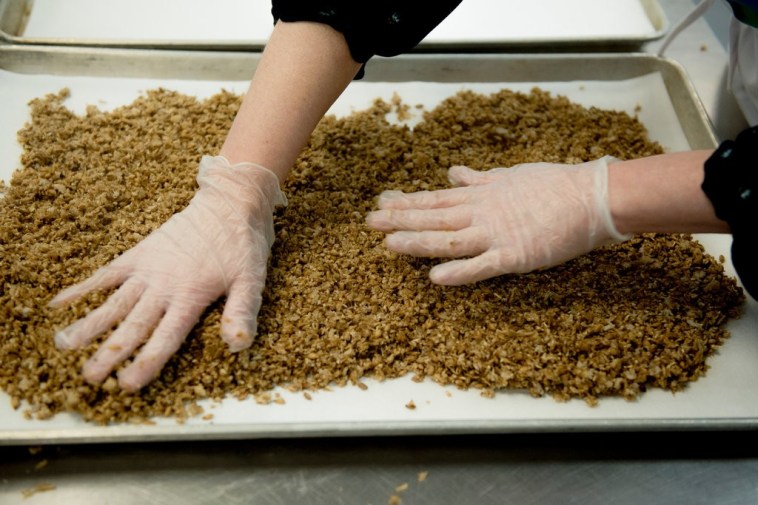
In a temporary commercial kitchen in Long Island City, Queens, Rise Products dries spent beer grains in an oven before they are ground, milled and sifted into a fine flour. George Etheredge for The New York Times

For some people, beer is the perfect end to a workday. For Bertha Jimenez, it’s the start of a new way to eliminate food waste.

Breweries throw out millions of pounds of used grain every day that could have other uses. While some is repurposed as animal feed, compostable products or heating fuel, little has been exploited for its value as food.

20flour-new2-jumbo.jpg

Because of the growing interest in reducing waste, many chefs and bakers are already eager to work with the flour. George Etheredge for The New York Times

But Ms. Jimenez, 35, has created a small start-up, Rise Products, that converts the grain into a flour that is finding its way into sustainable bakeries and kitchens in New York and as far away as Italy.

The potential for recycling beer waste first came into the cross hairs of Ms. Jimenez, an immigrant from Ecuador, while she was working toward her doctorate in 2015 at the Tandon School of Engineering at New York University. Intent on finding ways to reduce industrial waste, she started a side project with like-minded friends — most of them also immigrants — and craft beer provided an easy target: Everyone loved it, but it had issues.

Ms. Jimenez lives in Brooklyn, which at last count had 20 craft breweries that are tossing out grain. Ms. Jimenez and Ashwin Gopi, a classmate and a founder of Rise, began asking around for samples so they could figure out how best to reuse them. Continue reading

Copenhagenize Your City

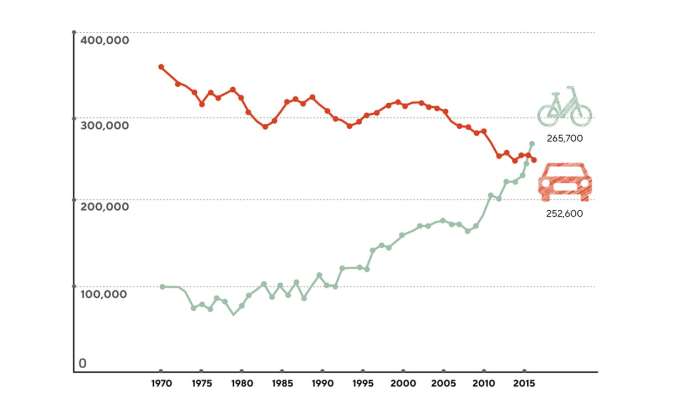
3872 (1).jpgWho knew you could do such a thing? When did that become a thing? Nevermind, just read the graphs that accompany this story:

Danish-Canadian urban designer Mikael Colville-Andersen busts some common myths and shows how the bicycle has the potential to transform cities around the world (All images: Copenhagenize Design Company/ Mikael Colville-Andersen)

8889 (1).jpg

Perspective On The Plastic Straw

906318ab3.jpg

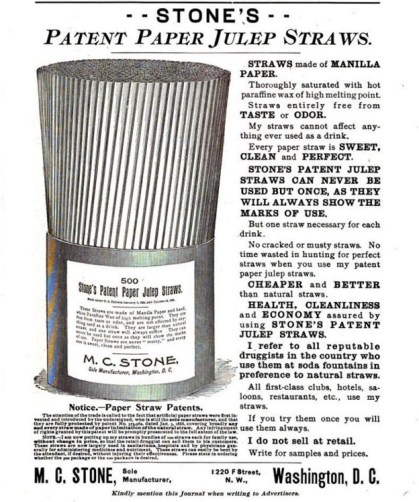
A typical Stone straw ad from a newspaper in 1899 (Google Books)

When we arrived in south India mid-2010 our toolkit was full of fifteen years worth of entrepreneurial conservation initiatives, starting in Costa Rica and followed by work in the Galapagos Islands, Chilean Patagonia, Montenegro, Croatia and Siberia. It took us a year to understand all the important ways India differed from everything we knew from elsewhere. Then Amie started targeting the elimination of plastic from our hotel operations, starting with bags in the gift shops. She might have been a latter-day Doña Quixote, tilting at packaged water bottles. All tourists had been instructed by guide books and travel agents to insist on these, and it was not as simple as deciding we knew better.

I might have been a latter-day  Sancho Panza, with a front row seat to the action and as occasional contributor to solution-sourcing. But nevermind the literary allusions. We did eliminate plastic bottles, and then moved on to straws, both in India and back in Costa Rica. We are still working on straws, which oddly enough are more puzzling than disposable water bottles. Alexis Madrigal, as always, has our gratitude for this illuminating history and perspective that helps stoke our motivation:

Disposable America

A history of modern capitalism from the perspective of the straw. Seriously.

lead_720_405.jpg

MIRAGEC / GETTY

A straw is a simple thing. It’s a tube, a conveyance mechanism for liquid. The defining characteristic of the straw is the emptiness inside it. This is the stuff of tragedy, and America.

Over the last several months, plastic straws have come under fire from environmental activists who rightly point out that disposable plastics have created a swirling, centuries-long ecological disaster that is brutally difficult to clean up. Bags were first against the wall, but municipalities from Oakland, California, (yup) to Surfside, Florida, (huh!) have started to restrict the use of plastic straws. Of course, now there is a movement afoot among conservatives to keep those plastics flowing for freedom. Meanwhile, disability advocates have pointed out that plastic straws, in particular, are important for people with physical limitations. “To me, it’s just lame liberal activism that in the end is nothing,” one activist told The Toronto Star. “We’re really kind of vilifying people who need straws.” Other environmentalists aren’t sure that banning straws is gonna do much, and point out that banning straws is not an entirely rigorous approach to global systems change, considering that a widely cited estimate for the magnitude of the problem was, umm, created by a smart 9-year-old. Continue reading

Resilience, Greece & Reasonable Questions

3543.jpg

Tourism is Greece’s biggest foreign currency earner. Photograph: Costas Baltas/Reuters

Nearly forty years ago I was in Greece for the second time. I accompanied my mother on a visit to the village where she was born and had lived until her teens. We had spent an extended period in that village ten years earlier, and into my child’s mind it had imprinted vivid memories that, by 1979, were as fresh as the smell of bread baking in the stone oven of that village home. And now, that re-visit with my mother is as vivid as can be, and even has a sound track. That album had just been released and someone in the village had a cassette tape of it, and it played from the sound system of a Volkswagen Beetle, doors open, as we had a meal overlooking the mountains.

I have had one opportunity to bring to Greece the sustainable tourism development tools I have been working with since the mid-1990s. This recent story in the Guardian, too short to truly appreciate the scale of the questions raised, is a welcome reminder to me of the work to be done in a place I care deeply about.

Greece tourism at record high amid alarm over environmental cost

With 32 million visitors expected this year, fears grow that the country cannot cope

Greece is braced for another bumper year. The tourists will not stop coming. For every one of its citizens, three foreign visitors – 32 million in total – will arrive this year, more than at any other time since records began.

It’s an extraordinary feat for a country that has battled with bankruptcy, at times has been better known for its protests and riots and, only three years ago, narrowly escaped euro ejection. Tourism is the heavy industry that has helped keep catastrophe at bay.

But is Greece almost too successful for its own good? Tourist numbers have increased by an additional two million every year for the past three years. Arrivals from China alone have doubled since 2017. But with forecasts predicting record numbers over the next decade, a growing number are asking: can Greece really cope? Continue reading

Aspirational Recycling & Bigger Problems

20cli-aspirational-lede-superJumbo

Tony Cenicola/The New York Times

I recall reading this article by Livia Albeck-Ripka and thinking that I would like to read more from anyone who can write clearly and creatively about topics that are central to our purpose here. And so today, my wish was granted, twice. In this first one, I am introduced to a term, aspirational recycling, that I had not heard until now:

6 Things You’re Recycling Wrong

Can you recycle coffee cups or greasy pizza boxes? If you’re tossing things in the recycling bin out of sheer hope, you might be an “aspirational recycler.”

We have all done it: a greasy pizza box, a disposable coffee cup, the odd plastic bag. Sometimes, we want things to be recyclable, so we put them in the recycling bin.

Waste managers often call this wishful or aspirational recycling. But, unfortunately, putting these objects in with the rest of the recycling can do more harm than good. While rules differ in every municipality (check your local recycling website to find out what’s acceptable), we have picked out some key offenders to keep in mind.

Too many of these items will contaminate a batch of recycling. That means waste managers might not be able to find buyers for the materials — especially now that China, one of the world’s main importers of recyclable waste, has said it will reject shipments that are more than 0.5 percent impure. Contaminated loads could be sent to the landfill instead…

Same day, same publication, same author, an eye-opener for anyone who diligently follows all the rules made plain in the article above:

Your Recycling Gets Recycled, Right? Maybe, or Maybe Not

Plastics and papers from dozens of American cities and towns are being dumped in landfills after China stopped recycling most “foreign garbage.”

13cli-recycling-facility-jumbo

Bales of recyclable waste in Seattle. American waste managers are struggling to find plants to process their recyclables. Credit Wiqan Ang for The New York Times

Oregon is serious about recycling. Its residents are accustomed to dutifully separating milk cartons, yogurt containers, cereal boxes and kombucha bottles from their trash to divert them from the landfill. But this year, because of a far-reaching rule change in China, some of the recyclables are ending up in the local dump anyway. Continue reading

Karen Washington, Food Activist

2560

‘When we say ‘food apartheid,’ the real conversation can begin.’
Illustration: Daniel Chang Christensen

Thanks to Anna Brones for bringing this article, and its subject, to our attention in the Guardian, as a reprint of an essay originally published in Guernica:

Food apartheid: the root of the problem with America’s groceries

Food justice activist Karen Washington wants us to move away from the term ‘food desert’, which doesn’t take into account the systemic racism permeating America’s food system

America’s sustainable food movement has been steadily growing, challenging consumers to truly consider where our food comes from, and inspiring people to farm, eat local, and rethink our approaches to food policy. But at the same time, the movement is predominantly white, and often neglects the needs and root problems of diverse communities. Continue reading

Being Ecological When Nature Is Perceived With Limits

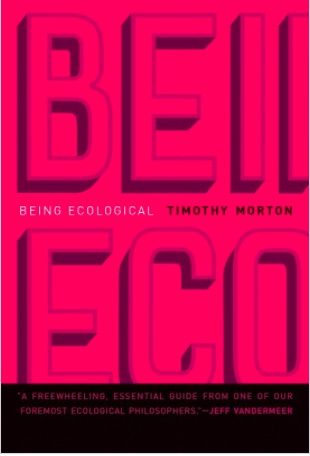
BeingEco

A book about ecology without information dumping, guilt inducing, or preaching to the choir.

This new book is mentioned in a description of coming to terms with a life without water, an essay written from the perspective of living in Cape Town, South Africa. The essay is moving in the way a dream can be, which fits the writer’s reference to what we all might come to know as “the water-anxiety dream.”

The essay was effective enough to get me to click through to find out more about the book to the left. Which leads to Timothy Morton, who has somehow avoided our notice until now. How had we missed an author of books with titles like Dark Ecology, and The Ecological Thought, as well as Ecology without Nature?

Nevermind how. My thanks to Rosa Lyster for this, among other gifts from her essay.

Lyster-Capetown-Drought

For some residents of Cape Town, the memory of the drought is already fading. But, in an increasingly parched world, will the anxiety ever really end? Illustration by Owen Gent

A friend of mine got married in her parents’ garden last year, on a lavishly beautiful late-summer afternoon in Cape Town. Many of the guests were British, and they could not stop remarking on the fineness of the weather. It was a startling reminder that some people still relish hot days with no possibility of rain, that not everyone looks upon February in the Western Cape as something to be endured. After the ceremony, my date and I stood by the swimming pool, drinking sparkling wine and monitoring the canapés. My friend’s stepfather came by to say hello, carefully picking his way past the bride’s two young brothers, who were playing an ecstatic game of hide-and-seek on the lawn, getting grass stains on their tiny suits. After gracefully accepting our praise about how lovely everything had been, he told us that he’d been having torrid anxiety dreams. We nodded. Weddings are notoriously hard on the old nerves—guests to be tended to, speeches to be made, and the pool just lying there, waiting for any old idiot to accidentally fall in and cast an undignified pall over the happy day. He shook his head. His dream, he explained, was about the garden. Continue reading

Turbines, Bigger & Better

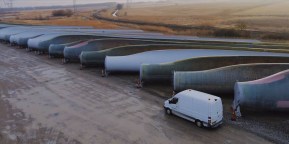
WindTurbs2

Prototype wind turbines whirl at a testing site in Osterild, near the northern end of Denmark’s Jutland peninsula. By Rasmus Degnbol

Thanks to the New York Times for this reminder that, in spite of what headlines often lead us to believe, progress is out there on as many fronts as we care to look to:

How Windmills as Wide as Jumbo Jets
Are Making Clean Energy Mainstream

WindTurbs.jpg

Blades for wind turbines lie outside a factory, waiting to be transported to wind farms.By Rasmus Degnbol

OSTERILD, Denmark — At the northern end of Denmark’s Jutland peninsula, the wind blows so hard that rows of trees grow in one direction, like gnarled flags.

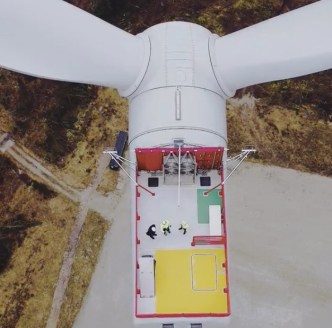
WindTurbs3.jpg

Technicians reach the roof of these enormous wind turbines either via an internal elevator or, if the turbine is installed offshore, by helicopters that lower them into the fenced-off area.By Rasmus Degnbol

The relentless weather over this long strip of farmland, bogs and mud flats — and the real-world laboratory it provides — has given the country a leading role in transforming wind power into a viable source of clean energy.

After energy prices spiked during the 1973 oil crisis, entrepreneurs began building small turbines to sell here. “It started out as an interest in providing power for my parents’ farm,” said Henrik Stiesdal, who designed and built early prototypes with a blacksmith partner. Continue reading

Plastic Reduction Success Story

5150 (1).jpg

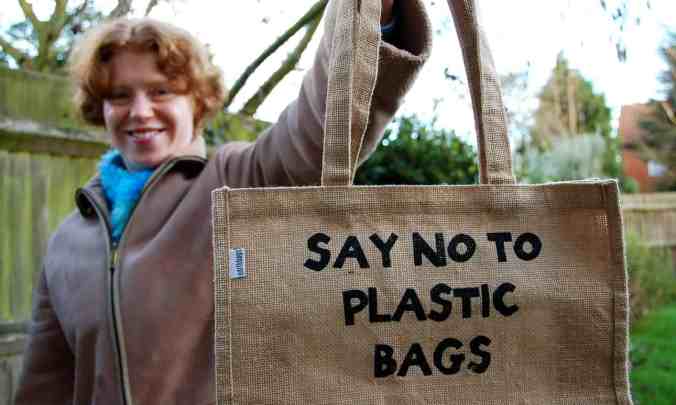
A UK levy of 5p per bag introduced in 2015 has already reduced single-use plastic bags by 85%. Photograph: Stuart Kelly/Alamy Stock Photo

We never tire of reporting on efforts at plastic-reduction, so thanks to Juliette Jowit and the Guardian for this update:

Drop in plastic bags littering British seas linked to introduction of 5p charge

Scientists find an estimated 30% drop in plastic bags on the seabed in the same timeframe as charges were introduced in European countries

A big drop in plastic bags found in the seas around Britain has been credited to the introduction of charges for plastic bags across Europe. Continue reading