Closer To An Alternative For Plastic Packaging

cut-melon-fruit-store_web

Yale e360, with news like this, titles it carefully:

Scientists Say They Have Found a Viable Replacement for Petroleum-Based Plastic

Scientists at Ohio State University say they have developed a viable alternative to petroleum-based plastic food packaging by using natural tree-based rubber. According to the researchers, the new biodegradable material holds promise for fighting the world’s growing plastic pollution problem, as well as for helping curb our reliance on fossil fuels.

The original source, with slightly more flowery language, titles it as if packaging can be friendly to the environment. The way we use packaging, not so. But we will take what we can get at this point:

Study shows potential for Earth-friendly plastic replacement

New biodegradable ‘plastic’ is tough, flexible

500_biodegradation-312743

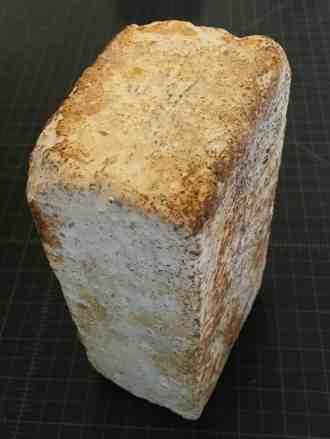
The new bioplastic and rubber blend devised by Ohio State researchers proved much more durable than the bioplastic on its own

The quest to keep plastic out of landfills and simultaneously satisfy the needs of the food industry is filled with obstacles.

A biodegradable replacement for petroleum-based products has to meet all sorts of standards and, so far, attempts at viable replacements from renewable sources have faced limited success due to processing and economic constraints. Among the obstacles, products to date have been too brittle for food packaging. Continue reading

Mass Timber & Metrics Of Ecology

Mjosa-Tower_Norway_42987-Bilder-til-Mj_starnet-episode-3_web.jpg

Mjösa Tower, the world’s tallest wooden building, under construction in Brumunddal, Norway. ANTI HAMAR

Thanks to Yale e360 and especially to Jim Robbins, as always, for keeping us up to date on the most interesting new developments in our natural world and its built spaces:

As Mass Timber Takes Off, How Green Is This New Building Material?

Mass timber construction is on the rise, with advocates saying it could revolutionize the building industry and be part of a climate change solution. But some are questioning whether the logging and manufacturing required to produce the new material outweigh any benefits.

Carbon12_Portland_web.jpg

Carbon 12 in Portland, Oregon is the tallest building in the United States made with mass timber. COURTESY OF KAISER + PATH
2 / 4

The eight-story Carbon 12 building in Portland, Oregon is the tallest commercial structure in the United States to be built from something called mass timber.

If the many fervent boosters of this new construction material are right, however, it is only one of the first mass timber buildings among many, the beginning of a construction revolution. “The design community in Portland is enthralled with the material,” said Emily Dawson, an architect at Kaiser + Path, the locally-based firm that designed Carbon 12.

The move to mass timber is even farther along in Europe. That’s because mass timber – large structural panels, posts, and beams glued under pressure or nailed together in layers, with the wood’s grain stacked perpendicular for extra strength – is not only prized as an innovative building material, superior to concrete and steel in many ways, it is also hoped it will come into its own as a significant part of a climate change solution. Continue reading

Watching Birds From Home, Online

Thanks to Lewis Page and the folks at Sierra for this selection of bird-viewing options:

6 Exciting Birdwatching Webcams

Vicariously join in on the springtime migration from your couch

Birding is a sport for the intrepid—its participants rise at ungodly hours, bundle in layers, and sit silently for hours, all in hopes of seeing a winged animal that may never arrive. But for those who aren’t quite ready to trek outdoors into wintry-remnant weather, or who might be stuck in front of a computer when they wish they weren’t, there’s another, tamer option. Indeed, the miracles of modern webcam and streaming technology have afforded even the lowliest of couch potatoes ample portals into a variety of avian worlds. And the advent of spring means that flocks of migratory birds are en route north from their winter haunts—which means it’s about to be primetime for bird cams. Here are a few to watch in the coming months.

The Mississippi River’s Migratory Birds

On a small island in the middle of the Mississippi River’s Lake Onalaska, near the Wisconsin-Minnesota border, stands a slowly rotating camera on a pole. Continue reading

The Most Interesting News Today

17mag-climeworks-image2-jumbo-v2.jpg

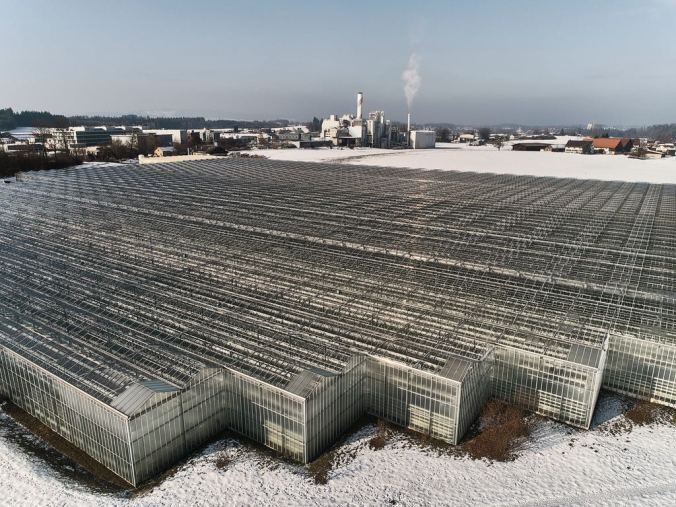
The greenhouse in Hinwil where Climeworks uses carbon dioxide pulled from the air to grow fruits and vegetables. Luca Locatelli for The New York Times

When this platform started in 2011 it was two young men, one a senior at Amherst College and the other a sophomore at Cornell University, who thought it would be useful to share their experiences with other students. It continued beyond their summer internships. At some point, hard to pinpoint the date, it started serving as a daily exercise for me. It became an exercise in finding something in the world that is worthy of attention, as much as possible something that inspires hope rather than reinforces dread (though that has been unavoidable from time to time).

The title I give to today’s post is impossible to justify with any metrics, but read on and you may see my point. Jon Gertner, for this first time featured in our pages, and for what is likely the longest of any longform treatments of any topic in the New York Times, thank you for making it about this:

17mag-climeworks-image1-jumbo.jpg

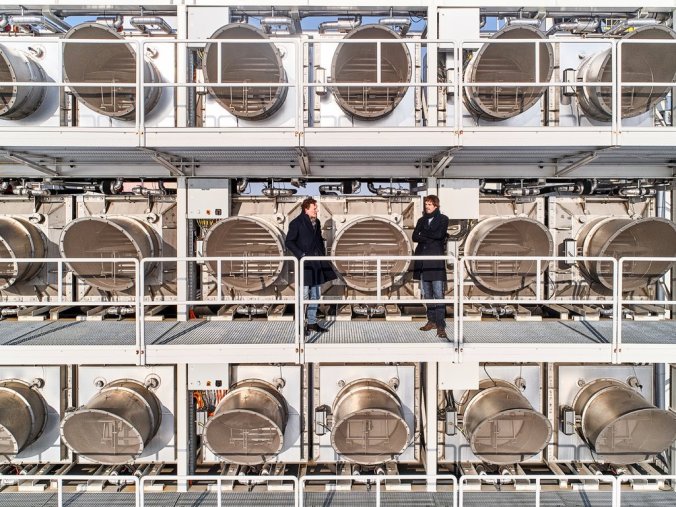
Christoph Gebald, left, and Jan Wurzbacher, the founders of Climeworks, at their plant in Hinwil, Switzerland. Luca Locatelli for The New York Times

The Tiny Swiss Company That Thinks It Can Help Stop Climate Change

Two European entrepreneurs think they can remove carbon from the air at prices cheap enough to matter.

17mag-climeworks-image3-jumbo

A pilot project at a Swiss university that uses Climeworks equipment to make methane out of airborne CO₂. Luca Locatelli for The New York Times

Just over a century ago in Ludwigshafen, Germany, a scientist named Carl Bosch assembled a team of engineers to exploit a new technique in chemistry. A year earlier, another German chemist, Fritz Haber, hit upon a process to pull nitrogen (N) from the air and combine it with hydrogen (H) to produce tiny amounts of ammonia (NH₃). But Haber’s process was delicate, requiring the maintenance of high temperatures and high pressure. Bosch wanted to figure out how to adapt Haber’s discovery for commercial purposes — as we would say today, to “scale it up.” Anyone looking at the state of manufacturing in Europe around 1910, Bosch observed, could see that the task was daunting: The technology simply didn’t exist.

Over the next decade, however, Bosch and his team overcame a multitude of technological and metallurgical challenges. He chronicled them in his 1932 acceptance speech for the Nobel Prize for Chemistry — an honor he won because the Haber-Bosch process, as it came to be known, changed the world. His breakthrough made possible the production of ammonia on an industrial scale, providing the world with cheap and abundant fertilizer. The scientist and historian Vaclav Smil called Haber-Bosch “the most important technical invention of the 20th century.” Bosch had effectively removed the historical bounds on crop yields, so much so that he was widely credited with making “bread from air.” By some estimates, Bosch’s work made possible the lives of more than two billion human beings over the last 100 years. Continue reading

Connecting the Dots Between Technology & Nature Conservation

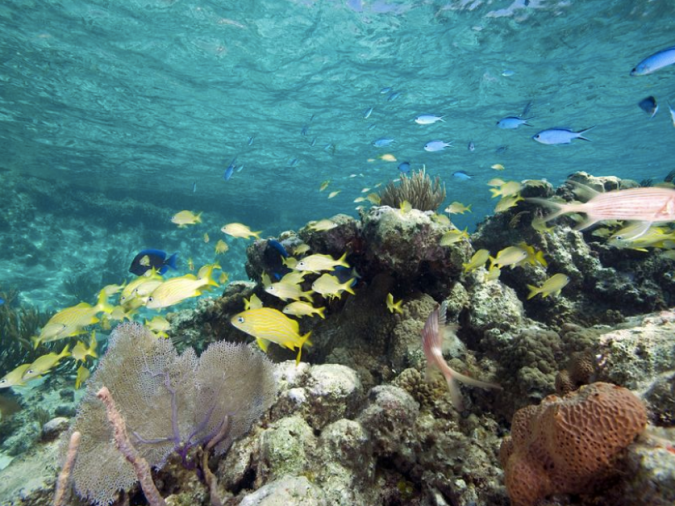
REEF FISH, BAHAMAS Fish congregate near a shallow reef in Exuma Cays Land and Sea Park. © Jeff Yonover

Those familiar with our work will recognize the word valorization, which is an essential element of what we write about and what we do. It’s increasingly important to note that Nature, made more fragile with each passing year by human impact climate change, requires human efforts to protect and hopefully, turn back the clock on damage already done; and it appears to be human nature that maintain a direct  correlation between how something is valued and the amount of attention it gets.

We’re particularly impressed by this example of tech collaboration. Thanks to the Nature Conservancy for highlighting these stories…

The Caribbean Needs Tourism, and Tourism Needs Healthy Coral Reefs

AI and social media are helping quantify the economic value of coral reefs

The Caribbean region is more dependent on tourism than any other region in the world—the sector accounts for over 15 percent of GDP and 13 percent of jobs in the region. And almost all visitors to the Caribbean take part in some activity that relates to coral reefs—either directly, like snorkeling and scuba diving, or indirectly, like enjoying sandy beaches, eating fresh seafood and swimming in crystal waters. That means the health of the Caribbean’s tourism industry—and thus the whole regional economy—is dependent on the health of its coral reefs.

But just how much value do reefs produce? After all, “what gets measured gets managed and improved.” The Nature Conservancy (TNC) recently released the results of a study that focused on reef-adjacent activities and the value they generate for the tourism industry, island governments and Caribbean communities. This study, which builds on an earlier body of globally focused research produced by TNC, found that reef-adjacent activities alone generate an estimated $5.7 billion per year in the Caribbean from roughly 7.4 million visitors. When combined with reef-dependent tourism activities, they generate $7.9 billion total from roughly 11 million visitors.

In other words, a major draw for people traveling to the Caribbean are activities related to coral reef ecosystems, and both the tourism industry and other aspects of the local economies depend on healthy coral reefs to keep this relationship afloat. This evidence offers a pivotal opportunity for advancing coral conservation initiatives not only in the Caribbean but around the world, as it can catalyze both the tourism industry and local governments and communities to invest in protecting and restoring coral reefs for the benefit of economies and incomes.

We now know that these natural wonders are responsible for generating billions of dollars, sustaining livelihoods and anchoring economies in the Caribbean as well as other tropical destinations across the globe. And that should translate into a major incentive to conserve them.   Continue reading

Livestreaming Conservation

1200 (4)

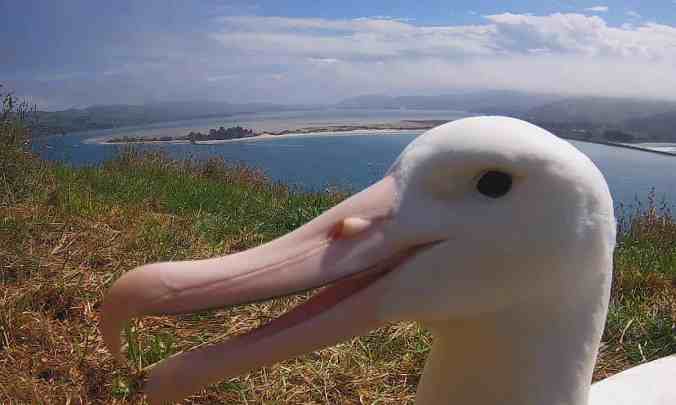
A northern royal albatross inspects the New Zealand Department of Conservation’s ‘Royal Cam’, a 24/7 livestream that documents an albatross nest in breeding season. Photograph: Department of Conservation

The revolution may not be televised but conservation may be livestreamed from time to time, conditions permitting. Thanks to the Guardian for this story from New Zealand:

On a wing and a player: hopes webcam can save endangered albatross

Footage of tiny colony of birds on the southern tip of New Zealand captivates millions around the globe

nzalbMillions of amateur naturalists around the world have been tuning in to the secret lives of albatrosses as New Zealand rangers employ YouTube in a bid to save the mysterious giant sea birds.

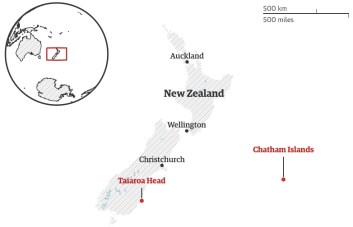
New Zealand conservation teams set up a 24-hour live-stream of an albatross nest at Taiaroa Head on the Otago peninsula in 2016. Three years on, the feed has become an unexpected global hit, with 2.3 million people from 190 countries tuning in to watch the endangered birds rear their chicks on a frigid peninsula at the bottom of the world. Continue reading

The Only Virtual Reality A Surfer Might Enjoy

181217_r33425.jpg

Slater has spent a career searching the world for waves, adapting to tricky conditions with unparalleled intuition. Now his Surf Ranch, in California farm country, can produce a perfect wave on demand. Photograph by Ben Lowy for The New Yorker

I have surfed, but I am not a surfer. I have surfer friends, including some who have travelled the world searching out the waves described in the story below, and family friends of ours have an adult child ranked in the top ten in the world. I do not care about surfing as much as any of them, but because of them I care deeply about surfing. Evidence of that is the fact that surfing is the #1 metaphor I use within my own family to describe the pivots we make from time to time, explaining a move to France, Croatia or India or back to Costa Rica is due to a new wave of opportunity that we might catch. Below is a story I appreciate for other reasons as well, because it is about a man-made replica of the ultimate pleasures of a real-life experience. This is kind of what we do for a living. But it is really about surfing. And even non-surfers can enjoy this. William Finnegan’s story is complemented by two interactive features, the first with the author himself and the second a remarkably clear explanation of the technology.

Kelly Slater’s Shock Wave

The best surfer in history made a machine that creates perfect conditions on demand. Will his invention democratize surfing or despoil it?

The first few hours I spent at the W.S.L. Surf Ranch, a wave pool built for surfing in the farmlands south of Fresno, California, were for me a blur. I was fine on arrival, hiking through a little forest of scaffolding, eucalyptus, and white tents with a publicist from the Kelly Slater Wave Company, which built and runs the place. The valley heat was fierce but dry. House music rode on a light northwest breeze. We passed a bright-red antique row-crop tractor parked on wood chips. Then I looked to my right and felt my mind yaw. The wave was probably six hundred yards away, a sparkling emerald wall, with a tiny surfer snapping rhythmic turns off the top. I had come expecting to see this wave, out here in cotton fields a hundred-plus miles from the coast. Still, my reaction to it was involuntary. Kelly’s Wave, as it’s known, seems designed to make someone who surfs, which I do, feel this way: stunned, turned on, needy. Surfers spend much of their lives looking for high-quality waves. Now a machine has been invented that churns out virtually flawless ones on command. “We call it the smile machine,” someone, possibly the publicist, said. I had trouble paying attention. Every four minutes, I had to turn and crane to watch a wave make its way the length of the pool. Continue reading

The Technology Of Negative Emissions

ClimeWorks_20170510DSC_6501_PhotosbyJuliaDunlop_web2.jpg

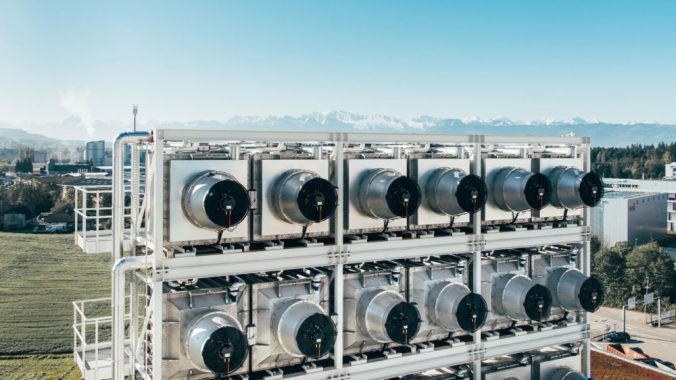
A direct air capture facility in Zurich, created by the Swiss-based technology company ClimeWorks. JULIA DUNLOP / CLIMEWORKS

I was not aware that Elizabeth Kolbert has been writing for Yale e360 for the entire time we have been linking to her New Yorker work on this platform. And then some, because she started publishing there ten years ago. This is her 17th publication for Yale e360 and it can help a layperson understand in a relatively short read whether technology has any chance of accelerating our progress on climate change mitigation:

Climate Solutions: Is It Feasible to Remove Enough CO2 from the Air?

A U.S. scientific panel reports that technologies that take CO2 out of the atmosphere could be a significant part of a strategy to mitigate global warming. In an e360 interview, Stephen Pacala, the panel’s chairman, discusses how these fast-developing technologies are becoming increasingly viable.

Is there still time to avoid runaway climate change? To a large degree, the answer depends on the feasibility of “negative emissions” — techniques or technologies that suck CO2 out of the air. In the latest report from the Intergovernmental Panel on Climate Change (IPCC), all scenarios for limiting warming to 1.5 degrees Celsius depend on negative emissions technologies, or NETs. Most 2-degree scenarios also rely on negative emissions; many call for removing billions of tons of CO2 per year by mid-century.

NETs_NationalAcademies_web.jpg

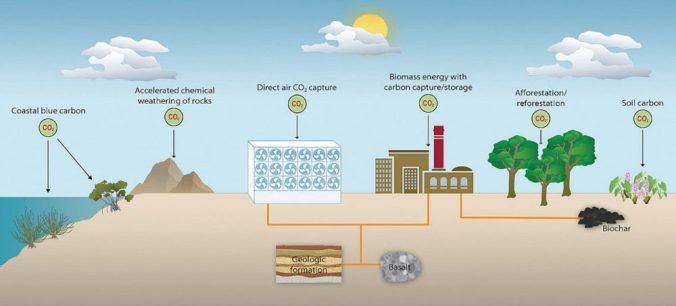
Negative Emissions Technologies (NETs) range from low-tech, such as planting more trees, to more high-tech options, such as developing machines to scrub CO2 from the air. NATIONAL ACADEMY OF SCIENCES, 2018

Yet most NETs remain either untested or unproved. To help bridge this gap, the National Academies convened a panel of scientists and asked it to propose a research agenda. The panel considered several possible techniques, ranging from the low-tech — planting more trees — to the high-tech — developing machines to scrub CO2 from the sky. It also looked at a hybrid technology that has become known as bioenergy with carbon capture and storage, or BECCS. The panel recommended several billion dollars be directed to research on NETs. Such technologies, it suggested, ought to be viewed as a “component of the mitigation portfolio,” rather than as a futuristic, last-ditch effort to reduce atmospheric CO2.

Pacala_IsometricStudios_web.jpg

Stephen Pacala. CREDIT: ISOMETRIC STUDIOS

Stephen Pacala, a professor of ecology and evolutionary biology at Princeton University, chaired the panel. In an interview with Yale Environment 360, he talks about why NETs are needed, what should be done to advance them, and why he believes that “direct air capture” technologies could come into widespread use within the next decade. Continue reading

Keeping Track Of Renewables

Kormann-Prop-127.jpg

Despite the rapid decline in the cost of solar-energy technology and battery storage, Arizona gets only six per cent of its electricity from solar. Photograph by Joshua Lott / Bloomberg / Getty

Thanks to Carolyn Kormann, making her fifth appearance since early 2016 in our pages, including this recent item that I particularly favored, for the article below that helps us understand what is happening with renewable energy these days in the USA. It is easy to forget, amidst all the noise of a federal government working to deregulate and reduce environmental protection, that important work continues:

The Battle for Solar Energy in the Country’s Sunniest State

In late September, the Heartland Institute, a libertarian think tank that receives donations from fossil-fuel companies, published a blog post titled “California Billionaire’s Renewable Energy Initiative Makes Arizona Ballot.” The billionaire in question was Tom Steyer, whose year-long effort to pass Proposition 127, an amendment to Arizona’s constitution that would require power companies to generate fifty per cent of their electricity from renewable sources by 2030, has faced aggressive opposition from the state’s largest utility, Arizona Public Service, or A.P.S. The blog post lamented a failed lawsuit filed by Arizonans for Affordable Energy, a political-action committee funded by A.P.S.’s parent company, to keep Prop 127 off the ballot, and quoted several opponents who believed the measure, now up for a vote in November, would be a costly mistake. “Prop 127 would tie Arizona’s future to technologies that do not deliver baseload electricity,” Mark Finchem, a Republican state representative, said, “and are arguably worse for the environment as a whole than the dependable technologies we already have.” The photograph accompanying the post depicted a wind-turbine farm, and, in the foreground, a dead bald eagle.

Arizona is the sunniest state in the country, with more than three hundred bluebird days per year. It is also projected to endure an additional month of hundred-degree days in the coming decades owing to climate change. Yet, despite the rapid decline in the cost of solar-energy technology and battery storage—to the point that, as an A.P.S. director told me, it now frequently outbids fossil fuels, even natural gas—in 2017, Arizona generated only six per cent of its electricity from solar, according to the ballot initiative’s advocates. The state currently requires utilities to generate eight per cent of their power from sources like solar and wind, scaling up to fifteen per cent by 2025. Natural gas, the largest source of Arizona’s net electricity generation, is imported from out of state. “Our most abundant resource in Arizona is our sunshine,” D. J. Quinlan, a spokesman for Clean Energy for a Healthy Arizona, the Phoenix-based political-action committee that Steyer is funding, said. “We need a nationwide transition to renewables. One of the first places we should be doing it is where it’s most efficient and cost-effective, and that’s here.” Continue reading

Analyzing Local Sources Of Big Carbon Footprints

lead_720_405.png

GOOGLE

What gets measured gets managed. In the realm of climate science, national governments have the scale and responsibility to be involved in measurement. But if a skeptic is in charge of the government apparatus, good luck with that. With the national government of one of the big carbon footprint countries abandoning science and dropping out of the fight to reduce climate change, one of that country’s biggest companies is stepping up to offer an alternative. It may be too little too late but under the circumstances we may have no choice but to cheer it on:

Google’s New Tool to Fight Climate Change

The company will begin estimating local carbon pollution from cities around the world.

In the next decade or so, more than 6,000 cities, states, and provinces around the world will try to do something that has eluded humanity for 25 years: reduce their emissions of greenhouse gases, which warm the atmosphere and cause climate change.

The city-level leaders overseeing this task won’t have the same tools available to their national peers. Most of them won’t have an Environmental Protection Agency (or its equivalent), a meteorological bureau, a team of military engineers, or nasa. So where will they start? Never mind how to reduce their city’s greenhouse-gas emissions; how will they know what’s spewing carbon dioxide in the first place?

Maybe Google will do it for them. Or, at least, do it with them.

Google has started estimating greenhouse-gas emissions for individual cities, part of what it recently described as an ambitious new plan to deploy its hoard of geographic information on the side of climate-concerned local leaders. Continue reading

Green Food, Tech Model Solutions

Derek Thomson and his Crazy Genius crew over at the Atlantic’s podcast division have hit on a winning formula, at least for me. They take a big issue question we hear about and think about frequently, like the question of what to do about meat consumption–as in what to do about the extremely obvious problem of meat consumption levels–and they apply some creative pod knowhow. One of the best motivators for going meatless, or at least eating less meat, that I have come upon in ages.

CG.jpg

Will We Ever Stop Eating Animal Meat?

Americans eat more meat now than ever. That’s a problem for the planet’s future. Animal farming takes up 30 percent of the earth’s landmass (the equivalent of Asia), and livestock causes one-sixth of global greenhouse gas emissions. We need more than moral arguments against meat. We need a technological revolution in better, cleaner food.

If you do not have half an our for the podcast, take five minutes to read the summary here:

There are two big truths about eating meat from animals.

First, animal flesh imposes a high moral and ecological price for a tender medallion of food. Factory farming incurs the torturous treatment of millions of chickens, cows, and pigs each year. This constitutes a rolling moral catastrophe. What’s more, one-sixth of the world’s greenhouse gas emissions are directly attributable to raising livestock, and the figure is rising as more countries enter the global middle class. For most Americans, cutting meat out of their diets would reduce global warming more than giving up driving. Continue reading

Be Aware, Big Boom & Beware

csm_TOC_Computer_Renderings_Profileview_2942c52c93.jpg

Thanks to Christina Caron for this story that raises important questions about an awesome-sounding technology. Best to first read from The Ocean Cleanup website, and if you have been following the stories we pay attention to you will understand how we might get hooked on the idea:

TOC_map-gyres-02

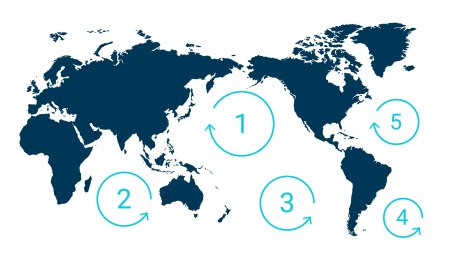
Ocean garbage patches are vast and dispersed

Ocean currents concentrate plastic in five areas in the world: the subtropical gyres, also known as the world’s “ocean garbage patches”. Once in these patches, the plastic will not go away by itself. The challenge of cleaning up the gyres is the plastic pollution spreads across millions of square kilometers and travels in all directions. Covering this area using vessels and nets would take thousands of years and cost billions of dollars to complete. How can we use these ocean currents to our advantage?

THE IMPACT OF CLEANUP

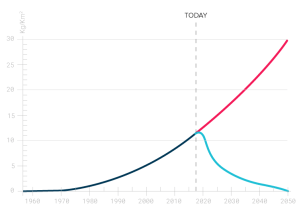
Concentration_microplasticsOur models indicate that a full-scale system roll-out could clean up 50% of the Great Pacific Garbage Patch in 5 years.
Research shows the majority of plastic by mass is currently in the larger debris. By removing the plastic while most of it is still large, we prevent it from breaking down into dangerous microplastics.

Combining the cleanup with source reduction on land paves the road towards a plastic free ocean by 2050.

The story in the New York Times raises important questions, not least of which is that Peter Thiel is involved:

merlin_143438058_1dbdff34-c291-498d-a8a9-572419767520-jumbo (1).jpg

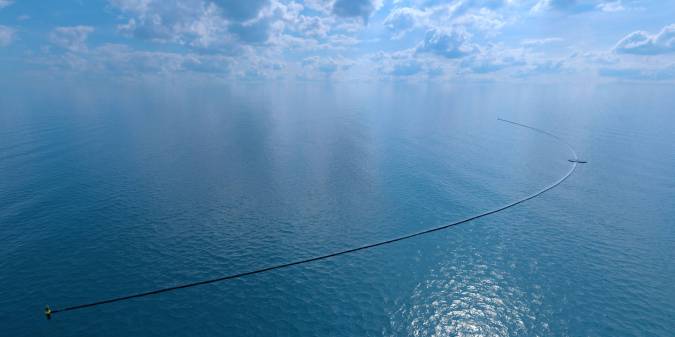
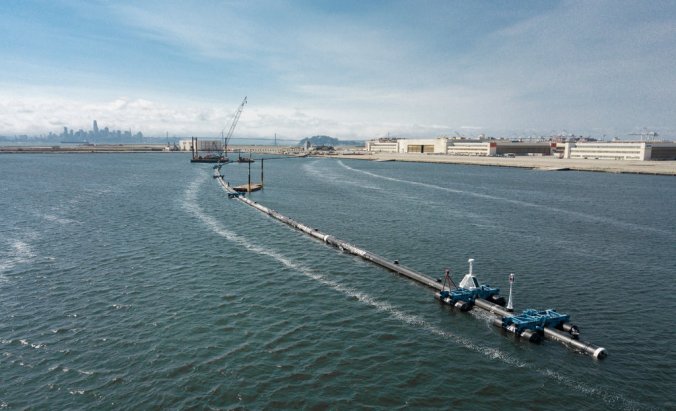
A 2,000-foot-long floating boom, designed by the Ocean Cleanup, a nonprofit, will be used to corral plastics littering the Pacific Ocean. Credit The Ocean Cleanup, via Associated Press

…But the ocean can be unpredictable, and simulation models are no guarantee of future performance.

“There’s worry that you can’t remove the plastic without removing marine life at the same time,” said George Leonard, chief scientist at the Ocean Conservancy. “We know from the fishing industry if you put any sort of structure in the open ocean, it acts as a fish-aggregating device.” Continue reading

Virtual Immersion In Wilderness Via Live Feeds

Thanks to Rachel Riederer for this:

Bear Cam’s Captivating, Unedited Zen

Riederer-Bear-Cam.jpg

It’s innately satisfying to see a bear grab ahold of a salmon with its mouth and trundle off into the shallows with the fish still flapping in its jaws. Photograph by Jennifer Leigh Warner / Barcroft / Getty

One recent afternoon, I found myself spellbound by the brown bears of Alaska’s Katmai National Park, and spent longer than I care to admit watching them fishing and feasting on the sockeye salmon of Brooks Falls. Several bears stood in the water, facing the falls. They didn’t interact with each other much—at least not in a way that was legible to me—but quietly went about the business of fattening up for winter. I watched these Internet stars through a live stream popularly known as the bear cam, which provides a counterpoint to the hyper-produced prestige nature documentaries that use music, high-definition videography, and delicately placed cameras to turn wildlife activities into dramatic cinema. If “Planet Earth” is a Michael Bay production, the bear cam is not even a home movie—it’s CCTV. Continue reading

A Science Advisor At Long Last, Yay

ScienceAdvisor

SUE OGROCKI / AP / THE ATLANTIC

If Ed Yong is happy, then we too are happy about this. Really. Even if it has a bit of fiddling while Rome burns feel to it. Let’s hope he can talk some sense, even if it is too late, into the powers that be:

Trump Finally Picks a Science Adviser—And People Are Delighted

His nominee, Kelvin Droegemeier, is an accomplished meteorologist who studies storms and other extreme weather.

For decades, the meteorologist Kelvin Droegemeier has been immersed in the study of thunderstorms, tornadoes, and other extreme weather. Now he looks set to enter the unpredictable and stormy world of the Trump administration as its top scientific consigliere. Continue reading

When & Where & How Should Crops Be Genetically Modified?

merlin_139523913_5fd65f9c-fc91-48ef-b875-12d5d327301a-jumbo

A wheat field in Mouchamps, France. There are very few genetically modified crops grown in Europe compared to the United States. Credit Regis Duvignau/Reuters

Thanks for this GMO primer by Carl Zimmer:

What Is a Genetically Modified Crop? A European Ruling Sows Confusion

In Europe, plants created with gene-editing technologies will be stringently regulated as G.M.O.’s. But older crops whose DNA has been altered will be left alone.

Mushrooms that don’t brown. Wheat that fights off disease. Tomatoes with a longer growing season.

All of these crops are made possible by a gene-editing technology called Crispr-cas9. But now its future has been clouded by the European Union’s top court.

This week, the court ruled that gene-edited crops are genetically modified organisms, and therefore must comply with the tough regulations that apply to plants made with genes from other species.

Many scientists responded to the decision with dismay, predicting that countries in the developing world would follow Europe’s lead, blocking useful gene-edited crops from reaching farms and marketplaces. The ruling may also curtail exports from the United States, which has taken a more lenient view of gene-edited foods.

“You’re not just affecting Europe, you’re affecting the world with this decision,” said Matthew Willmann, the director of the Plant Transformation Facility at Cornell University. Continue reading

The Footprint Of Our Data-Driven Lives

New-Dark-Age-1050-5927870a2b206657f6b87133d3f776c4.jpgThanks to John Harris, writing in the Guardian, for “Our phones and gadgets are now endangering the planet,” an opinion essay that doubles as a review of the book to the right:

It was just another moment in this long, increasingly strange summer. I was on a train home from Paddington station, and the carriage’s air-conditioning was just about fighting off the heat outside. Most people seemed to be staring at their phones – in many cases, they were trying to stream a World Cup match, as the 4G signal came and went, and Great Western Railway’s onboard wifi proved to be maddeningly erratic. The trebly chatter of headphone leakage was constant. And thousands of miles and a few time zones away in Loudoun County, Virginia, one of the world’s largest concentrations of computing power was playing its part in keeping everything I saw ticking over, as data from around the world passed back and forth from its vast buildings.

Most of us communicate with this small and wealthy corner of the US every day. Thanks to a combination of factors – its proximity to Washington DC, competitive electricity prices, and its low susceptibility to natural disasters – the county is the home of data centres used by about 3,000 tech companies: huge agglomerations of circuitry, cables and cooling systems that sit in corners of the world most of us rarely see, but that are now at the core of how we live. About 70% of the world’s online traffic is reckoned to pass through Loudoun County. Continue reading

Biobrick, Another Wonder Enabled By Mycelium

1500 (2).jpg

The Hulett hotel, Cleveland, which Redhouse are currently building using the biocycling process.
Illustration: Redhouse Studio

Thanks to Redhouse Studio and the Guardian’s Laura Dorwart for this story:

Magic mushrooms: how fungus could help rebuild derelict Cleveland

Could a process that uses mycelium to help recycle old buildings into new ones solve the problem of the city’s many abandoned homes?

1000

A biobrick created using broken down construction waste combined with biobinders made of fungi, plant material and microbes. Photograph: Redhouse Studio

Over 7,000 abandoned or condemned homes litter the urban landscape of Cleveland, Ohio, where a stunning population loss of about 100,000 residents in 25 years and widespread foreclosures have sparked a housing crisis marked by growing racial and economic disparities. Posing concerns in terms of economic stability, public health and safety, the abandoned homes that line many of the city’s streets are at once symbols of its resilience and ongoing obstacles to growth and prosperity.

Cleveland native Christopher Maurer, founder and principal architect at local humanitarian design firm Redhouse Studio and adjunct professor at Kent State University, has plenty of ideas about how to address the city’s complex challenges.

2500 (3)

Construction debris is ground to a pulp and combined with biobinders, then pressed and treated to make bricks and other materials. Illustration: Redhouse Studio

Continue reading

Technology To Battle High Seas Ecological Crimes

3129.jpg

China, Taiwan, Japan and South Korea account for well over two-thirds of high seas fishing. Photograph: Laura Lezza/Getty Images

If you are trying to watch what you eat for sustainability and impact, Justin McCurry, in Tokyo writing for the Guardian, has this story to keep in mind:

The ‘dark fleet’: Global Fishing Watch shines a light on illegal catches

Low light imaging data being used to expose unregulated and unreported fishing on the high seas

VIIRS-detection-1030x597.png

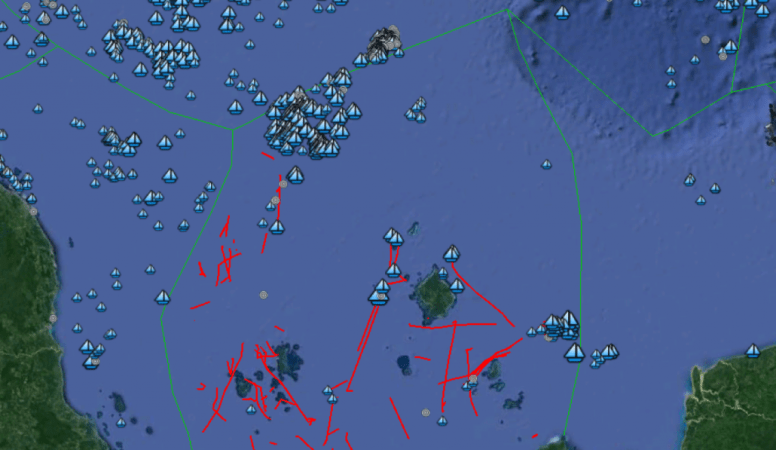
These vessels (indicated with blue boat icons) in the Natuna Sea off Indonesia were detected by VIIRS, and are suspected to not be using VMS. The red lines indicate VMS tracks from the same day.

New data is being used to expose fleets of previously unmonitored fishing vessels on the high seas, in what campaigners hope will lead to the eradication of illegal, unregulated and unreported fishing.

Global Fishing Watch (GFW) has turned low light imaging data collected by the US National Oceanic and Atmospheric Administration (NOAA) into the first publicly available real-time map showing the location and identity of thousands of vessels operating at night in waters that lie beyond national jurisdiction. Continue reading

Make Your Opinion Known About New Labeling For GMOs


dept-ag_custom-27b49bc849696ef8487e34355a2fc1a9ae7bf17d-s1400-c85

The USDA has released several options for what the labels might look like.
Department of Agriculture

If the questions and concerns surrounding GMOs are of interest to you, then in the next six weeks you have a unique window of opportunity. Until July 3 you are invited to share your opinion with the folks responsible for these label design options to the right. Thanks to our friends at the salt (National Public Radio, USA) for bringing this to our attention:

USDA Unveils Prototypes For GMO Food Labels, And They’re … Confusing

Foods that contains genetically modified ingredients will soon have a special label.

We recently got the first glimpse of what that label might look like, when the U.S. Department of Agriculture released its proposed guidelines.

This is the product of a decades-long fight between anti-GMO campaigners and Big Agriculture companies, which left neither side completely satisfied, as NPR has reported.

After Congress passed a bill in 2016 requiring labels on foods containing GMO ingredients, the USDA launched a long process to figure out the specifics. When it asked for feedback, it received 112,000 responses from consumers, farmers and manufacturers, among others.

The result? Continue reading

Road Electrification, The Latest Automotive Paradigm Shift

ElecCarVid

Take a minute to watch this video, and you may find the article below worth the read:

World’s first electrified road for charging vehicles opens in Sweden

Stretch of road outside Stockholm transfers energy from two tracks of rail in the road, recharging the batteries of electric cars and trucks

ElecCar1.jpgThe world’s first electrified road that recharges the batteries of cars and trucks driving on it has been opened in Sweden.

About 2km (1.2 miles) of electric rail has been embedded in a public road near Stockholm, but the government’s roads agency has already drafted a national map for future expansion.

Sweden’s target of achieving independence from fossil fuel by 2030 requires a 70% reduction in the transport sector. Continue reading