Wilerson S. Andrade/Flickr.com
Thanks to Anthropocene:
Could more efficient photosynthesis help feed the world?
Wilerson S. Andrade/Flickr.com
Thanks to Anthropocene:
Could more efficient photosynthesis help feed the world?
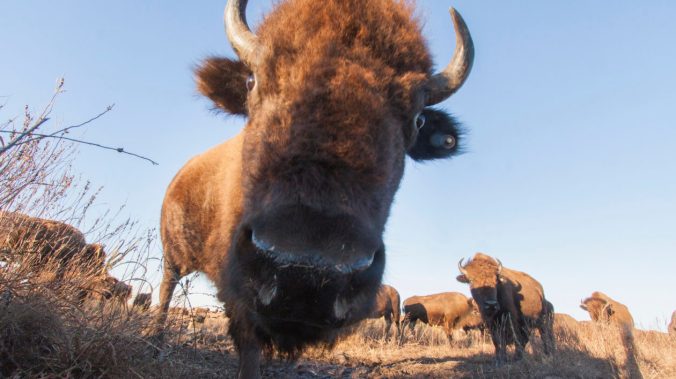
Bison trigger a camera trap set up on the prairie at The Nature Conservancy’s Tallgrass Prairie Preserve in Pawhuska, Oklahoma.
We have posted on this topic a few times, and can predict there will be more:
9 Animal Cams You Need in Your Life

E-maxx/Flickr.com
Thanks to Anthropocene for this summary of promising new findings for the GMO-concerned:
A novel approach to pesticide-free, non-GMO food?

Thanks to the BBC for this story:
Why Apple And Google Are Moving Into Solar Energy
Silicon Valley’s biggest companies are investing in renewable energy in a serious way – a sign, perhaps, of rapid changes in the energy market.
By Chris Baraniuk 14 October 2016
Most people think of Apple as a company that makes phones, computers and smart watches – not an energy provider. But in August all of that changed when the firm was given permission to sell energy from a Californian solar farm that it acquired last year. Continue reading
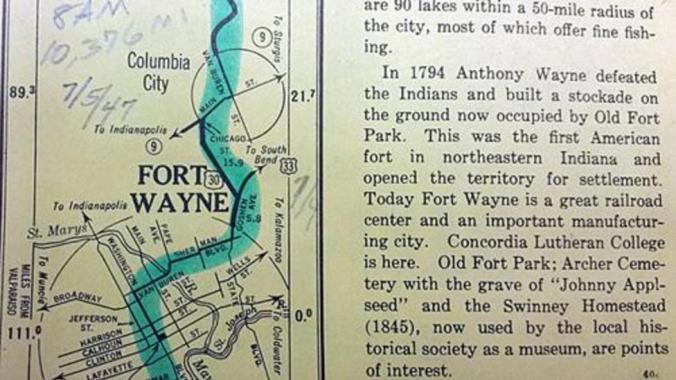
If you are old enough to remember regularly using postal services, as in letters printed on paper, placed in paper envelopes with stamp(s) affixed, then you can appreciate the assumption that paper maps are on their way out just like old fashioned letter-writing and sending. This article on the BBC website catches our attention for a counter-intuitive finding:
Why Paper Road Maps Won’t Die
In an age of Google Maps and GPS, paper maps sales are on the rebound
How did we manage to get from point A to B before GPS and navigation apps — especially when such journeys were long distances? Continue reading
Long before we tackled the science to allow a view of what Carl Sagan would come to call “our pale blue dot”, there were artists and explorers who imagined the vastness of the world and took off into the unknown – both figuratively and literally.
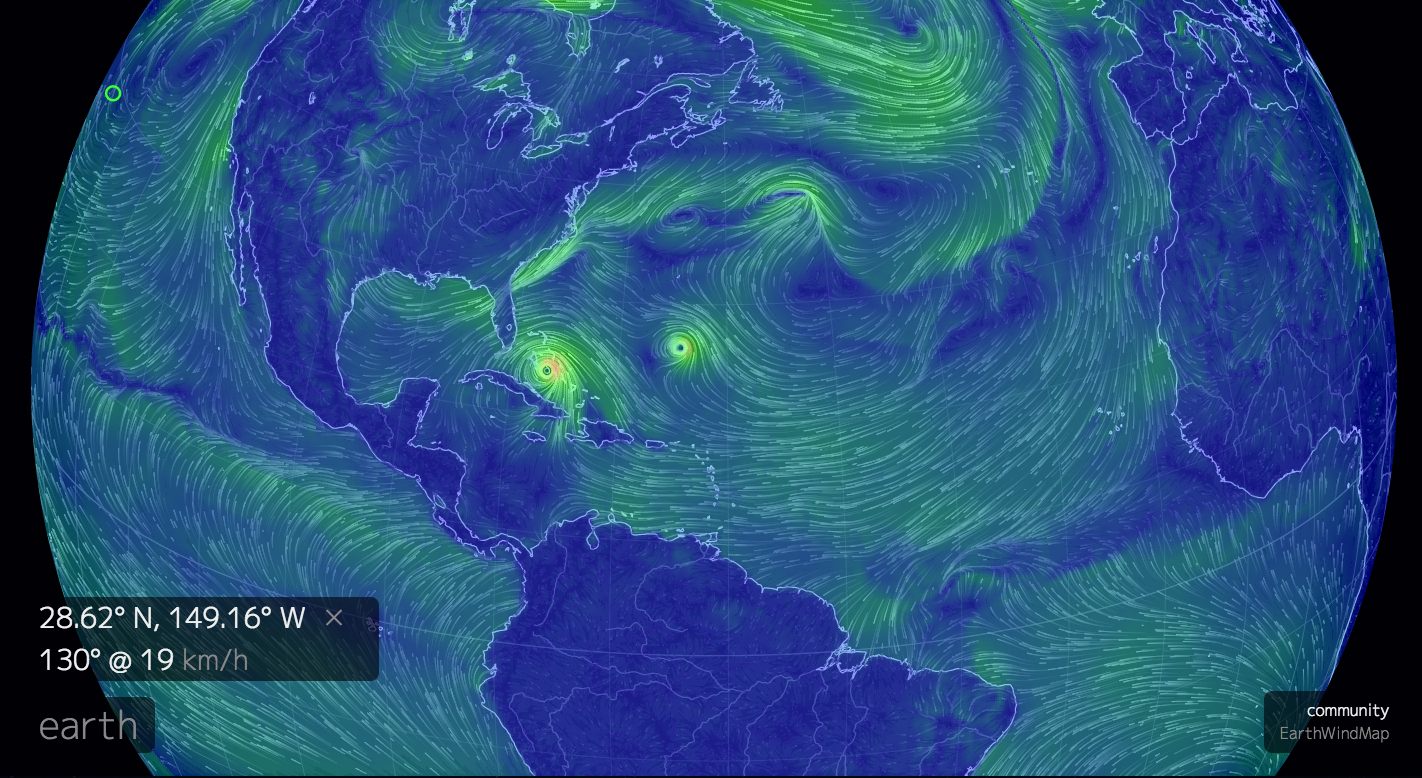
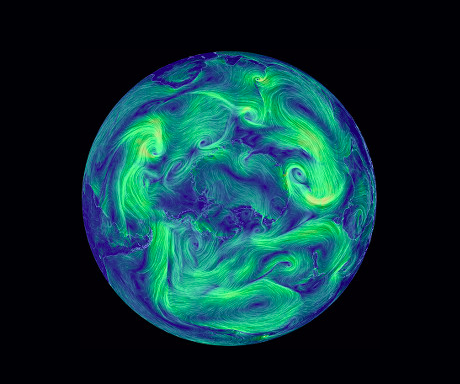
EARTH collaborates with information from scientific organizations such as NASA and NOAA to create an interactive visualization of global weather conditions forecast by super computers updated every three hours. The actual global images are a fascinating swirl of wind and current, reminiscent of a Vincent Van Gogh painting. The ocean surface current estimates are updated every five days, ocean surface temperatures and anomaly from daily average (1981-2011) are updated daily, and ocen waves are updated every three hours – all of which combine to present a moving canvas of what is presently occurring on this blue marble of a planet.
About The Art
EARTH, by Cameron Beccario, is a near real-time visualization of global weather conditions forecast by supercomputers. This vivid capture depicts intricate, dramatic swirling patterns of wind streamlines reminiscent of oil paintings of the Impressionists. Continue reading
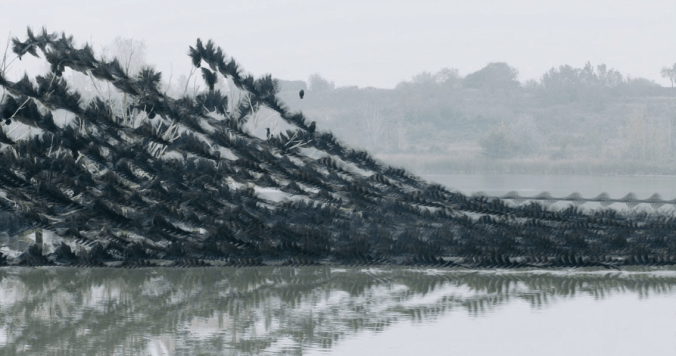
Great cormorants, Ibars Swamp, Catalonia (Courtesy of Xavi Bou)
Birds are photogenic in their own right, but this creative capture of their flight by artist Xavi Bou is both innovative and etherial. A geologist and photographer by training, Xavi’s love of birds goes back to childhood.
Xavi Bou focuses on birds, his great passion, in order to capture in a single time frame, the shapes they generate when flying, making visible the invisible.
Unlike other motion analysis which preceded it, Ornitographies moves away from the scientific approach of chronophotography used by photographers like Eadweard Muybridge and Etienne-Jules Marey. Continue reading

Eve Lonnquist examining trees on her property with Logan Sander, a consulting forester. Credit Leah Nash for The New York Times
An excellent article, whose title says it all, in the Science section of the New York Times this week:
How Small Forests Can Help Save the Planet
By
BIRKENFELD, Ore. — Eve Lonnquist’s family has owned a forest in the mountains of northwest Oregon since her grandmother bought the land in 1919. Her 95-year-old father still lives on the 157-acre property. And she and her wife often drive up from their home just outside Portland.
But lately, Ms. Lonnquist, 59 and recently retired, has been thinking about the future of her family’s land. Like many small-forest owners, they draw some income from logging and would like to keep doing so. But they would also like to see the forest, with its stands of Douglas fir, alder and cherry, protected from clear-cutting or being sold off to developers. Continue reading
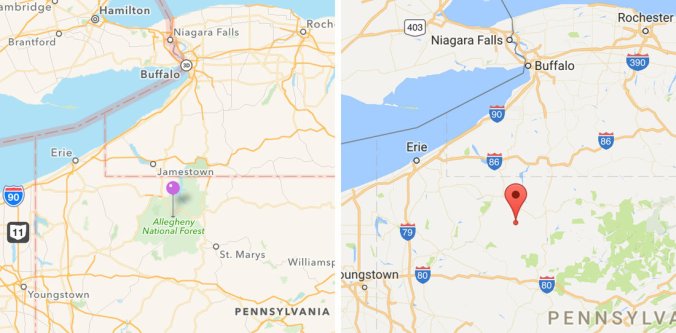
The Allegheny National Forest is absent from Google Maps (right) but displayed on Apple Maps (left). Apple & Google/Screenshots by NPR
We lose more than enough green in the real world, so when the cartographical world starts compounding the problem, we must shout in protest:
Where Did National Forests Go? Green Spaces Disappear From Google Maps
Erin Ross
If you looked at Google Maps this week, you might have noticed something strange: less green. Continue reading
In the first few years of our building this wordpress platform to communicate about things that concern us and especially about things that inspire us, we occasionally found something that Andrew Sullivan had posted that was relevant here (only rarely since his site was mainly dedicated to politics and other topics that do not belong on our platform).
So we know a bit about him and always admired his relentless pursuit of what he believed in. We also know he is an excellent writer, so almost always worth a read. The same relentlessness we admire is also one we vigilantly guard against in these pages, where we have tried to limit our daily contribution to just a few essentials. We want only to have some shared space with a community of readers who care about some of the issues that interest us the most. This article Mr. Sullivan just published is definitely worth a read:
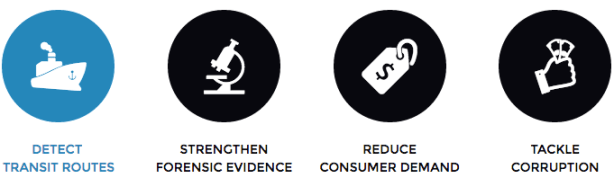
From wildlifecrimetech.org
Back in July we shared a story on turtle egg poaching that was part of the Wildlife Crime Tech Challenge, created by USAID with the support of the Smithsonian Institution, the National Geographic Society, and TRAFFIC. The company with the fake turtle egg idea from that article was one of the sixteen winners of the competition, but a grand prize was announced for the four “most creative and impactful” ideas offered out of those winners. The four grand prize winners were announced this weekend at the World Conservation Congress of the International Union for Conservation of Nature in Honolulu, Hawaii. Christine Dell’Amore reports:
Every year about 10 million aquarium fish pass through United States ports, many on their way to new homes as family pets. But first, federal inspectors must leaf through mountains of paperwork on the animals, which are shipped from more than 40 countries around the world. “Until recently, the [inspectors] didn’t even have wireless access in the warehouses,” says Michael Tlusty, director of ocean sustainability and science at the New England Aquarium. Continue reading

Kyle Guyer prepared to flip a barrel during toasting at the Missouri Cooperage operation of Independent Stave in Lebanon, Missouri. Lasers and infrared cameras have refined the toasting process to give the customer a desired flavor profile.
Credit August Kryger for The New York Times
Every now and then we find interesting stories from the world of distilleries. Maybe it’s a small mescal brewer, or a giant liquor corporation giving back in some way, or the history of traditional London gin, or people making beer out of wasted bread. In the world of wine and certain spirits, oak barrels are imperative to the process of aging the drink, and the technology involved in cooperage has changed a lot in the last couple years, even as barrels look exactly as they did hundreds of years ago. Clay Risen reports for the New York Times:
SALEM, Mo. — Standing on a wooded hillside in the Ozarks, about 100 miles southwest of St. Louis, Brad Boswell watches a chain-saw-wielding logger make several deft cuts at the base of a 100-foot white oak. The logger points to a clearing down the slope and, with one final, quick slash, sends the tree falling, exactly where he pointed.
Mr. Boswell scrambles over to look at the swirls and loops that make up the tree’s cross section. If they’re consistent, and the wood doesn’t show scars from fire damage or disease, it will most likely end up in some of the hundreds of thousands of barrels that his 1,500-person company, Independent Stave, turns out every year.
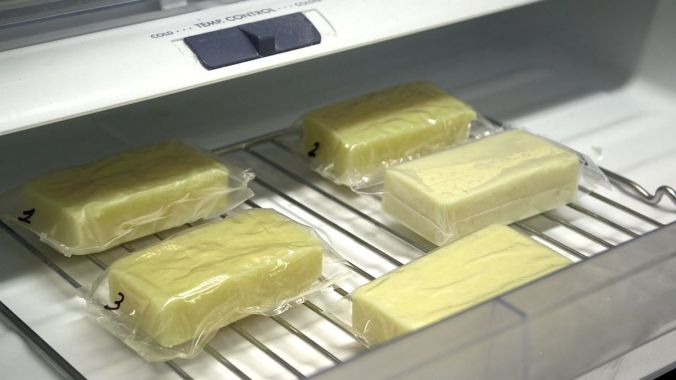
Source: American Chemical Society
On numerous occasions we have written about the need to reduce consumption of plastics and the need for alternative, sustainable food packaging. Fortunately, researchers have developed a food packaging that is much better at keeping food fresh than regular plastics – it’s also biodegradable and edible. Yes, you read correctly, edible! This new packaging is made of casein from milk proteins, which are clear and fairly pliable, and has little flavor. This material has other unique applications in addition to being used as plastic pouches and cling-style wrap. Continue reading

CREDIT: UNIVERSITY OF MARYLAND AND ADVANCED ENERGY MATERIALS
It seems too weird to be true, but wood can be bleached and then soaked in epoxy to create a material not quite as transparent as glass, but which lets in plenty of non-glare light and insulates far better against heat. Scientists at the University of Maryland have patented the technology and are studying its applications in building for the future. One interesting feature of the wooden window is that it directs the diffused sunlight in the same direction regardless of the angle at which it enters the panel, which, as the lead author Tian Li says, “means your cat would not have to get up out of its nice patch of sunlight every few minutes and move over. The sunlight would stay in the same place. Also, the room would be more equally lighted at all times.” Sounds great!

Glowee.com
In the developed world, light and electricity go hand in hand. But what if there was a way to produce light without electricity? That is the question Glowee, a biolighting living system, is striving to resolve. Glowee is a biological source of light that relies on the natural properties of marine microorganisms, specifically, the genetic coding for bioluminescence. The benefit to this alternative lighting is that it emits very low light pollution and CO₂.
To understand this new development, Continue reading
Some of us contributors to the blog are Kindle users. We all have friends that are obstinate book-handlers and would never give up the feeling of rustling pages or the musty smell of yellowing paper, and we understand the appeal, but sometimes the convenience of having several books packed into one slim package is too much to give up. But one thing we’ve taken for granted is the relatively new technology of e-ink. How does it work? When was it invented? Chau Tu reports for Science Friday in an article from a few weeks ago:
When Amazon introduced its first Kindle back in 2007, it raved about the e-reader’s “crisp, high-resolution electronic paper display that looks and reads like real paper, even in bright sunlight.” The tablet did not use the LCD screens that most consumers saw on their laptops or TVs. “It reflects light like ordinary paper and uses no backlight, eliminating the eyestrain and glare associated with other electronic displays such as computer monitors or PDA screens,” Amazon boasted.

Wind turbines at the Snowtown Facility.
Any story regarding the expansion and encouragement of renewables to promote sustainable development is a good story in our book, and we’re impressed by the Clean Energy Council policy manager’s statement, “If South Australia was a nation, it would be second only to Denmark [in renewables].” South Australia is a state in the middle of the southern coast of the country, about a hundred square miles larger than the US state of Texas, so it’s great to hear that such a large area relies so much on innovation. Kathy Marks reports for the Guardian:
In a state that leads the country – in fact, much of the world – in producing electricity from renewable sources, Snowtown is wind central. The first stage of a $660m, 270-megawatt farm, with 47 turbines, opened in 2008, 5km west of the town; the second, adding another 90 turbines, came on stream in 2014.
Developed by New Zealand’s Trustpower, South Australia’s biggest wind facility – and Australia’s second biggest – created hundreds of construction jobs and 21 permanent positions.
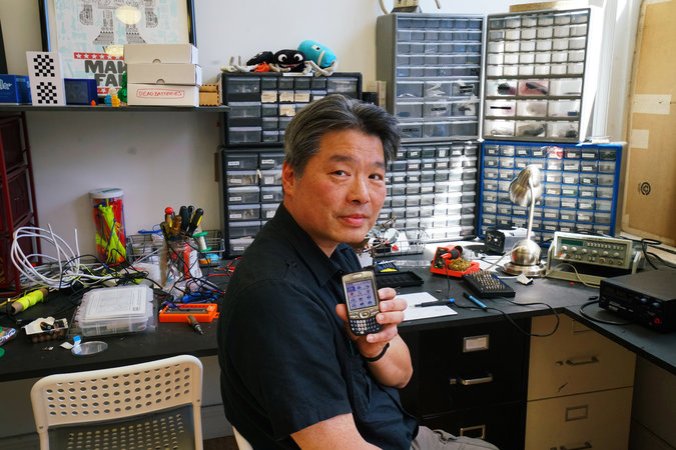
Vincent Lai with the Treo he rescued. “A phone can last for a very, very long time,” he said. CreditNicole Bengiveno/The New York Times
No one on our team is exempt from the temptation to have the latest, greatest whatever. But we have gotten into the habit of reminding each other it is not always necessary. Frequently not. Almost never, actually. We never tire of sharing, and hope you never tire of reading, new stories about re-use, recycle and up-cycle options in our every day lives:
Choosing to Skip the Upgrade and Care for the Gadget You’ve Got
By
Vincent Lai was working at a recycling facility in New York and sorting through a bin of used cellphones a few years ago when he dug up a Palm Treo, a smartphone that was discontinued last decade.
Mr. Lai, 49, tested the Treo and found it still worked. So he took the device home and made it his everyday mobile companion, much as one would adopt an abandoned animal on its way to being euthanized. Continue reading
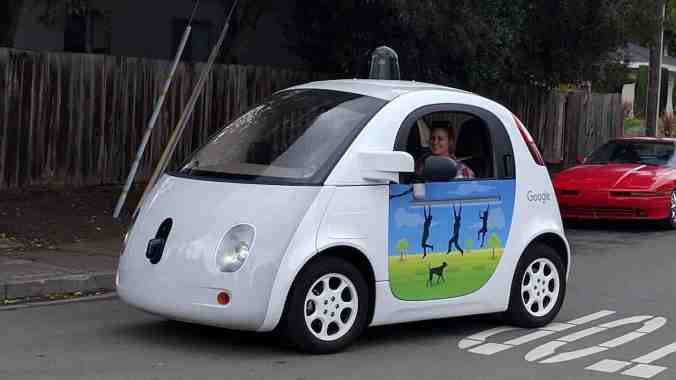
A Google self-driving car. Photo © Grendelkhan / Wikimedia through a Creative Commons license
From Cool Green Science:
Why Driverless Cars May Make Cities Sprawl Even More
 Organikos