Ever-Evolving Puppetry

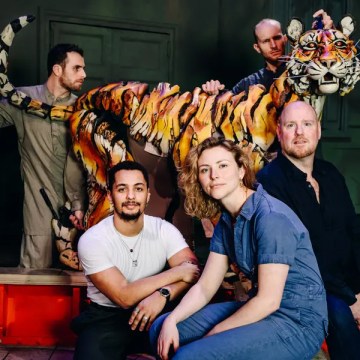
Foreground, from left: Fred Davis, Scarlet Wilderink and Finn Caldwell. Behind the tiger, from left: Andrew Wilson and Rowan Ian Seamus Magee. Nina Westervelt for The New York Times

Puppetry is a rare topic in these pages, but as cultural heritage goes, this ever-evolving form is worth at least a few minutes of reading time related to this new production:

Puppetry So Lifelike, Even Their Deaths Look Real

Members of the puppetry team for “Life of Pi” discuss making the show’s animals seem all-too-real on a very crowded lifeboat.

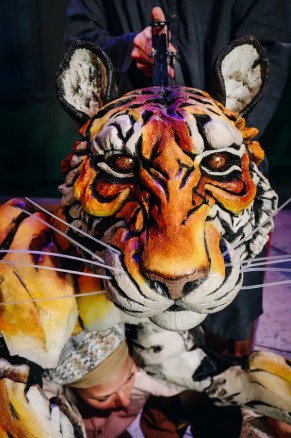
Richard Parker, the Royal Bengal tiger in “Life of Pi” takes three puppeteers (including Celia Mei Rubin, bottom left) to operate in the production opening at the Gerald Schoenfeld Theater on March 30. Nina Westervelt for The New York Times

Fair warning: This article is riddled with spoilers about puppet deaths in “Life of Pi,” the stage adaptation of Yann Martel’s best-selling novel about a shipwrecked teenager adrift on the Pacific Ocean. He shares his lifeboat first with a menagerie of animals from his family’s zoo in India — large-scale puppets all, requiring a gaggle of puppeteers — and eventually just with a magnificent, ravenous Royal Bengal tiger named Richard Parker that takes three puppeteers to operate.

Now in previews on Broadway, where it is slated to open on March 30 at the Gerald Schoenfeld Theater, the play picked up five Olivier Awards in London last year. Puppetry design by the longtime collaborators Nick Barnes and Finn Caldwell was included with Tim Hatley’s set in one award, and, unprecedentedly, a team of puppeteers won an acting Olivier for playing Richard Parker. Continue reading
Model Mad, Musical

170320_r29568-600

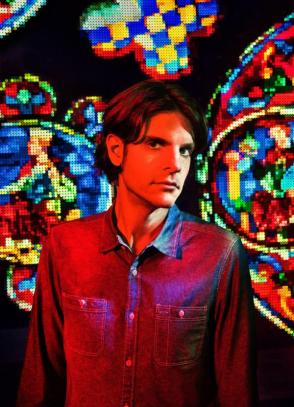
Timbers specializes in offbeat revisionist fantasies about historical figures.Photograph by Pari Dukovic for The New Yorker

Our goal, linking out to stories like this, is not to politicize this platform; it is to showcase creative problem-solving, akin to our fascination with and commitment to entrepreneurial conservation. That is what we mean by model mad. We are wary, and weary of the name of the polarizing figure, but resolutely curious to read about how others are dealing with it. Even with a title like A PROTEST MUSICAL FOR THE TRUMP ERA we know it will deliver on the creative side rather than the political. Thanks to Rebecca Mead for a well-focused message:

Five actors gathered in a room on Lafayette Street, in downtown Manhattan, to start rehearsing a new work for the Public Theatre, “Joan of Arc: Into the Fire.” Written by David Byrne, formerly of the Talking Heads, the show recast the enduring, improbable story of Joan—a teen-age girl in medieval France who experienced divine visions, led an army to defeat an occupying power, and was burned at the stake for heresy—as a rock musical that spoke to the current political moment. Continue reading

New Directions In Art

shed1

flexn

Flexn artists, photo by Sodium for MIF 2015

We had not heard of Flexn until this week, when they were mentioned in a podcast with the phenomenal Peter Sellars (alluded to once previously in these pages, and linked to another time directly). Now we want to know more. And it looks like one way to learn more will happen at The Shed. Back in August, when we first heard about The Shed, it was a quick glance at the future. Now we have more detail, thanks to this early release of a profile in next week’s New Yorker:

ALEX POOTS, PERFORMANCE ART IMPRESARIO

How will the director of New York’s ambitious experimental cultural center change the city?

By Calvin Tomkins

Every so often, it seems, visual artists are stricken by the urge to perform. The “happenings” movement in the nineteen-sixties—young painters and sculptors doing nonverbal theatre—was explained as a response to Pollock, de Kooning, and other gestural Abstract Expressionists: it was the gesture without the painting. Continue reading

If You Happen To Be In ’s-Hertogenbosch, the Netherlands


Literally, “The Duke’s Forest”, ‘s-Hertogenbosch is a fortified historic city in the North Brabant Province of the Netherlands. Aside from being a lovely area with a beautiful church, the city is best known for it’s most famous Medieval citizen, the religious artist Hieronymus Bosch, known for his bizarre paintings of demons and human-animal-machine hybrids meant to invoke the “evil of mankind”.

While his apocalyptic,  fantastical work may have rather dour origins, it’s gone on to inspire the amazing exuberance of the the Bosch Parade since 2010.

A wondrous armada of vessels and objects inspired by the work and ideas of Medieval painter Jheronimus Bosch. Artists from all disciplines (art, theatre, dance, music, architecture) collaborate with groups of enthusiastic amateurs and volunteers to create this artistic, water-borne parade. This spawns not only a creative floating parade by and for the city, but also an extensive creativity network throughout the city. Continue reading

Raise Your Voice

Screen Shot 2015-06-09 at 9.33.44 AM

We have all faced airline/airport delays, and it is always tempting to raise one’s voice in anger.  What if your raised voice could make everything just a little bit better for everyone? Thanks to the New York Times and the root for bringing this to our attention:

…Facing a six-hour delay, the casts of “The Lion King” and “Aladdin” gave a spontaneous performance at New York’s LaGuardia Airport. It appears that the “sing-off,” which occured in an airline waiting area, lifted quite a few spirits…

Listen When Nature Is Speaking

Edward Norton provided the voice for the soil in Conservation International's Nature is Speaking campaign. Credit Conservation International

Edward Norton provided the voice for the soil in Conservation International’s Nature is Speaking campaign. Credit Conservation International

Dot Earth, once upon a time, was a daily source of amazing material, until it seemed to disappear, and then again it reappeared. Ed Norton gets our attention any time:

Nature Talks Back, and Sounds a Lot like Edward Norton

Continue reading

When In Doubt, Musical Theater

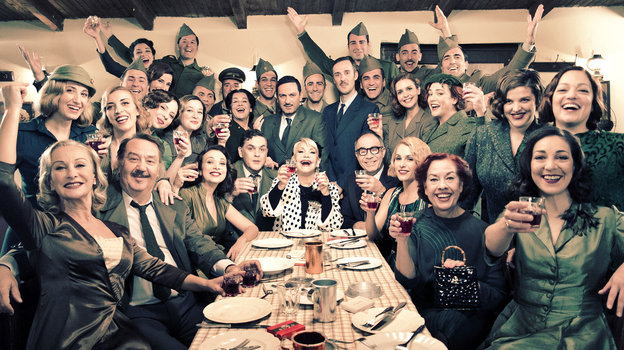
Greek vocal icon Marinella, center, sings "Children of Greece," a song once sung to Greek soldiers as Italian and German forces invaded the country. As they endure hard times today, Greeks are turning to theater that shows triumphs over adversity in the last century.

Greek vocal icon Marinella, center, sings “Children of Greece,” a song once sung to Greek soldiers as Italian and German forces invaded the country. As they endure hard times today, Greeks are turning to theater that shows triumphs over adversity in the last century.

Thanks to National Public Radio for this story from Athens, where several Raxa Collective members have family and friends who attest to the tough times there. The story is interesting because it is counterintuititve to us, with no offense to those who appreciate musicals, that this form of theater has proven so popular at such a time as this. It is not what we might have first thought up as an antidote for tough times, but who are we to argue with effective salves:

It’s a full house at the 2,000-seat Badminton Theater in Athens. On stage is a musical about the singer Sofia Vembo, whose warm contralto voice comforted Greeks during World War II.

The song that is bringing the audience, mostly Greeks in their 60s and 70s, to tears and applause is called “Paida Tis Ellados, Paidia,” or “Children of Greece.” Sofia Vembo sang it to Greek soldiers as Italian and German forces invaded the country.

On this evening, it’s sung by 75-year-old Marinella, the platinum-haired icon of modern Greek music. She’s joined by a young cast in 1940s dresses and military garb.

In the audience, a young, green-eyed dermatologist named Fiori Kousta is passionately singing along.

“This song gives me hope,” she says, “because it reminds me that Greeks have been through much worse than what we’re going through today. Continue reading

Kathakali

This slideshow requires JavaScript.

Last night I had the opportunity to see a Kathakali performance, which is a classical Indian dance-drama that originated in Kerala in the 17 th century.

I arrived a little bit late because I was sitting at the wrong section of the performing center, so I missed the introduction of what the dancers were depicting. Yet, I was still wholly captivated when I walked into the theater: the make-up on the dancers was so incredibly colorful and elaborate. The dark, fierce black liners around their eyes made them look a bit intimidating as well. In addition to the make-up, the dancers were wearing head pieces, skirts, and pants that were bejeweled and feathered with colorful ornaments. Continue reading

Basil Twist’s Puppetry Illuminated

Screen Shot 2013-04-27 at 9.25.19 AM

The New Yorker’s Joan Acocella profiled Basil Twist in a recent issue, and the magazine’s online team visited Twist at his studio, which you can see in the video above (click on the image), and the profile itself is worth a read:

“The crucial point about puppets,” Twist told me, “is that they are real and unreal at the same time.” At the beginning of the twentieth century, many writers and visual artists (Alfred Jarry, Paul Klee, Oskar Schlemmer, Sophie Taeuber-Arp), looking for something that was a little bit human, but much more art, made puppets, or works for puppets. The trend continues. Continue reading

I Can Feel My Heart Beat With Kalari Moves

Guest Author: Rania Mirabueno

Image

Beyond the nature tours of the Periyer Tiger Reserve near Cardamom County, the cultural scene in Thekkady offers a traditional Kerala martial arts performance called Kalari that I would definitely recommend for everyone to experience. Kalari is truly an art form combining music, dance and performance in the context of martial arts.

What I enjoyed most about Kalari was the diverse audience that attended. Kalari attracted all ages and from all backgrounds. I was able to share a unique moment with the community to see an ancient art form. From dagger to long stick to sword, I was at the edge of my seat the entire hour. Continue reading

Rickman Time

If you have had the experience of seeing this man on stage, the eight minute clip below will come as no surprise.  Live on stage, he owns the interminable fuse and phenomenal explosion, both for comedic and dramatic (and sometimes both) effect.  He does something in a theater that film has not captured well. Until, trivially, now.  So bravo to the camera, and the person behind it, for finding Alan Rickman’s inner tea party gunpowder and lighting it:

Bharatanatyam

Bharatanatyam originated around 2000 years ago, making it one of the most ancient of all Indian Classical Dances. It is performed along with south Indian vocal songs and with instruments like violin, flute, Mridangam (drums) etc. In the ancient times it was only performed in the temples and courts of South India.

Continue reading