Olives In October

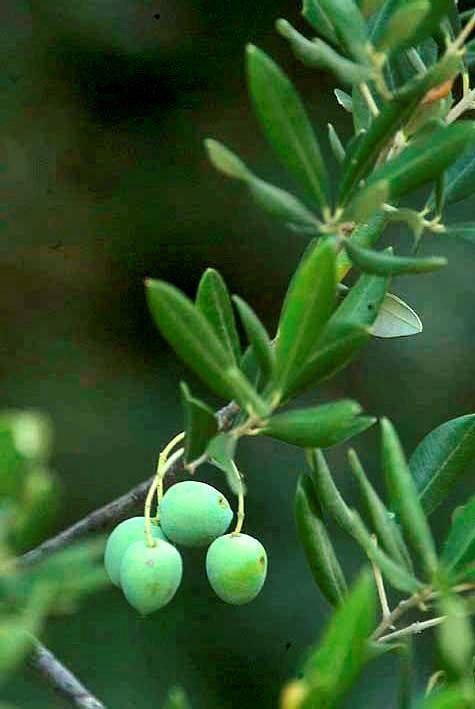
October is the month for harvesting olives in Croatia. I thought about this recently when cooking in my Kerala kitchen as I opened a jar of imported olives, knowing in advance that they would never hold a candle to the  quality of artisanal food. When we lived in Paris one could buy olives by the kilo at the marché, with numerous varieties to choose from. But here in southern India I have to settle for rather industrial Spanish imports at the table and memories of unparalleled flavor in my mind.

In reality, there are two harvests—one for olives that will be cured, and one for olives that will be pressed for oil. On smaller islands the frenzy of activity is much more evident for the latter—perhaps because fewer people cure olives anymore. The island people found me to be quite the curiosity. Here I was, a newcomer, trying to do all the traditional things that most young people were attempting to abandon.

There was no commercial production or agriculture on Koločep, one of smaller of the 5 Elafiti Islands, that sit like an extended constellation from the city of Dubrovnik. All gardens and orchards are for personal use, but there are people who certainly had large amounts of land in one sort of production or another. Our very overgrown home garden was a small example—there were figs, pomegranates, mandarinas, plums, carobs and of course, olives—none of which have been pruned  for what looked like decades. Continue reading
Putting Kashmir On The Map

Guest Author: CJ Fonzi

I recently received this link from a Facebook friend.  One of those Facebook friends that you meet on an adventure somewhere, instantly bond with, keep in touch with forever.  This particular guy is an oil engineer from Norway- an unlikely friend of a sustainable business consultant in New York City.  But that is what travel and exploration are all about.

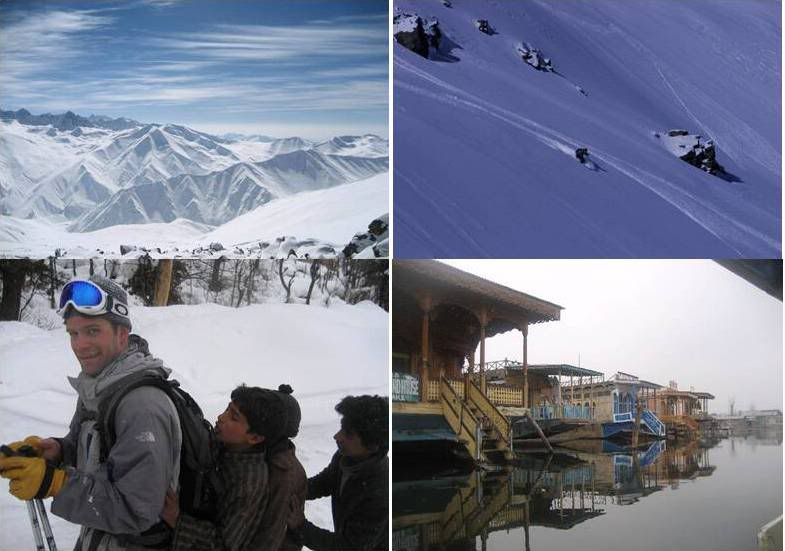
Kashmir- the name brings images of war, struggle, and International politics.  But to those of us who have been there the images that come to mind are more like the ones shown here.

The village is called Gulmarg and it hands down has the best skiing in the world.  Continue reading

Pico Iyer: Global Soul

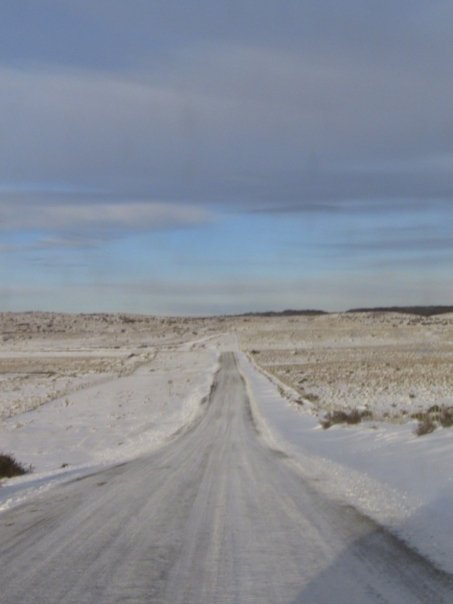
Deserted road on Tierra del Fuego

For me the whole point of travel is to leave yourself behind, to leave your assumptions behind, to become cleared out and to step into another person.

–Pico Iyer

Sometimes I have to wonder what kind of rock I live under.  I mean, really!  Despite my peripatetic lifestyle I seem to be strangely illiterate in “travel writer” terms.  Busy “doing” perhaps?  Perhaps.

So when I received an email from Diwia with a video link and the short note: “Great listening Amie, watch the first 15 mins – you’ll be hooked to the very end”.  I clicked with the clear mind of the uninitiated. Continue reading

La Giganta, Baja California Sur

As noted in the first and second posts on this topic, the question at hand is whether there is a formulation that can effectively bring thousands of hectares of private lands into a conservation area that is supported by entrepreneurial activity.  That activity puts conservation and social welfare of the local communities as the top priorities–the motivation for bringing conservation-minded travelers to valorize these protected areas.

This slideshow requires JavaScript.

Continue reading

Gulf Of California

I had not been exposed to the corridor known as La Giganta, which you can see in the background of the above photo, when I carried out my work on behalf of WWF several years ago.  Now that I have, over the last week, I can only say that it had such an impact on me that I am still processing it.  It is partially the geology of this portion of the peninsula known as Baja California Sur.  It is partially how that geology intersects with the marine ecosystem. But it is mostly–and here I refer to the impressions I am still processing–the intersection of local people with those two natural wonders that really got to me.  The photo above looks from the back of a panga (the type of boat local fishermen use) as we departed a property that is best described as an oasis. Continue reading

Bambouzle

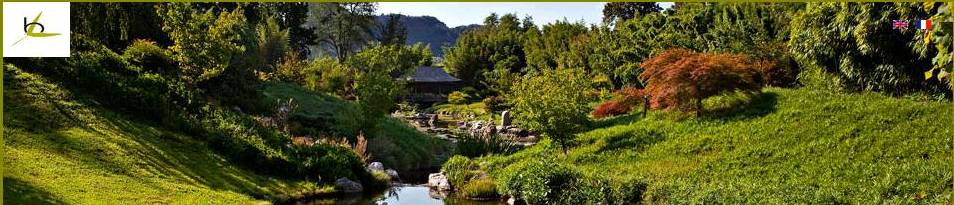
France has a horticultural history that goes back centuries, from the forested hunting grounds to the formal gardens of kings.  But “Liberté, égalité, fraternité” leads to parks for the people, offering countless opportunities for visitors to fulfill their desires to commune with nature.

Continue reading

Wordsmithing: Spa

When it is capitalized, this word refers to the mineral springs in Liège, Belgium, believed to have curative properties.  In the last several centuries the meaning of the word has been generalized to refer to almost any place that has curative mineral waters, according to OED, so that “a town, locality, or resort possessing a mineral spring or springs; a watering-place of this kind” is fairly known as a spa.

The generalization has expanded further in recent decades through commercialization, and as always OED’s tracking of the etymology is intriguing:

A commercial establishment which offers health and beauty treatment (esp. for women) through steam baths, exercise equipment, massage, and the like. U.S.

1960    Life 8 Feb. 111/1   The submerged specter above‥is getting a hydraulic underwater massage at a plush health spa near San Diego called the Golden Gate beauty resort whose customers are usually female.
1976    Vogue Dec. 214/1   Most American spas are designed exclusively for women.
1981    W. Safire in N.Y. Times Mag. 21 June 10/2   Only fuddy-duddies go to the gym,‥the upscale‥crowd goes to the spa.

A Four Year Echo Of Hope

For all of the challenges facing the Gulf Of California region ecologically, global trends in sustainable tourism offer potential solutions.  Broadly speaking, the mass tourism model propagated on the most accessible coastal regions of the world—particularly those visited by European and North American travelers—has been challenged by this alternative model.

Still, the mass tourism model has its advocates, in Mexico as in other parts of the world, and creeps into the planning models of destinations where sustainable development is the nominal platform. This happens because for at least half a century the notion of success or failure in tourism development has been defined according to this older model.  If WWF is to have an effective strategy for conservation in the GOC region, then a clear definition of competitiveness vis a vis sustainability must be established.

Those words opened the first draft of a report submitted four years ago . Continue reading

Primitive Garage

While driving through Tamil Nadu a few weeks ago, there were more  than enough of those moments one experiences when travelling through a culture not your own, during which your eyes glaze over as you try to determine either what someone was doing, what you saw, or what in the world is going on. Tamil Nadu, of all the places I have traveled in the world, very likely has the highest concentration of these moments I have personally experienced, and in addition to a truck garage that looks more like an elephant parking space, one is liable to see extravagantly mustachioed motorcycles, patchwork oxcarts, and large angry red men.

This slideshow requires JavaScript.

A Worldly Point of View

Emory’s Language Lab

Diversity in American universities is on the rise: just a little under a quarter (23%) of Harvard’s undergraduate enrollment consists of international students. At Columbia University, over a quarter (26%) of the university’s enrollment are international students. The story is the same at other top schools around the nation. UCLA, Boston University, Cornell and NYU all boast international student levels at around 15%. Here at Emory, the picture is roughly the same. Most of these international students in American universities hail from Asian countries, but there is plenty of exchange from Europe, Africa, the Middle East, and other parts of the world as well.

At Emory, many international students specifically come from China, India, South Korea, and Japan. Having spoken to these foreign exchange students, it is clear that international admissions to a top-20 American university are incredibly competitive, even more so than they are here. One friend told me that he was the only student from his entire town (a suburb of Calcutta, so quite a lot of competition) to attend a top-30 American school; even with his extremely impressive credentials Continue reading

Landscape Yearnings

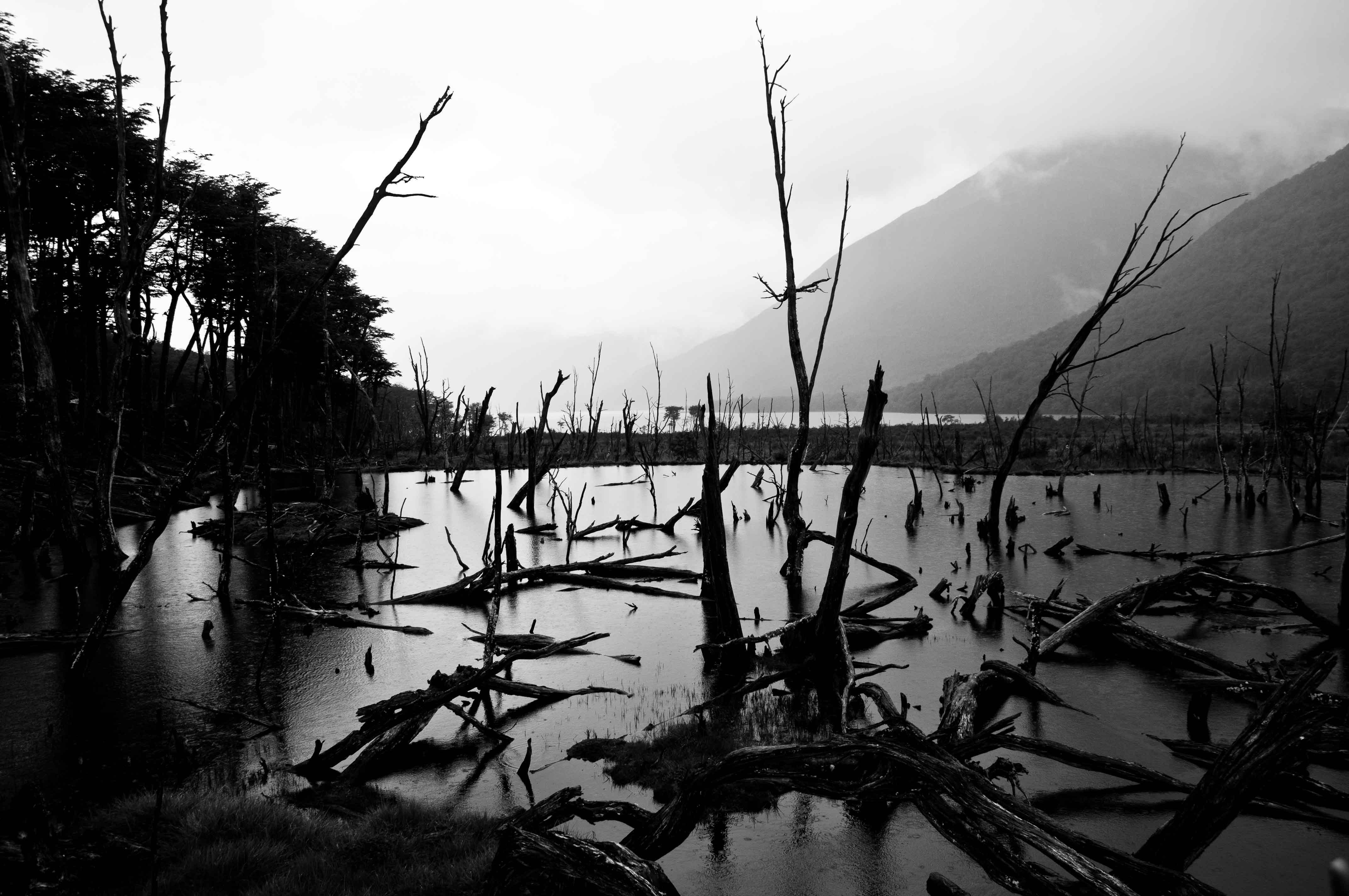
Beaver damage

As someone who enjoys the outdoors and the wonderful silence that nature provides, I have recently begun to feel the emotional effects of being surrounded by metal and concrete.  I, along with millions of others, am living in Buenos Aires and I am counting the days (8) until I have the opportunity to leave the city and enjoy the serenity of grass and the ability to see the stars. Recently I have had the good fortune of being asked to do some exhibitions of my work including many of  the photos that I took while down in Patagonia.

Continue reading

Connecting Dots

This slideshow requires JavaScript.

The news of Jad Abumrad being selected as a MacArthur Fellow, the so-called “genius grant” in recognition of his accomplishments and his future contributions, was worthy of celebration.  That defenestration reference led me back to that episode, which was a series of oddly connected sub-segments on the topic of Falling.  I use the word odd at the same time that I think: these are clearly examples of structured relevance.

What’s more odd is the coincidence between the Jad news and the fact that I just recently had pulled out material from my doctoral dissertation that I had only looked at one other time since 1997.  I pulled it out for the presentation I made to the students at Brown mentioned here.  Some visual highlights of that presentation (more on my dissertation, which is more clearly linked to Seth’s post here, and this one too, another time) are in the slideshow above, and complement Radio Lab’s treatment of the same (cue up at just prior to the 35th minute of this episode if you can download it and listen to it on your own player). Continue reading

“Vella-kkaran!”

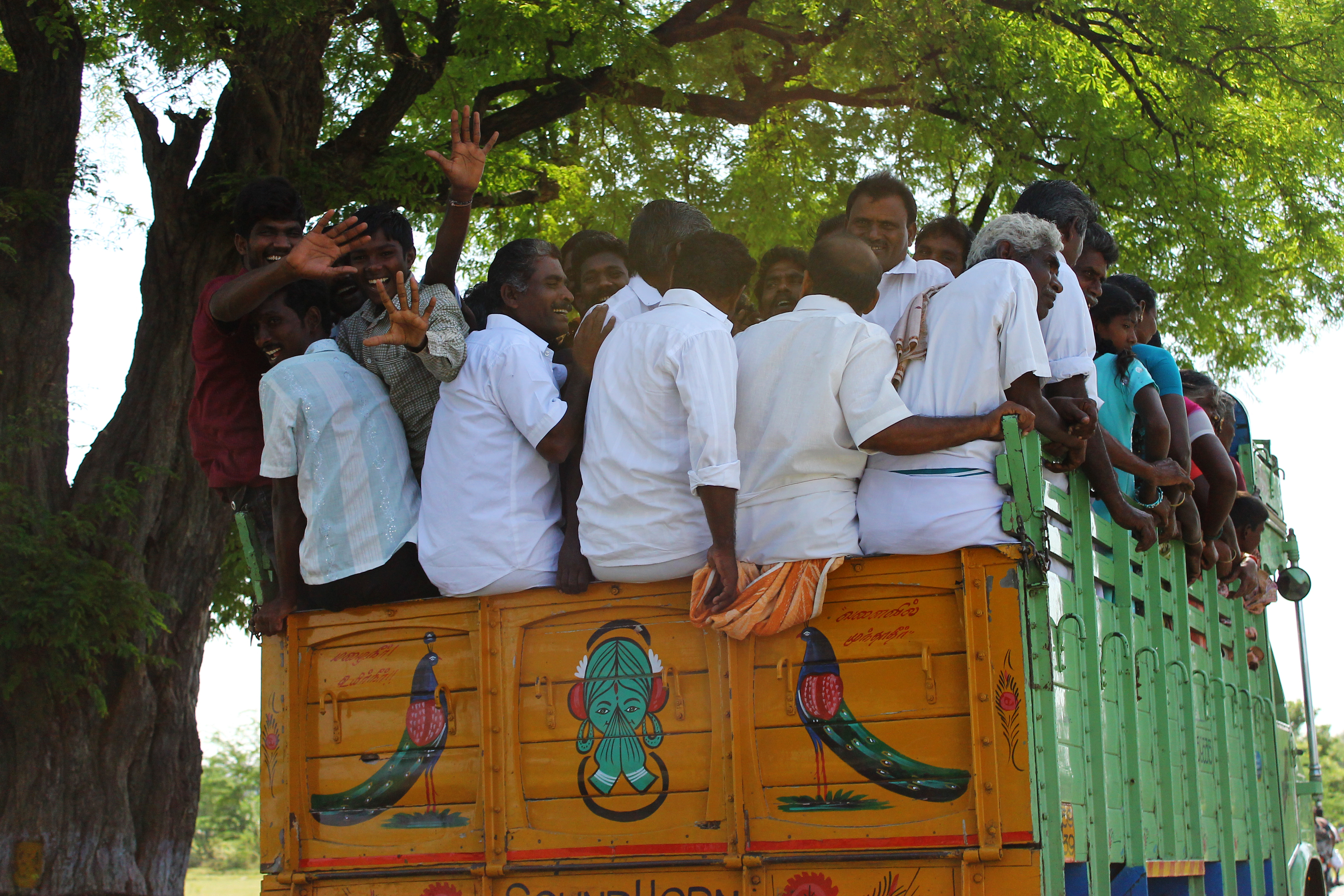
A group of celebratory Tamils on route to a festival

On a recent road trip into Tamil Nadu I was really struck by the ways it differed from Kerala. Although the states are direct neighbors, and many Tamil live and work in Kerala, the contrasts were striking.

They were small differences, subtle even, but enough to give the states a different flavor, if you will. Maybe its that Keralites seem a bit more serious, a bit more focused on their modernity and business acumen. There was something more colorful about the way life was portrayed next door. Although there is the old adage that the “grass is always greener on the other side”, an irony in this case to be sure, as Kerala is a far greener state in almost every meaning of that word.  (I highlight the word almost because, as Sung wrote in a previous post, much of the produce eaten in Kerala is grown in Tamil Nadu, despite their far lower rainfall.)

The short time I spent in the state left me with an impression of a less mechanized world.  A land of brick works and goat herds, of Bullock carts as lorries, of fields and fields of crop cultivation. Continue reading

Watch It On National Geographic Channel

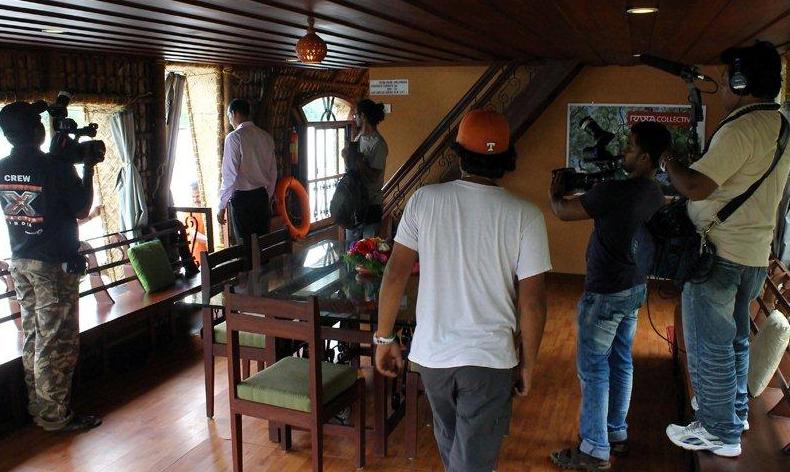
Our colleagues offer amazing experiences on the backwaters of Kerala, in the houseboats described here, with some visual support here and here; and once more here (really, look at it to get a sense of grocery shopping in our neighborhood); so no surprise that a film crew and remarkable cast of characters asked to spend time with them.  The crew of 15 or so (I lost count) was from all over India; so was the cast.  The four featured men in this film are part of a “bucket list” adventure that is being filmed in the locations ranked most highly in a national competition as “must go.” Kerala’s backwaters made that list. Raxa Collective’s houseboats were chosen as the venue for best experiencing those backwaters.

The four men–a student, an IT marketing executive, an Indian Capoeira master-in-training, and a famous Bollywood actor–met for the first time not long ago, and by the time we met them they seemed like old friends.  By the time it airs on the National Geographic Channel, that will stand out as much as the fabulous locations (I like the picture hanging on the wall past the camera man).  We will share more on the broadcast times when we have them.  The photo below is Milo’s, and we have some additional photos by Sung from this particular day (they were on the houseboats for many more days), more on which as we have those photos, and hopefully some film outtakes.

Brown Takeaways, & Galapagos Giveaways

For the work we do, there are a few places always on my radar.  I do not mean some search engine tool for getting all the news on such and such.  I mean radar in the sense of, what really matters?  Why? When and where did it start mattering for me?  September, 1983 at JFK Airport is at the very top of the list, believe it or not, but I will save that story for another day. August, 1988 at Cornell University is near the top, as is February, 1995 in Costa Rica.  The Galapagos Islands joined the list in July, 1998 when I had my first work assignment there.  Ever since, I have had WWDD? buzzing in my thoughts, something like a bumper sticker in the back of my mind that cannot and will not go away.

This story from 2000 is a reminder of one my my subsequent visits.  Continue reading

Hello To The Galapagos

A pleasure to read this post from the Islands that Reyna has written about, especially that it is from someone celebrating their honeymoon; super-especially when they take great photos, write well, and share them with everyone.

Footprints

As of this writing, the biographical section of this author’s personal website begins with an inaccuracy that can be easily forgiven.  He just hasn’t updated it yet.  That’s okay, glass houses and all.  But what about all the students interested in topics like this, at places like Brown and Cornell, who want to figure out how one becomes Charles C. Mann?  We learn a bit about the initial C in his name, but not about how he got interested in this topic, he prepared to research it, write it, etc.  That’s okay too.

He brings light to so many topics that we take for granted, even those of us studying some of these topics–do you picture the local population of what is now North America, pre-Columbus, riding horses?–that we can be thankful that he has been busy at researching and writing this book, and less busy explaining to us how he learned to do such work.  Just this passage should get you thinking:

Newspapers usually describe globalization in purely economic terms, but it is also a biological phenomenon; indeed, from a long-term perspective it may be primarily a biological phenomenon. Two hundred and fifty million years ago the world contained a single landmass known to scientists as Pangaea. Geological forces broke up this vast expanse, splitting Eurasia and the Americas. Over time the two divided halves of Pangaea developed wildly different suites of plants and animals. Before Colón a few venturesome land creatures had crossed the oceans and established themselves on the other side. Most were insects and birds, as one would expect, but the list also includes, surprisingly, a few farm species—bottle gourds, coconuts, sweet potatoes—the subject today of scholarly head-scratching. Continue reading

Monsooning Coffee & Tasting The Place

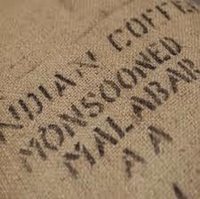
Monsoon_Malabar_m.pngWe have been beta on a service that allows an actual taste of the places where we work.  Coffee, from our friends in Nicaragua; honey, wild-hunted in India, Africa and South America; the salt that Ghandi promoted; and the pepper that we have written about more than once.  And so on. The point is that you can taste the difference of a food or a beverage based on where it comes from, and that is evocative. For example, coffee grows all over the world, and not only the growing conditions vary but so do the post-harvest traditions:

I head off to attend a friend’s wedding in India.  It happens to be at the same time as the beginning of the monsoon season so I can’t resist the temptation of organizing to visit the coffee monsoon processing town of Mangalore on the Malabar coast.  It is the only place in the world where this most unique of coffees is processed: Monsoon Malabar

I land at the new Bangalore airport which is now world-class, slick, big and impressive.  It is so far removed from the old Bangalore airport I last visited sixteen months ago where you were jolted into a profound awareness that you were in a foreign country for real: with hordes of people lining the exit ramp and traffic going in six directions at once and a cacophony of horns, calls and mass humanity pressing on all sides. The new airport is much more sedate and orderly and the immersion into the wonderfully varied and exotically, pungent Indian culture is now a little more gradual. Continue reading