A drive to Fort Kochi, India

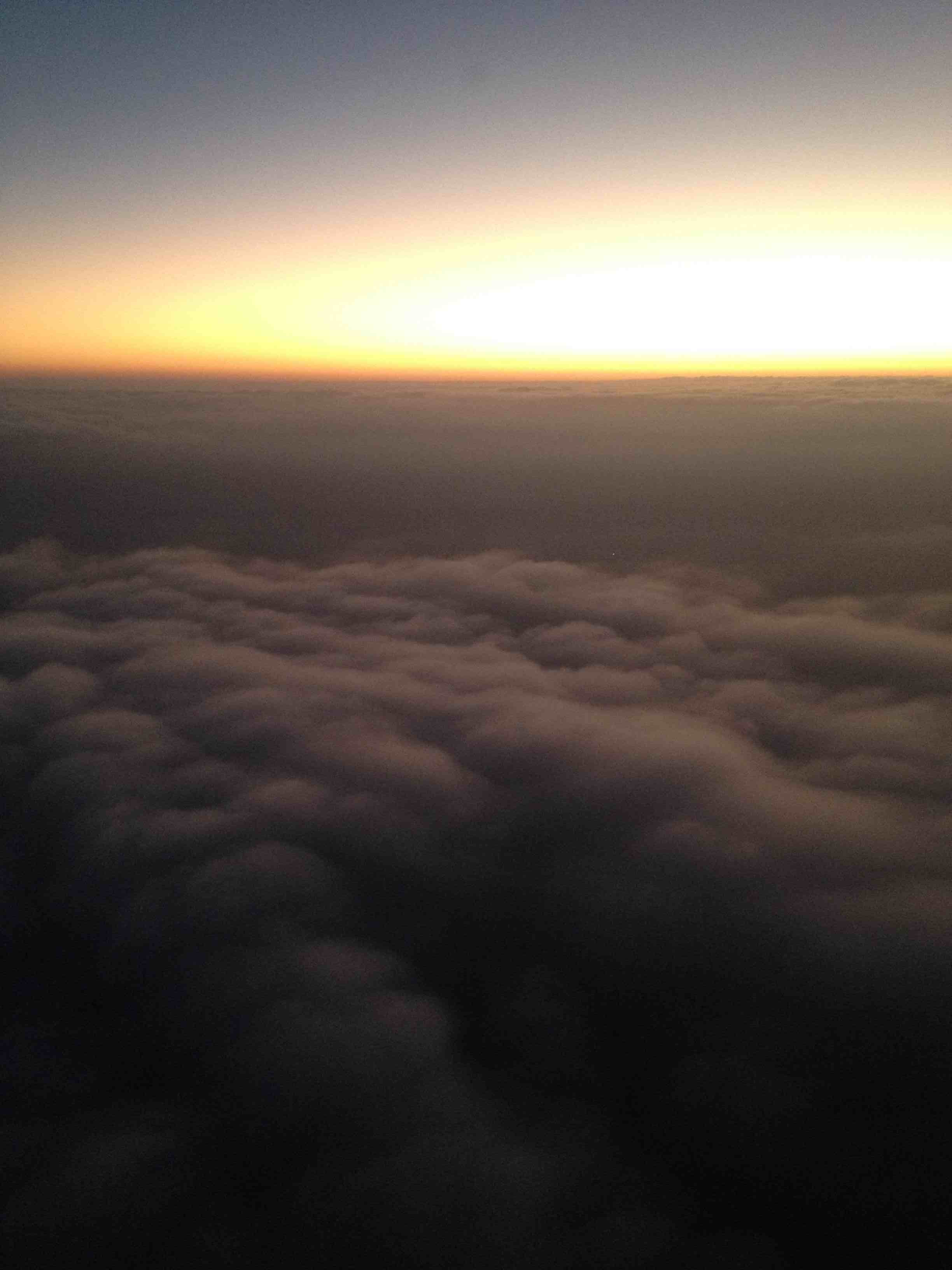
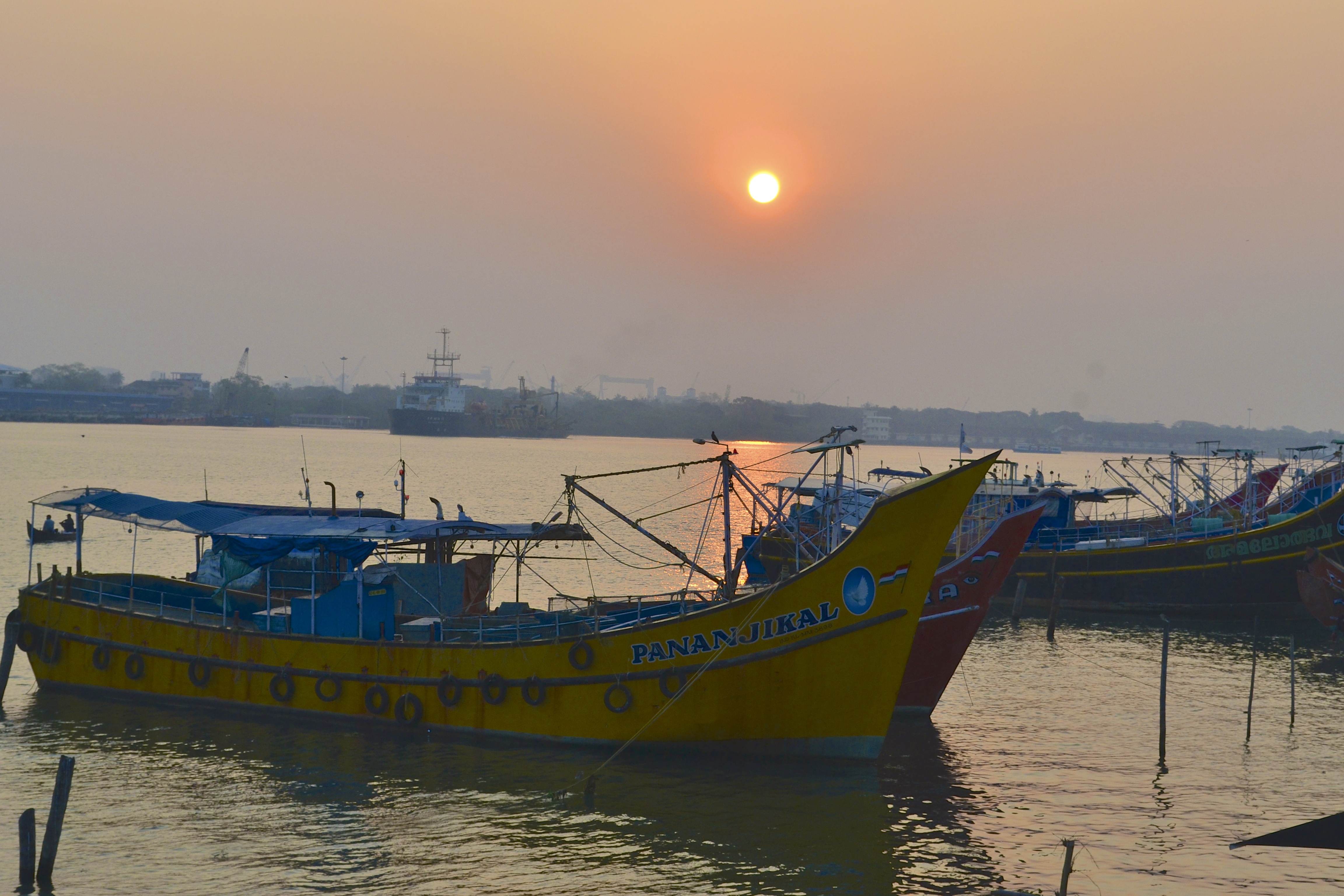
Sunrise over Cochin Harbor

Sunrise over Cochin Harbor

I flew into the Cochin airport in Kerala a few days ago for the first time. This is my first time to Asia and to a country whose language I do not speak (fluent in english and spanish). I was greeted by Udayan, one of Raxa Collective’s drivers who began driving me to the hotel. If you had read my last post, you would know that I am here to do an internship under Crist and Amie Inman (owners and operators of Raxa Collective), who I have been communicating with for months now. Amie especially, had warned me of the driving and how “In some parts of the world, people drive on the left side, others on the right side, but in India people drive everywhere”! That could not have been closer to the truth. As soon as we leave the airport parking lot, I hear horns going off, almost in symphony to one another, communicating back and forth. Tuk-tuks (a type of small yet quick 3 wheeler) are swerving in and out of traffic, motorcycles and cars zig-zagging in and out. The driver, completely calm and very good at what he does tells me that it will be a 45min drive. In my mind, I thought this wasn’t driving, but a type of noisy tetras.
Continue reading

Costa Rican Wildlife Saving Under-vacationed Americans

We have many connections with Costa Rica at Raxa Collective, but especially after the inclusion of Xandari in our network. So we were happy to hear that, facilitated by Costa Rica’s Tourism Institute (ICT), the country’s animals have gotten together to try to save overworked Americans by offering them natural habitat and a stress-free paradise to escape to. Or at least that’s what the Save the Americans website declares after you watch the video embedded above. Spinning off statistics like “Americans leave 500,000,000 vacation days unused,” “1 in 4 Americans get no paid vacation,” and “59% of Americans feel vacation deprived,” the initiative’s true purpose is to advertise and inform American travelers about the opportunities for different vacation experiences in Costa Rica.

Continue reading

Ithaca Featured in NatGeo’s Intelligent Travel Section

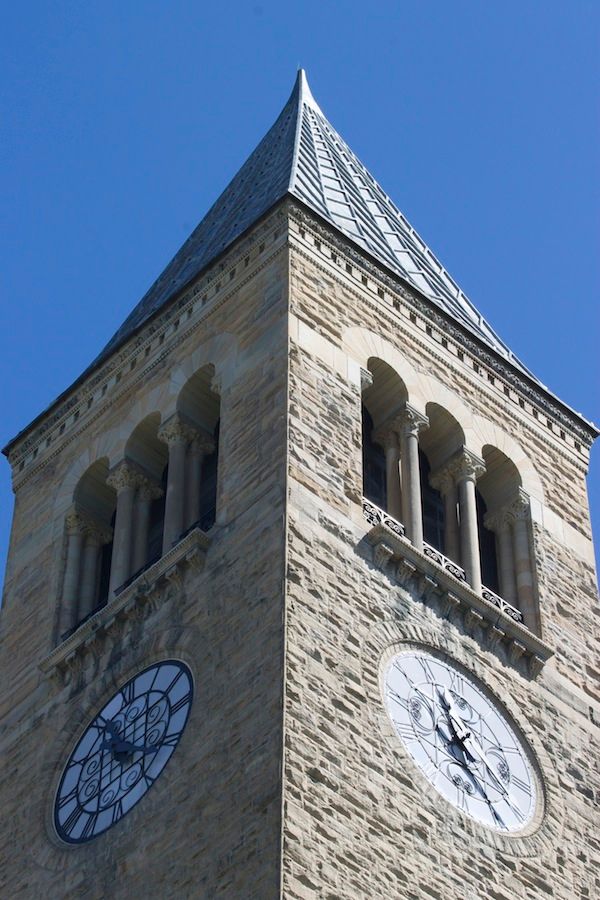
Cornell’s McGraw Tower. Photo by S. Inman

Over the last several years, dozens of our interns have been Cornellians, and some have even been born-and-bred Ithacans. It is often said that Ithaca is “ten square miles surrounded by reality,” for reasons that we won’t go into here and might be gleaned from the text below. But if Ithaca is sometimes seen as a bubble, then it can be expected that students at Cornell University or, to a lesser degree, Ithaca College live in an even more insulated shell that separates them from the city of Ithaca.

So it’s somewhat refreshing to see a descriptive post by an Ithaca resident–but McGill University graduate–in National Geographic’s Intelligent Travel section. Under the “Beyond the Guidebook” category, Alizé Carrère wrote a quick but information-packed list of things that she loves about her city, which you can read below or here:

Summer is the best time to visit my city because that’s when Ithaca really comes to life. Many of the college students leave for summer break, so the city opens up and all of the best outdoor attractions are in their prime. You can enjoy waterfall hikes, summer concerts in the park, patio happy hours, fresh produce in local restaurants, and twilights that stretch into the nine o’clock hour.

You can see my city best from the top floor of Cornell University’s Johnson Art Museum, which reveals a near 360-degree view of Ithaca, including Cornell’s beautiful campus and the south end of Cayuga Lake. The museum itself, which looks like a giant sewing machine, was designed by renowned architect I.M. Pei, the creative mind behind the striking (and once controversial) glass pyramid in front of the Louvre.

Continue reading

Reducing The Carbon Footprint Of A Sport

Niels Ackermann for The New York Times

Niels Ackermann for The New York Times

It is not a story told from a conservation perspective, but this New York Times article makes us wonder how many sports might reduce their natural resource consumption as radically as this one does:

PURSUITS

Skiing as It Was Before Chairlifts

Ski mountaineering, Alpine touring or skinning — propelling yourself up the mountain before swooshing back down — is a throwback to the sport’s early days, before chairlifts.

Digging Deeper, Getting To No

Casa Dominique is an ecolodge on Lanzarote's northern coast. Julie Genicot, a French trekking guide, has lived in Lanzarote since her grandparents opened the Casa Dominique when she was a child. She worries that offshore oil drilling might ruin the natural environment she grew up in. Lauren Frayer/NPR

Casa Dominique is an ecolodge on Lanzarote’s northern coast. Julie Genicot, a French trekking guide, has lived in Lanzarote since her grandparents opened the Casa Dominique when she was a child. She worries that offshore oil drilling might ruin the natural environment she grew up in. Lauren Frayer/NPR

We cannot possibly say that Spain does not need more oil. But we can say that before going to the Canary Islands there should be more effort to use the sun and wind, as at least one European country with less direct sunlight per year than Spain has successfully done. Spain should dig deeper on the alternative energy front before drilling in the sea. Go, Julie, go! Thanks to National Public Radio (USA) for bringing this story to our attention:

An oil rig now floats offshore in one of Europe’s top winter beach destinations — Spain’s Canary Islands. For the first time, Spain has authorized offshore oil drilling there. It’s hoping to reduce its dependence on foreign oil. But the project has prompted massive protests by local residents and environmental groups like Greenpeace.

Julie Genicot is a French trekking guide who’s lived in Lanzarote, one of Spain’s Canary Islands, ever since her grandparents opened an ecolodge there when she was a child.

“We have all the elements. It’s very windy, we have tides, the sun. It’s a very energetic place,” she says, looking out her windows across sand dunes in a protected natural park, backed by the Atlantic Ocean. “You have earth, the fire — we’re surrounded by volcanoes. And the wind, the sea — it’s very powerful.” Continue reading

Ethio-jazz And A Goal For 2015

16ETHIOPIA1-articleInline-v2

Nichole Sobecki for The New York Times. Mulatu Astatke, seen as the father of Ethio-jazz, performs at African Jazz Village, which opened in late 2013.

As we prepare for a scouting trip to Ethiopia for a possible Raxa Collective collaboration with our Ghana colleagues in 2015, we were happy to see this item in the Sunday Travel section of the New York Times last week and just now remember to post this link:

CULTURED TRAVELER

In Ethiopia’s Capital, a Resurgent Jazz Scene

An Artist’s Favorite Points Of View

The sculptor, printmaker and painter tells Charlie McCann about his favourite places—they reveal an eye for beauty as well as a taste for symbolism

The sculptor, printmaker and painter tells Charlie McCann about his favourite places—they reveal an eye for beauty as well as a taste for symbolism

Thanks to the Economist’s “intelligent life” for this briefing on an artist’s favorite visuals:

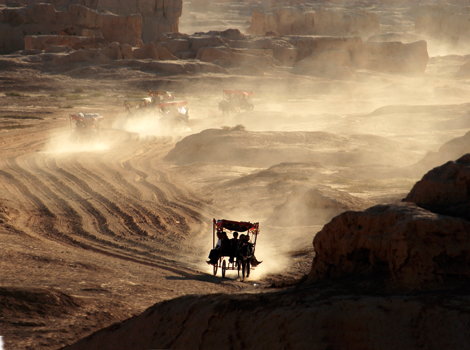
JOURNEY From Beijing to Yining (above)
In 2010, my son Edmund went on his gap year to Yining, in the province of Xinjiang. My wife and I were worried; Edmund was one of only two Europeans in the city and there’d been tremendous unrest in the region. After eight months, we decided to check up on him. We flew to Beijing and got on a train. Our journey inland was really exciting: from our cabin we saw tiny villages, where every little patch had been cultivated, and passed vast deserts where huge dust storms turned the sky black. Eventually we got to Xinjiang. By that time, Edmund could speak rudimentary Mandarin. With him, we ended up travelling to Yining by an overnight coach. It was this mad bus full of chickens, geese and dogs. Continue reading

Speaking Of Greece

36hours-athens-thumbWide36 Hours in Athens

By JOANNA KAKISSIS

The city’s self-confidence and creativity are stirring again after years of tough press that defined Athens as a beleaguered capital.

This post on classics, referencing an earlier post on the same topic reminds us of our hinted promise to tell more about Raxa Collective’s recent scouting visit to Greece, and specifically about prospective project on one of the most fascinating of all the islands. We promise more on that soon.

Giant of Africa

Nigeria is known as the Giant of Africa and that’s where I’m currently based. I was looking for a change in my life, so promptly accepted the position when it was offered. Most of you must be wondering why I’m here, and that’s one question I don’t have a clear answer to. Perhaps it’s the adventure and the challenge that comes along with moving into a territory. The nature of the job is different from the regular office administration job that I was used to so that was new as well.

So I packed my bags along with words of advice from family and friends – “don’t mingle too much”; “don’t be over friendly”; “do your work and go directly home”; “don’t get into any unnecessary relationships” etc. etc. It’s not surprising that a woman about to embark on this type of adventure should receive advice like this, so I thanked everyone and was on my way. The journey had it’s challenges, none of which were surprising. I was carrying heavy luggage and changing planes in Mumbai was the toughest. I promised myself that I’ll be taking a different route when I visit India next – not just a different route, I intend to fly Business class! Continue reading

World Tourism Day

September 27th is World Tourism Day! As the UNWTO Secretary-General Taleb Rifai said in his address this year,

Tourism is a people-based economic activity built on social interaction, and as such can only prosper if it engages the local population by contributing to social values such as participation, education and enhanced local governance. At the same time, there can be no real tourism development if such development damages in any way the values and the culture of host communities or if the socio-economic benefits generated by the tourism sector do not trickle down to the community level.

Continue reading

Advances In Solar-Based Flight

We do not expect this to mean we will board such a plane anytime soon, but anyway thanks to the New York Times for this news about advances in in our ability to harness the sun in ever-better ways:

SOLAR-01-thumbStandardSwiss Pilots to Fly Solar Plane Around World

The trip, which will begin and end in Abu Dhabi, will involve about 25 days of flying over four to five months, with stops in Asia, the United States and Southern Europe or North Africa.

Night Train, Climate Change, Action

Illustration by Otto


If you did not happen to be in New York today, but agreed that small sacrifices are necessary even if insufficient conditions for battling climate change, consider signing the petition mentioned in the following (a guest editorial, in today’s Guardian), which you should read all the way through before deciding:

Back in May I was on a sleeper train between Paris and Berlin, chewing on a biro and filling out a questionnaire. As the sun set across the rolling hills of the French countryside, I assiduously answered question after question about how often I used night trains and how I felt about the standard of service. I was hopeful that the questionnaire heralded a new era of growth in this crucial service. I couldn’t have been more wrong.

This month Germany’s state railway provider, Deutsche Bahn, confirmed it has decided to terminate a large number of overnight services, including the lines from Copenhagen to Basle/Amsterdam/Prague, and Paris to Hamburg/Berlin/Munich. The network cites low income, high overheads, losses of millions of euros and slow growth. Continue reading

Conquering Iceland’s Mountains: The Alpine Club (Part 3)

“Turquoise Falls, Bruarfoss” © Jerome Berbigier

Continued from Part 2.

As it turned out, it was a British law student, William Lord Watts, who became the first man to truly answer Longman’s call and embark on some serious exploring. In the introduction to his book Across the Vatna Jökull; or, Scenes in Iceland; Being a Description of Hitherto Unknown Regions, Watts started by taking issue with the concerned British subject at home who saw the exploration of wilderness as a waste of “money, time, and labour,” or “utter folly,” explaining that everyone had a mania for something or other, and his own “may be to wander amongst unknown or unfrequented corners of the earth.” Calling for “a truce to critical stay-at-homes,” Watts advanced to the meat of his trip itself.

In his descriptions of his several expeditions, Watts usually employed a calm, scientific and lawyerly tone that make his bursts of romantic and athletic enthusiasm in certain scenes all the more exciting and believable. Nodding to his biggest audience, he also used some of the Continue reading

Conquering Iceland’s Mountains: The Alpine Club (Part 2)

Continued from Part 1.

If Longman’s unorthodox address is interesting as a sign of Iceland’s attractiveness to the middle-class British authentic-seeking traveller, the responses to his suggestions are even more so. In a May 18 article The Critic wrote a review of the Longman’s address that effectively summed up the perceived position of Iceland in the global context of travel and exploration. The author suggested that any adventurous Briton who had already “used up Ireland and Scotland” and “[did] not care to ascend Mont Blanc for the dozenth time” might turn to Iceland for their future travels, as it had spectacular scenery equal to Switzerland and critics were growing tired of “oft-repeated tales” in countries they knew intimately through so many books. The contributor continued by explaining that:

Aerial view of Iceland © Sarah Martinet

We do not ask the good-natured traveller to kill gorillas in Africa after Mr. Du Chaillu’s fashion, or hunt bisons on the American prairies with Mr. Grantley Berkeley. Our request is much more reasonable. Iceland may be reached by the expenditure of a single five-pound note: and in that uncockneyfied land a solitary Englishman may pay all his daily travelling expenses, including those which will be entailed on him by a retinue of three horses and a guide, for twenty shillings.

Continue reading

Conquering Iceland’s Mountains: The Alpine Club (Part 1)

Aerial view of Iceland © Sarah Martinet

It has been months since I’ve mentioned Iceland on the blog, partly because I was exhausted with the subject after completing my thesis in mid-April, but also because I’ve been occupied with less academic matters over the summer. Another reason for revisiting the topic is that over the summer I had the honor of learning that my thesis was added to the Kroch Library Rare and Manuscript Collections–hopefully somebody will find it useful eventually! Now that the volcanic dust has settled and the borrowed library books have been returned, I feel there are a couple facets of nineteenth-century British travel to Iceland left to explore here.

I’ve written about some of the qualities exhibited by British travelers to Iceland before, but Continue reading

Souvenirs Of A Travel Junkie Architect

Photo by Greg Vore

Photo by Greg Vore

When we first heard of him two years ago, he caught our attention with the choice he made at a young age:

Architect Mark Leininger credits his parents for choosing travel to China, Antigua, Colombia and other foreign destinations over material things throughout his childhood, instilling a love that has endured. Case in point: He remembers asking his mother for a pool table in third grade.

“Do you want a pool table or a trip to Jamaica?” she replied. He wisely opted for the travel, collecting the airline timetables that used to pile up at airport ticket counters in the pre-Internet era. Continue reading

Bring On The Night

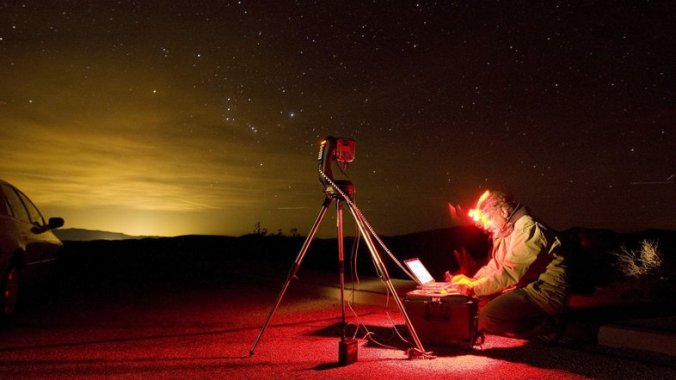
Dan Duriscoe works at a special computer-controlled camera used to photograph the night sky at Dantes View in Death Valley National Park in California. John Locher/AP

Dan Duriscoe works at a special computer-controlled camera used to photograph the night sky at Dantes View in Death Valley National Park in California. John Locher/AP

Supporting an activity that depends on the mitigation, if not reduction, of light pollution? We are all for it:

When was the last time you looked at the Milky Way? Or saw the shape of Cassiopeia? If you live in a city, you might not even remember. In the world’s most populated areas, air and light pollution obscure the sight of thousands of stars once visible to the naked eye. Continue reading

Visiting Madurai Meenakshi Amman Temple

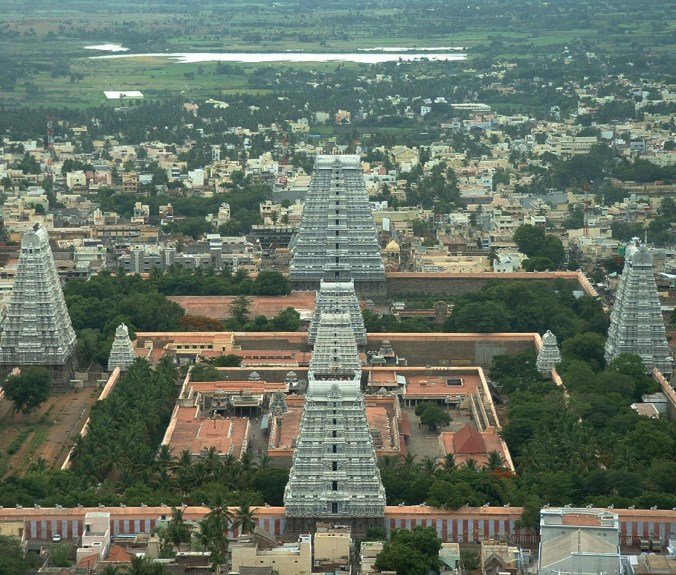
madurai_temples

Upon visiting the Meenakshi Temple, I removed my shoes, checked my bag at the door and proceeded my barefoot adventure through the eastern tower of the temple city. Maduri is known as temple city because of how vast the Meenakshi temple is. There are 12 towers, the four larger ones face each of the directions North, East, South, and West. We explored the 1000 pillar hall, the holy pond, and many other parts of the ancient temple.  It seemed like every corridor and wall had some sort of sacred art or story to it. The history of the temple is as vast as temple city itself. The temple dates back at least 2500 years. In 1310, the temple was almost completely destroyed by an Islamic conqueror and so many of the important sculptures were destroyed. It was restored in the 14th century though by Hindu kings who regained power.

Continue reading

Camino de Santiago Adventure: Paris, not quite like I planned

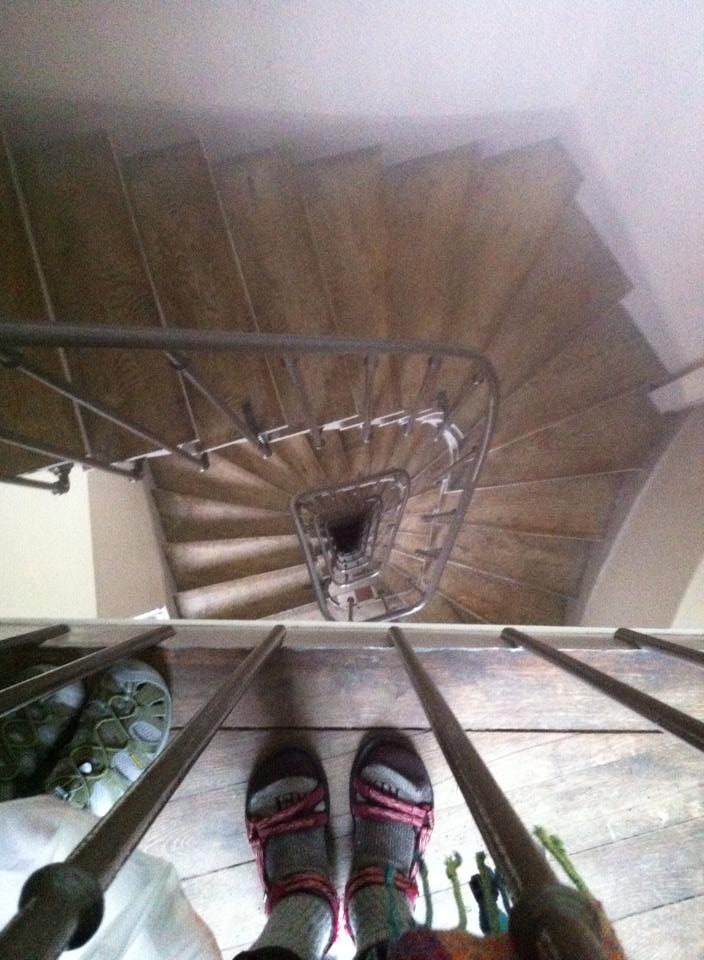
We walked up this very skinny, tall staircase to our microscopic abode that night.

We walked up this very skinny, tall staircase to our microscopic abode that night.

One of my biggest lessons on the Camino was in planning. My friend and I arrived in Paris with no plan, or a very loose one that failed as soon as we looked at what time it was. We were going to just find a train upon arrival to reach the starting point in our pilgrimage: St. Jean Pied de Port. If there were no trains, we were going to find a cheap hostel. Our plane arrived around 8 PM. There goes the plan.

Paris is the most visited city in the world. We just figured the infrastructure for tourists would be obvious. Upon exiting the airport we realized that it’s far from obvious. We didn’t even know which train station we were looking for. There was no wifi around and figuring out all these things would be much more difficult as daylight slipped from us.

A man who spoke English noticed our obvious “lost-ness” and ended up being our angel of the night. He let us use his smart phone to look up which train station we needed to go to, how to get there, and what hostels were nearby. Turns out all the hostels we found were way out of our price range. Along the Camino- albergues were 10 euros, tops. Since we weren’t planning on staying in Paris, we didn’t realize how expensive they were. This was happening at a bus station, and when his bus arrived we just followed him on with no ticket and ended up taking that all the way to the train station. Continue reading