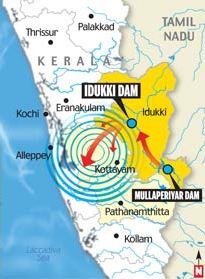
Water, Dams, Kerala & Tamil Nadu

In the lovely monsoon season, one of our Contributors wrote about crossing the border from Kerala into Tamil Nadu.  The writing took the man from mars perspective: a South Korean observing two distinctly different cultures and landscapes within southern India, writing with a sense of wonder and backed up by great photographs.

Lately things are different.  Sung would not be able to make that same journey.  The politics of water–actually the politics of politics superimposed on the politics of water, or vice versa–seem to be the problem.  Another of our Contributors, writing seven weeks prior to Sung about the same cross-border excursion, hinted at the problem seen today, with martian prescience. Continue reading

The Heavy Hand’s Awesome Grip

What can be done to reduce hypoxia?

Although reducing fertilizer use is the most cost effective method of ameliorating hypoxia in the Gulf of Mexico, the reductions necessary are too difficult and expensive to implement; the massive agribusiness establishment of wheat, soy, and especially corn is not easily confronted. So conservation and restoration of wetlands, or creation of any other form of buffer zone, is one of the better alternatives.

Buffer zones can filter between 50 and 90 percent of nitrogen and phosphorous from runoff; riparian buffers, filter strips, grassed waterways, and contour grass strips are practices eligible for the Conservation Reserve Program that also prevent nutrient runoff. The Conservation Reserve Program, or CRP, is Continue reading

Water Resources

We are in constant search mode for methods to reduce the use of plastics in India.  Plastic water bottles are the big frontier to conquer for resorts–no matter how “green” they may otherwise be–in particular.  Travelers are educated from so many sources–guidebooks, travel agents, government advisories, etc.–to demand sealed plastic water bottles (or else not drink from any other source). Continue reading

Peter Donnelly, Come To India!

New Brighton Pier, in Christchurch New Zealand, is fortunate in many ways.  Beautiful beach, wind for kites, friendly people.  But most of all, that fellow with the rake and the spring in his step.

And, as far as one can tell from the 10 minutes below (after the jump), that fellow has something to say.  As we did with another artist, we extend an invitation.  Could someone let Peter know?

Continue reading

Water, Success, India

Those are three words that have a certain ring together.  But as per their tradition of seeking out news with a purpose, we appreciate this story in the Monitor, not least because it has to do with our neighbors to the north.  Click the image below to read the story at its source.

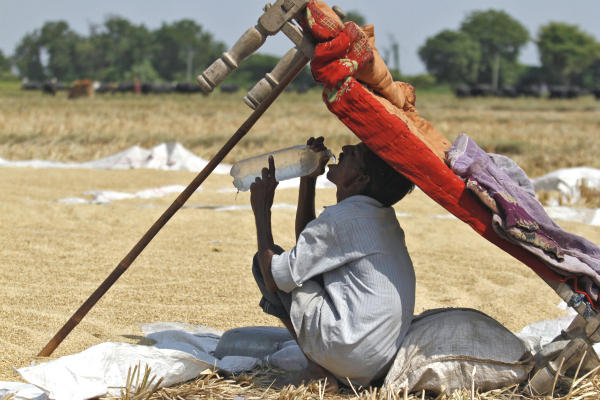
A laborer drinks water while taking a break from spreading paddy crop in a field on the outskirts of the western Indian city of Ahmedabad. In the tiny village of Wankute, water-management practices have eliminated the need to haul water to the village by truck, raised the water table, and widened the variety of crops that can be grown. Amit Dave/Reuters/File

Wankute, a tiny village located high in the Sahyadri mountain range of the Maharashtra state of India, was dry and near-barren in the 1990s. Agriculture was limited to crops that could withstand hot temperatures and little water, such as millet and certain legumes.

Continue reading

Swampbuster

My last post introduced the problem of hypoxia in the Gulf of Mexico, and I promised to start trying to answer that question. Today I’ll shed some light on some subsidies and federal policies that could be altered and bolstered in the right ways to stop nutrient-rich runoff from reaching the Mississippi River. I’m going to point out right away that although the most obvious way of preventing hypoxia is by reducing fertilizer use, this is also the most difficult and expensive tactic to implement. My goal is to start laying out elements of a more cost effective, pragmatic plan for ameliorating hypoxia in the Gulf of Mexico.

The agricultural subsidies that I discuss here are measures that can be implemented through various policy tools (e.g. direct payments, technical assistance, tax incentives) to reduce costs for producers and attempt to benefit the economy in doing so. One positive form of subsidy, known as a cross-compliance program, discourages creation of farmland from current wetlands or land that is highly erodible. Continue reading

Waterborne Mysteries

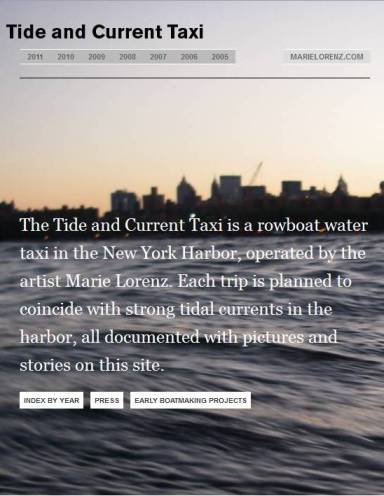
Click the image to the left and you will find yourself somewhere in the Marie Lorenz realm.  It may be easier to understand this realm if you see some of her more “traditional” art, and especially the evolution of that art, at her own website first.

If you happen to be in New York City, you have an advantage: you can experience this realm firsthand. If not, maybe a description of some of her other recent art will give a small portion of perspective to the Tide and Current Taxi:

Recently I have been making collographs of things that I find on the beach. This project is an attempt to find out the story that an object tells about itself. I think of it as another way to collaborate with the tide – because of how the harbor collects things from the city, and distributes them around the shore according to their density, buoyancy, and shape. Continue reading

A Dead Zone

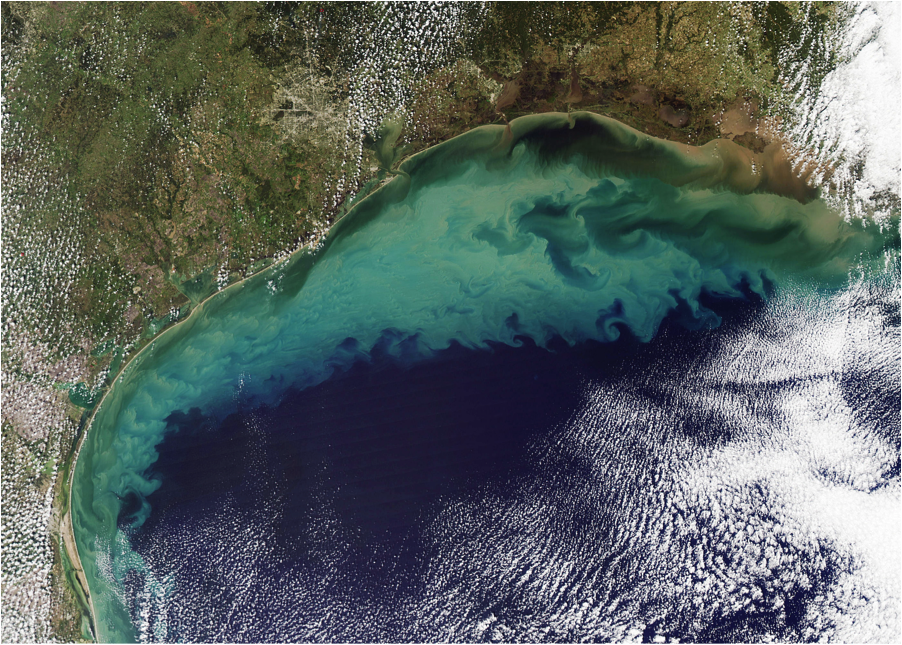
This picture is of the hypoxic area in the Gulf of Mexico, the largest “dead zone” in the western Atlantic. Since the beginning of this site we have tried to accentuate the wonders of nature, creative and collaborative approaches to conservation, and other fun stuff.  Every now and then a dose of scientific explanation helps put this in perspective, even if it is a downer like hypoxia.

Hypoxia occurs when oxygen concentrations in the water are too low to sustain most life, and is created by a process known as eutrophication. This is the over-enrichment of water by nutrients, which cause dense growth of algae that consumes oxygen as it multiplies and decomposes. The resulting lack of oxygen can cause large die-offs of marine life, seriously threatening ecosystems in the Gulf.

Continue reading

Life Mein Ek Baar, Featuring River Escapes

Every minute of this is fun.  The 35th minute is particularly fun for those of us based in Kerala because members of our organization join the stage with the stars of this show.

About five months ago we were approached by a film production company about a show they were filming for National Geographic Channel.  They told us that River Escapes was recommended to them as having the best houseboats in the Kerala backwaters (a bit of music to our ears).  Then they proposed that their Kerala episode should be based on our houseboats (we danced to that music).

Continue reading

What the Trees Read

Without question, the section of Cayuga Lake’s Inlet that receives the most traffic is a small area of shoreline at the corner of the second tendril extending east from the Inlet into Ithaca. Community members and college students are attracted to this little spot on the Inlet, known as Steamboat Landing, because the Ithaca Farmer’s Market spends its weekends there, sheltered under a long wooden pavilion topped by a green metal roof. Dozens of stalls are laden with earthly, culinary, and artistic crafts; more than a couple hundred people a day visit each of them to browse and purchase these locally produced goods.

This quaint market is surrounded by a mixture of modern development and natural shoreline that I could not have noticed from the Inlet’s waters—only by walking around Steamboat Landing was I able to understand the spot’s significance to the Ithaca community, and connect elements of Henry David Thoreau’s and Aldo Leopold’s writings with the history of the place. Continue reading

Paying for Ecosystem Services

Tim Chen has covered ecosystem services as they relate to ecotourism; below I’ve written some additional information on how the process might work on the market.

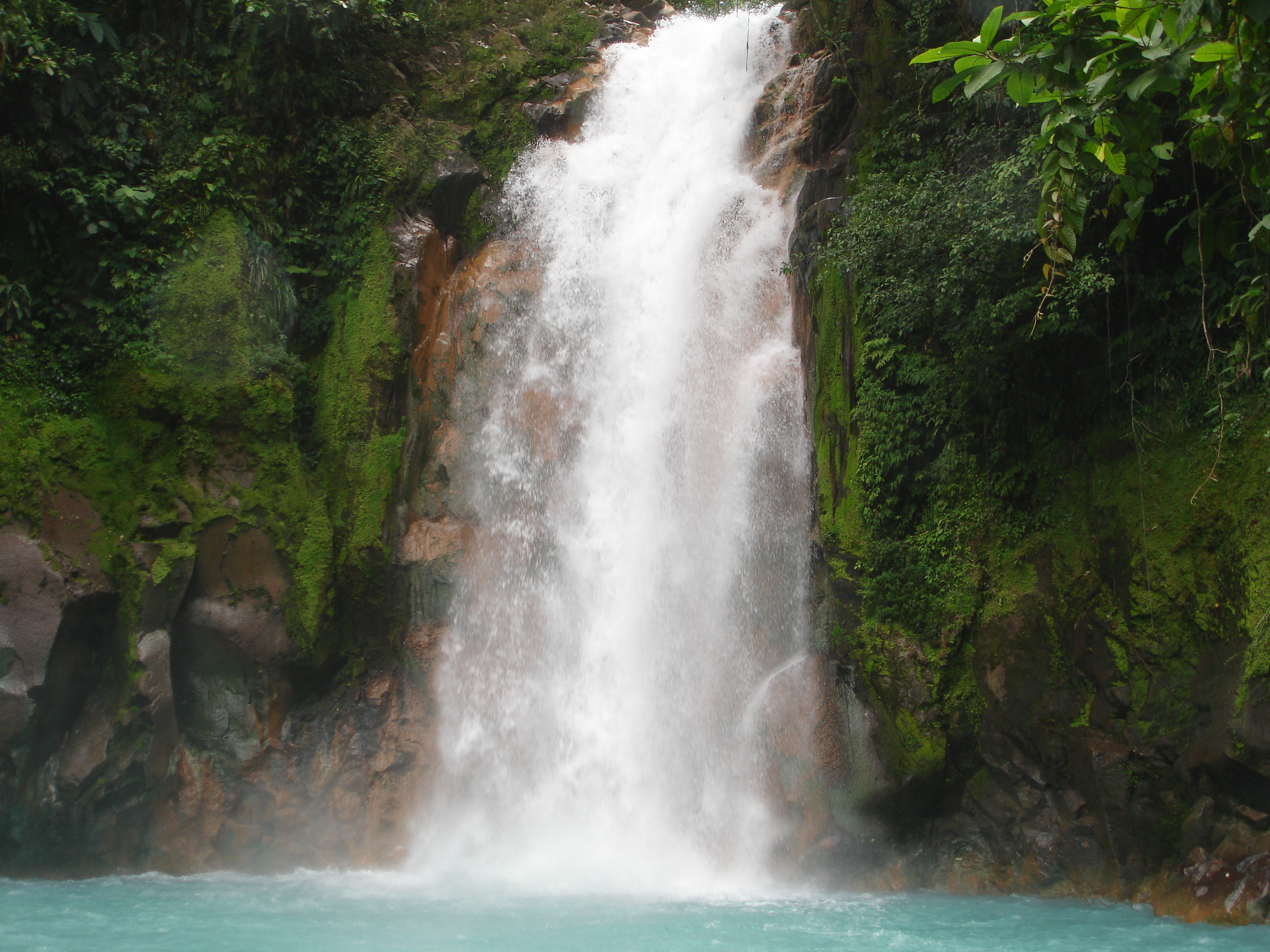
Sulfur-rich waterfall in Costa Rica

As developing countries increasingly convert natural ecosystems to areas controlled by humans, ecosystem services (e.g., waste absorption, water purification, soil conservation) are being lost. In order to prevent these shifts, people who live in urban areas or have no close relationship with, for example, their sources of drinking water are often willing to pay people who do have direct impacts on the watersheds. Payment for ecosystem services (PES) has become a measure by which higher-resource groups can induce lower-resource communities or individuals to protect local wetlands, forests, or other areas in order to maintain the ecosystem services that support a particular standard of living. Before such payment schemes can be established, however, certain scientific analyses must be carried out to determine the most efficient allocation of resources and facilitate the selection of the right service providers. Continue reading

Scraping Hell’s Attic

The Sulphur-Bottom Whale

The sulphur-bottom whale is the largest mammal on (or under) the earth’s surface; many speculate that it might be the largest animal ever to have inhabited our terraqueous globe. These immense creatures can typically grow to between eighty and a hundred feet long, with the largest specimens caught suggesting that the whales might exceed one hundred and ten feet in length! The weight of the sulphur-bottom whale is commensurate with its size: they can weigh between one hundred and one hundred and fifty tons. For comparison, the largest elephant ever recorded weighed a mere twelve tons. If the sulphur-bottom whale rolled over in its sleep Continue reading

Eight Year Echo Of Hope

When I described, a couple weeks ago, the echo of hope emanating from the Gulf of California it is fair to say I was pleasantly surprised.  That may be putting it too mildly, especially in hindsight now that I have seen a major new entrepreneurial initiative come to life there.  I will be writing more about that in the coming days.

But for now, I am in the Galapagos Islands and another echo is resonating.  In this case, for me, the echo is an eight year feedback.  As mentioned in this earlier post I had worked here on and off over several years, and the last time I was here there were some challenges that seemed intractable.  Today, upon arrival and for the remainder of the day, I had the opposite feeling of the last time I was here.  The photos below show the first thing I did with Reyna and Roberto after leaving the airport.  In the first photo you can see, as I did, just a simple conversation between them and one of the workers; then slowly a parade of otherworldly creatures crept into the photos…

This slideshow requires JavaScript.

Continue reading

Mission-Driven Development in Baja California Sur

In the first third of the 17th Century the Spanish crown sent Jesuit priests to establish missions in what is now Baja California Sur.  The fourth of these–Misión San Francisco Javier Vigge Biaundó–was active from 1699-1817.  What is amazing is that the installation has remained intact even centuries after its last priest left (abandoning the missions at the gun-pointing insistence of the crown as independence movements fomented, which is a story worthy of your further investigation).  Having found this particular oasis in the last third of the 17th Century, the priests cultivated grapes, dates, olives and other produce which, remarkably, still grow here today.

This slideshow requires JavaScript.

It is visually and olfactorally stunning to be in a place with the cactus and other desert flora native to the region Continue reading

Wordsmithing: Spa

When it is capitalized, this word refers to the mineral springs in Liège, Belgium, believed to have curative properties.  In the last several centuries the meaning of the word has been generalized to refer to almost any place that has curative mineral waters, according to OED, so that “a town, locality, or resort possessing a mineral spring or springs; a watering-place of this kind” is fairly known as a spa.

The generalization has expanded further in recent decades through commercialization, and as always OED’s tracking of the etymology is intriguing:

A commercial establishment which offers health and beauty treatment (esp. for women) through steam baths, exercise equipment, massage, and the like. U.S.

1960    Life 8 Feb. 111/1   The submerged specter above‥is getting a hydraulic underwater massage at a plush health spa near San Diego called the Golden Gate beauty resort whose customers are usually female.
1976    Vogue Dec. 214/1   Most American spas are designed exclusively for women.
1981    W. Safire in N.Y. Times Mag. 21 June 10/2   Only fuddy-duddies go to the gym,‥the upscale‥crowd goes to the spa.

A Four Year Echo Of Hope

For all of the challenges facing the Gulf Of California region ecologically, global trends in sustainable tourism offer potential solutions.  Broadly speaking, the mass tourism model propagated on the most accessible coastal regions of the world—particularly those visited by European and North American travelers—has been challenged by this alternative model.

Still, the mass tourism model has its advocates, in Mexico as in other parts of the world, and creeps into the planning models of destinations where sustainable development is the nominal platform. This happens because for at least half a century the notion of success or failure in tourism development has been defined according to this older model.  If WWF is to have an effective strategy for conservation in the GOC region, then a clear definition of competitiveness vis a vis sustainability must be established.

Those words opened the first draft of a report submitted four years ago . Continue reading

Connecting Dots

This slideshow requires JavaScript.

The news of Jad Abumrad being selected as a MacArthur Fellow, the so-called “genius grant” in recognition of his accomplishments and his future contributions, was worthy of celebration.  That defenestration reference led me back to that episode, which was a series of oddly connected sub-segments on the topic of Falling.  I use the word odd at the same time that I think: these are clearly examples of structured relevance.

What’s more odd is the coincidence between the Jad news and the fact that I just recently had pulled out material from my doctoral dissertation that I had only looked at one other time since 1997.  I pulled it out for the presentation I made to the students at Brown mentioned here.  Some visual highlights of that presentation (more on my dissertation, which is more clearly linked to Seth’s post here, and this one too, another time) are in the slideshow above, and complement Radio Lab’s treatment of the same (cue up at just prior to the 35th minute of this episode if you can download it and listen to it on your own player). Continue reading