How To Volunteer In Costa Rica

Ok, finally I will start from the beginning.

I study French and Spanish at the University of Edinburgh, and as such, I have to spend my Junior Honours year abroad: one semester in a Spanish-speaking country and one in a French-speaking country. Ever the romantic, I chose Costa Rica, with its rainforests and volcanoes, earthquakes and hurricanes, democracy and peace. There is no Costa Rican army. And they all say ‘Pura Vida’, all the time.

I'd say 'Pura Vida' all the time if I lived here too.

Continue reading

A Complex Region Through A Thoughtful Lens

The newspaper, back in its paper days (1908-2008), was always excellent.  As a web resource, we are glad it has found firmer footing.  And some stories and contributors make its Latin America coverage particularly worth watching. Continue reading

We Are Not The Only Ones


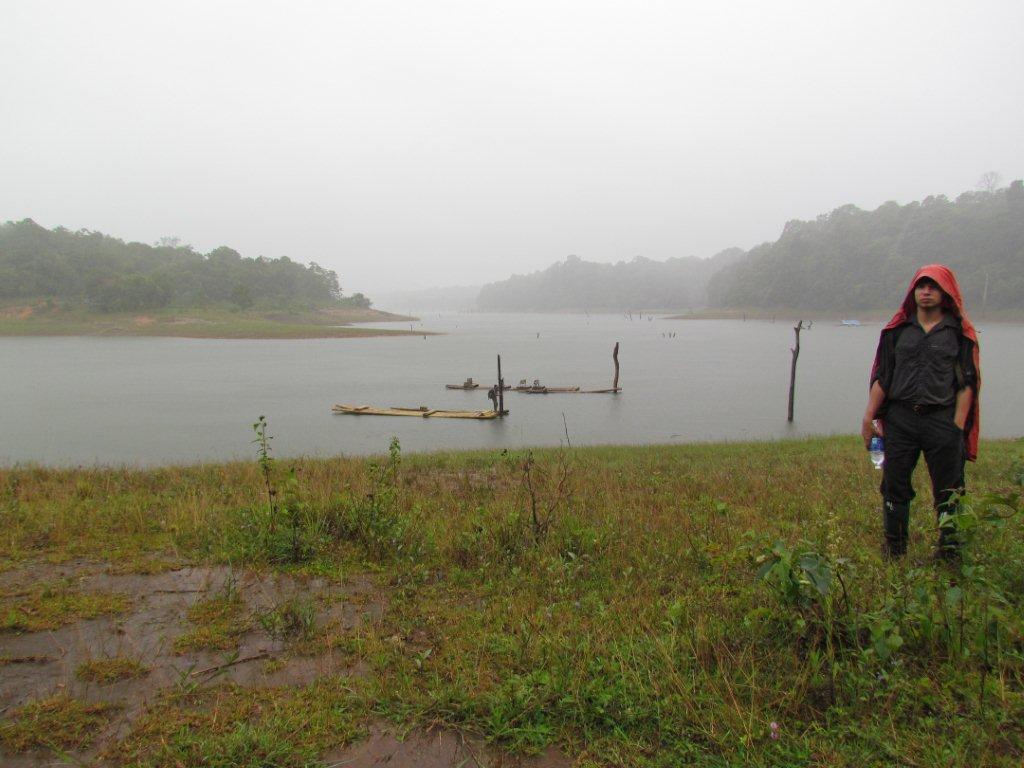
Normally we are watching for them in Thekkady or at the orphanage.  But they are elsewhere also.  In Munnar, where there are both tea estates and plenty of forest, elephants are always lingering.

Continue reading

Scarlet Basker, Revisited

In my previous post about this species, I gave a very brief description of its physiological features. Urothemis signata is indeed called the Scarlet Basker because of the mature male’s coloration, although the young male and female are quite similar, and therefore difficult to differentiate.  The difference (prior to maturity) between the two, as far as I can tell, is that the female’s abdomen has somewhat more extensive black markings, becoming almost ringlike, whereas the male’s markings are more like patches.

Although it is very possible that there were mature males flying about the area in which I photographed this specimen (there were probably 6 or 7 immature ones about), it would be almost impossible to tell because  Continue reading

The Circle of Life

During my five day safari, I snapped over 1,600 photos. I became obsessive and treated each sighting like a magazine photo shoot. At every encounter, my right eye was glued behind my camera’s view finder. Nearing the end of my trip, I realized I needed to simply enjoy the view and action, not just capture the scene. But as the safari progressed, I became selfish; not only did I want to see the animals but I also wanted to see them in action. Fortunately, that’s what I got.

This slideshow requires JavaScript.

In the middle of the day, you don’t really expect to see much predator wildlife since the weather is so hot; Continue reading

Lion King in Real Life

As a kid, I loved watching the Lion King. Either on the Disney Channel, VHS or live on Broadway, I was hooked. For me, safari in the Masai Mara is story of The Lion King coming to life: The whole gang was there- Simba, Nala, Pumba, Timon and even Rafiki!

This slideshow requires JavaScript.

Continue reading

Wordsmithing: Zoo

It is one of the words that most children associate with wildlife. Does it qualify as a word?  OED shows the etymology of these three letters as:
c1847    Macaulay in Life & Lett. (1878) II. 216   We treated the Clifton Zoo much too contemptuously.
1886    C. E. Pascoe London of To-day (ed. 3) iv. 65   The ‘Zoo’ in time past was as favourite a fashionable resort as Rotten Row.

Bumbling Back From The Brink

Cockerell's Bumblebee. (Credit: G. Ballmer, UC Riverside)

While news related to species loss seems almost always seem to be coming in at us like floodlights, occasionally there is a glimmer of hope shining outward in the headlines:

ScienceDaily (Dec. 5, 2011) — A team of scientists from the University of California, Riverside recently rediscovered the rarest species of bumblebee in the United States, last seen in 1956, living in the White Mountains of south-central New Mexico. Continue reading

Pygmy Dartlet

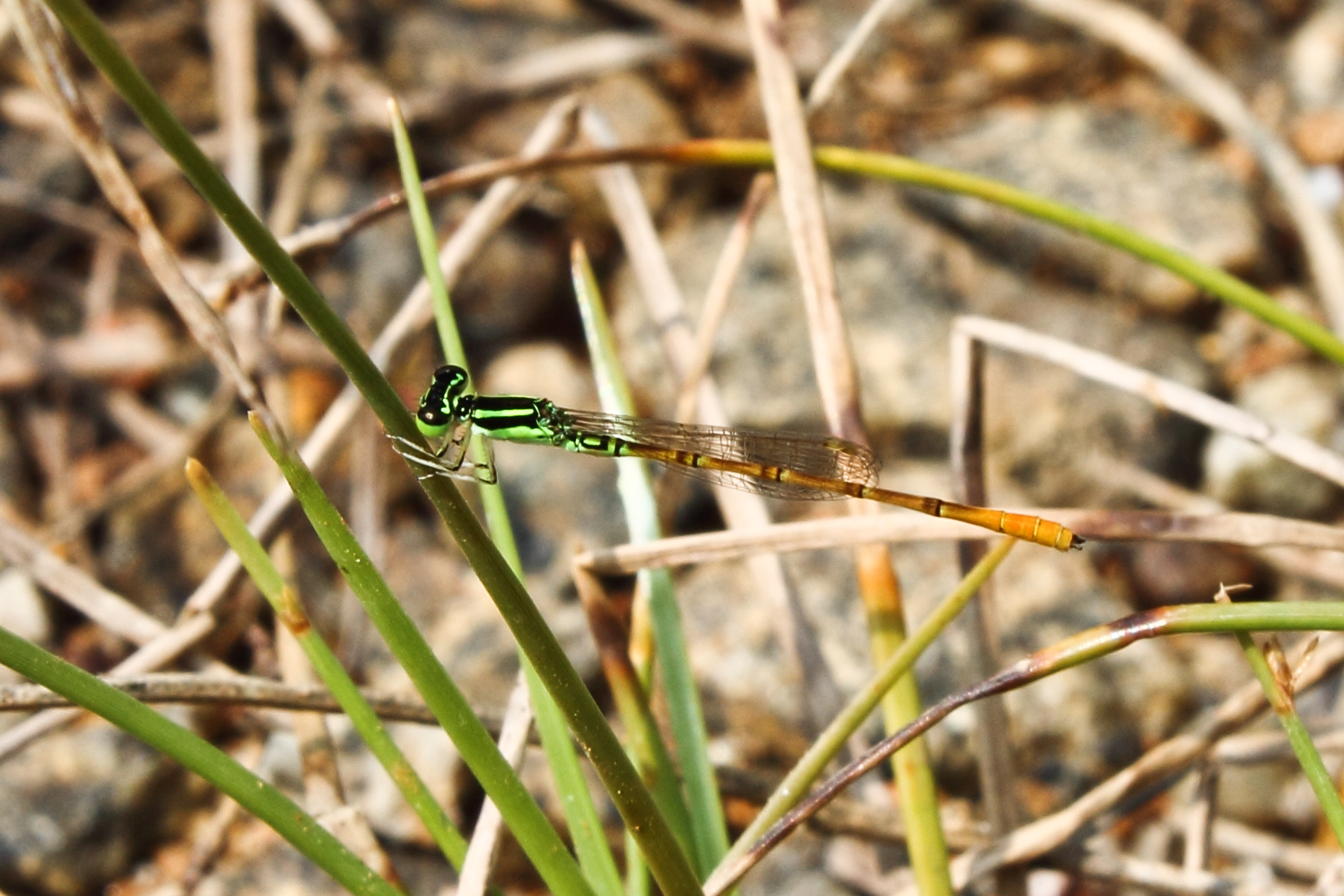
The Pygmy Dartlet is a very widespread species of damselfly, surprisingly enough. Measuring about 16 millimeters, Agriocnemis pygmaea is undoubtedly the smallest damselfly or dragonfly I’ve seen. The species is known to have many different appearances, with both male and female displaying up to three or four different color combinations. The male is pictured above, and the female below.  Continue reading

Exploring Kenya: Lake Nakuru

This slideshow requires JavaScript.

My first trip to Kenya was about two years ago; unfortunately, I never ventured outside the borders of Nairobi. This time, I pledged to experience the nation’s countryside firsthand. Above is a sample of what I saw from Lake Nakuru and the drive to the Masai Mara. Continue reading

More Stephen Jay Gould On The Simplicity Of Darwin

Six minutes continuing the lecture (the first five minutes were posted here) given by one of the greatest scholars of evolutionary theory since Darwin himself.

Continue reading

A Dead Zone

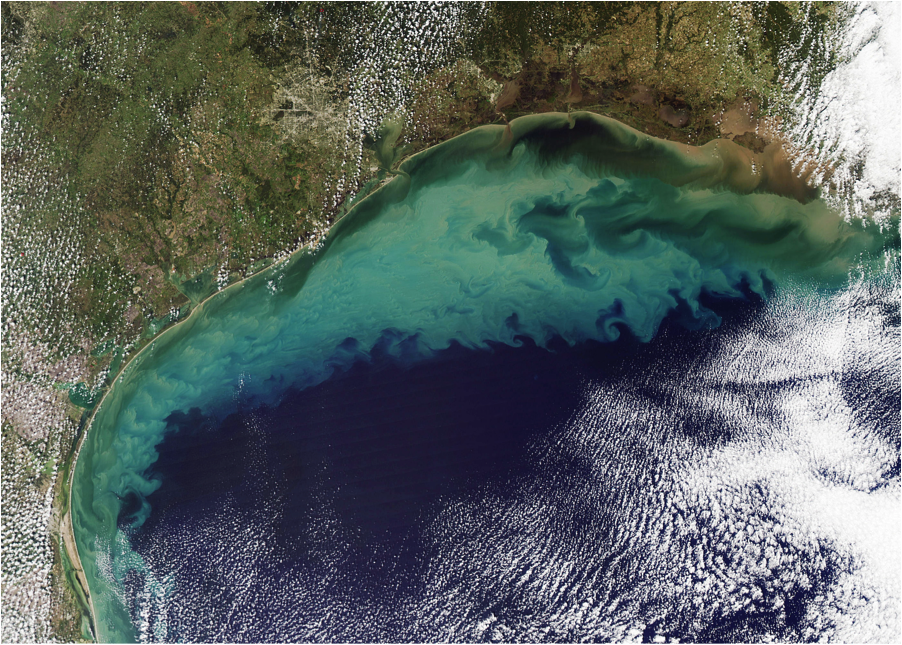
This picture is of the hypoxic area in the Gulf of Mexico, the largest “dead zone” in the western Atlantic. Since the beginning of this site we have tried to accentuate the wonders of nature, creative and collaborative approaches to conservation, and other fun stuff.  Every now and then a dose of scientific explanation helps put this in perspective, even if it is a downer like hypoxia.

Hypoxia occurs when oxygen concentrations in the water are too low to sustain most life, and is created by a process known as eutrophication. This is the over-enrichment of water by nutrients, which cause dense growth of algae that consumes oxygen as it multiplies and decomposes. The resulting lack of oxygen can cause large die-offs of marine life, seriously threatening ecosystems in the Gulf.

Continue reading

Kerala’s Caterpillars

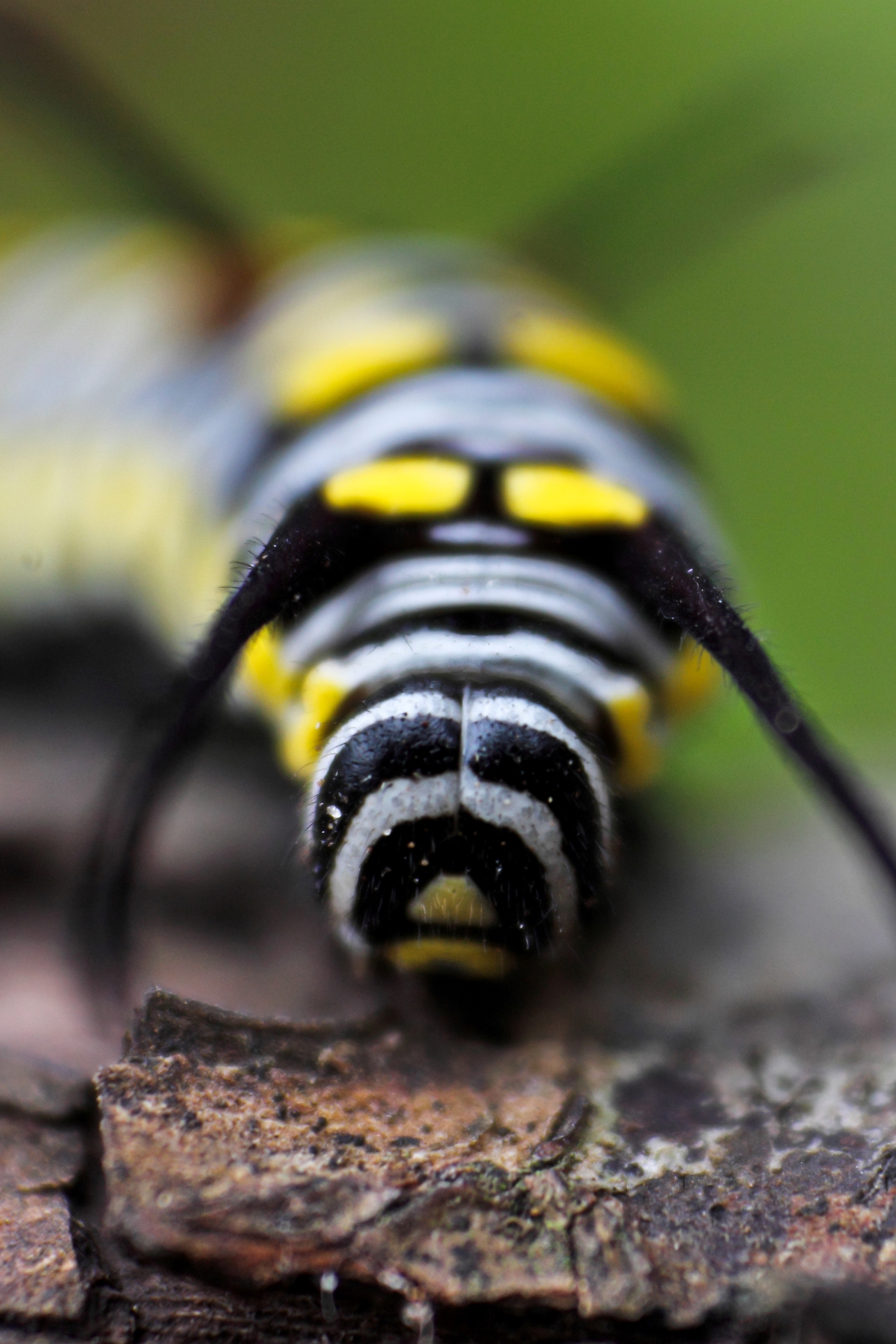
More than once I have failed to successfully (by my standards) photograph a butterfly’s larva due to insufficiently sophisticated equipment. However, those days are coming to an end, inching forward step by baby step, in odd undulating motions eerily akin to a caterpillar’s rolling gait.

Continue reading

Clear-Winged Forest Glory

These are the first good shots I’ve gotten of any glories before. I have seen Stream Glories (Neurobasis chinensis) in Gavi, but they were far too shy to be able to photograph them. Walking through the forest the other day, however, a single Forest Glory (Vestalis gracilis) flew past me into the undergrowth. Careful not to lose sight, I followed it, only to discover a total of  five damselflies lounging about in the shade.  Continue reading

Keyhole To The Jungle

Another vertical panorama, the Keyhole is a more artistic than depictive, unlike most of my photographs. I was struggling to get the shots I wanted to use in the picture (there were about 10) because of the lighting differences between the rocks on the bottom, the undergrowth in the lower third, the canopy, and the skyline. Getting an even light level in all the shots was complicated, requiring checking each shot and retaking them multiple times to ensure accuracy. After over 20 minutes I finally felt satisfied, and laboring twice that long in the digital darkroom resulted in the following image Continue reading

Coromandel Marsh Dart

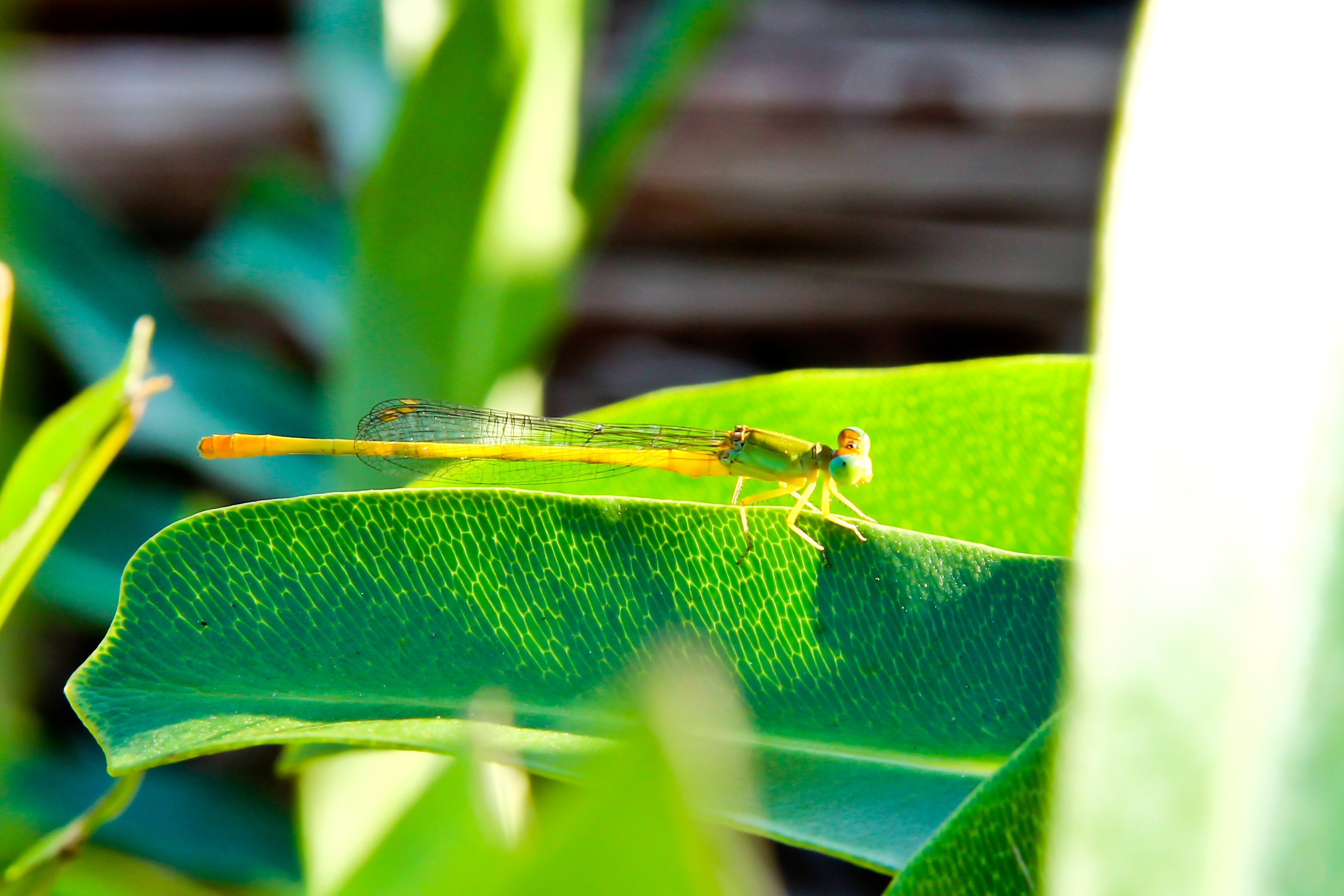
I love this picture because of the clearly visible veins on the leaf the damselfly is perched upon. This male marsh dart (Ceriagrion coromandelianum) was photographed in Panganad, Kerala, the same day as  Continue reading

Yellow Bush Dart

Yes, I used this picture in a previous post, but I feel it is worthy of a repost, especially when the female counterpart is included. If memory serves, this was one of, if not the first odonate picture I took with an SLR camera.  Continue reading