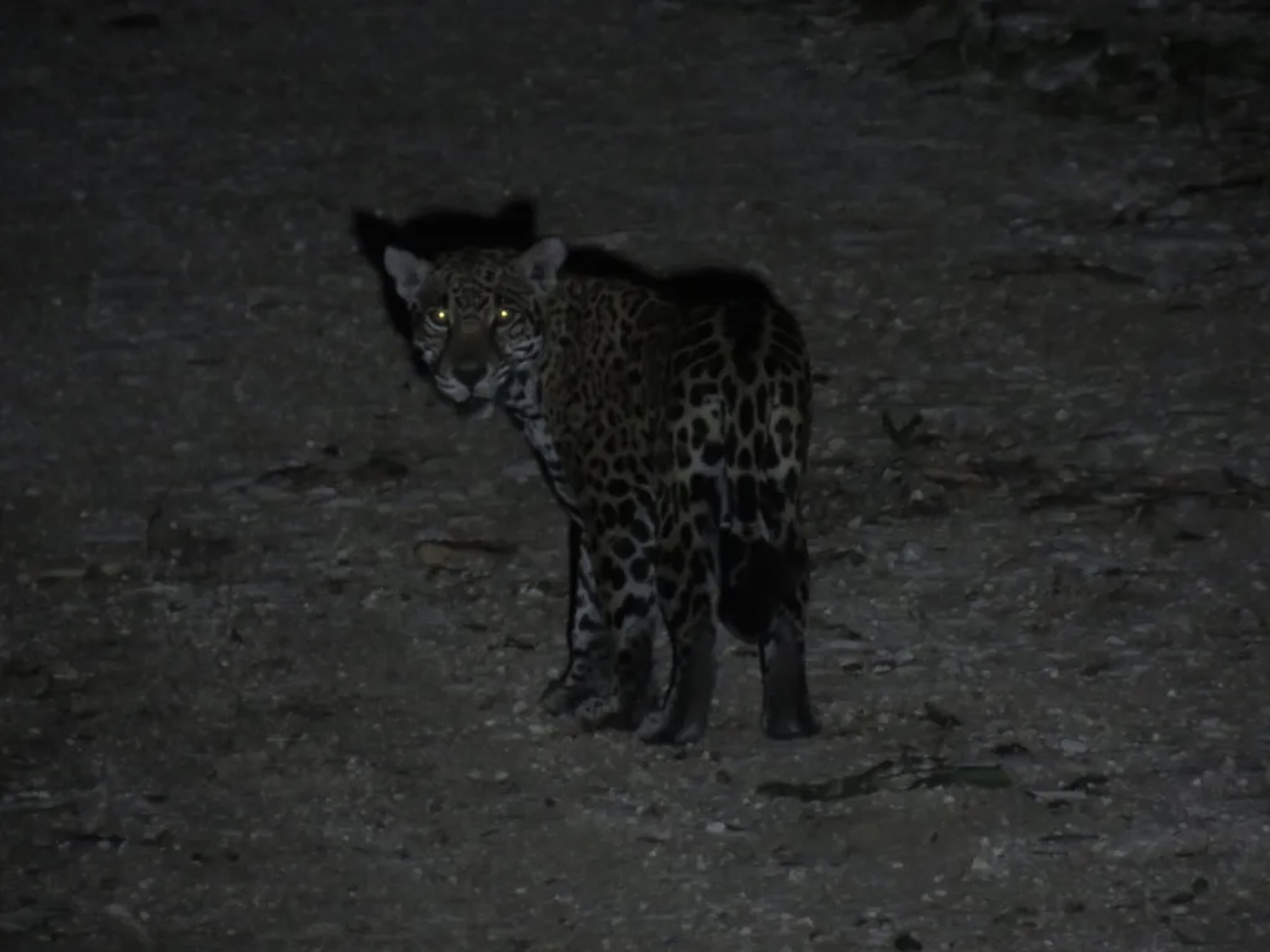
The Jaguar in the Night

Jaguar by Seth Inman

The night drive is one of the most popular tours at Chan Chich Lodge because it is arguably the best opportunity for spotting a jaguar, ocelot, margay, or puma. Of the four forest cats, last night our tour group was fortunate to see the beloved jaguar.

The drive started at 7:30pm. Eight of us climbed up the back of the truck and took our seats along the cushioned benches facing out to the road. We were instructed by Luis, our tour guide, to look for “eyes,” and thereafter, the truck rumbled to a start and Luis began to point his flashlight in all directions, up at the tree branches and down at the forest undergrowth. The aftermath from Hurricane Earl was evident as the truck drove between broken tree stumps and overhanging branches, but this also allowed wildlife to appear in places that it had not been seen before.
Continue reading

Living with Jaguars

Note: Mr. Flota was born in the village of San Lazaro in the Orange Walk District of northern Belize. He works at Chan Chich Lodge in Gallon Jug, which is situated in a protected private forest that has one of the highest densities of jaguars in the world. He is the bartender and horse wrangler for the Lodge. Mr. Flota related this story to Jacalyn Willis, a biologist working in the tropics and at the Lodge. She wrote down his story as he told it.

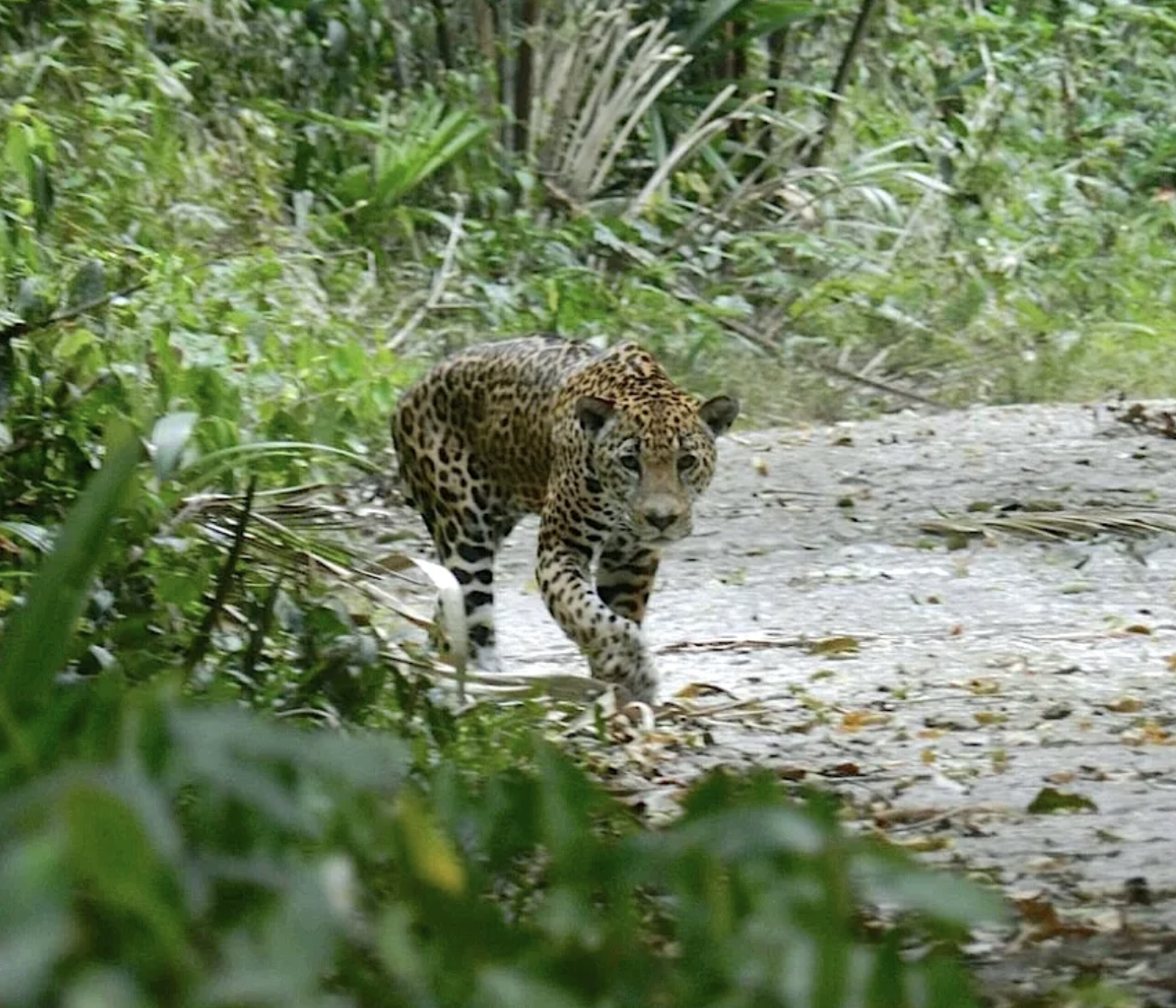
One sunny morning in July I decided to take a walk on the old limestone road here called Sylvester Village Road. It cuts through forest that has been selectively logged, leaving a mixed habitat good for birds. I took my binoculars and camera. As I came out of the little housing area where I live at Chan Chich Lodge, and swung around a bend in the path to get onto the road, I saw a jaguar walking ahead of me in the same direction. Now, we live in jaguar territory in a private preserve in northern Belize, so it happens fairly often that someone will see a jaguar, which usually disappears quickly. But this jaguar had not yet noticed me and was about 30 yards ahead.

Continue reading

My First Encounter with Chan Chich Lodge

img_9736_zpscnhylmqj

Chan Chich Lodge is camouflaged deep within the Belizean forest and within the ancient ruins of a Mayan structure. When you are driving along a rocky one-way limestone road through a variation of open cattle pastures and the dense forests for several hours, you don’t realize you have reached the lodge until you have driven past the welcome sign and are passing by one of the twelve wooden cabañas. Disclaimer: perhaps this first impression is singular to me because I first arrived to the hotel via ground transportation, at dusk, and in a drowsy state. Continue reading

Turns Out the Red Wolf is Part Gray, Part Coyote

John Woodhouse Audubon – Red Texas Wolf – Google Art Project via WikiMedia Commons

Last time I recall linking to a story with gray wolves, it was in the context of rewilding. And though I haven’t written about the red wolf before, it’s another North American species that is protected under US federal law in the Endangered Species Act. But new genetic research published last week on the DNA of North American wolf genomes is showing that the red wolf is in fact a hybrid species; a mix of gray wolf and coyote. The same goes for the Eastern gray wolf, another protected species. Carl Zimmer reports for the New York Times:

The finding, announced Wednesday, highlights the shortcomings of laws intended to protect endangered species, as such laws lag far behind scientific research into the evolution of species. Continue reading

Bad News for a Few European World Heritage Sites

Protections have been weakened for Russian natural areas like the Western Caucasus. © WWF-Russia / Sergey Trepet

Last time we mentioned UNESCO World Heritage Sites, it wasn’t good news either, when many Sites were listed as “in danger.” The places newly at risk, according to the World Wildlife Fund (WWF), are often in the way of logging enterprises, often by the very governments who should be protecting the internationally recognized areas.  From the WWF:

The UNESCO World Heritage Committee today expressed concern over three sites facing severe pressures from harmful industrial activities, but failed to take bold action to protect them.

At the meeting, WWF objected to a sharp logging increase in the Polish portion of Bialowieza Forest World Heritage site, which also spans part of Belarus. The forest is one of Europe’s oldest, and is home to the most wild European bison, as well as lynxes and wolves. The government of Poland has argued that logging is necessary in order to combat a bark beetle infestation, a claim Polish scientists reject.

Continue reading

An Introduction to Villa del Faro, via Birds

Screen Shot 2020-08-14 at 10.48.43 AM

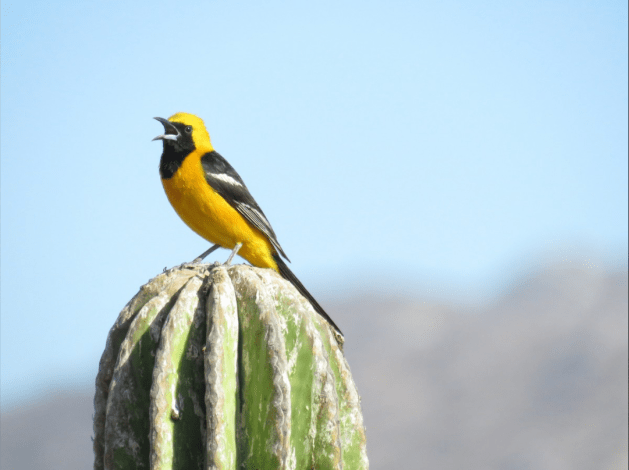
male Hooded Oriole at Villa del Faro

Jocelyn and I are visiting a property on the southern tip of the state Baja California Sur in Mexico, on the long peninsula running from the mainland into the Pacific Ocean, creating the Sea of Cortez. Grey and Humpback Whales use the sheltered and warm waters in the Bay of California to give birth and raise their calfs, but unfortunately for us, we aren’t here at a time during which these marine mammals can be seen from the many patios and balconies at Villa del Faro.

Continue reading

A Just So Story by DNA

A few years ago we shared a story similar to the one below, where Kipling’s Just So Stories were linked with reporting on modern evolutionary biology; a year before that, at the beginning of this blog’s start in India, we discussed Kipling’s ties to that country and its wildlife. From the New Yorker‘s Elements section comes the story “How the Giraffe Got Its Neck,” by Anthony Lydgate:

It’s difficult to know what to make of the giraffe. It shuffles like a camel (right legs forward, then left legs) but runs like a rabbit (hind legs forward, then front legs). Its distinctive aroma repulses many ticks but enchants certain people. It bellows, hisses, and moans in the wild, and in captivity it hums in the dark. It naps with its head aloft but sleeps like a swan, with its head on its haunches. Had Aristotle ever seen a giraffe, he might have said that it was the product of an interspecies dalliance at the watering hole, which he thought of as a kind of zoological swingers’ club—a place where “bastard animals are born to heterogeneous pairs.”

Continue reading

Waste Not, Want Not Tiger Habitat

4047

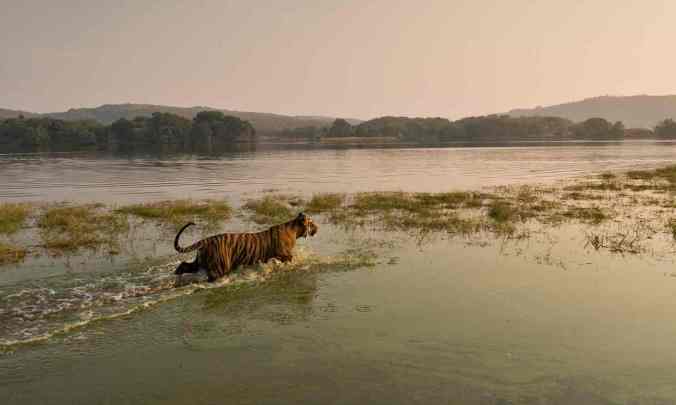
A tiger wades into the waters of Raj Bagh lake in Ranthambhore tiger in Rajasthan, India. Conservationists warn ‘tiger corridors’ connecting habitats across Asia are crucial for the survival of the species. Photograph: Aditya Singh/Alamy

From today’s Guardian in the Environment section, some welcome news on one of our most posted-on topics:

Forests still large enough to double the world’s tiger population, study finds

Satellite maps show tiger habitat is being lost but still adequate for meeting international goal of doubling tiger numbers by 2022

Forests that harbour tigers are being lost but are still large enough to take double the world’s tiger population in the next six years, according to a study using new satellite mapping technology. Continue reading

Camera Trapping Bounty

29TB-Camera-trap-top-jumbo

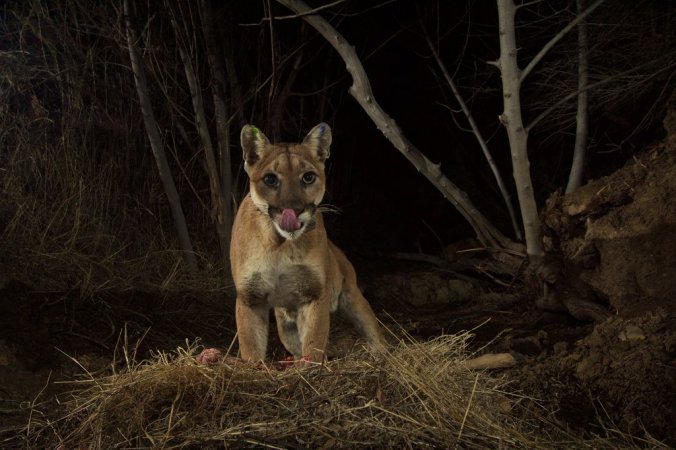
A female mountain lion called P-35 was photographed by a camera trap in the Santa Susana Mountains northwest of Los Angeles. National Park Service

 From today’s Science section of the New York Times:

Photographing Wildlife Without a Photographer

By

Camera traps can help illuminate the world’s most elusive animals. When a cougar, elephant or other creature triggers the device’s motion sensor, it snaps a picture.

“Most animals are hiding, you actually never get to see them and you might be led to believe there’s nothing out there,” said Roland Kays, a zoologist at North Carolina State University and author of the forthcoming book “Candid Creatures: How Camera Traps Reveal the Mysteries of Nature.” Continue reading

Conservation, Technology & Ethics

13duaneWEB-jumbo

Adam Ferriss

We have had the good fortune, and could not agree more with the questions raised and the puzzles presented in this opinion editorial published two days ago in the New York Times:

The Unnatural Kingdom

If technology helps us save the wilderness,
will the wilderness still be wild?

By

IF you ever have the good fortune to see a Sierra Nevada bighorn sheep, the experience might go like this: On a sunny morning in Yosemite National Park, you walk through alpine meadows and then up a ridge to the summit of Mount Gibbs at 12,764 feet above sea level. You unwrap a chocolate bar amid breathtaking views of mountain and desert and then you notice movement below. Continue reading

El Jefe, Sole Wild USA Jaguar

lead_large (1)

One may be the loneliest number, but it is not a hopeless number, we hope. Thanks to the Atlantic for this story:

There are about 15,000 jaguars living in the wild today. They are solitary creatures, preferring to live and hunt alone. But the one living and hunting in the United States takes the word “loner” to another level: The jaguar, nicknamed “El Jefe,” is the only known wild jaguar in the country.

El Jefe, which means “the boss” in Spanish, made his public debut Wednesday in video footage released by the Seattle-based Conservation CATalyst and the Tucson, Arizona-based Center for Biological Diversity. The brief clip shows the big cat roaming the grassy forest floor of the Santa Rita Mountains, outside Tucson, navigating rocky creeks, and just doing jaguar-y things: Continue reading

Concurrent and Coinciding Thoughts on 5000+ Birds

img_7608_zpsgfofu0lt

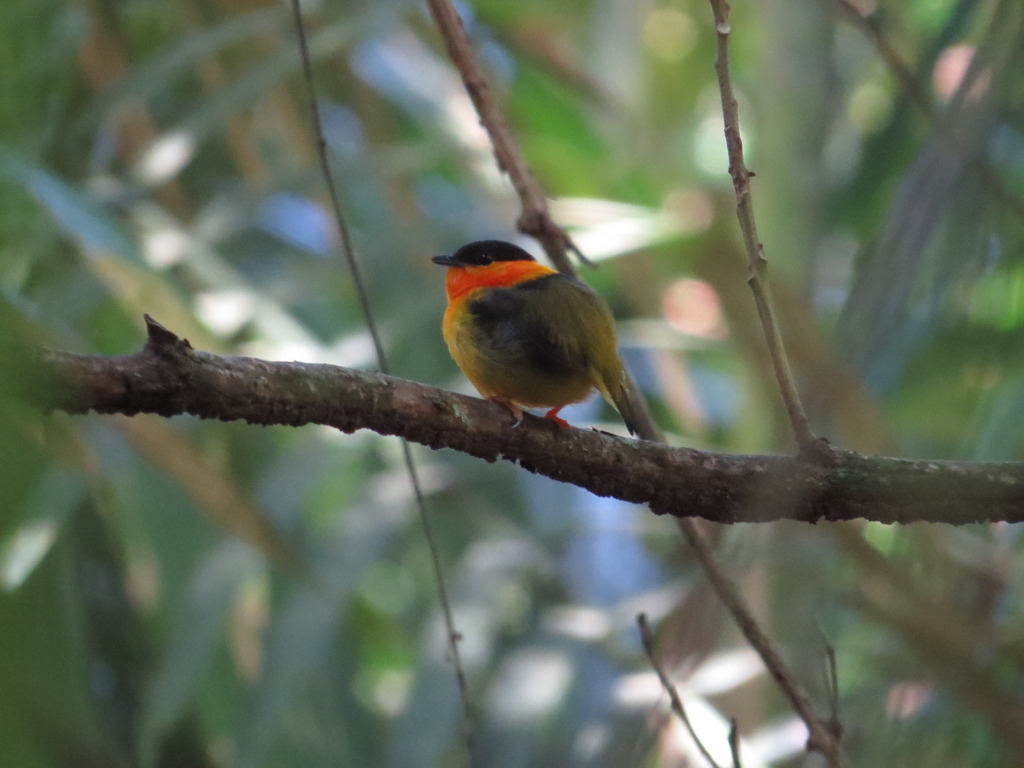
male Orange-collared Manakin seen at Carara National Park, Costa Rica

This week, two birders (one of whom we’ve featured on the blog before, and the other who we should have), Noah Strycker and Tim Boucher, wrote some thoughts on birding and life lists that had much in common, partially because I suspect Boucher’s post on The Nature Conservancy’s blog was inspired by Strycker’s summary of his 2015 Big Year, even though he made no explicit mention of the new world record (6,042 species of bird seen or heard in a calendar year).

Boucher, who saw his 5000th bird at the very end of 2015 (and those 5000 birds are ones he’s actually seen, not only heard), reflects on thirty-four years of birding to achieve his goal. Strycker, on the other hand, summarizes 365 days of straight birding to end up with the biggest big year ever recorded.

Continue reading

The Power of Parks

yosemite

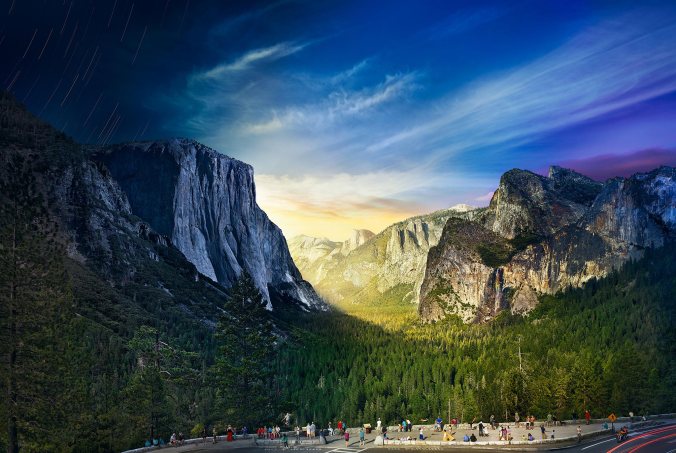
Photographs of Yosemite National Parks composed by Stephen Wilkes. Courtesy: National Geographic

Which side are you on – the one that believes national parks are the past or to the side that sees the future in these stretches? As long as national parks figure on your maps and feature in your scheme of things, you must know that the National Park Service is celebrating its centennial this year.  In commemoration, National Geographic looks at how to preserve these wild spaces:

“In March 1868 a 29-year-old John Muir stopped a passerby in San Francisco to ask for directions out of town. “Where do you wish to go?” the startled man inquired. “Anywhere that is wild,” said Muir. His journey took him to the Yosemite Valley in California’s Sierra Nevada, which became the spiritual home of Muir’s conservation movement and, under his guidance, the country’s third national park. “John the Baptist,” he wrote, “was not more eager to get all his fellow sinners into the Jordan than I to baptize all of mine in the beauty of God’s mountains.” Today around four million people a year follow their own thirst for the wild to Yosemite.”

Continue reading

To Keep The Mountain Gorillas Alive

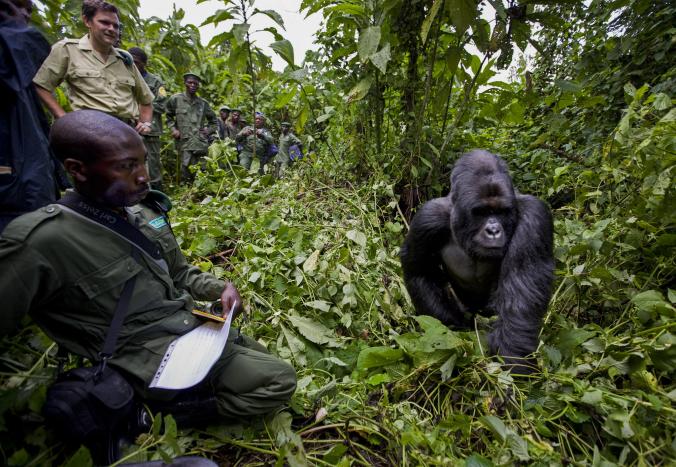
In November 2008, conservation authorities in the DRC had their first sighting of a mountain gorilla in more than 15 months. Because of the commitment and bravery of its rangers, the gorilla population is now estimated to be 880. PHOTO: BRENT STIRTON, GETTY

In November 2008, conservation authorities in the DRC had their first sighting of a mountain gorilla in more than 15 months. Because of the commitment and bravery of its rangers, the gorilla population is now estimated to be 880. PHOTO: BRENT STIRTON, GETTY

The Virunga National Park in the Democratic Republic of Congo is one of the world’s deadliest parks. It’s also home to some 300 mountain gorillas—more than a quarter of those that remain on the planet. Beneath Virunga’s surface lies a wealth of minerals and oil, coveted by multinational companies. Deadliest park because since 1996, more than 150 Virunga rangers have been killed in the line of duty. Emmanuel de Merode, director of Virunga National Park and a National Geographic Society Explorer of the Year, was nearly killed in 2014 for protecting the park and its mountain gorillas.

Continue reading

An NBA Star and a Campaign to Protect Sharks

Yao Ming has teamed up with the conservation nonprofit WildAid to spread the word that shark fin soup bears bad news. PHOTO: Toshifumi Kitamura/AFP/Getty

Yao Ming has teamed up with the conservation nonprofit WildAid to spread the word that shark fin soup bears bad news. PHOTO: Toshifumi Kitamura/AFP/Getty

Yao Ming may now be a retired professional basketball player but him making it to the  All-NBA Team five times is not a forgotten feat. That and the fact that at the time of his final season, he was the tallest active player in the NBA, at 2.29 m (7 ft 6 in). Ming, who was born in Shanghai, China, started playing for the Shanghai Sharks as a teenager. Now, miles away from the court, his life is still closely linked to the sharks – the animal kind. Ming is a strong advocate on protecting sharks and is pushing for a ban on shark fin soup, a delicacy that significantly contributes to the estimate of 1 in 4 sharks now being endangered.

The number of sharks in our seas has been steadily decreasing for decades. About 100 million sharks a year are killed — 73% of those are targeted for their fins, which are usually cut off before the shark is left to die.

Continue reading

A Bird Prized for its Ivory

The illegal trade in elephant tusks is well reported, but there's a type of "ivory" that's even more valuable. It comes from the helmeted hornbill - a bird that lives in the rainforests of East Asia and is now under threat. PHOTO: Science Photo Library

The illegal trade in elephant tusks is well reported, but there’s a type of “ivory” that’s even more valuable. It comes from the helmeted hornbill – a bird that lives in the rainforests of East Asia and is now under threat. PHOTO: Science Photo Library

Throughout history, the human desire for ivory—used in products from jewelry to piano keys to priceless religious art objects—has far outmatched efforts to stop the killing of elephants for their tusks. A smaller, feathered species, too, feels threatened thanks to the ‘prized’ casque it wears on its head: the Helmeted Hornbill.

Helmeted hornbills live in Malaysia and Indonesia. On the islands of Sumatra and Borneo their maniacal calls and hoots resonate through the rainforest. They have a reputation for being secretive and wary, though, and you’re more likely to hear them than see them.They have good reason to be shy – thousands are killed each year for their casques, shot by hunters who sell the heads to China. Between 2012 and 2014, 1,111 were confiscated from smugglers in Indonesia’s West Kalimantan province alone. Hornbill researcher, Yokyok Hadiprakarsa, estimates that about 6,000 of the birds are killed each year in East Asia.The casque, for which hunters are willing to risk arrest and imprisonment, is sometimes referred to as “ivory”. It’s a beautiful material to carve, smooth and silky to the touch, with a golden-yellow hue, coloured by secretions from the preen gland – most birds use their heads to rub protective oils from this gland over their feathers, legs and feet.

Continue reading

As Wild As It Gets

Greg Carr says Gorongosa is a “human development and conservation project". PHOTO: BBC

Greg Carr says Gorongosa is a “human development and conservation project”. PHOTO: BBC

What does it take to restore a wildlife hotspot? To put some animals back in, develop and sustain the environment so more animals return, and hold up the model as a means to uplift communities, and thereby the nation? The answer is Gorongosa National Park – a Mozambican safari paradise.

In 1962, six-year-old Vasco Galante was treated to his first cinema trip – to see Charlton Heston in the Hollywood epic, The Ten Commandments. But despite the blockbuster’s eye-popping sequences, the images that most impressed young Vasco came from a short advert shown before the film, which showcased the elephants, lions and buffalo in the verdant floodplains of Gorongosa National Park – a Mozambican safari paradise once marketed as “the place where Noah left his Ark”.

As he left the Lisbon picture house, young Vasco vowed to visit the park one day, and more than 40 years later, he finally got the chance. But the park he encountered was a far cry from the Gorongosa of ’60s showreels that once attracted the likes of John Wayne, Joan Crawford and Gregory Peck. A brutal 15-year civil war in the aftermath of Mozambique’s independence from Portugal in 1975 had devastated much of the province, and Gorongosa, one of its key battle grounds, was almost destroyed.

Continue reading

Where Have the Rhinos Gone?

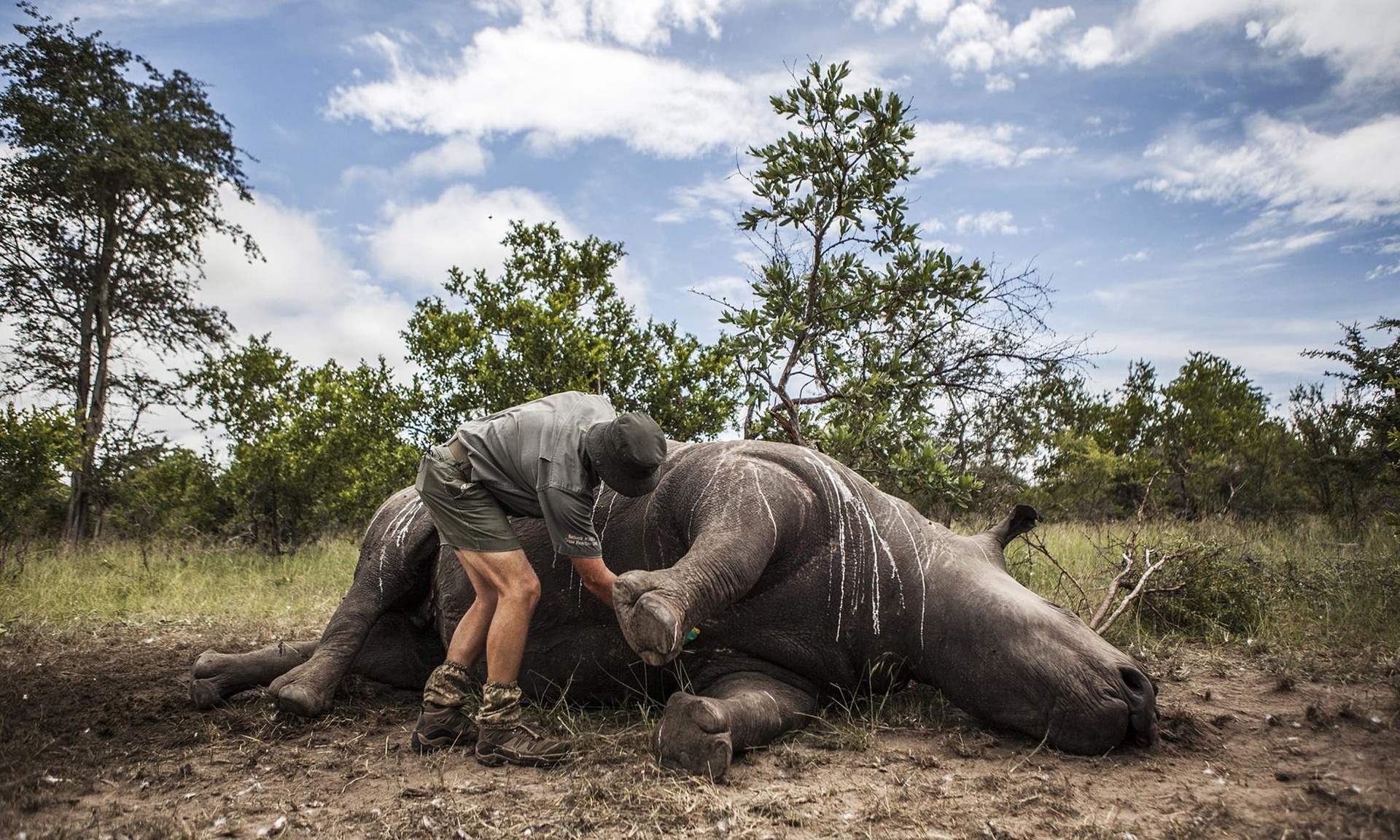
 An investigator prepares the carcass of a rhino killed for its horn for postmortem in the Kruger national park. PHOTO: Salym Fayad/EPA

An investigator prepares the carcass of a rhino killed for its horn for postmortem in the Kruger national park. PHOTO: Salym Fayad/EPA

Today is World Rhino Day. It celebrates all five species of rhino: Black, white, greater one-horned, Sumatran and Javan rhinos and was first announced by WWF-South Africa in 2010. South Africa is home to over 70 percent of African rhinos, the endangered species whose number dropped sharply to under 20,000 due to rampant poaching. Poaching has become the leading threat to the rhinos’ survival, with official statistics indicating 1,215 rhinos were killed for their horns in South Africa in 2014.

Continue reading

A Fitting Anniversary Surprise

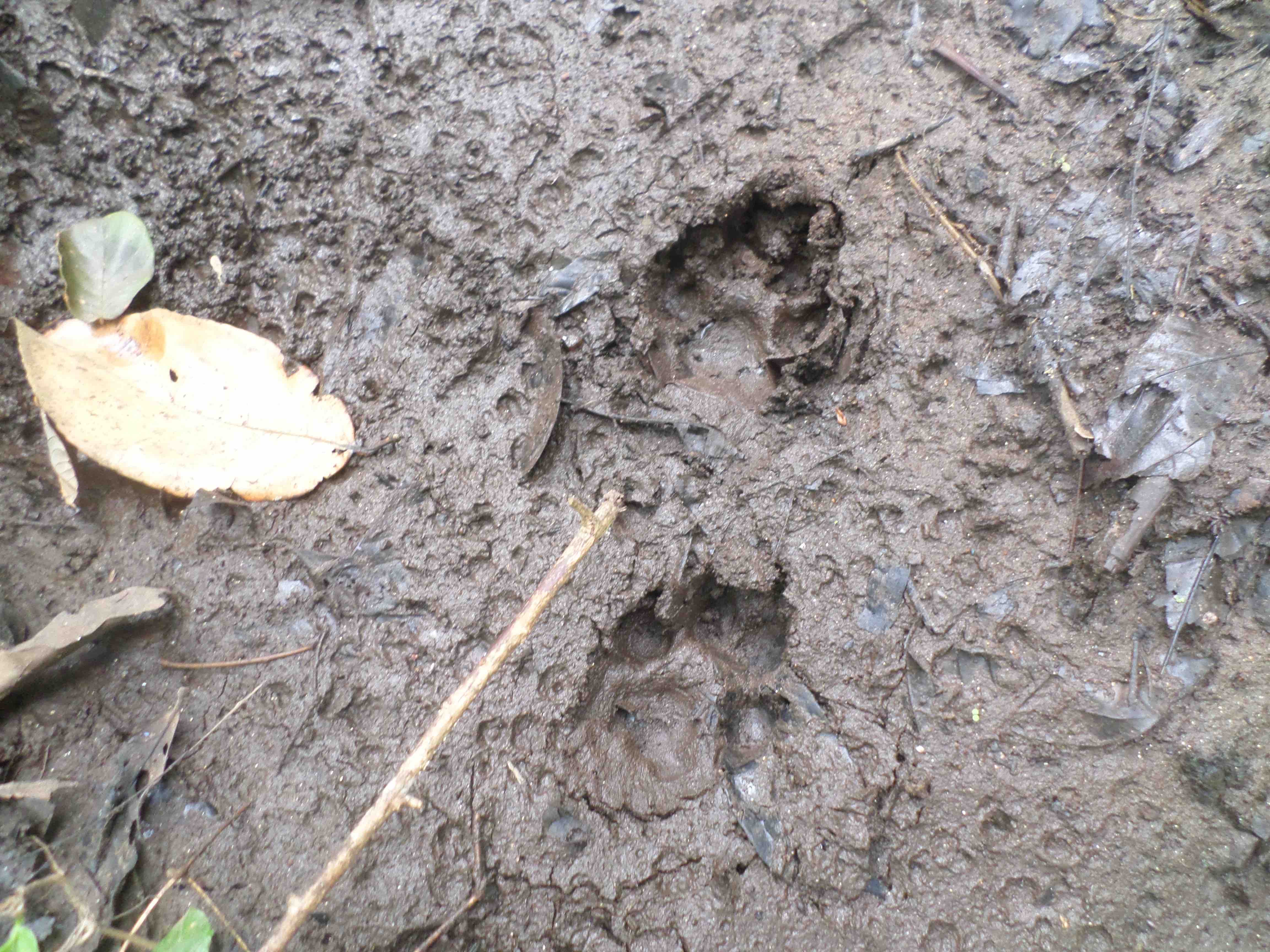
Leopard Paw Prints, Periyar Tiger Reserve

Leopard Paw Prints, Periyar Tiger Reserve

Five years ago last week several of us moved to Kerala, India. Sometime in the first year one of us took a photo of a huge tiger paw print while trekking through the Periyar Tiger Reserve. Two of us had the briefest of brief sightings of a tiger, back then as well, with the tiger leaping across the trail we were on, doing its best to avoid us and move on…

Now, exactly five years in, we had what anyone would describe as the ideal nature encounter.  Continue reading

What Can We Do For the Gentle Giant?

A herd of elephants by the river at Periyar Tiger Reserve, Thekkady, India. PHOTO: Rosanna Abrachan

A herd of elephants by the river at Periyar Tiger Reserve, Thekkady, India. PHOTO: Rosanna Abrachan

Predation of elephants has increased in recent years, with as many as 100,000 African elephants being killed between 2010 and 2012, according to an elephant researcher at Colorado State University. Nearly 60 percent of Tanzania’s elephant population has been wiped out in the past six years, the report indicated. Increased demand in Asia, where a single tusk can fetch up to $200,000, has fueled the increase in poaching. August 12 marked the fourth annual World Elephant Day, a day to “bring attention to the urgent plight of Asian and African elephants,” according to a Web site about the annual event. There may be fewer than 400,000 African and fewer than 40,000 Asian elephants remaining in the wild, the Website says.

Continue reading