On the Tail of the Tiger

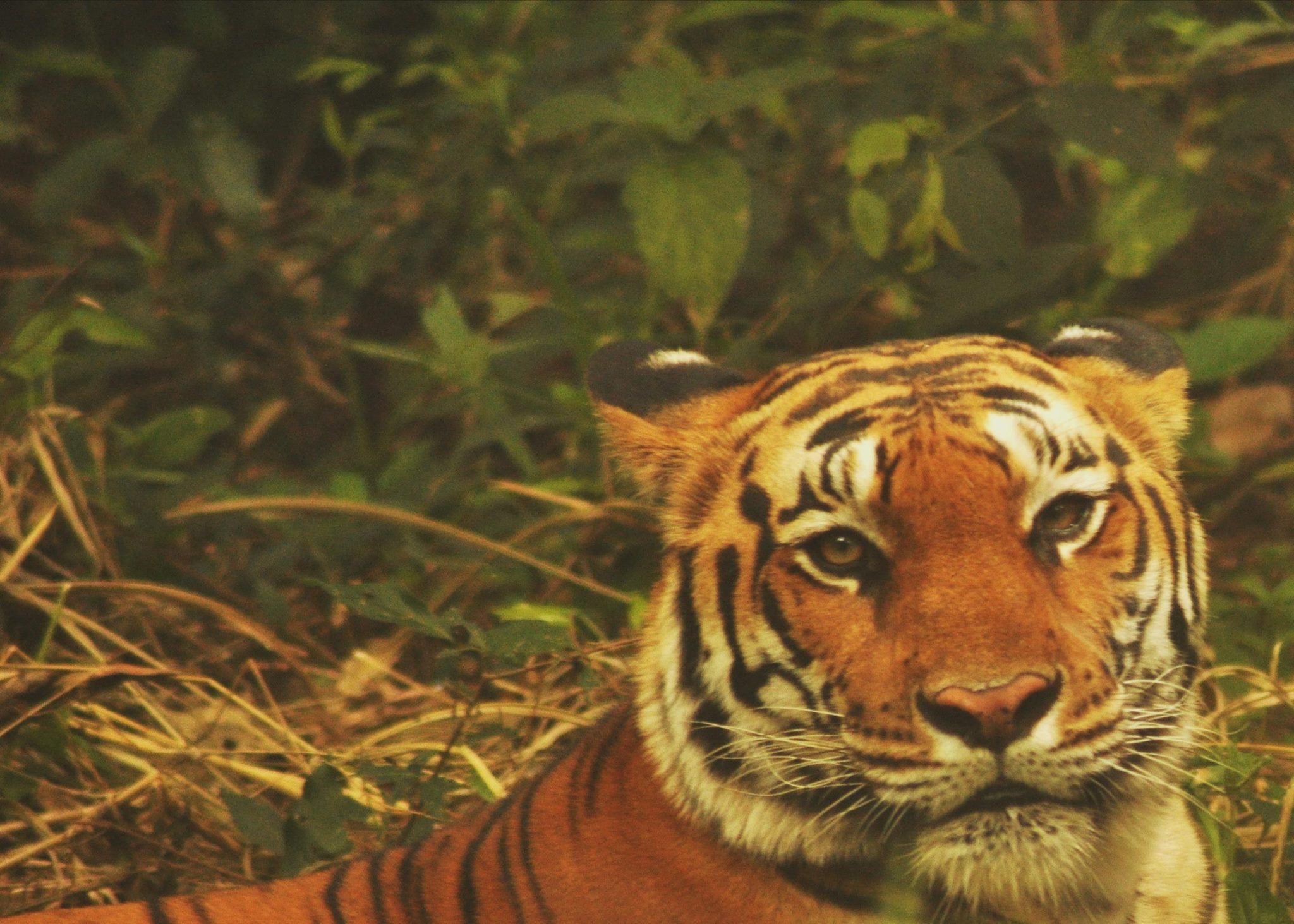
A captive tiger at Bannerghatta National Park, Bengaluru, India. PHOTO: Rosanna Abrachan

A captive tiger at Bannerghatta National Park, Bengaluru, India. PHOTO: Rosanna Abrachan

The world has seen the population of individual wild tigers dwindle from 100,000 in 1913 to just about 3,200 now. Classified into six species, a majority of these surviving cats belong to the specie panthera tigris tigris, more popularly known as the Bengal tiger, that are found in India. Here too, their population, estimated to be between 20,000-40,000 at the turn of the 20th century, reduced to fewer than 2,000 by the 1970s, mostly due to hunting and poaching. It has now inched to 2,226, making India home to 70% of the world’s total tiger population.

Continue reading

Notes from a Natural History Museum

Harvard Natural History Museum

I recently had the chance to visit the Harvard Natural History Museum. Despite having lived in Cambridge for nearly a year, and having often thought about visiting the museum when I passed by going to and from my apartment, I had not stopped in until now. What a treat! The collections are full, diverse, and well curated. On this occasion, I spent most of my time in the animal wing, but I plan to return soon to take in the flora and minerals, and spend much more time in choice display rooms (e.g. the absolutely gorgeous Mammals/Birds of the World permanent exhibit: see below for pictures).

A ground sloth skeleton. It is hard to get an idea of the size of this creature from this photo, but it probably weighed several tons while alive!

Continue reading

Mother’s Day Redux: Bluebird and her Babies

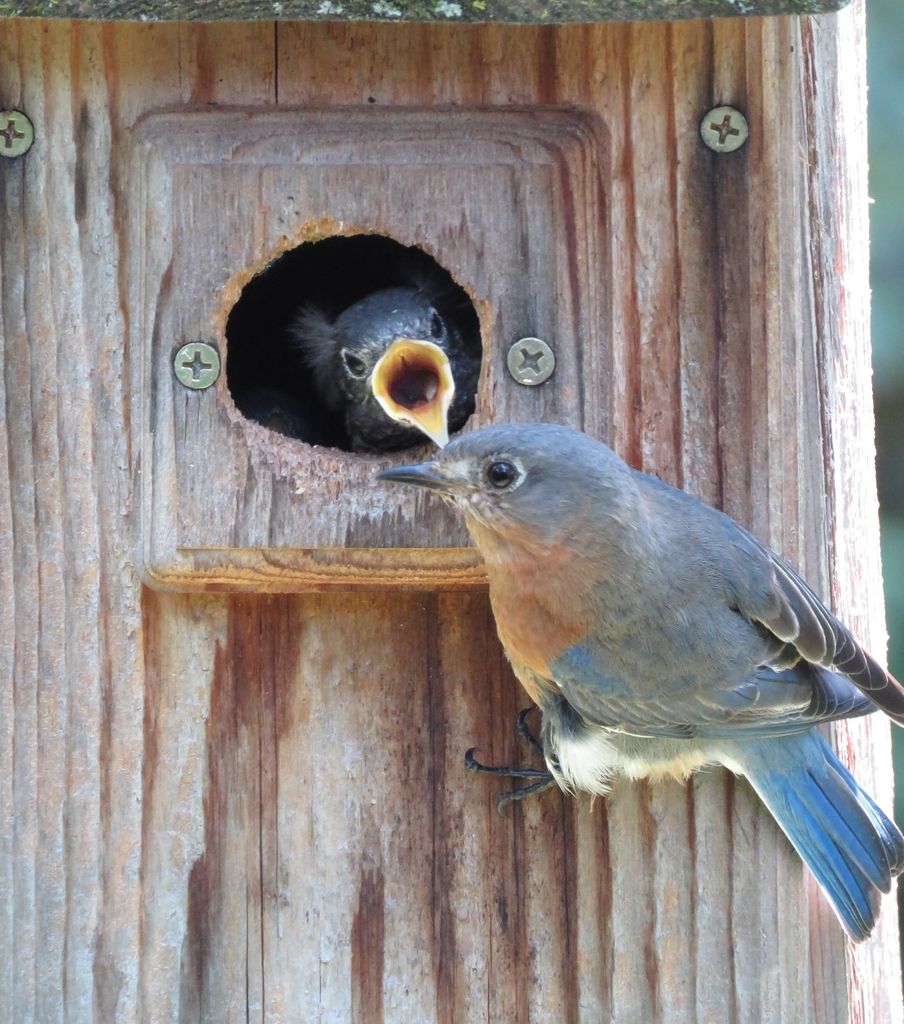
Mother bluebird feeding babies on Mother’s Day

A little less than a month before mother’s day (May 10th), a pair of bluebirds made their nest in one of the bluebird houses in our backyard in Atlanta. I was away studying at the university at the time, but my parents described to me in phone conversations the process familiar to anyone who has seen birds build a nest in their yard: first the birds made tentative visits to the site, then they began to carry in straw, twigs, and grass, finally the mother Continue reading

“The Great Empty,” more Full than its Sobriquet Implies

Photo © Gerrit Vyn

What will you be doing this Wednesday 5/20 at 8pm EDT? If you’re in the United States and have a television, you should consider watching a PBS Nature documentary on the Greater Sage-Grouse (male in mating display pictured left) and other wildlife members of the vast community that lives in the sagebrush plains that span eleven western states and hundreds of thousands of miles. Titled “The Sagebrush Sea,” the film is the first of its type shot and produced by the Cornell Lab of Ornithology, and it promises to be quite entertaining and educational about this vast and daunting landscape. A friend who was in one of my freshman-year classes at Cornell has been helping out in the editing room as an employee at the Lab this spring, and he tells me that its been a really rewarding experience. Just from watching the trailer below you can see why!

You can check out the PBS Nature schedule webpage to see when the broadcast Continue reading

Leopards And Humans Peacefully Cohabitating In India

An elderly priest descending to Perwa village from a temple devoted to Lord Shiva on Perwa Hill where he lives, one of the many holy slopes in the region that is also home to leopards. Credit Richard Mosse

An elderly priest descending to Perwa village from a temple devoted to Lord Shiva on Perwa Hill where he lives, one of the many holy slopes in the region that is also home to leopards. Credit Richard Mosse

If you are coming to visit one of Raxa Collective’s properties in south India, and want a recommendation for a visit to another part of India, this may be on our to do list (we need to go check it out first, and will let you know):

Life Among the Leopards

Continue reading

Planet Of The Apes, If We Act

An endangered Sumatran orangutan in the forest of Bukit Lawang, in Indonesia’s Sumatra island, one of the key sites identified as at risk. Photograph: Romeo Gacad/AFP/Getty Images

An endangered Sumatran orangutan in the forest of Bukit Lawang, in Indonesia’s Sumatra island, one of the key sites identified as at risk. Photograph: Romeo Gacad/AFP/Getty Images

© WWF

© WWF

The photograph above illustrates a story in today’s Guardian in the Environment section, and addresses the readership of that publication in a manner that expects action. We had provided the executive summary of the study here that is the maritime version of a major call to action, and that was still quite a read; here, thanks to the Guardian, is a briefer read on the topic of a terrestrial call to action by WWF, one we hope that apes of all varieties can appreciate:

Hundreds of millions of acres of forest could be lost in the next two decades in less than a dozen global hotspots for deforestation, conservationists have warned.

Research by wildlife charity WWF has identified 11 “deforestation fronts” where 80% of projected global forest losses by 2030 could occur.

Up to 170m hectares (420m acres) could be lost between 2010 and 2030 in these areas if current trends continued – equivalent to the disappearance of a forest stretching across Germany, France, Spain and Portugal.

The areas are the Amazon, the Atlantic Forest and Gran Chaco, and the Cerrado in South America, the Choco-Darien in Central America, the Congo Basin, East Africa, eastern Australia, the Greater Mekong in South East Asia, Borneo, New Guinea and Sumatra. Continue reading

Finding Solutions In The Wild, And Out Of The Wild

_81599510_b709fc07-2c46-44c7-8996-3e28da839ced

We normally do not link out to stories of man and wild animal bonding. But occasionally the story has more than aw shucks or just aw value; this is one of those. So is this one. Thanks to the BBC’s magazine for this story:

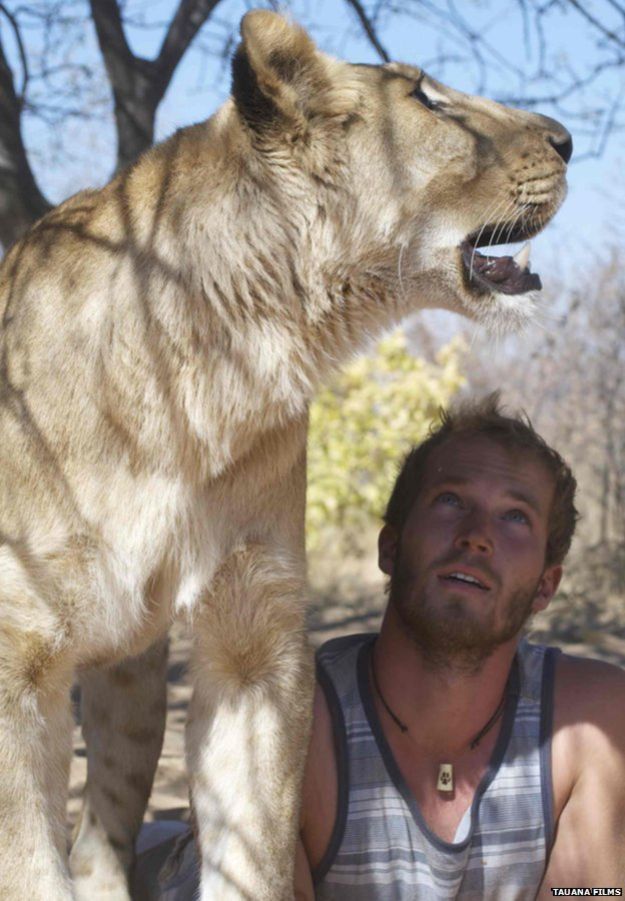
The lion hugger

In 2012 Valentin Gruener rescued a young lion cub and raised it himself at a wildlife park in Botswana. It was the start of an extraordinary relationship. Now an astonishing scene is repeated each time they meet – the young lion leaps on Gruener and holds him in an affectionate embrace.

“Since the lion arrived, which is three years now, I haven’t really left the camp,” says Gruener.

“Sometimes for one night I go into the town here to organise something for the business, but other than that I’ve been here with the lion.”

The lion he has devoted himself to is Sirga – a female cub he rescued from a holding pen established by a farmer who was fed up with shooting animals that preyed on his cattle.

Continue reading

Panthers In Man’s Habitat

shutterstock_225706531-680x405

And in other “nature sometimes solves man-made problems” news to complement today’s editorial from the Guardian, we thank Conservation for their daily summaries of important environmental science news:

MOUNTAIN LIONS SURVIVE NEAR CITIES, BUT AT WHAT COST?

The samango monkeys living near South Africa’s Lajuma Research Centre have learned that they can rely on humans as lookouts while they forage for food. The monkeys have learned that if humans are around, then they’re probably safe from leopards. When left alone, the monkeys spend less time foraging for food and more time scanning their surroundings to avoid becoming someone else’s dinner. The mountain lions of California have a different tale to tell. Continue reading

Let Nature Do Its Own Work

The Pine Marten, once common in the UK, is a natural predator of the grey squirrel and has successfully reduced their numbers in Ireland. Photograph: Alamy

The Pine Marten, once common in the UK, is a natural predator of the grey squirrel and has successfully reduced their numbers in Ireland. Photograph: Alamy

Not every problem in the natural world has a solution, let alone a simple one; and there is always that law of unintended consequences, but we like the way this proposal sounds as an alternative to other forms of eradication:

Is there anything more stupid than the government’s plan to kill grey squirrels?

I ask not because I believe – as Animal Aid does – that grey squirrels are harmless. Far from it: they have eliminated red squirrels from most of Britain since their introduction by Victorian landowners, and are now doing the same thing in parts of the continent. By destroying young trees, they also make the establishment of new woodland almost impossible in many places. As someone who believes there should be many more trees in this country, I see that as a problem. A big one.

No, I oppose the cull for two reasons. The first is that it’s a total waste of time and money. Here’s what scientists who have studied such programmes have to say: Continue reading

Fairer Trade Pact, In The Interest Of Wildlife

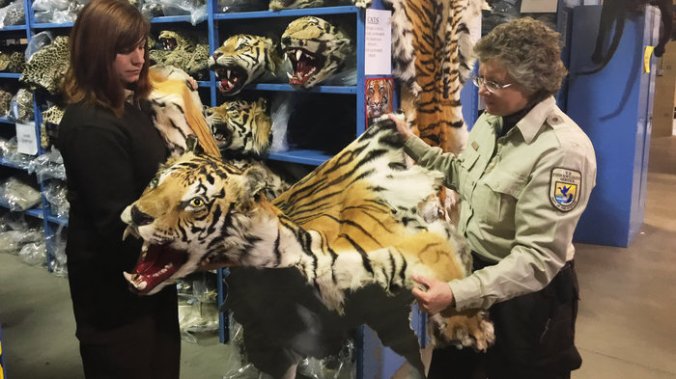
Coleen Schaefer (left) and Doni Sprague display a tiger pelt that was confiscated and is being stored at the National Eagle and Wildlife Repository on the outskirts of Denver. Some 1.5 million items are being held at the facility. The Trans-Pacific Partnership, which is still under negotiation, would punish wildlife trafficking.

Coleen Schaefer (left) and Doni Sprague display a tiger pelt that was confiscated and is being stored at the National Eagle and Wildlife Repository on the outskirts of Denver. Some 1.5 million items are being held at the facility. The Trans-Pacific Partnership, which is still under negotiation, would punish wildlife trafficking. Jackie Northam/NPR

Thanks to National Public Radio (USA) for this story, which has nothing pleasant about it but which signals a positively determined approach to do something substantive about this tragic scourge:

Tiger Skins And Rhino Horns: Can A Trade Deal Halt The Trafficking?

If you want a sobering look at the scale of wildlife trafficking, just visit the National Eagle and Wildlife Repository on the outskirts of Denver. In the middle of a national reserve is a cavernous warehouse stuffed with the remains of 1.5 million animals, whole and in parts.

They range from taxidermied polar bears to tiny sea horses turned into key chains. An area devoted to elephants is framed by a pair of enormous tusks. Continue reading

A Random Walk Into Science

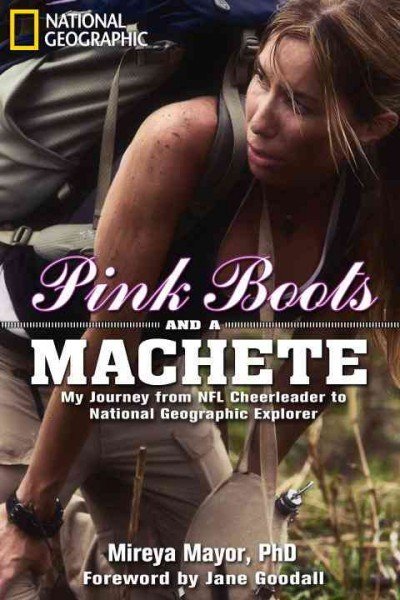
9781426207211_custom-35a4548b8f07b01d4c9e9152d330cf0d69e5ce53-s400-c85

This title of the book to the left, and of the podcast interview (“Trading Pom-Poms For Field Boots”) on the National Public Radio (USA) series called “My Big Break”–and even the opening line belowgive the false impression that this may be a dilettante story; but not at all. It is about discovering science in a classroom and coming to love it thanks to a deep experience in nature:

Mireya Mayor’s life plays out like an adventure film.

She’s a globe-trotting anthropologist, primatologist, wildlife expert and conservationist. As the first female wildlife correspondent for the Ultimate Explorer series on National Geographic Channel, she’s gone diving with great whites, she’s rappelled down cliffs and she was even charged by an angry silverback gorilla.

But some of her fans might be surprised by what Mayor was up to before she trekked around remote regions of the world. Continue reading

Bambi, or Rudolph?

Woodland caribou in the United States were decimated by overhunting and logging. Now they face additional challenges. Photo: Joseph N. Hall under a Creative Commons license. Via Cool Green Science.

Cool Green Science, The Nature Conservancy’s blog that we have started visiting to find more of our kind of news, has re-run their post from last year on the conflict between populations of caribou and white-tailed deer in North America. Matt Miller reports:

Rudolph-the-Red-Nosed Reindeer versus Bambi: yes, it sounds like a really bad holiday special. Maybe the worst ever.

Don’t worry; that’s not the case here. But along the Canada border in northern Idaho and eastern Washington, a struggle is playing out pitting the real-life counterparts of Rudolph (caribou) and Disney’s Bambi (white-tailed deer).

The quick version: woodland caribou, the rarest large mammal in the “lower 48” states have faced dramatic changes in forest habitat. White-tailed deer, drawn by the new habitat, have moved in and thrived.

The large numbers of deer have drawn more predators, notably mountain lions. And those mountain lions prey on the less wary, easier-to-kill caribou. An already beleaguered caribou population faces what may be its final straw.

In this case, Bambi wins. But there is nothing simple about this story, not really. For conservationists, it raises far more questions than answers.

Continue reading

Winning Wildlife Photography of 2014

2014 Wildlife photographer of the Year invertebrate category winner: ‘Night of the deadly lights’ by Ary Bassous (Brazil). Photograph: Ary Bassous/2014 WPY. Via The Guardian.

We’ve always loved wildlife photography, and the explosion of competitions over the web in the last decade has created the type of arms race for the best shot in which the audience always wins. Folks over at The Guardian know what’s up: they’ve compiled some of the most amazing wildlife photographs from various competitions over the course of 2014, so we have an even greater pool of shots to enjoy.

Continue reading

Costa Rican Wildlife Saving Under-vacationed Americans

We have many connections with Costa Rica at Raxa Collective, but especially after the inclusion of Xandari in our network. So we were happy to hear that, facilitated by Costa Rica’s Tourism Institute (ICT), the country’s animals have gotten together to try to save overworked Americans by offering them natural habitat and a stress-free paradise to escape to. Or at least that’s what the Save the Americans website declares after you watch the video embedded above. Spinning off statistics like “Americans leave 500,000,000 vacation days unused,” “1 in 4 Americans get no paid vacation,” and “59% of Americans feel vacation deprived,” the initiative’s true purpose is to advertise and inform American travelers about the opportunities for different vacation experiences in Costa Rica.

Continue reading

Illegal Wildlife Trade, Quantified

9f71b8b7-4c32-4afe-86e7-2d27c9f6b728-620x372

Photograph: James Morgan/WWF/AFP/Getty Images

The Guardian’s coverage of one of our least favorite but critically important topics is appreciated, as always:

Continue reading

Migrating Wildlife Needs More Than Merely Parks

According to an in-depth atlas project being undertaken by the Wyoming Migration Initiative, many species of wild ungulates (hoofed mammals) require more land than what is currently encompassed in wilderness reserves. Certain areas that are under private ownership or designated as mixed use government lands are also key to the survival of species like the bighorn sheep (whose migration routes are to the left), mule deer, elk, and others.

Continue reading

New Mammal Spotted at Xandari

About a week ago, while walking the forest trails at Xandari, several resort employees and I had a great wildlife spotting. The trail we were taking leads to a seven-foot waterfall that flows into a large pool and continues as a small river with several other waterfalls in it, one of which is about a seventy-foot drop. As we were rounding a bend in the path, a member of the group looked across the river to the opposite bank and noticed an animal down by the water.

It had either been drinking or perhaps hunting for some aquatic prey, but when it heard our voices (we were a group of about six or seven) it scampered up the hill and in among the trees, where we lost sight of it. My first impression was that it was a black house cat, but it quickly became clear that it was in fact almost double the size and its tail was quite large – not bushy, but as if the bone and flesh themselves were a good deal thicker than a normal cat’s.

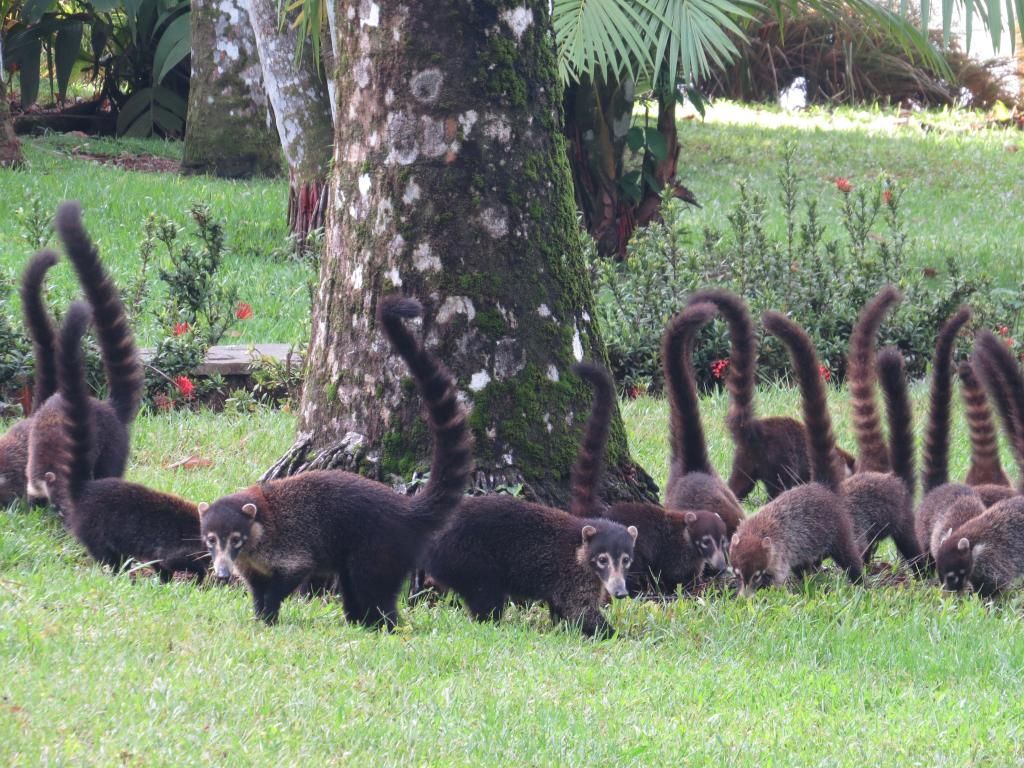
White-nosed Coatis foraging warily on the grounds of Bosque del Cabo, a nature lodge on the Osa Peninsula of Costa Rica.

The staff member who first spotted the animal voiced the hypothesis that it was a pizote, or White-nosed Coati, a member of the raccoon family that many visitors to Costa Rica have probably seen in their travels here. But as the black-furred animal briefly turned its head back to check that we were not pursuing it, I could see despite the shadows cast by the forest that its face was not pointed into a long nose but rather a normal cat’s face, and there was no hint of white there either. Continue reading

Monkeys Learning, Improving Coexistence Probabilities

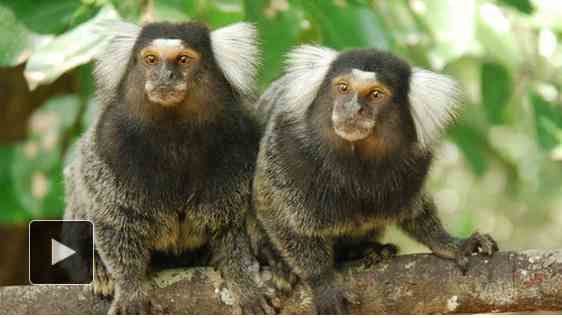
From the New York Times, a short video on something we might take into account at Cardamom County, where the monkeys do their monkey business without any concern for who’s who or what’s what:

ScienceTake | Marmoset See, Marmoset Do

Wild monkeys can learn from a demonstration video set up in the forest.

Some Animal Behavior Footage from Costa Rica

A dragonfly on a path at Xandari

Whenever I have the opportunity to visit a national park in Costa Rica, I obviously take my camera with me so I can try to get some good photos or videos of all the wildlife I hope to see. Looking back on my files of images from the past couple months, I realized that I happened to have some half-decent videos that represented what I’d consider the four most important classes of Kingdom Animalia/Metazoa from the point of view of a terrestrial biophile: Aves, Reptilia, Mammalia, and Insecta. In other words, when I’m walking through the rainforest, the animals I keep an eye out for will likely fall into the category of bird, reptile, mammal, or insect. If I’m out at night, then maybe Amphibia will get thrown in there too!

In the video above, you can  Continue reading

Funky Nests, Oh My!


Wren leaving her basket nest

The Cornell Lab of Ornithology is hosting a “Funky Nests” contest for their Celebrate Urban Birds project. The above image is of a wren nest in a basket in my backyard (Atlanta, GA). Continue reading