Looming Line 3 Battle

Only a small percentage of Americans visit the Grand Canyon, but its existence, as an ancient place of inestimable value, has a global psychological importance.Photograph by Jim Kidd / Alamy

The Line 3 story started for us last month, and continues today, with another essay by Bill McKibben, this time using the Grand Canyon for context:

Lessons from the Fight for the Grand Canyon

We once saved natural landmarks for their beauty—now it’s for survival, too.

To float down the Colorado River through the Grand Canyon is to meander through geologic time. As you descend, the formations you pass include the Coconino Sandstone, the Redwall Limestone, the Bright Angel Shale—by the time you reach the tortured-looking Vishnu Schist, you’re a couple billion years back in time. Continue reading
A Nest Dislodged, Rolled, Resting

It rolled down the hill from our up-hill neighbor, and rested on our chicken coop.

You can see the size of this nest if you consider the size of the chain-links in the fence it is resting on. It is approximately two feet wide and four feet long, oblong.

Close examination reveals tiny ant-like creatures crawling in the recesses of the structure. Termites?

The texture is firm, brittle, what seems to be the organic material I frequently see ants carrying off (occasionally something I have planted, to my annoyance), and layered as if dipped in mud. On one side there are sticks that are built into the structure sticking out.

Is a nest like this anything like trust in modern human society?

I cannot imagine how much time was required to build this nest, but ants seem patient, diligent, even tireless. The man clearing brush on the hillside told me that he gave it a little push, and it rolled on its own. It is an apt photo to accompany a review I have just read about the alarming decline of trust in modern society:

Are Americans More Trusting Than They Seem?

Political scientists say that our confidence in our institutions—and in one another—is running perilously low. Economists see a different story.

My  takeaway from the article is that trust, a binding agent of society, takes a long time to build, yet can be more easily toppled than you might have imagined. Institutions, through which trust has been built in the past, may be replaced with a different variety of trust according to economists. As of now, I do not buy it.

Volts, A Panic-Mitigation Option

Volts: a newsletter about clean energy and politics

What with climate change accelerating and US politics falling apart, it’s pretty grim out there. Yet alongside these doom loops, somewhat anomalously, something good is happening: the transition away from fossil fuels to clean, carbon-free energy is underway, and it is accelerating every day

Our reading and listening options are constantly expanding and contracting, and especially with climate change and energy topics in particular it can be challenging to find options that do not simply induce panic. We have our regular go-to sources, like Yale e360, that has been creatively informative without just heaping on the bleak (any more than necessary, which it sometimes is). A recent discovery of an analytical source worth sharing is this newsletter/podcast combo by David Roberts. Below is the most recent podcast:

Volts podcast: rampant environmental rule-breaking and how to fix it, with Cynthia Giles

Designing rules (including climate rules) that are harder to break

The US has hundreds of environmental rules and regulations on the books, meant to achieve various environmental goals — clean up coal plants, reduce toxins in consumer products, limit agricultural waste, and so on.

Once these rules and regulations are put in place, most people don’t give them a lot of thought. To the extent they do, they tend to believe two things: one, that environmental rules are generally followed (maybe, what, 3-5 percent break the rules?), and two, that the answer to noncompliance is increased enforcement.

According to Cynthia Giles, both those assumptions are dead wrong.


Greenland Ends Drilling For Oil

Icebergs near Ilulissat, Greenland. Climate change is having a profound effect in Greenland with glaciers and the Greenland ice cap retreating. Ulrik Pedersen / NurPhoto / Getty Images

Thanks to Ecowatch for publishing this story by Andrea Germanos:

‘Future Belongs to Renewable Energy’: Greenland Ditches All Oil Drilling

Greenland announced Thursday a halt on new oil and gas exploration, citing climate and other environmental impacts.

“Great news!” responded the Center for International Environmental Law.

The government of Greenland, an autonomous Danish dependent territory, framed the move as necessary to transition away from fossil fuels. Continue reading
Appleseed, For Your Consideration

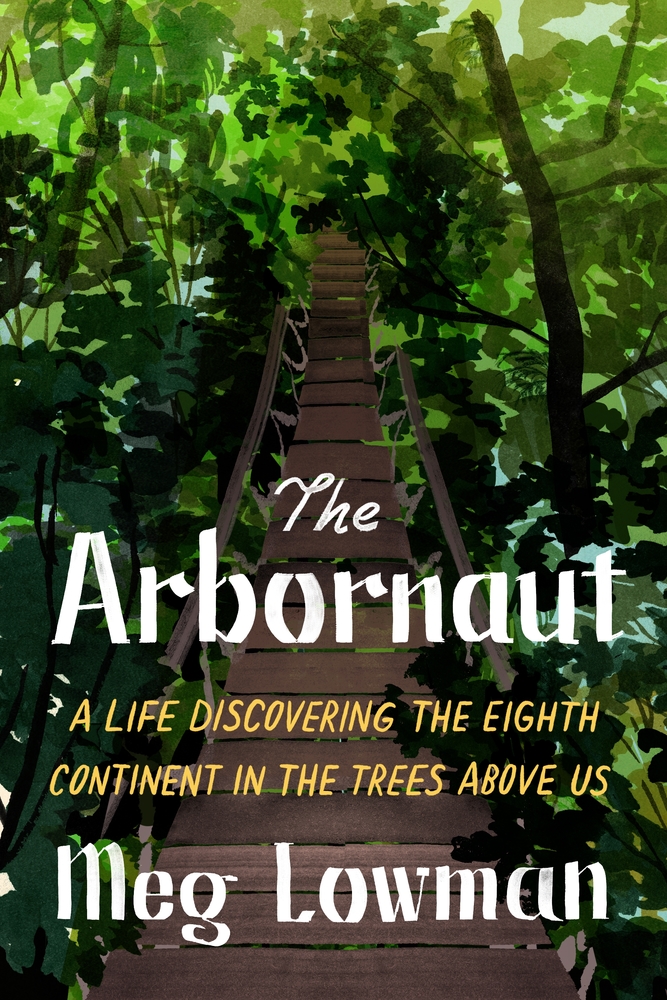
If your summer reading does not include some dystopian fiction and you want to consider adding some, for your consideration this review bhas a strong recommendation of the above book:

A Novel Charts Earth’s Path From Lush Eden to Barren Hellscape

Climate is everywhere in fiction these days. Omar El Akkad’s “American War,” Lydia Millet’s “A Children’s Bible,” N. K. Jemisin’s Broken Earth trilogy, Carys Bray’s “When the Lights Go Out” and Selah Saterstrom’s “Slab” are just a few of the many recent novels to highlight global warming and related extreme weather. Continue reading

The Largest Forest In The World

Virgin Komi Forest in the northern Ural Mountains in the Komi Republic, Russia. MARKUS MAUTHE / GREENPEACE

We have not posted many times on the vastness of Russia, and its various natural resources, but they are worthy of more attention. Thanks to Yale e360:

Will Russia’s Forests Be an Asset or an Obstacle in Climate Fight?

New research indicating Russia’s vast forests store more carbon than previously estimated would seem like good news. But scientists are concerned Russia will count this carbon uptake as an offset in its climate commitments, which would allow its emissions to continue unchecked. Continue reading
The Soul Of An Octopus

I missed this book when it was first published, but thankfully its author was invited onto a podcast I listen to regularly.

On the author’s own website she links an independent bookseller of her choice as the favored place to buy the book. Bravo.

Klein’s introduction to the conversation:

How Octopuses Upend What We Know About Ourselves

I’ve spent the past few months on an octopus kick. In that, I don’t seem to be alone. Octopuses (it’s incorrect to say “octopi,” to my despair) are having a moment: There are award-winning books, documentaries and even science fiction about them. I suspect it’s the same hunger that leaves many of us yearning to know aliens: How do radically different minds work? Continue reading

Really, Australia?

The Unesco world heritage committee’s decision on the Great Barrier Reef’s ‘in danger’ status is currently scheduled for 23 July. Photograph: James Cook University/AFP via Getty Images

It’s been a couple months since we asked anyone the fundamental question. Ok, we acknowledge our not being qualified to make the scientific judgement on whether the Great Barrier Reef is in sufficient danger to be listed as such, officially. But UNESCO has the qualified scientists, so let them do their job without undue influence. It sure seems likely to help the entire world to see how fossil-fueled climate change is impacting such natural wonders. It would raise consciousness in a way that might even be good for Australia–whose government obviously thinks otherwise. Hopefully UNESCO will stick to its principles and resist this lobbying. When oil-based economies come to lend a hand, watch out for conflict of interest:

‘Fossil fuel friends’: Saudi Arabia and Bahrain back Australia’s lobbying on Great Barrier Reef

Exclusive: oil rich nations back push against Unesco recommendation to have reef placed on world heritage ‘in danger’ list Continue reading

Reflecting On The Water’s Simplicity & Its Surrounding Complexity

Photograph by Alejandro Cegarra for The New Yorker

My work in Costa Rica, motivated by previous work on my doctoral dissertation, started with an expectation that to protect nature we should search for entrepreneurial approaches that can complement regulatory and/or philanthropic efforts. Since then I am more convinced than ever that effective conservation depends on all three types of efforts.

So, after reading about the lagoon in the story below my thoughts wander into that territory, hoping that the author and her adopted community find a location-specific adaptation of that trifecta. A key insight of her story is the recognition of how easily perspective can be lost about the phenomenal beauty of some places in their natural state. We adjust, for better or worse:

How a Mexican Lagoon Lost Its Colors

Bacalar is poised to become one of the country’s great tourist destinations—if its ecosystem can survive.

The water of the Bacalar Lagoon, on the east coast of Mexico’s Yucatán Peninsula, is as pure as glacial ice. It contains scant organic material: some of its oldest inhabitants are oligotrophic microorganisms, so called for their minimal diet. As a result, the lagoon puts on a spectacular display in the sunlight. It’s said that there are seven distinct shades of blue in the water, from deep-sea indigo to sunset violet. In English, Bacalar is sometimes called the Lagoon of Seven Colors; its original name in Mayan, Siyan Ka’an Bakjalal, translates roughly to “place surrounded by reeds where the sky is born.”…

Read the entire story here.

Jane Goodall In Living Color

Long-time fans, far from first-time posting:

Why Jane Goodall Still Has Hope for Us Humans

Wherever the story of our natural world ultimately lands, Jane Goodall will have earned a proud place in its telling. Goodall, 87, first found fame in the early 1960s for her paradigm-busting work as a primatologist. Continue reading