Hasties Swamp, Tablelands
Hasties Swamp, Tablelands
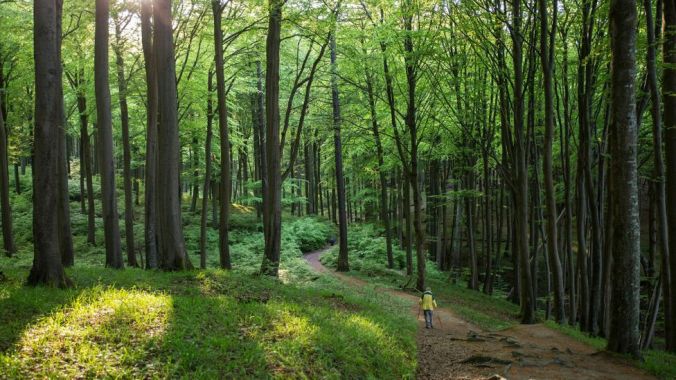
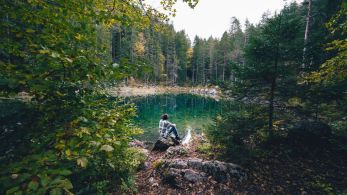
With forest making up around 33% of Germany’s land area, woodlands have become a central part of German culture (Credit: Westend61/Getty Images)
Thanks to the BBC for this article about the Germanic tradition of waldeinsamkeit:
Waldeinsamkeit is an archaic German term for the feeling of “forest loneliness” (Credit: Marco Bottigelli/Getty Images)
Everybody is at it in Germany. They’re doing it in the trees in the Black Forest. Out in the magical Harz Mountains. In the national parks of Bavaria when silhouetted in the moonlight. And in the city centre woodlands of Berlin and Munich. Continue reading
Costa Rica
Costa Rica
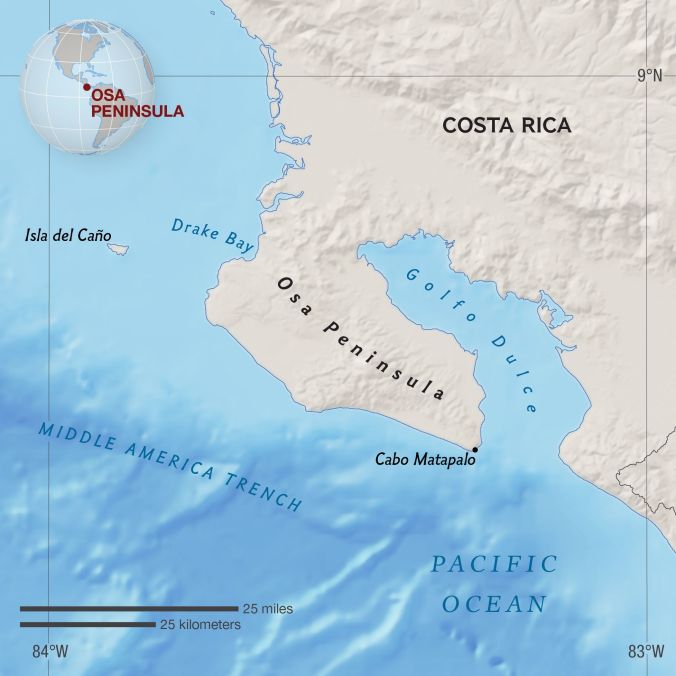
MAP BY NATIONAL GEOGRAPHIC SOCIETY STAFF
After two visits in 2019 I wrote a quick note about the Osa Peninsula, and afterwards I found the map above on National Geographic’s website. A couple years have passed since those visits and National Geographic published this article that I somehow missed until now. Jamie Shreeve shares a history I was well aware of due to our four years managing Lapa Rios, and back then I heard versions of it many times in the first person; but here it is told better than by anyone else in my experience, plus accompanied by the kind of photography you expect from National Geographic (not included here out of respect for the copyrights of those images). The title notes the challenge facing the peninsula, and my bet is on the peninsula’s having the support it needs to survive:
A loss of tourism threatens Costa Rica’s lush paradise
The Osa Peninsula is a biodiverse wonder and a model for conservation. But its preservation programs have been devastated by COVID-19.
Celedonia Tellez doesn’t recall the year she moved to the Osa Peninsula, or exactly how old she was, but she remembers well why she came: free land. At the time, the peninsula, a 700-square-mile crook on the southern Pacific coast of Costa Rica, was a forest frontier, separated from the mainland by a neck of near-impenetrable mangroves and accessible mainly by boat. Celedonia was pregnant when she arrived with her five children, six chickens, a dog, and 700 colones, about one dollar. She also brought her boyfriend, but he “hated nature, and would run away from insects,” she remembers. So she took an ax and cleared the land herself.
“When I was cutting down the trees, I would think how they must have taken so long to grow, and I cut them down in an instant,” she says. “That’s what we did. We cut down the forest to live.” Continue reading
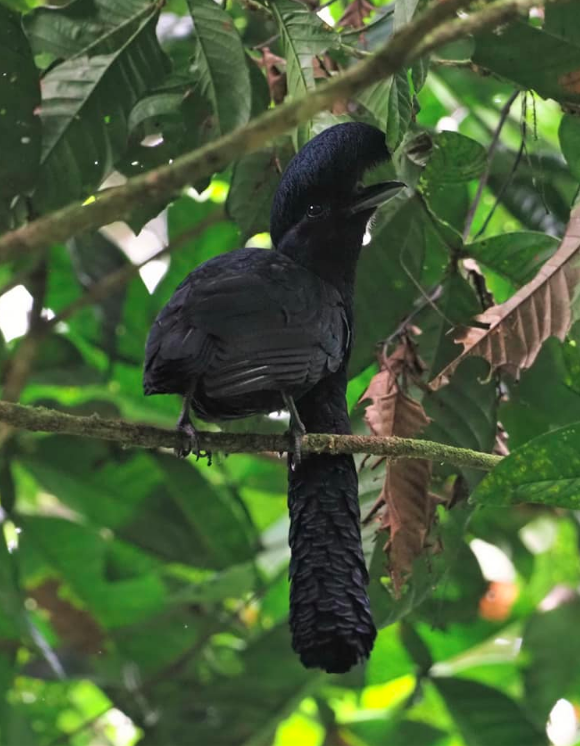
Buenaventura Reserve, Ecuador

The South Padre Island Convention Center opened its doors and took in thousands of sea turtles cold-stunned during the Valentine’s Week Winter Storm. UT Marine Science Institute
Thanks to National Public Radio (USA) for this:
Texas ‘Cold-Stun’ Of 2021 Was Largest Sea Turtle Rescue In History, Scientists Say
Volunteers bringing in many lethargic turtles. John Faulk/Frontera Media
The Valentine’s Day winter storm of 2021 left Texans shivering in the dark, but that didn’t stop intrepid volunteers from heading out into the suddenly frigid waters of the Gulf Coast to save thousands of sea turtles at risk of dying. This is the story of the largest sea turtle “cold-stun” event in recorded history, according to scientists. Continue reading
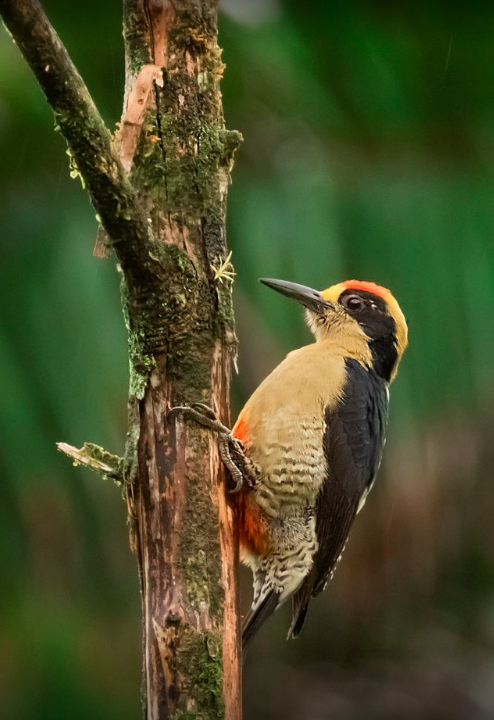
Macaw Lodge, Costa Rica
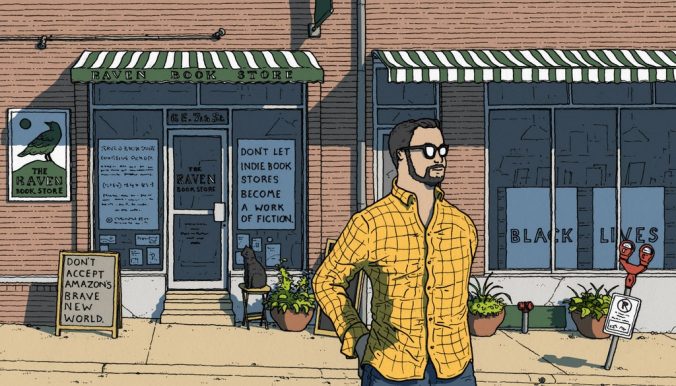
Amazon can afford to take a loss on books. Small independent bookstores cannot. Illustration by Owen D. Pomery; Source photograph by Danny Caine
We have respect for any merchant who takes the time, and has strong logic on their side, to explain why their prices are not as low as Amazon’s. Any time the opportunity arises to read Casey Cep on the subject of bookshops, take it; especially when she is writing about a bookshop’s pricing relative to Amazon’s. Be sure to read far enough to where she touches on the impact of bookshop.org on the marketplace for books, which on its own makes reading this essay worth the time:
A Kansas Bookshop’s Fight with Amazon Is About More Than the Price of Books
The owner of the Raven bookstore, in Lawrence, wants to tell you about all the ways that the e-commerce giant is hurting American downtowns.
If you know anything about the Raven bookstore in Lawrence, Kansas, then you know that it charges more for books than Amazon. Advertising higher prices is an unlikely strategy for any business, but Danny Caine, the Raven’s owner, has an M.F.A., not an M.B.A., and he talks openly with customers about why his books cost as much as they do. Continue reading

Williamson, TX
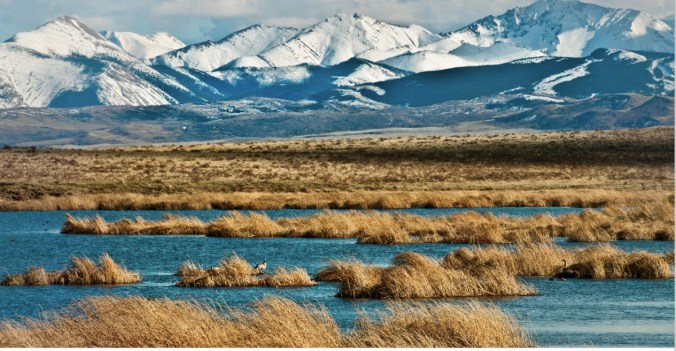
Canada Geese and other waterfowl occupy wetlands in the Badger-Two Medicine area of Montana. Members of the Blackfeet Nation hold the area sacred and are working to protect it permanently. Photo: Tony Bynum
Indigenous communities might seem obvious stakeholders in the protection of wilderness areas, but it does not always, or even often, play out that way. Graham Lee Brewer, a reporter for Audubon Magazine, has this to say about changes in the works:
Tribes Could Play a Crucial Role in Achieving a Bold New Conservation Goal
An emerging effort to protect 30 percent of the country’s land and water is an opportunity to strengthen tribal sovereignty and heed Indigenous ecological knowledge, experts say.
For nearly four decades the Blackfeet Nation has fought off attempts to drill for oil and gas in Montana’s Badger-Two Medicine area. Nestled in a national forest beside Glacier National Park, the region’s sweeping valleys, rivers, and wetlands—almost entirely unmarred by roads—form the setting of the Blackfeet creation story and host tribal ceremonies today. Continue reading

Talamanca Highlands, Costa Rica
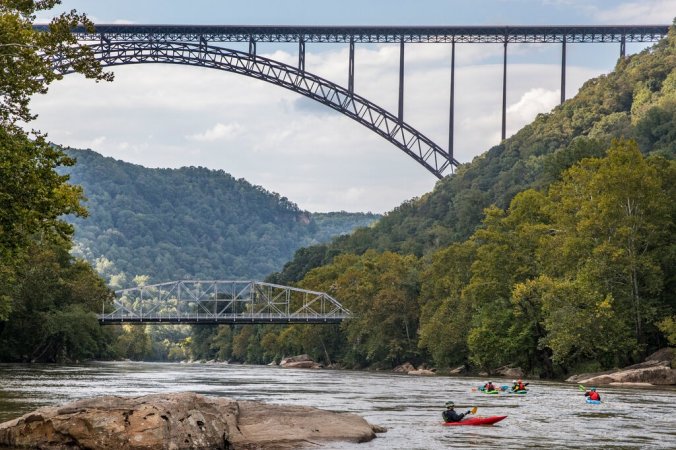
Kayakers enjoy calm waters under the New River Gorge Bridge.Credit…Tony Cenicola/The New York Times
The fact that we’re a late to highlight this new addition doesn’t lessen our enthusiasm for the fact. The United States National Park Service and the those who created it, and continue to fight for it, are heroes in our eyes. It’s an especially strong breath of fresh air when this new administration moves immediately to promote this “great idea” rather than diminish it.
Meet America’s 63rd National Park
The New River Gorge in West Virginia got the federal government’s highest protection, thanks, in part, to the latest pandemic relief bill.
As Americans continue to weather the pandemic, the $2.3 trillion coronavirus relief and spending bill passed by the federal government in December brought an unexpected and lasting gift: a new national park.
The 5,593-page spending package included a raft of provisions authorizing little-known projects — the construction of the Teddy Roosevelt Presidential Library in North Dakota, for one — and giving lawmakers a chance to advance a variety of long-delayed initiatives. Among them was the elevation of the New River Gorge, in southern West Virginia, to the status of Yellowstone, Yosemite and the country’s other most renowned outdoor spaces. The designation of the area — roughly 72,000 acres of land flanking 53 miles of the gorge — as a national park and preserve creates the 63rd national park in the United States and completes a multigenerational effort, started in the mid-twentieth century, to transform a tired industrial area into a national landmark.
“Towards the end of this year, with these big bills coming down, I decided to strike,” said Shelley Moore Capito, a Republican and the state’s junior senator, who, along with Senator Joe Manchin III, a Democrat, introduced the New River Gorge legislation in 2019.
“This was the right opportunity,” she said. Continue reading

San Marcos, Guatemala
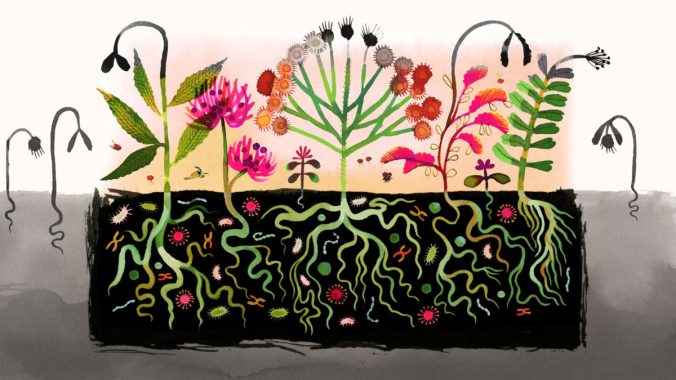
ENZO PÉRÈS-LABOURDETTE / YALE E360
Thanks to Verlyn Klinkenborg for this essay:
How the Loss of Soil Is Sacrificing America’s Natural Heritage
A new study points to a stunning loss of topsoil in the Corn Belt — the result of farming practices that have depleted this once-fertile ground. Beyond diminished agricultural productivity and more carbon in the atmosphere, it is a catastrophic loss of an irreplaceable resource.
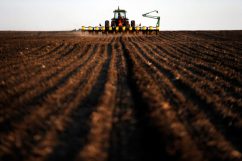
A corn field being planted in Hull, Sioux County, Iowa. MELINA MARA/ THE WASHINGTON POST VIA GETTY IMAGES
Geologically speaking, I grew up in a small farm town on the Des Moines lobe, a huge tongue-shaped remnant of glacial activity that reaches south across central Iowa. All around us were mollisols with a deep A-horizon — a type of rich black topsoil visible in farm fields for miles in every direction. In school we were taught only one thing about that soil: to be proud of it. It was a given, a blessing, a moral fact. In a sense, it seemed to have no history. Continue reading
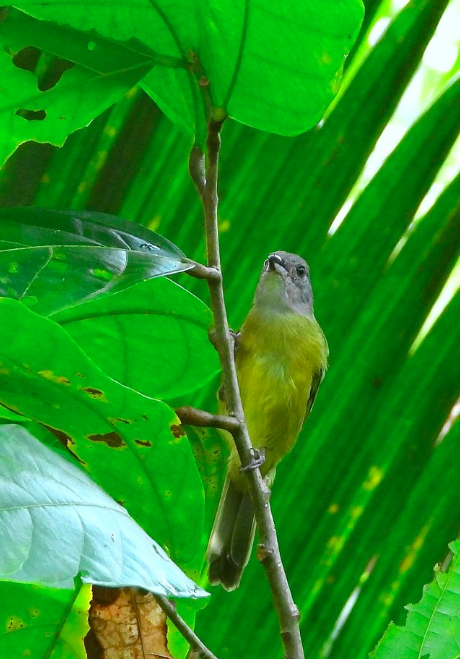
Female – Macaw Lodge, Costa Rica

Last spring, a herd of Great Orme Kashmiri goats was spotted ambling through empty streets in Llandudno, a coastal town in northern Wales. Christopher Furlong/Getty Images
Kashmiri goats in Wales? I saw that story a year ago and it was amusing, and interesting. I did not post about it because amusement did not seem an appropriate sentiment to share then; too soon, as they say. But now, taking stock of the lasting impact of the pandemic on the work we do, on the planet where we do it, makes more sense. Somehow, Lisa Foderaro has never appeared in our pages before, but today is the perfect day to correct that:
For Planet Earth, No Tourism is a Curse and a Blessing
From the rise in poaching to the waning of noise pollution, travel’s shutdown is having profound effects. Which will remain, and which will vanish?
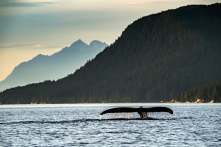
Water flows off the tail of a humpback whale as it dives below the surface near Juneau, Alaska. Christopher Miller for The New York Time
For the planet, the year without tourists was a curse and a blessing.
With flights canceled, cruise ships mothballed and vacations largely scrapped, carbon emissions plummeted. Wildlife that usually kept a low profile amid a crush of tourists in vacation hot spots suddenly emerged. And a lack of cruise ships in places like Alaska meant that humpback whales could hear each other’s calls without the din of engines. Continue reading
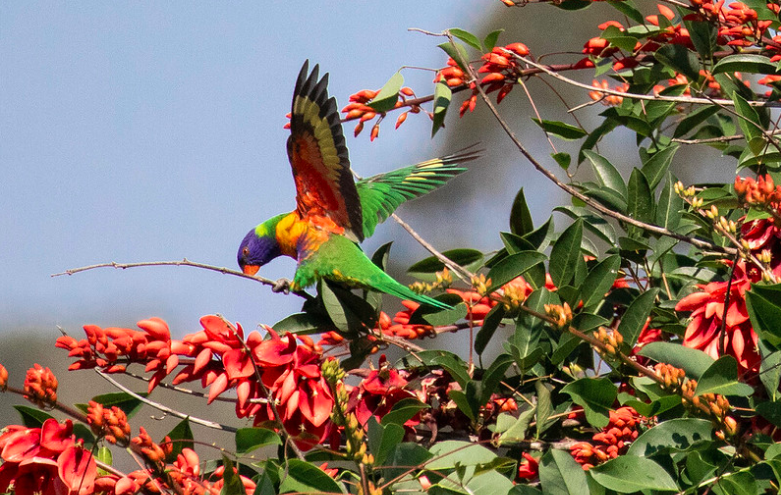
Oxley Creek Common, Brisbane
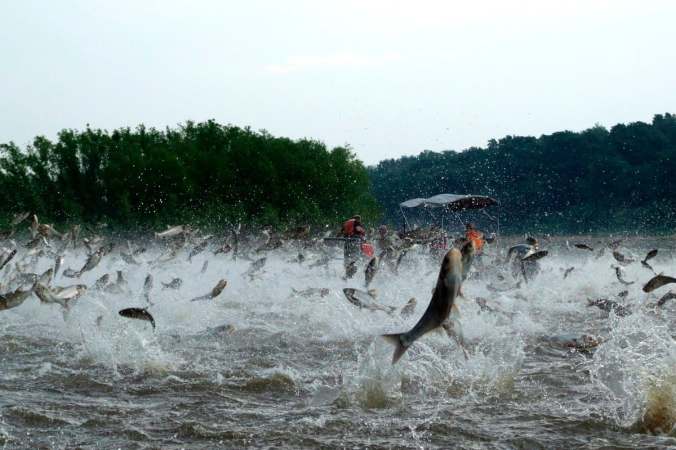
The continuing struggle to prevent Asian carp from entering the Great Lakes system has included solutions ranging from electrified water barriers to thrillingly impractical suggestions like stopping them with flying knives. Nerissa Michaels/Illinois River Biological Station, via Detroit Free Press
We have not featured any of her work since this review of H is for Hawk but we are happy to read Helen Macdonald’s work again with this review:
Can We Patch Up the Natural World We’ve Hurt?
UNDER A WHITE SKY
The Nature of the Future
By Elizabeth KolbertA few years ago YouTube recommended I watch a video with the word “carpocalypse” in its title. I clicked the link — of course I did — and stared in awe at what resembled a mash-up of a video game, nature documentary and war movie. I saw a river full of fish leaping from the water like chaotic piscine fireworks and men in speedboats yelling and holding out nets to catch them as if they were wet and weighty butterflies. Fish hitting people in the face, fish landing in boats, fish flapping between people’s feet in a mess of slime and blood. Continue reading

Costa Rica

The pygmy hog is still endangered but a reintroduction programme in Assam, India, has given it a greater chance of survival
A highlight of seven years living and working in India was a brief visit to Assam to review the land holdings of an investor who was considering having us assist with the development of a conservation-focused lodge. I did not know about this endangered species at the time, but its current status brings a good vibe to my day for more than one reason:
Pig in clover: how the world’s smallest wild hog was saved from extinction
A pygmy hog enters the wild from the release enclosure in Manas reserve. Photograph: Goutam Narayan
The greyish brown pygmy hog (Porcula salvania), with its sparse hair and a streamlined body that is about the size of a cat’s, is the smallest wild pig in the world, and also one of its rarest, appearing on the International Union for Conservation of Nature (IUCN) red list as endangered. Continue reading


 Organikos