Geographic Information Systems, Tool For Conservation

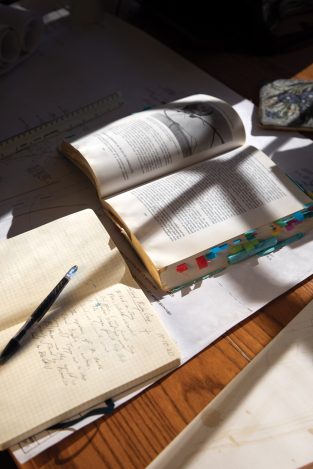
Burhans realized that the Church had lost track of its vast landholdings. Photograph by Isabel Magowan for The New Yorker

When I was a doctoral student I was introduced to geographic information systems. I became interested in how this tool might be of use in the hospitality industry. By the time I co-authored a second article about this, I already had my dissertation research focused on an entirely different topic, and I also had a job offer in Costa Rica to put that research to use. So, my GIS fascination was short-lived. But it was revived in the last couple of years as Seth focused his graduate school education on how to use this tool for land stewardship and natural resource management. So, reading this article by David Owen was a delight on multiple fronts. Foremost is the knowledge that the tool I found useful for business purposes has an equally powerful use for conservation:

How a Young Activist Is Helping Pope Francis Battle Climate Change

Molly Burhans wants the Catholic Church to put its assets—which include farms, forests, oil wells, and millions of acres of land—to better use. But, first, she has to map them.

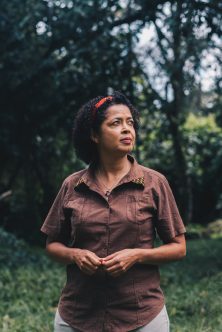
The role of the cartographer, according to Molly Burhans, is not just data analytics. “It’s also storytelling,” she said. Photograph by Isabel Magowan for The New Yorker

In the summer of 2016, Molly Burhans, a twenty-six-year-old cartographer and environmentalist from Connecticut, spoke at a Catholic conference in Nairobi, and she took advantage of her modest travel stipend to book her return trip through Rome. When she arrived, she got a room in the cheapest youth hostel she could find, and began sending e-mails to Vatican officials, asking if they’d be willing to meet with her. She wanted to discuss a project she’d been working on for months: documenting the global landholdings of the Catholic Church. To her surprise, she received an appointment in the office of the Secretariat of State.

On the day of the meeting, she couldn’t find the entrance that she’d been told to use. She hadn’t bought a sim card for her phone, so she couldn’t call for help, and, in a panic, she ran almost all the way around Vatican City. The day was hot, and she was sweating. At last, she spotted a monk, and she asked him for directions. He gave her a funny look: the entrance was a few steps away. A pair of Swiss Guards, in their blue, red, and yellow striped uniforms, led her to an elevator. She took it to the third loggia of the Apostolic Palace, and walked down a long marble hallway. On the wall to her right were windows draped with gauzy curtains; to her left were enormous fresco maps, commissioned in the early sixteenth century, depicting the world as it was known then. Continue reading

Hedgerow Versus Berm, Win-Win

Phoebe Weston is back in our pages with a story about the importance of a seemingly prosaic part of the old UK landscape–hedgerows.

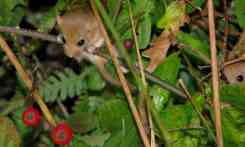
Young dormice photographed by ecologist Rob Wolton during a two-year study of his hedge in Devon. Photograph: Robert Wolton

She covers their prospective role in meeting net-zero targets and the video above is an excellent primer on that. The details in her article below about Rob Wolton’s investigation of his own hedgerow is fascinating.  I am interested in the topic as much for the biodiversity implications as I consider whether my berms should all remain berms, or if some portion should become hedgerow:

‘Reservoirs of life’: how hedgerows can help the UK reach net zero in 2050

They store carbon and are havens for wildlife – it’s no wonder experts are calling for Britain’s hedge network to be extended

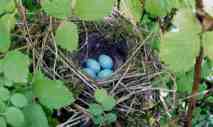
A dunnock’s nest containing eggs in Rob Wolton’s hedge. Thrush and bullfinch also made their homes in the hedgerow. Photograph: Robert Wolton

One New Year’s Day, ecologist Rob Wolton came up with an unusual resolution – to spend the next 12 months studying a hedge 40 metres from his house in the middle of Devon. He wanted to make a list of every plant, animal and fungus that used it. Why? Because a wildlife-enthusiast friend challenged him to do it during a long car journey.

“I thought it would take a year, but at the end of the first one Continue reading

Waking Up 30 Years & Billions Of Tons Of Carbon Dioxide Behind Schedule

Elizabeth Kolbert rarely, if ever, could be faulted for sugar coating anything, but here she is lauding the simple act of the government of the USA talking about climate change again:

A New Day for the Climate

It remains to be seen whether Joe Biden’s sweeping climate directives can make a meaningful difference, but a critical threshold has been crossed.

Illustration by João Fazenda

Nine years ago, Senator Sheldon Whitehouse had a sign made up that showed a photograph of the Earth as seen from space. “time to wake up,” it urged, in large, unevenly spaced letters. Every week that the Senate was in session, Whitehouse, a Democrat from Rhode Island, would tote the sign to the chamber, set it on an easel, and, before a hundred chairs—most of them empty—deliver a speech. Though the details changed, the subject of the speech remained the same. Continue reading

Migration Corridors & Conservation Priorities

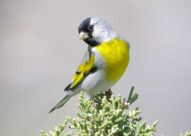
Approximately 80 percent of all Lawrence’s goldfinches migrate through California’s Central Valley every spring. ALAN SCHMIERER/FLICKR

Thanks to Yale e360 for this note:

Tens of Millions of Birds Pass Through Just Two Western U.S. Corridors

California’s Central Valley and the Colorado River Delta host more than 82 million birds every year during the spring migration, according to a new study published in the journal Ornithological Applications. Continue reading

The Little Book of Investing in Nature

A pdf version of The Little Book of Investing in Nature is available and the case for why this might be of value to you is in the book’s forward section:

How does this book help? As the impacts of human activity on the natural world have become increasingly clear in recent years, alongside human dependences on a healthy environment, the conversation has shifted from “Should we save nature?” to “How do we pay for it?”. Few in government or business today doubt the inherent value of nature or the importance of managing it sustainably. The interest in halting the loss of biodiversity is enormous and is coming from unexpected quarters. Continue reading

What To Do About Planet Palm

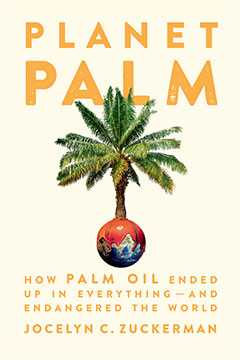
Production of palm for oil is a problem, to say the least. What can we do? The publisher describes this forthcoming book as being in the tradition of Eric Schlosser’s Fast Food Nation and Bill McKibben interviews the author (scroll to the second section in his weekly newsletter, after the note on energy use in the cannabis industry):

About half of all products on grocery shelves contain palm oil, and production has doubled in the past decade. The James Beard Award-winning food journalist Jocelyn Zuckerman has travelled from Indonesia and Malaysia to Brazil and India looking at the vast plantations where the oil palms are grown. Her forthcoming book, “Planet Palm,” is a compelling look at just how much trouble it’s possible to cause with a single plant. (Our conversation has been edited for length and clarity.) Continue reading

Snowy Owl In Central Park, Our Kind Of News

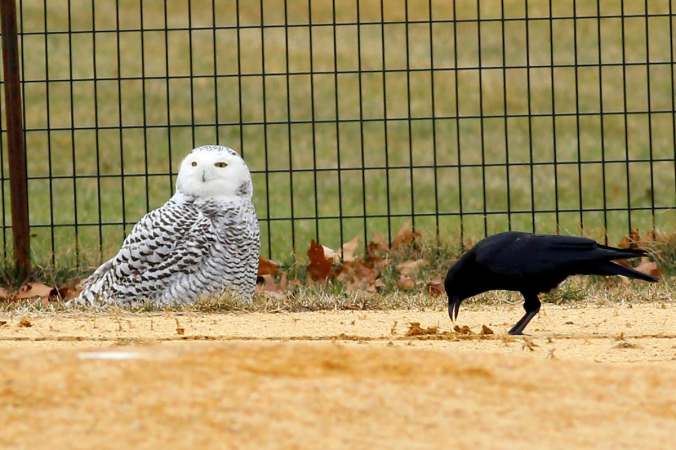
A snowy owl in Central Park drew flocks of people (and crows) on Wednesday. Maryté Mercado

If you tend bird-nerdy, you will want to read this. To state the obvious (if you visit here regularly), we live for this kind of news:

Snowy Owl Is Spotted in Central Park, for First Time in 130 Years

The hordes came running and the snow-white raptor became the latest celebrity bird of Manhattan.

In the winter of 1890, a snowy owl was spotted in New York City’s Central Park, part of what a contemporary account called an “unusual abundance” along the East Coast of the large, strikingly beautiful predators that make their home in the Arctic tundra. Continue reading

Making A Better Carbon Chain

Animation by Megan McGrew/PBS Newshour

Thanks to Isabella Isaacs-Thomas and PBS Newshour for a look at our carbon chain through the lens of a scientist determined to making that chain more sustainable:

How this chemical engineer is hacking plastic production to promote sustainability

The products many of us purchase on a regular basis — the water bottles, clothes and, perhaps especially in the era of COVID, take-out containers from our local restaurants — are often plastic, disposable and bound to outlive us for generations. But the enormous amount of plastic waste that humans leave behind is a logistical and ecological nightmare, and experts say potential solutions must be approached from multiple angles, both for the planet’s sake and for our own. Continue reading
Kenya’s Rangelands, An Ecologist, & Television Attention

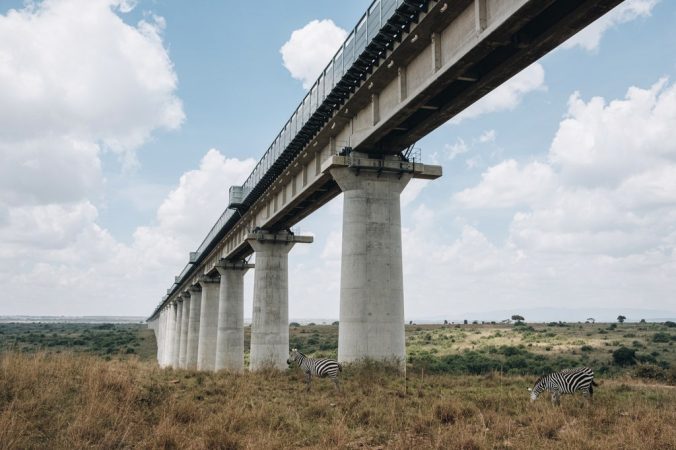
In Kenya, those animals which poachers and cattle-herders have not killed off are being wiped out by new roads, power lines, mushrooming towns, and overgrazed, shrinking rangelands. Photograph by Khadija Farah for The New Yorker

Thanks to Jon Lee Anderson, whose Latin America stories’ gravity have compelled our attention in the past, for this story from another part of the world he once called home:

A Kenyan Ecologist’s Crusade to Save Her Country’s Wildlife

To get her fellow-citizens to care about threatened animals, Paula Kahumbu became a TV star.

Seventy miles southwest of Nairobi, the Loita Hills climb toward the sky from the red stone cleft of the Great Rift Valley. Situated beside the Serengeti and the Maasai Mara, the Loitas provide a vital watershed for migratory animals on the plains below. Forest pigs, bushbuck, black-and-white colobus monkeys, leopards, and Cape buffalo find refuge there, along with elephants that come to graze when the plains are dry. The Loita forest, one of Kenya’s last surviving stands of old-growth cedar, is sacred to the Maasai people, who call it Naimina Enkiyio—the Forest of the Lost Child, after the legend of a girl who followed wayward calves into the trees and never returned. Some twenty-five thousand Maasai live in settlements scattered through the lower valleys, where they herd goats and cows in sweeping meadows reminiscent of the Rocky Mountain foothills. The Loitas, rich in medicinal herbs and plants, are an irreplaceable resource for the laibon, the spiritual leaders of the Maasai. Continue reading
Decades, Fruits & Labor

In mid-June the first personal reflections of our interns–the original purpose of this site being an opportunity for 20-somethings to reflect on conservation-related work in countries other than their own–will be 10 years old. Seth still contributes when his schedule allows. Michael does not, but one of his posts is the one I share most often with prospective interns as a benchmark for writing about their work experiences. To my eye, the early posts have aged well. We had one not-yet 20-something also contributing at that time; his writing at 17 (and his photography) matches the extraordinary experiences he was having.

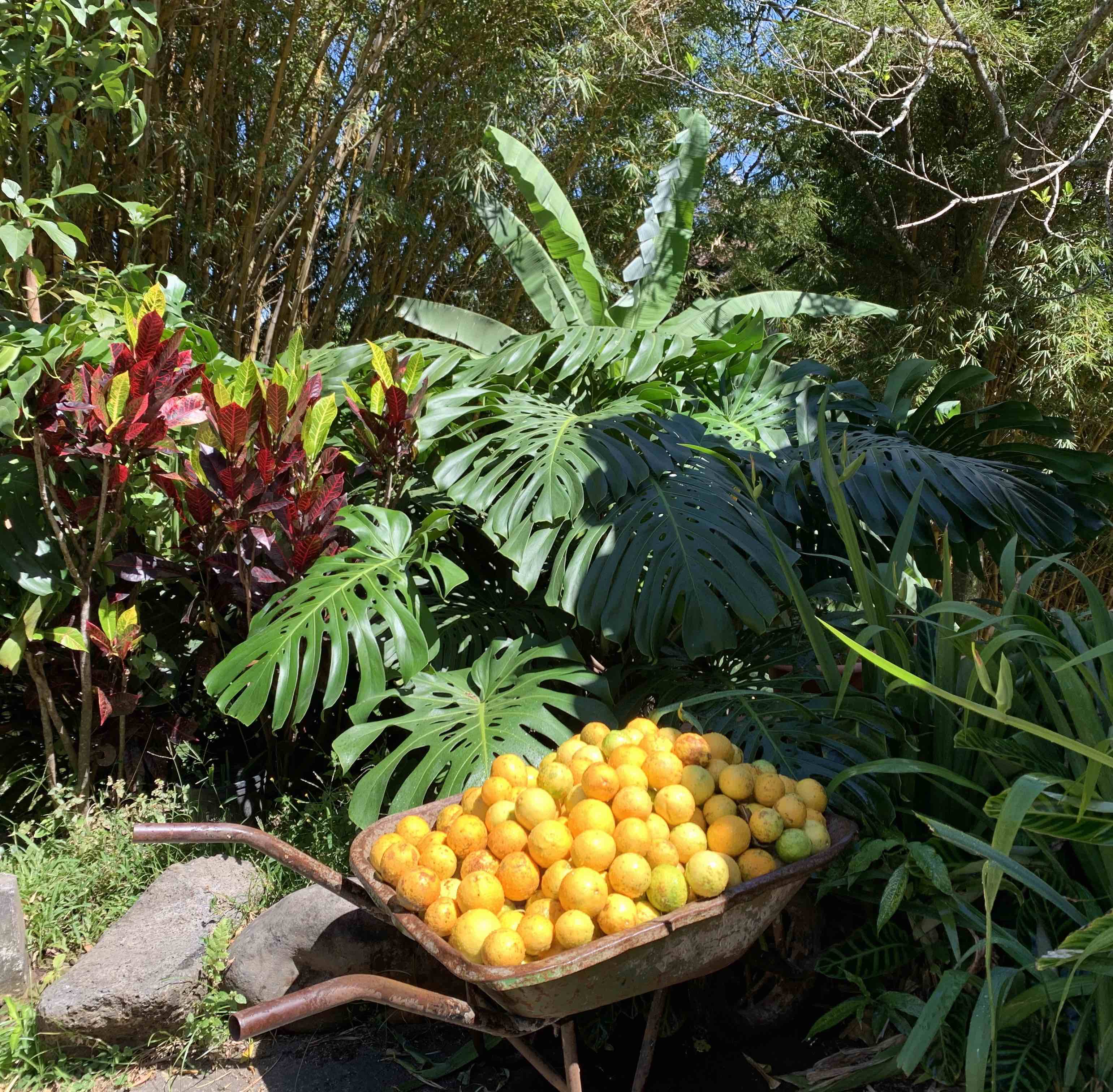
The fruit in the image above is from trees planted 10 years prior to our starting to post on this platform, and so the fruits of our labor planting citrus 20 years ago gives me a few hundred reasons to be grateful. This is the fourth and final wheel barrow full of various types of oranges and limes, and in addition to drinking plenty of juice in the last month I am freezing many gallons for the remaining summer months.