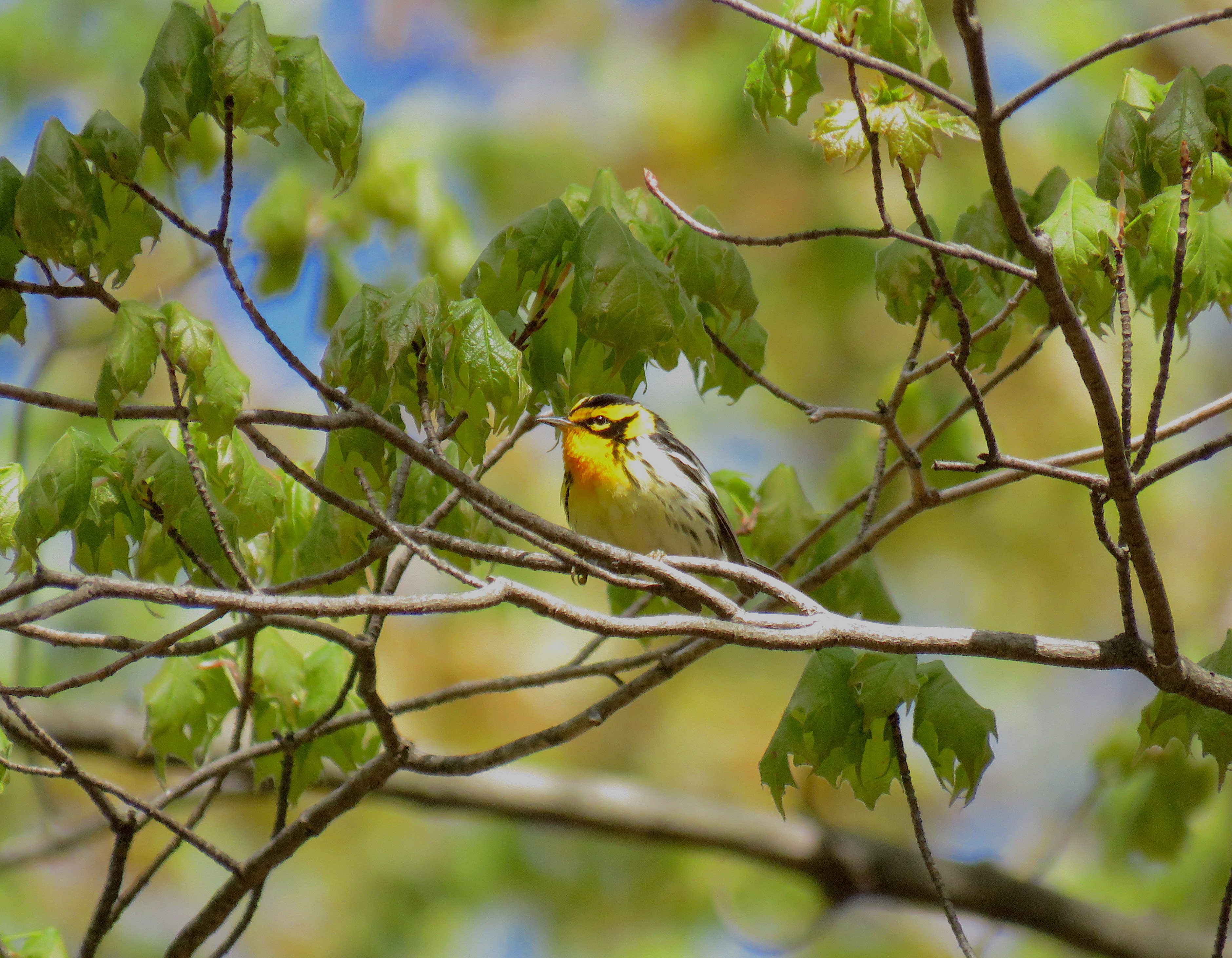
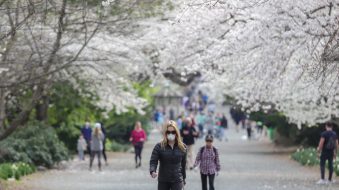
(male) East Rock Park, New Haven, CT
(male) East Rock Park, New Haven, CT
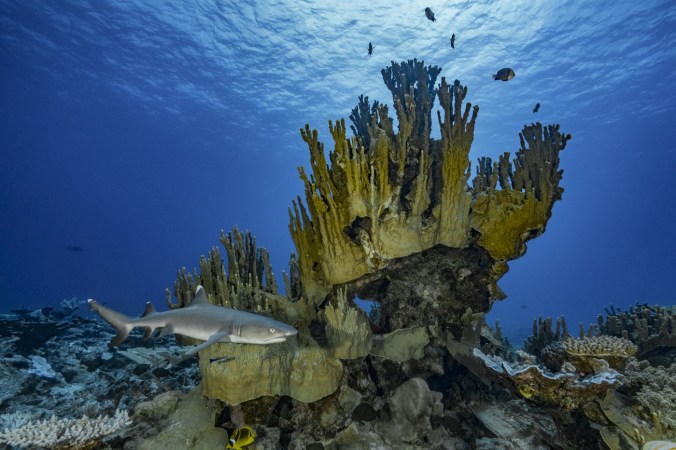
© Alexis Rosenfeld
We’re a day behind on World Oceans Day, but John Tanzer’s words are lasting, despite the date.
Don’t Waste A Crisis – A World Oceans Day Call to Action.
By John Tanzer, Oceans Practice Leader, WWF International
It was early March when the realization hit. Our Year of Ocean Action wasn’t going to happen — at least not in the way so many had been planning. 2020 would be extraordinary, but for all the wrong reasons. Our Super Year was meant to be the launch platform for a decade of strong global efforts to restore the ocean. Clearly, the attention and resources we had hoped to harness have been in much demand elsewhere.
I was not looking for a “silver lining” to the suffering and loss caused by the coronavirus, but somewhere in the back of my mind was a quote about not letting a crisis go to waste. Was it Winston Churchill who said it? Or a contemporary politician?
It turns out, it was not Churchill, and it wasn’t even a politician. The line can be traced back at least as far as 1976, to M. F. Weiner’s article in the journal Medical Economics, “Don’t Waste a Crisis — Your Patient’s or Your Own.” Weiner apparently meant that a medical crisis can be used to improve all aspects of a patient’s well-being.
So, it wasn’t a callous sentiment about seizing the upper hand in a moment of chaos. It was an acknowledgement that a crisis may arise which so disrupts the norm that all preconceptions are set aside, and all solutions are on the table.
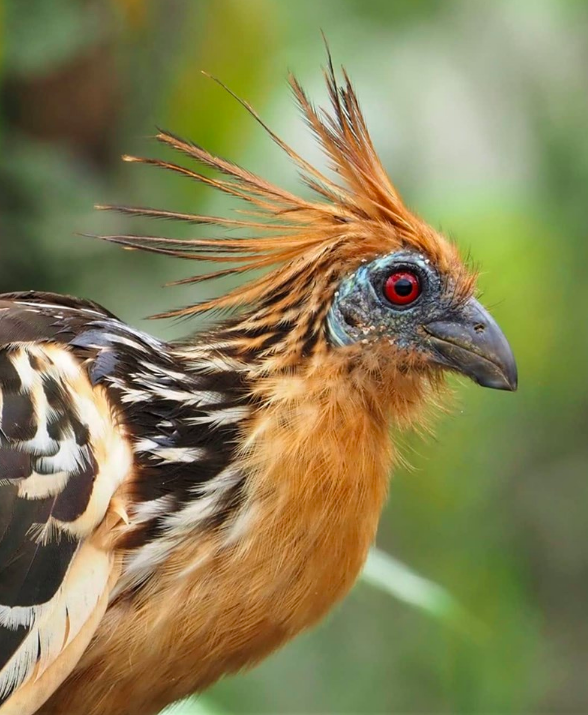
Yasuni National Park, Ecuador
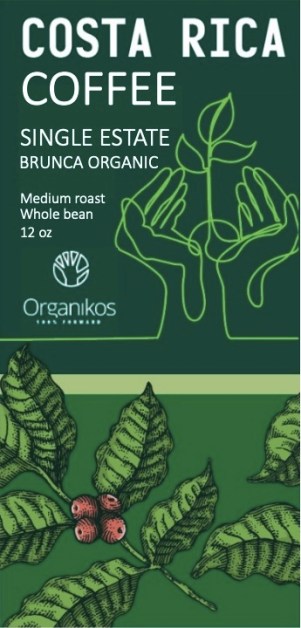 Since mentioning the new Organikos labeling and upcoming delivery of coffee in the USA we have progressed enough to predict that by sometime in August we will be shipping. The label to the left is mostly the same as three weeks ago, but now highlights the two general categories of coffee we offer. We knew one year ago that we would be featuring single estate and single region coffees from Costa Rica, but our labels did not focus attention on that as clearly as we now will. Organic, as well as Fair Trade and Decaffeinated were treated as their own categories, even though our organic is at least as special because it is a single estate. The same can be said for the two single region coffees–special for that reason but also due to their fair trade practices and decaffeination processing–so we decided to simplify the format as you see here, and can also see in the example below.
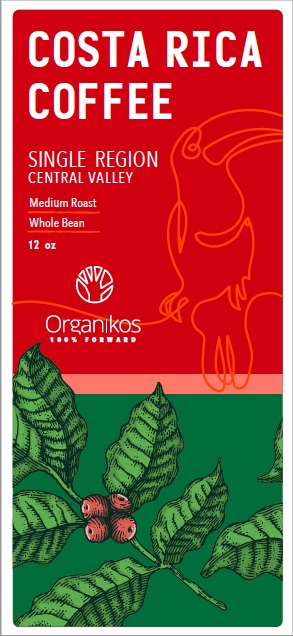 While we wait for our coffee to germinate, and for our graphic designer to complete the remaining sketches that accompany the twelve coffees, we are also finishing the structure of the e-commerce platform where the coffee can be purchased.
We started receiving requests last year from people who had bought our coffee while in Costa Rica about how to buy more and have it delivered to them. Not all of those queries were from the USA but under current circumstances it happens that fulfilling the requests in the USA is most feasible. So, we will be roasting weekly and coffee will arrive to those who order it within a few days.
If you are in the USA and you are interested in learning more about this option, please leave a message in the comment section here, or send an email to me at crist@organikos.com

Vijayapura, Karnataka

Michael Davoren with his cattle in the Burren, Co Clare. Photograph: Eamon Ward/Burrenbeo Trust
Thanks to Ella McSweeney for this story about a young academic’s hands on, entrepreneurial approach to solving problems caused by Ireland’s farmers, who had followed incentives to their economically logical but environmentally disastrous conclusions:
‘Life attracts life’: the Irish farmers filling their fields with bees and butterflies
Rewarding positive environmental impact has revitalised an area of west Ireland. Is this a solution to the country’s ‘acute’ nature crisis?
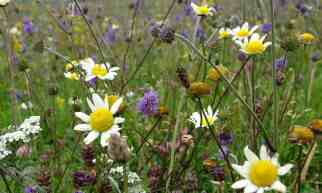
In late spring, the Burren is transformed into an explosion of colour. Photograph: Burrenbeo Trust
Michael Davoren shudders when he thinks of the 1990s. He’d been in charge of his 80-hectare farm in the Burren, Co Clare, since the 1970s, and the place was in his blood. The Davorens had worked these hills for 400 years.
But growing intensification fuelled by European subsidies meant that most farmers in this part of Ireland were having to decide between getting big or getting out. Hundreds were choosing the latter.
Hundreds of farmers have signed up to a scheme that pays them to create healthier fields and clean waterways. Photograph: Burrenbeo Trust
Davoren followed the advice to specialise and chase the beef markets. “The more animals I kept, the more money I got,” he says. “I put more cattle out, bought fertiliser, made silage. Slurry run-off was killing fish. But if I kept fewer animals I’d be penalised 10% of my subsidy.”
The austere appearance of the Burren landscape belies its rich diversity. The thick rocks were laid down 300 million years ago when warm tropical seas covered the area, and the bodies of billions of marine creatures cascaded to the sea floor to form the Burren limestone. Continue reading
Walong, Arunachal Pradesh
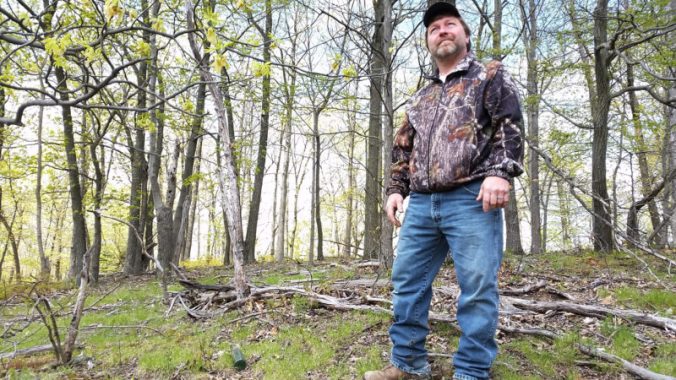
Tim Leiby co-owns his 95-acre forest near Blain, Pennsylvania with eight other families. GABRIEL POPKIN / YALE E360
Gabriel Popkin takes a “who knew?” topic and brightens up the day:
How Small Family Forests Can Help Meet the Climate Challenge
As efforts grow to store more CO2 emissions in forests, one sector has been overlooked — small, family-owned woodlands, which comprise 38 percent of U.S. forests. Now, a major conservation initiative is aiming to help these owners manage their lands for maximum carbon storage.
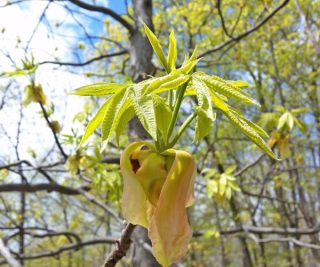
Hickory leaves emerge on Tim Leiby’s forest, a sign of progress toward bringing back native hardwoods. GABRIEL POPKIN / YALE E360
Tim Leiby had wrapped up a fun but fruitless early-morning turkey hunt and was enjoying an old John Wayne flick when I arrived at Willow Lodge near Blain, Pennsylvania. A few flurries drifted down on this unseasonably cold May morning. After a quick scan of antlers mounted on virtually every wall of the cozy hunting lodge, we headed out for a socially distanced stroll through what Leiby calls “our little piece of heaven.”
This 95-acre woods in south-central Pennsylvania’s ridge-and-valley country is a hunting and hiking refuge co-owned by eight families. Continue reading
Sarapiqui, Costa Rica
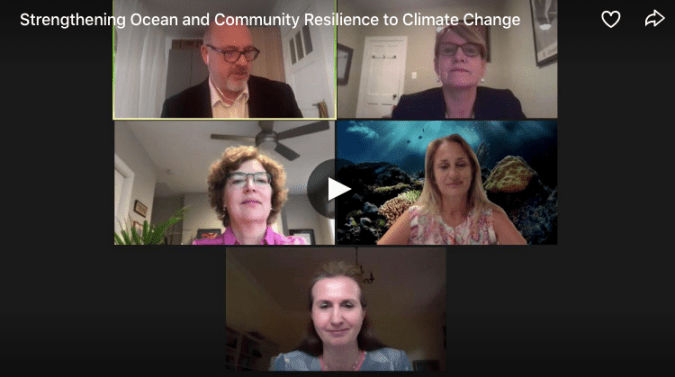
Another example of Costa Rican leadership and team action. The Virtual Ocean Dialogues, held by the World Economic Forum, “bring to light ambitious and inspiring solutions as well as tangible opportunities for positive change, and galvanize urgent global action for a healthy ocean. It will also spotlight some of the solutions that emerged as critical for the recovery from the COVID-19 crisis, including the role of the ocean in building the resilience that our economies and communities need to recover and eventually face other potential future shocks.”
The opening address by Costa Rica’s President Carlos Alvarado Quesada included statements about present and future actions.
“Costa Rica has historically been a leader in conservation,” Quesada says. It has doubled forest coverage in recent years and is aiming for a zero-emission economy by 2050.
Now it wants to turn its attentions to the sea. “We are working towards a sustainable approach for ocean management,” he says.
It is “committed to promoting a global blue economy transformation”, prioritizing mangrove forests, aquaculture and coastal biodiversity.

Jim Wilson/The New York Times
If they displace congesting and polluting four-wheel alternatives, they are worth a look:
E-Bikes Are Having Their Moment. They Deserve It.
The benefits of owning a battery-powered two-wheeler far outweigh the downsides, especially in a pandemic.
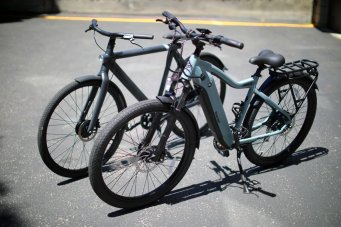
Credit…Jim Wilson/The New York Times
Many of us are entering a new stage of pandemic grief: adaptation. We are asking ourselves: How do we live with this new reality?
For many Americans, part of the solution has been to buy an electric bike. The battery-powered two-wheelers have become a compelling alternative for commuters who are being discouraged from taking public transportation and Ubers. For others, the bikes provide much-needed fresh air after months of confinement. Continue reading
Reserva Nacional Lomas de Lachay, Peru
Some happy news:
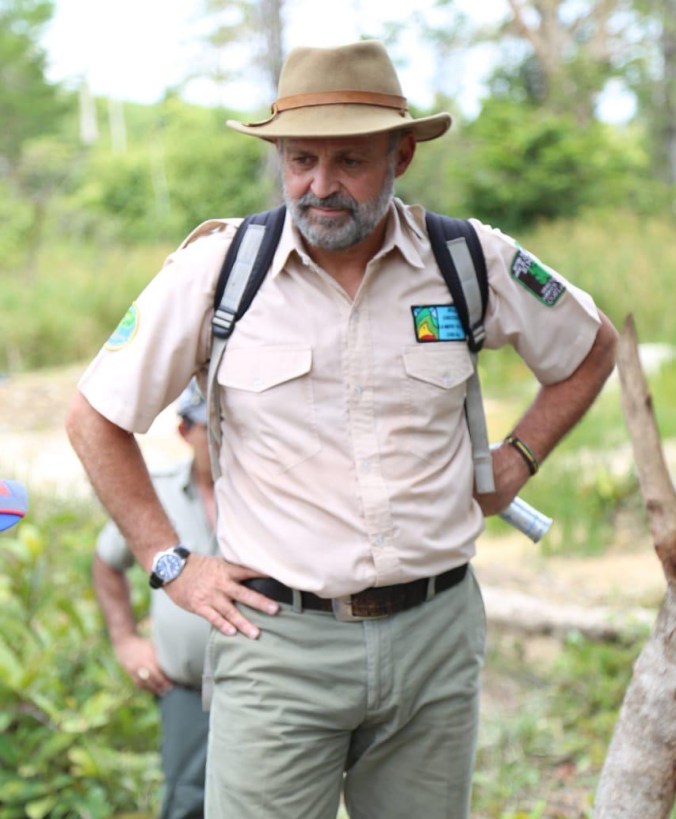
Carlos Manuel Rodriguez named new CEO of Global Environment Facility
Costa Rican Environment and Energy Minister Carlos Manuel Rodriguez has been selected as the next CEO and Chairperson of the Global Environment Facility, the largest multilateral trust fund supporting environmental action in developing countries and the main financing mechanism for multiple United Nations environmental conventions. Continue reading
Mindo, Ecuador
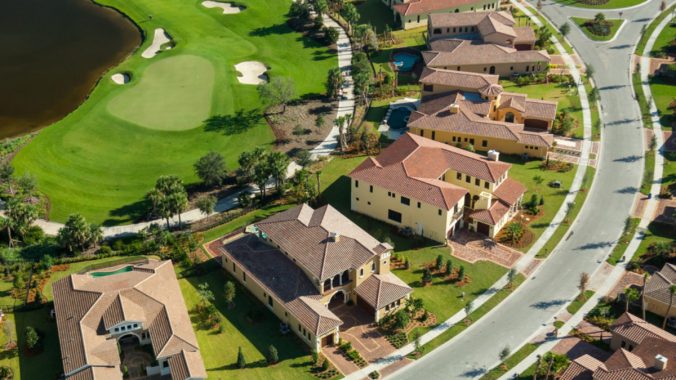
The average size of a new house in the U.S. has doubled since 1970. SHUTTERSTOCK
Thanks as always to Bill McKibben for his view on ways of thinking differently about our shared future:
When Social Distancing Ends, Will We Rethink the World We Want?
Long before the virus, Americans had become socially isolated, retreating into sprawling suburbs and an online world of screens. When we emerge from our pandemic-mandated separation, can we reconnect with each other and reconsider how the way we live impacts the natural world?
Patterns are notoriously hard to break, even when you have to. Studies find that more than half of smokers diagnosed with lung cancer keep on smoking, even though their odds of survival would go way up if they stopped. Nicotine is powerfully addictive, of course — but we’re beginning to suspect that’s true of lots of other human behaviors too: checking your phone, for instance, which seems strongly linked to the supply of dopamine (which is what nicotine affects as well). One tells oneself that one will change — but change is hard. Continue reading

San Gerarda de Dota, Costa Rica
Alladale first came to my attention in 2017, several years after I had started reading about rewilding. It came to my attention because of an introduction, through a mutual friend, to the founder of Alladale. I recall finding his description of what he was doing as identical to our own work in entrepreneurial conservation. I cannot recall why we have only two prior links to Alladale in our pages, but here is one more, in the form of a 30 minute podcast and its descriptor page:
How to bring back a forest, and a Scotland of the past, one tree at a time
Listen to the latest episode of THE WILD with Chris Morgan!
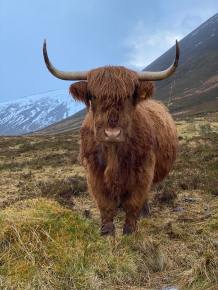
Scottish cow at the Alladale Wilderness Reserve.
The wind is really ripping through this valley in the remote Scottish Highlands as I’m zipping along in an ATV. I’m with highlander Innes MacNeil. He’s showing me a few remaining big old trees in the area.
The trees appear like something from a Tolkien novel — remnants of a forgotten time, like a magical connection to the past. There used to be a lot more trees like these across the Highlands. These are anywhere from 250-400 years old — and many are too old to reproduce.
“So these, we would describe them as granny pines,” MacNeil says. “The ones down here in front of us are about 250 to 300 years old, just sat in the bottom of the glen.” Continue reading
Baylands Nature Preserve, California
Starting in 1997 I got to know the entire country of Honduras over two years while working on a sustainable tourism development project for the government. I spent more time in Tegucigalpa than anywhere else because my monthly meetings with the Ministry of Tourism were held there. While poverty was visible, the city had a charm, unique in Central America, based on its particular history. At the time I also had many students from Honduras, most from Tegucigalpa, so it was more than a workplace for me. When hurricane Mitch descended on Central America in 1998, nowhere was more devastated than Tegucigalpa; by the time my project ended in 1999 I could not picture how or if the city would recover. I have not been back since, but continued to wonder. Nando Castillo has given me part of the answer, and I thank him for the clarity of his presentation on Medium, which I recommend taking five minutes to read:
Why Place Matters, Part I.
Can our cities evolve into the places we truly need?
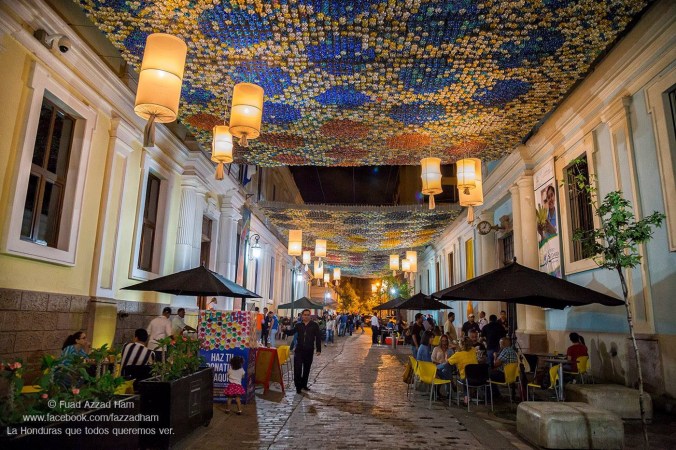
Image: Fuad Azzad Ham
At Raíz Capital our mission is sustainable urban revitalization. Our vision is for Tegucigalpa, a community with a neglected urban core, to become the creative capital of Central America and regain its glory as a prosperous city. We are still a ways from realizing it, but this is the story of how we found that vision and began to make it come true. Continue reading

 Organikos