A Corrective History Of Coffee

200427_r36287

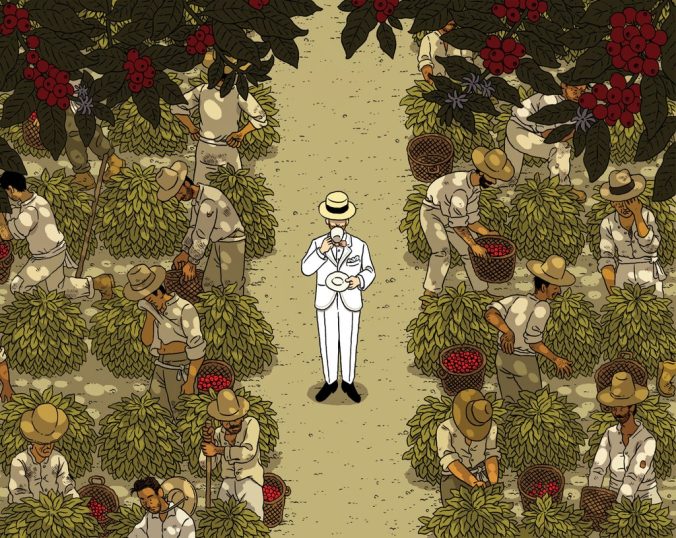
The literature of coffee has produced a new genre: corrective history. Illustration by Ilya Milstein

An essayist‘s review on one of our favorite topics is a nice surprise for a start to a new week:

The War on Coffee

The history of caffeine and capitalism can get surprisingly heated.

What would life be without coffee?” King Louis XV of France is said to have asked. “But, then, what is life even with coffee?” he added. Truer, or more apt, words for the present moment were never spoken, now usable as a kind of daily catechism. At a time when coffee remains one of the few things that the anxious sleeper can look forward to in the morning (What is life without it?), giving as it does at least an illusion of recharge and a fresh start, the charge has invariably slipped away by the time the latest grim briefing comes (What is life even with it?). Imagining life without coffee right now is, for many of us, almost impossible, even though the culture of the café that arose in America over the past couple of decades has, for some indefinite period, been shut down.

The growth of coffee as a culture, not just as a drink, can be measured in a unit that might be called the Larry, for the peerless comedy writer Larry David. In “Seinfeld,” which he co-created in 1989, coffee came as a normal beverage in a coffee shop—bad, indistinct stuff that might as well have been tea. (Paul Reiser had a nice bit about the codependency of coffee and tea, with tea as coffee’s pathetic friend.) Then, on “Friends,” the characters gathered in a coffee-specific location, Central Perk, but the very invocation of a percolator, the worst way to brew, suggested that they were there more for the company than for the coffee. Six or so Larrys later, by 2020, the plotline of an entire season of David’s own “Curb Your Enthusiasm” turned on a competition between Mocha Joe’s and Latte Larry’s—the “spite store” that Larry opens just to avenge an insult over scones, with many details about a specific kind of Mexican coffee bean he means to steal. The audience was expected to accept as an obvious premise the idea that coffee was a culture of devotion and discrimination, not just a passable caffeinated drink.

This change is real, and is reflected in the numbers. As Jonathan Morris documents in his recent book, “Coffee: A Global History” (Reaktion), epicurean coffeehouses in the United States numbered in the hundreds in 1989, and in the tens of thousands by 2013. Continue reading

Searching For Bread

000064298Yesterday’s post got me thinking more about bread, which reminded me of Cherchez le pain. This guide to the best bakeries in Paris was published when we lived there, and its author had been my professor at Cornell. As soon as I saw the publicity for the book I sent him an email congratulating him. To my surprise, he was on sabbatical leave, living just a few blocks from where we were living, so I invited him to join us for dinner.

I had sat through enough of his lectures on the history of food to anticipate an interesting dinner, but I was not prepared for what might sound now like a parlor trick. As soon as we sat for the meal, he picked up the bread in front of him, our favorite from a bakery we had chosen from dozens during our first few months living in that city. He held it to his nose, then brought it to his ear and tapped it with a spoon. He broke it in two and pressed his face into it. Maybe there was more to the show that I have forgotten now. What I do remember is that he named the bakery it was from.

I was impressed. And I was gratified after that when he said we had chosen well. But then he mentioned that if we were willing to walk just two blocks further we would find a bakery that ranked in the top five out of six hundred bakeries he had sampled in Paris. Next morning, of course, we went to that bakery and bought what might be the best bread of our lives. As we walked home with our bread, our entire family halted as we approached the bakery that had been our regular bakery for the past several months. We decided to walk an entire city block out of our way so that the baker would not see us having bought our bread elsewhere.

This Headline Catches My Attention

merlin_152866413_609459f1-4de4-461f-8e13-a961bae7438b-jumbo

Organic cabernet sauvignon grown near the town of Cowaramup in the Margaret River region of Australia. Frances Andrijich for The New York Times

During 2003 and 2004, life in Paris was full of wonders for our family. Bread was really art, we learned. And tarte tatin, which Amie had modified for years using mangos in Costa Rica, is best of all modified by using various French heritage plums available in a nearby marché in late August. And cheese! Plus plenty more, but for now I am reminded of the occasional wine expositions–cavernous spaces filled with hundreds of kiosks of artisanal wine makers–we would attend. At one of those I first tasted natural wine. So today, this headline shouts down all the others. Just the fact that Eric Asimov is still on this particular beat is enough to make me think things are okay, or will be okay, or at least could someday be okay:

France Defines Natural Wine, but Is That Enough?

The wine industry and many consumers have long sought a definition, but the adoption of a voluntary charter may not clarify anything.

merlin_171485409_9bb9d6f4-c698-4e74-a6c7-eb92ca40e585-jumbo

Marie Carroget

Natural wine is healthy and pure; natural wine is wretched and horrible. It’s the future of wine; it’s the death of wine.

For 15 years, natural wine has been a contentious time bomb that has divided many in the wine community, creating conflicts fought with the sort of anger that stems only from extreme defensiveness.

Since 2003, when I first encountered what has come to be called natural wine at the seminal restaurant 360 in Red Hook, Brooklyn, I have been a fan, though a cleareyed one, I hope.

I believe in the promise and beauty of natural wines, while acknowledging that many examples are not good, as is true with all genres of wine. The truth is that natural wines have made all of wine better. Continue reading

The Youthful Insights Behind ‘Black Histories, Black Futures’

Jadon Smith is one of six teen curators for “Black Histories, Black Futures,” the first exhibition at the Museum of Fine Arts, Boston, curated entirely by high school students. photo credit: Melanie Stetson Freeman/Staff

Although the exhibit highlighted here began in January (notably directly following the holiday honoring MLK), we have the CS Monitor to thank for bringing it to our attention.  The museum is currently closed due to the coronavirus outbreaks, but the making of video on the MFA website shows some highlights, and we can only hope that there will be opportunity to visit it in person before the end date of June 20th.

“The teen curators—fellows from youth empowerment organizations Becoming a Man (BAM), The BASE, and the Bloomberg Arts Internship Boston program managed by EdVestors—used skills they developed as paid interns in a pilot internship program at the MFA to research, interpret, and design the exhibition. Their work highlights areas of excellence within the Museum’s collection and lays foundations for the future.”

What if curators were teens? Museums try it.

Jadon Smith steps closer to his favorite painting by Archibald Motley, carefully examining the details he’s looked at many times before, a smile from ear to ear. At the center of the piece, five elegant women dressed in their Sunday best sit in a restaurant. One woman, hidden in the background, catches his attention.

The John Axelrod Collection/Frank B. Bemis Fund, Charles H. Bayley Fund, and the Heritage Fund for a Diverse Collection/Courtesy of The MFA “Cocktails” by Archibald Motley is an oil on canvas painting from about 1926. Motley was known for depicting the blossoming of black social life.

“Women are the centerpiece of the whole entire painting,” says Jadon, a junior at John D. O’Bryant School of Mathematics and Science, during a visit to Boston’s Museum of Fine Arts in early March. “They’re supposed to be there to be seen. Don’t ignore them. Notice that they’re there, appreciate the fact that they’re there.”

Jadon is one of six local teens selected to craft “Black Histories, Black Futures” – the museum’s first exhibition curated entirely by high school students. The MFA’s exhibition, the culmination of a partnership with local youth empowerment organizations, reflects a growing trend, one that has museums working to engage and represent a more diverse population within the field of fine art. Including young people in the curation process not only trains the next generation of curators, say museum staffers, but it also helps aging institutions display refreshing and inclusive exhibitions inspired by the young curators’ own experiences.

“This institution is 150 years old. And so what does that mean for young people? Where do young people belong in such an old institution?” says Layla Bermeo, an associate curator at the MFA. “This project really tried to argue that young people belong in the center.”.. Continue reading

Slow Brew, Day 4

SlowBrew1

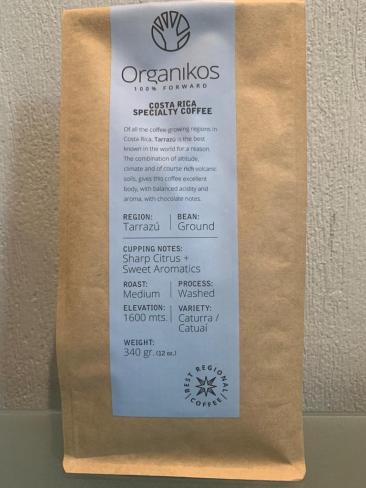
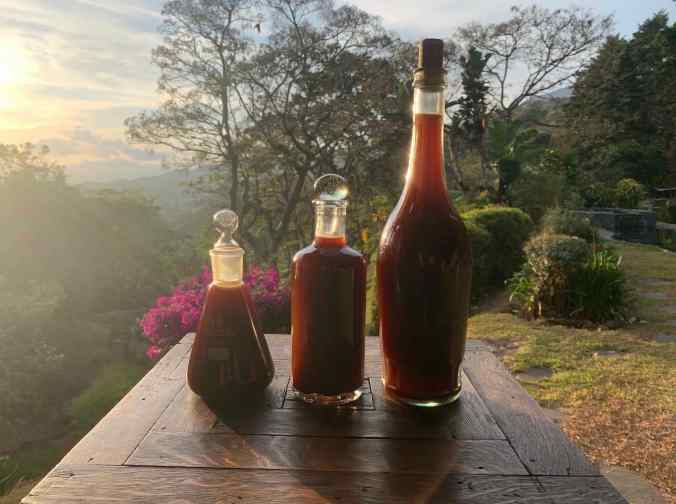
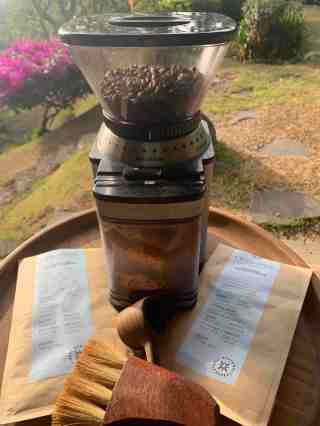
TarrazuRegionalGroundI have been drinking hot coffee every morning for four decades, plus the occasional espresso, and on rare occasions on a hot summer day I have had iced coffee. Maybe ten times in my life have I been interested in drinking a coffee that was not hot. My morning coffee ritual is easily the most consistent feature of my adult life. So, I was not expecting what happened this week. I am now on the fourth day of testing my response to slow brew, which is four days longer than I have gone without drinking hot coffee first thing in the morning since 1980.
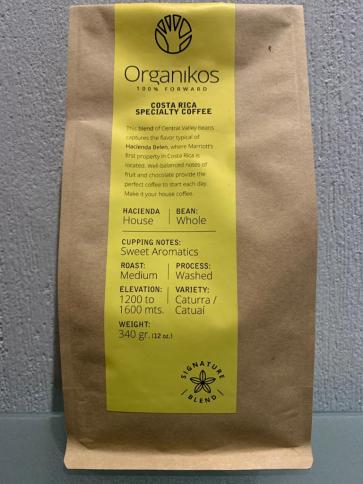
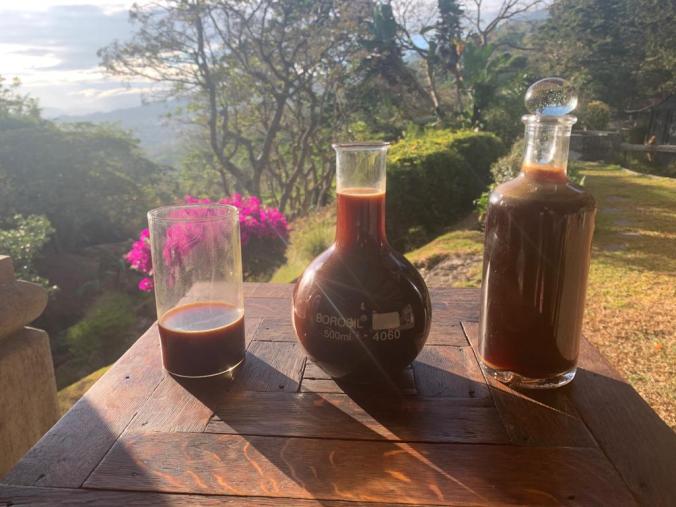
HaciendaHouseWholeFor the first stage of this experiment I brewed our Tarrazu regional blend, packaged in the photo just above. In the photo above that it is in the small bottle on the right. You can see that a residue has formed at the top of the vessel after a few days of sitting, which resembles the spuma on the head of a good espresso. Today I am drinking a slow brew of Hacienda House, our tribute to the coffee estate on which Marriott’s Hacienda Belen is situated in Costa Rica’s Central Valley. This can be seen in the round beaker and the glass in the photo above.

It is darker, and in other ways different. I brewed the Tarrazu for 12 hours and the House for 18 hours. As I drink it now, one flavor pops in a way that it never has for me when I drink it hot: cinnamon!

Mutation as a Positive

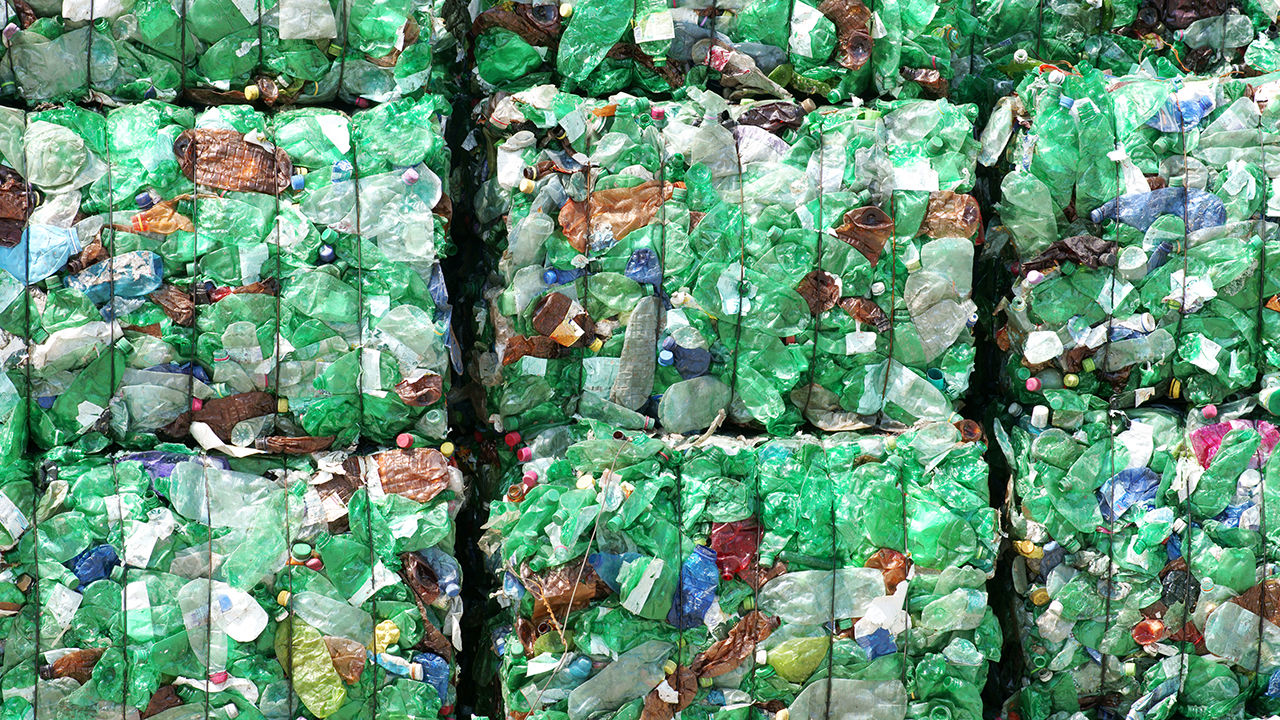
Green plastic bottles ready for recycling

In addition to all the creative ways that people recycle and upcycle plastics, we appreciate when scientific collaboration is brought to the forefront, as in the example here. We thank Science Magazine for highlighting the story.

‘A huge step forward.’ Mutant enzyme could vastly improve recycling of plastic bottles

Recycling isn’t as guilt-free as it seems. Only about 30% of the plastic that goes into soda bottles gets turned into new plastic, and it often ends up as a lower strength version. Now, researchers report they’ve engineered an enzyme that can convert 90% of that same plastic back to its pristine starting materials. Work is underway to scale up the technology and open a demonstration plant next year.

“This is a huge step forward,” says John McGeehan, who directs the center for enzyme innovation at the University of Portsmouth and who was not involved with the work.

Polyethylene terephthalate (PET) is one of the world’s most commonly used plastics, with some 70 million tons produced annually. PET bottles are already recycled in many places. But the current approach has problems. For starters, recycling companies typically end up with a broad mix of different colors of the plastic. They then use high temperatures to melt those down, producing a gray or black plastic starting material that few companies want to use to package their products.

Instead, the material is typically turned into carpets or other low-grade plastic fibers that eventually end up in a landfill or get incinerated. “It’s not really recycling at all,” McGeehan says.

To get around this concern, scientists have searched for enzymes in microbes that break down PET and other plastics. In 2012, researchers at Osaka University found one such enzyme in a compost heap. Continue reading

New Day, New Brew

ColdCoffee1

ColdCoffee2I have been wondering in recent months whether there is something we can do to further reduce the carbon footprint of the coffee we sell? Is there a way to do that and simultaneously improve the taste of our 12 varieties of coffee? The idea of brewing without heat is not new, but I resisted it. I did not like the name cold brew, nor the concept, for the same reason I resist anything smacking of trendy or fashionable: fads fade. I was wrong, in this case. And as soon as I acknowledged to myself that I might be wrong, I demonstrated it with results that I am happy to share here.
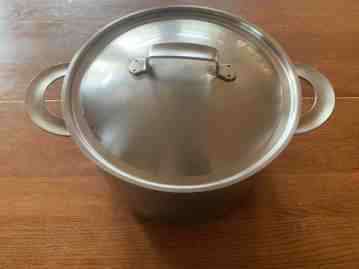
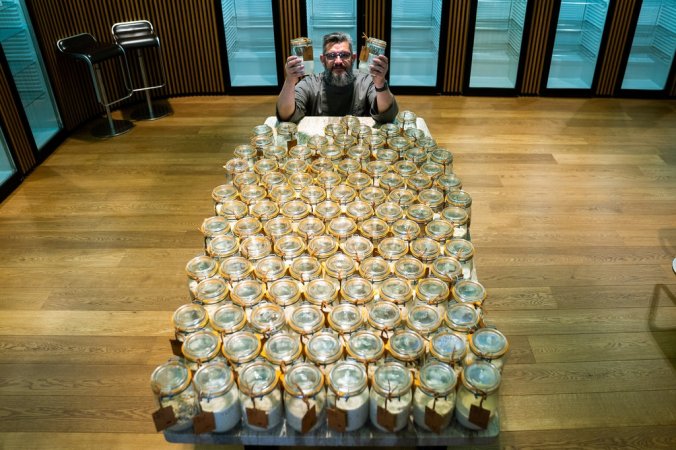
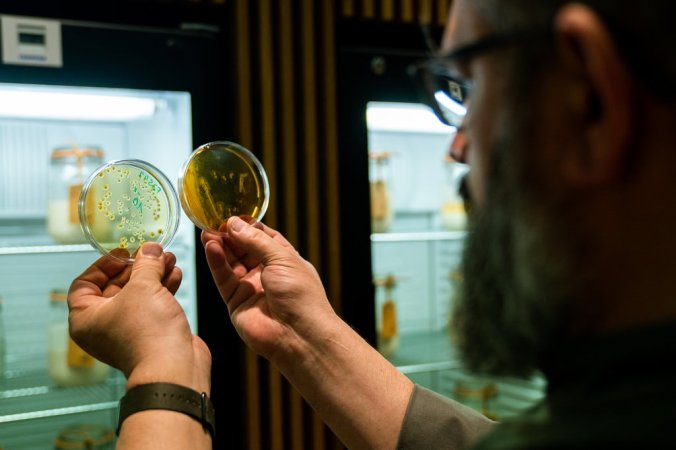
ColdCoffee2.5Instead of cold brew, a better name is slow brew, bypassing the carbon footprint of refrigeration. It is as simple as this: grind a pound of coffee at medium and place it in a stainless steel pot. Add two cups of room temperature water (I run tap water through a Britta filter) and gently stir the grounds.
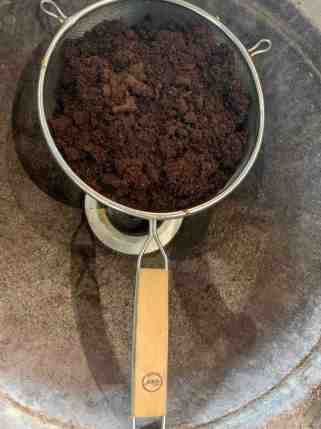
ColdCoffee3Add eight more cups of water and cover, letting the coffee brew for at least 12 hours. Strain through a medium sieve–1/16 mesh is perfect for coffee ground at medium–into another stainless steel pot, letting it drip until the grounds look dry as in the picture to the right. Next use a fine sieve to strain the brew again. You will have about eight cups of coffee that is much stronger than I normally enjoy, but it is worth tasting for the intensity and complexity. After experimenting I found that combining one portion of slow brew with an equal portion of water created the perfect flavor profile.
Librarians Of Bread

00SCI-SOURDOUGH1-jumbo

Karl De Smedt in the Puratos Center for Bread Flavor, the world’s most extensive collection of sourdough starters, in St. Vith, Belgium. Puratos Center for Bread Flavor

Bread is a frequent flier of a topic on this platform, including sourdough specifically. Ditto for libraries and their librarians and the creative things they do. Franz Lidz is not a writer we have featured in our pages before, but with a story like this one we will be watching for more.

At the Sourdough Library, With Some Very Old Mothers

Some starters never die, they just get filed away here.

In these housebound times, Americans have gone stark baking mad. Shut-ins are channeling their anxieties into pandemic pastries and quarantine cookies, some with icing piped in the shape of surgical masks, others frosted with the face of Dr. Anthony Fauci. Baking essentials such as yeast and flour are in short supply, and Google searches for bread recipes are on the rise, so to speak.

00SCI-SOURDOUGH2-jumbo

Puratos Center for Bread Flavour

Curiously, during this apocalyptic spring, the best thing since sliced bread turns out not to be sliced bread. The most coveted isolation loaves seem to be sourdough, a knobbly, rugged variety that requires patience, handmade fermentations and something like affection. “Working with sourdough is part art, part science,” said Karl De Smedt. “You don’t tell the dough when it’s time to be shaped. The dough tells you.”

Mr. De Smedt is the curator of the world’s only sourdough library. Located in the flyspeck village of St. Vith, 87 miles southeast of Brussels, the library houses the world’s most extensive collection of sourdough starters, those bubbling beige globs of bacteria and wild yeast — known as “mothers” — that bakers mix into dough to produce flavorful loaves with interestingly shaped holes. If a mother isn’t regularly divided and kneaded and fed with flour and water, she will eventually go dormant or die. “A starter has its own heart, almost its own will,” Mr. De Smedt said. “Treat a starter nice and it will reward you tremendously, like a good friend.” Continue reading

Here Is Where We Are, With Birds & Coffee

BOTDCrist

Of all the gin joints in all the towns, in all the world…here is where we are.

BOTD2CristAmie and I are following local rules in place over the Semana Santa holiday week, which ends today. Starting tomorrow there will be more freedom of movement. Most of our friends in Costa Rica feel confident in their country’s leadership during this time, and we have respected the rules and appreciated the clarity of their communication.
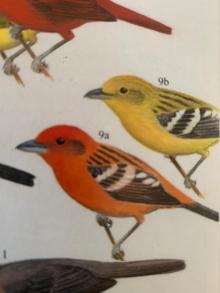
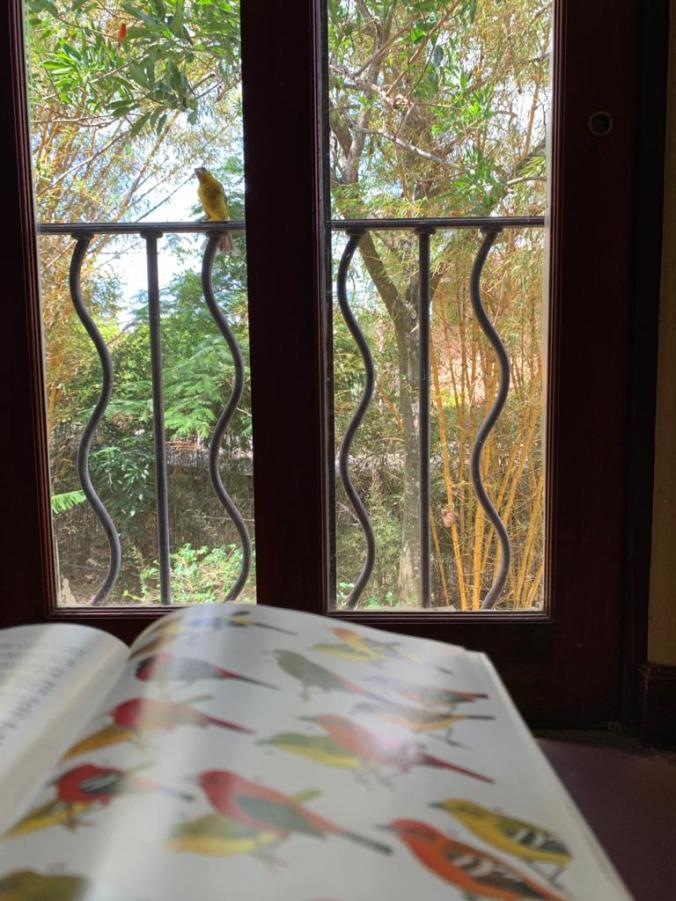
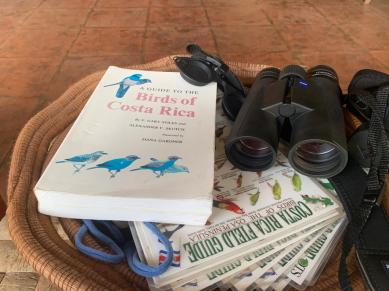
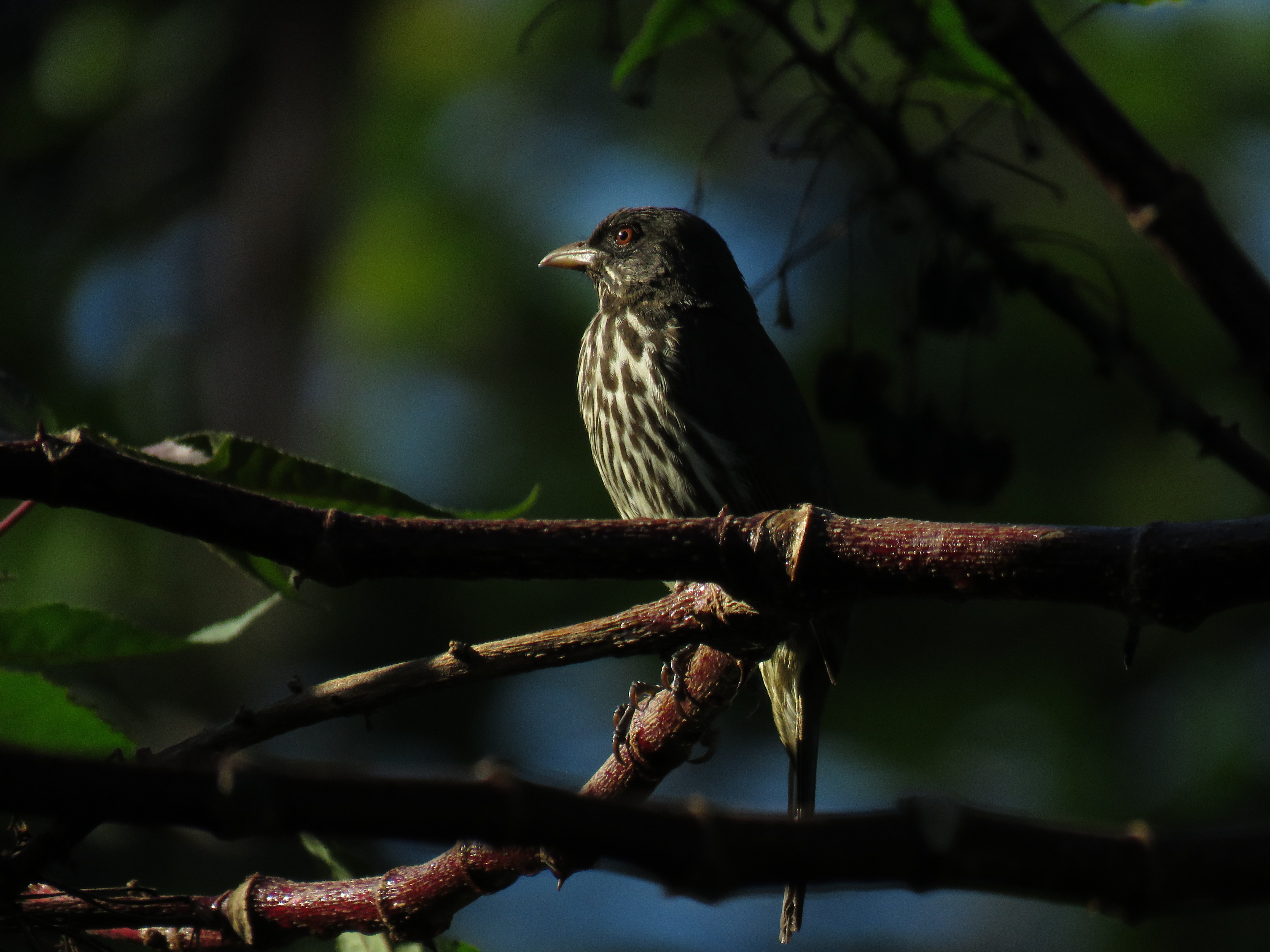
BOTD3CristWe are at home, and I took the photo at the top yesterday with a book we keep next to the binoculars. We have been seeing two different species of bird coming to that window, and I did my best to capture the more colorful pair. I was hoping to get the male and female at the same time on the rail, with their entry in the book clearly in view in the lower right of the frame. I took what I could get. The entry for this pair is on a page with the header Plate 47: Larger Red or Yellow Tanagers which then specifies:
Flame-colored Tanager (Piranga bidentata), p433. Streaked back and wing-bars. (a) [male] orange-red. (b) [female]: yellowish-olive.

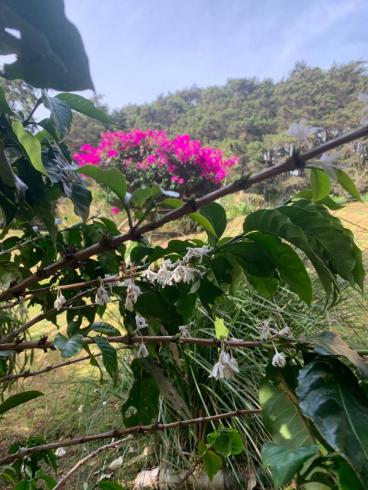
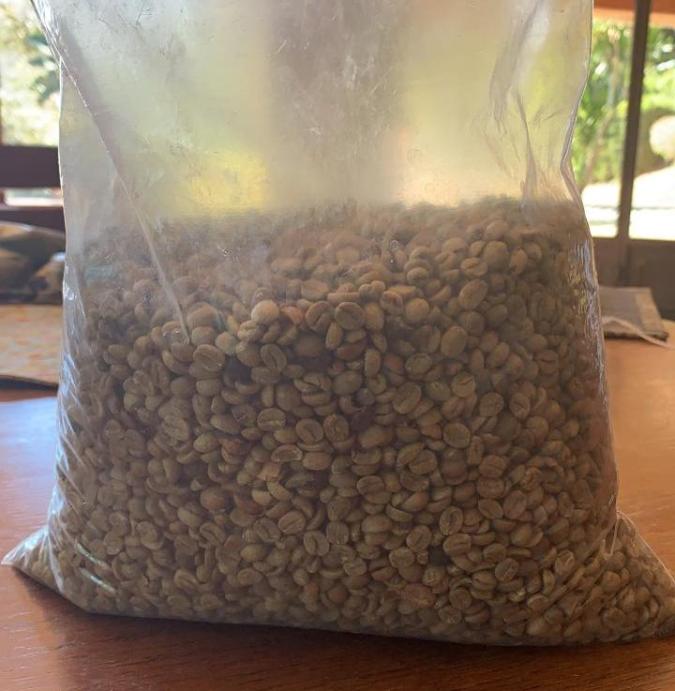
BOTD4CristPositive id. During the setup for that shot, looking out our family room window Amie noticed that one of our coffee trees still has blossoms on it. The white flowers to the right, slightly droopy, signal the beginning of the fruit production cycle that will culminate in December with the ripe red cherries we have been harvesting for 20 years now. Just a few days ago the beans from the most recent harvest were ready, and I placed them in a sack after they had been sundried and the husks removed. We call them beans but they are really seeds, and unlike the previous 20 years when this coffee has been roasted and consumed, this year I will germinate them to fulfill the commitment made one year ago. There is plenty to be concerned about today versus 363 days ago, but there is also, still, inspiration.
BOTD5Crist


Butterfly Farming’s Limits

merlin_171378282_a6460ac2-c217-40f4-b8a0-00d58c272766-jumbo

Sylvain Cordier/Gamma-Rapho, via Getty Images

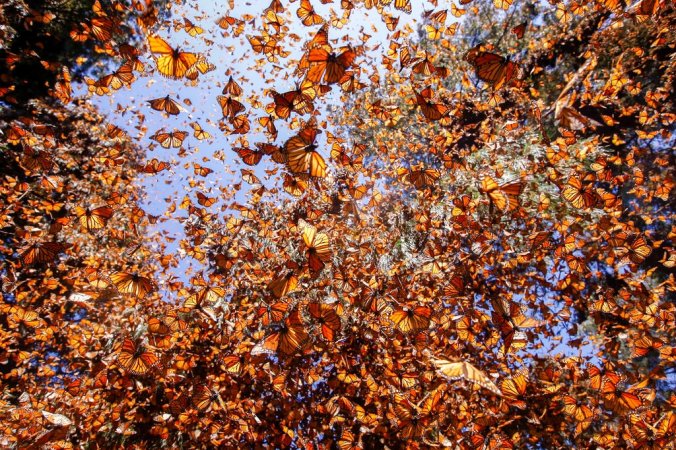
Costa Rica pioneered butterfly farming in the 1990s, and it has been an important export ever since. It is an export oriented to botanical gardens and other natural attractions where butterflies can be released by the thousands in enclosures; it is also an export that feeds the hunger of collectors. It is not a cure-all as Elizabeth Preston, on our radar again after five years, notes:

What’s Wrong With Butterflies Raised in Captivity?

A study suggests that monarchs bred by enthusiasts were less fit than those that started as caterpillars in the wild.

Monarch butterflies look delicate, but they need to be super-tough to survive their annual migrations. The monarchs of eastern North America may travel thousands of miles to their winter home in Mexico’s Sierra Madre mountains. And, increasingly, they’re not making it, a problem that has been blamed on habitat loss, climate change and pesticides.

In an effort to boost the struggling insect’s numbers, some butterfly enthusiasts buy monarchs raised in captivity or breed their own, then set them free. But research published Wednesday in Biology Letters shows that captive-born monarchs are weaker than wild ones — adding evidence to the arguments of those who warn that releasing them does more harm than good. Continue reading