Thattekad Bird Sanctuary, Kerala
Thattekad Bird Sanctuary, Kerala
Foodrunners may have the unusual problem of overabundance, in the form of waste and generous people donating their time. Thanks to Marisa Endicott (again) and Mother Jones for bringing this organization to our attention.

Alleviating hunger, one volunteer and donor at a time:
Tech Company Free Meals Beget a Lot of Leftovers. Meet the Man on a Mission to Rescue Them.
Food Runners saves extra grub before it’s wasted, and delivers it to hungry mouths.
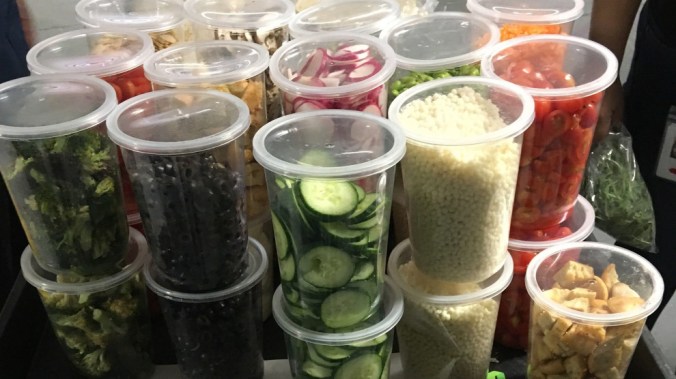
Marisa Endicott
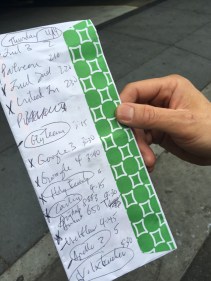
Tso loads his car with Tetris-like precision. Marisa Endicott
I meet Les Tso on a corner in San Francisco’s SoMa district on a wet Thursday afternoon. He pulls his silver Isuzu SUV into an alley. “Today because it’s the first rain, people are going to be driving cluelessly—there are a lot of Uber and Lyft drivers that come from out of the area,” Tso warns me. “Makes it more exciting, I guess.”
Tso picks up donations from an average 16 places a day. Marisa Endicott
Tso works as a driver for Food Runners, a nonprofit that picks up leftover food from grocery stores, companies, events, and restaurants and brings it to organizations working to feed the hungry. For four hours every weekday, Tso braves the worst of Bay Area traffic to makes his 80 to 90 pickups (an average of 16 a day), primarily from tech companies—including Google, Juul, and LinkedIn—that have become an omnipresent force in the city. Continue reading
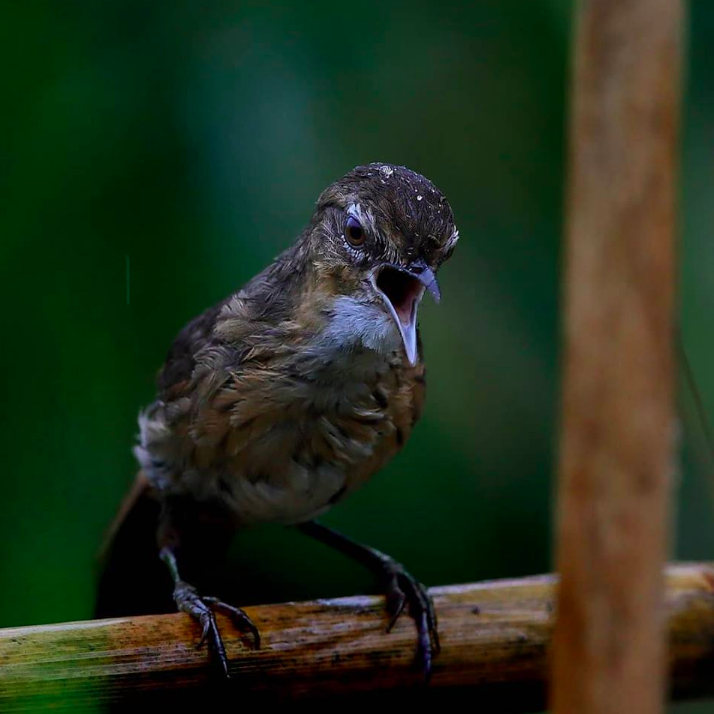
Maguri Bheel, Assam
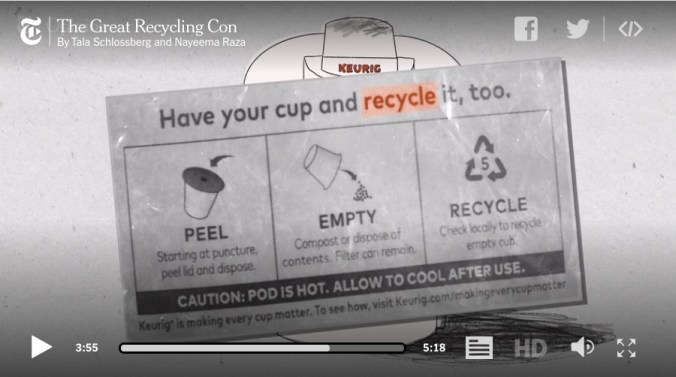
The greatest trick companies ever played was making us think we could recycle their products. The New York Times
My most recent reference to pods could have been the last. Enough said. But my eye was caught by the title of this item yesterday, and all day I kept wondering whether I need to know more about the confidence game that has been, and is, recycling. Deciding this morning to click through I was rewarded with an update on my favorite coffee scandal. Insult on top of injury. Surprised by that? Nope. My thanks to Tala Schlossberg and Nayeema Raza for this creative op-ed video, and accompanying text:
The Great Recycling Con
The greatest trick corporations ever played was making us think we could recycle their products…
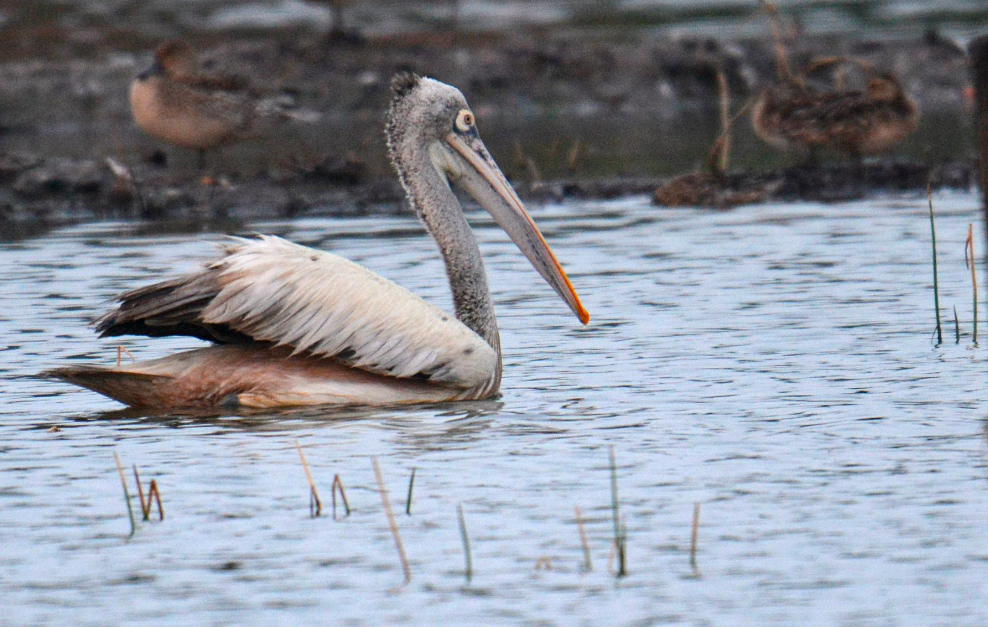
Kandakadavy backwaters, Kerala
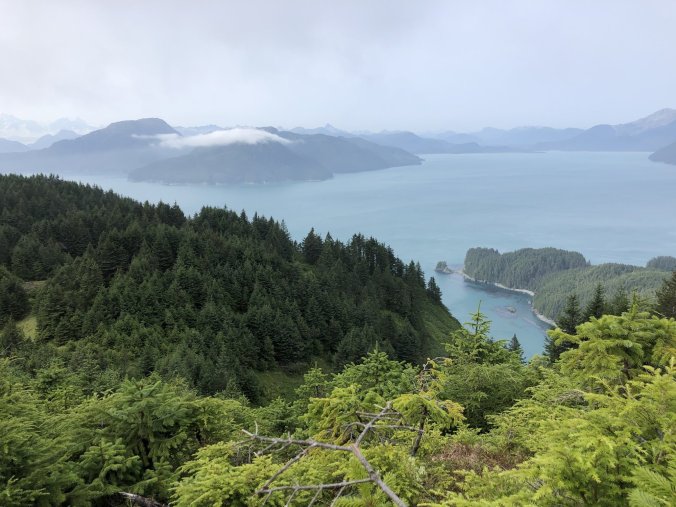
The waters and mountains of the Inian Islands, near Glacier Bay, Alaska.Lauren Migaki/NPR
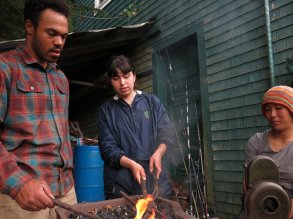
With help from books and YouTube, Abe Marcus (left, pictured with Yasamin Sharifi, center, and Tsu Isaka) has been learning how to operate a coal-powered, hand-cranked forge found on the property. Lauren Migaki/NPR
There is a great story shared yesterday on the National Public Radio (USA) website, told in unusually long form for that outlet, by Anya Kamenetz. I look forward to more stories by this journalist — she relates a story that is as far away from my own experience as I can imagine, but I feel at home in it. The picture to the right, from near the end of the story, hints at one reason. But it is not that. Nor is it the fact that I witnessed the birth and evolution of a similar initiative in Costa Rica.
I taught a field course in amazing locations (2005 in Senegal, followed by Costa Rica in 2006 followed by Croatia, India, Siberia and Chilean Patagonia), but that bore little resemblance to the initiative in this story. All those factors may help me feel at home in this story, but mostly I relate to it as a story told well for the purpose of understanding the motivations of a social entrepreneur and incidentally her commitment to experiential learning.
In Alaska’s Wilderness, A New Vision Of Higher Learning
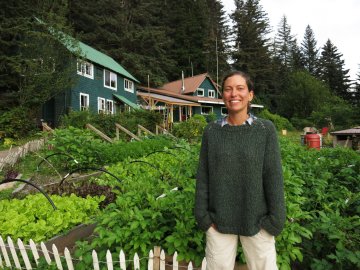
Marcus stands in front of the massive vegetable garden at The Arete Project in Glacier Bay, Alaska. Lauren Migaki/NPR
In Glacier Bay, Alaska, mountains rush up farther and faster from the shoreline than almost anywhere else on the planet. Humpback whales, halibut and sea otters ply the waters that lap rocky, pine-crowned islands, and you can stick a bare hook in the water and pull out dinner about as fast as it takes to say so.
This is the place 31-year-old Laura Marcus chose for her Arete Project. Or just maybe, this place chose her.

The Arete Project takes place in the remote wilderness of the Inian Islands in southeast Alaska.
Lauren Migaki/NPR
Arete in Greek means “excellence.” And Marcus’ Arete is a tiny, extremely remote program that offers college credit for a combination of outdoor and classroom-based learning. It’s also an experiment in just how, what and why young people are supposed to live and learn together in a world that seems more fragile than ever. It’s dedicated, Marcus says, to “the possibility of an education where there were stakes beyond individual achievement — where the work that students were doing … actually mattered.” Continue reading
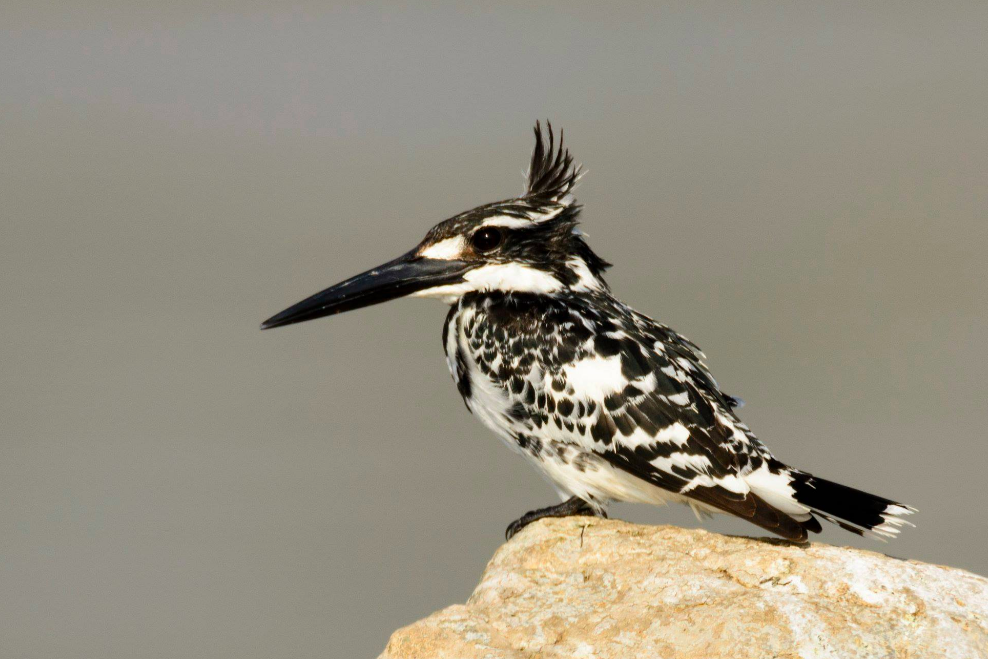
Vijayapur, Karnataka
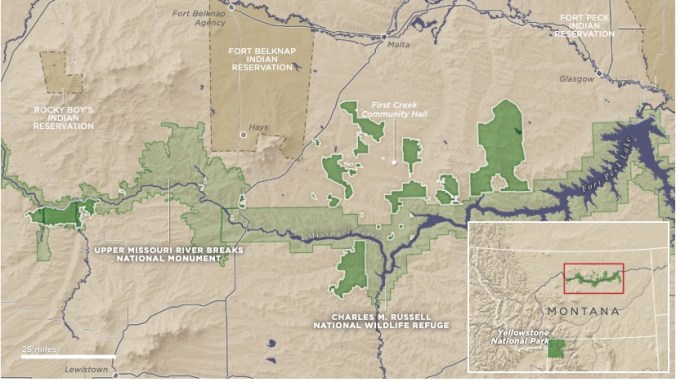
American Prairie Reserve’s Patchwork Of Properties
American Prairie Reserve’s purchased and leased land is shown in green with white borders adjacent to Upper Missouri Breaks National Monument and Charles M. Russell National Wildlife Refuge. Together, these parcels complete a network of land larger than Yellowstone National Park, the second-largest national park in the Lower 48 states. Source: American Prairie Reserve, Montana State Library, U.S. Geological Survey 1 Arc-Second SRTM, Natural Earth, Montana Department of Transportation, U.S. Census Bureau, National Park Service
Credit: Daniel Wood/NPR
Hats off to Sean Gerrity, as well as to the farmers and ranchers who have kept the native prairie grasses intact in recent generation, and to the native communities who stewarded these lands long before all this became a story. Our thanks to National Public Radio (USA) for sharing the story:
Big Money Is Building A New Kind Of National Park In The Great Plains
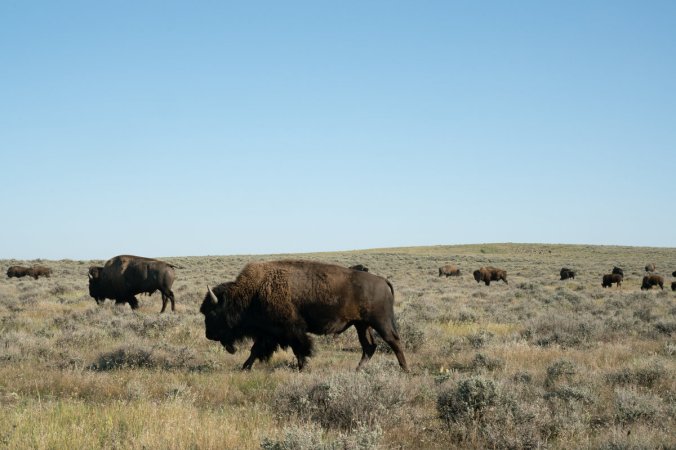
Bison walk on American Prairie Reserve land. The organization is slowly purchasing ranches from willing sellers, phasing out the cows and replacing them with wild bison. Claire Harbage/NPR
This story was supported by the Pulitzer Center on Crisis Reporting.
A privately funded, nonprofit organization is creating a 3.2 million-acre wildlife sanctuary — American Prairie Reserve — in northeastern Montana, an area long known as cattle country.
Sean Gerrity founded the American Prairie Reserve more than 18 years ago after he moved back home to Montana from Silicon Valley, where he ran a firm that consulted for companies such as AT&T and Apple.
Claire Harbage/NPRBut the reserve is facing fierce opposition from many locals because to build it, the organization is slowly purchasing ranches from willing sellers, phasing out the cows and replacing them with wild bison. Those private properties are then stitched together with vast tracts of neighboring public lands to create one giant, rewilded prairie. The organization has purchased close to 30 properties so far, but it needs at least 50 more.
“I see them coming in with big money, buying up ranches and walking over the top of the people who are already here,” says ranch owner Conni French. “For them to be successful in their goals, we can’t be here, and that’s not OK with us.”
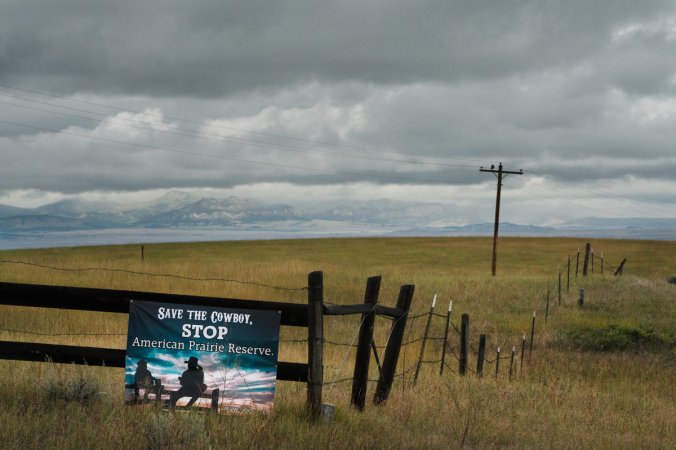
She isn’t alone. Driving around, you see signs everywhere that say, “Save The Cowboy, Stop The American Prairie Reserve.”
A “Save the Cowboy” sign is posted along a fence. The “Little Rockies” on the Fort Belknap Indian Reservation are seen in the distance. Claire Harbage/NPR
But the project’s efforts have garnered a lot of positive attention from those living outside northeastern Montana because, once it’s complete, it will be the largest wildlife sanctuary in the Lower 48 states — about 5,000 square miles, nearly the size of the Serengeti National Park in Tanzania. Continue reading

Tawang, Arunachal Pradesh
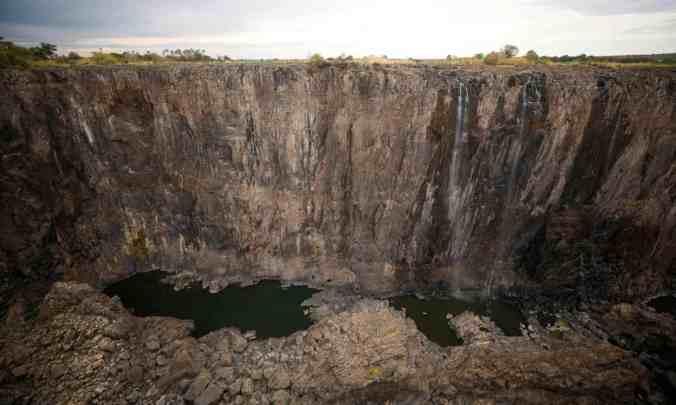
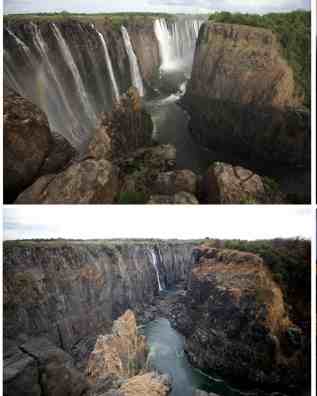
The dry cliffs of Victoria Falls in Zimbabwe this week, during the area’s worst drought in a century, fuelling concerns about climate change. Photograph: Mike Hutchings/Reuters
What can be done? What could we do differently? What must I do now that I was not doing before, or stop doing now that I was doing before? The photo above and the story below fit a pattern of alarm, in the way I have chosen to be alarmed in recent years. That choice fuels my commitments to find alternative ways of doing things. And sometimes sparks fly, in a good way. My appreciation to the Guardian for this information, disturbing though it is considering how important water falls have been to my thinking over the years:
Victoria Falls dries to a trickle after worst drought in a century
One of southern Africa’s biggest tourist attractions has seen an unprecedented decline this dry season, fuelling climate change fears
A combination photo of water flowing down Victoria Falls (top) and during the current drought. Photograph: Reuters
For decades Victoria Falls, where southern Africa’s Zambezi river cascades down 100 metres into a gash in the earth, have drawn millions of holidaymakers to Zimbabwe and Zambia for their stunning views.
But the worst drought in a century has slowed the waterfalls to a trickle, fuelling fears that climate change could kill one of the region’s biggest tourist attractions.
While they typically slow down during the dry season, officials said this year had brought an unprecedented decline in water levels. Continue reading
Baylands Nature Preserve, California

A chihuahua plays on the grass. Photo © Jamie McCaffrey / Flickr
Thanks to Cool Green Science for asking, and answering, this burning question:
Do Hawks Eat Pets?
Hawks have moved into our backyards. And many people seem to find their new neighbors terrifying.
I recently downloaded the Nextdoor app, the “social network for your neighborhood community,” to keep track of road closures and new developments in my rapidly growing community. It served that purpose, but it also gives me sometimes-startling insights into my neighbors’ concerns.
Chief among those concerns is wildlife: Coyotes, bobcats (or bobcats misidentified as mountain lions), deer, and, lately, hawks. Yes, hawks. Continue reading

male – Wayanad, Kerala
 Adam Minter has not appeared in our pages before, surprisingly. Stories with recycling and upcycling themes have been featured dozens of times on this platform, but this theme is just enough different as to qualify as original, to us. Thanks to National Public Radio (USA) for this review and author interview:
Author Adam Minter remembers two periods of grief after his mother died in 2015: the intense sadness of her death, followed by the challenge of sorting through what he calls “the material legacy of her life.”
Over the course of a year, Minter and his sister worked through their mother’s possessions until only her beloved china was left. Neither one of them wanted to take the china — but neither could bear to throw it out. Instead, they decided to donate it. Continue reading
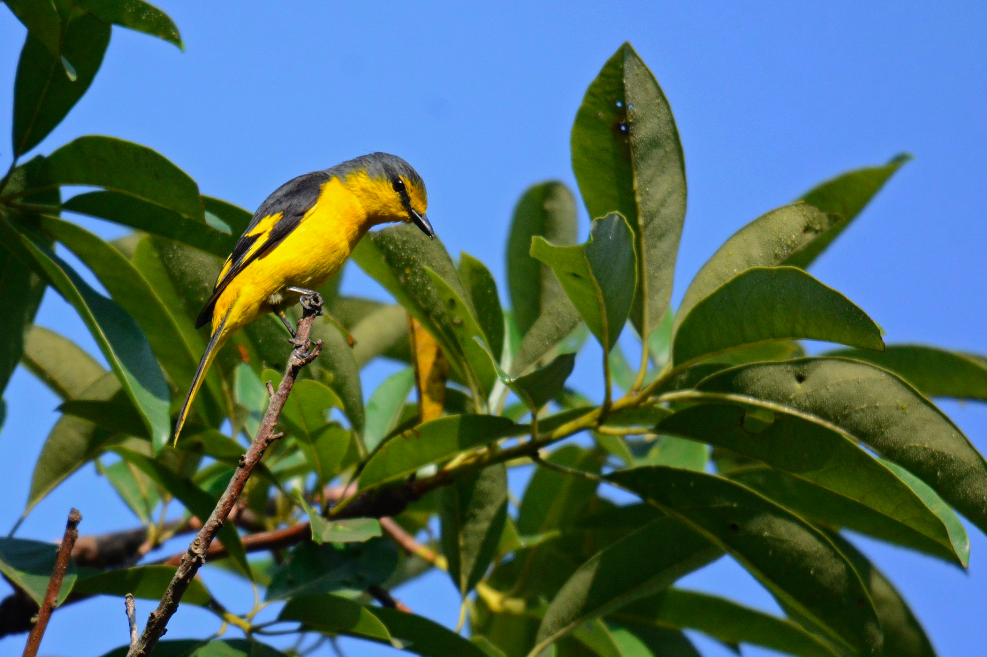
female – Wayanad, Kerala
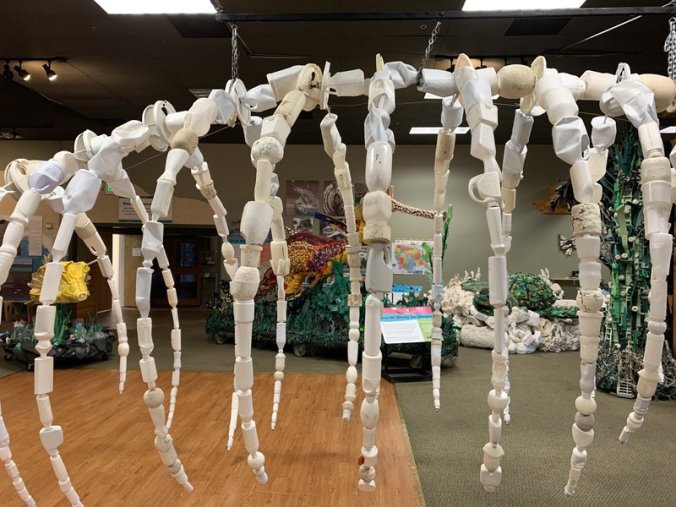
A to-scale sculpture of a juvenile humpback whale ribcage made of plastic bottles.
Kirk Siegler/NPR
An artist doing something about it. Whether or not the root problem is solved, we can all be more creative about doing something about the problem. Angela Haseltine Pozzi demonstrates by example. That’s a nice story to start the day with. Thanks to National Public Radio (USA) for brightening our day:
On The Oregon Coast, Turning Pollution Into Art With A Purpose
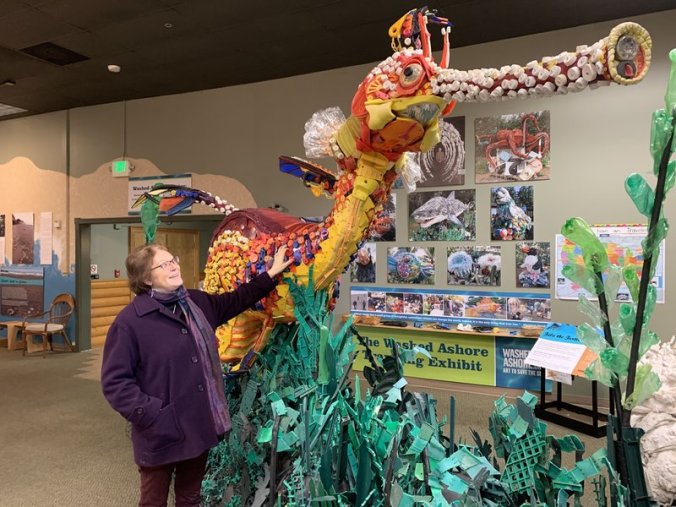
In her gallery in Bandon, Ore., Angela Haseltine Pozzi stands next to an enormous sea dragon sculpted from plastics found on Oregon’s famously ‘pristine’ beaches.
Kirk Siegler/NPR
At Coquille Point along the remote and rugged southern Oregon Coast, the wind is tumultuous and the sea just as violent. Huge waves crash up against the giant, moss-cloaked rocks perched off the beach.
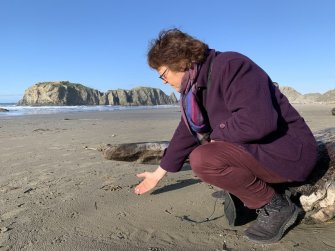
Angela Haseltine Pozzi founded Washed Ashore in 2010. The nonprofit turns plastics taken from Oregon’s beaches into eye-opening sculptures of threatened marine life.
Kirk Siegler/NPRThis particular stretch of the Oregon coastline is famous for being pristine and wild. But train your eyes down a little closer to the beach and sand as Angela Haseltine Pozzi so often does, and even here you’ll find bits of plastic.
“I think the most disturbing thing I find is detergent bottles and bleach bottles with giant bite marks out of them by fish,” she says.
A sea star made mostly of plastic water bottles from the 2008 Summer Olympics in China that are still washing up on Oregon beaches today.
Kirk Siegler/NPRHaseltine Pozzi is a local artist and longtime art teacher who’s made it her mission to collect as much of this shameful garbage as possible. It washes up from Asia, Europe, California and right here in Oregon.
In her gallery in the nearby town of Bandon, where she’d spend summers with her grandmother exploring the wild beaches, she’s now taking these plastic invaders and turning them into jaw-dropping sculptures. The plastic bottle caps, cocktail toothpicks, shotgun shell casings — anything — form life-size garbage creatures of the very marine life threatened by all this plastic. Continue reading
with Belcher’s Gull – Pucusana, Peru
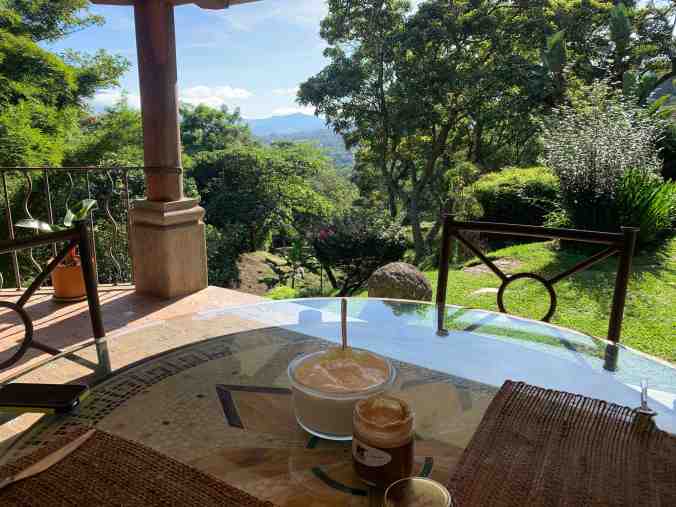
I held off on linking to this story below, by Jamie Tarabay. Seeing one of my favorite topics, honey, in the context of yet another international conflict, did not seem to fit with our platform; or perhaps I was just waiting for a way to connect that story to something closer to home. The hook came in the form of a visit last week to an apiary, set on a farm, during our time in Ithaca. The photo above is from our breakfast table yesterday, in Costa Rica, with a remarkably thick Greek-style yogurt complemented by a jar of honey from that apiary. Now the connection to that story is so close to home, it is in my home. The honey in the picture above is so different from commercial grade honey as to be inspirational — it made me seek out this article, after a month of waiting. Sometimes the hook needed to make a story make sense for sharing is gustatory…
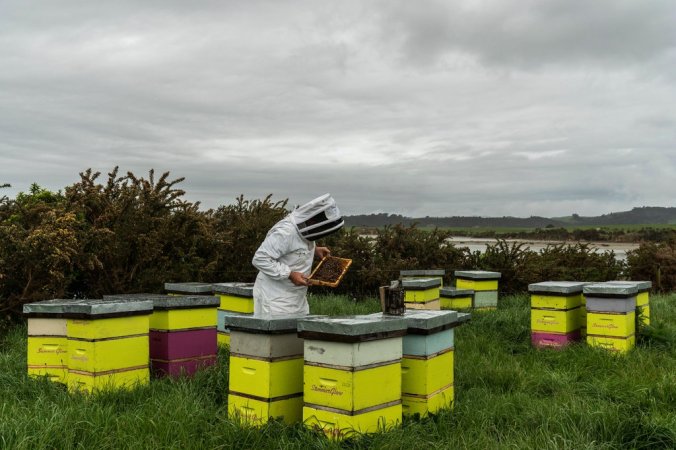
Adam Dean for The New York Times
What Could Come Between These Two Allies? A $100 Jar of Honey
New Zealand producers, in the face of protests by their Australian counterparts, want to trademark manuka honey, a costly nectar beloved by celebrities.
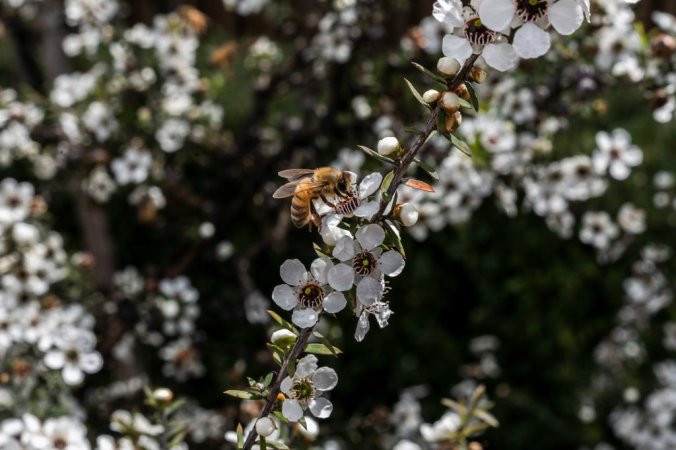
A bee on a manuka bush at the visitor center in Paengaroa for Comvita, one of New Zealand’s largest producers of manuka honey. Adam Dean for The New York Times
PAENGAROA, New Zealand — Australia and New Zealand are at war.
Over honey.
Not just any honey, mind you — this stuff isn’t sold in plastic bear-shaped bottles. It’s manuka honey, a high-priced nectar ballyhooed by celebrities as a health and beauty elixir. (Scarlett Johansson smears it on her face; Laura Dern heals her children with it.)
Manuka-branded honey is so valuable that New Zealand producers have gone to court to argue that they alone should have the right to sell it, in much the same way that only France can claim Champagne with a capital C. They say they are the only source of guaranteed authentic manuka honey, from a single species of bush; their Australian counterparts have marshaled a point-by-point rebuttal that stretches all the way back to the Cretaceous Period. Continue reading
Panbari, Assam
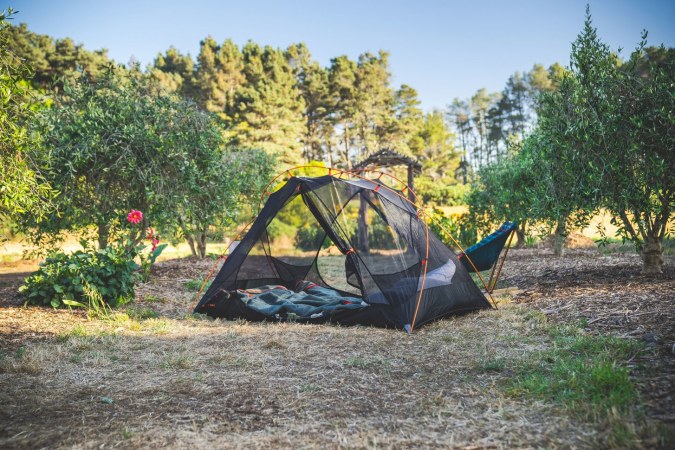
The minimum land requirement for a Hipcamp site is generally just two acres. Some listings look like ordinary suburban back yards, but there are also off-grid plots, Airstreams, and tree houses. Photograph Courtesy Hipcamp
Disruption has so much baggage now due to the unintended consequences of various social media platforms, not to mention other tech juggernauts, that another disruptor does not make me think I can’t wait to try it. And disrupting camping? Hmmm. For these and other reasons this article is at the top of my reading list for this week:
How Hipcamp Became the Airbnb of the Outdoors
Can a startup save the wilderness by disrupting it?
In Northern California, booking a public campsite is a blood sport. The Bay Area overflows with young people who have R.E.I. Co-op memberships and drawers full of sweat-wicking apparel—people who spend Friday and Sunday nights packing and unpacking their Subarus, who own cat-hole trowels, who love to live here because it’s easy to leave in pursuit of the sublime. From Big Sur to Mendocino, many public campgrounds are booked months in advance; Yosemite is a lost cause. It’s common practice to wake at five in the morning to hover over a computer, poised to nab a site as soon as it becomes available. This is both a regional issue and not. Across the country, America’s national parks are overcrowded and overbooked. The reservation system is riddled with bots. A cottage industry of apps and services has emerged to monitor campsite availability and, in some cases, provide alternatives. Continue reading