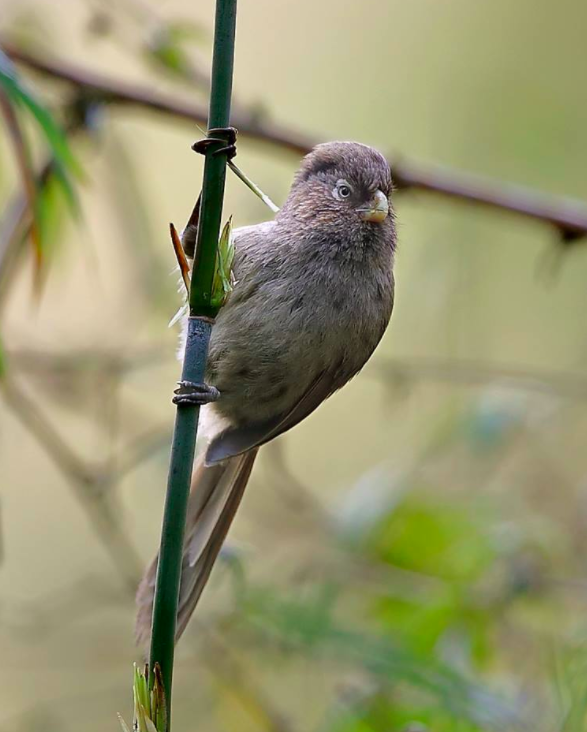
Lava, West Bengal
Lava, West Bengal

A few years ago, as we were completing work on the final hotel of our work plan in India, we had visitors from Costa Rica. They brought this little thing as a gift. Bicycle as ambassador. Knowing that we had been developing relationships with artisan groups in India, this was a small token of what had been happening in Costa Rica in the many years we had been away. Using recycled materials, one group of artisans were designing and crafting mementos like this for people to take home with them after their vacation in Costa Rica.
During my doctorate years I had mementos from one place in my office. In my office now I have mementos from many different places to inspire the work we will do next. This little thing is in a prized place.
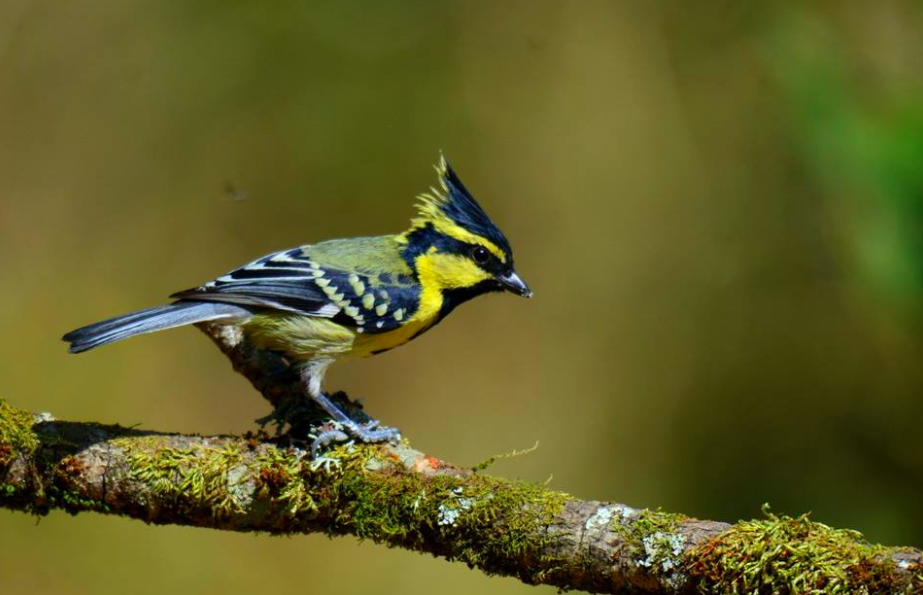
Sattal, Uttarakhand
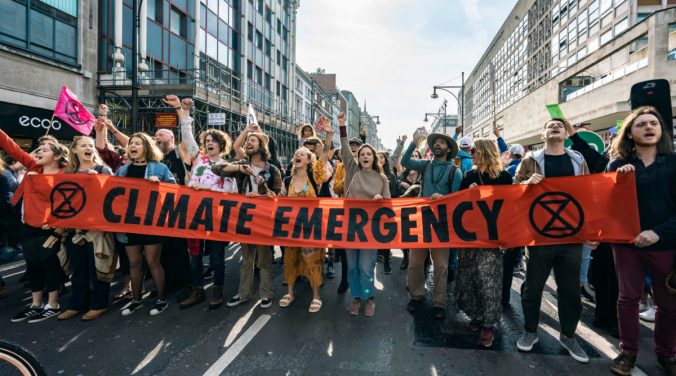
Climate activists block traffic in London’s Oxford Circus on April 19, part of a string of protests organized by Extinction Rebellion. COURTESY OF VLADIMIR MOROZOV/AKX MEDIA
Two luminaries on climate, in conversation:
Why Bill McKibben Sees Rays of Hope in a Grim Climate Picture
The world has done little to tackle global warming since Bill McKibben’s landmark book on the subject was published in 1989. In ane360 interview, McKibben talks about the critical time lost and what can be done now to avoid the worst impacts of climate change.
Three decades ago, Bill McKibben published The End of Nature, the first book on climate change aimed at a general audience. McKibben went on to found the international environmental group 350.org, help launch the fossil fuel divestment movement, and write a dozen more non-fiction books, as well as a novel. In 2014, McKibben received the Right Livelihood Award, sometimes referred to as the “alternative Nobel,” for mobilizing popular support for “strong action to counter the threat of global climate change.”
McKibben’s latest book, Falter: Has the Human Game Begun to Play Itself Out?, was published this month and debuted last week on the New York Times bestseller list. In an interview with Yale Environment 360 , McKibben talks about why the critical time for action on climate was missed, where he still finds hope, and what the world will look like three decades from now.
“Thirty or 50 years out, the world’s going to run on sun and wind, because they’re free,” McKibben says. “The question is… what kind of world will it be?”
Yale Environment 360: It’s almost exactly 30 years since you published The End of Nature. One way to read that book is as a warning. How you would characterize Falter? Is it also a warning, or are we beyond that?
Bill McKibben: Look, 30 years ago this was all still prospective. You couldn’t really take a picture of climate change yet. Now, having wasted 30 years, we’re at the point where it’s a dominant fact of everyday life for hundreds of millions of people and promising to be the overwhelming fact of our time in the years ahead. It’s too late, obviously, to stop climate change. I hope that the book gets across that it may not be too late to keep it from getting absolutely out of control. It’s not a warning. It’s some combination of a report and a chronicle and a plea, I think. Continue reading
Telegraph Hill, California
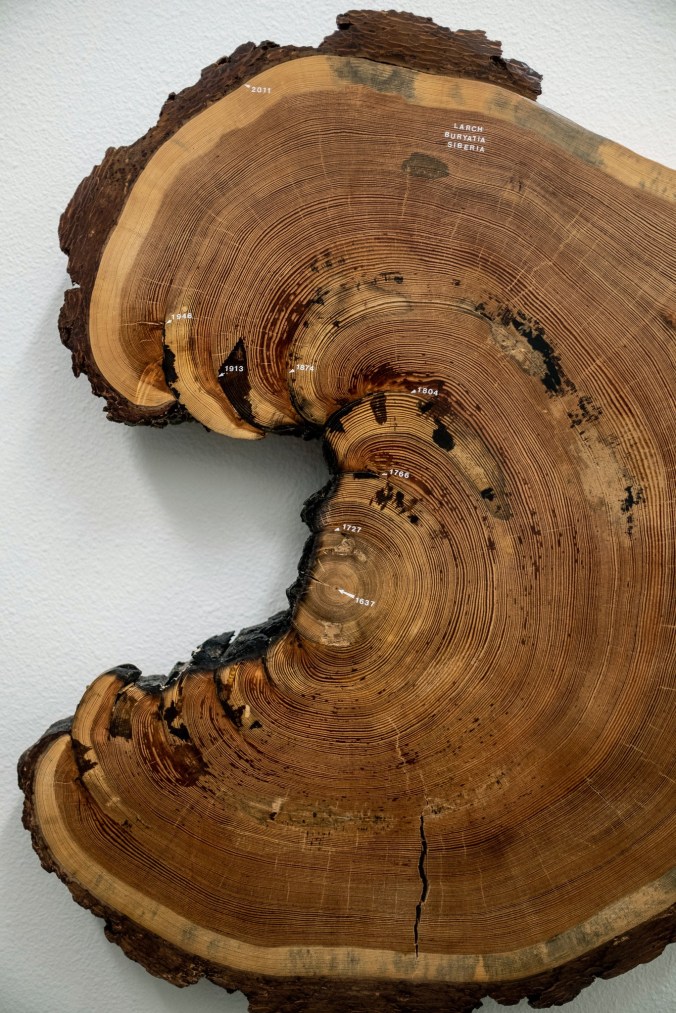
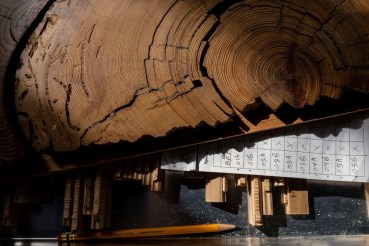
A sample from Siberia, with the core dating from 1637 and the outer ring from 2011, hangs on a wall at the research lab on the University of Arizona campus in Tucson. Adriana Zehbrauskas for The New York Times
Thanks to Jim Robbins, as always:
Chronicles of the Rings: What Trees Tell Us
Studying the historical data stored in centuries-old trees is a burgeoning field, with labs around the world learning more about historical patterns of weather and climate and the effects on humans.
Wood samples for research at the Laboratory of Tree Ring Research at the University of Arizona. Adriana Zehbrauskas for The New York Times
TUCSON — From the early 1700s until the 1960s, the fast moving river of wind known as the North Atlantic Jet Stream, which drives weather extremes over Europe, was pretty steady on its course.
Then it became less predictable. But instrument data alone can’t tell the jet stream’s movements for comparison over the centuries, given that scientists began keeping records of weather events via instruments only in the late 19th century. Continue reading

Elephants have held highest honors in our family for decades, as symbols for the importance of Nature Conservation, and later infused with the power of Ganesh when we lived in India.
Elephant conservation has taken many forms over the years. When writing about the recent Real Elephant Collective collaboration exhibit that took place in Cochin a few months ago, I realized that art installations using elephants as symbols for big picture conservation have existed for some time.
Having been unable to attend the exhibit personally, Anoodha and the Curiouser team make me feel that I was there.
Buenos Aires, Argentina
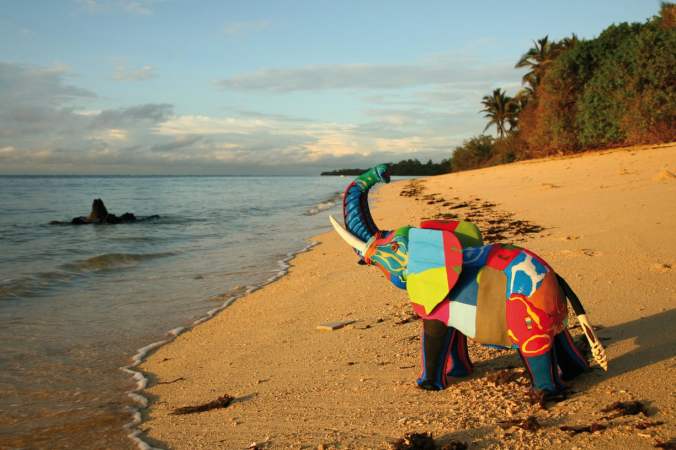
Ocean Sole turns reclaimed flip-flops into colourful, hand-made animal toys and sculptures. Tonnes of flip-flops wash up on the east African coast every year.
Photograph: Courtesy of Ocean Sole/Plastic Soup
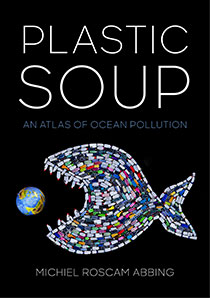 And speaking of plastics, a new book has come to our attention thanks to the Guardian, and thanks to Island Books for the explanation of the book:
Plastics have transformed every aspect of our lives. Yet the very properties that make them attractive—they are cheap to make, light, and durable—spell disaster when trash makes its way into the environment. Plastic Soup: An Atlas of Ocean Pollution is a beautifully-illustrated survey of the plastics clogging our seas, their impacts on wildlife and people around the world, and inspirational initiatives designed to tackle the problem.
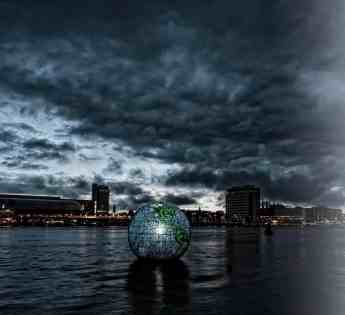
Peter Smith made this floating work, World of Litter, in 2012.
Photograph: Courtesy of Jos van Zetten/Plastic SoupIn Plastic Soup, Michiel Roscam Abbing of the Plastic Soup Foundation reveals the scope of the issue: plastic trash now lurks on every corner of the planet. With striking photography and graphics, Plastic Soup brings this challenge to brilliant life for readers. Yet it also sends a message of hope; although the scale of the problem is massive, so is the dedication of activists working to check it. Plastic Soup highlights a diverse array of projects to curb plastic waste and raise awareness, from plastic-free grocery stores to innovative laws and art installations.
According to some estimates, if we continue on our current path, the oceans will contain more plastic than fish by the year 2050. Created to inform and inspire readers, Plastic Soup is a critical tool in the fight to reverse this trend.
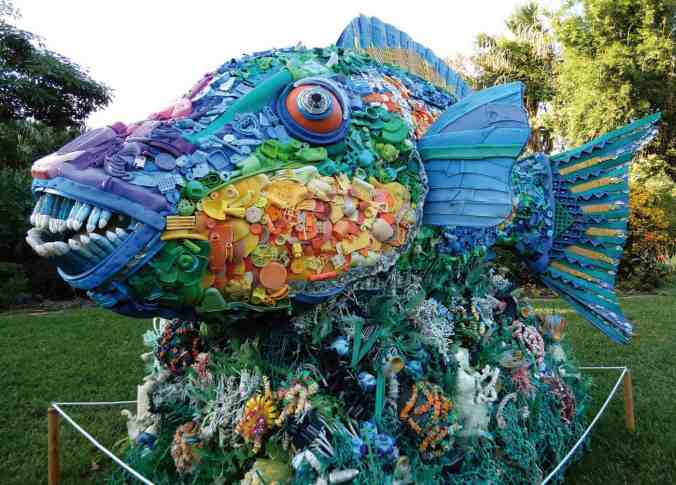
Washed Ashore makes larger-than-life sculptures of marine animals, like this parrotfish, to make people aware of plastic pollution.
Photograph: WashedAshore.org/Plastic Soup
Parque del Acueducto, Cali, Colombia
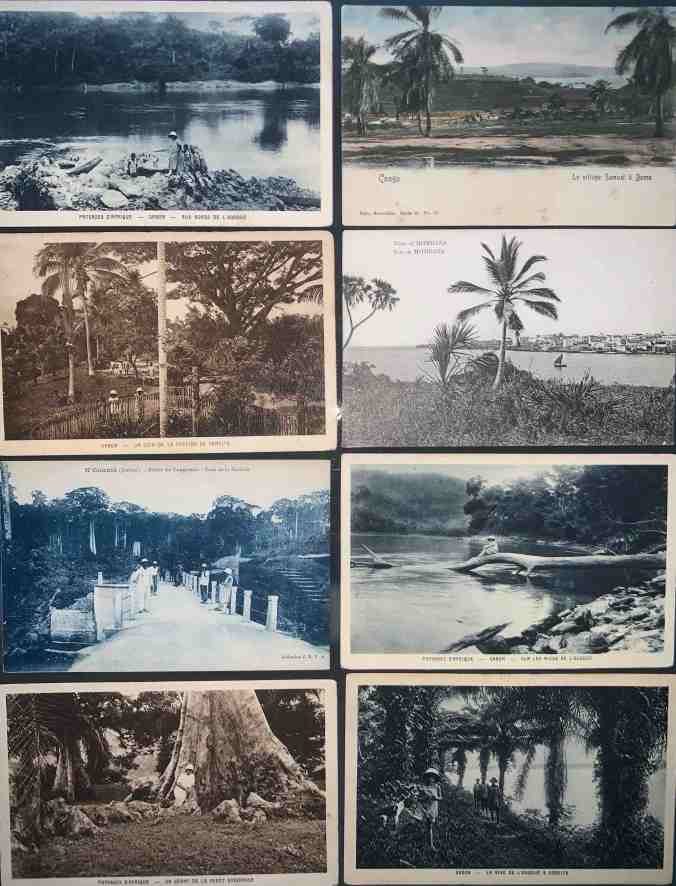
When we lived in Paris, weekend grocery errands inevitably led us through informal markets where people sold all kinds of old things. One favorite distraction was the vendor of postcards. There was at least one person at any given marketplace who had cards like the ones above, mostly from early 1900s, some going back to the previous century. Usually they were in shoe boxes and never were they organized in any way any of us could understand. Most but not all were from French travelers sending mementos back to people in France. In just five minutes flipping through the cards we could be transported.
What made this a favorite distraction was as much professional as anything else. Having spent several years studying a place from which countless postcards had been sent starting in the 1870s, I developed an affinity for the choices made by illustrators and photographers in different eras about how to represent a place.
There is also a personal dimension to this affinity, which is that my father was a photographer who in addition to a portrait studio had a postcard business. From 1972 until 1978 if you sent a postcard from just about anywhere in the Finger Lakes region of New York state, it was probably one of his postcards, which means one of his photographs. Starting when I was 10 years old until I was 16 I would accompany him on road trips through that region when he was restocking postcards at hotels and other venues where they were sold. That might explain my favorite distraction in Paris.

Maguri Bheel, Assam
Illustrations by Andrew Khosravani
Those familiar with this site know that climate change denial would find difficult footing; no leap of faith is required to take it as scientific fact. We appreciate the following examples of learning from recent history of forest collapse and planning for environmental changes accordingly.
Can Humans Help Trees Outrun Climate Change?
SCITUATE, R. I. — Foresters began noticing the patches of dying pines and denuded oaks, and grew concerned. Warmer winters and drier summers had sent invasive insects and diseases marching northward, killing the trees.
If the dieback continued, some woodlands could become shrub land.
Most trees can migrate only as fast as their seeds disperse — and if current warming trends hold, the climate this century will change 10 times faster than many tree species can move, according to one estimate. Rhode Island is already seeing more heat and drought, shifting precipitation and the intensification of plagues such as the red pine scale, a nearly invisible insect carried by wind that can kill a tree in just a few years.
The dark synergy of extreme weather and emboldened pests could imperil vast stretches of woodland.
So foresters in Rhode Island and elsewhere have launched ambitious experiments to test how people can help forests adapt, something that might take decades to occur naturally. One controversial idea, known as assisted migration, involves deliberately moving trees northward. But trees can live centuries, and environments are changing so fast in some places that species planted today may be ill-suited to conditions in 50 years, let alone 100. No one knows the best way to make forests more resilient to climatic upheaval.
These great uncertainties can prompt “analysis paralysis,” said Maria Janowiak, deputy director of the Forest Service’s Northern Institute of Applied Climate Science, or N.I.A.C.S. But, she added, “We can’t keep waiting until we know everything.” Continue reading
Sattal Road, Uttarakhand
Credit Tyler Varsell; Shutterstock
Coinciding with Earth Day the NYTimes Environment team recently initiated the Climate FWD newsletter, emailing readers weekly with stories and insights about climate change.
We’ve been writing about plastics since the inception of this site; it’s alternatives, environmental impacts, and even creative applications with it’s existence.
Studies are clear that reducing plastic use and production is multiple steps better than recycling, yet considering the ubiquity of the material, the latter has it’s place.
One Thing You Can Do: Know Your Plastics
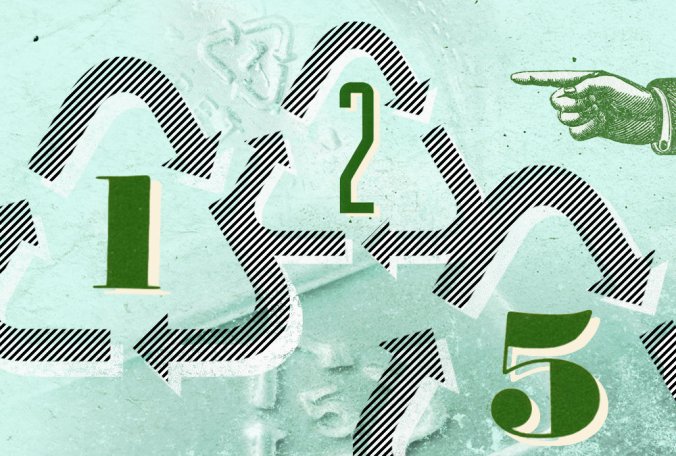
Ever notice those recycling symbols, the triangles with the numbers inside, on plastic packaging and containers? I always assumed they meant the plastic was recyclable. But that’s not necessarily the case.
Those numbers are resin identification codes, and they tell what kind of plastic the item is made from. And not all plastic is created equal.
Identifying what types of plastics are recyclable can be challenging because plastics do not always carry a resin code and because not all recycling programs are equal, either. Generally speaking, though, some categories of plastic are more widely recyclable in the United States.
“We always encourage people to focus on Nos. 1, 2 and 5 because we have great markets for them in the U.S.,” said Brent Bell, vice president of recycling at Waste Management, a major garbage collection and recycling company.
Water and soda bottles, milk jugs, laundry detergent bottles, yogurt cups and butter tubs are mostly made of these plastics. You could lend a helping hand by rinsing these kinds of containers and removing labels.
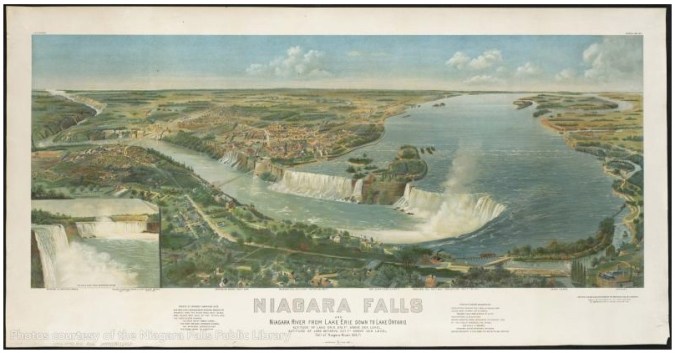
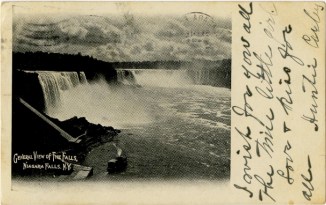 Before moving to Costa Rica in the mid-1990s I was working for a few years at a desk with images like the one above taped to the walls around the desk, and postcards from the previous century, like the one to the right, scattered about for inspiration.
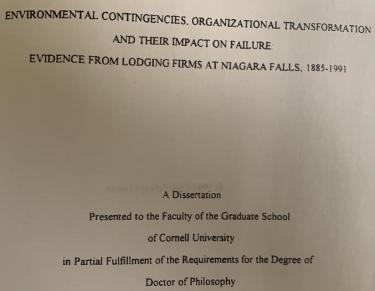 On the desk were drafts of a dissertation whose summary, on page 131, states: “…the results of the first hypothesis suggest that lodging firms in a tourism destination, such as Niagara Falls, should be directly involved with the strengthening and support of the institutional environment in which they operate.”
In other words, if you benefit from nature for your livelihood one of your best investments will be in building and strengthening institutions that protect nature. It may now sound like stating the obvious, but Nobel laureate economists made claims to the contrary that were treated as gospel truth twenty five years ago.

So 132 pages, not including bibliography, were used to make the point. Ever since, members of our team have wondered whether it could be summed up more simply. Meeting recently with graphic designers to discuss how to communicate more effectively about Organikos, we think now maybe the answer is yes.
 When we saw this hand and tree side by side in that meeting, we had a reaction that was related to what the graphic designer intended, but not exactly.
 Whatever his precise intent was, someone’s mouth opened and blurted out: Yes! Nature is in our hands. And so we have come upon a way to say a little more simply what Organikos means in addition to what Organikos does.
Parque Nacional Valle Nuevo, Dominican Republic
When we think of Holland, we think of its engineering contributions to the world’s lower elevation places that have water management issues. Such as Kerala historically, and soon to be many more places due to climate change-related water levels rising. Here is a novel twist on using their expertise with water, for which we give thanks to the Guardian:
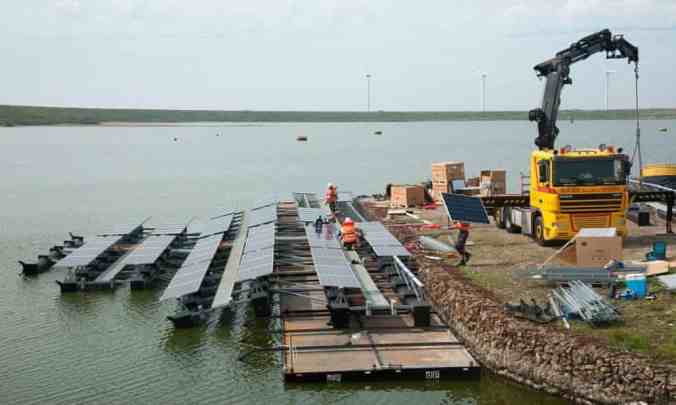
The islands will contain 73,500 panels. Photograph: Floating Solar
Dutch engineers build world’s biggest sun-seeking solar farm
The 15 floating solar islands will possess sunflower-like ability to turn to face the sun
Dutch engineers are building what will be the world’s largest archipelago of islands made up of sun-tracking solar panels.
Growing resistance to the construction of wind turbines or fields of solar panels on land has led the renewable energy industry to look for alternative options. Large islands of solar panels are under construction or already in place in reservoirs and lakes across the Netherlands, China, the UK and Japan. Continue reading
 Organikos