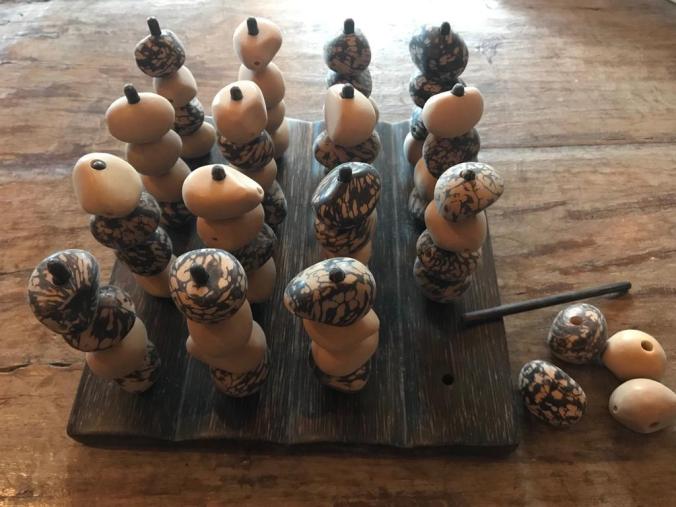
Some Games Foster Trust

4x4 (tagua)

A friend in my early teens had chess skills well-matched with my own. We played constantly, the way some kids today play video games. I switched to backgammon in my late teens and played hundreds of hours over the years. I gave up backgammon when I discovered a new old game 20+ years ago in Ecuador. It is the game in the picture above, and I vaguely referenced it once here. I never stopped to think what drew me to play those games compulsively. Samanth Subramanian, who appeared in our pages once, five years ago, has made my day with this new piece. What We Learn from One of the World’s Oldest Board Games helps me put my love of old games in some kind of historical perspective:

Subramanian-OldestBoardGame-Story

This ivory Fifty-eight Holes board was dug up by Howard Carter, in 1910, out of a pit tomb in Thebes. “We have before us,” Carter wrote, “a simple, but exciting, game of chance.”Photograph Courtesy The Metropolitan Museum of Art

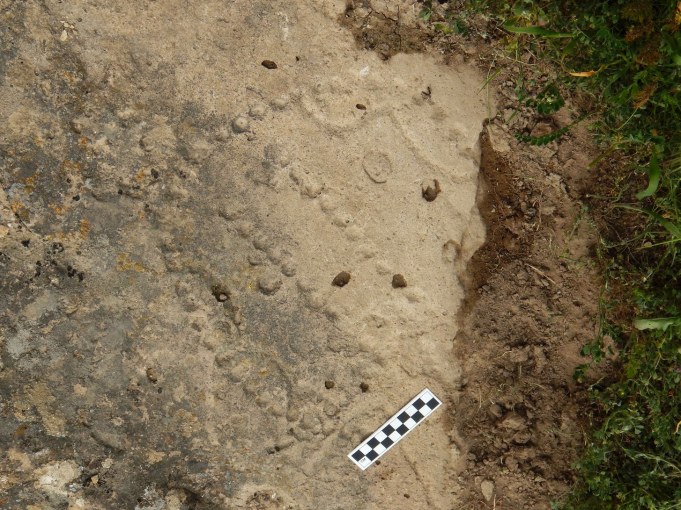
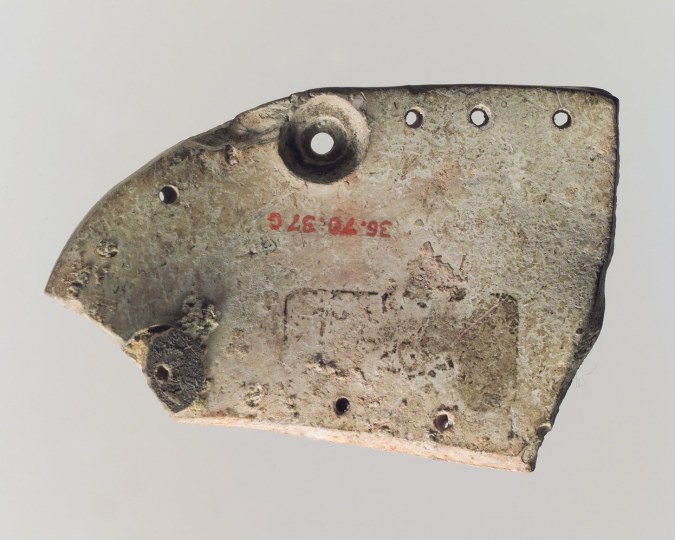
A few years ago, almost by accident, Walter Crist happened upon one of the oldest board games in the world. Crist, who was then working toward a doctorate on ancient Cypriot board games, at Arizona State University, was searching the Internet for images of a game called Fifty-eight Holes. In the second millennium B.C., Fifty-eight Holes was the most popular game of its kind across Egypt, the eastern Mediterranean, and the Middle East, and roughly eighty boards of the game, in various degrees of incompleteness, rest in museum collections around the world. Images of these boards are well known to scholars, but the photo that Crist eventually found, on the Web site of a magazine called Azerbaijan International, was unfamiliar. Taken at an archaeological site near Baku, it showed a rock carving that bore a strong resemblance to the game’s board: two parallel rows of indentations and an outer, horseshoe-shaped run of more holes. It looked like a four-year-old’s sketch of a tree.
Subramanian-OldestBoardGame-Secondary2

A series of depressions taking the form of the game of Fifty-eight Holes on a horizontal rock surface in Azerbaijan’s Gobustan National Park. Photograph by Walter Crist / Gobustan National Preserve

The site, Crist learned, had been destroyed to make way for a housing development, but he eventually got in touch with an archaeologist in Azerbaijan’s Gobustan National Park, who told him that the park held a similar carving. “I think he knew that it was a game, or that people thought it was,” Crist said. “There were other people arguing that it could be an astronomical chart, or a calendar—but nobody that had studied games in any kind of depth.” So Crist decided to go to Gobustan and find out for himself.
Subramanian-OldestBoardGame-Secondary1

A fragment believed to be part of a Fifty-eight Holes game board, from the eighteenth century B.C. Photograph Courtesy The Metropolitan Museum of Art

Crist, who completed his Ph.D. in 2016, works at the New York Public Library, as a librarian. “I’m on the academic job market, which is terrible and difficult,” he said. When he went to Azerbaijan last spring, he paid for the trip himself, appending it to a visit to Athens to attend the Twenty-first Board Game Studies Colloquium. At Gobustan, near the Caspian coast, he found a vast moonscape of rocks, caves, and mud volcanoes. Archaeologists visit the park for its six thousand petroglyphs: carvings of hunting parties, bulls, boats, and dancing stick men. The glyphs date back at least four thousand years; some might be as old as forty thousand years, reaching back into the Upper Paleolithic age. Not much is known about the artists. Most likely, they were nomadic hunters who lived in rock shelters, charted the heavens, and buried their dead. Continue reading
From South-South To North-North

merlin_150668253_8478433b-acb1-4e50-ad5c-07753a4a7545-jumbo.jpg

The beginning of a ski run on the roof of Copenhagen’s new trash incinerator, which will help heat buildings in the city. Photograph by Charlotte de la Fuente

South-south cooperation has been an important learning mechanism for some time and we have shared plenty of those stories in part because those places are where we work. According to Somini Sengupta Copenhagen Wants to Show How Cities Can Fight Climate Change,  so we now also should be paying attention to the northern counterpart of the cooperation that has been getting all our attention:

merlin_150668361_cc20049e-a87c-46f1-a7d1-8dcb474d3f5f-jumbo.jpg

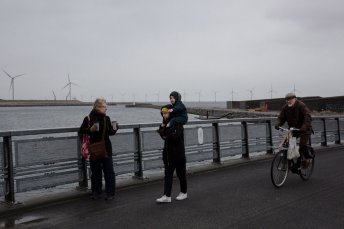
Wind turbines along the strait that separates Denmark from Sweden, seen from the Amager Strandpark in Copenhagen. Photograph by Charlotte de la Fuente

COPENHAGEN — Can a city cancel out its greenhouse gas emissions?

Copenhagen intends to, and fast. By 2025, this once-grimy industrial city aims to be net carbon neutral, meaning it plans to generate more renewable energy than the dirty energy it consumes.

merlin_150668178_4d6ca480-2e7d-41c4-b2ca-263eb31c8490-jumbo.jpg

The Copenhagen Metro. A new line, scheduled to open this year, will put most residents less than half a mile from a station. Photograph by Charlotte de la Fuente

Here’s why it matters to the rest of the world: Half of humanity now lives in cities, and the vast share of planet-warming gases come from cities. The big fixes for climate change need to come from cities too. They are both a problem and a potential source of solutions.

The experience of Copenhagen, home to 624,000 people, can show what’s possible, and what’s tough, for other urban governments on a warming planet.

merlin_150668325_10e1c59f-32f1-40bb-8099-87326409a305-jumbo.jpg

Recycling bins in the Christianshavn district of Copenhagen. The city requires residents to sort recycling into eight separate categories. Photograph by Charlotte de la Fuente

The mayor, Frank Jensen, said cities “can change the way we behave, the way we are living, and go more green.” His city has some advantages. It is small, it is rich and its people care a lot about climate change.

Mr. Jensen said mayors, more than national politicians, felt the pressure to take action. “We are directly responsible for our cities and our citizens, and they expect us to act,” he said. Continue reading

Fortunate Encounters With Birds

190401_r34004illuweb.jpg

Jeffrey and Jason WardIllustration by João Fazenda

Thanks to Anna Russell for this short wonder:

Birding Brothers of the Bronx

A chance sighting of a hungry peregrine falcon gave a homeless teen a lifelong passion; now Jason Ward and his brother Jeffrey star in “Birds of North America,” on topic.com.

When Jason Ward was fourteen, he spotted a peregrine falcon devouring a pigeon on the windowsill of the South Bronx homeless shelter where his family was living. “I was literally witnessing a nature documentary unfold,” he recalled, adding, “That was definitely my spark bird.” Ward, now thirty-two, has five siblings, but only he and his younger brother Jeffrey are birders. (Jeffrey’s spark bird was a barn owl, which he saw in Central Park.) “These peregrines are really powerful fliers,” Jason said. “They have the ability to just change their immediate surroundings. Growing up in the Bronx, that was something that I admired, and wanted to be able to do myself.” Continue reading

Bob’s Red Mill Keeps On Amazing

redmill1_wide-9f7e4dfcb6b1bbe41f3ed0fb85f60daeb2ea71ae-s1300-c85.jpg

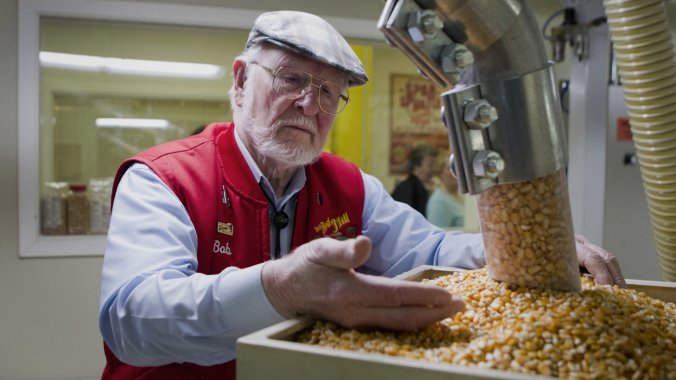
Bob Moore, founder of Bob’s Red Mill and Natural Foods, inspects grains at the company’s facility in Milwaukie, Ore. The pioneering manufacturer of gluten-free products invests in whole grains as well as beans, seeds, nuts, dried fruits, spices and herbs.
Natalie Behring/Bloomberg via Getty Images

One of our favorites, featured in a story that is important to several people we know:

How Bob’s Red Mill Company Became A Gluten-Free Giant Ahead Of Its Time

redmill2_wide-963a77b360e361e6d37206cd2d89da3014710621-s1300-c85.jpg

Gluten-free products are for sale at the Bob’s Red Mill and Natural Foods store in Milwaukie, Ore.
Natalie Behring/Bloomberg via Getty Images

Bob Moore, the 90-year-old founder of Bob’s Red Mill, was just a few years into the business of milling whole grains at a converted animal feed mill in a Portland, Ore., suburb when he got a visit from some gluten-free Seattlites who’d come down with a business proposition: Use his business contacts to help them buy bulk xantham gum, an ingredient used in gluten-free baking to help replicate gluten’s elasticity. Continue reading
Regeneration & Food Futures

tnc_67697146_preview-1260x708.jpg

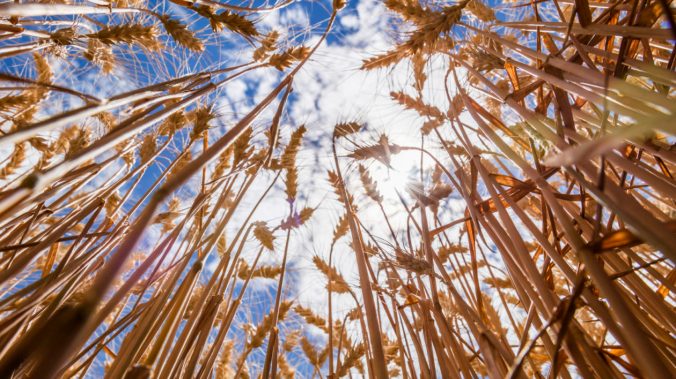
A view of wheat grown on Meaker Farm, Montrose, Colorado. Photo © Ken Geiger/TNC

While on the topic of food, thanks to Dustin Solberg and Cool Green Science for this:

Dirt to Soil: A Farmer’s Tell-all Puts Soil First

tnc_92212427_preview-1260x708.jpg

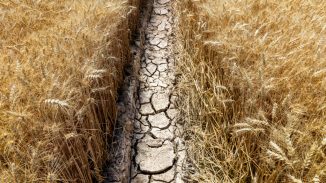
Circle irrigation tire tracks remain in the challenging soil conditions on a wheat farm in Colorado. Photo © Ken Geiger/TNC

Quite a few years back, while working the wheat harvest in the middle of Oklahoma, I met a leathery skinned farmer. He lived through the dusty, hardscrabble, droughty years of the Great Depression, and experience had taught him plenty. I still recall his silver belt buckle, his straw cowboy hat, and the funny joke he told me about the buffalo on a buffalo nickel, which I can’t repeat here. He wanted me to know, and so told me in no uncertain terms, that there’s one way, and one way only, to plow a field.

We were standing then in the fresh golden stubble of a wheat field. It was hot. We’d just finished combining and after a day of steady motion we were finally still, the diesel engines at rest. I can still recall the animated force in his muscly hands – he made his fingers into the tines of a chisel plow – to make his point as vividly as I recall what he said: “You’ve got to set the plow deep.”

The trouble was, he was wrong.

Continue reading

Getting The Food Puzzle Solved


http___com.ft.imagepublish.upp-prod-us.s3.amazonaws

Green: an organic farm in Cuba © Getty

Thanks to FT’s Sarah Murray for this story–Organic farming’s growth only part of answer to food sustainability:

The approach has an impact far beyond its scale but questions remain over yields

While only a tiny proportion of the world’s agricultural land is devoted to organic farming, some argue that it punches above its weight in contributing to more sustainable farming practices. “Its influence goes far beyond the 1 per cent of land that is managed organically,” says Verena Seufert, assistant professor at the Institute for Environmental Studies at VU University Amsterdam. “It is influencing the debate by highlighting food sustainability and how big an impact the food we eat has on many of our environmental problems,” she says. Yet while some believe that organic agriculture could play a bigger role in helping feed the world, environmental advocates see it as one option in a number of more sustainable approaches to farming. Continue reading

Watching Birds From Home, Online

Thanks to Lewis Page and the folks at Sierra for this selection of bird-viewing options:

6 Exciting Birdwatching Webcams

Vicariously join in on the springtime migration from your couch

Birding is a sport for the intrepid—its participants rise at ungodly hours, bundle in layers, and sit silently for hours, all in hopes of seeing a winged animal that may never arrive. But for those who aren’t quite ready to trek outdoors into wintry-remnant weather, or who might be stuck in front of a computer when they wish they weren’t, there’s another, tamer option. Indeed, the miracles of modern webcam and streaming technology have afforded even the lowliest of couch potatoes ample portals into a variety of avian worlds. And the advent of spring means that flocks of migratory birds are en route north from their winter haunts—which means it’s about to be primetime for bird cams. Here are a few to watch in the coming months.

The Mississippi River’s Migratory Birds

On a small island in the middle of the Mississippi River’s Lake Onalaska, near the Wisconsin-Minnesota border, stands a slowly rotating camera on a pole. Continue reading

A Warm Welcome To Birding’s Newer Adherents

birdpunks_mark-makela_34

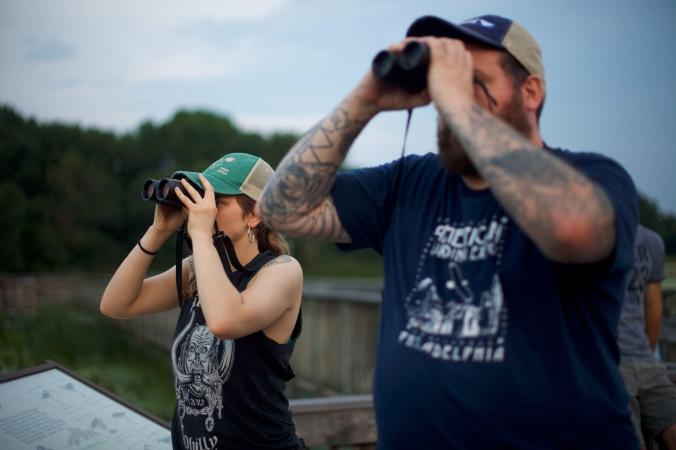
Caleb Hunt (left) and Tony Croasdale at the John Heinz National Wildlife Refuge at Tinicum in Philadelphia. In a city known for its punk underground and avian history, the friends have found an overlap that celebrates both niches. Photo: Mark Makela

I do not have a tattoo. If I did, it may be that a bird would adorn my arm. Our efforts to promote the joys of birdwatching combined with the conservation benefits that come from increased concern for bird habitat all suggest that I would be susceptible. I came of age during the emergence of punk rock, so the possibilities are there:

Welcome to Birdpunk: A Subculture of a Subculture

Punk has always been about embracing different forms of expression. Meet the people who are putting birding on that spectrum.

BirdTattoo1.jpg

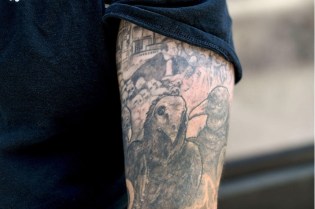
A trio of vultures serve as badges of Croasdale’s birding obsession. Photos: Mark Makela

It’s the evening golden hour at the John Heinz National Wildlife Refuge at Tinicum. A whirlwind of swallows swims through the soft light, chasing midges into a frenzy. Nearby on a platform a handful of birders scans the dimming sky, exposed to the marsh and its blood-thirsty elements.

BirdTattoo2

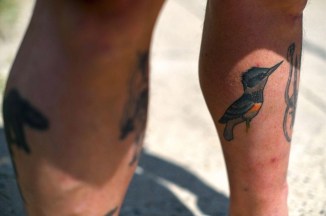
A trio of vultures. Photo: Mark Makela

In plain T-shirts and khakis, the group blends into the woods-y backdrop—with two exceptions. Caleb Hunt, a bookkeeper for an adult-entertainment boutique, rocks a Philly Punx tank top with a fanged, horned Benjamin Franklin splashed across the front. Next to her, Tony Croasdale, the leader of today’s walk, sports an aviary of skin art. A Swallow-tailed Kite, Belted Kingfisher, Scissor-tailed Flycatcher, Greater Racket-tailed Drongo, Scarlet Tanager, and three types of vultures bedeck his legs, collarbone, and arms.

Croasdale’s tattoos pay homage to two of his biggest life passions: birding and punk rocking. He plunged into the first as a kid when his father took him to Philadelphia’s Pennypack Park to learn about kingfishers. Continue reading

Books Are Things Unlike Other Things

190325_r33967.jpg

My father loved books ravenously, and his always had a devoured look to them. Illustration by Rose Wong

Kathryn Schulz came to my attention four years ago, and we immediately deemed her worthy of an invitation to Kerala. We linked to two more of her articles after that, but re-reading the first essay, it is easy to recall what “ignorance is bliss” means. The world was, as always, facing challenges. But I had no clue then what 2019 would look and feel like, so I enjoyed that essay differently then than I do now.

I am in need of more frequent diversions from the daily news, not to hide but to remember what matters. Times like these call for tangible reminders of what is good and healthy for us, much as comfort foods at certain other times are required to anchor us to better thinking. Food seems the most common thing to turn to for comfort, but books are a better one because ideas that come from books are not just to be remembered, but to renew inspiration, commitment, and determination related to values:

My Father’s Stack of Books

When he was a child, books were gifts. For his daughters, he made sure they were a given.

When I was a child, the grownup books in my house were arranged according to two principles. One of these, which governed the downstairs books, was instituted by my mother, and involved achieving a remarkable harmony—one that anyone who has ever tried to organize a home library would envy—among thematic, alphabetic, and aesthetic demands. The other, which governed the upstairs books, was instituted by my father, and was based on the conviction that it is very nice to have everything you’ve recently read near at hand, in case you get the urge to consult any of it again; and also that it is a pain in the neck to put those books away, especially when the shelves on which they belong are so exquisitely organized that returning one to its appropriate slot requires not only a card catalogue but a crowbar. Continue reading

Look Away, But At Least Listen

9780525576709.jpegWe have already linked to stories about life after warming enough that it borders on repetitive. No choice, as the book to the right makes very clear. This recent short video by the author will make you wince. There is something about visual cues on this topic that make it tougher to listen without being distracted. One of the better conversations with him is this one hour+, so if you only have that much time for him, make the best of it:

After years of hovering on the periphery of American politics, never quite the star of the show, it seems that climate change is having a moment. Continue reading