In Case Of Emergency, Plant Trees

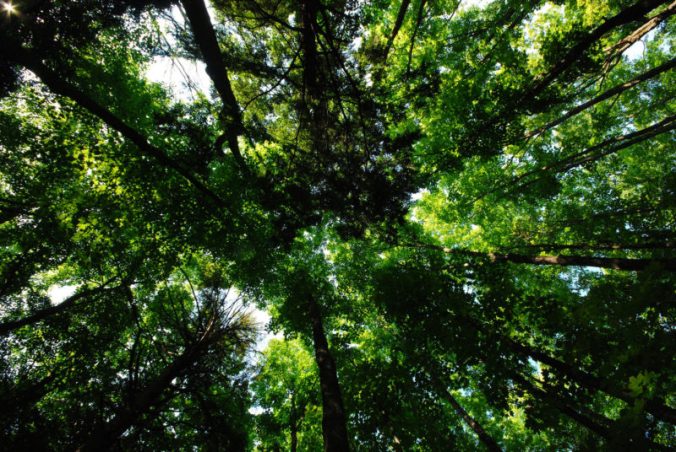
Fox-Maple-Woods_Wisconsin_JoshuaMayer_web.jpg

Fox Maple Woods in Wisconsin. JOSHUA MAYER / FLICKR

Emergency? The evidence is clear in the case of the environment, and it is a global emergency with a global solution. Thanks to Yale e360 for this summary of a new finding:

Planting 1.2 Trillion Trees Could Cancel Out a Decade of CO2 Emissions, Scientists Find

There is enough room in the world’s existing parks, forests, and abandoned land to plant 1.2 trillion additional trees, which would have the CO2 storage capacity to cancel out a decade of carbon dioxide emissions, according to a new analysis by ecologist Thomas Crowther and colleagues at ETH Zurich, a Swiss university. Continue reading

The Power Of Panic

merlin_150201243_6e45f17e-9e07-4df5-96e6-a96f9afa878b-jumbo.jpg

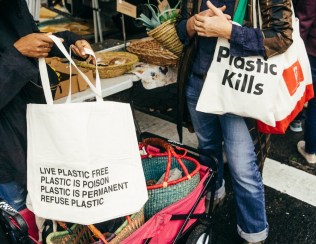
Ms. Cohen favors vendors who don’t use plastic. Credit Adam Amengual for The New York Times

When I started my Saturday morning reading it was just prior to our weekly visit to the farmer’s market and there was visual resonance with our own experience eliminating, or trying to eliminate plastic:

You’re Addicted to Plastic. Can You Go Cold Turkey?

Going plastic free starts with cloth bags and straws. Suddenly, you’re … making your own toothpaste?

merlin_150201240_ff27ccbe-4e4a-4550-81e5-99cbc3e11a81-jumbo.jpg

Reusable cloth bags are a must. Credit Adam Amengual for The New York Times

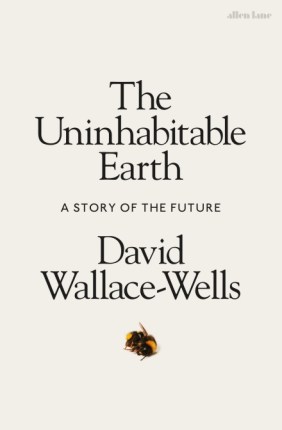
Like most people, resonance is always welcome in my reading. But like a second cup of coffee to really get the day going, there is nothing like cognitive dissonance. I can think eliminating plastic from our lives is a big deal one moment, and then the next it is clear that it is not enough, that it is like tinkering. Or as the punchy cliche puts it, like arranging deck chairs on the Titanic. David Wallace-Wells is a skilled dissonance artist in this vein. He can make your best efforts suddenly seem pathetic; not in a snarky way and if you listen to him explain his work you will realize resistance is futile; you cannot look away from what he is saying, even if you want to.

WellsBook.jpg

‘A profound book, which simultaneously makes me terrified and hopeful about the future’ Jonathan Safran Foer
A Times and FT Most Anticipated Book 2019

His book will not likely be damned by faint praise; its look at our future prospects will more likely draw extreme responses in favor of the intensity of his alarm, and claims of alarmism from the usual suspects. He is catching up to Elizabeth Kolbert in balancing our preference for optimism with extreme realism. His op-ed on Saturday tipped the balance for me quite like a second, maybe third cup of coffee:

The age of climate panic is here. Last summer, a heat wave baked the entire Northern Hemisphere, killing dozens from Quebec to Japan. Some of the most destructive wildfires in California history turned more than a million acres to ash, along the way melting the tires and the sneakers of those trying to escape the flames. Pacific hurricanes forced three million people in China to flee and wiped away almost all of Hawaii’s East Island.

We are living today in a world that has warmed by just one degree Celsius (1.8 degrees Fahrenheit) since the late 1800s, when records began on a global scale. We are adding planet-warming carbon dioxide to the atmosphere at a rate faster than at any point in human history since the beginning of industrialization. Continue reading

Home Team Great Backyard Bird Count 2019

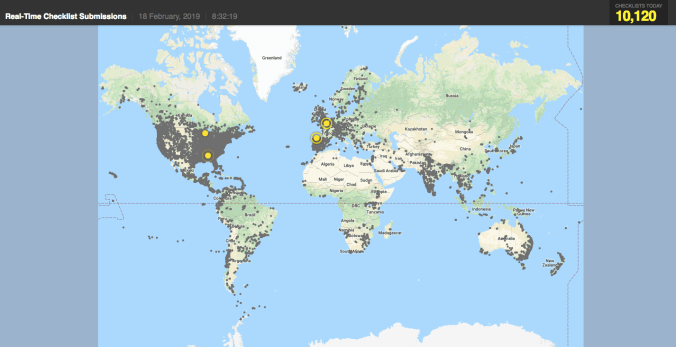
It’s been 5 years since we first began highlighting the Great Backyard Bird Count, a citizen science collaboration between the Cornell Lab of Ornithology, the Audubon Society and Bird Studies Canada. Since then, we’ve participated in 3 countries, on 2 continents, primarily in birding hotspots such as the Periyar Tiger Reserve in Kerala, India, a special corridor of avian biodiversity in the foothills of Poas Volcano in Costa Rica, and Baja California Sur, Mexico.

The data that is collected by thousands of individual birders for eBird has long range benefits for monitoring both the health and range of particular species, as well as the state of the planet as species have to adapt to changing climate.

The map above indicates the locations from which checklists have been submitted (each gray dot represents a list, and the larger yellow dots are a moment frozen in time when a list has just been submitted. I highly recommend clicking on the image to view the site and watch the “lists” pop through the map!) Initially the GBBC only took place in North America, and birders worldwide rejoiced when it was expanded into a global event. (We were in India at the time, so I kid you not.) Continue reading

Gaining Ground

Cleaning plastic waste from the oceans is an ever-present issue. We thank the UN News for sharing this example of collaborations that inspire present and future action.

Boat made of recycled plastic and flip-flops inspires fight for cleaner seas along African coast

After completing a historic 500km journey from the Kenyan island of Lamu to the Tanzanian island of Zanzibar, the world’s first ever traditional “dhow” sailing boat made entirely from recycled plastic, known as the Flipflopi, has successfully raised awareness of the need to overcome one of the world’s biggest environmental challenges: plastic pollution.

The Flipflopi Project was co-founded by Kenyan tour operator Ben Morison in 2016, and the ground-breaking dhow was built by master craftsmen Ali Skanda, and a team of volunteers using 10 tonnes of recycled plastic.

The boat gets its name from the 30,000 recycled flip-flops used to decorate its multi-coloured hull. Continue reading

My Thoughts Drift To Colombia

For reasons I will need to write more about another time, Colombia has been on my radar recently. When I first visited that country, the conflict was in full swing and my only task was to give a series of lectures related to the country’s potential for nature-based tourism. And I remember very clearly my sense of responsibility for not creating false expectations: as long as there was conflict, this potential would remain just that.

My most recent visit was as the conflict was nearing formal resolution. At that time I was engaged for some weeks of work to be very specific about the potential, location by location. And I was then able to say, based on my own direct observation, that this country would be a powerhouse in the birdwatching market. And I have to admit, I did not have then the knowledge I have now, thanks to the Lab of Ornithology, about the country’s species count and its ranking in the world. The information was there, but I did not have it. Now I do, and my sense of confidence in the country’s opportunity to leverage this abundance into sustainable development is strong. The film above came to my attention in the last 24 hours from several sources, all of whom I thank. But particularly I thank the sponsors of the film for their vision, and the director of the film for his visual acuity:

The Birders, a documentary film on Colombian bird diversity and birdwatching presented by ProColombia, with support of FONTUR and directed by Gregg Bleakney. The film highlights Colombian local birdwatching guide, Diego Calderon-Franco and National Geographic photographer / videographer Keith Ladzinski as they travel through one of the most diverse bird regions in the world to capture new and rare birds that have never been filmed before. The Birders, also takes people through the Colombian landscape, highlighting several of its’ top locations, culture, birds and music. Continue reading

One More Way Technology Can Benefit Birds

minden_90710440.jpg

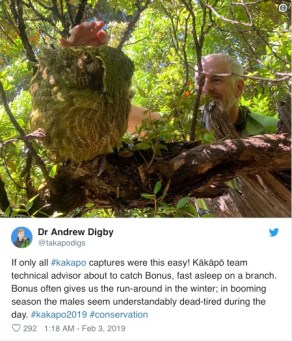
Kakapo on Codfish Island, New Zealand. Photo: Tui De Roy/Minden Pictures
Conservation

Modernization has put pressure on bird populations in so many ways, it is easy to forget that it has its occasional bright sides. We have favored on this platform the citizen science possibilities that technology allows, but even social media can add value. Thanks to Audubon Magazine for pointing this out:

Fat, Flightless, and Funny, Kākāpō Make the Internet a Much Better Place

With a savvy social media presence, caretakers of the endangered parrots have created an utterly delightful, conservation-focused corner of the web.

minden_90710440b.jpgSoon, the Kākāpō of New Zealand will have a little extra motivation when it’s time to mate. That’s because, thanks to a recent competition, some of these large, flightless, long-lived parrots will be treated to a special saxophone-laden soundtrack. The composer behind the mood music will be the winner of a recent search to find the next Kenny G. of Kākāpō smooth jazz.

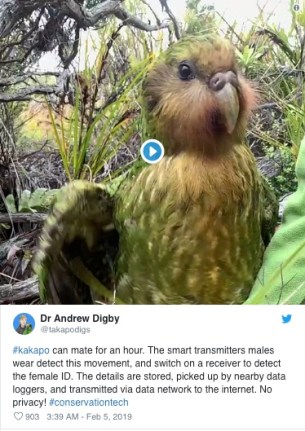
Of course, there’s no evidence that critically endangered Kākāpō, which breed in leks every two to three years, find saxophone music particularly romantic. For the Kākāpō Recovery team and its partner in the project Meridian Energy, the campaign was more about raising awareness than coming up with a serious conservation strategy. But the search points to a larger truth about the Kakapo conservation effort: It’s as good at getting the word out about the Kākāpō as it is at working to save them.

minden_90710440c.jpgKākāpō, the heaviest parrots in the world, need all the help they can get. The birds evolved without natural mammalian predators, making them easy targets for the cats, rats, and stoats that arrived with European settlers hundreds of years ago. Kākāpō were nearly wiped out by these invaders, but in the mid-1990s, when the population hovered around 51 birds, New Zealand’s Kākāpō Recovery Program was formed to help bring these birds back from the brink.

The birds’ first big social media break came in 2009, when the internet met Sirocco, a 21-year-old Kākāpō who went viral for, in the words of the BBC television hosts, “shagging” zoologist Mark Carwardine while filming a documentary on the species (remember his name). The video of Sirocco wildly beating his wings against Carwardine’s head launched the bird’s career: In 2010, New Zealand Prime Minister John Key appointed Sirocco the country’s first Spokesbird for Conservation. Continue reading

Great Rivers Are Worthy Of Great Restoration Projects

CORiverMX-100819-0623_DeltaAerial_web.jpg

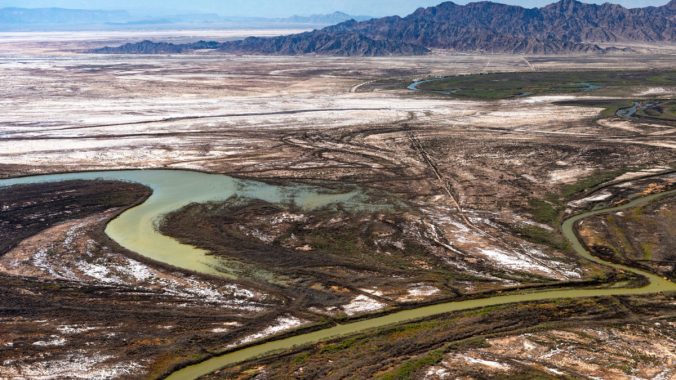
The Colorado River delta in Baja California is now a mosaic of largely dried-up river channels and tidal salt flats. TED WOOD
DetailMap_C_26_Delta_web.jpg

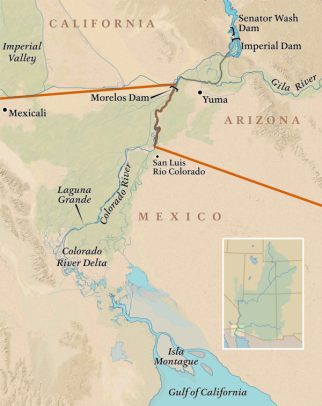
Downstream from the Morelos Dam, the Colorado River delta now runs dry before reaching the Gulf of California. MAP BY DAVID LINDROTH

When the first couple of stories about the Colorado River ran in Yale e360, it was difficult to imagine how much more there might be to say about it. But now the last article in the series, Restoring the Colorado: Bringing New Life to a Stressed River, provides an example of saving the best for last:

The Colorado River has been dammed, diverted, and slowed by reservoirs, strangling the life out of a once-thriving ecosystem. But in the U.S. and Mexico, efforts are underway to revive sections of the river and restore vital riparian habitat for native plants, fish, and wildlife. Last in a series.

CORiverMX-100819-0513_Morelos-Dam_web.jpg

The Morelos Dam on the U.S.-Mexico border, where the Colorado’s remaining water is diverted to cities and farms in Mexico. SUPPORT FOR AERIAL PHOTOGRAPHS PROVIDED BY LIGHTHAWK

From the air, the last gasp of the Colorado River is sudden and dramatic. The pale green river flows smack into the Morelos Dam on the U.S.-Mexico border, and virtually all of it is immediately diverted into a large irrigation canal that waters a mosaic of hundreds of fields — alfalfa, asparagus, lettuce, and other vegetables, their vivid green color clashing against the sere desert. The slender thread of water that remains in the Colorado’s channel continues to flow south, but is soon swallowed up by a sea of sand, far short of its delta, which lies 100 miles farther on.
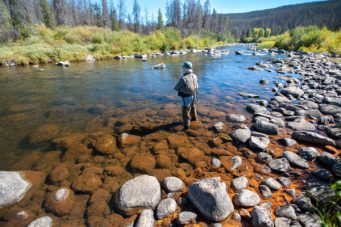
TU-CO-20100912-0190_COFishing_web.jpg

A fisherman on the upper Colorado River in northern Colorado. Low water flows have endangered fish populations and led last year to the closing of parts of the river to fishing.

The Colorado River once surged through the delta during high flows, carrying so much water at times that shallow draft steamboats chugged hundreds of miles up the river into the U.S. with loads of freight. The water in the delta nourished a vast fertile landscape, a fitting end to a river known as the Nile of North America.

“The river was everywhere and nowhere,” the naturalist Aldo Leopold wrote during a 1922 canoe trip to the delta, describing the waterway as it ebbed, flowed, braided, and stalled into pools, nourishing a rich and diverse ecosystem of “a hundred green lagoons,” a “milk and honey wilderness” with thick stands of cottonwoods and willows that provided habitat for hundreds of species of birds. The delta’s marshes, mudflats, and white sand beaches were home to clapper rails, bitterns, mallards, teal, and clouds of egrets.

Bobcats, puma, deer, and wild boar wandered the delta’s forests. Leopold was searching for the jaguar that roamed there, but didn’t see any. Continue reading

Seven Generations

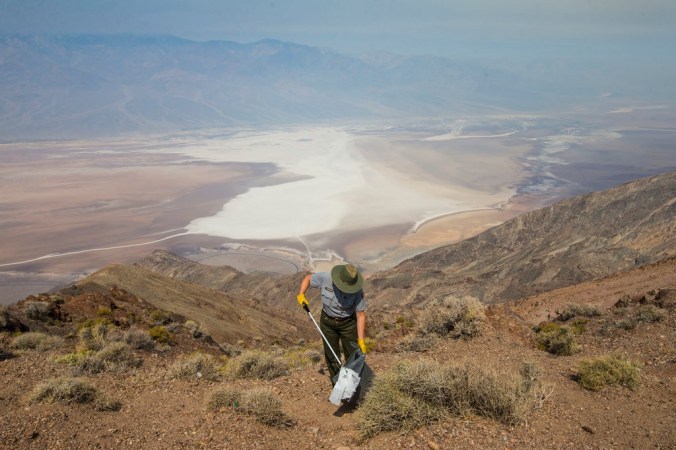
A custodian in Death Valley National Park, which would gain 40,000 acres under the measure. Credit Chase Stevens/Las Vegas Review-Journal, via Associated Press

At a time when the current administration and it’s legislative supporters are busy dismantling the environmental protections that have been painstakingly developed for over half a century, this bipartisan achievement is surprising, and heartening news.

Senate Passes a Sweeping Land Conservation Bill

The Senate on Tuesday passed a sweeping public lands conservation bill, designating more than one million acres of wilderness for environmental protection and permanently reauthorizing a federal program to pay for conservation measures.

The Senate voted 92 to 8 in favor of the bill, offering a rare moment of bipartisanship in a divided chamber and a rare victory for environmentalists at a time when the Trump administration is working aggressively to strip away protections on public lands and open them to mining and drilling.

“It touches every state, features the input of a wide coalition of our colleagues, and has earned the support of a broad, diverse coalition of many advocates for public lands, economic development, and conservation,” said Senator Mitch McConnell, Republican of Kentucky, the majority leader.

Western lawmakers of both parties have been working for four years on the bill, which will next be taken up by the House of Representatives, where it also enjoys bipartisan support.

“This package gives our country a million acres of new wilderness, protects a million acres of public lands from future mining, permanently reauthorizes the Land and Water Conservation Fund and balances conservation and recreation for the long term,” said Representative Raúl Grijalva, the Arizona Democrat who heads the House Natural Resources Committee. “It’s one of the biggest bipartisan wins for this country I’ve ever seen in Congress.” Continue reading

The Most Interesting News Today

17mag-climeworks-image2-jumbo-v2.jpg

The greenhouse in Hinwil where Climeworks uses carbon dioxide pulled from the air to grow fruits and vegetables. Luca Locatelli for The New York Times

When this platform started in 2011 it was two young men, one a senior at Amherst College and the other a sophomore at Cornell University, who thought it would be useful to share their experiences with other students. It continued beyond their summer internships. At some point, hard to pinpoint the date, it started serving as a daily exercise for me. It became an exercise in finding something in the world that is worthy of attention, as much as possible something that inspires hope rather than reinforces dread (though that has been unavoidable from time to time).

The title I give to today’s post is impossible to justify with any metrics, but read on and you may see my point. Jon Gertner, for this first time featured in our pages, and for what is likely the longest of any longform treatments of any topic in the New York Times, thank you for making it about this:

17mag-climeworks-image1-jumbo.jpg

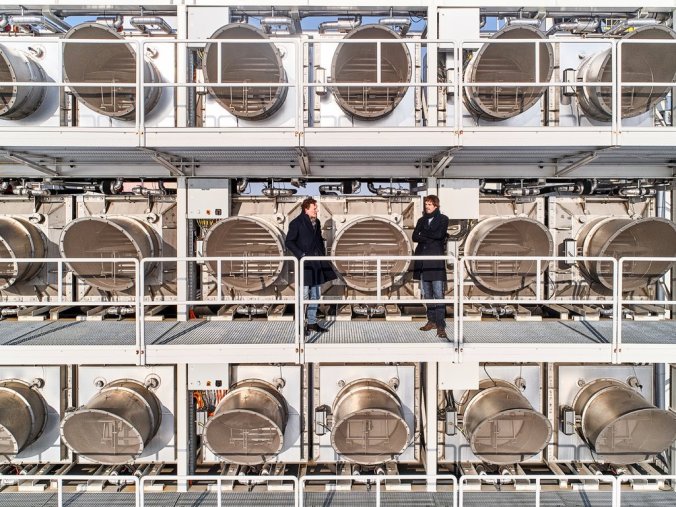
Christoph Gebald, left, and Jan Wurzbacher, the founders of Climeworks, at their plant in Hinwil, Switzerland. Luca Locatelli for The New York Times

The Tiny Swiss Company That Thinks It Can Help Stop Climate Change

Two European entrepreneurs think they can remove carbon from the air at prices cheap enough to matter.

17mag-climeworks-image3-jumbo

A pilot project at a Swiss university that uses Climeworks equipment to make methane out of airborne CO₂. Luca Locatelli for The New York Times

Just over a century ago in Ludwigshafen, Germany, a scientist named Carl Bosch assembled a team of engineers to exploit a new technique in chemistry. A year earlier, another German chemist, Fritz Haber, hit upon a process to pull nitrogen (N) from the air and combine it with hydrogen (H) to produce tiny amounts of ammonia (NH₃). But Haber’s process was delicate, requiring the maintenance of high temperatures and high pressure. Bosch wanted to figure out how to adapt Haber’s discovery for commercial purposes — as we would say today, to “scale it up.” Anyone looking at the state of manufacturing in Europe around 1910, Bosch observed, could see that the task was daunting: The technology simply didn’t exist.

Over the next decade, however, Bosch and his team overcame a multitude of technological and metallurgical challenges. He chronicled them in his 1932 acceptance speech for the Nobel Prize for Chemistry — an honor he won because the Haber-Bosch process, as it came to be known, changed the world. His breakthrough made possible the production of ammonia on an industrial scale, providing the world with cheap and abundant fertilizer. The scientist and historian Vaclav Smil called Haber-Bosch “the most important technical invention of the 20th century.” Bosch had effectively removed the historical bounds on crop yields, so much so that he was widely credited with making “bread from air.” By some estimates, Bosch’s work made possible the lives of more than two billion human beings over the last 100 years. Continue reading

The Original “Third Place”

Louie Chin

A friend of mine recently posted on social media about beautiful libraries in Halifax, as well as other favorites, including the Boston Public Library. We’ve written about libraries countless times on this site, both due to their clear cultural importance, as well as their impact within our family. It reminded me how libraries have been part of our lives since early toddlerhood for our sons, starting in Ithaca, where they were born, and in Paris, the American Library (the largest English-language lending library on the European continent) where they discovered authors like Philip Pullman and Terry Prachett. There are no limitations for what libraries have meant to our family over the years.

Thanks to sociologist Eric Klinenberg for this opinion piece.

To Restore Civil Society, Start With the Library

This crucial institution is being neglected just when we need it the most.

Is the public library obsolete?

A lot of powerful forces in society seem to think so. In recent years, declines in the circulation of bound books in some parts of the country have led prominent critics to argue that libraries are no longer serving their historical function. Countless elected officials insist that in the 21st century — when so many books are digitized, so much public culture exists online and so often people interact virtually — libraries no longer need the support they once commanded.

Libraries are already starved for resources. In some cities, even affluent ones like Atlanta, entire branches are being shut down. In San Jose, Calif., just down the road from Facebook, Google and Apple, the public library budget is so tight that users with overdue fees above $20 aren’t allowed to borrow books or use computers.

But the problem that libraries face today isn’t irrelevance. Indeed, in New York and many other cities, library circulation, program attendance and average hours spent visiting are up. The real problem that libraries face is that so many people are using them, and for such a wide variety of purposes, that library systems and their employees are overwhelmed. According to a 2016 survey conducted by the Pew Research Center, about half of all Americans ages 16 and over used a public library in the past year, and two-thirds say that closing their local branch would have a “major impact on their community.” Continue reading