Bringing More Vegetation Into Our Diets

Hercules-Herbs.jpg

Layer bunches of herbs on an ornate oblong platter, and they will become the most decorative feature of any table. Photograph by Joe Woodhouse

Thanks to Olia Hercules for this:

A Case for Eating Herbs as if They Were Vegetables

On a whim one July morning in 1987, my family set off from our small town in south Ukraine in a stuffy old Lada. We drove through Crimea, then rode by ferry to Sochi, and then drove again through Abkhazia and Georgia into Azerbaijan, where our Ukrainian-Armenian extended family lived. My mum recently reminisced about that trip, how we enjoyed late-evening dinners on our relatives’ terrace. There were tandyr-baked flatbreads, katyk yogurt, grilled meats—the works. But what stood out to mum were the herbs. At each meal, a huge platter stood proud in the middle of the table, piled with bunches of greenery: raikhan (purple basil), mint, dill, tarragon, land cress, cilantro, and spring onions. They were long and robust, nothing like those sad, weedy clumps we now buy in supermarkets, and were meant to be eaten by the stalkful, as if they were vegetables. The adults—I was too young then to have a taste for herbs—would pick up a few sprigs of each, fold them in two, dip them into salt, and chomp on them along with fresh radishes and cucumbers, sometimes folded into lavash like a veggie kebab sandwich. Continue reading
Keeping Track Of Renewables

Kormann-Prop-127.jpg

Despite the rapid decline in the cost of solar-energy technology and battery storage, Arizona gets only six per cent of its electricity from solar. Photograph by Joshua Lott / Bloomberg / Getty

Thanks to Carolyn Kormann, making her fifth appearance since early 2016 in our pages, including this recent item that I particularly favored, for the article below that helps us understand what is happening with renewable energy these days in the USA. It is easy to forget, amidst all the noise of a federal government working to deregulate and reduce environmental protection, that important work continues:

The Battle for Solar Energy in the Country’s Sunniest State

In late September, the Heartland Institute, a libertarian think tank that receives donations from fossil-fuel companies, published a blog post titled “California Billionaire’s Renewable Energy Initiative Makes Arizona Ballot.” The billionaire in question was Tom Steyer, whose year-long effort to pass Proposition 127, an amendment to Arizona’s constitution that would require power companies to generate fifty per cent of their electricity from renewable sources by 2030, has faced aggressive opposition from the state’s largest utility, Arizona Public Service, or A.P.S. The blog post lamented a failed lawsuit filed by Arizonans for Affordable Energy, a political-action committee funded by A.P.S.’s parent company, to keep Prop 127 off the ballot, and quoted several opponents who believed the measure, now up for a vote in November, would be a costly mistake. “Prop 127 would tie Arizona’s future to technologies that do not deliver baseload electricity,” Mark Finchem, a Republican state representative, said, “and are arguably worse for the environment as a whole than the dependable technologies we already have.” The photograph accompanying the post depicted a wind-turbine farm, and, in the foreground, a dead bald eagle.

Arizona is the sunniest state in the country, with more than three hundred bluebird days per year. It is also projected to endure an additional month of hundred-degree days in the coming decades owing to climate change. Yet, despite the rapid decline in the cost of solar-energy technology and battery storage—to the point that, as an A.P.S. director told me, it now frequently outbids fossil fuels, even natural gas—in 2017, Arizona generated only six per cent of its electricity from solar, according to the ballot initiative’s advocates. The state currently requires utilities to generate eight per cent of their power from sources like solar and wind, scaling up to fifteen per cent by 2025. Natural gas, the largest source of Arizona’s net electricity generation, is imported from out of state. “Our most abundant resource in Arizona is our sunshine,” D. J. Quinlan, a spokesman for Clean Energy for a Healthy Arizona, the Phoenix-based political-action committee that Steyer is funding, said. “We need a nationwide transition to renewables. One of the first places we should be doing it is where it’s most efficient and cost-effective, and that’s here.” Continue reading

Maritime History Just Got Richer

blackseaship_wide-ba336617e8054f7120da46d07a837b5d0c46e374-s1200-c85.jpg

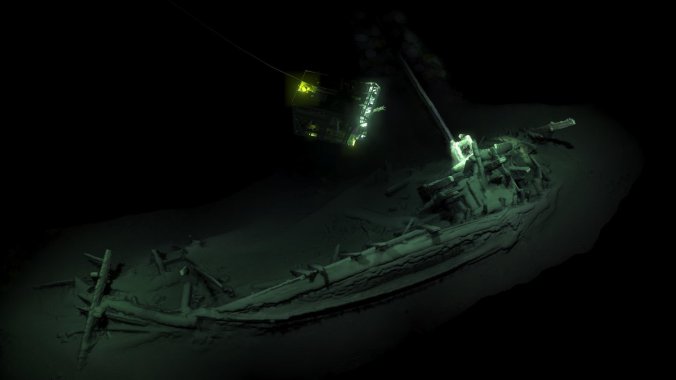
The Black Sea Maritime Archaeology Project says the intact shipwreck was discovered at a depth of more than 1 mile, where the scarcity of oxygen helped preserve the ancient vessel. Black Sea MAP/EEF Expeditions

Who knew there were still such discoveries to be made? Obviously, someone did. And Homer’s epic tale of Odysseus and his journeys plays a part in this story:

‘Oldest Intact Shipwreck Known To Mankind’ Found In Depths Of Black Sea

gettyimages-113635460_sq-30ea9188d1e635b97822388656dde1dcdae3c53e-s1200-c85.jpg

The recently discovered shipwreck reveals details that are similar to the ship on this famed ancient Greek vase, which dates to the fifth century B.C. and depicts Odysseus tied to the mast to brave the sirens.
Universal Images Group/Getty Images

More than a mile beneath the surface of the Black Sea, shrouded in darkness, an ancient Greek ship sat for millennia unseen by human eyes — until the Black Sea Maritime Archaeology Project happened upon its watery grave last year.

The team announced the find Tuesday, saying its discovery has been “confirmed as the oldest intact shipwreck known to mankind.” Radiocarbon-dated to roughly 400 B.C., the trading vessel plied the waves in the days of Plato and Sophocles, when the city-states of ancient Greece had scattered colonies all around the Black Sea.

Since then, it has sat at a depth that more than doubles the height of the tallest skyscraper in the world. In water that deep, oxygen is hard to come by, and because of that, so too are the organic processes that help drive decomposition. That left the ship all but undisturbed until the research team discovered it — along with dozens of other shipwrecks — during an 800-square-mile survey of the seabed. Continue reading
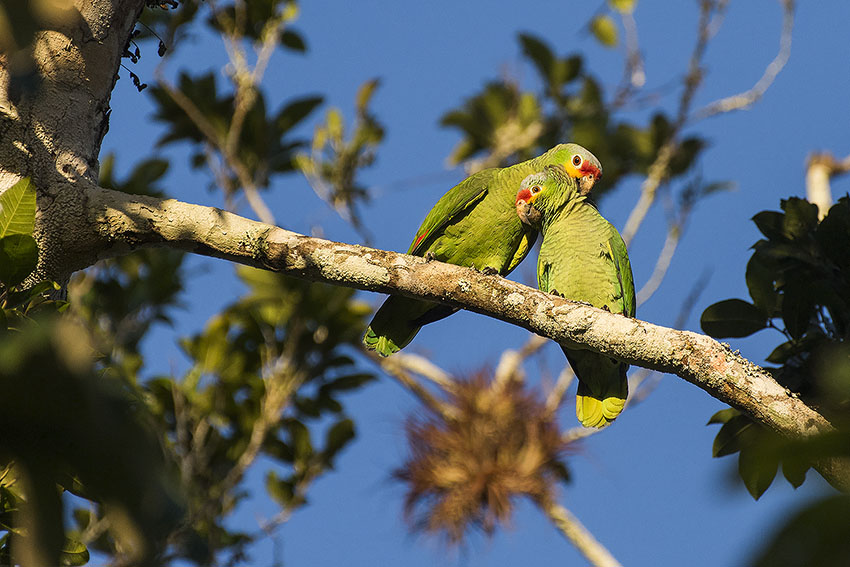
Conversations Between Birders

181029_r33103illuweb

Christopher Skaife Illustration by João Fazenda

Thanks to Sarah Larson for this:

Bird-Watching with the Ravenmaster

The yeoman warder charged with caring for the ravens of the Tower of London hikes along the Hudson.

When he’s at work, at the Tower of London, Yeoman Warder Christopher Skaife typically wears a uniform featuring a royal-blue tabard with scarlet ornamentation, a brass-buckled belt, and a bonnet. (Formalwear involves stockings and a ruff.) Skaife lives at the Tower, too, with his wife, in a house with forty-foot walls and arrow slits for windows. Skaife is the Tower’s Ravenmaster—his new book, “The Ravenmaster,” just came out—and in that role he cares for its most famous current residents, Merlin (a.k.a. Merlina), Erin, Rocky, Jubilee II, Gripp II, Harris, and Poppy, and gives tours to some of the Tower’s three million annual visitors. Recently, while vacationing in Manhattan, Skaife, who is Beefeater-shaped, with a bristly beard, was incognito, dressed in a zippered jacket and cargo shorts. He has tattoos on his calves depicting ravens, as well as, he said, “the skulls of those who were executed on the Tower Green.” On a crisp Friday, Skaife met up with his friend Gabriel Willow, a trim man in a cap, who works with New York City Audubon, to embark on a raven quest.

After a long absence, ravens have returned to the metro area: about six pairs nest in or around New York City. Willow and Skaife visited three potential hot spots—Pelham Bay Park, in the Bronx (mallards, cormorants, egrets; no ravens), far West Twenty-third Street, and Inwood Hill Park, at the northernmost tip of Manhattan. At West Twenty-third and the Hudson River, Skaife and Willow peered through binoculars. “I did see a raven this morning up in Central Park—a big flyby,” Willow said. “I heard cawing and calling, and a murder of crows swirled around, chasing a raven.” Continue reading

Who Will Farm In The Future?

101618_mb_FarmSuccession_EmmaTransplanting_0

Four-year-old Emma is already helping out at Field and Farm Co., doing things like transplanting onions. SNARE FAMILY / FIELD AND FARM CO.

Thanks to Madelyn Beck:

Handing Off: The Reality Of Land Transfer Between Older, Younger Farmers

101618_mb_FarmSuccession_CurryFamilyFarm

This farm near Springfield, Illinois, has been in the Curry family since 1886, though Kim Curry only moved there in 2008 when her father was dying of cancer. She, her sister and her niece grow and sell pigs, piglets, chickens and cows.
CREDIT MADELYN BECK / HARVEST PUBLIC MEDIA

As life expectancy increases, farmers are staying in the business, but there’s still a need to plan for what happens when they die. At the same time, young farmers who come from non-farming backgrounds are looking for the space to grow their own careers.

A land transfer may seem simple, but challenges abound: How do retiring farmers connect with beginning farmers? When does a farmer confront death? How can smaller farm organizations fit into the ever-growing 1,000-acre farm scene?

101618_mb_FarmSuccession_Curry

Formerly a biochemist in Michigan, Curry now works in disability claims for the state of Illinois on top of helping run the family farm. She said dinnertime often comes late, about 8 or 8:30 p.m.
CREDIT MADELYN BECK / HARVEST PUBLIC MEDIA

Past the likeness of Western movie icon John Wayne etched in stone, a ways down North John Wayne Road and at the end of a long dirt driveway is Kim Curry’s place. A few of the farm’s seven dogs meander up to the gate to bark at anyone who pulls up, while chickens and occasional escapee piglet scrounge for food around the yard.

The Curry Family Farm is near Springfield, Illinois, but unlike most of that area, it has green, rolling hills, a few creeks and a few ponds. It’s been in the family since 1886.

“It’s just so restful and relaxing out here. We’ll have to show you the pigs,” Curry said. “They’re all eating.”

The 59-year-old lives there with her sister and niece, but the three of them can’t keep up with it all, especially because she has a full-time state job working with disability claims.

So, she is selling about 80 acres, which she said “really has potential with someone with younger, more energy.”

And that’s where it gets tricky for people trying to offload land in Illinois, which doesn’t have an online system like several other states — Iowa, Nebraska and Montana, for example — that specifically links older farmers with newer ones looking for land.

Continue reading

Charisma & Conservation

Steve-Pearlman-32_FLUXMAG_WEB

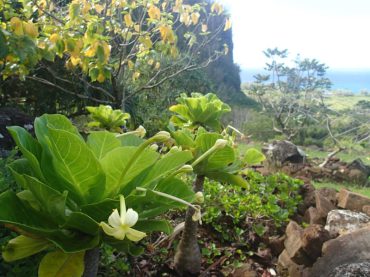
Botanist Steve Perlman rappels into the Kalalau Valley, a biodiversity hotspot on the Hawaiian island of Kauai. COURTESY OF BRYCE JOHNSON/FLUX HAWAII

Thanks to Janet Marinelli and the team at Yale e360 for a reminder that charisma is not all that matters in decisions about conservation:

Extreme Botany: The Precarious Science of Endangered Rare Plants

They don’t make the headlines the way charismatic animals such as rhinos and elephants do. But there are thousands of critically endangered plants in the world, and a determined group of botanists are ready to go to great lengths to save them.

B.insignis-outplanted-in-former-range-at-LImahuli-Garden-2_web

The plant known as cabbage-on-a-stick (Brighamia insignis) has been grown at Limahuli Garden & Preserve on Kauai, which is within the historic range of the species. SEANA WALSH

To save plants that can no longer survive on their own, Steve Perlman has bushwhacked through remote valleys, dangled from helicopters, and teetered on the edge of towering sea cliffs. Watching a video of the self-described “extreme botanist” in actio­­n is not for the faint-hearted. “Each time I make this journey I’m aware that nature can turn on me,” Perlman says in the video as he battles ocean swells in a kayak to reach the few remaining members of a critically endangered species on a rugged, isolated stretch of Hawaiian coastline. “The ocean could suddenly rise up and dash me against the rocks like a piece of driftwood.”

RS40032_Limahuli-Garden_Brighamia-insignis_Nov-8-2016-2_web

A botanist collects pollen from the flower of Brighamia insignis. NATIONAL TROPICAL BOTANICAL GARDEN

When he arrives at his destination, Perlman starts hauling himself up an impossibly steep, razor-sharp cliff 3,000 feet above the sea without a rope, his fingers sending chunks of rock tumbling down to the waters below. Finally, he reaches the plants and painstakingly transfers pollen from the flowers of one to those of another to ensure that the species can perpetuate itself. At the end of the season, he will return to collect any seeds they were able to produce. Continue reading
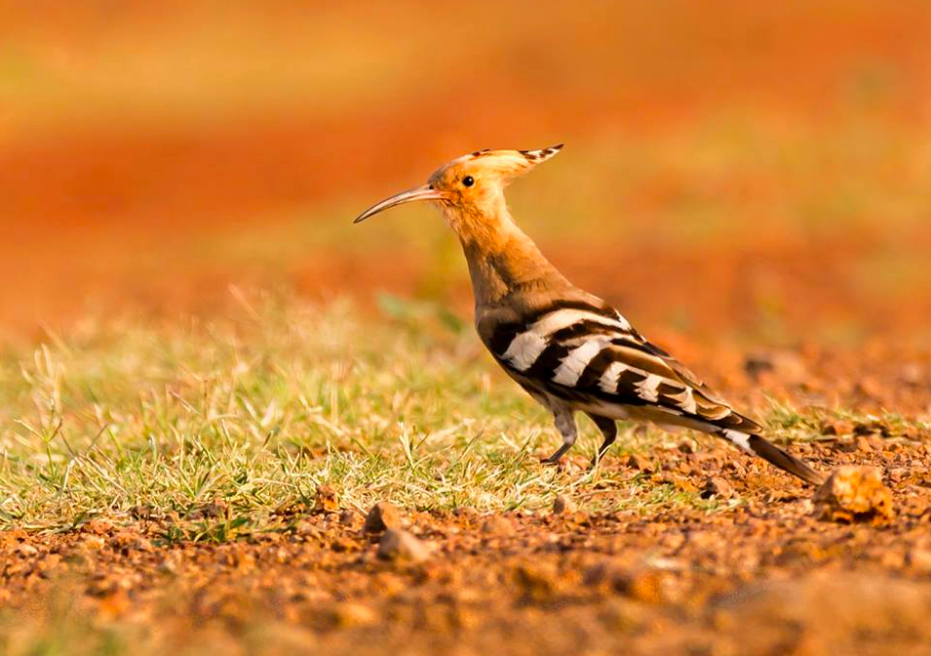
The Science Of Camouflage

This is more science-y than is our custom, but Nature magazine has been appreciated on this platform as a source of intriguing findings about creatures from time to time, so here goes:

Cuttlefish wear their thoughts on their skin

Elaborate video system tracks how pigment cells controlled by neurons generate complex patterns of camouflage.

d41586-018-07023-7_16205982

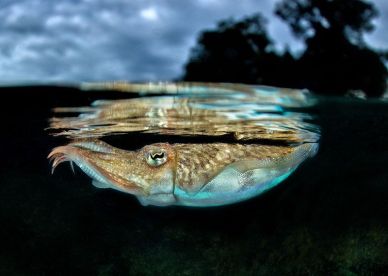
Cuttlefish are masters of quick-change camouflage, thanks to skin cells that act as coloured pixels. Credit: Pasquale Vassallo/Getty

Cuttlefish are masters at altering their appearance to blend into their surroundings. But the cephalopods can no longer hide their inner thoughts, thanks to a technique that infers a cuttlefish’s brain activity by tracking the ever-changing patterns on its skin. The findings, published in Nature on 17 October1, could help researchers to better understand how the brain controls behaviour.

The cuttlefish (Sepia officinalis) camouflages itself by contracting the muscles around tiny, coloured skin cells called chromatophores. The cells come in several colours and act as pixels across the cuttlefish’s body, changing their size to alter the pattern on the animal’s skin.

The cuttlefish doesn’t always conjure up an exact match for its background. It can also blanket itself in stripes, rings, mottles or other complex patterns to make itself less noticeable to predators. “On any background, especially a coral reef, it can’t look like a thousand things,” says Roger Hanlon, a cephalopod biologist at the Marine Biological Laboratory in Woods Hole, Massachusetts. “Camouflage is about deceiving the visual system.” Continue reading
Lost & Found, Apples & Ciders

merlin_142713882_be9ebc0e-dd46-437b-98c1-b3318b6157b2-jumbo

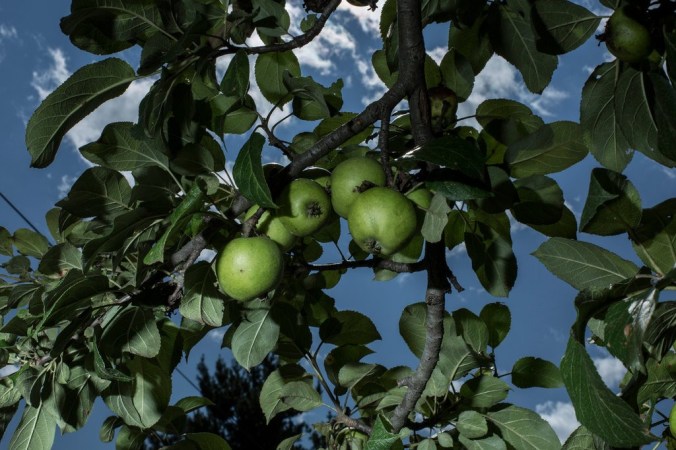
The Harrison apple tree that Thomas Vilardi found near Newark in the fall of 2015. “I knew I had seen apples on a tree,” he said. “I wasn’t expecting to find a Harrison.” Credit Bryan Anselm for The New York Times

Thanks for this article to Rachel Wharton, who is batting 1000 for our taste in food writing:

Finding Lost Apples and Reviving a Beloved Cider

George Washington was among the many fans of Newark cider, a long-missing treat now being recreated by a former ad man on a mission.

merlin_142713408_bab1e622-f74d-40b1-8bce-3ee6fe4b1ae6-jumbo

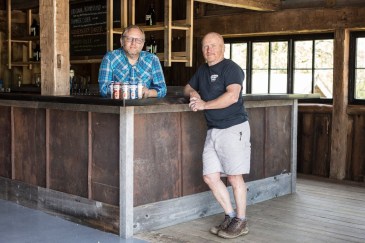
Charles Rosen, left, and Cameron Stark in the new taproom they opened last week at Ironbound Hard Cider in Asbury, N.J. It will serve limited-edition ciders made by Mr. Stark, the head cider maker.CreditBryan Anselm for The New York Times

ASBURY, N.J. — Ironbound Hard Cider may seem an odd name for the business Charles Rosen has built here on 108 acres in central New Jersey. The farm, where a new taproom offers pastoral views of the still-ripening fruit, doesn’t appear to share much with the Ironbound, an industrial neighborhood 50 miles to the east in Newark.

Yet they do have common roots, thanks to four very old apple varieties now growing on Mr. Rosen’s land.

merlin_142713801_a087507e-571c-47c8-a090-d896063758d1-jumbo

Mr. Vilardi and Fran McManus at the old apple tree he found three years ago. An apple expert connected him to Ms. McManus, who had written an article about Newark cider in 2010. Credit Bryan Anselm for The New York Times

Mr. Rosen, the former chief executive of a Manhattan advertising agency that promoted Svedka vodka and Mike’s Hard Lemonade, wants to reintroduce Newark cider, an 18th- and 19th-century alcoholic drink once famously compared to Champagne.

Newark cider was both a point of pride and big business for the region — requested by name, reportedly lauded by George Washington and produced by dozens of Newark-area cideries with acres of orchards. The secret wasn’t a recipe, but the blending of a quartet of superior apples born in the region: Campfield, Poveshon, Granniwinkle and Harrison, the most celebrated of the four.

merlin_142713792_582225fa-f36e-4060-bf8f-fec10923a552-jumbo

The 1- and 2-year-old apple trees in Ironbound Hard Cider’s nursery include the Harrisons shown here and Poveshons, a New Jersey-born variety thought to be extinct until 2015. Credit Bryan Anselm for The New York Times

As a result of urbanization and then Prohibition, when many of the nation’s remaining cider orchards were destroyed, Newark cider hasn’t been made for at least a century. But after years of planning and planting — not to mention the accidental discovery of two lost apple trees and the investment of what Mr. Rosen called “100 percent of all the money I ever had in my entire life” — Ironbound Hard Cider is on the precipice of bringing it back. Continue reading
110 Million Years And Counting

16SCI-TURTLES2-jumbo

In a village near Watamu, Kenya, a sea turtle accidentally caught by a fisherman was turned over to Local Ocean Conservation. Credit Amy Yee

These creatures have been around forever, more or less. Survived everything that nature threw at them over the epochs. Until mankind and its addiction to plastic. And now it is clear their days are numbered, so any initiative anywhere that tries to slow the clock and keep the species going, we are happy to hear about it and share on this platform. Thanks to Amy Yee for bringing this to our attention:

Rescuing Sea Turtles From Fishermen’s Nets

An organization on the coast of Kenya tries to persuade local residents to help return the trapped reptiles to the ocean, rather than sell their meat and shells for a living.

merlin_145220637_c2a0c017-6041-44e3-9aef-e066644ccaa8-superJumbo

A green sea turtle trapped in a gill net. Scientists estimate the global green turtle population has declined 50 to 70 percent since 1900. Credit Jeff Rotman/Science Source

WATAMU, Kenya — The young hawksbill turtle was accidentally caught in a net in the Indian Ocean off Kenya’s coast.

The fisherman called Local Ocean Conservation, a nonprofit based in the town of Watamu that is the only turtle rescue and rehabilitation center on the East African seaboard. The hawksbill, critically endangered in this region, was a mere seven pounds; adults can weigh up to 160 pounds.

X-rays showed that the reptile’s intestinal tract was clogged with plastic. Hogaar, as Local Ocean named her, floated and couldn’t dive. Gas had built up in her innards after she had eaten small pieces of plastic mistaken for food such as jellyfish. Local Ocean staff members placed Hogaar in a rehab pool and gave her laxatives. She passed feces laced with shreds of packaging and had little appetite. After more than four months at Local Ocean, Hogaar died. A necropsy revealed her gut was also full of sharp shards of white, blue and pink plastic and tangles of blue and gray string.

Turtles are reptiles that have existed for at least 110 million years and survived the mass extinction that killed off dinosaurs. But today, sea turtles worldwide are threatened with extinction. And it’s estimated that only one of 1,000 turtle eggs laid survive to adulthood. Continue reading

Macro Views

main_600

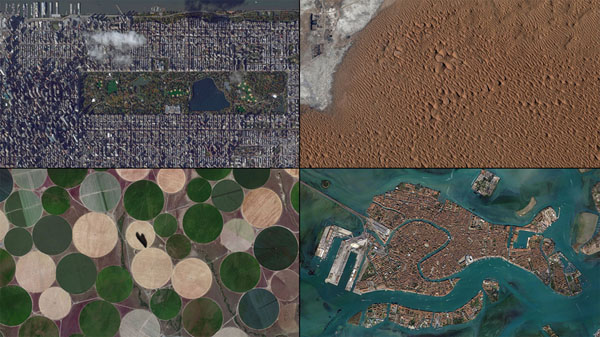
(Clockwise, from upper left) Seven-square-mile views of Manhattan; Chaganbulage Administrative Village in Inner Mongolia; Venice, Italy; and farms in Plymouth, Washington  © Google

Every now and then, it is good to just let the mind wander. And some of those times, visual prompts are the fastest way to get from here to there.

main_600 (1)

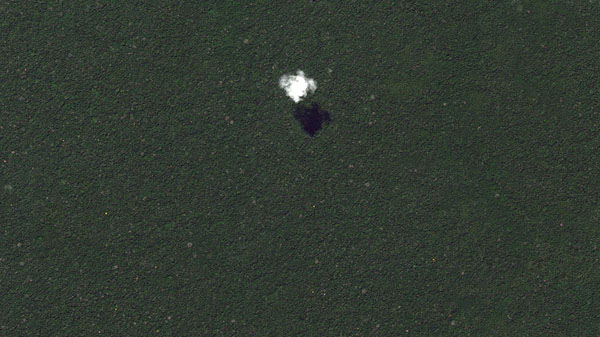
A seven-square-mile snapshot of the 2,700,000-square-mile Amazon rainforest in Brazil © Google

Thanks to the Atlantic’s Senior Editor of the photo section, Alan Taylor, for this:

 Seven Square Miles

main_600 (5)

Multiple channels of a braided river in southern Iceland. See it mapped © Google

Spending time looking at the varying and beautiful images of our planet from above in Google Earth, zooming in and out at dizzying rates, I thought it would be interesting to compare all of these vistas at a fixed scale—to see what New York City, Venice, or the Grand Canyon would look like from the same virtual height. So, the following images are snapshots from Google Earth, all rectangles of the same size and scale, approximately three and a half miles (5.6 kilometers) wide by two miles (3.2 kilometers) tall—showing seven square miles (18.1 square kilometers, or 4,480 acres) of the surface of our planet in each view.

main_600 (2)

A section of Upsala Glacier in Argentina. Explore more here, in Google Maps.  © Google

Continue reading