Scotland, Land Of Regret-Reducing Renewable Resources

5329

Scottish Power’s Whitelee windfarm on Eaglesham moor, just south of Glasgow. Photograph: Global Warming Images/REX

My daily contribution to this platform is a habit vaguely in the tradition of meditation–finding something each day that is worthy of gratitude, or otherwise worthy of sharing with friends, family, and anyone else who cares to listen. Because of the good fortune I have had to visit and work in many amazing places, it is important to me to never regret the places where I still have not been. Scotland is one of those places that, if I were a regretter, I would be feeling it now. I owe that place a visit (even if the company name sounds like a Bond villain):

Scottish Power shifts to 100% wind generation after £700m Drax sale

Big six energy firm drops fossil fuels for generation and say cheap green energy is the future

Scottish Power has ditched fossil fuels for electricity generation and switched to 100% wind power, by selling off its last remaining gas power stations to Drax for more than £700m.

Iberdrola, Scottish Power’s Spanish parent company, said the move was part of its strategy to tackle climate change and would free it up to invest in renewables and power grids in the UK.

The deal also marks a significant expansion and diversification for Drax, whose main business is a coal- and biomass-fired power station in North Yorkshire. Continue reading

Forests, Deforestation & Climate Change

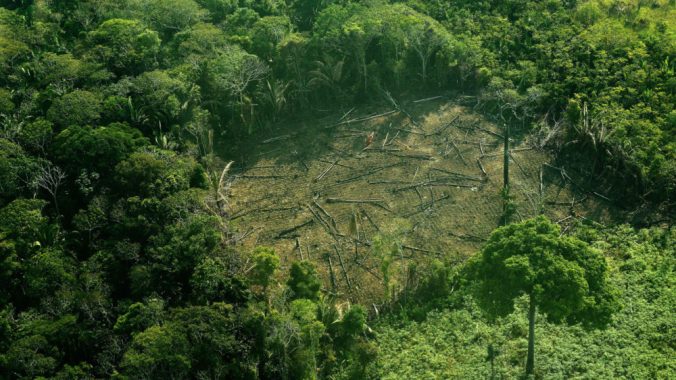
Trees cleared in the western Amazon region of Brazil in September 2017. CARL DE SOUZA / AFP / GETTY IMAGES

If you have been following the news recently, you may have noticed a report that indicates the urgency from climate change is greater than scientists previously thought. Everyone who cares has been digesting the science and we appreciate every effort to clarify what the science is saying. Fred Pearce, writing for Yale e360, has this:

Conflicting Data: How Fast Is the World Losing its Forests?

GP0STRVIX_PressMedia_web.jpg

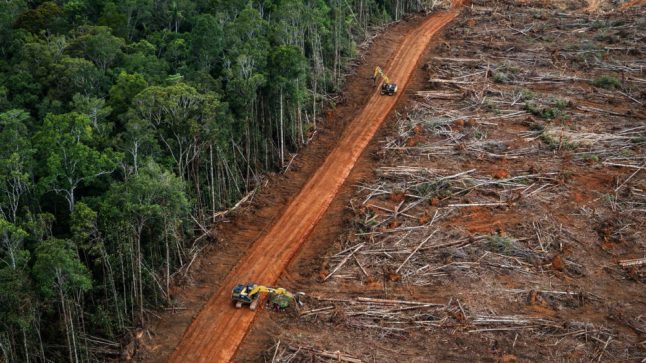
Forest cut to make way for an oil palm plantation in Papua, Indonesia in April 2018. ULET IFANSASTI / GREENPEACE

The latest UN report on climate says reducing deforestation is crucial to slowing global warming. But researchers must first reconcile two contradictory sets of statistics on tree loss in order to determine whether promises made by nations to protect and restore forests are on target.

The world is losing trees faster than ever. An area the size of Italy disappeared last year. Or did it? New research suggests three-quarters of those lost forests may already be regrowing. That hardly means we are out of the woods. Fighting climate change and protecting biodiversity still needs a global campaign to reforest the planet. But it does suggest that, given the chance, nature will do much of the work. Continue reading

Citizen Science, Children & Bees

11TB-BEES2-jumbo.jpg

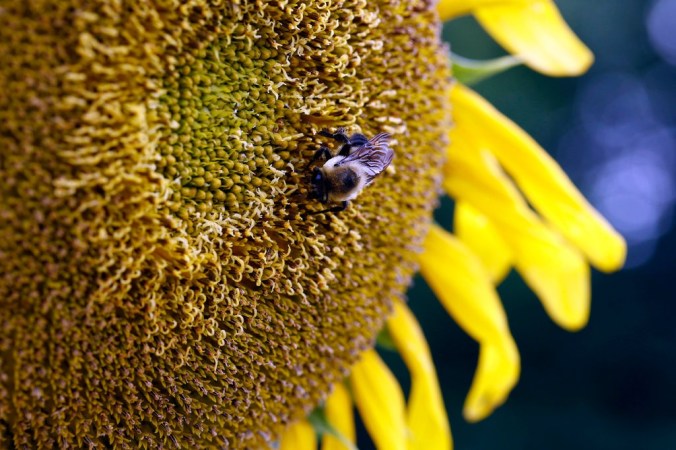
Scientists expected bees to gradually cease buzzing as the sky darkened during an eclipse. Instead, they stopped altogether. Credit Rogelio V. Solis/Associated Press

After following the work of Nicholas St. Fleur for a couple years now–his beat includes archaeology, paleontology, and space among other of the things we care about on this platform, including conservation–his most recent story below is my favorite for one reason, namely citizen science. Specifically the participation of youth in such an important scientific investigation:

The Moon Eclipsed the Sun. Then the Bees Stopped Buzzing.

Researchers worked with a small army of elementary school children to collect audio recordings of bees as they visited flowers along the path of last summer’s total eclipse.

merlin_145121940_aa0e5867-a947-44eb-9851-f90f39f77723-jumbo

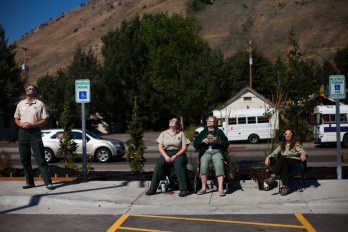
National Forest Service workers at the Bridger-Teton National Forest Office in Jackson, Wyo., took a break to watch the Great American Eclipse last year. Credit Celia Talbot Tobin for The New York Times

Last year’s Great American Eclipse drew hundreds of millions of eyes to the sky. But while people across the country “oohed” and “aahed” at the phenomenon, it appears the bees went silent.

So found a new study that monitored the acoustic activity of bees before, during and after totality — the moment when the moon completely blocked the sun — during the solar eclipse on Aug. 21, 2017. Researchers at the University of Missouri, along with a small army of elementary school children and other volunteers, collected audio recordings of honeybees, bumblebees and other types of bees as they visited flowers along the path of totality Continue reading

Carbon Insurance As Heritage Insurance

Kormann-YurokCarbonCredits-Primary.jpg

A carbon-offset project, the first of its kind in the United States, has become the Yurok’s main source of discretionary income, helping the tribe buy back thousands of acres of land. Photograph by Joel Redman

Carbon trading has featured, or at least been mentioned, only rarely on this platform, now that I stop to check. That seems impossible. But the scheme with so much promise has simply not taken off. Indigenous heritage, on the other hand, has featured in dozens of stories here since we started in 2011. Thanks to Carolyn Kormann for bringing this story to my attention, helped by two captivating photos and the fact that it highlights the approach of the Yurok Tribe (a community I had not heard of before):

Kormann-YurokCarbonCredits-Secondary2

“I think we did a good thing by saving the trees, but I’m not happy with it,” Jene McCovey, a tribal elder, said. “It’s not viable. It allows polluters to pollute.” Photograph by Joel Redman

How Carbon Trading Became a Way of Life for California’s Yurok Tribe

When Marty Lamebear is not fighting fires, he is starting them. In the past few years, as a member of the Yurok Tribe Forestry Program’s fire department, he has been helping revive the controversial practice of prescribed burns to protect and restore the coastal redwood forests of northern California. Lamebear is also a hunter, fisherman, and dancer. In his free time, he makes tribal regalia for ceremonial dances from parts of elk, deer, minks, and porcupines, which he shoots or finds already dead, and from frozen eagles that he orders from the U.S. Fish and Wildlife Service. A prescribed burn, what Lamebear calls a culture burn, creates prairies within the forest, which attract those animals. “At first, we couldn’t really tell its effects,” he said. “But, after about six years now, we can honestly start seeing the landscape open up, animals come around.” They also serve another purpose, he said. “It’s insurance for our carbon.” Continue reading

Billion Oysters And Counting

BillionOysters

HarborClass

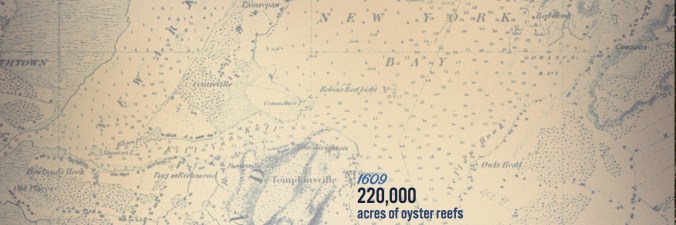
Our school programming puts students at the center of the movement to restore oysters to New York City waters. Explore our Billion Oyster Classroom program, currently in 70+ New York City schools, and high school at the Harbor School.

Every week or so since we started this platform in 2011 we have had too many opportunities to highlight water-based ecological challenges and they seem to outnumber solutions. But it has been our goal to balance the highlighting, neither hiding our head in the sand nor claiming false equivalence between bad news and good.

Given all the challenges facing our oceans and waterways we are always heartened to hear of another initiative that involves collaboration between enterprise, youth and civic organizations. Click the image above or the one to the right to see what the Billion Oyster Project is doing in this regard.   Thanks to National Public Radio (USA) for bringing this initiative to our attention:

Oysters On The Half Shell Are Actually Saving New York’s Eroding Harbor

20180626-dsc_8730_custom-017620689c347e9ace4501eb1e5f40b39875a047-s1400-c85

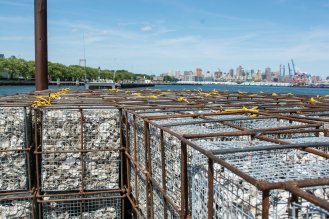
The shells are trucked over to Brooklyn’s Greenpoint neighborhood and once a month are brought en masse to Governors Island in the heart of the New York Harbor. Billion Oyster Project has collected more than 1 million pounds of oyster shells so far. Courtesy of Agata Poniatowski

Across New York City, more than 70 restaurants are tossing their oyster shells not into the trash or composting pile, but into the city’s eroded harbor. It’s all part of Billion Oyster Project’s restaurant shell-collection program.

The journey from trash to treasure begins after an oyster half shell is turned upside down and left on an icy tray. Once discarded, it joins hundreds of thousands of other half shells collected in blue bins and picked up (free of charge) from restaurants five days a week by Billion Oyster Project’s partner, The Lobster Place, a seafood supplier. The shells are trucked over to Brooklyn’s Greenpoint neighborhood and once a month are brought en masse to Governors Island in the heart of the New York Harbor, just yards away from both Brooklyn and Lower Manhattan. There, rolling shell hills sparkle in the sun while “curing” out in the elements for one year, a process that rids them of contaminants.

zadies_morganioneyeager-231_custom-8561dab3ee768ba35d5c28f16d698c2144cc7889-s1400-c85

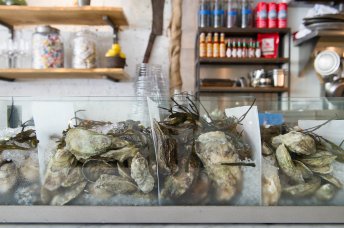
Oysters at Zadie’s Oyster Room, one of the New York City restaurants participating in Billion Oyster Project’s shell-collection program.
Courtesy of Morgan Ione Yeager

The shells then get a final cleaning and are moved to Billion Oyster Project’s hatchery at the Urban Assembly New York Harbor School, a public high school on Governors Island that offers technical and vocational training in the marine sciences. In an aquaculture classroom’s hatchery, student-grown oysters produce larvae in an artificially induced springtime environment. In one to two weeks, each larvae grows a “foot” — a little limb covered in a kind of natural glue — and then is moved to a tank full of the “cured” restaurant shells, which serve as anchors for all of those sticky feet. This phase is critical: If larvae can’t find a place to attach, they die. One reclaimed shell can house 10 to 20 new live oysters, depending on shell size. Continue reading

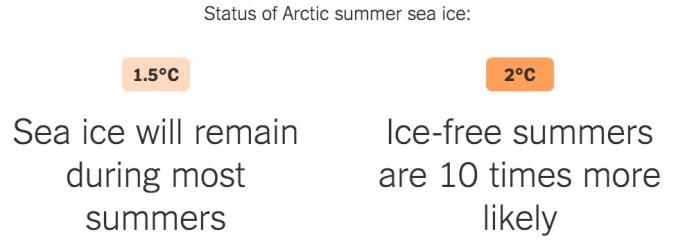
The Picture From The Recent Climate Change Report Is Now More Clear

Chart_lg.gif

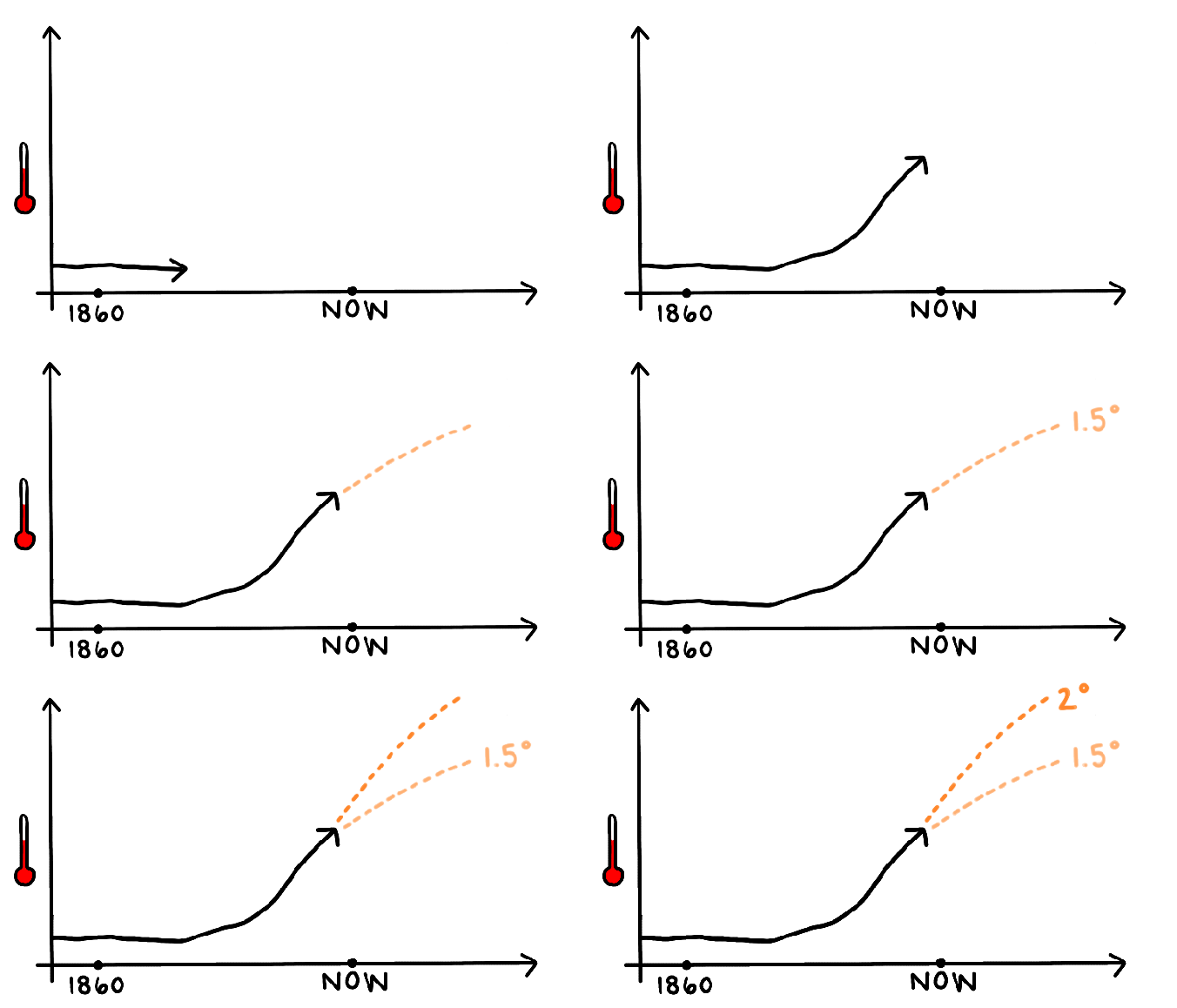
Deniers, we already know you will find a way to see this from some other perspective, and we have given up trying to understand why you do that. But for everyone else, there is still time to understand the implications of this science. And there is no shame in using props to help learn. Thanks to Brad Plumer and Nadja Popovich for making sure we get the point, with clear graphical illustration, about what this recent study is saying and why every one of us should care:

Heat

Extreme heat will be much more common worldwide under 2°C of warming compared to 1.5°C, with the tropics experiencing the biggest increase in the number of “highly unusual” hot days.

Read the rest of this graphics-rich story here.

Time As An Ingredient

MistMaize.jpg

Climate change has reared its big ugly head enough that I no longer count on seasonal consistency, but for now nine days in a row it has felt familiar, the greenest month of the green season in Costa Rica. And today, as of dawn, it looks like more of the same. “Some things never change” would be a real head in the sand cliché when thinking of seasons, but at least this October, so far, mornings have been sunny and by early afternoon the clouds roll in and the afternoons remind me of our 2010 to 2017 Kerala life, until dinner time. The photo above was from our second monsoon season there. Just up the hill from where I am writing at this moment, in Tarrazu–the Costa Rica equivalent of Munnar’s tea region–you might see something comparable, like this:

DCIM/100MEDIA/DJI_0482.JPG A few years ago Seth and James worked to restore a coffee plantation across the valley from the home where Seth grew up. The coffee they restored had been removed two decades earlier, a moment in time when coffee prices had crashed, even for the premium arabica that grows in Costa Rica. As it happens the same is true of the property where I am writing from, which had been a coffee plantation for most of the last century. In 2019 a restoration project will bring coffee back to this land, with tree shade for both the coffee and for the sake of restored bird habitat, and I look forward to sharing that progress here. And it is with this in mind that time, as an ingredient, is a theme for today. Work that Seth and James did demonstrated, with the passage of time, the fruitfulness of restoration and conservation. Now a replica project is ready to roll.

Time as an ingredient during green season is also a theme. Reading and cooking pass the time pleasantly during such afternoons, at least when the weekend schedule permits. Time for reading was on my mind a couple days ago, and the author featured in this podcast gets me thinking about time as an ingredient in the cooking I have been doing recently–almost all vegetarian and with the conscious effort to cook as minimally as possible to retain nutrients and flavor. As a bonus, this episode of a podcast we have been listening and linking to for two years shares the story behind espresso, so worth a listen:

EspWhiskey.jpg

One Week to Whiskey

A Los Angeles distillery aims to speed up a 10-year aging process to a matter of days.

9781468316384.jpgWhy does fish cook so fast? What’s the “wasabi window”? And can you really make 20-year-old aged whiskey in six days? This episode, we’re looking at the role of time in food and flavor: what it does and how we’ve tried—and sometimes succeeded—to manipulate that. To explore these questions, we visit a whiskey time machine tucked away in a low-slung warehouse in downtown Los Angeles and meet its inventor, Bryan Davis. And we speak with Jenny Linford, a food writer and author of a new book, The Missing Ingredient, all about time and food. Listen in now—this one’s well worth your time! Continue reading

Trees, Cities & Happiness

merlin_144034221_4ee0b063-798b-4669-80dc-817bcbc10dfe-superJumbo.jpg

A tree in Riverfront Park competes for grandeur with Nashville’s iconic At&T building. Credit William DeShazer for The New York Times

PlantTreeCity.jpgI just learned of an urban tree-planting initiative on a day when the news shows purposeful indifference about climate change on the part of a powerful country’s elected leader, on the same day when the news also shows that an economist considered a pioneer of environmental economics is receiving a prestigious prize and what he said when he learned of his being awarded the prize:

“Once we start to try to reduce carbon emissions, we’ll be surprised that it wasn’t as hard as we anticipated. The danger with very alarming forecasts is that it will make people feel apathetic and hopeless.

“One problem today is that people think protecting the environment will be so costly and so hard that they want to ignore the problem and pretend it doesn’t exist. Humans are capable of amazing accomplishments if we set our minds to it.”
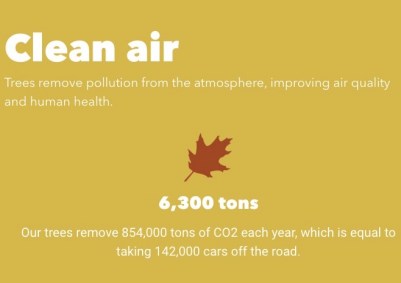
PlantTreesCity2Let’s decide together to do something, seems to be his message. I learned about this urban tree-planting initiative, news of a president’s abdication of responsibility, and this economist’s optimistic message on the same day I read about a 15-year old climate activist who has decided to do something where she sees her government failing to take action. She has decided at a very young age to do what she can regardless of the daunting odds. So thanks to Margaret Renkl a Nashville-based contributing opinion writer for The New York Times, for bringing this initiative to my attention, as a reminder to do something:

More Trees, Happier People

When cities grow, green space dies. Replanting it has been shown to lift the human spirit.
merlin_144034215_0e5eb0e9-e3ad-4046-b39b-a6189d715df7-superJumbo

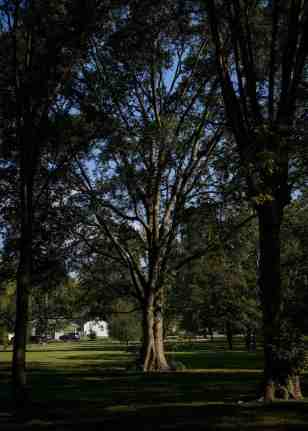
A tale of two trees in Nashville. A mature tree in England Park, left, and a newly planted tree at Wright Middle School.

NASHVILLE — The scene in a tiny pocket park outside Plaza Mariachi here on Nolensville Pike last Wednesday was like a tableau from a Norman Rockwell painting, 21st-century style. Surrounded by signs advertising the Hispanic Family Foundation, Dubai Jewelry, the Dominican Barber Shop and restaurants offering Peruvian, Chinese, Mediterranean and Indian food — as well as a Game Stop franchise and H&R Block — was a small sign that read, “Today: Free trees.”

merlin_144034152_9a1c43d3-ccb7-42c0-bfd7-979917608536-superJumbo

Photographs by William DeShazer for The New York Times

The arrow on the sign pointed to a pop-up canopy where the Nashville Tree Foundation was hosting its fourth tree giveaway of October. A family standing under the canopy was posing for a photo with the sapling they had just adopted. Carolyn Sorenson, executive director of the foundation, was taking the picture: “Say ‘trees’!” she said.

The tree giveaway at Plaza Mariachi happened to fall on the very day that Nashville’s mayor, David Briley, announced a campaign to restore and enlarge the city’s tree canopy. The effort, called “Root Nashville,” will be overseen by the city and the Cumberland River Compact, an environmental nonprofit, and funded through a combination of public, corporate, foundation and private dollars. Together with several municipal departments and other nonprofit organizations, the initiative aims to plant 500,000 trees in Davidson County by 2050.

Many of these newly planted saplings will replace very large, very old trees that have been lost to Nashville’s meteoric growth — a population increase of more than 45 percent since 2000. As the city has grown, the city’s trees have fallen: deliberately felled by developers to make room for new construction or unintentionally killed as a side effect of nearby building. Just since 2008, the tree canopy in the urban core has dropped from 28 percent to 24 percent, a loss of roughly 9,000 trees a year. Continue reading

A Place And A Time For Learning To Read, And To Appreciate Books As Things

from-the-mixed-up-files-of-mrs-basil-e-frankweiler-9781416949756_hr.jpg

Just this moment, as I started today’s post, I learned I had missed a 50th birthday party. We tend to like round numbers, even if they do not mean much–why should the 50th be any more important than the 49th or 23rd? For whatever reason, a centenary or half-centenary, or bicentennial all seem to have a bigger ring. So, happy birthday to this book (last year) that I searched for after reading Susan Orlean’s essay on her personal history with libraries and books:

…My family was big on the library. We were very much a reading family, but we were more a borrow-a-book-from-the-library family than a bookshelves-full-of-books family. My parents valued books, but they had grown up in the Depression, aware of the quicksilver nature of money, and they had learned the hard way that you shouldn’t buy what you could borrow. Because of that frugality, or perhaps despite it, they also believed that you should read a book for the experience of reading it. You shouldn’t read it in order to have an object that had to be housed and looked after forever, a memento of the purpose for which it was obtained. The reading of the book was a journey. There was no need for souvenirs…

I have just recently finished unpacking from storage a lifetime’s worth of books–actually multiple lifetimes because in addition to my own family of four’s lifetimes there are also books from our parents’ and grandparents’ personal collections. And the essay got me thinking about whether I had a personal favorite book, and if so whether I have a “souvenir” of it.

I had taken a moment after emptying a box to leaf through this book that qualifies as a contender. I remember where I was when I purchased it, and where I first read it. But the essay I just read got me thinking about the importance of libraries to my own history with reading, so I focused my thought on the question what was my first favorite book. And the book above was that book, without question, in part because it was what got me to return to the library for more books. Not much more to say on that, but if you are a bibliophile or a libraryphile, if you consider librarians heroes, or any such thing, the essay may be for you.

Banana Blossoms, A Novel Approach To Vegan Fish & Chips

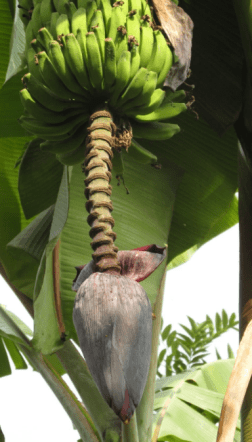
There are a variety of bananas trees outside my window at different stages of growth from baby to blossoming to bunches hanging low with the weight of near-readiness.
I realize that, although we have had some initiatives related to bananas, and I get motivated to learn more every time someone on our team has proposed such an initiative (regardless of its possible zaniness), I have not personally learned enough about bananas to know: how did these trees get here? What species are they? How long is the life cycle of the tree from sprout to fruit maturity? Thanks to Ceylan Yeginsu for this idea on what to do with the blossoms:

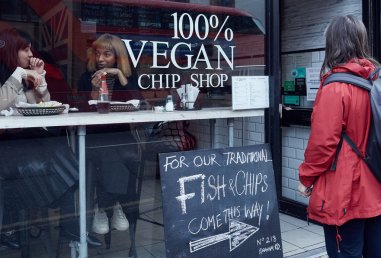
In London’s Vegan Fish-and-Chip Shop, Banana Blossoms Play Cod

merlin_144816903_a4ed189f-7baa-417a-b130-f0a167787069-jumboLONDON — A newly opened restaurant in an East London neighborhood is aiming to make waves by serving what looks like the perfect presentation of fish and chips, that quintessential British dish: a piece of glistening plump batter, chunky chips, mushy peas and a slice of lemon.

But one major ingredient is missing.

“There’s no fish in our ‘fish,’ ” says Daniel Sutton, a fishmonger and restaurateur who opened what he says is London’s first stand-alone “vegan fish” and chips restaurant, Sutton and Sons, in Hackney this week.

merlin_144817173_ba1454ed-9bc8-4be7-ac2f-2dec75e6d337-jumbo.jpg

Diners enjoying lunch on Thursday at the shop, where vegans could not seem to get enough of the fake fish. Credit Olivia Harris for The New York Times

For lovers of succulent fried cod, that concept may be hard to grasp.

“What do you mean there is no fish?” Christopher Haddon asked the restaurant’s manager with a puzzled expression on Thursday. He seemed confused and left the restaurant, or chippie, shaking his head.

Vegans, however, could not get enough of the fake fish.

“It’s amazing, delicious. Mmmmm,” said Dan Margetts, 53, as he took a bite. “It’s the same look and texture but less oily, cleaner — and no ammonia.” Continue reading