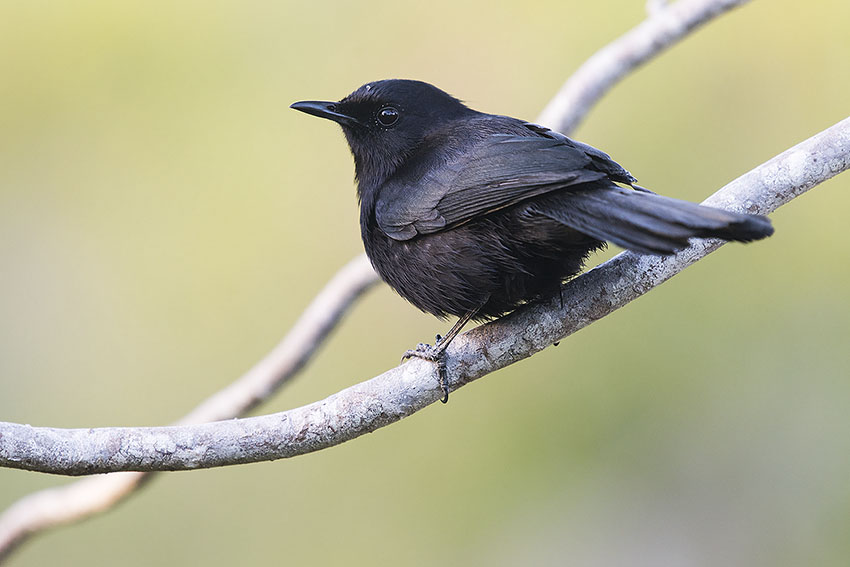
Punta Allen, Mexico
Peacock Spiders!
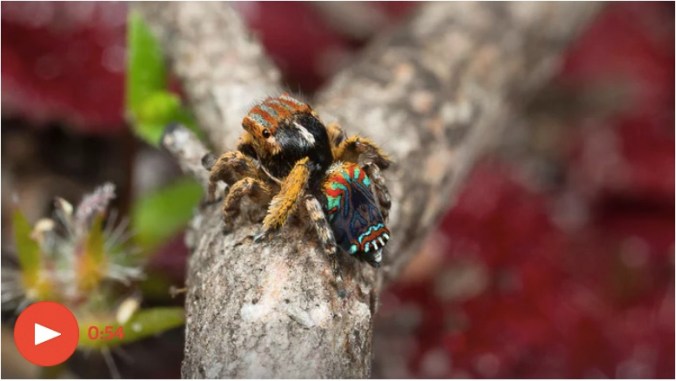
New peacock spider species filmed in Western Australia – video
Thanks to the Guardian for this reminder that nature is generous, bestowing vibrant colors in the most unexpected places:
Biologist Jürgen Otto and colleagues have named two species of the extraordinarily colourful dancing spiders
It is only a few millimetres in size, performs a dance as part of a courtship ritual and has striking coloured markings on its back that “look like a pharaoh’s headdress”.
But when biologist Jürgen Otto first spotted the peacock spider species he has named Maratus unicup, he didn’t immediately recognise how special it was.
Bird of the Day: Red-shouldered Hawk
Rehoboth, Massachusetts, USA
Latinovegan

Pesto and pulled jackfruit tacos. In Southern California, working-class Mexican-American chefs are giving traditionally meaty dishes a vegan spin. Evi Oravecz/Green Evi/Picture Press/Getty Images
We are happy to see another story posted by Gustavo Arellano in the salt files at National Public Radio (USA):
Carne Asada, Hold The Meat: Why Latinos Are Embracing Vegan-Mexican Cuisine
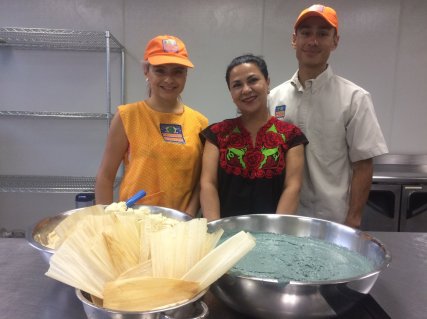
Loreta Ruiz (center) runs La Vegana Mexicana, a food pop-up based in Southern California, with her children, Loreta Sierra (left) and Luis Sierra. Gustavo Arellano/for NPR
Tall, dreadlocked Josh Scheper knew he was out of place as he surveyed the scene at a Santa Ana, Calif., parking lot on a Sunday morning this past April. And the 46-year-old loved it.
Hundreds of people waited in line at stalls for vegan food, but few people looked like the Los Angeles resident. Nearly everyone in the crowd was young and Latino, as were the chefs. The food on sale was Mexican — but not hippie-dippy cafe standbys like cauliflower tacos, or tempeh-stuffed burritos. Instead, chefs reimagined meaty classics that were honest-to-goodness bueno. Continue reading
Bird of the Day: Long-tailed Sibia

Nagaland, India
Join The Butterfly Count
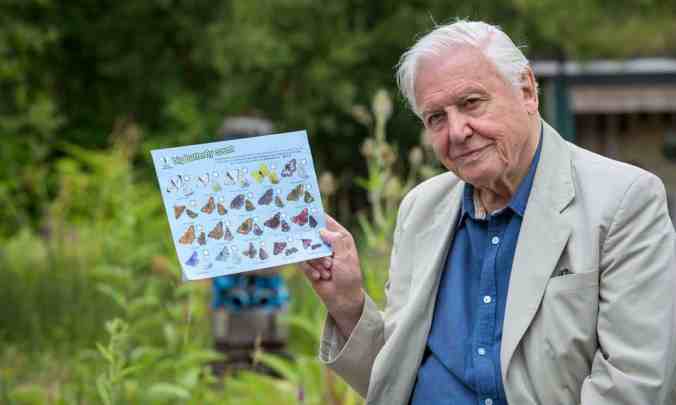
Sir David Attenborough launching the Big Butterfly Count in July 2017. Photograph: Butterfly Conservation/PA
Thanks to the Guardian for bringing this to our attention:
Sir David Attenborough urges British public to join butterfly count
Veteran broadcaster encourages people to take part in Big Butterfly Count and highlights mental health benefits of wildlife
Watching nature provides “precious breathing space” from the stress of modern life, Sir David Attenborough has said, as he urges people to take part in the world’s biggest butterfly count.
While the UK’s butterflies are basking in the best summer conditions in more than a decade, if the hot weather becomes a drought it could be catastrophic for the insects as plants wither and caterpillars starve.
The public are being encouraged to take part in the Big Butterfly Count over the next three weeks to help experts see how butterflies are faring and to enjoy the mental health benefits of watching wildlife. Continue reading
Bird of the Day: Comb-crested Jacana
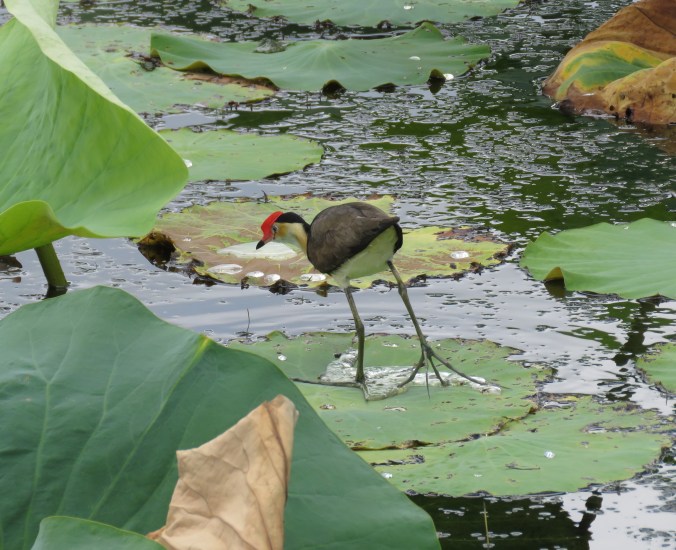
Kakadu National Park, Northern Territory, Australia
Plastic Straws Going, Going, Gone

Marriott International became the latest company to announce it will stop using plastic straws, saying it would remove them from its more than 6,500 properties by next July. Justin Sullivan/Getty Images
We did not foresee the straw revolution gaining such momentum so quickly. But we are certainly happy to see it going mainstream, going global, going company-wide:
The days of plastic straws are drawing shorter.
Marriott International on Wednesday became the latest big company to announce it will stop using plastic straws, saying it would remove them from its more than 6,500 properties by next July. The giant hotel chain said it will stop offering plastic stirrers, too.
It said the environmentally friendly move could eliminate the use of more than 1 billion plastic straws and about 250 million stirrers per year. Marriott said its hotels will “offer alternative straws upon request.” Continue reading
Bird of the Day: Scott’s Oriole

Baja California Sur, Mexico
A Taste Of The Place

llustration by Rebecca Mock
Adam Davidson recounts the best sandwich he ever ate—a local specialty of the ancient city of Aleppo, Syria—and Dan Pashman sets out to re-create it.

Uptown Funk
In the last couple of months, Amie and I have focused on how to more effectively evoke the taste of a place. We have specifically been thinking about the future of a family dairy farm in Costa Rica. Click the image above to hear, in just under one hour, a story told by a few people we admire about how important taste can be to our experience of a place.
In addition to dairy, which is a shorter term initiative, we have been working with coffee for some years. All those years have been beta, which has worked well as a complement to our hospitality projects. Now we are preparing to go from beta to live. And that description of a sandwich in Aleppo, and the obsessional hunt to ensure that its very particular culinary heritage is not lost, is a motivational tipping point to get that coffee to your kitchen sooner.
We have tasted coffee from one of the regions of Costa Rica that gets less attention than others. And we have tasted the “natural” form of this coffee, which has very little in common with the monsooning accidental innovation in India but gives us a new way to enjoy coffee. And we have tried chilling it. Wow. We’re calling it Uptown Funk. Hopefully you can try it soon.
Bird of the Day: Egyptian Vulture
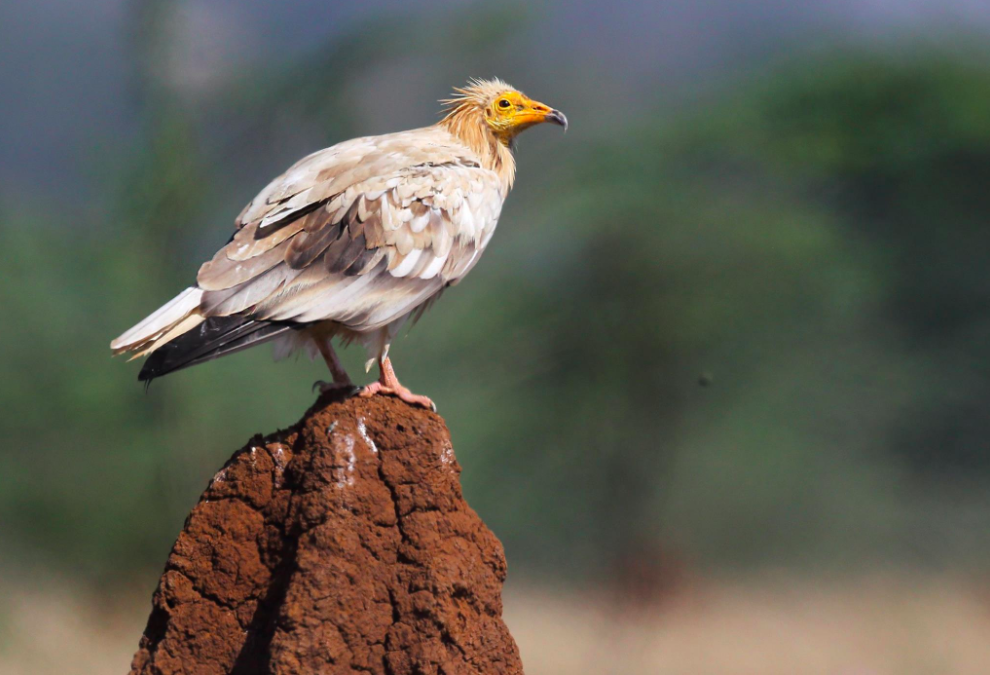
Bangalore, Karnataka
The Footprint Of Our Data-Driven Lives
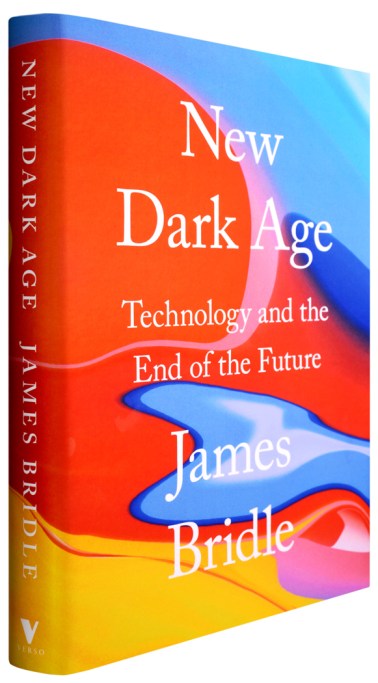 Thanks to John Harris, writing in the Guardian, for “Our phones and gadgets are now endangering the planet,” an opinion essay that doubles as a review of the book to the right:
It was just another moment in this long, increasingly strange summer. I was on a train home from Paddington station, and the carriage’s air-conditioning was just about fighting off the heat outside. Most people seemed to be staring at their phones – in many cases, they were trying to stream a World Cup match, as the 4G signal came and went, and Great Western Railway’s onboard wifi proved to be maddeningly erratic. The trebly chatter of headphone leakage was constant. And thousands of miles and a few time zones away in Loudoun County, Virginia, one of the world’s largest concentrations of computing power was playing its part in keeping everything I saw ticking over, as data from around the world passed back and forth from its vast buildings.
Most of us communicate with this small and wealthy corner of the US every day. Thanks to a combination of factors – its proximity to Washington DC, competitive electricity prices, and its low susceptibility to natural disasters – the county is the home of data centres used by about 3,000 tech companies: huge agglomerations of circuitry, cables and cooling systems that sit in corners of the world most of us rarely see, but that are now at the core of how we live. About 70% of the world’s online traffic is reckoned to pass through Loudoun County. Continue reading
Bird of the Day: Great Blue Heron
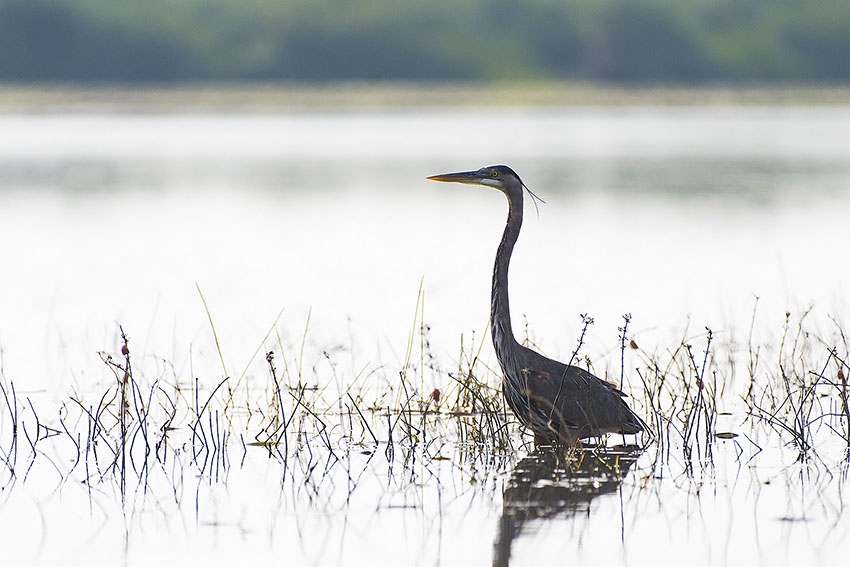
Crooked Tree, Belize
Last Resort Waste Management
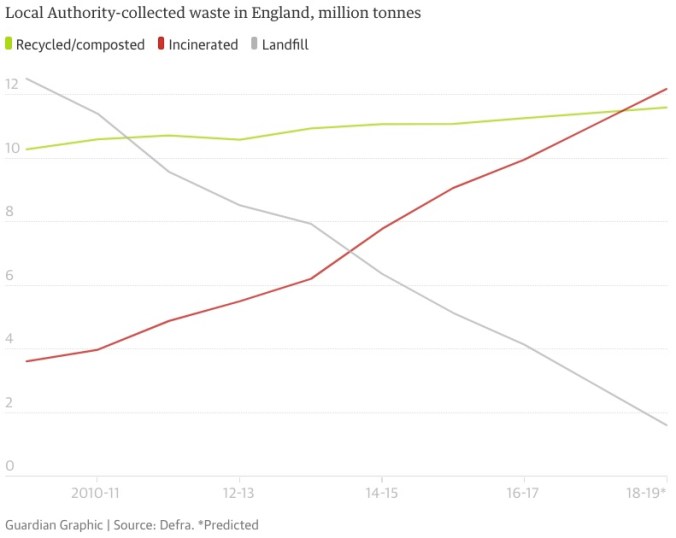
In our sustainable hospitality practice we do from time to time think of incineration as an option worthy of consideration. Especially in India, where waste management is at a completely different stage of development, we thought about it quite seriously. But in the UK, it is clearly not the first best option. If you want to learn a thing or two about waste management, a few minutes with this article will be worth your while:
Waste incineration set to overtake recycling in England, Greens warn
Amount of rubbish burned by local authorities triples while household recycling rates stall
Full recycling bins on pavement in Bristol. Photograph: Matt Cardy/Getty Images
England is on the brink of burning more of its rubbish in incinerators than it recycles for the first time, according to a new analysis.
The amount of waste managed by local authorities and sent to incinerators, or energy-from-waste plants, tripled between 2010-11 and 2016-17. By contrast, household recycling rates have stalled since 2013.
If those trends continue, the millions of tonnes of waste incinerated will overtake the amount sent for recycling by the end of the current financial year, a report by the Green party found. Continue reading

Bird of the Day: New Zealand Grebe

Outskirts of Auckland, New Zealand
Rewilding Croatia’s Velebit Mountains
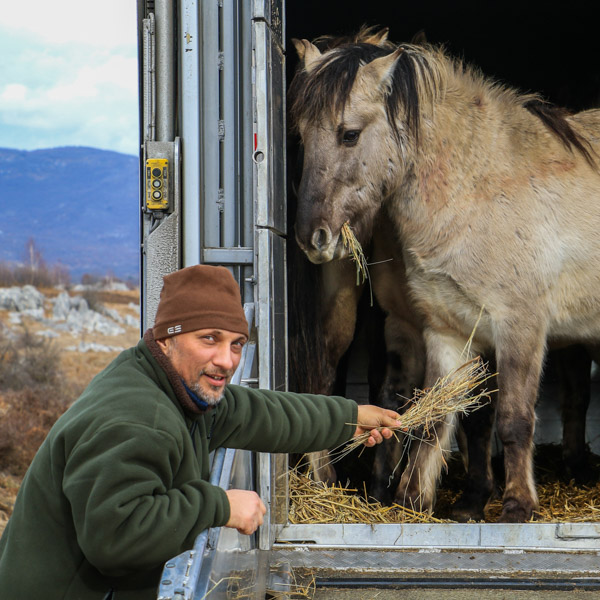
Davor Krmpotić
Team leader of Velebit Mountains
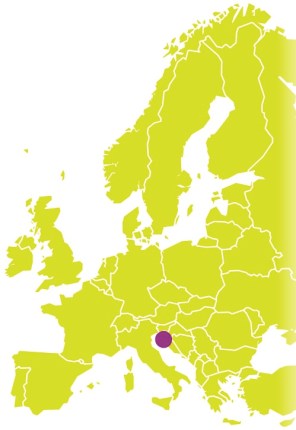 Croatia, playing in its first World Cup final today, makes this rewilding story from the Velebit Mountains, and interview with its team leader, timely:
This dramatic mountain chain, right on the Adriatic coast in Croatia, is one of the wildest areas of the whole Mediterranean. A region where wild nature is really coming back.
Velebit is one of the most important natural areas in the Balkans and situated on the Adriatic coast of Croatia. It hosts two national parks, a biosphere reserve and several wonderful old-growth forests, deep canyons, ancient open lands and exciting wildlife like Balkan chamois, red deer, brown bear, wolf and lynx…
Velebit hosts a diversity of habitats
How would you characterise your rewilding area?
Velebit is one of the most important natural areas in the Balkans. The area hosts an extraordinary diversity of different habitats, from barren Mediterranean landscapes at sea level, via vast beech forest of central European type, to almost boreal systems and alpine grasslands at higher altitudes. Outside protected areas in the south and east there are several other very interesting areas also with great rewilding potential, mainly consisting of abandoned farm and grazing lands. Apart from its fantastic wildlife, Velebit is also a climber’s paradise, home to spectacular caves and breathtaking sceneries. Continue reading
Rewild The Uplands?
 Intelligence Squared has an app that allows you to listen to their debates and lectures at your own convenience, on your phone or wherever, whenever you choose. If, like us, you have found the rewilding debate interesting, this is one you will want to listen to:
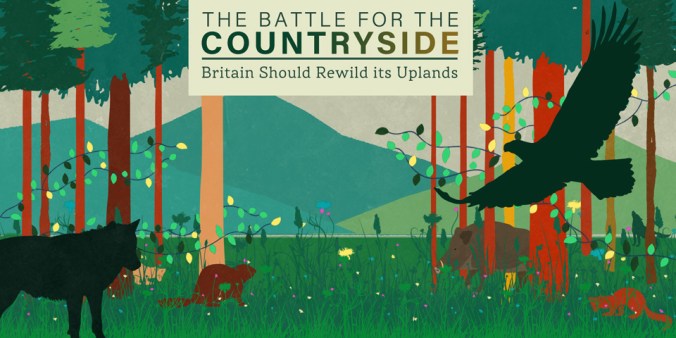
THE BATTLE FOR THE COUNTRYSIDE: BRITAIN SHOULD REWILD ITS UPLANDS
Imagine if swathes of the British countryside were allowed to be wild once again, if trees and rare plants could flourish and beavers, boars and white-tailed eagles could retake their place in the ecosystem. That’s the goal of the growing numbers of nature-lovers who support the idea of rewilding Britain’s uplands. We tend to think of these uplands as ‘wild’ and ‘natural’. But in fact, as the rewilders point out, they are entirely man-made, the result of clearances by man to make way for millions of sheep whose grazing over the last 200 years has rendered the land bare. Continue reading
Bird of the Day: White-rumped Shama
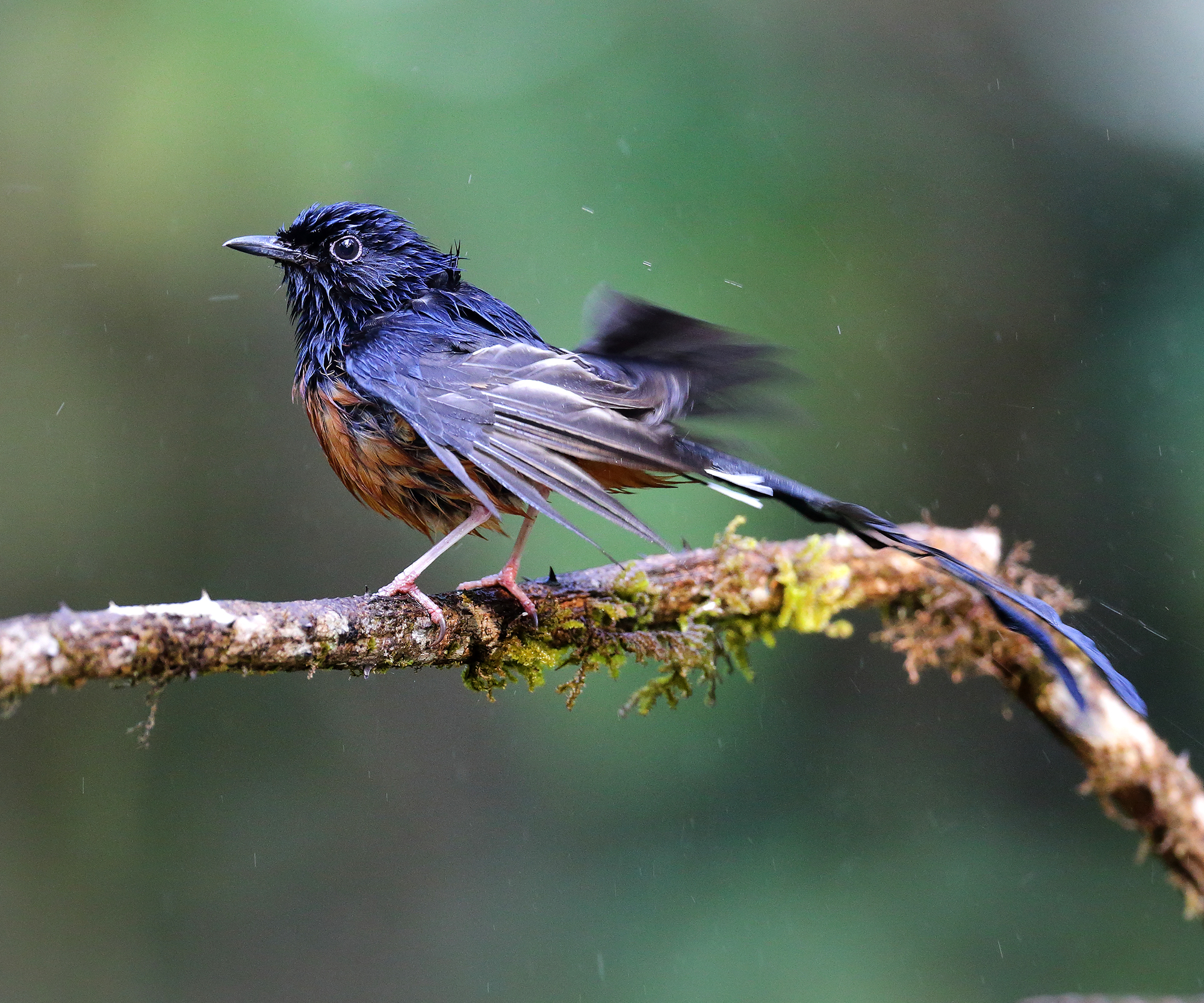
Western Ghats, India
Valorizing Places And Things We Love
One decade ago I made the journey to Rapa Nui while on an extended project in southern Chile. It was another bit of fortune that came with the occupation I accidentally found myself in. The video above, excerpted by the Atlantic from Max Lowe’s film, hints at the value tourism can infuse, as well as the perils it can represent, with regard to cultural heritage. We have long used the archaic word “valorization” to explain what we do as a company and the Celine Cousteau Film Fellowship seems to believe the same, in supporting Max’s film:
Tourism to a Dying Ancient Culture
“The modern world has come for our little island,” says Heu Rapu Haoa in Max Lowe’s short documentary, Amo. Heu is one of the 800 remaining speakers of his native tongue. His home, Rapa Nui, known widely as Easter Island, is one of the most remote inhabited islands in the world. Continue reading
Bird of the Day: Green Pygmy-goose

Kakadu National Park, Northern Territory, Australia
 Organikos