
Keoladeo National Park, Rajasthan
Keoladeo National Park, Rajasthan
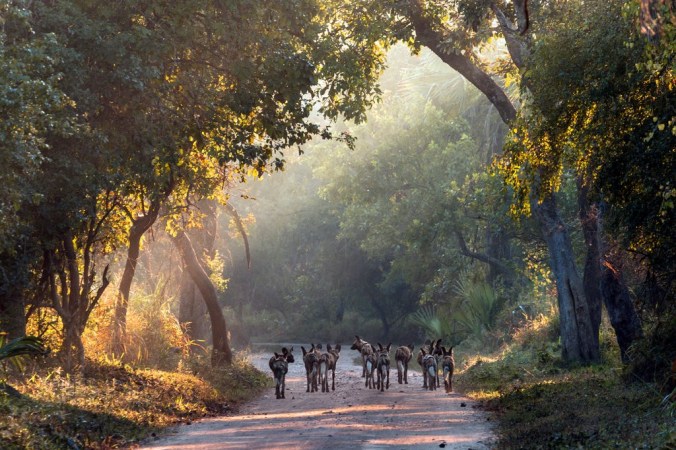
Wild dogs, apex predators missing from Gorongosa National Park for decades, have been reintroduced and are slowly making a comeback, part of an ongoing experiment in reviving the park ecosystem after years of devastating war. Credit Brett Kuxhausen/Gorongosa Media, via Associated Press
Thanks to one of our favorite science writers, the ever-optimistic Natalie Angier, for this note of hope:
In Mozambique, a Living Laboratory for Nature’s Renewal
At Gorongosa National Park, scarred by civil war, scientists are answering fundamental questions about ecology and evolution, and how wildlife recovers from devastation.
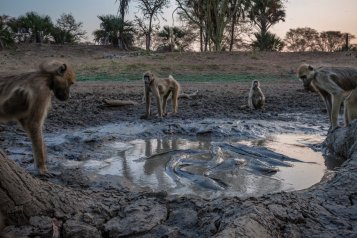
Baboons and sharptooth catfish in the Mussicadzi River in the park during the dry season. The baboons in Gorongosa are brazen and plentiful, as there aren’t many leopards to keep them in check. Credit Piotr Naskrecki & Jen Guyton/NPL/Minden Pictures
GORONGOSA NATIONAL PARK, MOZAMBIQUE — The 14 African wild dogs were ravenous, dashing back and forth along the fence of their open-air enclosure, or boma, bouncing madly on their pogo-stick legs, tweet-yipping their distinctive wild-dog calls, and wagging their bushy, white-tipped tails like contestants on a game show desperate to be seen.
Since arriving at the park three months earlier, as they acclimated to their new setting and forged the sort of immiscible bonds that make Lycaon pictus one of the most social mammals in the world, the dogs had grown accustomed to a daily delivery of a freshly killed antelope to feast on. Continue reading
male – Baja California Sur, Mexico

Is the evidence for fish-eating better than simply taking a fish oil pill? Composite: Getty
Paul Greenberg, author of The Omega Principle: Seafood and the Quest for a Long Life and a Healthier Planet (Penguin Press), is making the rounds with an important argument; get the short version here in the Guardian:
Fool’s gold: what fish oil is doing to our health and the planet
Omega-3 is one of our favourite supplements – but a huge new study has found it has little or no benefit for heart health or strokes. How did it become a $30bn business?
The omega-3 industry is in a twist. Again. Last week, Cochrane, an organisation that compiles and evaluates medical research for the general public, released a meta-analysis – a study of studies – to determine whether or not omega-3 pills, one of the world’s most popular dietary supplements, reduced the risk of coronary heart disease. After comparing 79 trials involving 112,059 people, the researchers could find “little or no difference to risk of cardiovascular events, coronary heart deaths, coronary heart disease events, stroke or heart irregularities”.
I can’t say that I was particularly surprised. Over the past 15 years, more than 20 studies have shown a similar lack of effect. But what does surprise me is how we continue to look at the world of fish and seafood through the amber lens of a fish oil capsule. Omega-3s do something in our bodies – and probably something important. But without the larger context of the marine organisms that contain them, omega-3s get lost in the noise of human metabolism and modern marketing.
Continue reading

Tawharanui Peninsula, New Zealand
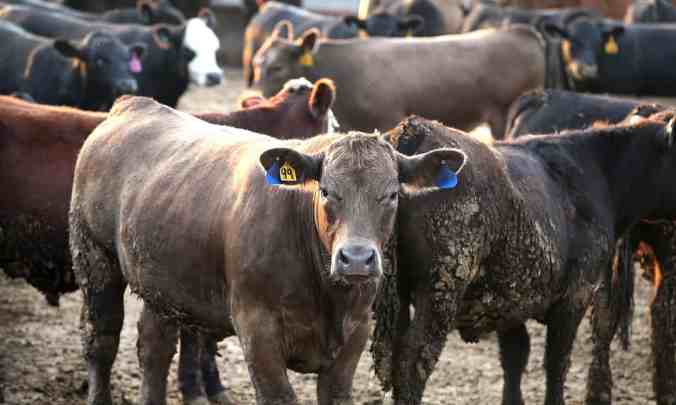
Replacing 50% of meat consumption with a vegetarian diet would push back the overshoot date by five days. Photograph: Scott Olson/Getty
Our vegetarian diet ambitions are strengthening for all kinds of reasons. Footprint reduction among them. Thanks to our colleague Mathis Wackernagel for his regular reminders of the anything but regular footprint growth humanity imposes on the planet each year:
Earth’s resources consumed in ever greater destructive volumes
Study says the date by which we consume a year’s worth of resources is arriving faster
Humanity is devouring our planet’s resources in increasingly destructive volumes, according to a new study that reveals we have consumed a year’s worth of carbon, food, water, fibre, land and timber in a record 212 days.
As a result, the Earth Overshoot Day – which marks the point at which consumption exceeds the capacity of nature to regenerate – has moved forward two days to 1 August, the earliest date ever recorded.
Earth Overshoot Day falls on 1 August this year – marking the point at which consumption exceeds the capacity of nature to regenerate
Guardian graphic. Source: Overshootday.org
To maintain our current appetite for resources, we would need the equivalent of 1.7 Earths, according to Global Footprint Network, an international research organisation that makes an annual assessment of how far humankind is falling into ecological debt. Continue reading

Andaman Islands, India

CIRO DE LUCA / REUTERS
We have plenty of reasons to celebrate the vegans among us. But we committed to think about this dairy’s future and in doing so I have avoided the cow-versus-other-milk health implications. Now I have reason to reconsider:
The Vindication of Cheese, Butter, and Full-Fat Milk
A new study exonerates dairy fats as a cause of early death, even as low-fat products continue to be misperceived as healthier.
As a young child I missed a question on a psychological test: “What comes in a bottle?”
The answer was supposed to be milk. Continue reading
Punta Allen, Mexico
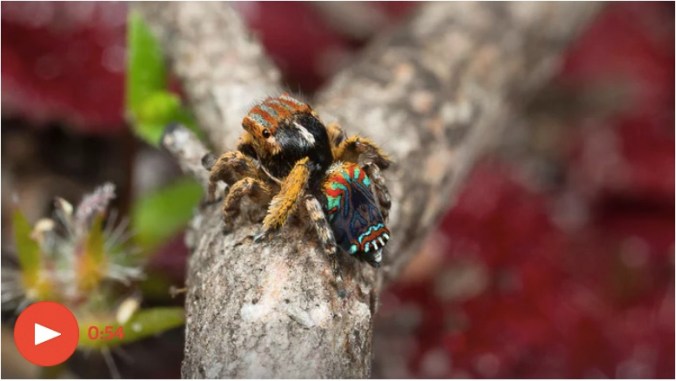
New peacock spider species filmed in Western Australia – video
Thanks to the Guardian for this reminder that nature is generous, bestowing vibrant colors in the most unexpected places:
Biologist Jürgen Otto and colleagues have named two species of the extraordinarily colourful dancing spiders
It is only a few millimetres in size, performs a dance as part of a courtship ritual and has striking coloured markings on its back that “look like a pharaoh’s headdress”.
But when biologist Jürgen Otto first spotted the peacock spider species he has named Maratus unicup, he didn’t immediately recognise how special it was.
Rehoboth, Massachusetts, USA
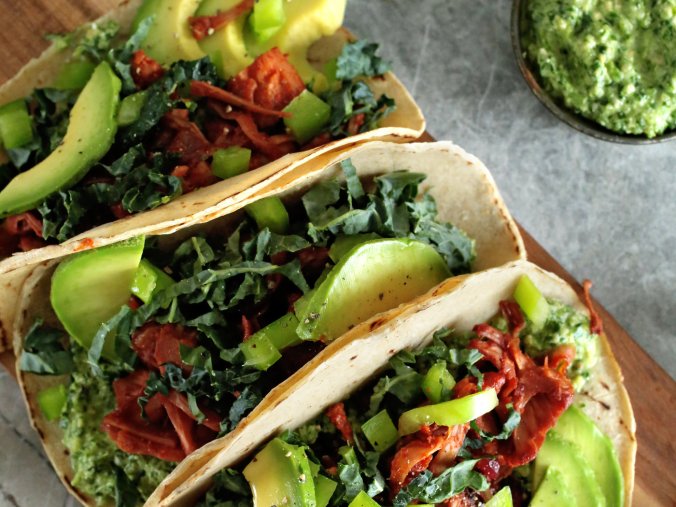
Pesto and pulled jackfruit tacos. In Southern California, working-class Mexican-American chefs are giving traditionally meaty dishes a vegan spin. Evi Oravecz/Green Evi/Picture Press/Getty Images
We are happy to see another story posted by Gustavo Arellano in the salt files at National Public Radio (USA):
Carne Asada, Hold The Meat: Why Latinos Are Embracing Vegan-Mexican Cuisine
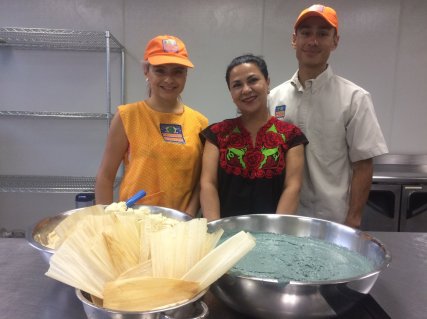
Loreta Ruiz (center) runs La Vegana Mexicana, a food pop-up based in Southern California, with her children, Loreta Sierra (left) and Luis Sierra. Gustavo Arellano/for NPR
Tall, dreadlocked Josh Scheper knew he was out of place as he surveyed the scene at a Santa Ana, Calif., parking lot on a Sunday morning this past April. And the 46-year-old loved it.
Hundreds of people waited in line at stalls for vegan food, but few people looked like the Los Angeles resident. Nearly everyone in the crowd was young and Latino, as were the chefs. The food on sale was Mexican — but not hippie-dippy cafe standbys like cauliflower tacos, or tempeh-stuffed burritos. Instead, chefs reimagined meaty classics that were honest-to-goodness bueno. Continue reading

Nagaland, India
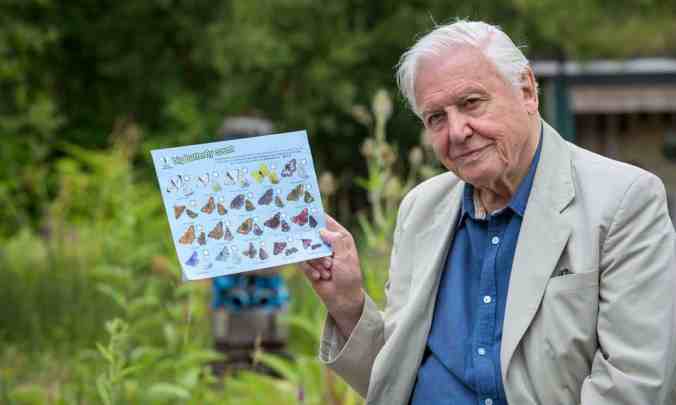
Sir David Attenborough launching the Big Butterfly Count in July 2017. Photograph: Butterfly Conservation/PA
Thanks to the Guardian for bringing this to our attention:
Sir David Attenborough urges British public to join butterfly count
Veteran broadcaster encourages people to take part in Big Butterfly Count and highlights mental health benefits of wildlife
Watching nature provides “precious breathing space” from the stress of modern life, Sir David Attenborough has said, as he urges people to take part in the world’s biggest butterfly count.
While the UK’s butterflies are basking in the best summer conditions in more than a decade, if the hot weather becomes a drought it could be catastrophic for the insects as plants wither and caterpillars starve.
The public are being encouraged to take part in the Big Butterfly Count over the next three weeks to help experts see how butterflies are faring and to enjoy the mental health benefits of watching wildlife. Continue reading

Kakadu National Park, Northern Territory, Australia

Marriott International became the latest company to announce it will stop using plastic straws, saying it would remove them from its more than 6,500 properties by next July. Justin Sullivan/Getty Images
We did not foresee the straw revolution gaining such momentum so quickly. But we are certainly happy to see it going mainstream, going global, going company-wide:
The days of plastic straws are drawing shorter.
Marriott International on Wednesday became the latest big company to announce it will stop using plastic straws, saying it would remove them from its more than 6,500 properties by next July. The giant hotel chain said it will stop offering plastic stirrers, too.
It said the environmentally friendly move could eliminate the use of more than 1 billion plastic straws and about 250 million stirrers per year. Marriott said its hotels will “offer alternative straws upon request.” Continue reading

Baja California Sur, Mexico
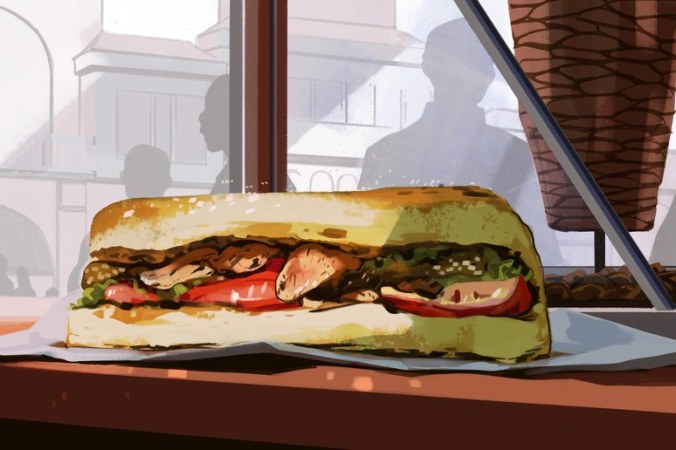
llustration by Rebecca Mock
Adam Davidson recounts the best sandwich he ever ate—a local specialty of the ancient city of Aleppo, Syria—and Dan Pashman sets out to re-create it.
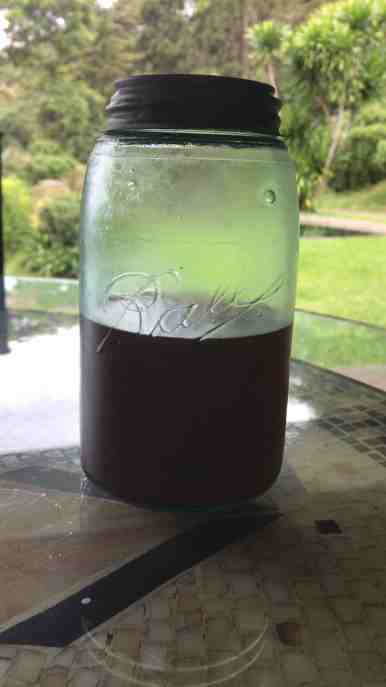
Uptown Funk
In the last couple of months, Amie and I have focused on how to more effectively evoke the taste of a place. We have specifically been thinking about the future of a family dairy farm in Costa Rica. Click the image above to hear, in just under one hour, a story told by a few people we admire about how important taste can be to our experience of a place.
In addition to dairy, which is a shorter term initiative, we have been working with coffee for some years. All those years have been beta, which has worked well as a complement to our hospitality projects. Now we are preparing to go from beta to live. And that description of a sandwich in Aleppo, and the obsessional hunt to ensure that its very particular culinary heritage is not lost, is a motivational tipping point to get that coffee to your kitchen sooner.
We have tasted coffee from one of the regions of Costa Rica that gets less attention than others. And we have tasted the “natural” form of this coffee, which has very little in common with the monsooning accidental innovation in India but gives us a new way to enjoy coffee. And we have tried chilling it. Wow. We’re calling it Uptown Funk. Hopefully you can try it soon.
Bangalore, Karnataka
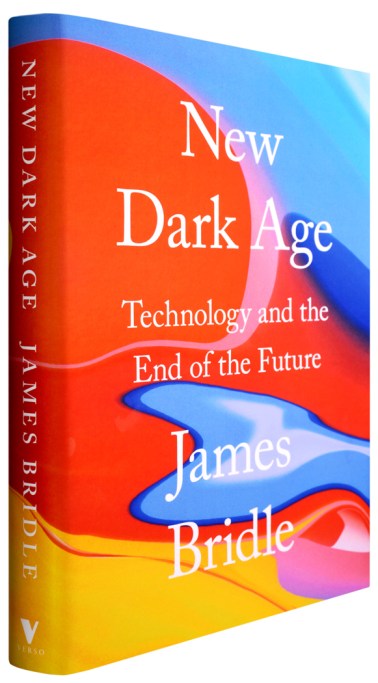 Thanks to John Harris, writing in the Guardian, for “Our phones and gadgets are now endangering the planet,” an opinion essay that doubles as a review of the book to the right:
It was just another moment in this long, increasingly strange summer. I was on a train home from Paddington station, and the carriage’s air-conditioning was just about fighting off the heat outside. Most people seemed to be staring at their phones – in many cases, they were trying to stream a World Cup match, as the 4G signal came and went, and Great Western Railway’s onboard wifi proved to be maddeningly erratic. The trebly chatter of headphone leakage was constant. And thousands of miles and a few time zones away in Loudoun County, Virginia, one of the world’s largest concentrations of computing power was playing its part in keeping everything I saw ticking over, as data from around the world passed back and forth from its vast buildings.
Most of us communicate with this small and wealthy corner of the US every day. Thanks to a combination of factors – its proximity to Washington DC, competitive electricity prices, and its low susceptibility to natural disasters – the county is the home of data centres used by about 3,000 tech companies: huge agglomerations of circuitry, cables and cooling systems that sit in corners of the world most of us rarely see, but that are now at the core of how we live. About 70% of the world’s online traffic is reckoned to pass through Loudoun County. Continue reading

 Organikos