Resilience, Greece & Reasonable Questions

3543.jpg

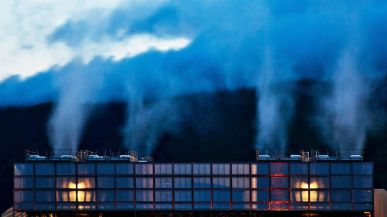
Tourism is Greece’s biggest foreign currency earner. Photograph: Costas Baltas/Reuters

Nearly forty years ago I was in Greece for the second time. I accompanied my mother on a visit to the village where she was born and had lived until her teens. We had spent an extended period in that village ten years earlier, and into my child’s mind it had imprinted vivid memories that, by 1979, were as fresh as the smell of bread baking in the stone oven of that village home. And now, that re-visit with my mother is as vivid as can be, and even has a sound track. That album had just been released and someone in the village had a cassette tape of it, and it played from the sound system of a Volkswagen Beetle, doors open, as we had a meal overlooking the mountains.

I have had one opportunity to bring to Greece the sustainable tourism development tools I have been working with since the mid-1990s. This recent story in the Guardian, too short to truly appreciate the scale of the questions raised, is a welcome reminder to me of the work to be done in a place I care deeply about.

Greece tourism at record high amid alarm over environmental cost

With 32 million visitors expected this year, fears grow that the country cannot cope

Greece is braced for another bumper year. The tourists will not stop coming. For every one of its citizens, three foreign visitors – 32 million in total – will arrive this year, more than at any other time since records began.

It’s an extraordinary feat for a country that has battled with bankruptcy, at times has been better known for its protests and riots and, only three years ago, narrowly escaped euro ejection. Tourism is the heavy industry that has helped keep catastrophe at bay.

But is Greece almost too successful for its own good? Tourist numbers have increased by an additional two million every year for the past three years. Arrivals from China alone have doubled since 2017. But with forecasts predicting record numbers over the next decade, a growing number are asking: can Greece really cope? Continue reading
Not Pretty, But Pretty Amazing

Burdick-Stick-Insects.jpg

A surprising reproductive strategy could help to explain how stick insects—which are eaten by birds and don’t lay a lot of eggs—have managed to persist from generation to generation. Photograph by Education Images / UIG via Getty

Another day, another short-form wonder, thanks to Alan Burdick. His pieces are short, but to the point on topics we care about on this platform:

Why Stick Insects Might Be Into Birds Eating Their Kids

Stick insects make a certain amount of sense, evolutionarily speaking. They look like sticks, or twigs, or leaves; thus camouflaged, they presumably have a better chance of avoiding predators, reproducing, and passing on their stick-resemblance genes to their offspring. Except that birds still eat them, a lot. Stick insects don’t run fast, most don’t fly, and the females typically don’t lay eggs in large numbers. So there’s a mystery: How do they manage to persist from generation to generation? Why, having managed to exist, do they continue to do so? Continue reading

The Spoon, The Fork & The Hand

Goldfield-Spoons.jpg

Photograph by Francis Amiand / Spoon /Pointed Leaf Press

Hannah Goldfield, in this short piece about the spoon, reminds me that Bee Wilson’s book about the fork came to my attention about three years into our Kerala, India experience. I tend to favor stories about the history of something taken for granted. When it is involves foodways, I’m in. Five years ago, when that book came out, I was firmly entrenched in a new way of eating, namely with my right hand and no utensils. Today, reading about the spoon, I can relate to the author’s preference because, given the choice between spoon and fork I will choose the former. Given the choice between a meal that favors one or the other, I will choose the spoon-forward meal. But if I am somewhere eating something that hands-on is okay, keep the spoon and fork off the table.

In Praise of Eating Almost Anything with a Spoon

The introduction to the most recent version of Emily Post’s Table Setting Guides includes the following mandate: “Only set the table with utensils you will use. No soup; no soup spoon.” Sounds pretty reasonable, as far as Emily Post rules go, but I beg to differ. Who says that soup spoons are only for soup, or should even be called soup spoons at all? I have long admired the way utensils are used in parts of Southeast Asia, including Thailand: the spoon is the most important instrument, held in the dominant hand and used to bring food—soupy or otherwise—to the mouth; the fork plays a supporting role, used only to push morsels onto the spoon, and chopsticks are generally reserved for noodles. I’ve been eating Thai food this way ever since I learned about the custom, dipping spoonfuls of rice into coconut curries, herding green-papaya salad, spangled with peanuts, chili, and tiny dried shrimp, into the curvature of a spoon. It feels elegant, efficient, economical—nary a drop or a morsel is wasted. Continue reading

David Attenborough Memoir Has A Captive Audience Here

9781473665958There is a reason why David Attenborough is the name that appears most frequently in these pages over the last seven years. So how did I miss this publication date nine months ago? Now there are several reviews and I am just late to the table. Nevermind that. Just read some of what Frans de Waal, the most recent reviewer, has to say:

The soothing, authoritative voice of David Attenborough has become such a widely recognized feature of nature documentaries that there are now all sorts of spinoffs. Funny animations show gorillas munching on leaves while gossiping about their encounter with the pith-helmeted explorer. Spoof documentaries of our species’ mating rituals show young men drinking beer in a Canadian bar while Attenborough’s voice-over notes that “the air is heavy with the scent of females.” In my classes at Emory University, I show so many snippets of BBC documentaries that I need to warn students that not all of our knowledge about animal behavior comes from this omnipresent talking gentleman. He is just the narrator.

03De-Waal-superJumbo

David Attenborough searching for armadillos. Photograph from David Attenborough

But “just” doesn’t do justice to his role, because Attenborough co-wrote the programs and the insertion of his persona into almost every scene is deliberate. It is the key to the success of “Life on Earth,” “The Blue Planet,” “Planet Earth” and all those other BBC nature series we love. It all started with a 1950s television program featuring animals from the London Zoo. The animals were brought into a studio, where the famous biologist Julian Huxley handled them while explaining their anatomy, habits and special skills. The occasional escapes and other mishaps on this live program greatly contributed to its entertainment value. Continue reading

Reducing Our Intake Is The Only Answer

3829

Cattle at an illegal settlement in the Jamanxim National Forest, state of Para, northern Brazil, November 29, 2009. With 1,3 million hectares, the Jamanxim National Forest is today a microsm that replicates what happens in the Amazon, where thousands of hectares of land are prey of illegal woodcutters, stock breeders and gold miners. Photograph: Antonio Scorza/AFP/Getty Images

The argument made below by Damian Carrington, the Guardian’s Environment editor, is one nobody can hide from. We are not. Contributors on this platform have been reducing our intake of these forms of calories over the last couple years. We can report on its not being as difficult as it may sound at first to carnivores, ice cream aficionados and milk-drinkers. We are down some 40% and pushing the envelope further as fast as we can. It is not enough, relative to what these numbers say:

Avoiding meat and dairy is ‘single biggest way’ to reduce your impact on Earth

Biggest analysis to date reveals huge footprint of livestock – it provides just 18% of calories but takes up 83% of farmland

Avoiding meat and dairy products is the single biggest way to reduce your environmental impact on the planet, according to the scientists behind the most comprehensive analysis to date of the damage farming does to the planet. Continue reading

Can You Top This Birding Experience?

31WARBLERS-jumbo.jpg

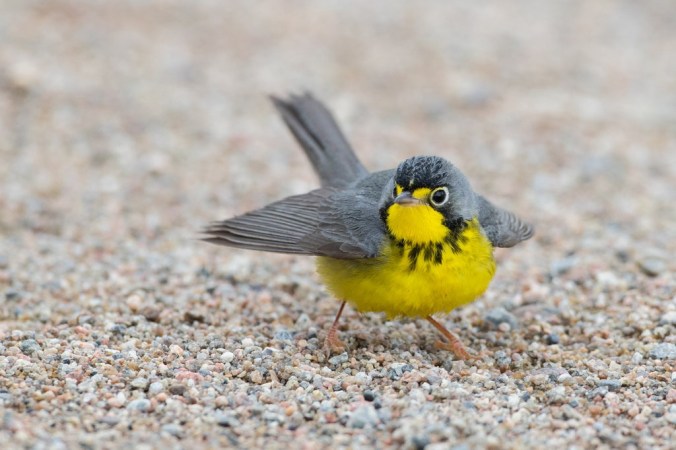
A Canada warbler. Credit Ian Davies

We have wow posts about birds all the time, but this one will have to take the cake, for now:

A River of Warblers: ‘the Greatest Birding Day of My Life’

At an observatory in Quebec, they were hoping for a 50,000-bird day. They saw more than half a million.

By James Gorman

Ian Davies got hooked on birds when he was 12. He went to a site near Plymouth, Mass., where volunteers were putting bands on migrating birds.

“They let me release a Canada warbler,” he said, “and that was just game over.”

On Monday, he saw an estimated 700,000 warblers and set the birding world all atwitter with a posting on the site eBird describing the astonishing event. Continue reading

Renewables In Our Midst

Facebook_Odense_Heat-Recovery_vFINAL_web

When it opens in 2020, Facebook’s new data center in Odense, Denmark will channel its waste heat to warm nearly 7,000 homes. FACEBOOK

Thanks to Nicola Jones and colleagues at Yale Environment 360 for this:

Waste Heat: Innovators Turn to an Overlooked Renewable Resource

Nearly three-quarters of all the energy produced by humanity is squandered as waste heat. Now, large businesses, high-tech operations such as data centers, and governments are exploring innovative technologies to capture and reuse this vast renewable energy source.

HeatHaze_Grangemouth-Refinery_Scotland_ChristopherFurlongGetty_web

Heat radiates from the Grangemouth Oil Refinery in Scotland. About 70 percent of all the energy produced globally gets discarded as waste heat. CHRISTOPHER FURLONG/GETTY IMAGES

When you think of Facebook and “hot air,” a stream of pointless online chatter might be what comes to mind. But the company will soon be putting its literal hot air — the waste heat pumped out by one of its data centers — to good environmental use. That center, in Odense, Denmark, plans to channel its waste heat to warm nearly 7,000 homes when it opens in 2020.

google-datacenter-places-04_Dalles-Oregon_web2

Data centers, such as Google’s facility in Dalles, Oregon, generate huge amounts of waste heat. GOOGLE

Waste heat is everywhere. Every time an engine runs, a machine clunks away, or any work is done by anything, heat is generated. That’s a law of thermodynamics. More often than not, that heat gets thrown away, dribbling out into the atmosphere. The scale of this invisible garbage is huge: About 70 percent of all the energy produced by humanity gets chucked as waste heat. Continue reading

Aspirational Recycling & Bigger Problems

20cli-aspirational-lede-superJumbo

Tony Cenicola/The New York Times

I recall reading this article by Livia Albeck-Ripka and thinking that I would like to read more from anyone who can write clearly and creatively about topics that are central to our purpose here. And so today, my wish was granted, twice. In this first one, I am introduced to a term, aspirational recycling, that I had not heard until now:

6 Things You’re Recycling Wrong

Can you recycle coffee cups or greasy pizza boxes? If you’re tossing things in the recycling bin out of sheer hope, you might be an “aspirational recycler.”

We have all done it: a greasy pizza box, a disposable coffee cup, the odd plastic bag. Sometimes, we want things to be recyclable, so we put them in the recycling bin.

Waste managers often call this wishful or aspirational recycling. But, unfortunately, putting these objects in with the rest of the recycling can do more harm than good. While rules differ in every municipality (check your local recycling website to find out what’s acceptable), we have picked out some key offenders to keep in mind.

Too many of these items will contaminate a batch of recycling. That means waste managers might not be able to find buyers for the materials — especially now that China, one of the world’s main importers of recyclable waste, has said it will reject shipments that are more than 0.5 percent impure. Contaminated loads could be sent to the landfill instead…

Same day, same publication, same author, an eye-opener for anyone who diligently follows all the rules made plain in the article above:

Your Recycling Gets Recycled, Right? Maybe, or Maybe Not

Plastics and papers from dozens of American cities and towns are being dumped in landfills after China stopped recycling most “foreign garbage.”

13cli-recycling-facility-jumbo

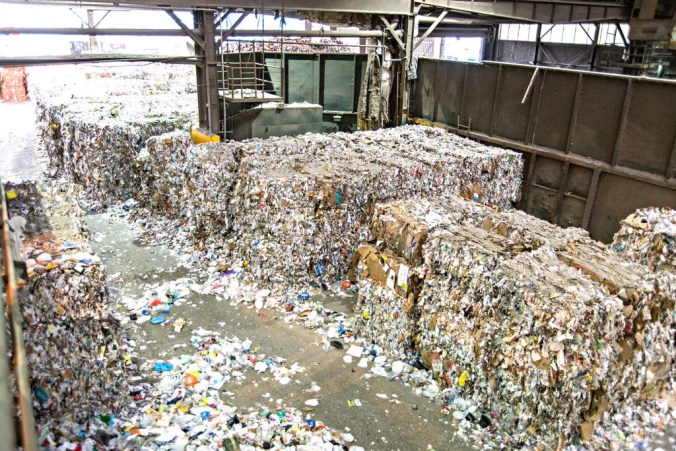
Bales of recyclable waste in Seattle. American waste managers are struggling to find plants to process their recyclables. Credit Wiqan Ang for The New York Times

Oregon is serious about recycling. Its residents are accustomed to dutifully separating milk cartons, yogurt containers, cereal boxes and kombucha bottles from their trash to divert them from the landfill. But this year, because of a far-reaching rule change in China, some of the recyclables are ending up in the local dump anyway. Continue reading

Paddlefish, Pioneers Of Sustainability

merlin_138254148_5493a279-d7d5-4f52-a071-0bbed4dab490-jumbo

Janie Osborne for The New York Times

Thanks to Jim Robbins, whose work we have appreciated not least for its culinary intrigue, but especially for the sustainability angles:

Food For Thought & Thought For Food

27stager-jumbo

Enzo Pérès-Labourdette

The food for thought is by way of Curt Stager, a professor of natural sciences, who celebrates citizen science in a powerful ominously-titled op-ed:

Why care about this new silence of the bugs? An across-the-board decline in flying insects, if true, means that an entire sector of the animal kingdom is in trouble, representing an immense diversity of life-forms, from butterflies and beetles to hoverflies and damselflies. The eminent biologist Edward O. Wilson, who has spent much of his life studying ants, has warned: “If all mankind were to disappear, the world would regenerate back to the rich state of equilibrium that existed ten thousand years ago. If insects were to vanish, the environment would collapse into chaos.”

And the thought for food is also from an op-ed:

Why You Should Be Drinking Weird Wines

By Jason Wilson

merlin_138630777_bd5bc3fe-d84f-4de8-a999-7c0568353414-superJumbo

Alicia Adamerovich

…For years, the global wine industry had been devolving toward a monoculture, with local grape varieties ripped out in favor of more immediately profitable, mass-market types. There are 1,368 known wine grape varieties, but nearly 80 percent of the world’s wine is made from just 20 kinds of grapes. Many of the rest face extinction. Continue reading