Social Media Needs Rethinking

9781250196682

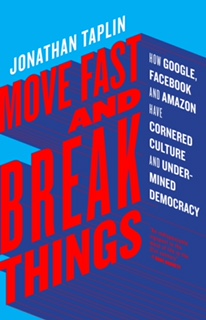
It is so freshly pressed that there are no reviews to cite yet, but the author himself previewed the ideas here, which I remember reading and thinking that his big, important thoughts would get lost in the momentary hysteria of relatively small potatoes news (Cambridge Analytica) breaking at the time:

Be a pioneer – delete Facebook

Quitting means beating the addiction, making a political statement and redefining social life. Are you ready?

3500 (4)

‘Facebook deleters are indispensable. They should be celebrated. We all benefit from them.’ Photograph: GETTY IMAGES

When I wrote an about-to-be-published book last year about problems with social media, I thought it would be cute to call it Ten Arguments for Deleting Your Social Media Accounts Right Now. And then the Cambridge Analytica scandal broke, motivating a modest but notable wave of Facebook deletions in protest, including by prominent tech figures such as Elon Musk and Brian Acton, the co-founder of WhatsApp.

So much for the novelty of my book title. The biggest surprise was not the movement to delete accounts, but that the deleters have not been received well by pundits and commentators. The response has often been smug, dismissive, even scolding. Deleters are told they are abusing their privilege; that they are leaving behind the less fortunate, who cannot afford to quit. They are said to be abandoning society or distracting from the more important process of petitioning governments to regulate Facebook. They are accused of tilting at windmills

In early 2013 an article in Smithsonian first brought my attention to Jaron Lanier, and since then we have not featured him again on this platform, which is strange. I recall last year reading a short think piece by him, and listening to him, as he promoted an earlier book and finding him very compelling. Just today, he was back in the Guardian with another one-two punch of these ideas, in the effort to promote this new book. The book’s title tells me that even though I am already a convert to the basic principle, I want to know how he explains these ten ideas. And I admit I am susceptible to publishers’ blurbs when written by someone I respect: Continue reading
Adaptation’s Appetite

merlin_138614541_c4902893-8458-4d2d-ab11-fa10c796102c-jumbo

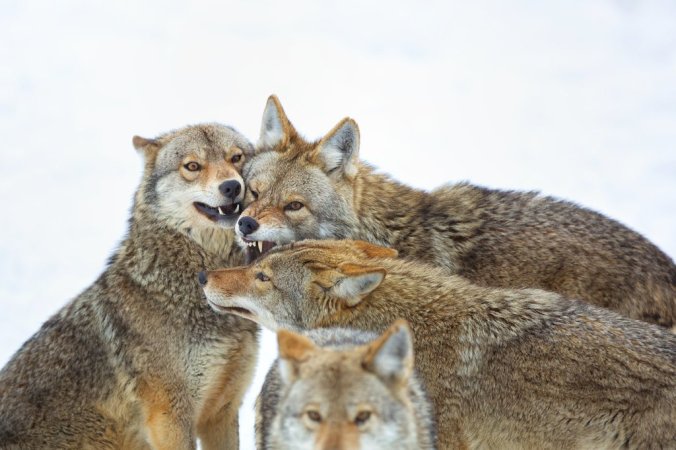
“They have to be one of the most adaptable animals on the planet,” said one ecologist who studies coyotes. Credit Perry McKenna/Getty Images

On this platform we have been in favor of celebrating conservation rather than doomsday. Science is key, but we also think entrepreneurship can be harnessed in the right direction, publicly and privately. There is not much to celebrate in the following story. The animals in the photo above, without any further details, could be granted wild beauty status. But context is everything. So we celebrate the writers who illuminate important scientific ideas, and their stories. Thanks to JoAnna Klein, who we have linked to many times (but missed this related recent story) for providing those details:

Coyotes Conquered North America. Now They’re Heading South.

New maps seek to update the historical range of our continent’s toughest canids, which have thrived as other predators experienced decline.

merlin_138614523_660b4fa1-90b1-49ed-8678-6322959a59e1-jumbo

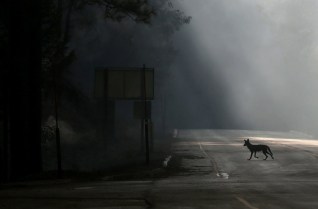
A coyote crossing U.S. Highway 120 near Groveland, Calif. Credit Justin Sullivan/Getty Images

Coyotes are excellent colonizers.

They breed fast, eat almost anything and live just about anywhere. You can find them in fields, forests, backyardsparks and even parking decks. They’re living in cities like Los AngelesNew York and Chicago. They’ve even made it to the Florida Keys and Long Island. In 2010, they crossed the Panama Canal. Now, the only thing keeping them from entering Colombia is a dense patch of forest called the Darien Gap. And camera traps have caught them heading that way. Continue reading
Bee-Saving In Costa Rica

Thanks to Rainforest Alliance, who sent its polite email asking whether we wanted to stay on their mailing list. Of course we do (but thanks for asking) because we believe in their work. And we have believed for a long time. Too long since our last post referencing them, but see this:

liz.png

Liz Paniagua, Co-founder Api-Agricultura

Introducing Costa Rican pro surfer Carlos Cortes and his partner Liz Paniagua. The husband-wife-apiarist-activist team is part of a growing movement working to save bees from the global crisis of colony collapse.

Their bee rescue organization, Api-Agricultura, works with a model Rainforest Alliance Certified banana farm in Costa Rica to save bee colonies from destruction and educate local communities about the importance of bees. By encouraging others to live in harmony with nature, Carlos and Liz exemplify the Costa Rican ethos of “pura vida.”  Continue reading
Bolivia’s Boggling Biodiversity

00MADIDI-andes-jumbo

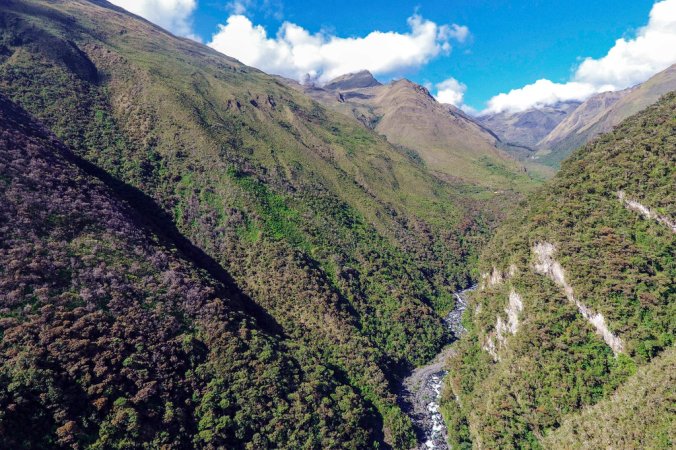
Keara valley Credit Omar Torrico/Wildlife Conservation Society

Whether or not the title is a rhetorical question does not matter; what does matter is our thanks to James Gorman, a science writer at large for The New York Times for this story about the work of Rob Wallace and colleagues at the Wildlife Conservation Society:

Is This the World’s Most Diverse National Park?

Bringing the numbers to life for the jewel in Bolivia’s conservation crown.

merlin_135918486_4d9c8f39-bf06-4931-b1d1-f35e5aa3c9eb-jumbo

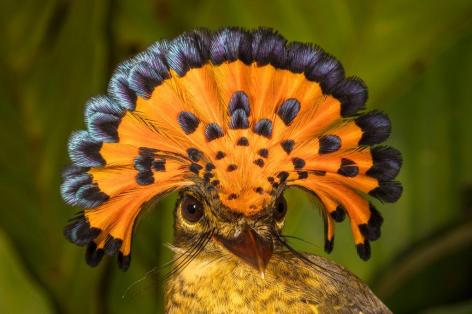
Royal flycatcher Credit Rob Wallace/Wildlife Conservation Society

The credit to Mr. Wallace and colleagues for these photos alone would be worthy of a post, but the creation of such a park in Bolivia is no small wonder:

Madidi National Park in Bolivia goes from lowland to mountaintop, from 600 feet to almost 20,000 feet above sea level. It covers more than 7,000 square miles of wildly different habitats. It is, says Rob Wallace, an ecologist with the Wildlife Conservation Society in Bolivia, “a place where the Amazon meets the Andes.”

merlin_135918168_ad69e304-0870-4e92-a1c9-02449dac0e78-jumbo

Rob Wallace/Wildlife Conservation Society

“Madidi was put together on the hypothesis that it could be the world’s most biologically diverse protected area,” Dr. Wallace said. And, he said, it is — for mammals, birds, plants and butterflies. Continue reading

Bob Moore And His Red Mill

ep78-bobsredmill_wide-3ed9dbf82bd572d256b86956e1e9823a74cd536b-s1400-c85

Marcus Marritt for NPR

47 minutes well spent with one of our heroes, who we realize now is not featured enough in our pages relative to how much he has inspired our work. Here is a quick start at repairing that oversight (click the image above to go to the podcast):

In the 1960s, Bob Moore read a book about an old grain mill and was inspired to start his own.

Using giant quartz stones from the 19th century, he ground and packaged dozens of different cereals and flours, quickly positioning his company at the forefront of the health food boom.

Despite a devastating fire in the 1980s, Bob’s Red Mill grew into a $100 million business – and although Bob is nearly 90, he goes to work at the mill every day.

Moving Slowly & Avoiding Breakage

Preston-Ecological-expedition-Honduras-8

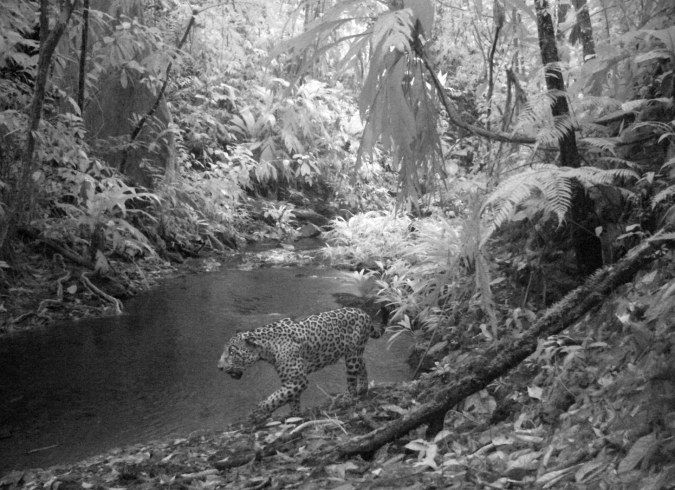
Panthera onca. The jaguar is the king of neotropical forests, where it is the largest of the cats. Its presence at the White City indicates an extensive, thriving ecosystem. © Washington State University, Panthera, Wildlife Conservation Society, Zamorano University, Honduran Forest Conservation Institute, Travis King, John Polisar, Manfredo Turcios

When the journalist Douglas Preston shared this story, I was in the process of closing up shop in India, where we had been in residence since 2010. Kipling-induced daydreaming notwithstanding, Amie and Milo (whose photos may be the most tangible representations of the dreaminess of those years) and I never had the illusion that there were lost civilizations or any such thing in India.

movefast (1)We did have the nonstop motivation of feline-fueled conservation initiatives, and some close encounters. Those provided us a perfect counterpoint to the seemingly irresistible catchphrase that described progress in the form of disruptive technology. Haste really does make waste when it comes to ecology, anthropology, and realms of life other than economic forward-marching.

When I read Mr. Preston’s story on the first day of last year I realized that our relocation to Central America, oddly enough since it is in the hemisphere called the New World, was full of potential for all kinds of discovery of “lost” things. And my own discoveries further sensitized me to the importance of moving slowly and avoiding breakage. My posts on this platform from February through July, 2017 are evidence of the richest ecological and anthropological observations of my lifetime (so far), and that makes Mr. Preston’s update post yesterday all the more wonderful to read:

Deep in the Honduran Rain Forest, an Ecological SWAT Team Explores a Lost World

Preston-Ecological-expedition-Honduras-1

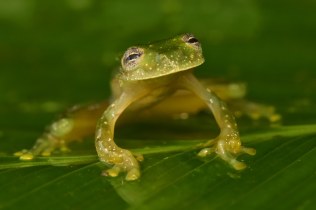
Sachatamia albomaculata. The inner organs of glass frogs are visible through their translucent bodies. Photograph by Trond Larsen / Conservation International

A little more than three years ago, I joined a team of archeologists on an expedition to La Mosquitia, a remote mountain wilderness in eastern Honduras. For centuries, the region had been rumored to contain a lost city, known as the City of the Monkey God or the White City, and now, thanks to a combination of luck and modern technology, an ancient settlement had been found. Although it was probably not the lost city of legend, it was a very real place, built by a mysterious civilization that flourished long before Columbus arrived in the Americas. Hidden in a densely forested valley, it had never been explored. Continue reading
Butterflies Bear Bucolic Benefits

merlin_138359769_63074afa-6c7c-4550-acd6-302cfc29161d-jumbo

Milkweed was first mentioned in these pages  so long ago I had forgotten their importance to Monarch butterflies, a seemingly perennial topic for our contributors. So thanks to Margaret Renkl for keeping that tradition going in her Monday op-ed, and reminding us in the process that while it is not all good news out there, it is also not all bad news:

Monarchs in My Garden, at Last

NASHVILLE — I was pretty proud of myself the spring I planted my first organic garden. It was the mid-1980s, and I was a first-year graduate student in creative writing, a program entirely unrelated to horticultural mastery. But I had taken a college course in environmental biology, and I knew the basics: The more chemicals you use in a garden, the more chemicals you’ll need in the garden. It’s a self-perpetuating cycle, more reliable than the seasons.

At my house, companion planting — marigolds in between the broccoli, tomato vines encircling the spinach — would repel bugs the natural way. Any lingering pests would be dispatched by beneficial insects like ladybugs and praying mantises. One evening I watched happily as cabbage white butterflies flitted over silvery broccoli leaves. Those little white butterflies pausing in the gloaming on the water-beaded broccoli made for a tableau of bucolic harmony. Continue reading
Water, Power & Discontent

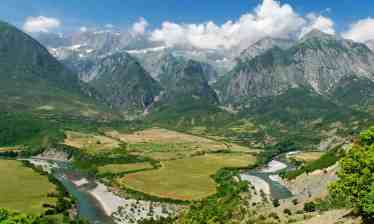
Early last year an article in the Guardian reminded me of work I had done in Montenegro in an earlier decade. The work was among the most impactful in my life, both professionally and personally, but the reminder was more a warning than a celebration. Something similar just happened with work I carried out in the region Rachel Dixon, a travel writer for the Guardian, brought to my attention with the film above, mentioned in this article:

Adventure in Albania: kayaking in one of Europe’s final frontiers

With wild rivers, mountains and Unesco sites aplenty, Albania is emerging as an exciting Mediterranean destination – but its wilderness could be devastated by huge dam-building projects

5188‘Go, go, go!” The white-water rafting guide shouted orders from the back of the boat and our five-strong crew paddled hard to stay on course. We were tackling a stretch of the Vjosa, a 270km river that begins in Greece (where it is called the Aoös) and flows through Albania and into the Adriatic just north of the city of Vlora. I was on a recce trip for a new southern Albanian break with Much Better Adventures, which specialises in long weekends to wild places in Europe and North Africa. But this trip was not just a fun adventure – rather just part of a campaign to save the river, which is under threat from proposed dams. A documentary film, Blue Heart, out this month, will highlight the fight to protect Europe’s last wild rivers, with help from ecotourism…

The film, and the article, have to do with the power of water. And the power of humans in deciding what to do with water. Not all reminders can be pleasant. This one is bittersweet. One sweet part is the call to action.

CallAct1

Step 1: Register your interest in hosting a screening

We are aiming to host hundreds of screenings of Blue Heart globally in 2018 to raise awareness of the plight of the people affected in the Balkan region. If you are interested in hosting a screening, please complete the form below and a member of our team will get back to you ASAP.  Please note the film is 40 mins long and we recommend that you allow at least 20 mins for a post screening discussion. Continue reading

Make Your Opinion Known About New Labeling For GMOs


dept-ag_custom-27b49bc849696ef8487e34355a2fc1a9ae7bf17d-s1400-c85

The USDA has released several options for what the labels might look like.
Department of Agriculture

If the questions and concerns surrounding GMOs are of interest to you, then in the next six weeks you have a unique window of opportunity. Until July 3 you are invited to share your opinion with the folks responsible for these label design options to the right. Thanks to our friends at the salt (National Public Radio, USA) for bringing this to our attention:

USDA Unveils Prototypes For GMO Food Labels, And They’re … Confusing

Foods that contains genetically modified ingredients will soon have a special label.

We recently got the first glimpse of what that label might look like, when the U.S. Department of Agriculture released its proposed guidelines.

This is the product of a decades-long fight between anti-GMO campaigners and Big Agriculture companies, which left neither side completely satisfied, as NPR has reported.

After Congress passed a bill in 2016 requiring labels on foods containing GMO ingredients, the USDA launched a long process to figure out the specifics. When it asked for feedback, it received 112,000 responses from consumers, farmers and manufacturers, among others.

The result? Continue reading

Nonetheless, Arabica

SIERRA Coffee Biodiversity WB

PHOTO COURTESY OF PRAKASH MATADA

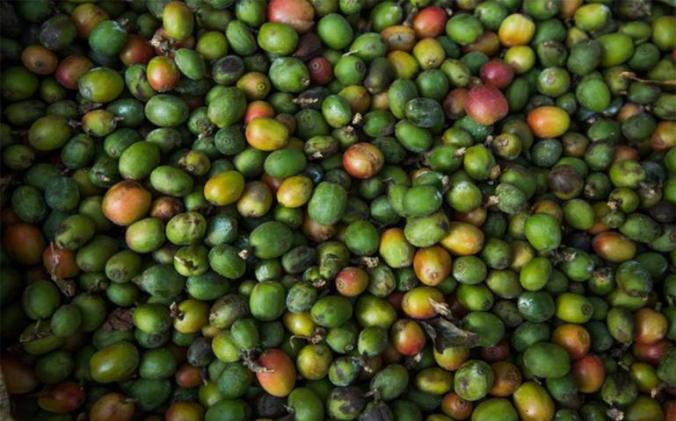
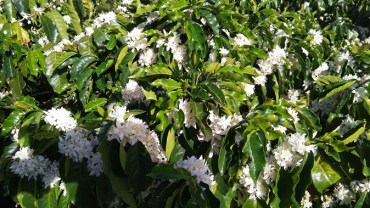
I have spent most of the last year expanding my coffee knowledge. One thing I was already confident about, and remain so, is that arabica is better than robusta on two scales that matter most to me: taste, and environmental impact. From 2010-2017 during our residency in the Western Ghats, we developed and opened a series of properties where both taste and environmental impact were brand signatures formed in Costa Rica.

image002

 Instituto del Café de Costa Rica

With regard to coffee, I knew there was more than one good reason why Costa Rica only permits arabica coffee to be grown in the country. And we sourced the highest grade arabica coffee produced in the Western Ghats as much as we could.

17TB-COFFEE6-superJumbo

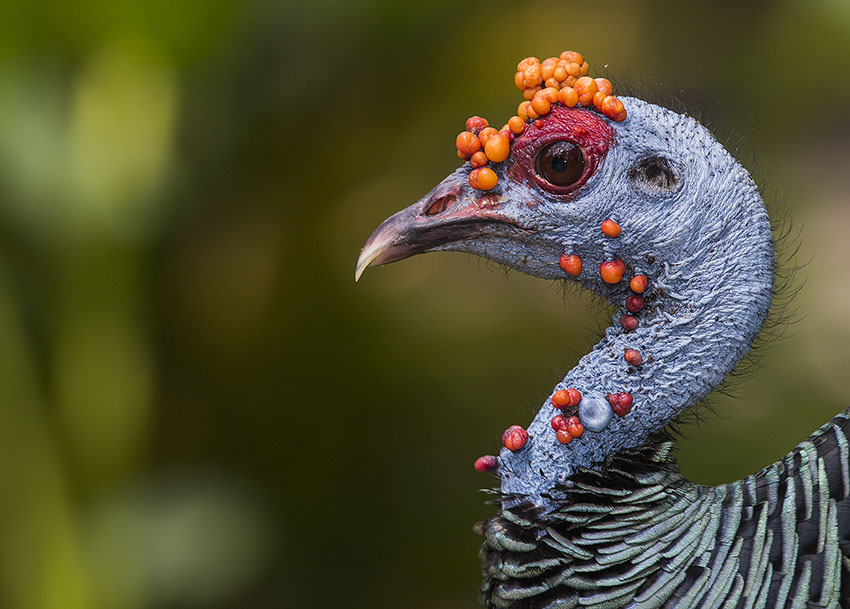
A Malabar pied hornbill, one of 204 species of bird found on coffee plantations in a new study, which found that the tree cover from shade-grown coffee farms provides a welcome habitat for all kinds of animal species. Credit Shashank Dalvi

I took to India a conviction that robusta coffee was to be avoided, but a few months ago started learning otherwise. Today I have read an article that reminds me to keep rethinking.

Thanks to Jason Daley in Sierra magazine for this look at the same scientific findings as those I first read in February in the New York Times,  (as I drink an organic arabica that I am sampling from a roaster in Atlanta, and even with this news about robusta I expect to remain committed to arabica for my own consumption, as well as our commercial purposes):

Which Coffee Is Better for Biodiversity?

A new study shows sun-loving robusta coffee doesn’t have to hurt biodiversity

SIERRA Coffee Biodiversity 2 WB

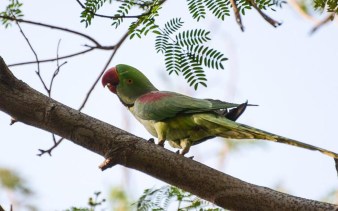
Alexandrine parakeet | Photo courtesy of Manish Kumarhoto

When coffee consumers think about the most sustainable way to manage their caffeine habit, they normally think about the cup it’s in—is it recyclable? But what about the coffee itself? Some coffee plantations require clear-cutting—will drinking one type of coffee have a bigger impact on the environment than another? Continue reading

What To Say About Amazon?

Click below for the second episode of the podcast I mentioned last week. The answer to the question, whether Facebook is fixable, was a surprise. Although we use that platform, if passively, to promote entrepreneurial conservation in our businesses, I personally chose not to have an account. It was only recently that I began appreciating the value of that decision. Now, something similar with Amazon, for which I have had equal measures of awe and wariness. This episode helps me understand the details that make my instinctive wariness insufficient.

CrazyG2a

Some time later this year, Amazon could become the first trillion-dollar company in American history. Its valuation has already doubled in the last 14 months to about $800 billion, and Jeff Bezos, its founder and CEO, is officially the richest man on the planet.

There are ways in which Amazon seems to be the greatest company in American history. It’s revolutionized the global shopping experience and expanded into media and hardware, while operating on razor-thin margins that have astonished critics. But some now consider it the modern incarnation of a railroad monopoly, a logistics behemoth using its scale to destroy competition.

So what is Amazon: brilliant, dangerous, or both?