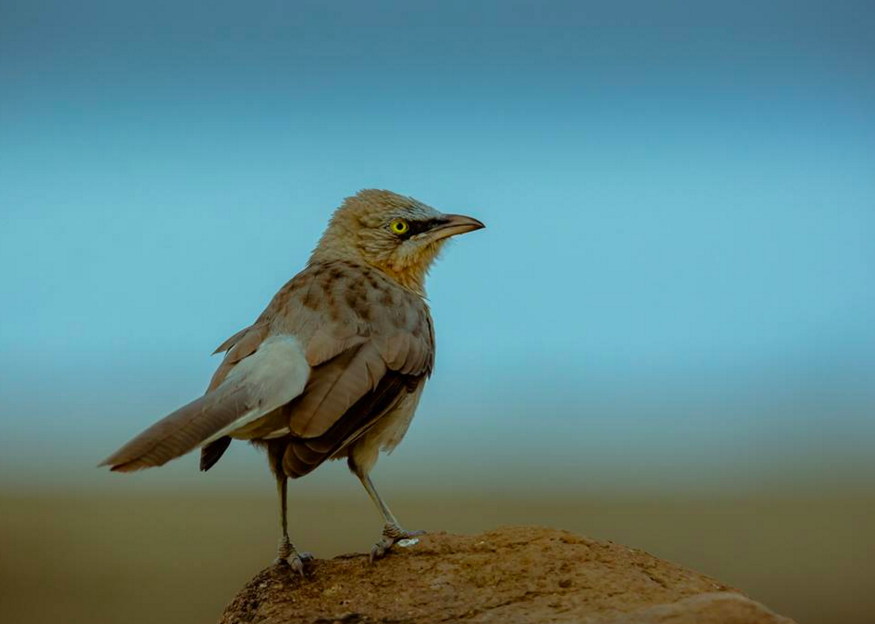
Vijayapura Outskirts, Karnataka
Vijayapura Outskirts, Karnataka
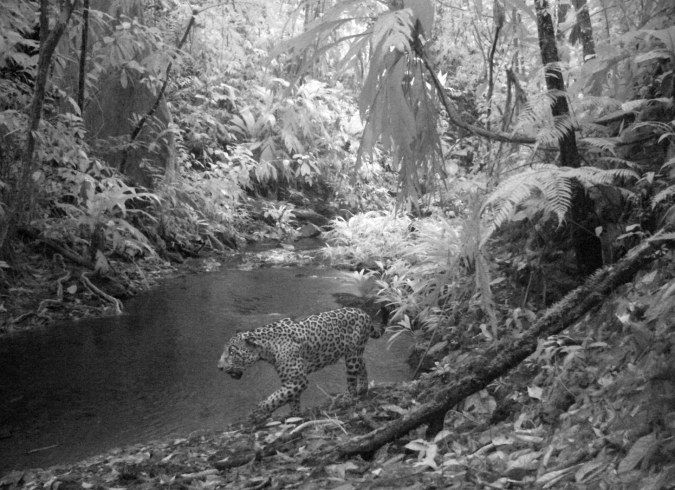
Panthera onca. The jaguar is the king of neotropical forests, where it is the largest of the cats. Its presence at the White City indicates an extensive, thriving ecosystem. © Washington State University, Panthera, Wildlife Conservation Society, Zamorano University, Honduran Forest Conservation Institute, Travis King, John Polisar, Manfredo Turcios
When the journalist Douglas Preston shared this story, I was in the process of closing up shop in India, where we had been in residence since 2010. Kipling-induced daydreaming notwithstanding, Amie and Milo (whose photos may be the most tangible representations of the dreaminess of those years) and I never had the illusion that there were lost civilizations or any such thing in India.
 We did have the nonstop motivation of feline-fueled conservation initiatives, and some close encounters. Those provided us a perfect counterpoint to the seemingly irresistible catchphrase that described progress in the form of disruptive technology. Haste really does make waste when it comes to ecology, anthropology, and realms of life other than economic forward-marching.
When I read Mr. Preston’s story on the first day of last year I realized that our relocation to Central America, oddly enough since it is in the hemisphere called the New World, was full of potential for all kinds of discovery of “lost” things. And my own discoveries further sensitized me to the importance of moving slowly and avoiding breakage. My posts on this platform from February through July, 2017 are evidence of the richest ecological and anthropological observations of my lifetime (so far), and that makes Mr. Preston’s update post yesterday all the more wonderful to read:
Deep in the Honduran Rain Forest, an Ecological SWAT Team Explores a Lost World
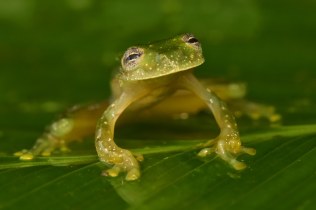
Sachatamia albomaculata. The inner organs of glass frogs are visible through their translucent bodies. Photograph by Trond Larsen / Conservation International
A little more than three years ago, I joined a team of archeologists on an expedition to La Mosquitia, a remote mountain wilderness in eastern Honduras. For centuries, the region had been rumored to contain a lost city, known as the City of the Monkey God or the White City, and now, thanks to a combination of luck and modern technology, an ancient settlement had been found. Although it was probably not the lost city of legend, it was a very real place, built by a mysterious civilization that flourished long before Columbus arrived in the Americas. Hidden in a densely forested valley, it had never been explored. Continue reading
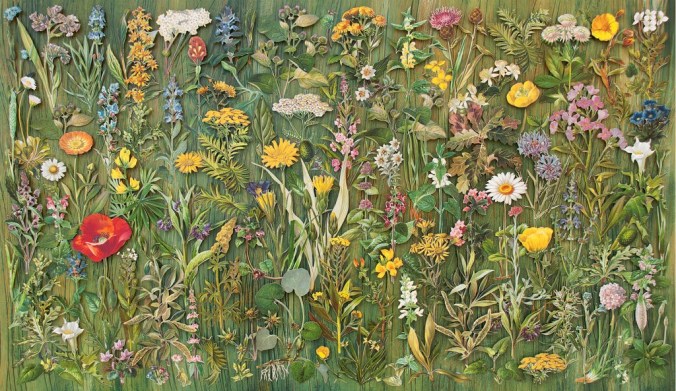
Milkweed was first mentioned in these pages so long ago I had forgotten their importance to Monarch butterflies, a seemingly perennial topic for our contributors. So thanks to Margaret Renkl for keeping that tradition going in her Monday op-ed, and reminding us in the process that while it is not all good news out there, it is also not all bad news:
Monarchs in My Garden, at Last
NASHVILLE — I was pretty proud of myself the spring I planted my first organic garden. It was the mid-1980s, and I was a first-year graduate student in creative writing, a program entirely unrelated to horticultural mastery. But I had taken a college course in environmental biology, and I knew the basics: The more chemicals you use in a garden, the more chemicals you’ll need in the garden. It’s a self-perpetuating cycle, more reliable than the seasons.
At my house, companion planting — marigolds in between the broccoli, tomato vines encircling the spinach — would repel bugs the natural way. Any lingering pests would be dispatched by beneficial insects like ladybugs and praying mantises. One evening I watched happily as cabbage white butterflies flitted over silvery broccoli leaves. Those little white butterflies pausing in the gloaming on the water-beaded broccoli made for a tableau of bucolic harmony. Continue reading
Early last year an article in the Guardian reminded me of work I had done in Montenegro in an earlier decade. The work was among the most impactful in my life, both professionally and personally, but the reminder was more a warning than a celebration. Something similar just happened with work I carried out in the region Rachel Dixon, a travel writer for the Guardian, brought to my attention with the film above, mentioned in this article:
Adventure in Albania: kayaking in one of Europe’s final frontiers
With wild rivers, mountains and Unesco sites aplenty, Albania is emerging as an exciting Mediterranean destination – but its wilderness could be devastated by huge dam-building projects
‘Go, go, go!” The white-water rafting guide shouted orders from the back of the boat and our five-strong crew paddled hard to stay on course. We were tackling a stretch of the Vjosa, a 270km river that begins in Greece (where it is called the Aoös) and flows through Albania and into the Adriatic just north of the city of Vlora. I was on a recce trip for a new southern Albanian break with Much Better Adventures, which specialises in long weekends to wild places in Europe and North Africa. But this trip was not just a fun adventure – rather just part of a campaign to save the river, which is under threat from proposed dams. A documentary film, Blue Heart, out this month, will highlight the fight to protect Europe’s last wild rivers, with help from ecotourism…
The film, and the article, have to do with the power of water. And the power of humans in deciding what to do with water. Not all reminders can be pleasant. This one is bittersweet. One sweet part is the call to action.

Step 1: Register your interest in hosting a screening
We are aiming to host hundreds of screenings of Blue Heart globally in 2018 to raise awareness of the plight of the people affected in the Balkan region. If you are interested in hosting a screening, please complete the form below and a member of our team will get back to you ASAP. Please note the film is 40 mins long and we recommend that you allow at least 20 mins for a post screening discussion. Continue reading

The USDA has released several options for what the labels might look like.
Department of Agriculture
If the questions and concerns surrounding GMOs are of interest to you, then in the next six weeks you have a unique window of opportunity. Until July 3 you are invited to share your opinion with the folks responsible for these label design options to the right. Thanks to our friends at the salt (National Public Radio, USA) for bringing this to our attention:
USDA Unveils Prototypes For GMO Food Labels, And They’re … Confusing
Foods that contains genetically modified ingredients will soon have a special label.
We recently got the first glimpse of what that label might look like, when the U.S. Department of Agriculture released its proposed guidelines.
This is the product of a decades-long fight between anti-GMO campaigners and Big Agriculture companies, which left neither side completely satisfied, as NPR has reported.
After Congress passed a bill in 2016 requiring labels on foods containing GMO ingredients, the USDA launched a long process to figure out the specifics. When it asked for feedback, it received 112,000 responses from consumers, farmers and manufacturers, among others.
The result? Continue reading

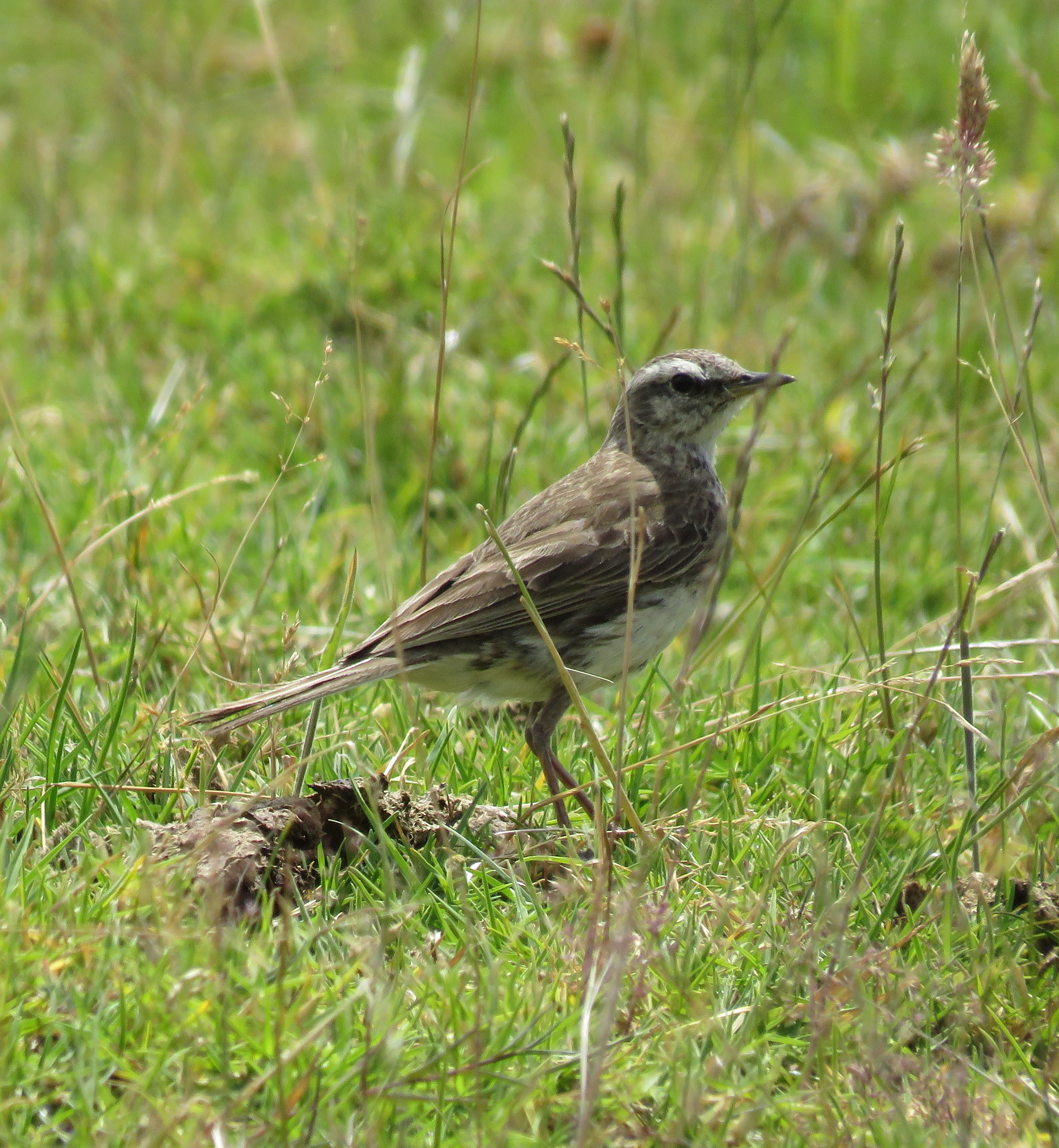
Nainital, Uttarakhand
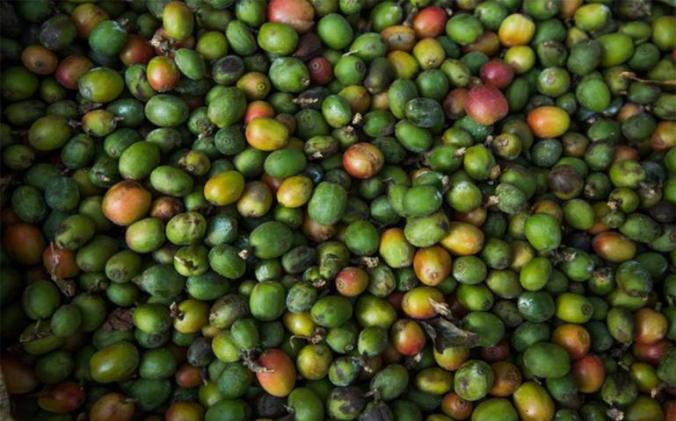
PHOTO COURTESY OF PRAKASH MATADA
I have spent most of the last year expanding my coffee knowledge. One thing I was already confident about, and remain so, is that arabica is better than robusta on two scales that matter most to me: taste, and environmental impact. From 2010-2017 during our residency in the Western Ghats, we developed and opened a series of properties where both taste and environmental impact were brand signatures formed in Costa Rica.
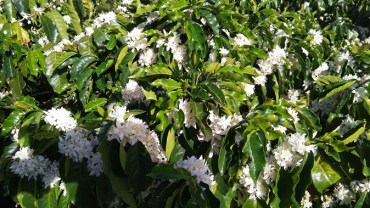
Instituto del Café de Costa Rica
With regard to coffee, I knew there was more than one good reason why Costa Rica only permits arabica coffee to be grown in the country. And we sourced the highest grade arabica coffee produced in the Western Ghats as much as we could.

A Malabar pied hornbill, one of 204 species of bird found on coffee plantations in a new study, which found that the tree cover from shade-grown coffee farms provides a welcome habitat for all kinds of animal species. Credit Shashank Dalvi
I took to India a conviction that robusta coffee was to be avoided, but a few months ago started learning otherwise. Today I have read an article that reminds me to keep rethinking.
Thanks to Jason Daley in Sierra magazine for this look at the same scientific findings as those I first read in February in the New York Times, (as I drink an organic arabica that I am sampling from a roaster in Atlanta, and even with this news about robusta I expect to remain committed to arabica for my own consumption, as well as our commercial purposes):
Which Coffee Is Better for Biodiversity?
A new study shows sun-loving robusta coffee doesn’t have to hurt biodiversity
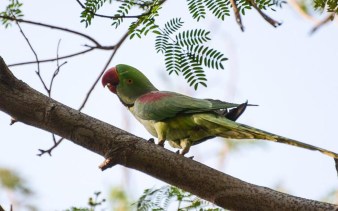
Alexandrine parakeet | Photo courtesy of Manish Kumarhoto
When coffee consumers think about the most sustainable way to manage their caffeine habit, they normally think about the cup it’s in—is it recyclable? But what about the coffee itself? Some coffee plantations require clear-cutting—will drinking one type of coffee have a bigger impact on the environment than another? Continue reading
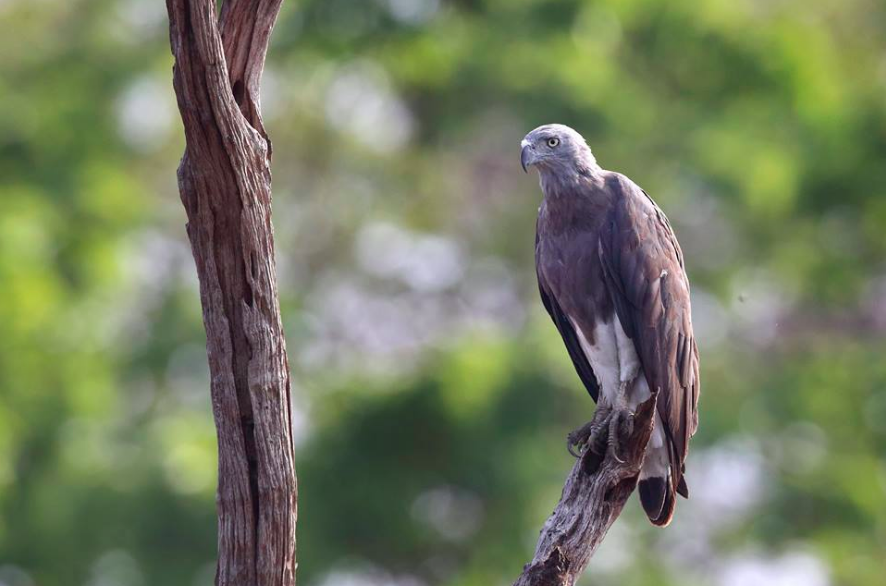
Bhadra Tiger Reserve, Karnataka
Click below for the second episode of the podcast I mentioned last week. The answer to the question, whether Facebook is fixable, was a surprise. Although we use that platform, if passively, to promote entrepreneurial conservation in our businesses, I personally chose not to have an account. It was only recently that I began appreciating the value of that decision. Now, something similar with Amazon, for which I have had equal measures of awe and wariness. This episode helps me understand the details that make my instinctive wariness insufficient.

Some time later this year, Amazon could become the first trillion-dollar company in American history. Its valuation has already doubled in the last 14 months to about $800 billion, and Jeff Bezos, its founder and CEO, is officially the richest man on the planet.
There are ways in which Amazon seems to be the greatest company in American history. It’s revolutionized the global shopping experience and expanded into media and hardware, while operating on razor-thin margins that have astonished critics. But some now consider it the modern incarnation of a railroad monopoly, a logistics behemoth using its scale to destroy competition.
So what is Amazon: brilliant, dangerous, or both?
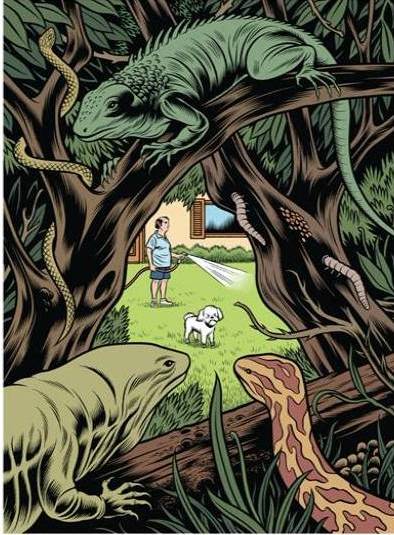
The state’s ecology is a kind of urban legend come true—the old alligator-flushed-down-the-toilet story, with a thousand species. Illustration by Charles Burns
When I first read this article about the downstream problems of the pet trade, I was living in India and learning about efforts to reduce the poaching crisis of wild animals being transported eastward as well as westward. Florida seemed a long way away and the problem Bilger described was a crisis, for sure, but it bordered on sounding, for lack of a better term, exotic. And maybe worthy of closer observation?
The Legal ‘Pet-Poaching’ Problem
It’s easy to spot a wild parrot in Miami, as in San Francisco, San Diego, and several other metropolitan areas in the U.S. But in Florida, “technically, it’s not illegal to take wild parrots, according to Florida Fish & Wildlife,” says Daria Feinstein, a parrot conservationist, in Neil Losin’s short documentary, Parrots in Peril. The film examines the threat that poaching poses to Miami’s wild macaws. Continue reading
juvenile – Baja California Sur, Mexico

‘When we say ‘food apartheid,’ the real conversation can begin.’
Illustration: Daniel Chang Christensen
Thanks to Anna Brones for bringing this article, and its subject, to our attention in the Guardian, as a reprint of an essay originally published in Guernica:
Food apartheid: the root of the problem with America’s groceries
Food justice activist Karen Washington wants us to move away from the term ‘food desert’, which doesn’t take into account the systemic racism permeating America’s food system
America’s sustainable food movement has been steadily growing, challenging consumers to truly consider where our food comes from, and inspiring people to farm, eat local, and rethink our approaches to food policy. But at the same time, the movement is predominantly white, and often neglects the needs and root problems of diverse communities. Continue reading

Valparai, Tamil Nadu
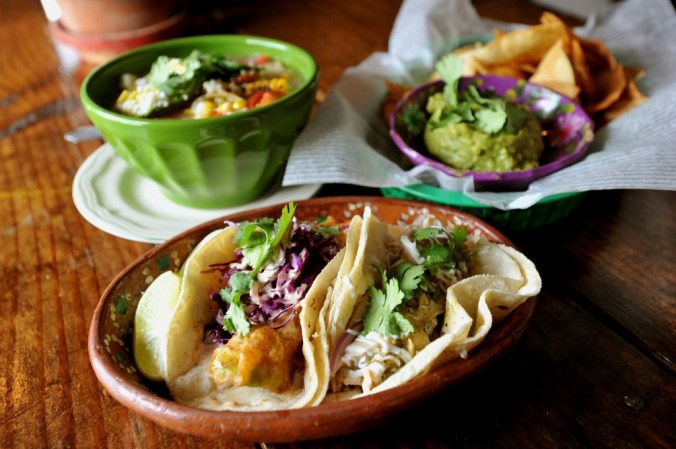
Tacos at a restaurant in Nashville. Credit Christopher Berkey for The New York Times
Margaret Renkl, Contributing Opinion Writer for the New York Times, shares an opinion that I am, as a son of an immigrant, inclined to agree with. Even if I was not so closely related to the theme, it would still make sense to me:
Eating Without Borders in Nashville
NASHVILLE — Not quite two weeks ago, I was driving down Nolensville Road, Nashville’s “international corridor,” looking for a restaurant called Tennessee Halal Fried Chicken. In the passenger seat was John T. Edge, the director of the Southern Foodways Alliance and author of “The Potlikker Papers: A Food History of the Modern South.” He was telling me that this particular approach to dining out, in one way of looking at it, could be considered a form of exploitation: “To patronize a restaurant of people who are different from you can be a kind of booty call,” he said.
This is an idea Mr. Edge has been considering for some time. The historically complicated nature of cross-cultural dining goes back to black-owned barbecue joints in the age of Jim Crow: “White Southerners patronized those restaurants,” he said. “They got in, they got what they wanted, and they got out.” Continue reading

Credit: AP Photo / Sebastian Scheiner
This is the second time in a year that the biology of free will is the story. Monday morning in mid-May 2018 nothing else seems more important. Thanks to Marc Sollinger and colleagues at WGBH and PRX (click the button to the left for the story):
Humanity is simultaneously incredibly kind and incredibly violent. We commit indescribable atrocities, but also acts of incomprehensible compassion. There is both horror and beauty in our history. Which leads to the question… how do we reconcile this inherent contradiction? It all goes back to our biology, according to Robert Sapolsky, a neurobiologist at Stanford and author of the book Behave: The Biology of Humans at Our Best and Worst. In fact, all questions about human behavior are, at their core, about biology. Continue reading
female – Baja California Sur, Mexico
 Organikos