Zero-Waste Shopping

180509-zero-waste-shopping-hetu-london

Bulk food bins at Hetu, an all-bulk / zero-waste grocery store in London. (Photo credit: Celia Ristow)

Thanks to Cathy Erway and colleagues at Civil Eats for this story on where and how the boundaries of shopping waste-reduction is being pushed:

Zero-Waste Stores Ask Shoppers to Bring Their Own Everything

As record amounts of plastic waste pollutes the planet, some grocers are helping shoppers do without.

180509-zero-waste-shopping-ekoplaza-plastic-free-aisle-credit-Ewout-Huibers.jpg

Ekoplaza’s plastic-free aisle. (Photo credit: Ewout Huibers)

Tom and Katrin Helmick live in New York’s Hudson Valley region with their 2-year-old son. They cook and grow vegetables in their backyard during the summer months, bring reusable totes to the grocery store or farmers’ market, and never buy plastic bottled water. Although they try to avoid buying foods that come in non-recyclable packaging, their landfill waste bin still receives a hearty diet of disposable baby food pouches and “lots of thin plastic,” says Tom.

“When we do buy grocery store meat, I hate that it still comes wrapped in Styrofoam. That’s why I love going directly to the source for our meat from a farm nearby that is simply vacuumed-packed,” says Tom. “We find it ridiculous that three people can create so much waste,” adds Katrin. Continue reading

The Networking Of Trees, A Novel Idea In Novel Form

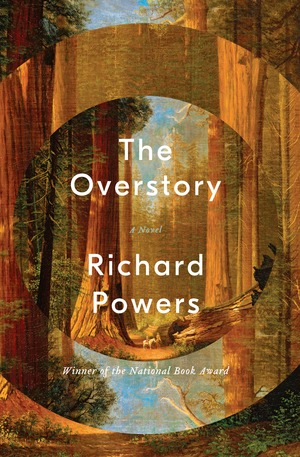
9780393635522_300The novelist Richard Powers, I see from this review, has utilized an idea I first heard of in 2016, and that idea disappeared for a couple years (from my view, anyway). But that compelling idea is back, fictionalized and more interesting than ever:

People see better what looks like them,” observes the field biologist Patricia Westerford, one of the nine—nine—main characters of Richard Powers’s 12th novel, The Overstory. And trees, Patricia discovers, look like people. They are social creatures, caring for one another, communicating, learning, trading goods and services; despite lacking a brain, trees are “aware.” After borers attack a sugar maple, it emits insecticides that warn its neighbors, which respond by intensifying their own defenses. When the roots of two Douglas firs meet underground, they fuse, joining vascular systems; if one tree gets ill, the other cares for it. The chopping down of a tree causes those surrounding it to weaken, as if in mourning. But Powers’s findings go beyond Dr. Pat’s. In his tree-mad novel, which contains as many species as any North American forest—17 are named on the first page alone—trees speak, sing, experience pain, dream, remember the past, and predict the future. The past and the future, it turns out, are mirror images of each other. Neither contains people.

merlin_136156101_0df4e4fd-b976-4a09-a8fc-5769260524f7-superJumbo

Olaf Hajek

Barbara Kingsolver’s earlier review in the New York Times started the ante on the must-read judgement that Nathaniel Rich (above) upped:

Trees do most of the things you do, just more slowly. They compete for their livelihoods and take care of their families, sometimes making huge sacrifices for their children. They breathe, eat and have sex. They give gifts, communicate, learn, remember and record the important events of their lives. With relatives and non-kin alike they cooperate, forming neighborhood watch committees — to name one example — with rapid response networks to alert others to a threatening intruder. Continue reading

Invasive Species, Eradication Efforts, Success Story

sght-monitoring-credit--oli-prince-230-2859dbe05902ffba6a40bf580c0c137db5803219-s1400-c85

Jane Tansell, one of the two handlers responsible for the rodent detection dogs, looks on from the background as a seal stares down the camera on South Georgia Island earlier this year.
Oliver Prince/Courtesy of South Georgia Heritage Trust

These three pairs of words in the post title, placed together in this order in a search engine, produce some interesting results from around the world. And today we find one more to add to the database. Thanks to National Public Radio (USA)’s Colin Dwyer for sharing this story:

south-georgia-pipit_credit-ingo-arndt_custom-2b8f235f1d7d80e43a778471718118bae53dd8d4-s1400-c85.jpg

The South Georgia pipit, seen posing for a glamour shot earlier this year, had been among the species hardest hit by the island’s invasive rodents.
Ingo Arndt/Courtesy of South Georgia Heritage Trust

There are no other birds quite like them in the world. The South Georgia pipit and pintail are so distinctive in the grand pantheon of ornithology, in fact, they draw their names from the one place they’ve made their home: South Georgia Island, sitting lonely in the forbidding South Atlantic not far from Antarctica.

Yet even in such a remote location, surrounded by penguins, fur seals and seemingly endless ocean, the birds have long been besieged by tiny alien invaders: rodents. Since the first European ships arrived in the late 18th century bearing rodents as stowaways, the voracious predators have devastated the South Georgia birds — which, with no trees to nest in, must make their vulnerable homes on the ground or in burrows.

Now, after more than two centuries, those invaders have been rebuffed. Continue reading

Crazy/Genius, Worthy

CrazyGeniusI had already been impressed with the Atlantic’s weekly interview podcast, but since that most often has to do with politics or other topics not central to our purpose here, I have never linked to one of those. But here is an 8-episode show, whose first guest is one of my favorite thinkers currently. The host, Derek Thompson, is another plus, and the topic is quite timely:

CrazyG

Why Can’t Facebook Tell the Truth?

In the last 18 months, Facebook has gone through one of the worst public relations crises of any major tech company. In this episode, two guests debate whether Facebook is fixable, or whether its business model is designed to sell us lies. Continue reading

The Food Explorer, Explored

GastroTaking a cue from yesterday’s post, another recent Gastropod can be combined with a review in the New York Times of a book that fits well in our pages:

You’ve probably never heard of David Fairchild. But if you’ve savored kale, mango, peaches, dates, grapes, a Meyer lemon, or a glass of craft beer lately, you’ve tasted the fruits of his globe-trotting travels in search of the world’s best crops—and his struggles to get them back home to the United States.

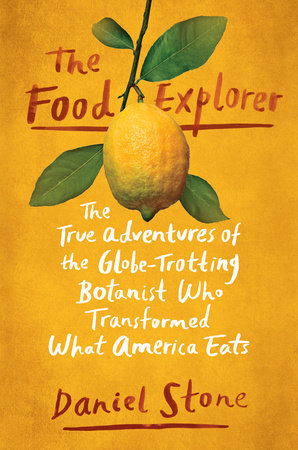
This episode, we talk to Daniel Stone, author of The Food Explorer, a new book all about Fairchild’s adventures. Listen in now for tales of pirates and biopiracy, eccentric patrons and painful betrayals, as well as the successes and failures that shaped not only the way we eat, but America’s place in the world.

9781101990582Daniel Stone, an author I had not known of 24 hours ago, fits well within our pages as part of a mix of historical sleuthing and present-day food activism that have been central themes here since we started.  Thanks to his book being the subject of that podcast, as well as its review last month, allow us to recommend that if you have an hour for the both, combine the listen with the read:

In a photograph dated Christmas 1896, featured in “The Food Explorer,” Daniel Stone’s biography of the botanist and explorer David Fairchild, his subject is sitting with his patron and friend Barbour Lathrop, in what looks like an empty saloon or a lounge on a steamship. The caption informs us that they’re off the coast of Sumatra; both are dressed in white and have mustaches that border on the extravagant.

Continue reading

Avocados & Epic Journeys

lead_960_540

Maggie Marsek / Getty / Katie Martin / The Atlantic

The Atlantic’s partnering with specialists in content that would not qualify as the magazine’s historically typical fare, we think, is good for all concerned. The folks at Gastropodcast certainly qualify, we also think, and have thought so, more than once:

Peak Avocado Is Yet to Come

How the fatty green fruit went from near-extinction to a worldwide boom

AvocadoAvocados are on a roll. More precisely, they’re on toast—a lot of toast. Last summer, BritishVogue reported that more than 3 million new photos of whole, sliced, and toast-topping avocados are uploaded to Instagram every day. Continue reading

Fishes, Fishing & Fishermen, Reviewed

Untitled-1

Book covers left to right: Fishes in the Fresh Waters of Florida, Fly Fishing for Redeye Bass, and Born to Fish

Thanks to Mathew L. Miller for an honest take on these three books:

Review: Fishing and Conservation

The mayflies are hatching, river levels are dropping and the evenings are getting longer. It’s the most wonderful time of year for those of us in North America who love to fish.

And if you can’t be out fishing? Well, you can always read a fish book. Here are three great new reads: a biography of an obsessed angler turned conservationist, a how-to book about overlooked species that need some attention, and an invaluable reference guide.

I have no interest in competitive fishing, and even less in books by and about celebrity anglers. I find most of them to be self-congratulatory and poorly written. So I’d normally have little inclination to read a book about a record-breaking striped bass angler, one who gained fame by appearing on the show Shark Tank.  Such a book would also appear to be a poor fit for a conservation blog. Continue reading

Meatless Monday Economics Info Session

5333W

It is Monday, a good time to revisit the “meatless” movement, the one where you take one small step at a time to a better diet. Thanks to Bibi van der Zee and colleagues at the Guardian for arranging this guide to all the good reasons to reduce or eliminate meat from the diet:

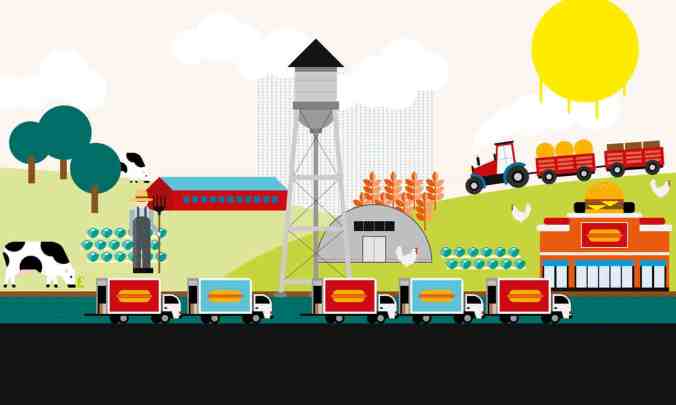
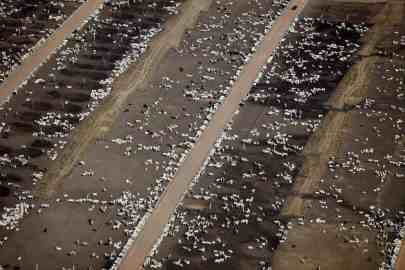
What is the true cost of eating meat?

As concerns over the huge impact on the environment, human health and animal welfare grow, what future is there for the meat industry

What are the economics of meat?

5616 (2)

Cattle in the Brazilian Amazon. Photograph: Rodrigo Baleia

Food and farming is one of the biggest economic sectors in the world. We are no longer in the 14th century, when as much as 76% of the population worked in agriculture – but farming still employs more than 26% of all workers globally. And that does not include the people who work along the meat supply chain: the slaughterers, packagers, retailers and chefs.

In 2016, the world’s meat production was estimated at 317m metric tons, and that is expected to continue to grow. Figures for the value of the global meat industry vary wildly from $90bn to as much as $741bn. Continue reading

Big Day 2018 at Costa Rica’s Carara National Park, And Nearby At Marriott Los Sueños

IMG_0353

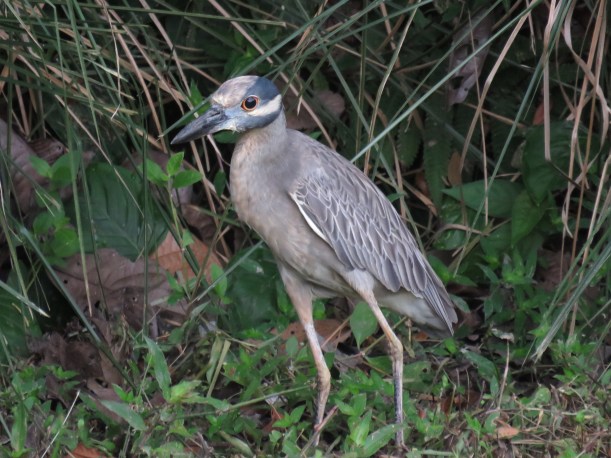
The first lucky bird of the day, a Yellow-crowned Night-Heron at Marriott, which I hadn’t seen yet on property

Almost four years ago, James and I took a day trip to Carara National Park, on the Pacific coast of Costa Rica where the tropical dry forest meets the moist rain forest in a transition zone that provides a great mix of habitats for all sorts of birds and other wildlife. On eBird, Carara’s Hotspot has over four hundred species, which made it a natural place for me to spend part of my Global Big Day this year, since I was already documenting the avian life on the property of the Marriott Los Sueños in Herradura, just half an hour south along the coast. These photos are from my May 5th efforts!

IMG_0359

The Turquoise-browed Motmot is a regular at Marriott and one of my favorite “common” birds in the country

I started the morning at 5:30am, heading out onto the perimeters of the forests surrounding Marriott Los Sueños and its golf course. Continue reading

Being Ecological When Nature Is Perceived With Limits

BeingEco

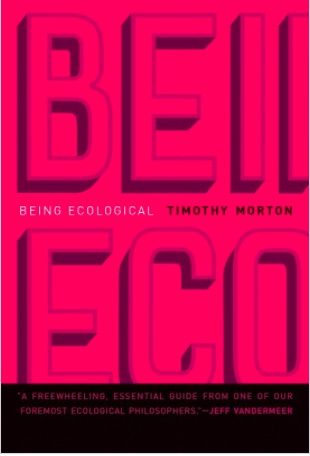
A book about ecology without information dumping, guilt inducing, or preaching to the choir.

This new book is mentioned in a description of coming to terms with a life without water, an essay written from the perspective of living in Cape Town, South Africa. The essay is moving in the way a dream can be, which fits the writer’s reference to what we all might come to know as “the water-anxiety dream.”

The essay was effective enough to get me to click through to find out more about the book to the left. Which leads to Timothy Morton, who has somehow avoided our notice until now. How had we missed an author of books with titles like Dark Ecology, and The Ecological Thought, as well as Ecology without Nature?

Nevermind how. My thanks to Rosa Lyster for this, among other gifts from her essay.

Lyster-Capetown-Drought

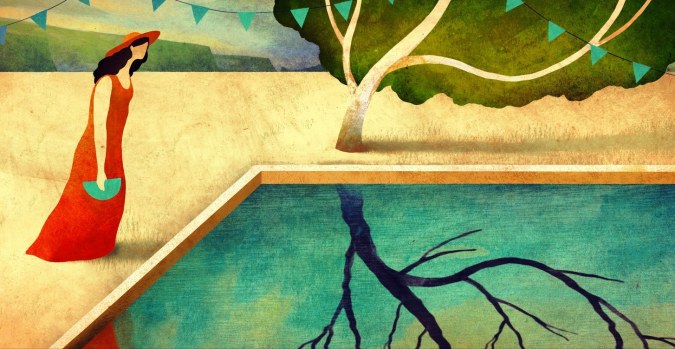
For some residents of Cape Town, the memory of the drought is already fading. But, in an increasingly parched world, will the anxiety ever really end? Illustration by Owen Gent

A friend of mine got married in her parents’ garden last year, on a lavishly beautiful late-summer afternoon in Cape Town. Many of the guests were British, and they could not stop remarking on the fineness of the weather. It was a startling reminder that some people still relish hot days with no possibility of rain, that not everyone looks upon February in the Western Cape as something to be endured. After the ceremony, my date and I stood by the swimming pool, drinking sparkling wine and monitoring the canapés. My friend’s stepfather came by to say hello, carefully picking his way past the bride’s two young brothers, who were playing an ecstatic game of hide-and-seek on the lawn, getting grass stains on their tiny suits. After gracefully accepting our praise about how lovely everything had been, he told us that he’d been having torrid anxiety dreams. We nodded. Weddings are notoriously hard on the old nerves—guests to be tended to, speeches to be made, and the pool just lying there, waiting for any old idiot to accidentally fall in and cast an undignified pall over the happy day. He shook his head. His dream, he explained, was about the garden. Continue reading

Commerce, Conscience & Conservation

06Patagonia1-jumbo

Yvon Chouinard, the founder of Patagonia, with its chief executive, Rose Marcario, in the tin shed where he once forged and hammered metal. The outdoor-clothing company has mixed commerce and activism since the early 1970s. Credit Laure Joliet for The New York Times

Since the early days of this platform we have linked to stories about this company many times, and its founder in particular is in our pantheon of role models. During these seven years we have also studiously avoided linking to stories involving politics, other than highlighting activism that holds public officials accountable. This story below borders on  too much politics, but I find the company’s position not only acceptable, but as usual about this company, aspirational. Thanks to David Gelles for this story about how Patagonia has supported grass-roots environmental activists for decades and how it is suing the president in a bid to protect Bears Ears National Monument:

merlin_136030764_da829491-ce0c-4974-a0f9-b170acc558c4-superJumbo

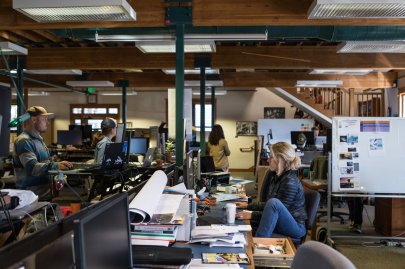
Patagonia employees at the Ventura, Calif., headquarters, where there are picnic tables in the parking lot, on-site day care and easy access to the beach.CreditLaure Joliet for The New York Times

VENTURA, Calif. — The offices of Patagonia occupy a low-slung complex of stucco buildings in this sleepy beachside town in Southern California. There are solar panels and picnic tables in the parking lot, day care with a jungle gym by the main lobby and easy access to the beach, where employees surf during lunch break. It is a corporate Eden of sorts, where idealistic Californians run a privately held company that sells about $1 billion of puffy down jackets and organic cotton jeans each year.

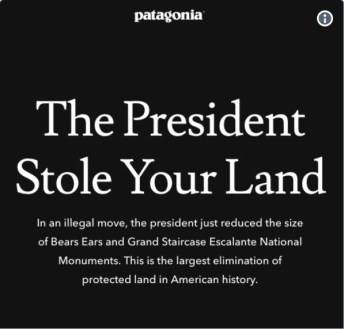
Screen Shot 2018-05-05 at 7.06.08 AMBut on an unseasonably hot and windy Monday morning in early December, Patagonia headquarters were transformed into something that quickly resembled a war room. There were emergency conference calls with Washington lawyers. Court filings were prepared. Web designers remade the company’s home page.

It wasn’t a business crisis that had mobilized the company, however. It was politics. Continue reading