Polar Bears, Hudson Bay & Informed Opinion

Polar.jpg

Polar bears haunt the landscape around the remote town of Churchill in northern Manitoba.Published On Credit Image by Ian Kerr

Thanks to Ian Kerr, a filmmaker who has spent years documenting polar bears in Churchill, Manitoba and shared this op-ed in the New York Times:

Polar Bears of Hudson Bay

Polar bears sleep a lot. That sight can leave an observer feeling disappointed, even insulted — it’s like watching a superhero clean his nails while you’re wishing he’d fly or pick up a car.

Keep watching, though, and you begin to notice interesting things about the sleeping bear’s world: the hard, cold snow blown across ice or the sun turning into a vertical streak through sheets of sleet; the odd, sticky sensation of frost slowly growing over your beard. Continue reading

Six Centuries Of Herding

Knight-Herdwick-Shepheard-1.jpg

James Rebanks’s family has worked on the land in Cumbria for six hundred years. Photographs by Gregor Schmatz for The New Yorker

When I first heard him tell his own story, James Rebanks had just recently published a book that received wide critical acclaim and plenty of commercial success. Sam Knight now gives a view in on this form of life, as lived for six centuries, as is today in The Tweeting of the Lambs: A Day in the Life of a Modern Shepherd:

Knight-Herdwick-Shepheard-2

Photographs by Gregor Schmatz for The New Yorker

The hills of Cumbria, in northern England, are known as fells. They are among the wettest, coldest, and windiest places where sheep are farmed outdoors year-round. The weather is rotten, more or less, from October to May. So by lambing season—a three-week period, usually after Easter, when the ewes give birth, and there are triumphs and miscarriages, adoptions and accidents, gambolling and suckling—the flock, the shepherd, and the land itself are already worn out. “You’re just about fucked,” James Rebanks told me. “The whole thing is designed so you are just about to break.”

On Twitter, Rebanks is the Herdwick Shepherd. A little more than a hundred and nine thousand people, most of them trapped in office environments or riding public transportation, follow his account for gorgeous, wide-skied pictures of his flock, and for his evocations of the English countryside. In 2015, Rebanks’s memoir, “The Shepherd’s Life,” became an international best-seller, and he was compared to the nineteenth-century rural poet John Clare. Clare, the son of illiterate laborers from Northamptonshire, wrote about the land from within it; Rebanks’s writing has a similarly involved quality. Continue reading

Two Op-Eds Arguing The Same Powerful Case In Two Different Ways

23Englander-superJumbo.jpgNathan Englander came to my attention nearly six years ago. A novelist who lives in Brooklyn, he got me thinking about story-telling in a way that was very important to me, two years into our residency in India. He did something important for me again this last week, focusing my attention on an act I would normally ignore. But his point resonated with me because of the subject’s connection to the state of nature. So I thought about how to link to his op-ed in a manner consistent with our objectives on this site.

22conniff-superJumbo.jpg

Credit Lan Truong

Four years ago Richard Conniff, who writes about wildlife and human and animal behavior, started a long series of regular appearances in our pages. The day after Nathan Englander published the op-ed I mentioned above, Richard Conniff published an op-ed referencing the same act, a day in advance of Earth Day. And it is powerful. So I knew how to proceed, and with this excerpt you may be inclined to read both op-eds in full:

I was thinking about Mr. Buckel and about despair a few nights later, over a drink with Joe Walston of the Wildlife Conservation Society. As director of that organization’s worldwide field conservation work, Mr. Walston routinely comes face-to-face with the dark forces of human overpopulation, mass extinction of species, climate change and pollution. But he is also the co-author of a paper being published this week in the journal BioScience that begins with the uplifting words of Winston Churchill to the British nation in June 1940, under the shadow of the Nazi conquest of France: “In casting up this dread balance sheet and contemplating our dangers with a disillusioned eye,” Churchill declared, “I see great reason for intense vigilance and exertion, but none whatever for panic or despair.” Continue reading

Gleaners Harvesting Properly

180430_r31970illuweb.jpg

Illustration by Tom Bachtell

I have been enjoying short essays and posts by Charles Bethea in the last year or so in a way that I can explain with a simple metric. I always find myself wanting to learn more about something I was intrigued by in what he wrote. That is a sign of one kind of excellent writing, interesting enough to make me hungry to learn more, but concise enough that I feel satisfied if I do not have time to explore further.

Case in point below, and fortunately I had time to find out about one of the gleaners he mentioned. I chose the one in Atlanta, since I have spent much of the last year there. I have pasted a couple screen shots from their website into the excerpt of Mr. Bethea’s essay below, in case you want to click out and see a live example. It is about time that I share my appreciation for his writing, and no better a way to do it than with this:

The Robin Hoods of Food Waste

A society of gleaners (not to be confused with dumpster divers) learn the rules of harvesting food in unusual places.

CJ1Two dozen gleaners—not to be confused with foragers or dumpster divers—showed up for the second annual International Gleaners Symposium, held recently at the Georgia Institute of Technology, in Atlanta. They were there to discuss the finer points of gathering neglected foodstuffs from roadsides, back yards, and other nonpublic places, and then donating them to the hungry.

CJ2.jpgThe gleaners sat in a classroom, drinking coffee and eating store-bought grapes. They were awaiting remarks from Ashley Pruitt, a local lawyer specializing in civil litigation, who had volunteered to explain the surprising number of ways that one can run afoul of the law while picking unharvested fruits and nuts for homeless shelters and food banks, as more than four hundred volunteer groups in the United States now do.

CJ3“A few weeks ago, I didn’t even know protection for food donation was a thing,” Pruitt, who wore a silk scarf around her neck, said before she began. “But I’ve been studying the case law. ”

One attendee, Jennifer Jans, described herself as an “outreach raccoon” for Hidden Harvest, a gleaning outfit in Ottawa. “We rescue fruit and nuts, largely from yards,” she said. “People will sign up their trees. Maybe they don’t want to harvest them, or they have too much fruit.” She listed some commonly gleaned Ottawan comestibles: “cherries, pears, black walnuts, and the rare apricot tree.” Also, “lots and lots of crab apples, which I whine about, even though they’re nutritious and delicious.” Continue reading

Thinking Outside The Vegetable Box

03VEGDESSERTS2-superJumbo.jpg

Arugula tops a pecan pear cake with blue cheese mousse at Gramercy Tavern. Credit An Rong Xu for The New York Times

We try not to source from the same medium two days in a row, but an exception is made today, going from wind turbine technology to a rethinking of when and how to eat vegetables (thanks to Tara Parker-Pope):

A Surprising Way to Eat Vegetables: For Dessert

00VegCarrotSorbet-jumbo.jpg

At Blue Hill in New York City, colorful sorbets rely on the natural sweetness of purple sweet potatoes and carrots. CreditBlue Hill

Struggling to cut down on added sugar and get more vegetables into your diet? Take a lesson from some of the best chefs in the country and try eating vegetables for dessert.

Chefs are pushing the culinary boundaries of traditional desserts, reducing added sugars and experimenting with the natural sweetness of corn, carrots, fennel, squash, sweet potatoes and other vegetables. At the restaurant Gwen in Los Angeles, a deliciously sweet roasted artichoke, celery sorbet and green olives with crème fraîche cheesecake have appeared on the dessert menu. At Blue Hill in New York City last fall, diners delighted in the natural sweetness of a honeynut squash with ice cream, parsnip cake and naturally sweet carrot sorbet.

00VegCurry-blog427

A popular green curry ice cream sundae at Gramercy Tavern gets its kick from chiles, cilantro and lemongrass.

“We’re shooting for a pastry kitchen that doesn’t gratuitously use any sugar because there is so much natural sweetness in the fruits and vegetables we use,” said Dan Barber, the Blue Hill chef and co-owner who works with the pastry chef Joel De La Cruz to create veggie-focused desserts. “We like looking at vegetables in a new way.”

At Gramercy Tavern in Manhattan, pecan pear cake is served with arugula and blue cheese mousse. A grapefruit panna cotta includes cilantro and avocado, and a popular green curry ice cream sundae gets its kick from curry made with chiles, cilantro, lemongrass and other traditional Thai ingredients. Continue reading

Turbines, Bigger & Better

WindTurbs2

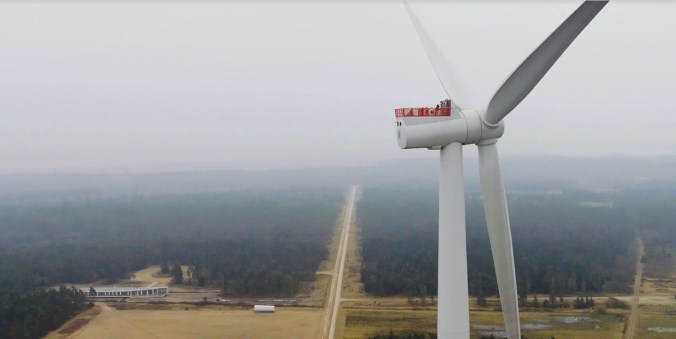
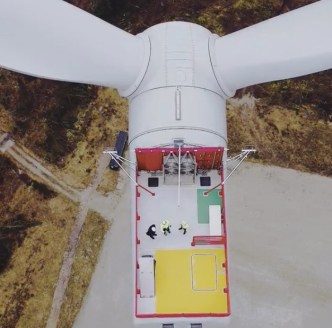
Prototype wind turbines whirl at a testing site in Osterild, near the northern end of Denmark’s Jutland peninsula. By Rasmus Degnbol

Thanks to the New York Times for this reminder that, in spite of what headlines often lead us to believe, progress is out there on as many fronts as we care to look to:

How Windmills as Wide as Jumbo Jets
Are Making Clean Energy Mainstream

WindTurbs.jpg

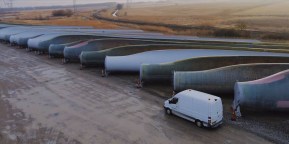
Blades for wind turbines lie outside a factory, waiting to be transported to wind farms.By Rasmus Degnbol

OSTERILD, Denmark — At the northern end of Denmark’s Jutland peninsula, the wind blows so hard that rows of trees grow in one direction, like gnarled flags.

WindTurbs3.jpg

Technicians reach the roof of these enormous wind turbines either via an internal elevator or, if the turbine is installed offshore, by helicopters that lower them into the fenced-off area.By Rasmus Degnbol

The relentless weather over this long strip of farmland, bogs and mud flats — and the real-world laboratory it provides — has given the country a leading role in transforming wind power into a viable source of clean energy.

After energy prices spiked during the 1973 oil crisis, entrepreneurs began building small turbines to sell here. “It started out as an interest in providing power for my parents’ farm,” said Henrik Stiesdal, who designed and built early prototypes with a blacksmith partner. Continue reading

Lyft Is Now Carbon Neutral

Image © Medium

We’ve already expressed our natural preference for Lyft, although Uber is still necessary and useful in certain countries outside the US. But now there is yet another reason to support the underdog, after they announced a few days ago that their rides were from then on (i.e., now) carbon neutral, through the funding of emission mitigation and capture, reforestation projects, and renewable energy programs.

Continue reading

Global Problems, Forests & Solutions

19lovejoy-reid-jumbo.jpg

Thomas E. Lovejoy a pioneer in the use of economics to conserve forests and other ecosystems globally is joined by John Reid, who has worked in the Amazon since 1965, in presenting a case for:

How Big Forests Solve Global Problems

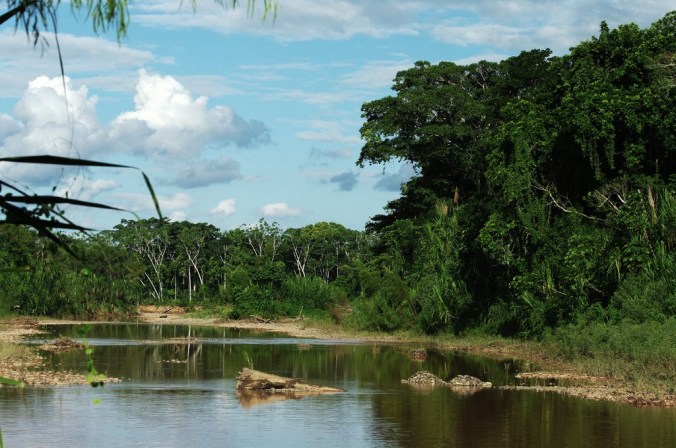
Sit on a log by the Madidi River in Bolivia at dusk and you can hear what an Amazon forest should sound like. The music includes red howler monkeys, breathy thumps from the mutum jungle fowl, droning cicadas, eerie calls locals attribute to deadly bushmaster vipers and the unhinged excitement of elusive titi monkeys. Around your feet, the beach is crisscrossed by jaguar tracks and those of the pony-size tapir, a shy beast that, if you keep quiet, will saunter out of the forest and swim across the river.

This is what scientists call an “intact forest landscape.” It’s a swath of at least 500 square kilometers (about 193 square miles, equal to 70,000 soccer fields) of unbroken forest. Because of their size, these areas have maintained all their native plant and animal life and biophysical processes. These forests still adorn parts of our planet’s tropical midsection, notably the Amazon, Congo Basin and the island of New Guinea. And they form a northern belt, the boreal forests of Canada, Russia, Alaska and Scandinavia. Continue reading

Trees For Life In Scotland

4000m.jpg

Trees for Life have planted 1.5m native trees in Glenmoriston and nearby Glen Affric since being founded 30 years ago. Photograph: Desmond Dugan/RSPB/PA

Thanks to Damian Carrington, the Guardian’s Environment editor, for this:

‘Magical’ mushroom mix to boost regrowth of lost Scottish forests

Return of Great Caledonian forest speeded up with fungi spores to help saplings flourish

The return of the Great Caledonian forest that once covered much of Scotland’s highlands is being boosted with a special mix of mushroom spores that should help saplings survive better on the hills.

Fungi living on the roots of trees play a vital role in the ecology, helping to break down nutrients in the soil. But trees were lost in much of the Highlands many years ago so the fungi vanished too.

The new project, run by Trees for Life, is adding the spores when young trees are planted. Continue reading

The Luck of the Draw

Me (left, obviously) with my Costa Rican non-birder friends in Río Celeste, Costa Rica

We’ve discussed eBird countless times here in the past, but I don’t think I ever mentioned their monthly challenges, which are designed to encourage eBirders to contribute some extra element of data to their usual checklists in a given month, with the chance of being randomly selected from the pool of people who satisfy the challenge requirements. If you’re chosen, you’ll receive an excellent pair of binoculars from Zeiss Optics!

In the past there have been challenges related to adding breeding codes to checklists (for example, noting if a species was observed carrying nesting material, or displaying, or feeding a juvenile); noting flyover species; going out birding with someone else and sharing the checklist; using the eBird app; and more! I think I remember a challenge from 2015 that involved checklists including raptors and vultures, and I recall being frustrated because it came a month after I’d been in Jamaica reporting Turkey Vultures several times a day. Continue reading