Fishes, Fishing & Fishermen, Reviewed

Untitled-1

Book covers left to right: Fishes in the Fresh Waters of Florida, Fly Fishing for Redeye Bass, and Born to Fish

Thanks to Mathew L. Miller for an honest take on these three books:

Review: Fishing and Conservation

The mayflies are hatching, river levels are dropping and the evenings are getting longer. It’s the most wonderful time of year for those of us in North America who love to fish.

And if you can’t be out fishing? Well, you can always read a fish book. Here are three great new reads: a biography of an obsessed angler turned conservationist, a how-to book about overlooked species that need some attention, and an invaluable reference guide.

I have no interest in competitive fishing, and even less in books by and about celebrity anglers. I find most of them to be self-congratulatory and poorly written. So I’d normally have little inclination to read a book about a record-breaking striped bass angler, one who gained fame by appearing on the show Shark Tank.  Such a book would also appear to be a poor fit for a conservation blog. Continue reading

Meatless Monday Economics Info Session

5333W

It is Monday, a good time to revisit the “meatless” movement, the one where you take one small step at a time to a better diet. Thanks to Bibi van der Zee and colleagues at the Guardian for arranging this guide to all the good reasons to reduce or eliminate meat from the diet:

What is the true cost of eating meat?

As concerns over the huge impact on the environment, human health and animal welfare grow, what future is there for the meat industry

What are the economics of meat?

5616 (2)

Cattle in the Brazilian Amazon. Photograph: Rodrigo Baleia

Food and farming is one of the biggest economic sectors in the world. We are no longer in the 14th century, when as much as 76% of the population worked in agriculture – but farming still employs more than 26% of all workers globally. And that does not include the people who work along the meat supply chain: the slaughterers, packagers, retailers and chefs.

In 2016, the world’s meat production was estimated at 317m metric tons, and that is expected to continue to grow. Figures for the value of the global meat industry vary wildly from $90bn to as much as $741bn. Continue reading

Big Day 2018 at Costa Rica’s Carara National Park, And Nearby At Marriott Los Sueños

IMG_0353

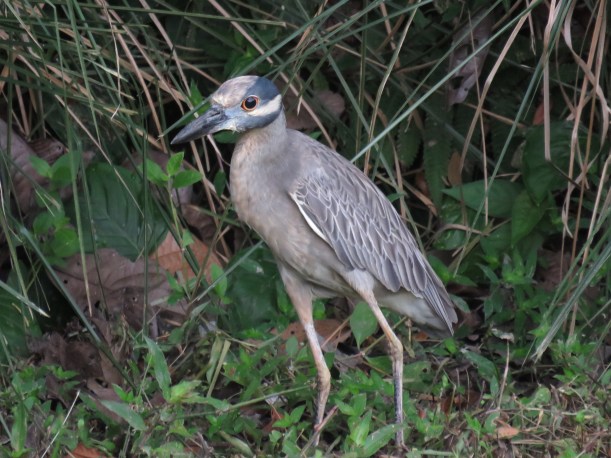
The first lucky bird of the day, a Yellow-crowned Night-Heron at Marriott, which I hadn’t seen yet on property

Almost four years ago, James and I took a day trip to Carara National Park, on the Pacific coast of Costa Rica where the tropical dry forest meets the moist rain forest in a transition zone that provides a great mix of habitats for all sorts of birds and other wildlife. On eBird, Carara’s Hotspot has over four hundred species, which made it a natural place for me to spend part of my Global Big Day this year, since I was already documenting the avian life on the property of the Marriott Los Sueños in Herradura, just half an hour south along the coast. These photos are from my May 5th efforts!

IMG_0359

The Turquoise-browed Motmot is a regular at Marriott and one of my favorite “common” birds in the country

I started the morning at 5:30am, heading out onto the perimeters of the forests surrounding Marriott Los Sueños and its golf course. Continue reading

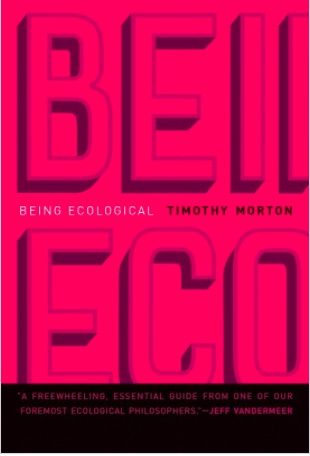
Being Ecological When Nature Is Perceived With Limits

BeingEco

A book about ecology without information dumping, guilt inducing, or preaching to the choir.

This new book is mentioned in a description of coming to terms with a life without water, an essay written from the perspective of living in Cape Town, South Africa. The essay is moving in the way a dream can be, which fits the writer’s reference to what we all might come to know as “the water-anxiety dream.”

The essay was effective enough to get me to click through to find out more about the book to the left. Which leads to Timothy Morton, who has somehow avoided our notice until now. How had we missed an author of books with titles like Dark Ecology, and The Ecological Thought, as well as Ecology without Nature?

Nevermind how. My thanks to Rosa Lyster for this, among other gifts from her essay.

Lyster-Capetown-Drought

For some residents of Cape Town, the memory of the drought is already fading. But, in an increasingly parched world, will the anxiety ever really end? Illustration by Owen Gent

A friend of mine got married in her parents’ garden last year, on a lavishly beautiful late-summer afternoon in Cape Town. Many of the guests were British, and they could not stop remarking on the fineness of the weather. It was a startling reminder that some people still relish hot days with no possibility of rain, that not everyone looks upon February in the Western Cape as something to be endured. After the ceremony, my date and I stood by the swimming pool, drinking sparkling wine and monitoring the canapés. My friend’s stepfather came by to say hello, carefully picking his way past the bride’s two young brothers, who were playing an ecstatic game of hide-and-seek on the lawn, getting grass stains on their tiny suits. After gracefully accepting our praise about how lovely everything had been, he told us that he’d been having torrid anxiety dreams. We nodded. Weddings are notoriously hard on the old nerves—guests to be tended to, speeches to be made, and the pool just lying there, waiting for any old idiot to accidentally fall in and cast an undignified pall over the happy day. He shook his head. His dream, he explained, was about the garden. Continue reading

Commerce, Conscience & Conservation

06Patagonia1-jumbo

Yvon Chouinard, the founder of Patagonia, with its chief executive, Rose Marcario, in the tin shed where he once forged and hammered metal. The outdoor-clothing company has mixed commerce and activism since the early 1970s. Credit Laure Joliet for The New York Times

Since the early days of this platform we have linked to stories about this company many times, and its founder in particular is in our pantheon of role models. During these seven years we have also studiously avoided linking to stories involving politics, other than highlighting activism that holds public officials accountable. This story below borders on  too much politics, but I find the company’s position not only acceptable, but as usual about this company, aspirational. Thanks to David Gelles for this story about how Patagonia has supported grass-roots environmental activists for decades and how it is suing the president in a bid to protect Bears Ears National Monument:

merlin_136030764_da829491-ce0c-4974-a0f9-b170acc558c4-superJumbo

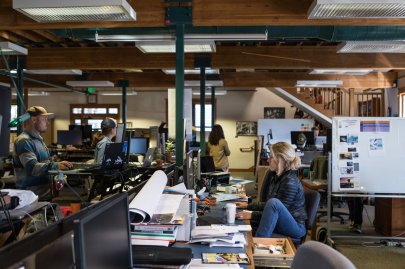
Patagonia employees at the Ventura, Calif., headquarters, where there are picnic tables in the parking lot, on-site day care and easy access to the beach.CreditLaure Joliet for The New York Times

VENTURA, Calif. — The offices of Patagonia occupy a low-slung complex of stucco buildings in this sleepy beachside town in Southern California. There are solar panels and picnic tables in the parking lot, day care with a jungle gym by the main lobby and easy access to the beach, where employees surf during lunch break. It is a corporate Eden of sorts, where idealistic Californians run a privately held company that sells about $1 billion of puffy down jackets and organic cotton jeans each year.

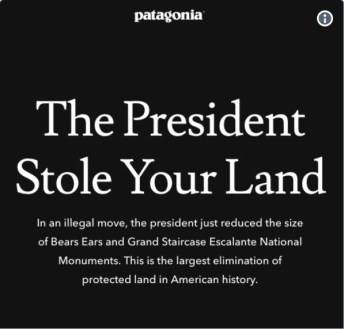
Screen Shot 2018-05-05 at 7.06.08 AMBut on an unseasonably hot and windy Monday morning in early December, Patagonia headquarters were transformed into something that quickly resembled a war room. There were emergency conference calls with Washington lawyers. Court filings were prepared. Web designers remade the company’s home page.

It wasn’t a business crisis that had mobilized the company, however. It was politics. Continue reading

Global Big Day 2018

GBD2018

Last year at this time, I was in Belize hosting a team from the Cornell Lab of Ornithology. I had known of the Lab starting 30 years ago when we moved to Ithaca for me to start graduate school at Cornell, and had known the Lab’s backyard, Sapsucker Woods, since Seth was born and we walked him through in a stroller from time to time. But I did not really know much about the Lab’s work until Seth started working there in 2011, during his sophomore year of college. And then in 2012 we had another young Lab worker join us in India.

We have been celebrating Global Big Day ever since, in India and Costa Rica, then last year in Belize. This year Seth is in Costa Rica, where he will be in a national park with a very high bird species counts. I hope we will hear from him about that experience. For now, may we recommend you click the button above to learn more?

Humpback Comeback, Brink To Boom

merlin_137560146_04720b59-267d-4943-82e7-2da5e9f11e4d-master768

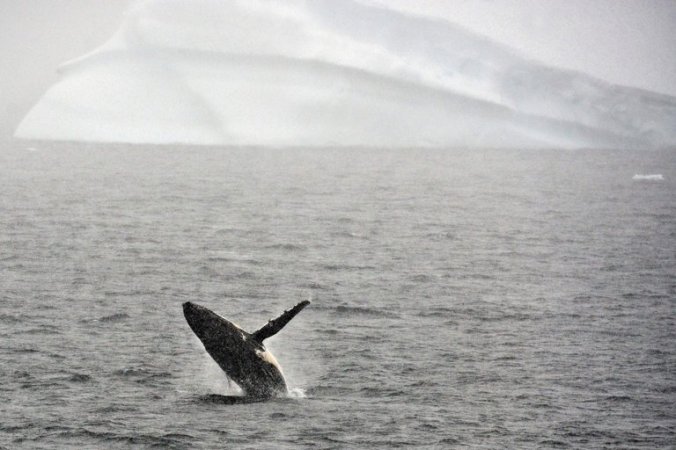
Humpback whales in the southern oceans around Antarctica appear to be breeding successfully, recovering their population. Credit Eitan Abramovich/Agence France-Presse — Getty Images

Ford does what it thinks to be in the best interest of its shareholders, and other companies follow suit as they sense the opportunity to do so, reducing their environmental responsibilities. Meanwhile and nonetheless, thanks to the work of organizations like WWF and Greenpeace, we have the opportunity to witness, if from afar, the rebirth of a population that signals some intact corners of the earth’s environment:

Humpback Whale Baby Boom Near Antarctica

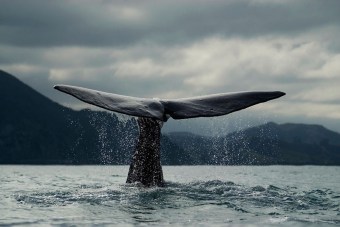
Blue whale, New Zealand

© naturepl.com/Mark Brownlow/WWF

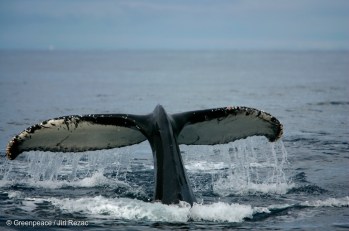
In a rare piece of good news for whales, humpbacks who live and breed in the southern oceans near Antarctica appear to be making a comeback, with females in recent years having a high pregnancy rate and giving birth to more calves.

Humpback whales were nearly hunted out of existence in the late 19th and most of the 20th centuries until treaties were signed to stop killing them and protections were put in place for the world’s coldest, least accessible continent.

Humpback Whales in the Southern OceanThe end of hunting has fostered the recovery of the school-bus-sized animals whose life spans are roughly comparable to ours, according to Ari Friedlaender, an associate researcher at the University of California Santa Cruz, who led the new study.

The population was believed to have been reduced to less than 10 percent of it pre-whaling levels. Continue reading

Just When Ford Started Being Great Again, The Signals Indicated A Shift To Reverse

merlin_137576667_7fa921a6-9ace-4e0a-9579-4c864e5232c3-jumbo

Cristina Spanò

Ford1I have been based back in the Americas for fifteen months. For the previous couple years I had been driving Ford’s best-selling vehicle in India –a vehicle with the three letters Eco in its name. This was the company that built the cars I grew up in, but had long since stopped believing in. That “Eco” car got me starting to believe again.

Then the election of 2016 happened. Holding aside all its other dangers, the election result has elevated ecological danger to perhaps its greatest level in my lifetime. A government elected on the slippery Make America Great Again slogan has given cover to companies seeing profit in rollbacks of erstwhile impressive ecological commitments. And the slope down which we all are now sliding seems to be getting steeper. An op-ed by Jamie Lincoln Kitman, the New York bureau chief for Automobile Magazine, illuminates the slip and the slope:

Why Is a ‘Green’ Car Company Pivoting Back to S.U.V.s?

Ford2Two years ago, the Ford Motor Company boasted about having been named Interbrand’s Best Global Green Brand and said it was committed to working to meet stricter fuel economy standards. Last week, after lobbying with the rest of the industry to strike down those standards, Ford announced that it would largely abandon the American passenger car market in favor of building more trucks, crossovers and S.U.V.s. Continue reading

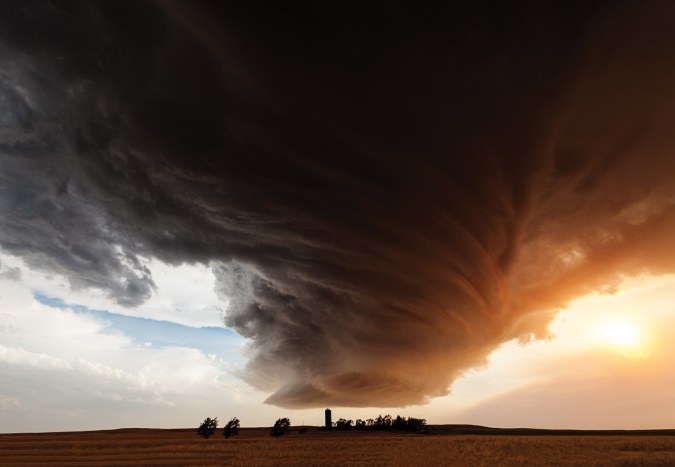
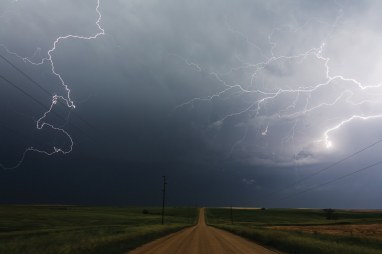
Celebrating A Force Of Nature, The Sky, With Clouds In All Their Visual Wonder

Big%20Cloud%20pg%2092.jpg

Nebraska, June, 2012.

Just because the climate is changing at a pace both dangerous and seemingly impossible to slow, given human tendencies; just because the storms that come from clouds can cause fear and worse; none of that diminishes our wonder and our ability to see importance in those clouds:

A Storm Chaser’s Unforgiving View of the Sky

Big%20Cloud%20pg%20173.jpg

Texas, June, 2014.

By Alan Burdick

Photography by Camille Seaman

A cloud is a shade in motion. Shape-shifting and moody, it arrives with a message that is opaque as often as it is threatening. “Clouds always tell a true story,” the Scottish meteorologist Ralph Abercromby wrote, in 1887, “but one which is difficult to read.”

Big%20Cloud%20pg%2057.jpg

Kansas, June, 2008.

The appeal of clouds is obvious: no two are the same, and no one is the same for long. And they not only manifest change but inflict it as well. A cloud can be beautiful, terrible, or both—the embodiment of the sublime. Few other things on earth still present us with a power larger than ourselves. To watch a supercell gather force over the plains, as storm chasers take such pleasure in doing, is to watch Zeus take shape on earth. Continue reading

Drink The Wonk

5219.jpg

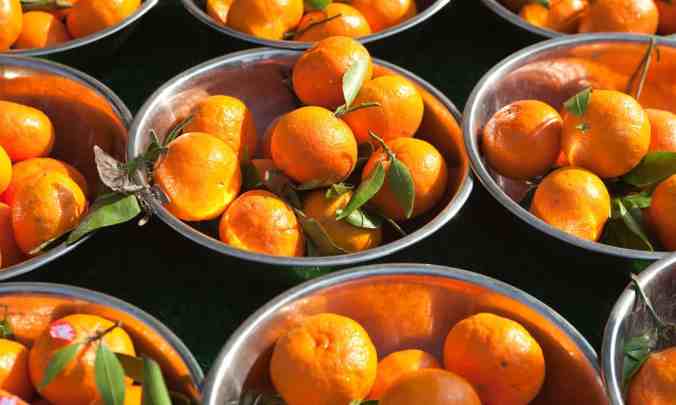
Soft fruit, such as oranges, root vegetables and salad are particularly prone to waste. Photograph: Eric Farrelly/Alamy

Rebecca Smithers, consumer affairs correspondent for the Guardian, has reported on a simple idea to not waste fruit just because its appearance is not standard. Wonky, as they say on the island where the English language comes from. Don’t fear the wonk, this article and this brand are saying. Was this not already happening with juice, as with other waste-reducing beverages? Can a brand be built on such an idea? Thumbs up to that:

‘Wonky’ fruit and vegetables that would have been thrown away are now being used to make a new range of juices, in one of a number of assaults on food waste.

One of the UK’s largest fresh produce growers has teamed up with a Spanish fruit supplier to create a new product, Waste Not, which will stop edible but visually ‘imperfect’ ingredients such as fresh celery, beetroot and oranges from being dug back into the soil, or used for animal feed. The new juices will go on sale in branches of Tesco.

The move is one of a growing number of innovations to reduce food waste throughout the supply chain, following criticism of supermarkets and suppliers that perfectly good food is being thrown out while UK consumers are relying increasingly on food banks. Continue reading

Rehabilitation Of A Vilified Umamifier

Rosner-MSG.jpg

Ajinomoto, the world’s largest manufacturer of MSG, produces umami magic at its panda-themed headquarters. Photograph from Alamy

In the new issue of one of the sources we draw from weekly there is an article–An MSG Convert Visits the High Church of Umami, by Helen Rosner–that gives a refreshing splash of cold water on the face. My kitchen counter looks like the one she describes, sans MSG. And for the reasons she lays out. Always happy to be corrected, I recommend this to others who may have suffered the same culinary fate as me until now:

On my kitchen counter, to the side of the stove, there is a jagged skyline of jars and bottles, featuring the condiments and oils and spices that I use too often to ever properly put away. A few are ingredients so key that I buy them in bulk, storing the multi-kilo mega-packages in the back of the closet and decanting them for daily use into more countertop-friendly vessels: olive oil, kosher salt, and monosodium glutamate, or MSG. In one combination or another, this holy trinity ends up in almost everything I prepare—the MSG, with its savory chemical magic, is particularly useful as rocket fuel for dishes of raw fruits and vegetables. I whisk it into vinaigrette before dressing a salad; add it by the teaspoon to the relish of fresh plums and jalapeños that I make each summer; and, whenever I’m feeling snacky, sprinkle it on chopped cucumbers. Continue reading