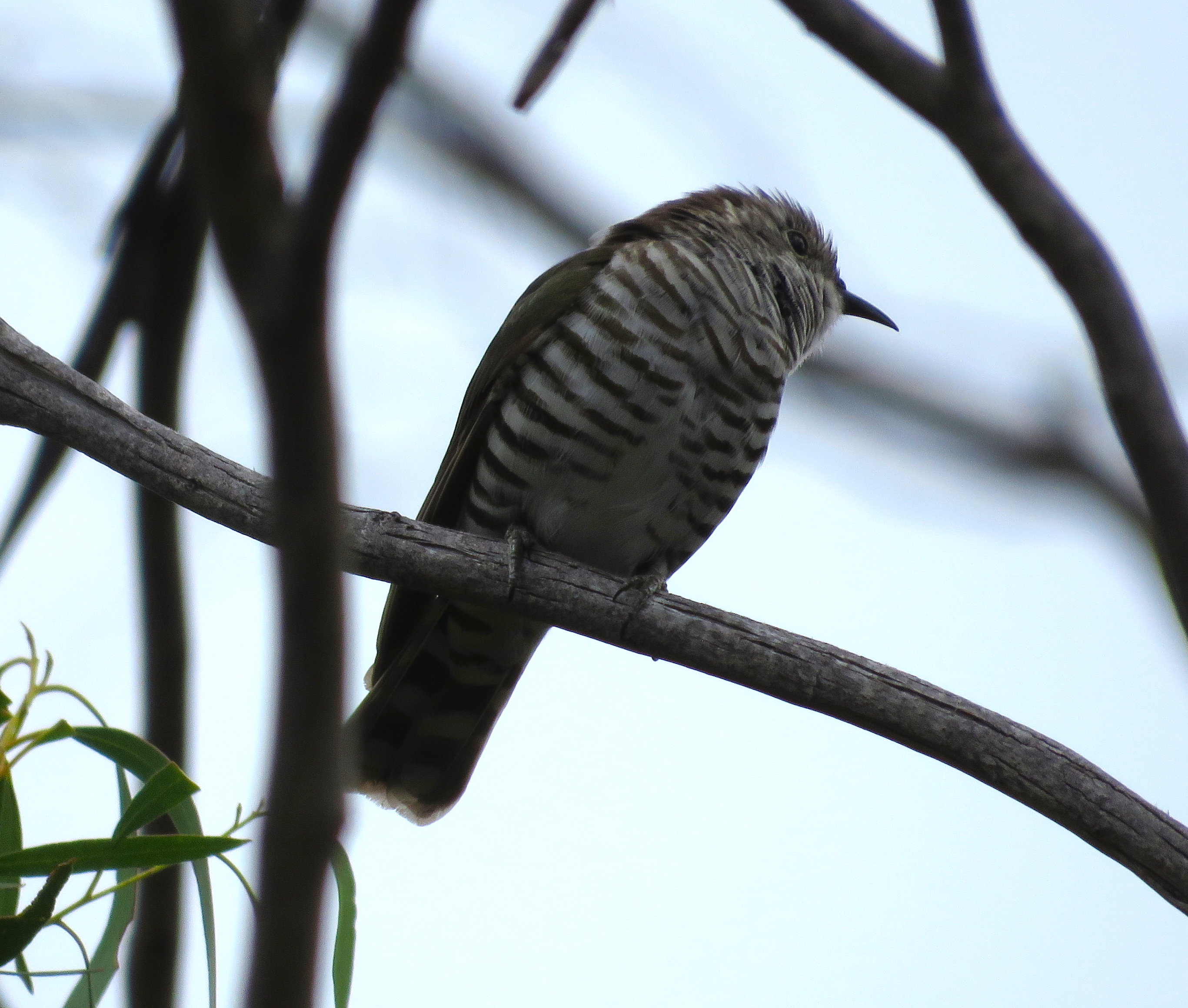
Bird of the Day: Shining Bronze-Cuckoo
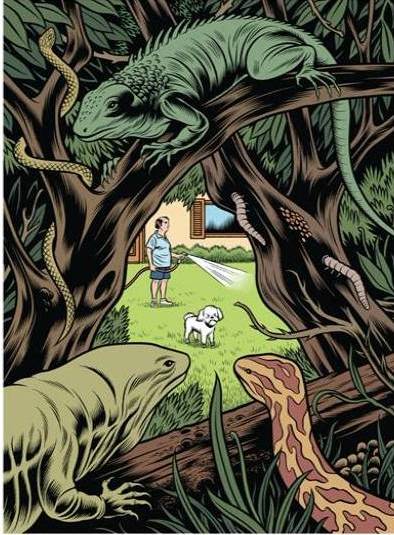
The state’s ecology is a kind of urban legend come true—the old alligator-flushed-down-the-toilet story, with a thousand species. Illustration by Charles Burns
When I first read this article about the downstream problems of the pet trade, I was living in India and learning about efforts to reduce the poaching crisis of wild animals being transported eastward as well as westward. Florida seemed a long way away and the problem Bilger described was a crisis, for sure, but it bordered on sounding, for lack of a better term, exotic. And maybe worthy of closer observation?
The Legal ‘Pet-Poaching’ Problem
It’s easy to spot a wild parrot in Miami, as in San Francisco, San Diego, and several other metropolitan areas in the U.S. But in Florida, “technically, it’s not illegal to take wild parrots, according to Florida Fish & Wildlife,” says Daria Feinstein, a parrot conservationist, in Neil Losin’s short documentary, Parrots in Peril. The film examines the threat that poaching poses to Miami’s wild macaws. Continue reading
juvenile – Baja California Sur, Mexico

‘When we say ‘food apartheid,’ the real conversation can begin.’
Illustration: Daniel Chang Christensen
Thanks to Anna Brones for bringing this article, and its subject, to our attention in the Guardian, as a reprint of an essay originally published in Guernica:
Food apartheid: the root of the problem with America’s groceries
Food justice activist Karen Washington wants us to move away from the term ‘food desert’, which doesn’t take into account the systemic racism permeating America’s food system
America’s sustainable food movement has been steadily growing, challenging consumers to truly consider where our food comes from, and inspiring people to farm, eat local, and rethink our approaches to food policy. But at the same time, the movement is predominantly white, and often neglects the needs and root problems of diverse communities. Continue reading

Valparai, Tamil Nadu
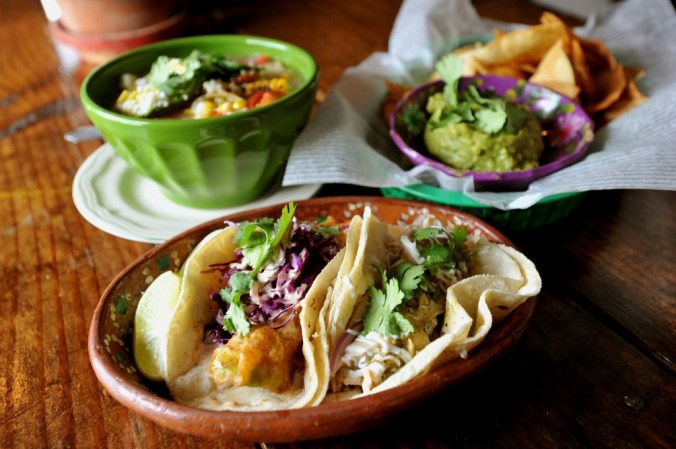
Tacos at a restaurant in Nashville. Credit Christopher Berkey for The New York Times
Margaret Renkl, Contributing Opinion Writer for the New York Times, shares an opinion that I am, as a son of an immigrant, inclined to agree with. Even if I was not so closely related to the theme, it would still make sense to me:
Eating Without Borders in Nashville
NASHVILLE — Not quite two weeks ago, I was driving down Nolensville Road, Nashville’s “international corridor,” looking for a restaurant called Tennessee Halal Fried Chicken. In the passenger seat was John T. Edge, the director of the Southern Foodways Alliance and author of “The Potlikker Papers: A Food History of the Modern South.” He was telling me that this particular approach to dining out, in one way of looking at it, could be considered a form of exploitation: “To patronize a restaurant of people who are different from you can be a kind of booty call,” he said.
This is an idea Mr. Edge has been considering for some time. The historically complicated nature of cross-cultural dining goes back to black-owned barbecue joints in the age of Jim Crow: “White Southerners patronized those restaurants,” he said. “They got in, they got what they wanted, and they got out.” Continue reading


Credit: AP Photo / Sebastian Scheiner
This is the second time in a year that the biology of free will is the story. Monday morning in mid-May 2018 nothing else seems more important. Thanks to Marc Sollinger and colleagues at WGBH and PRX (click the button to the left for the story):
Humanity is simultaneously incredibly kind and incredibly violent. We commit indescribable atrocities, but also acts of incomprehensible compassion. There is both horror and beauty in our history. Which leads to the question… how do we reconcile this inherent contradiction? It all goes back to our biology, according to Robert Sapolsky, a neurobiologist at Stanford and author of the book Behave: The Biology of Humans at Our Best and Worst. In fact, all questions about human behavior are, at their core, about biology. Continue reading
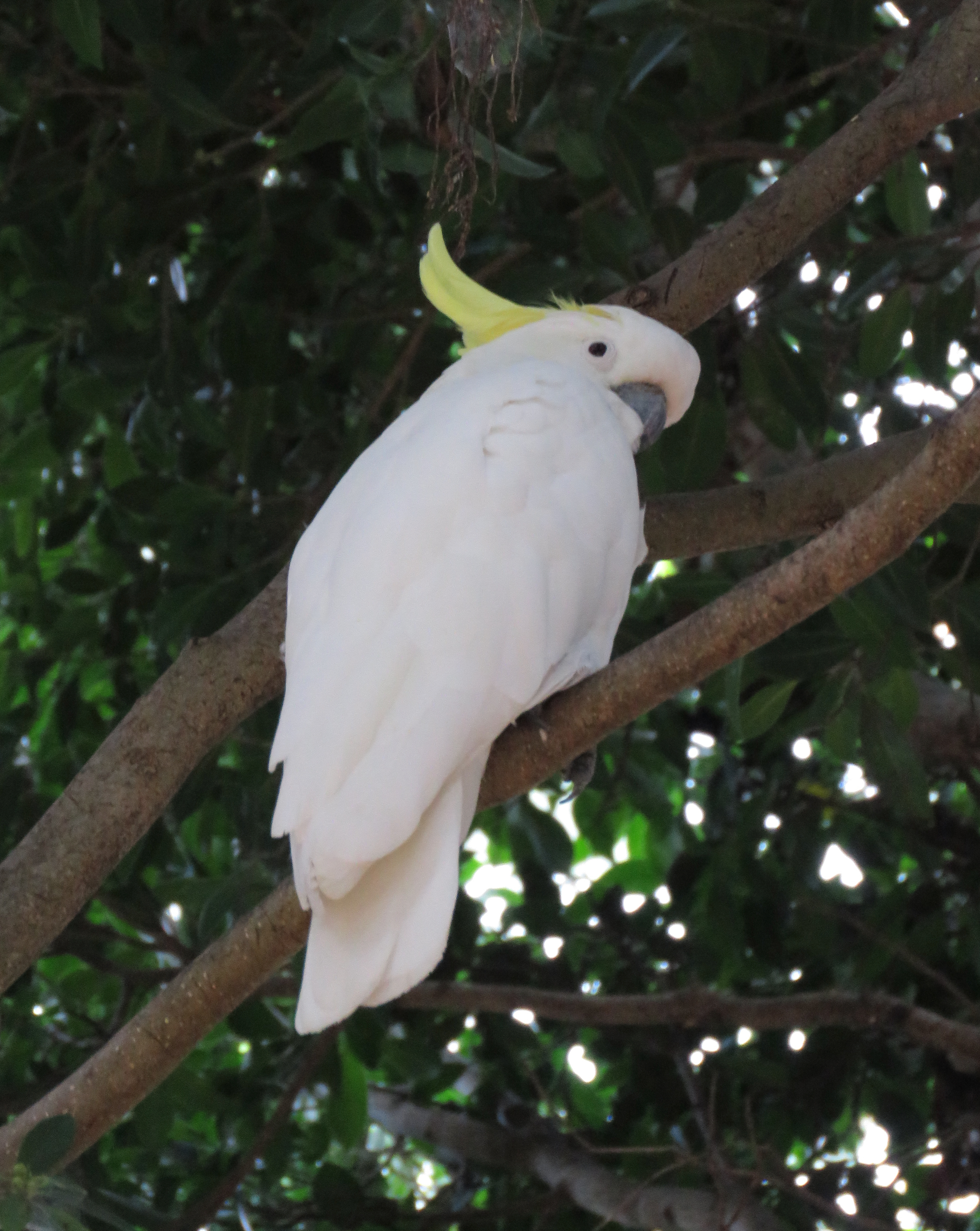
female – Baja California Sur, Mexico
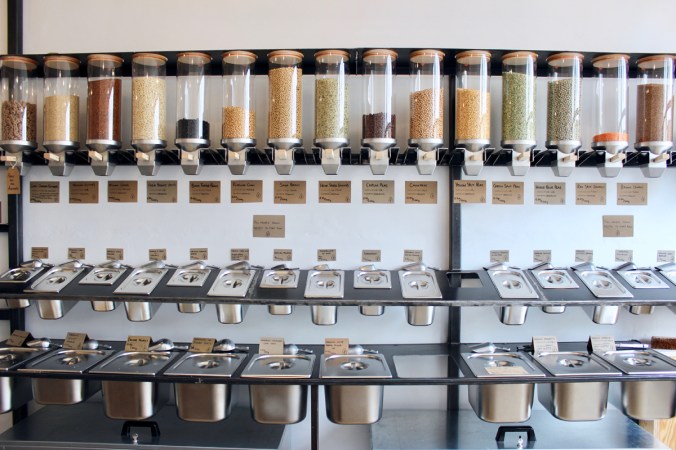
Bulk food bins at Hetu, an all-bulk / zero-waste grocery store in London. (Photo credit: Celia Ristow)
Thanks to Cathy Erway and colleagues at Civil Eats for this story on where and how the boundaries of shopping waste-reduction is being pushed:
Zero-Waste Stores Ask Shoppers to Bring Their Own Everything
As record amounts of plastic waste pollutes the planet, some grocers are helping shoppers do without.
Ekoplaza’s plastic-free aisle. (Photo credit: Ewout Huibers)
Tom and Katrin Helmick live in New York’s Hudson Valley region with their 2-year-old son. They cook and grow vegetables in their backyard during the summer months, bring reusable totes to the grocery store or farmers’ market, and never buy plastic bottled water. Although they try to avoid buying foods that come in non-recyclable packaging, their landfill waste bin still receives a hearty diet of disposable baby food pouches and “lots of thin plastic,” says Tom.
“When we do buy grocery store meat, I hate that it still comes wrapped in Styrofoam. That’s why I love going directly to the source for our meat from a farm nearby that is simply vacuumed-packed,” says Tom. “We find it ridiculous that three people can create so much waste,” adds Katrin. Continue reading
Rio Lagartos, Mexico
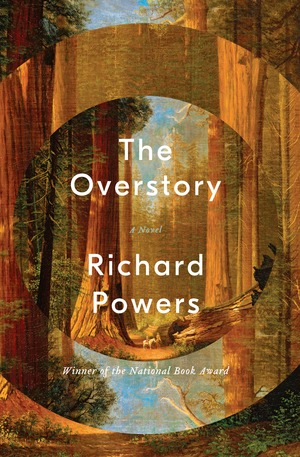 The novelist Richard Powers, I see from this review, has utilized an idea I first heard of in 2016, and that idea disappeared for a couple years (from my view, anyway). But that compelling idea is back, fictionalized and more interesting than ever:
People see better what looks like them,” observes the field biologist Patricia Westerford, one of the nine—nine—main characters of Richard Powers’s 12th novel, The Overstory. And trees, Patricia discovers, look like people. They are social creatures, caring for one another, communicating, learning, trading goods and services; despite lacking a brain, trees are “aware.” After borers attack a sugar maple, it emits insecticides that warn its neighbors, which respond by intensifying their own defenses. When the roots of two Douglas firs meet underground, they fuse, joining vascular systems; if one tree gets ill, the other cares for it. The chopping down of a tree causes those surrounding it to weaken, as if in mourning. But Powers’s findings go beyond Dr. Pat’s. In his tree-mad novel, which contains as many species as any North American forest—17 are named on the first page alone—trees speak, sing, experience pain, dream, remember the past, and predict the future. The past and the future, it turns out, are mirror images of each other. Neither contains people.
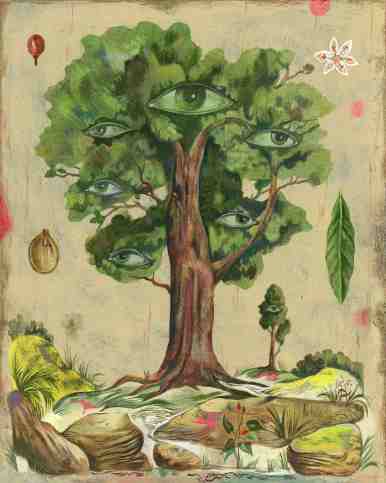
Olaf Hajek
Barbara Kingsolver’s earlier review in the New York Times started the ante on the must-read judgement that Nathaniel Rich (above) upped:
Trees do most of the things you do, just more slowly. They compete for their livelihoods and take care of their families, sometimes making huge sacrifices for their children. They breathe, eat and have sex. They give gifts, communicate, learn, remember and record the important events of their lives. With relatives and non-kin alike they cooperate, forming neighborhood watch committees — to name one example — with rapid response networks to alert others to a threatening intruder. Continue reading

Jane Tansell, one of the two handlers responsible for the rodent detection dogs, looks on from the background as a seal stares down the camera on South Georgia Island earlier this year.
Oliver Prince/Courtesy of South Georgia Heritage Trust
These three pairs of words in the post title, placed together in this order in a search engine, produce some interesting results from around the world. And today we find one more to add to the database. Thanks to National Public Radio (USA)’s Colin Dwyer for sharing this story:

The South Georgia pipit, seen posing for a glamour shot earlier this year, had been among the species hardest hit by the island’s invasive rodents.
Ingo Arndt/Courtesy of South Georgia Heritage Trust
There are no other birds quite like them in the world. The South Georgia pipit and pintail are so distinctive in the grand pantheon of ornithology, in fact, they draw their names from the one place they’ve made their home: South Georgia Island, sitting lonely in the forbidding South Atlantic not far from Antarctica.
Yet even in such a remote location, surrounded by penguins, fur seals and seemingly endless ocean, the birds have long been besieged by tiny alien invaders: rodents. Since the first European ships arrived in the late 18th century bearing rodents as stowaways, the voracious predators have devastated the South Georgia birds — which, with no trees to nest in, must make their vulnerable homes on the ground or in burrows.
Now, after more than two centuries, those invaders have been rebuffed. Continue reading
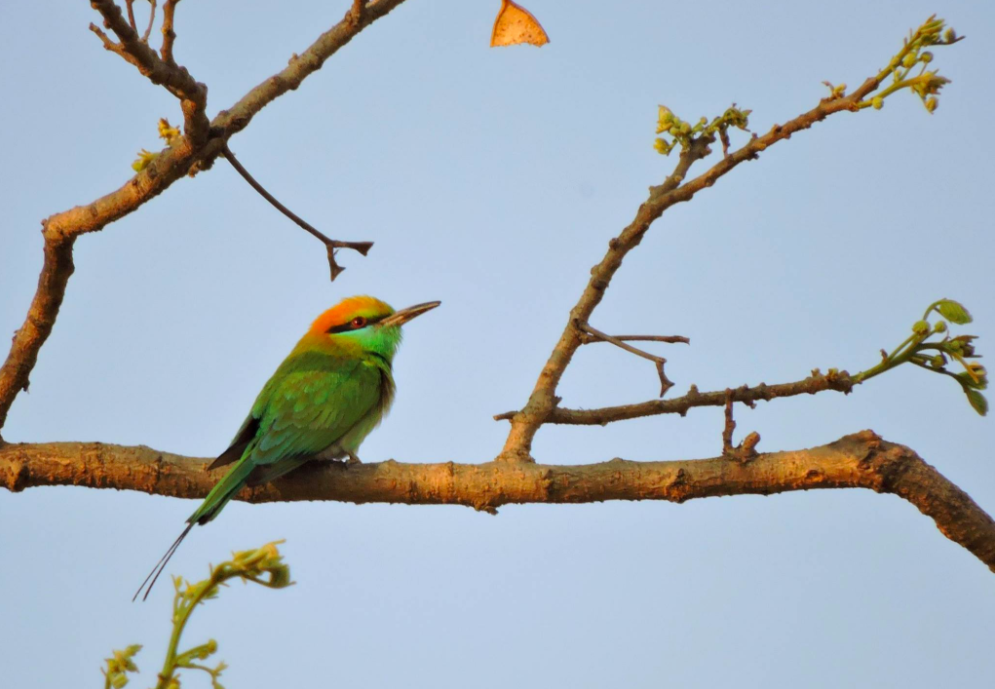
Lucknow, Uttar Pradesh
 I had already been impressed with the Atlantic’s weekly interview podcast, but since that most often has to do with politics or other topics not central to our purpose here, I have never linked to one of those. But here is an 8-episode show, whose first guest is one of my favorite thinkers currently. The host, Derek Thompson, is another plus, and the topic is quite timely:

Why Can’t Facebook Tell the Truth?
In the last 18 months, Facebook has gone through one of the worst public relations crises of any major tech company. In this episode, two guests debate whether Facebook is fixable, or whether its business model is designed to sell us lies. Continue reading
 Taking a cue from yesterday’s post, another recent Gastropod can be combined with a review in the New York Times of a book that fits well in our pages:
You’ve probably never heard of David Fairchild. But if you’ve savored kale, mango, peaches, dates, grapes, a Meyer lemon, or a glass of craft beer lately, you’ve tasted the fruits of his globe-trotting travels in search of the world’s best crops—and his struggles to get them back home to the United States.
This episode, we talk to Daniel Stone, author of The Food Explorer, a new book all about Fairchild’s adventures. Listen in now for tales of pirates and biopiracy, eccentric patrons and painful betrayals, as well as the successes and failures that shaped not only the way we eat, but America’s place in the world.
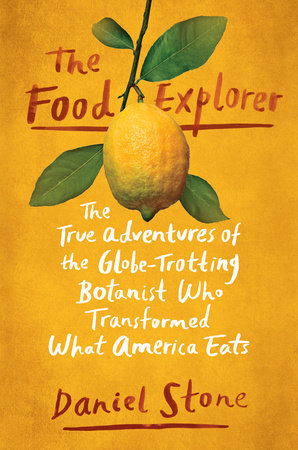 Daniel Stone, an author I had not known of 24 hours ago, fits well within our pages as part of a mix of historical sleuthing and present-day food activism that have been central themes here since we started. Thanks to his book being the subject of that podcast, as well as its review last month, allow us to recommend that if you have an hour for the both, combine the listen with the read:
In a photograph dated Christmas 1896, featured in “The Food Explorer,” Daniel Stone’s biography of the botanist and explorer David Fairchild, his subject is sitting with his patron and friend Barbour Lathrop, in what looks like an empty saloon or a lounge on a steamship. The caption informs us that they’re off the coast of Sumatra; both are dressed in white and have mustaches that border on the extravagant.
Continue reading
Bangalore, Karnataka
Maggie Marsek / Getty / Katie Martin / The Atlantic
The Atlantic’s partnering with specialists in content that would not qualify as the magazine’s historically typical fare, we think, is good for all concerned. The folks at Gastropodcast certainly qualify, we also think, and have thought so, more than once:
Peak Avocado Is Yet to Come
How the fatty green fruit went from near-extinction to a worldwide boom
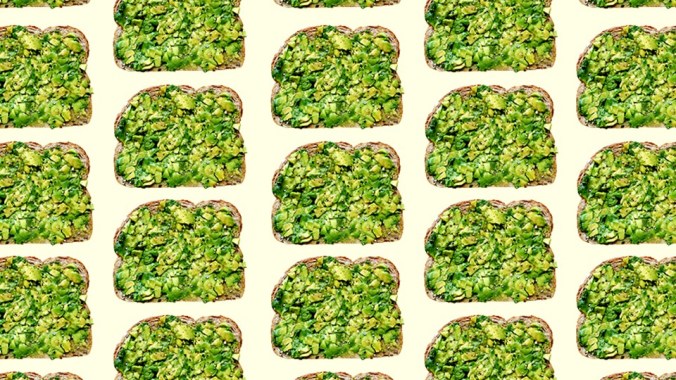
Avocados are on a roll. More precisely, they’re on toast—a lot of toast. Last summer, BritishVogue reported that more than 3 million new photos of whole, sliced, and toast-topping avocados are uploaded to Instagram every day. Continue reading
Estero San José, Baja California Sur, Mexico

 Organikos