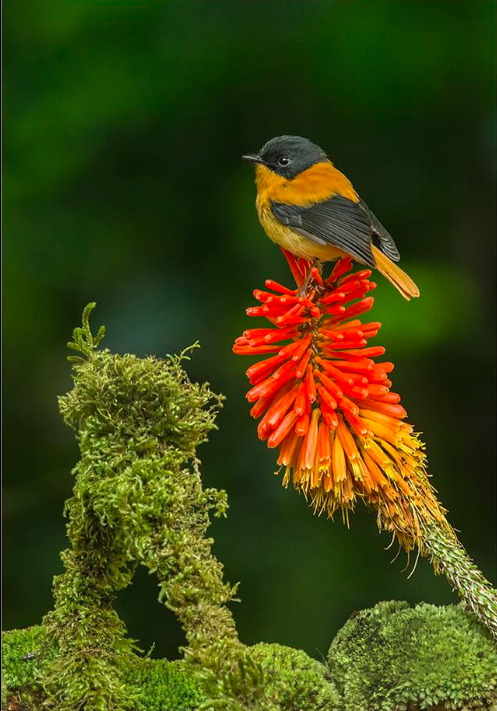
Nilgiris, India
Nilgiris, India

Image © National Geographic
In 2016 I wrote a couple times about eBird’s data––the observations contributed by citizen scientists––being used for migration maps, among other things. Those posts included animated gif images that illustrated the flow of thousands of birds across the Western Hemisphere at different times of year, which could be used in a casual setting to predict when to go out looking for a target species one wants to see in the wild, or in a conservation setting to know what time of the year is best to enforce certain environmental regulations, like open hunting or hiking seasons in sensitive areas. The moving maps also served as a mesmerizing graphic to simply astound us with the magnitude of travel these birds are undertaking.
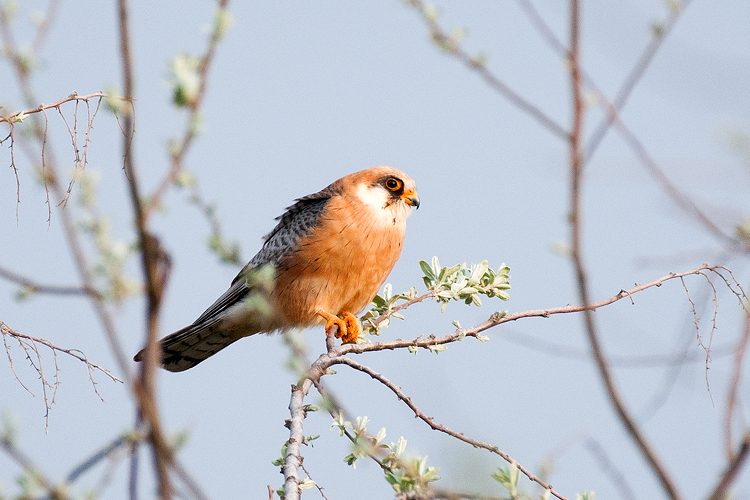
Leander Khil photography
Volga Delta, Russia
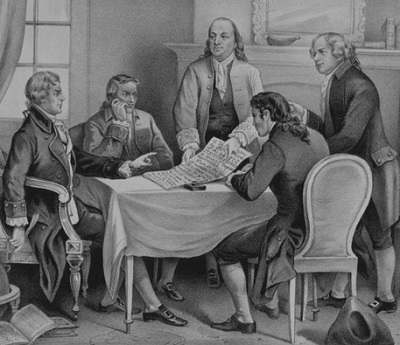
The Junto Club outgrew into the American Philosophical Society.
This historical reference is not typical of posts on this platform, except for when one of our contributors was in the midst of historical coursework that led to riffs like this; and then during his archival research that led to riffs like this.
We are riffing now from a current need (to put it mildly) for better conversation, with hindsight to a widely respected man’s approach at a time full of contentions. Thanks to Andrew Marantz for this brief note, whose accompanying illustration below belies the seriousness of the situation. Click the image to the left above to go to a historical archive with more background on this Talk of the Town item below:
Benjamin Franklin Invented the Chat Room
Conversation clubs, inspired by the Founding Father, have never felt more necessary.
In 1727, when Benjamin Franklin was twenty-one, he and a few friends—among them a scrivener, a joiner, and two cobblers—formed a conversation club called the Junto. They met on Friday evenings at a Philadelphia alehouse. “The rules that I drew up required that every member, in his turn, should produce one or more queries on any point of Morals, Politics, or Natural Philosophy, to be discuss’d by the company,” Franklin wrote in his autobiography. The United States was not yet the United States, but already he sensed a civility problem. His solution: structured, secular chitchat, “conducted in the sincere spirit of inquiry after truth, without fondness for dispute, or desire of victory.” Continue reading

Thattekad Bird Sanctuary – Soma Lagoon, Kerala
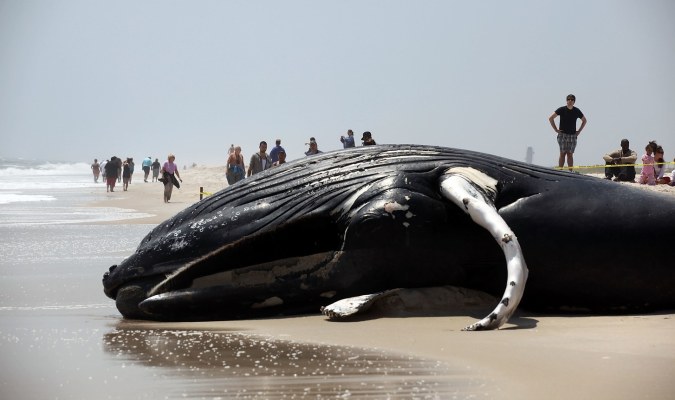
A humpback whale calf that washed ashore in Wantagh, New York. A series of “unusual mortality events” among whales has scientists worried that the ocean is more dangerous than ever. Photograph by Mario Tama / Getty
Thanks to Marguerite Holloway, who we have appreciated a couple times earlier, for this:
One foggy morning last April, a dead humpback whale washed up on New York’s Rockaway Beach. It was a young male, thirty-one feet long, and had extensive bruising—the result of contact with “something very large,” according to Kimberly Durham, of the Atlantic Marine Conservation Society, who performed the necropsy. The Rockaway whale was one of sixty-eight humpbacks that have died between North Carolina and Maine since 2016, casualties in what the National Oceanic and Atmospheric Administration is calling an “unusual mortality event.” And humpbacks, it turns out, are not the only species suffering. Continue reading
female – Chan Chich Lodge, Belize
 It’s a rare occasion that we republish one of our posts on this site – but April 1st is a special day, is it not? And as the weather warms, a little bit of lighthearted Spring frolicking won’t go amiss.
It was unlike me to have missed acknowledging the Vernal Equinox last week but please note that it wasn’t forgotten. In much of the northern hemisphere spring began sprouting all over the place, sometimes unseasonably early, and the first day of spring was observed in all its glory in Crist’s Holi series.
So I’m being careful not to miss April 1st and in the spirit of that celebration am sharing some of artist Ken Brown‘s collection of turn of the century (the 19th to the 20th that is!) French fantasy postcards that celebrate “Poisson d’Avril”, the French equivalent of April 1st or April Fools’ Day. Continue reading

Chopta, Uttarakhand

CreditPatricia Wall/The New York Times
This review, thanks to Ghaith Abdul-Ahad, has my attention on The Coffee-Flavored American Dream of a young man with about as improbable a mission as I can imagine. Returning to the coffee fields of Costa Rica’s Tarrazu region in a few days, I also plan to cross the Central Valley to see the latest mission accomplished of another coffee dreamer, the choice of Dave Eggers for his latest book topic is much appreciated.
A few years ago I traveled with a group of friends from the southern Yemeni port city of Aden to the capital of Sanaa in the north, taking the long coastal road that twists and curves around the bulge of Yemen’s southernmost tip. After passing the Bab el Mandeb strait, the road stretches along the seashore. Under a clear bright sky, the waters of the Red Sea shimmered and the sand glowed a warm ocher, the monotony interrupted only by an occasional fisherman’s shack, a small nomadic settlement or a bleached one-room mosque. Flat-topped trees looming in the distance suggested an African landscape.
CreditLorenzo Gritti
Ahead of us lay the port of Mokha, or Al-Mukha in Arabic, where from the 15th century onward ships set sail with precious Yemeni coffee bound for Istanbul, London, Amsterdam and eventually New York — so much coffee that the word “mocha” became synonymous with it. Continue reading
Bangalore, Karnataka
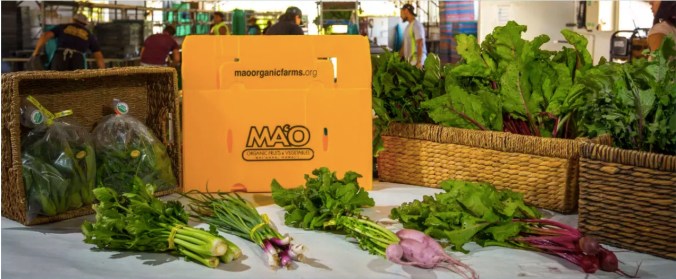
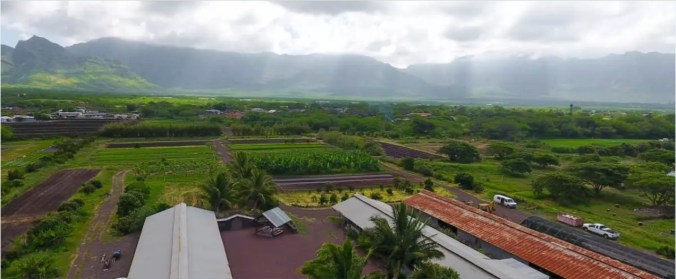
If we had come upon the website with no introduction maybe it would have looked like just another pretty organic farm in a tropical paradise.
But there are people involved, and it is a pleasant surprise to learn from Dakota Kim’s story Youth Farm In Hawaii Is Growing Food And Leaders how those people bring that place further to life. There is a mission worth reading about:
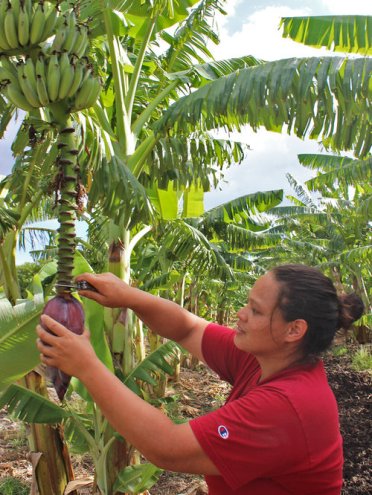
Cheryse Sana, farm co-manager, cuts a banana blossom off a tree at MA’O Organic Farms. Dakota Kim
A tight circle of teenagers is deep in conversation — not about movies or apps, but about … vegetables.
It’s 7 a.m. at MA’O Organic Farms, part of 24 acres nestled in an emerald mountain-ringed valley just two miles from Oahu’s west shore. Under a hot sun that bathes this idyllic breadbasket, college-aged farmers harvest tons of mangoes, bananas, mizuna (mustard greens) and taro every month for the island of Oahu.
The farm’s atmosphere bubbles with enthusiastic lightheartedness, its college interns quipping across the rows that they can beat their neighbors’ harvesting speed. But a calm falls over the group as they move from joking around to talking more seriously. A circle forms under an open pavilion, and a young woman speaks. Continue reading
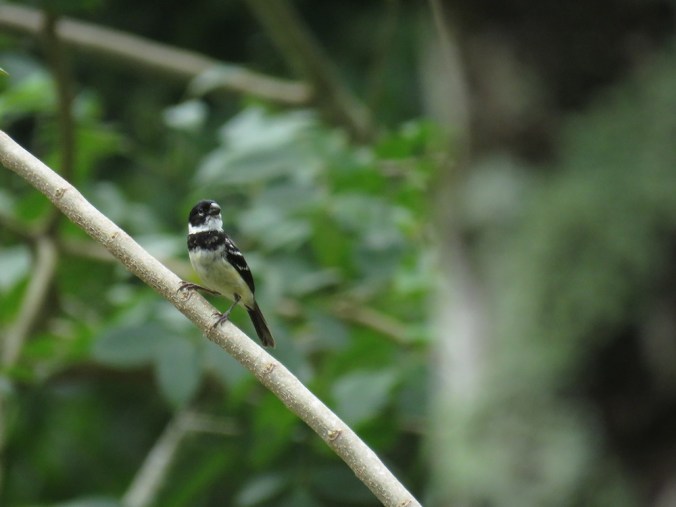
male – Gallon Jug Estate, Belize
Yesterday we were compelled to link to an illustration that captured the importance of vigilance. Putting that link in context was the reminder that our primary purpose on this platform is to seek out evidence of progress related to environmental and social innovation.
 Today a case in point. Credit is due to Starbucks. Just a couple days ago our vigilance antennae were roused by their opening in Yosemite, one more step in a national park system compromised by commercialism. There is no doubt that Starbucks is commercial, but they can also be model corporate citizens when seen from another angle.
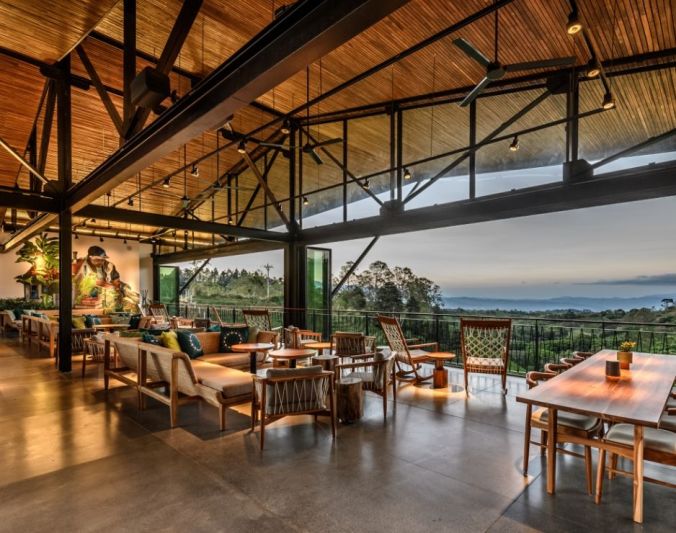
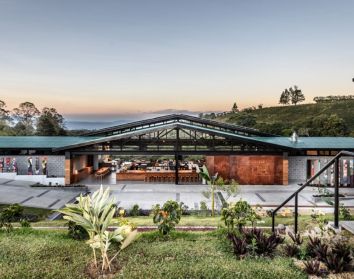 Costa Rica provides evidence in favor of Starbucks. Their recently opened facility–a combined working coffee farm, milling operation, visitor center, cafe, gift shop–called Hacienda Alsacia looks like a win-win for a country that deserves attention and investment, and a company that can provide them both of those.
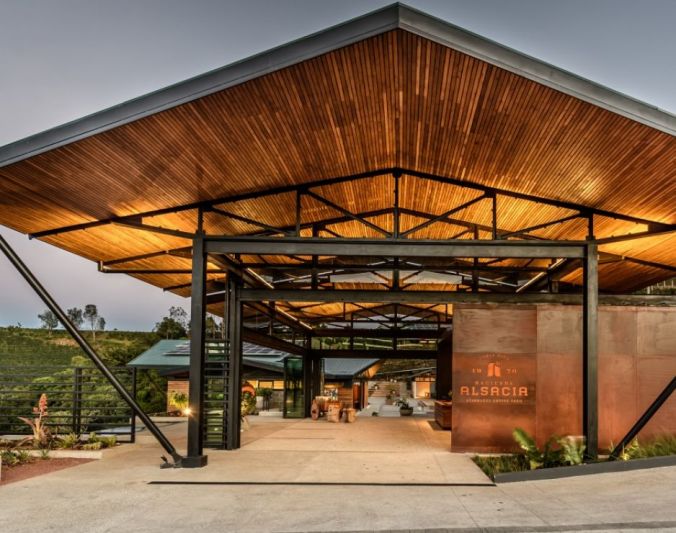
I plan to visit the property next week, so will save my commentary, focusing here on what makes me want to visit:
Starbucks Opens World Renowned Costa Rican Coffee Farm to Visitors
A 46,000-square foot visitor center immerses guests in the entire life cycle of sustainably grown, high-quality arabica coffee from seedling to picking, milling, roasting and the craft of brewing in a café
Starbucks approach to ethical sourcing and innovative coffee tree hybrid research also showcased at the visitor center, part of the company’s $100 million investment in an open-sourced farmer support program to help make coffee the world’s first sustainably sourced agriculture product Continue reading

Bhadra Tiger Reserve, Karnataka

William Ruckelshaus, who ran the E.P.A. under Nixon and Reagan, said that Pruitt and his top staff “don’t fundamentally agree with the mission of the agency.” Illustration by Paul Sahre; photograph by Saul Loeb / AFP / Getty (man)
The vast majority of posts on this platform are stories related to environmental conservation, social responsibility, community innovations. Forward-looking. Positive, if you want to think of it that way. But we keep our eyes open for clouds on the horizon as well. Yesterday’s post was a reminder that we should keep our eyes open to pernicious changes in the national park system of the USA. Today we get deeper into the underbelly of that particular issue, and the illustration above, which accompanies an epic (allow 80 minutes to read or listen to it) expose on Scott Pruitt, and as illustrations go it is a blunt hint of what to expect from the article that follows. Creepy. Ugly. Needing serious attention. Thanks to Margaret Talbot and her editors at the New Yorker:
Scott Pruitt’s Dirty Politics
How the Environmental Protection Agency became the fossil-fuel industry’s best friend.
One afternoon last April, Scott Pruitt, the administrator of the Environmental Protection Agency, travelled to the Harvey Mine, in Sycamore, Pennsylvania, to declare that the agency had a new direction, which he called “Back to Basics.” It was an unusual place for the nation’s chief steward of clean air, land, and water to set out a policy agenda. Consol Energy, the owner of the Harvey facility, which is part of the largest underground coal-mining complex in North America, has been fined repeatedly by the E.P.A. for violations; in 2016, it had to pay three million dollars for having discharged contaminated wastewater into the Ohio River and its tributaries. Past E.P.A. administrators have spoken of creating jobs as a welcome potential by-product of the agency’s work, especially if they are green jobs, but creating or protecting energy jobs is not supposed to be the mission—protecting human health and the environment is. As the speech that Pruitt gave at the mine demonstrated, he seems to have these priorities reversed. Continue reading

Hassan, Karnataka

There is an intentional lack of exterior signage for the new Starbucks at Yosemite national park. Photograph: Courtesy of Starbucks
Thanks to Freddy Brewster, the former Yosemite trail guide who raised the question, and thanks to the Guardian for airing it:
Yosemite’s secretive Starbucks: cafe opens in park, to delight and dismay
A new Starbucks provides convenience and caffeine to visitors, but to many it represents a trend of commercialism and 25,000 people petitioned to stop it from opening
Australian visitor Tom Collin sips a coffee from the new Starbucks at Yosemite, part of a major remodeling effort inside the 128-year-old national park. Photograph: Gabrielle Canon for the Guardian
It looks and feels just like any of the other roughly 27,000 Starbucks locations that have opened around the world. The green apron-clad barista makes tall, grande and venti coffee concoctions that are handed over in familiar mermaid-endowed cups.
But from the parking lot outside – where there is an intentional lack of Starbucks signage – the world-famous Yosemite falls can be heard through the patter of an early spring rainstorm. Continue reading

Pudukkottai, Tamil Nadu
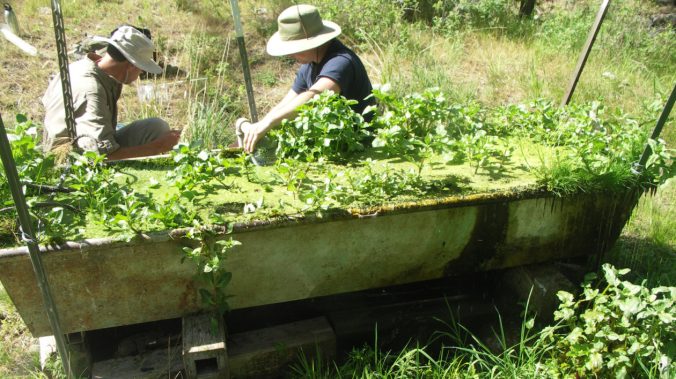
Hydrologists Zach Freed (The Nature Conservancy) and Hank Johnson (U.S. Geologic Survey) measure water chemistry of the spring from the inflow pipe to the old trough, which is filled with emergent aquatic vegetation. Photo © Allison Aldous / The Nature Conservancy
Thanks to Lisa Feldcamp at the Nature Conservancy for this story:
Sharing Water: How I Met the MacGyvers of Water Use
Down the stream at Sand Spring you can see an elk wallow. Photo © Lisa Feldkamp / The Nature Conservancy
“It’s like leaving the kitchen faucet on all year for one glass of water,” says Zach Freed, a hydrologist for the Nature Conservancy in Oregon. That’s how people in Oregon and throughout the US West have traditionally used spring water.
When European homesteaders first came west, spring water must have seemed like an endless resource. Homesteaders could find a potable spring and turn on the tap to provide water for their families and livestock. As the generations came and went, old ranches failed, and new ones sprang up. Springs came in and out of use, but it often happened that nobody ever turned off the tap. Continue reading


 Organikos