Alladale & Apex Wildlife

4019.jpg

Eurasian grey wolves at the Highland Wildlife Park, Kingussie, Scotland.
Photograph: Alamy

Thanks to Kevin McKenna and the Guardian for this profile of an entrepreneurial conservation project that is quite in the spirit of our work over the last two decades. We salute Paul Lister and his team for this wonder:

One man’s plan to let wolves roam free in the Highlands

The ‘custodian’ of the Alladale estate wants to turn it into a fenced-off wildlife reserve

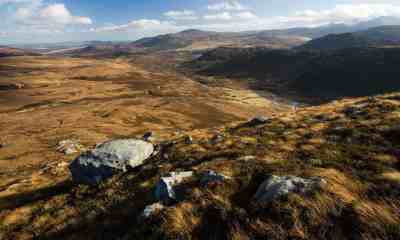
4992.jpg

The Alladale estate. Photograph: Alamy

The echoes of Scotland’s predator prince faded into silence three centuries ago. The wolf was once lord of these Sutherland slopes and the forest floors beneath and now a voice in the wilderness is calling him home.

Paul Lister acquired the Alladale estate, 50 miles north of Inverness, in 2003 and immediately set about creating a wilderness reserve according to his perception of what these wild and beautiful places ought to look like. He can’t imagine them without the packs of wolves that once roamed free here.

But his views are considered eccentric by ramblers and conservationists, who view them as a rich man’s caprice, centring their objections on his plans to fence off the vast reserve. Continue reading
Carbon Footprint Self-Analysis

Carbon1.jpg

Thanks to Livia Albeck-Ripka and the New York Times for this

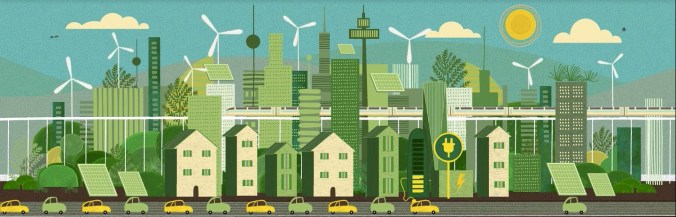
How to Reduce Your Carbon Footprint

carbonfootprint-slide-SUBX-jumbo.jpg

What Is a Carbon Footprint?

Climate change can be overwhelming. The science is complex, and when it comes to future impacts, there are still a lot of unknowns. While real solutions will require action on a global scale, there are choices you can make in your day-to-day life to lessen your personal impact on the environment. This guide will walk you through some of them.

carbonfootprint-slide-664U-jumbo.jpg

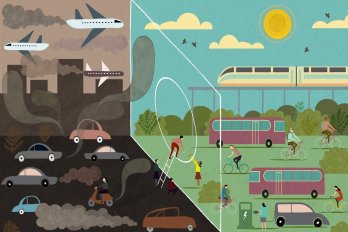
DRIVE LESS

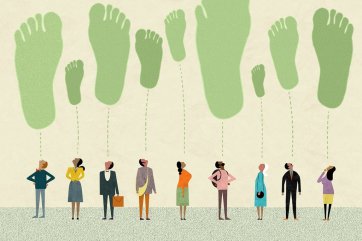
A carbon footprint is the total amount of greenhouse gas emissions that come from the production, use and end-of-life of a product or service. It includes carbon dioxide — the gas most commonly emitted by humans — and others, including methane, nitrous oxide, and fluorinated gases, which trap gas in the atmosphere, causing global warming. Usually, the bulk of an individual’s carbon footprint will come from transportation, housing and food.

You can start the process by calculating your carbon footprint here. You will need to know the following: Continue reading

Victorious Bananas

physed-banana-master768.jpg

iStock

We are already big fans of this fruit, for all kinds of reasons, so this is like icing on the cake:

Bananas vs. Sports Drinks? Bananas Win in Study

A banana might reasonably replace sports drinks for those of us who rely on carbohydrates to fuel exercise and speed recovery, according to a new study comparing the cellular effects of carbohydrates consumed during sports.

It found that a banana, with its all-natural package, provides comparable or greater anti-inflammatory and other benefits for athletes than sports drinks. But there may be a downside, and it involves bloating.

For decades, athletes and their advisers have believed, and studies have confirmed, that eating or drinking carbohydrates during prolonged exertion can enable someone to continue for longer or at higher intensities and recover more quickly afterward than if he or she does not eat during the workout. Continue reading

Thermal Imaging For Species-Level Learning

merlin_136343916_184e67ea-b2c7-4c2d-8cf5-2dbc257b126a-superJumbo.jpg

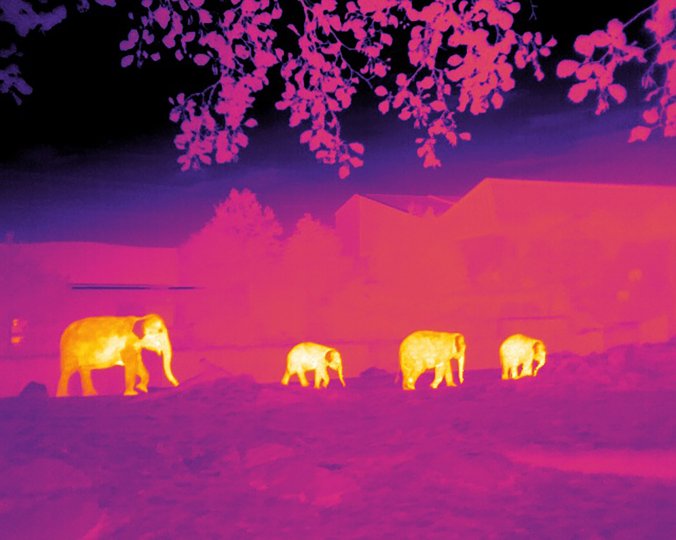
A thermal image of elephants, part of an effort to apply tools from astronomy to help conservationists and fight poaching. Credit Endangered Wildlife Trust/LJMU

We have noted this technology more than once in recent years, and who can resist the images? But Joanna Klein’s story here is a bit different from our earlier notes:

How Do You Count Endangered Species? Look to the Stars

06TB-INFRARED2-superJumbo.jpg

The research team has been working with a local safari park and zoo to film and photograph animals, like these chimpanzees, to build up a reference library of different animals. Credit Endangered Wildlife Trust/LJMU

The conversation started over a fence dividing two backyards. On one side, an ecologist remarked that surveying animals is a pain. His neighbor, an astronomer, said he could see objects in space billions of light years away.

And so began an unusual partnership to adapt tools originally developed to detect stars in the sky to monitor animals on the ground. Continue reading

Plastic Reduction Success Story

5150 (1).jpg

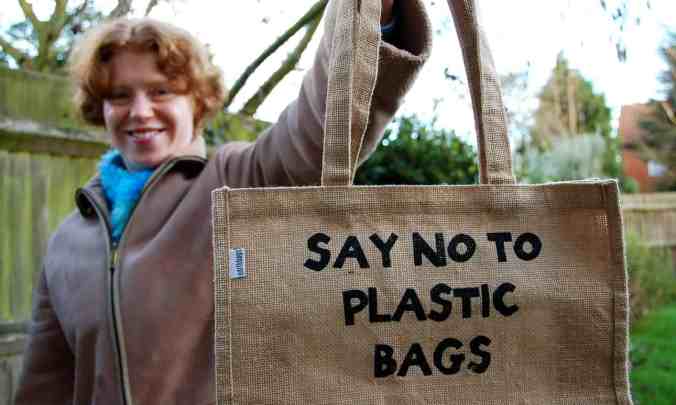
A UK levy of 5p per bag introduced in 2015 has already reduced single-use plastic bags by 85%. Photograph: Stuart Kelly/Alamy Stock Photo

We never tire of reporting on efforts at plastic-reduction, so thanks to Juliette Jowit and the Guardian for this update:

Drop in plastic bags littering British seas linked to introduction of 5p charge

Scientists find an estimated 30% drop in plastic bags on the seabed in the same timeframe as charges were introduced in European countries

A big drop in plastic bags found in the seas around Britain has been credited to the introduction of charges for plastic bags across Europe. Continue reading
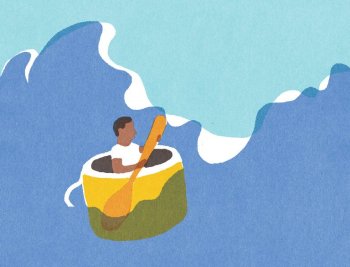
A Step Up for Bird Migration Maps

Image © National Geographic

In 2016 I wrote a couple times about eBird’s data––the observations contributed by citizen scientists––being used for migration maps, among other things. Those posts included animated gif images that illustrated the flow of thousands of birds across the Western Hemisphere at different times of year, which could be used in a casual setting to predict when to go out looking for a target species one wants to see in the wild, or in a conservation setting to know what time of the year is best to enforce certain environmental regulations, like open hunting or hiking seasons in sensitive areas. The moving maps also served as a mesmerizing graphic to simply astound us with the magnitude of travel these birds are undertaking.

Continue reading
Junto Clubs For 2018 & Beyond

Junto-Club

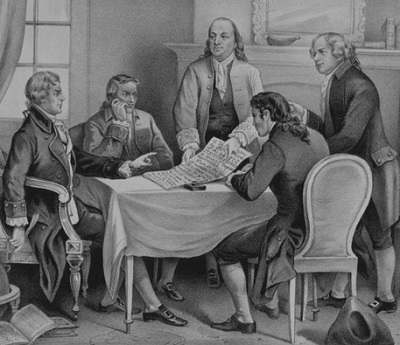
The Junto Club outgrew into the American Philosophical Society.

This historical reference is not typical of posts on this platform, except for when one of our contributors was in the midst of historical coursework that led to riffs like this; and then during his archival research that led to riffs like this.

We are riffing now from a current need (to put it mildly) for better conversation, with hindsight to a widely respected man’s approach at a time full of contentions. Thanks to Andrew Marantz for this brief note, whose accompanying illustration below belies the seriousness of the situation. Click the image to the left above to go to a historical archive with more background on this Talk of the Town item below:

Benjamin Franklin Invented the Chat Room

Conversation clubs, inspired by the Founding Father, have never felt more necessary.

180409_r31846webIn 1727, when Benjamin Franklin was twenty-one, he and a few friends—among them a scrivener, a joiner, and two cobblers—formed a conversation club called the Junto. They met on Friday evenings at a Philadelphia alehouse. “The rules that I drew up required that every member, in his turn, should produce one or more queries on any point of Morals, Politics, or Natural Philosophy, to be discuss’d by the company,” Franklin wrote in his autobiography. The United States was not yet the United States, but already he sensed a civility problem. His solution: structured, secular chitchat, “conducted in the sincere spirit of inquiry after truth, without fondness for dispute, or desire of victory.” Continue reading

Respecting Our Oceans, And Our Fellow Beings

Holloway-Whales

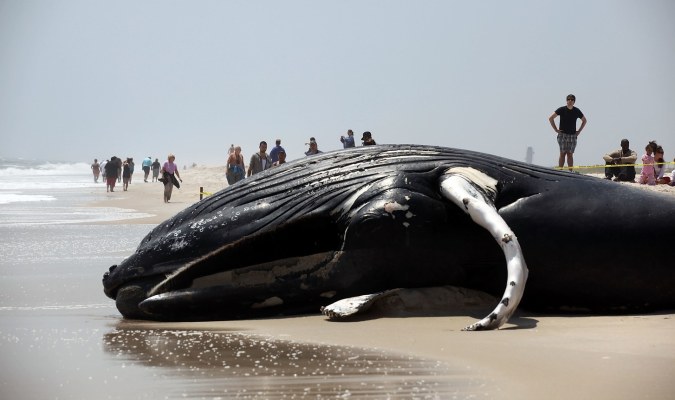
A humpback whale calf that washed ashore in Wantagh, New York. A series of “unusual mortality events” among whales has scientists worried that the ocean is more dangerous than ever. Photograph by Mario Tama / Getty

Thanks to Marguerite Holloway, who we have appreciated a couple times earlier, for this:

One foggy morning last April, a dead humpback whale washed up on New York’s Rockaway Beach. It was a young male, thirty-one feet long, and had extensive bruising—the result of contact with “something very large,” according to Kimberly Durham, of the Atlantic Marine Conservation Society, who performed the necropsy. The Rockaway whale was one of sixty-eight humpbacks that have died between North Carolina and Maine since 2016, casualties in what the National Oceanic and Atmospheric Administration is calling an “unusual mortality event.” And humpbacks, it turns out, are not the only species suffering. Continue reading

Poisson d’Avril Redux Two

It’s a rare occasion that we republish one of our posts on this site – but April 1st is a special day, is it not? And as the weather warms, a little bit of lighthearted Spring frolicking won’t go amiss.

It was unlike me to have missed acknowledging the Vernal Equinox last week but please note that it wasn’t forgotten. In much of the northern hemisphere spring began sprouting all over the place, sometimes unseasonably early, and the first day of spring was observed in all its glory in Crist’s Holi series.

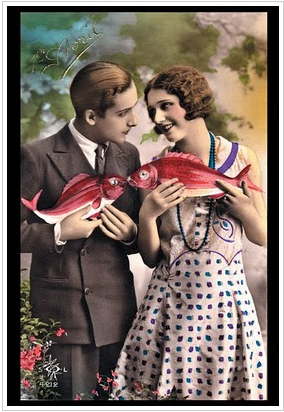
So I’m being careful not to miss April 1st and in the spirit of that celebration am sharing some of artist Ken Brown‘s collection of turn of the century (the 19th to the 20th that is!) French fantasy postcards that celebrate “Poisson d’Avril”, the French equivalent of April 1st or April Fools’ Day. Continue reading

Coffee, Journeys & Yemen

24bookeggers4-superJumbo-v2

CreditPatricia Wall/The New York Times

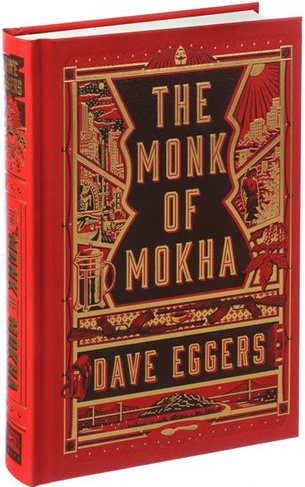
This review, thanks to Ghaith Abdul-Ahad, has my attention on The Coffee-Flavored American Dream of a young man with about as improbable a mission as I can imagine.  Returning to the coffee fields of Costa Rica’s Tarrazu region in a few days, I also plan to cross the Central Valley to see the latest mission accomplished of another coffee dreamer, the choice of Dave Eggers for his latest book topic is much appreciated.

A few years ago I traveled with a group of friends from the southern Yemeni port city of Aden to the capital of Sanaa in the north, taking the long coastal road that twists and curves around the bulge of Yemen’s southernmost tip. After passing the Bab el Mandeb strait, the road stretches along the seashore. Under a clear bright sky, the waters of the Red Sea shimmered and the sand glowed a warm ocher, the monotony interrupted only by an occasional fisherman’s shack, a small nomadic settlement or a bleached one-room mosque. Flat-topped trees looming in the distance suggested an African landscape.

merlin_135539598_25a28bf1-c1ea-4f91-864b-e5d08b63264d-master768

CreditLorenzo Gritti

Ahead of us lay the port of Mokha, or Al-Mukha in Arabic, where from the 15th century onward ships set sail with precious Yemeni coffee bound for Istanbul, London, Amsterdam and eventually New York — so much coffee that the word “mocha” became synonymous with it. Continue reading