Lepidopterist’s Treasure

730

Heterosphecia tawonoides puddling on a dry leaf washed out by the river. Photograph: Courtesy of Marta A. Skowron Volponi

Thanks to the Guardian for sharing this bit of good news:

Lost species of bee-mimicking moth rediscovered after 130 years

The rare oriental blue clearwing, that disguises itself as a bee, was spotted in the Malaysian rainforest

A moth that disguises itself as a bee and was previously only identified by a single damaged specimen collected in 1887 has been rediscovered in the Malaysian rainforest by a lepidopterist from Poland.

The oriental blue clearwing (Heterosphecia tawonoides) was seen “mud-puddling” – collecting salts and minerals from damp areas with its tongue-like proboscis – on the banks of a river in Malaysia’s lowland rainforest, one of the most wildlife-rich – and threatened – regions on Earth. Continue reading


Last Search for the Jamaican Golden Swallow

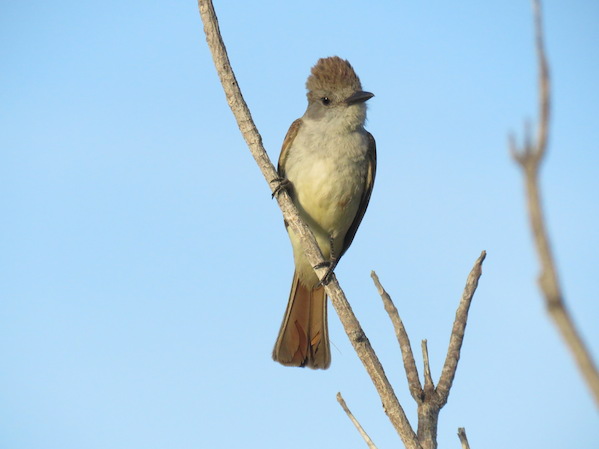
Spoiler alert: the search occurred about three years ago. We didn’t find any Golden Swallows.

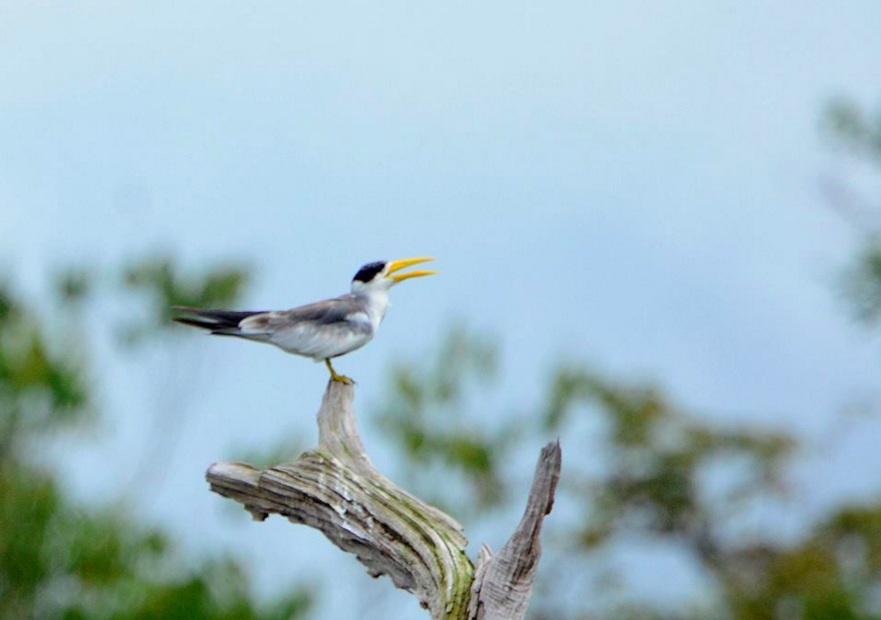
If you were a regular visitor to this site in the first half of 2015, you probably remember the slew of posts we had on the Smithsonian Institution’s expedition to Jamaica to search for the subspecies of Golden Swallow (a type of bird, in case that needs clarification). The only other known population of this species is on the island of Hispaniola, in the countries of Haiti and Dominican Republic, but the Jamaican population hadn’t been seen in about thirty years, and Justin, John and I were tasked with scouring the final remote areas of the Jamaican mountains that hadn’t been rigorously checked yet.

Continue reading

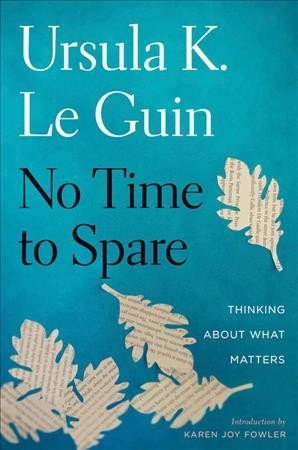
Thinking About What Matters

9781328661593_custom-98a5c984a54b82218a0fc4bb11b82f1021da6b56-s400-c85The author does not frequently show up in these pages. But when she does, it is worth noting because she says things that matter, and that gets us thinking. In the case of this book she is stating the obvious, that there is no time to spare. But sometimes it is good that someone of her stature states it anyway. Thanks to National Public Radio (USA) for this review:

Ursula K. Le Guin’s mastery of fiction has remained so consistent throughout her decades-long career, it’s easy to overlook her accomplishments in other forms. Sure, she’s the author of iconic, award-winning science fiction novels such as 1969’s The Left Hand of Darkness and 1971’s The Lathe of Heaven, not to mention the beloved fantasy series The Earthsea Cycle, which began in 1968. But those distinct works share Le Guin’s firm grasp of poetic language, science, and history. Accordingly, she’s a brilliant poet, albeit a less recognized one. Even further down on her résumé are her wins as a nonfiction writer. Her 2016 collection of essays and reviews, Words Are My Matter, won the Hugo Award for Best Related Work in 2017, despite the fact that the book did not focus exclusively on science fiction — nor do her other nonfiction collections, including The Wave in the Mind from 2004 and now, No Time to Spare, a new book that assembles some of her most cogent ruminations on everything from gender politics to anthropology to, yes, science fiction and fantasy. Continue reading

Penguins Once Had Awe On Their Side

Ancient Penguins Were Giant Waddling Predators

19SCI-ZIMMER-blog427

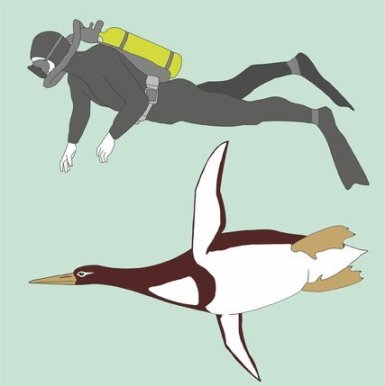
An artist’s rendering compares Kumimanu biceae, an extinct giant penguin, to a human diver. Kumimanu stood 5 feet 7 inches and weighed 220 pounds. It is among the earliest known penguin species. Credit G. Mayr/Senckenberg Research Institute

The 57 million-year-old fossil is both fearsome and comical: a long-beaked penguin that stood 5 feet 7 inches tall and weighed about 220 pounds.

“It was as tall as a medium-sized man,” said Gerald Mayr, a paleontologist at the Senckenberg Research Institute in Frankfurt, Germany, and lead author of a report in Nature Communications on Tuesday announcing the discovery.

By comparison, the tallest living species, the emperor penguin, reaches about four feet in height. Kumimanu biceae, as the fossil was named, would have towered above the emperor, and above just about all other known ancient penguins. Continue reading

Shoreline Durability

Crofton 12U Select 2017 Season

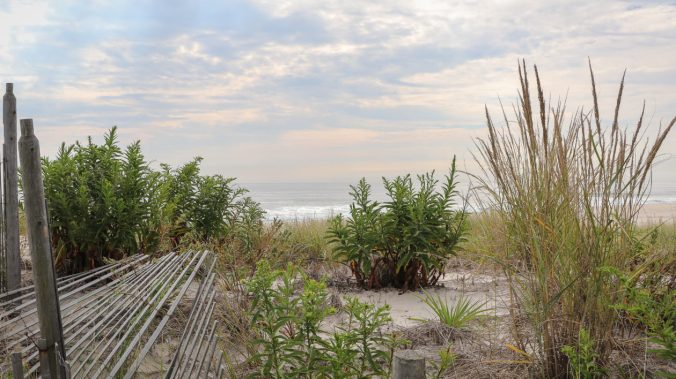
The dunes of Midway Beach have a secret ingredient hiding beneath the sand. © Cara Byington/The Nature Conservancy

Thanks to Cool Green Science:

The Secret in the Sand Dunes

Dominick Solazzo likes to say the healthy dunes at Midway Beach and South Seaside Park on the Jersey Shore have a “secret ingredient.” Of course, it’s a secret that gives itself away pretty readily when the wind blows.

Crofton 12U Select 2017 Season

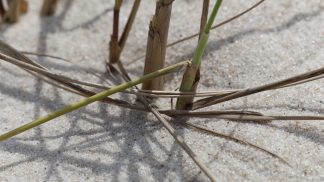
Dune grasses have deep roots that help trap sand and anchor the dunes, and help them grow and resist wind erosion. © Cara Byington/TNC

“It’s Christmas trees,” Solazzo says with a smile. Discarded (natural) Christmas trees donated by the city of Secaucus, New Jersey and given a second life – so to speak – as sand dunes. And, yes, according to him and a few of his neighbors, you can smell the sharp, familiar scent of fir through late winter and part of the spring.

But why Christmas trees? In a word: structure.

“They’re like re-bar in concrete,” explains Solazzo. “They help hold the sand and the dune in place, and give it structure. And good structure matters for dunes. It matters a lot.” Continue reading

Rewilding Minelands

Flatwoods_WFA_2.10.17-26_web

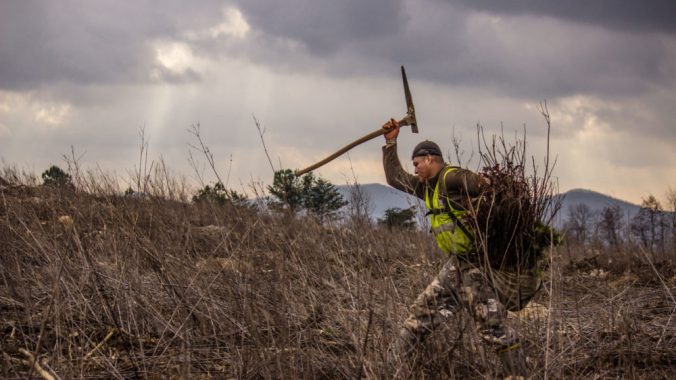
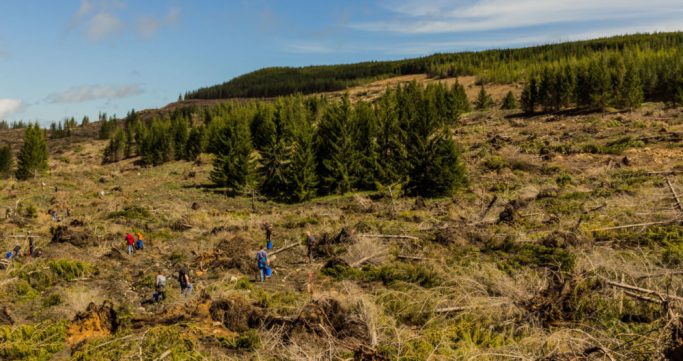
A contractor for Green Forests Work plants native hardwood and evergreen seedlings on a reclaimed mine site in Dorton, Kentucky. GREEN FORESTS WORK

Thanks to Yale 360 for this story about Green Forests Work, in a part of North America that is often considered lost, from an ecological perspective:

Reclaiming Appalachia: A Push to Bring Back Native Forests to Coal Country

Previous efforts to restore former coal mine sites in Appalachia have left behind vast swaths of unproductive land. Now, a group of nonprofits and scientists are working to restore native trees to the region — even if it means starting the reclamation process from scratch.

5.5.17_Monongahela-36_web

Volunteers fan out over a recently bulldozed plot on Cheat Mountain to plant red spruce and other native seedlings. GREEN FORESTS WORK

Near the top of Cheat Mountain in West Virginia, bulldozer operator Bill Moore gazes down a steep slope littered with toppled conifers. Tangled roots and angled boulders protrude from the slate-colored soil, and the earth is crisscrossed with deep gouges.

“Anywhere else I’ve ever worked,” Moore says, “if I did what I did here, I’d be fired.” Continue reading

Sunny-Futured Mass Transit

2048.jpg

An illustration of a solar train in action. Photograph: Esther Griffin

Thanks to Alice Bell and the Guardian for a look into the latest on harnessing the sun to power more of our transportation needs:

In 10 years time trains could be solar powered

A technique has been devised that allows electricity to flow directly from solar panels to electrified train tracks to the trains themselves making solar powered trains more feasible than ever before Continue reading

“Birds & the Bees”: More Than a Metaphor

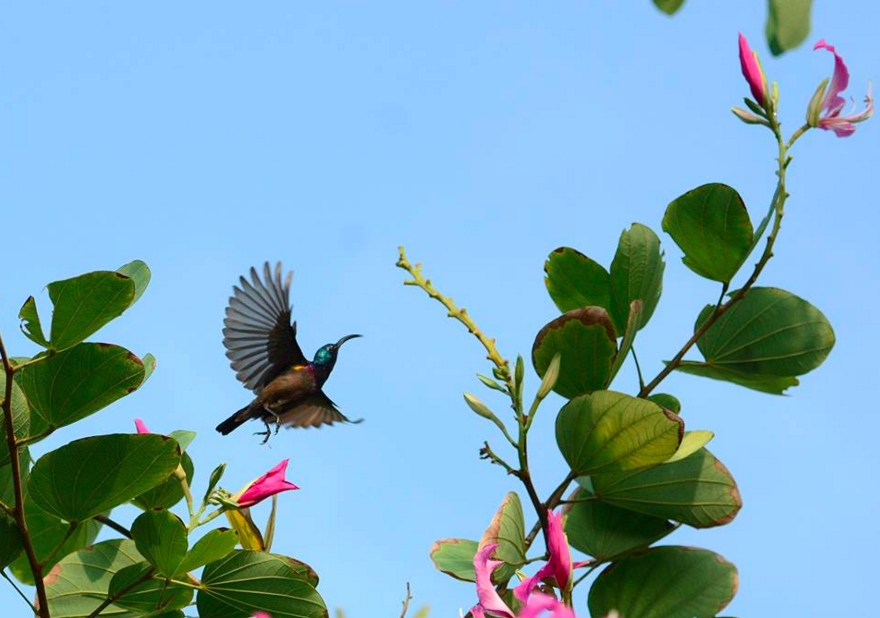
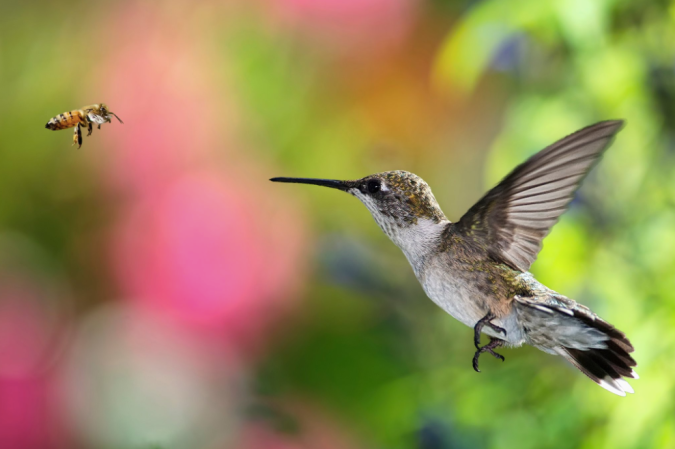
Scientists say that studying bee behavior could help them understand hummingbird behavior, too. Credit DansPhotoArt on flickr, via Getty Images

Members of our team have long been fans of bees and all bird species, with a particular soft spot for hummingbirds in particular. With their gemlike plumage and engaging personality, what’s not to love?

You Should Think of Hummingbirds as Bees With Feathers

What’s small, buzzes here and there and visits flowers?

If you said bees or hummingbirds, you got it. And you wouldn’t be the first if you mixed the two up. In Medieval Europe, some called bees the smallest birds. In Chinese and Japanese, the words for hummingbird translate into “bee bird.” Today we call the smallest hummingbird — weighing less than a penny and only a bit larger than the biggest bee — the bee hummingbird.

And now a group of researchers say we should embrace our history of lumping the two together. The way scientists study bees could help them study hummingbird behavior, too, they argue in a review published Tuesday in Biology Letters. Continue reading

The Craftwork Of Small Organisms

merlin_105802288_f62a8530-6c2d-46ae-ad3f-588b413aec3c-master768 (1)

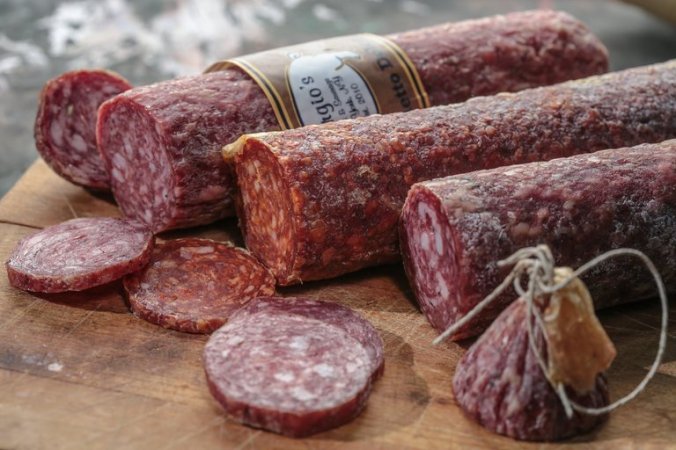
Bacteria are responsible for the delicious taste of salami, although industrial microbes do not yield as tasty dried sausages as wild microbes. Credit Tony Cenicola/The New York Times

Fermented meat does not have the sound of mmmm to it, but we learn something new each day:

Actually, You Do Want to Know How This Sausage Gets Made

When you slice into a salami, you are enjoying the fruits of some very small organisms’ labor.

Like other dried sausages, salami is a fermented food. Its production involves a period where manufacturers allow microbes to work on the ground meat filling to create a bouquet of pungent, savory molecules. Traditionally, the bugs find their way to the sausage from the surrounding environment. But these days, industrial manufacturers add a starter culture of bacteria to the meat instead, much the way a bread baker adds a packet of yeast to her dough. Continue reading

Hidden Numbers, Brought Into Daylight

FlatironThe mission of the Flatiron Institute is to advance scientific research through computational methods, including data analysis, modeling and simulation.

The institute, an internal research division of the Simons Foundation, is a community of scientists who are working to use modern computational tools to advance our understanding of science, both through the analysis of large, rich datasets and through the simulations of physical process.

If you are seeing the name above for the first time, so are we. It has come to our attention through this profile below. The questions raised are important. The answers, to the degree there are any, are fascinating. Thanks to longform journalism, which we need now more than ever, we have profiles like this:

Jim Simons, the Numbers King

Algorithms made him a Wall Street billionaire. His new research center helps scientists mine data for the common good.

171218_r31148 (1).jpg

Simons is donating billions of dollars to science. But much of his fortune, long stashed offshore, has never been taxed. Illustration by Oliver Munday; photograph by Tim Sloan / AFP / Getty

By D. T. Max

A visit to a scientific-research center usually begins at a star professor’s laboratory that is abuzz with a dozen postdocs collaborating on various experiments. But when I recently toured the Flatiron Institute, which formally opened in September, in lower Manhattan, I was taken straight to a computer room. The only sound came from a susurrating climate-control system. I was surrounded by rows of black metal cages outfitted, from floor to ceiling, with black metal shelves filled with black server nodes: boxes with small, twinkling lights and protruding multicolored wires. Tags dangled from some of the wires, notes that the tech staff had written to themselves. I realized that I’d seen a facility like this only in movies. Nick Carriero, one of the directors of what the institute calls its “scientific-computing core,” walked me around the space. He pointed to a cage with empty shelves. “We’re waiting for the quantum-physics people to start showing up,” he said. Continue reading