Trees, Carbon-Neutral Energy, & Ambiguous Definitions

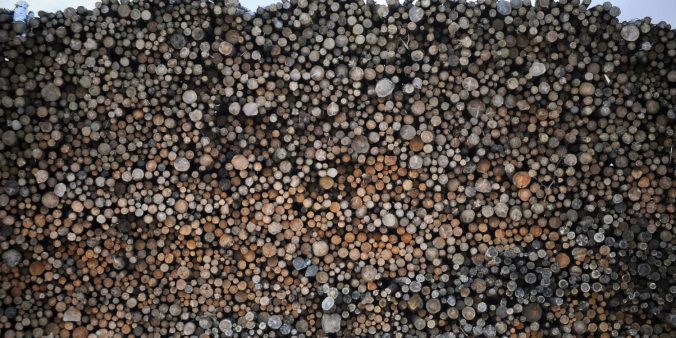
Logs_TimberYards_Finland_GettyImages-84157450_web16x9.jpg

Thanks to Fred Pearce over at Yale Environment360 for this puzzler:

Carbon Loophole: Why Is Wood Burning Counted as Green Energy?

A loophole in carbon-accounting rules is spurring a boom in burning wood pellets in European power plants. The result has been a surge in logging, particularly in the U.S. South, and new doubts about whether Europe can meet its commitments under the Paris accord. Continue reading

Battery Story, 2017

Tesla grid storage South AustraliaBattery technology is the thing. It seems to be a holy grail that environmentalists and technologists can agree on for helping us, humans who want a habitable planet for generations to come, mitigate climate change. And occasionally it is at the core of short term fixes. Once the dust has settled on 2017, and we are looking back on stories that were on the positive side of long term impact on the planet, this story will probably get more attention. For now it seems like a footnote at the end of the year to note that this Tesla scheme actually seemed to work:

Tesla Grid Storage Battery Reacts Insanely Fast To Coal Power Outage

Last spring, Elon Musk made a daring bet. He claimed he could build and install the world’s largest grid storage battery in South Australia within 100 days of the date a contract was signed or the system would be free. The contract was signed on September 29. Installation was completed by the third week of November. On December 2, the giant 129 MWh system was activated. Continue reading

The Custom Proteins In Your Future

26PROTEIN-jumbo.jpg

John Hersey

Cross-Chasm Communities Collaborating

5000m

Felisa Rogers at the Guardian provides some much needed late 2017 perspective on opportunities to collaborate for the common good:

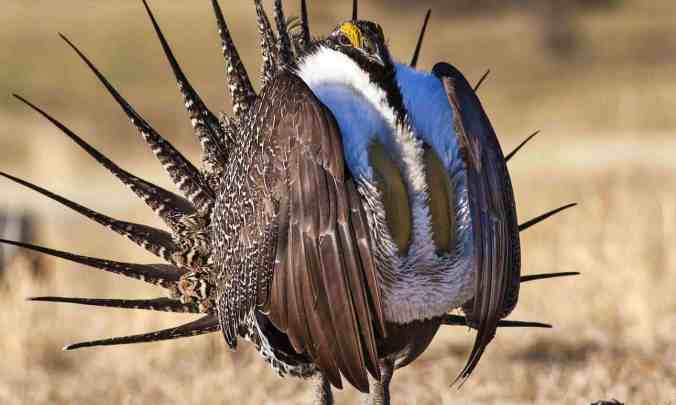
How the fight to save a bird species shows how to bridge the red/blue divide

A plan to save the sage grouse was a rare instance where ranchers, the timber industry, scientists, landowners and environmentalists all agreed on something

At 5am, the day is black, and resounds with the steady drum of rain. My husband Rich is getting ready for work. He oils his leather gloves and fills a Thermos. He’ll spend a 10-hour day in the downpour: tramping through thorny salmonberry and wading through the roaring creeks. Continue reading

Food-Canning Community

085_custom-3cbc67d5efc1188ad82ba51bf440ac69713397b9-s1300-c85.jpg

Roy Miller fills cans with cooked collard greens. Dan Charles/NPR

Thanks to the salt at National Public Radio (USA):

In A New Deal-Era Cannery, Old Meets New

Allie Hill got really serious about eating local food about eight years ago. She was cooking for three young children. “I was able to go to the farmers’ market and find my produce — fruits and veggies,” she says. “I was able to find meat, and even some dairy.”

She simply couldn’t find local version of other foods, though. These are foods that fill her pantry, like marinara sauce, apple sauce and everything else that comes to us preserved in sealed jars and cans. Continue reading

An Interesting Alternative To Ayn Rand’s Prescription For The Future

171218_r31150

The Estonian government is so eager to take on big problems that many ambitious techies leave the private sector to join it.Illustration by Eiko Ojala

This is about people with an idea pursuing it with confidence in the ability of government to achieve something that its people want. Not everyone, everywhere, would want this to be sure. But it is a vote in favor of pursuing the common good together. It is worth the read, on a cold winter’s night (or wherever you may be) for a glimpse of the future for those in small, flexible places:

Estonia, the Digital Republic

Its government is virtual, borderless, blockchained, and secure. Has this tiny post-Soviet nation found the way of the future?

Up the Estonian coast, a five-lane highway bends with the path of the sea, then breaks inland, leaving cars to follow a thin road toward the houses at the water’s edge. There is a gated community here, but it is not the usual kind. The gate is low—a picket fence—as if to prevent the dunes from riding up into the street. The entrance is blocked by a railroad-crossing arm, not so much to keep out strangers as to make sure they come with intent. Beyond the gate, there is a schoolhouse, and a few homes line a narrow drive. From Tallinn, Estonia’s capital, you arrive dazed: trees trace the highway, and the cars go fast, as if to get in front of something that no one can see. Continue reading
Preparing For Reef Wipeout, Corals Bred In Captivity

1200 (1)

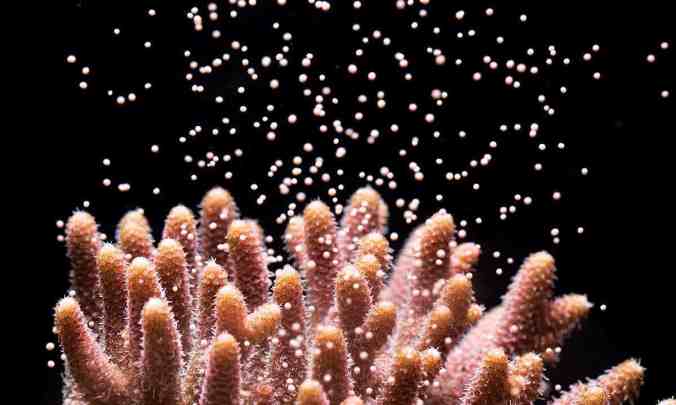
Coral spawning at the Horniman museum. Photograph: James Craggs/Horniman Museum

The Horniman Museum and Gardens in the UK is doing important work related to coral reef regeneration. Thanks to Damian Carrington and the Guardian for bringing this to our attention:

New lab-bred super corals could help avert global reef wipeout

Pioneering research on cross-species coral hybrids, inoculations with protective bacteria and even genetic engineering could provide a lifeline for the ‘rainforests of the oceans’

coral-reefs-a-globally-important-habitat-but-threaten-image-by-j-craggs-horniman-museum-and-gardens

Coral reefs are globally important habitats

New super corals bred by scientists to resist global warming could be tested on the Great Barrier Reef within a year as part of a global research effort to accelerate evolution and save the “rainforests of the seas” from extinction.

Researchers are getting promising early results from cross-breeding different species of reef-building corals, rapidly developing new strains of the symbiotic algae that corals rely on and testing inoculations of protective bacteria. They are also mapping out the genomes of the algae to assess the potential for genetic engineering.

planulae-held-in-the-tentacles-of-tubastrea-coccinea-image-by-j-craggs-horniman-museum-and-gardens

Planulae held in the tentacles of Tubastrea coccinea prior to release

Innovation is also moving fast in the techniques need to create new corals and successfully deploy them on reefs. One breakthrough is the reproduction of the entire complex life cycle of spawning corals in a London aquarium, which is now being scaled up in Florida and could see corals planted off that coast by 2019. Continue reading

Eating Habits, Deep Sea Edition

SeaFood

MBARI

Thanks to Joanna Klein:

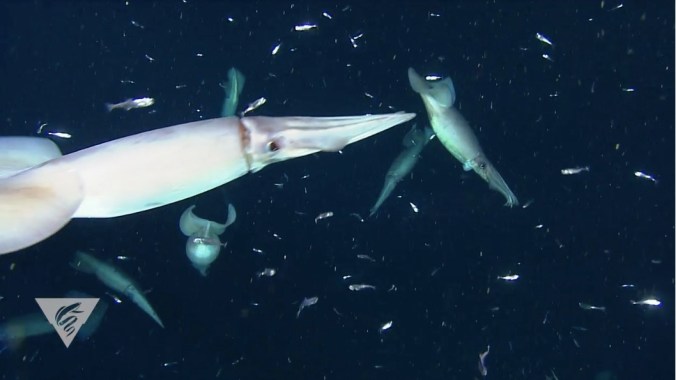
What Eats What: A Landlubber’s Guide to Deep Sea Dining

00TB-FOODWEB-ROV-master675

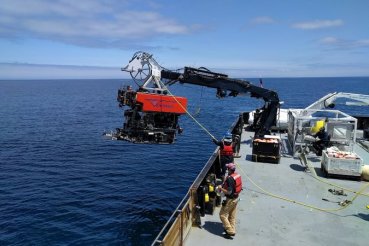
A remotely operated underwater vehicle, or R.O.V., deployed by the Monterey Bay Aquarium Research Institute, which captured images of underwater creatures devouring each other — at least, those that didn’t flee it. CreditAnela Choy/Monterey Bay Aquarium Research Institute

You’ll never go to dinner in the deep sea. It’s dark, vast and weird down there. If the pressure alone didn’t destroy your land-bound body, some hungry sea creature would probably try to eat you.

Fortunately for you, something else has spent a lot of time down there, helping to prepare this guide to deep sea dining.

For nearly three decades, robots with cameras deployed by the Monterey Bay Aquarium Research Institute have glided through the ocean off the coast of central California at depths as deep as two and half miles below. Continue reading

Will Divestment Be The Best News Of 2017?

McKibben-Fossil-Fuel-Divestment

Time and again, the petroleum industry has used its political might to stymie global action on climate change. Now cities and states have become the new battleground. Photograph by Robert Nickelsberg / Getty

Some things we lose slowly, which seems better than losing them quicker; other things we gain too slowly:

The Movement to Divest from Fossil Fuels Gains Momentum

Tuesday should have been a day of unmitigated joy for America’s oil and gas executives. The new G.O.P. tax bill treats their companies with great tenderness, reducing even further their federal tax burden.

Kolbert-Tax-Bill-National-Wildlife-Refuge

Part of the Arctic National Wildlife Refuge, known as the 10-02 area, serves as the summer breeding ground for two hundred thousand caribou. Photograph by The Asahi Shimbun via Getty

And the bill gave them something else they’ve sought for decades: permission to go a-drilling in the Arctic National Wildlife Refuge. But, around four in the afternoon, something utterly unexpected began to happen. A news release went out from Governor Andrew Cuomo’s office, saying that New York was going to divest its vast pension-fund investments in fossil fuels. The state, Cuomo said, would be “ceasing all new investments in entities with significant fossil-fuel-related activities,” and he would set up a committee with Thomas DiNapoli, the state comptroller, to figure out how to “decarbonize” the existing portfolio. Continue reading

Chocolate’s Future Is Ours To Write, Within Limits


Slowmelt

sethi_breadwinechocolate_3dWe are among those hoping that the future of chocolate is tastier, but we thankfully missed the mistaken headlines highlighted in this story below (thanks to the salt at National Public Radio, USA). So no false hopes dashed, but we pass this along in the interest of science. And to highlight an author who has recently come to our attention. A couple of us who contribute here have a copy of Simran Sethi’s book Bread, Wine, Chocolate: The Slow Loss of Foods We Love (click to the right to go to there) on our nightstand currently; she also podcasts on the topic of chocolate over at The Slow Melt (click above to go there).

Sorry Folks, Climate Change Won’t Make Chocolate Taste Better

gettyimages-626378342_wide-4e7d50db9ab7b5dcd9578cdca115148a070224e7-s1300-c85

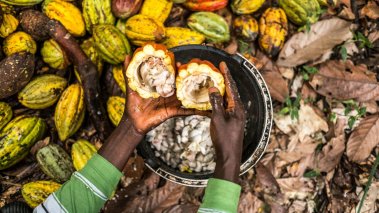
A cocoa farmer opens cacao pods with a stick to collect cocoa beans at his farm in Beni in the Democratic Republic of Congo. Eduardo Soteras/AFP/Getty Images

Two years ago, news headlines blared, “Cheese really is crack,” citing research that was widely misinterpreted as asserting cheese was addictive. Now, it’s chocolate’s turn.

Last week, several publications celebrated a new study that highlights the impacts of climate change on cocoa, stating global warming might make chocolate taste better. “Good news, chocolate-lovers,” wrote one outlet, “climate change may have a silver lining.”

Sadly, it’s not true. Continue reading