Undoing Dams, Animals Pitch In

ap_498416275898

Since 2014, Washington’s Elwha River has flowed freely through what once was Lake Mills and the Glines Canyon Dam. But the site still leaves a barren scar in Olympic National Park. Now, a human- and bird-led effort is turning it green again. Photo: Elaine Thompson/AP

Conservation is sometimes in the hands of animals, as this story in the current Audubon magazine illustrates:

Birds Are Helping to Plant an Entire Lost Landscape in Olympic National Park

After the largest dam removal in U.S. history, scientists, Native Americans, and wild animals are working together to restore the heart of the Elwha.

ap_081210040812

The Elwha Valley and Glines Canyon Dam prior to demolition. Photo: Elaine Thompson/AP

It’s a scorching August day in the Elwha Valley, and it only feels bleaker as we peer into the 200-foot void of Glines Canyon Dam. A sputtering trail of water marks the concrete lip where, for nearly a century, two hulking braces trapped logs, rocks, and sediments as they washed down from the mountains of northern Washington, forming a reservoir that was six times deeper than a competition-diving pool. At its height, the dam churned out 13.3 megawatts of hydroelectricity, enough to power 14,000 homes and a local paper mill. But it also seriously altered the Elwha River’s ecology, along with that of surrounding Olympic National Park. Endangered chinook salmon were cut off from their spawning sites; fish-eating birds and otters suffered; and estuaries became more brackish and shallow. Finally, in 1992, the U.S. government issued the order to destroy Glines Canyon Dam and the nearby Elwha Dam. Yet it wasn’t until two decades later when the water was completely freed. Continue reading

Vote Early, Vote Often

Voting open for crowdsourced climate change innovations

MIT Climate CoLab allows the public to vote for promising crowdsourced ideas on how to tackle climate change.

Annalyn Bachmann | MIT Climate CoLab

MIT-CCl-02_0.jpgThis is better than democracy, and as important as any citizen science initiative we know of, so we hope you will contribute:
MIT Climate CoLab has opened a public voting period to select the top innovative ideas on how to tackle climate change. A project of the MIT Center for Collective Intelligence, Climate CoLab is an online platform where over 90,000 community members from around the world work together to develop and select proposals to help solve this massive, complex issue. Continue reading

More Information, Thank You

gettyimages-629786322-56167ac88fd815c0482912a5baea16972304ffc3-s1300-c85

Contradictory consumer demands for food labels are making some food companies re-think their alliance with the industry’s traditional lobbying group. miakievy/Getty Images

Food producers may not all, or always, appreciate how much information consumers want or need, but erring on the side of more in this case makes sense to us. Thanks to National Public Radio (USA) for this story:

For at least the past decade, the Grocery Manufacturers Association (GMA) has been the unrivaled voice of a vast industry, from neighborhood grocery stores to food manufacturing giants with supply chains that span the globe. Most recently, it’s been a powerful force in fighting proposals to require information about added sugar or GMOs on food labels.

untitled-1_sq-b58cbda94a29b6944b67706c24dcb43ed57e06fb-s400-c85Today, that colossus is teetering and facing questions about its future. Over the past six months, eight of GMA’s largest members have decided to drop their membership. Each defection was quickly revealed on the news site Politico. One industry insider says that he’s seen a list of another three companies that are considering leaving the association. Continue reading

New Vehicle Technology Makes Good Business Sense

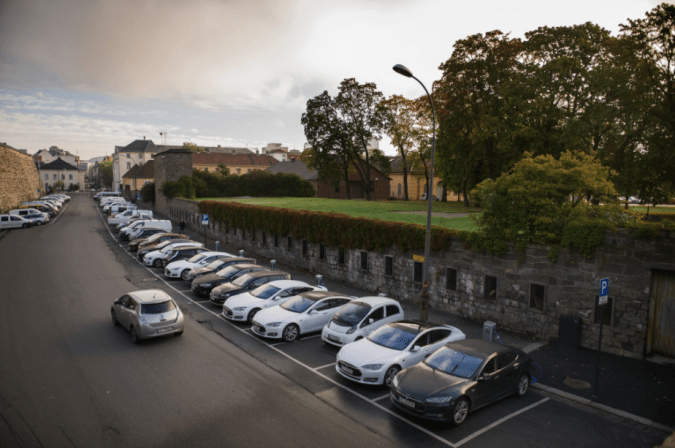
Free parking and charging stations for electric cars in Oslo. Norway offers generous incentives that make the vehicles cheaper to buy, and other benefits once they are on the road. Credit Thomas Haugersveen for The New York Times

Norway’s public policy that puts environmentalism front and center stands in stark contrast to the obvious deconstruction of protections in this country.

In Norway, Electric and Hybrid Cars Outsell Conventional Models

Sales of electric and hybrid cars in Norway outpaced those running on fossil fuels last year, cementing the country’s position as a global leader in the push to restrict vehicle emissions.

Norway, a major oil exporter, would seem an unlikely champion of newer, cleaner-running vehicles. But the country offers generous incentives that make electric cars cheaper to buy, and provides additional benefits once the vehicles are on the road.

Countries around the world have ramped up their promotion of hybrid and electric cars. As China tries to improve air quality and dominate new vehicle technology, the government there wants one in five cars sold to run on alternative fuels by 2025France and Britain plan to end the sale of gasoline- and diesel-powered cars by 2040.

Norway is ahead of the rest of the world. Continue reading

Precious Plumage

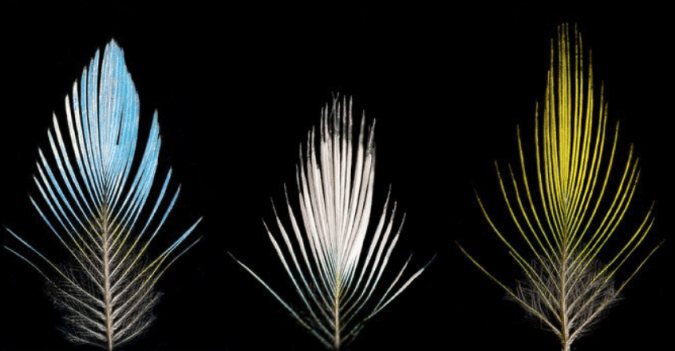
From left, the feathers of an opal-crowned manakin, a snow-capped manakin and the golden-crowned manakin. Credit University of Toronto Scarborough via NYTimes

Out of the roughly 250 bird families in the world, manakins (Pipridae family) are probably my favorite, because they’re like birds of paradise (Paradisaeidae family), except you don’t have to take a helicopter to remote areas of Papua New Guinea to see them. Almost all manakins are colorful––or at least the males are; females normally being a drab green––and they often have interesting behavior as well. I saw my first manakins in Ecuador, where two flashy species had some fun sounds to go along with their calls, but most of my exposure to the family has been in Costa Rica, where I did my best to record a Long-tailed Manakin lek.

Continue reading

Enlisting Enzymes for Ecoefficiency

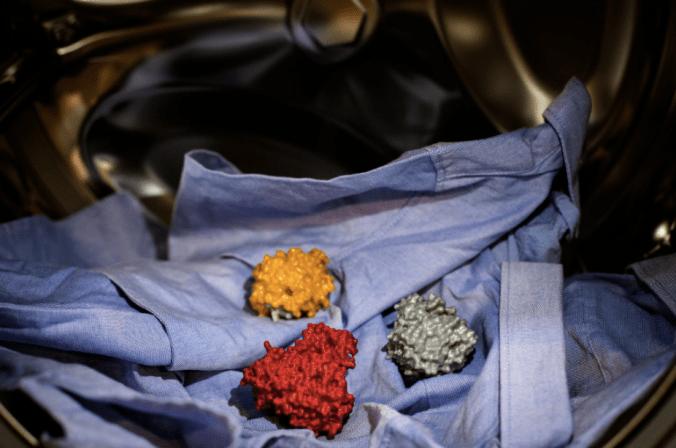
Models of stain-fighting enzymes, displayed on clothes in a washing machine. Credit Carsten Snejbjerg for The New York Times

We’ve been highlighting mycological innovation since the early days of this site, and our enthusiasm has yet to wane. The range of fungi-power will never cease to amaze.

Fighting Climate Change,
One Laundry Load at a Time

A Danish biotechnology company is trying to fight climate change — one laundry load at a time. Its secret weapon: mushrooms like those in a dormant forest outside Copenhagen.

In the quest for a more environmentally friendly detergent, two scientists at the company, Novozymes, regularly trudge through the mud, hunting for oyster mushrooms that protrude from a fallen beech or bracken fungi that feast on tough plant fibers. They are studying the enzymes in mushrooms that speed up chemical reactions or natural processes like decay.

“There is a lot going on here, if you know what to look for,” said Mikako Sasa, one of the Novozymes scientists.

Their work is helping the company develop enzymes for laundry and dishwasher detergents that would require less water, or that would work just as effectively at lower temperatures. The energy savings could be significant. Washing machines, for instance, account for over 6 percent of household electricity use in the European Union.

Enlisting enzymes to battle dirt is not a new strategy. Over thousands of years, mushrooms and their fungi cousins have evolved into masters at nourishing themselves on dying trees, fallen branches and other materials. They break down these difficult materials by secreting enzymes into their hosts. Even before anyone knew what enzymes were, they were used in brewing and cheese making, among other activities. Continue reading

Taste The Place, Yemen & Coffee In Michigan

img-8850_wide-96d9a5de4dcfc1e98058e4be37f9940b92363736-s1300-c85.jpg

A traditional pot of Yemeni coffee, mixed with cardamom and ginger, is served with a Yemeni sweet honey bread at a new Yemeni coffee shop in Dearborn, Mich. Owner Ibrahim Alhasbani sees himself as part entrepreneur, part cultural ambassador for his home country. Zahir Janmohamed

The salt, at National Public Radio (USA) has a story today about coffee, entrepreneurship and cultural illumination that is about tasting the place, a once and future key theme of our pages:

The 35-year-old owner of a new Yemeni coffee shop in Dearborn, Mich., never imagined he would enter the coffee business. Ibrahim Alhasbani was born in Yemen and grew up on a coffee farm outside the country’s capital city of Sana.

p1040537_wide-61e96f7114c07339e46dbc8eb78417f3c6facfd4-s1300-c85

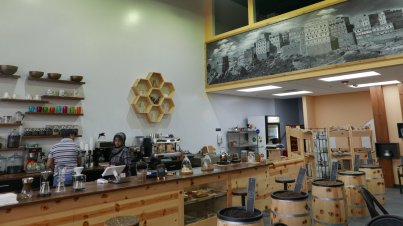
A view inside Qahwah House, a Yemeni coffee house in Dearborn, Mich. The city has a high concentration of Arabs and Arab Americans (qahwah means coffee in Arabic). Zahir Janmohamed

“I had enough coffee in my life,” Alhasbani says. “But when I moved to America and the problems started back home, I told myself I have a chance to show that Yemeni coffee is really good and that Yemen is more than just violence and war.”

A couple of months ago, he opened Qahwah House in Dearborn, a city with a high concentration of Arabs and Arab Americans (qahwah means coffee in Arabic). Continue reading

Poo-Power Innovations

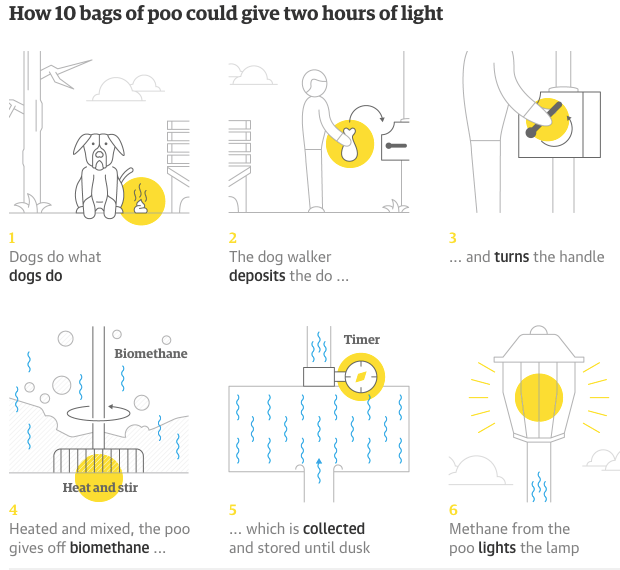
Guardian Graphic

Biomethane is an age-old concept in much of what is frequently called the “developing world”, so it’s difficult to overstate the irony of “1st world” adoption. That said, it’s heartening to read of more projects aimed at maximizing poo’s full potential.

From stools to fuels: the street lamp that runs on dog do

A long winding road climbs into a gathering dusk, coming to an abrupt dead end in front of a house. Here, a solitary flickering flame casts out a warm glow, illuminating the nearby ridge line of the Malvern Hills.

Below the light sits a mysterious green contraption resembling a cross between a giant washing machine and a weather station. This is the UK’s first dog poo-powered street lamp, and it is generating light in more ways than one.

The idea seems simple enough: dog walkers deposit the product of a hearty walk into a hatch and turn a handle. The contents are then broken down by microorganisms in the anaerobic digester, producing methane to fuel the light, and fertiliser…

…Humans have used animal dung as fuel since the neolithic period, and have known how to get flammable gas from decaying organic matter since the 17th century. Small-scale anaerobic digesters are commonplace in many developing countries, while larger plants producing heat and electricity from animal manure and human sewage have long been used in the west.

Yet the energy in most excrement still goes to waste.  Continue reading

Water Independence, A Trend Worth Watching In 2018

03Water8-master675.jpg

At Opal Springs Water Company in Oregon, raw water is prepared for shipping to the company Live Water. Credit Leah Nash for The New York Times

Closing out 2017, a note on water. Nellie Bowles wrote this story, Unfiltered Fervor: The Rush to Get Off the Water Grid, for the Food section of the New York Times. It could just as well have been in either the Science or the Tech section.

One new technology allows anyone, in dry or humid climates, to produce and store their own drinking water. The story is in the Food section presumably because it is a luxury for the improvement of your drinking pleasure; but the implications for natural resource management are interesting. And what about the projects that societies have embarked upon, forever, to determine ever-better ways to distribute necessities like water?

SOURCE: a HydropanelTM that makes drinking water from sunlight and air

main-image

A standard residential SOURCE array is made up of two panels: one primary panel and one additional panel with array sizes designed to meet your drinking water needs.

  • Daily Production

    A standard array averages 4-10 liters each day or 8-20 16.9oz standard water bottles, depending on sunshine and humidity.

  • Footprint

    Each panel is 4 feet x 8 feet (1.2m x 2.4m) and a standard array contains 2 panels.

  • Water Storage

    Each panel holds 30 liters in a reservoir where it is mineralized and kept clean for optimal taste and health. Standard arrays have 60 liters of water storage capacity.

  • Power

    SOURCE utilizes solar power and a small battery to enable water production when the sun shines and water delivery on cloudy days or at night.

The story includes several technologies that seem worth knowing about:

Continue reading

Paying for the Birds You See?

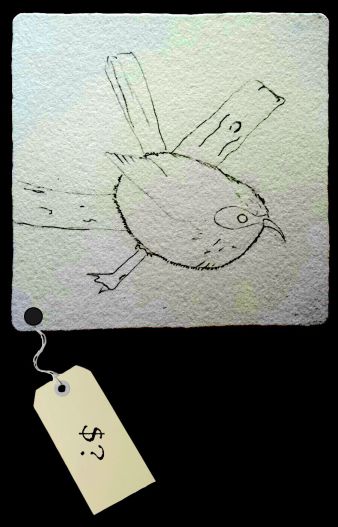
Can we put a price tag on birds we see?

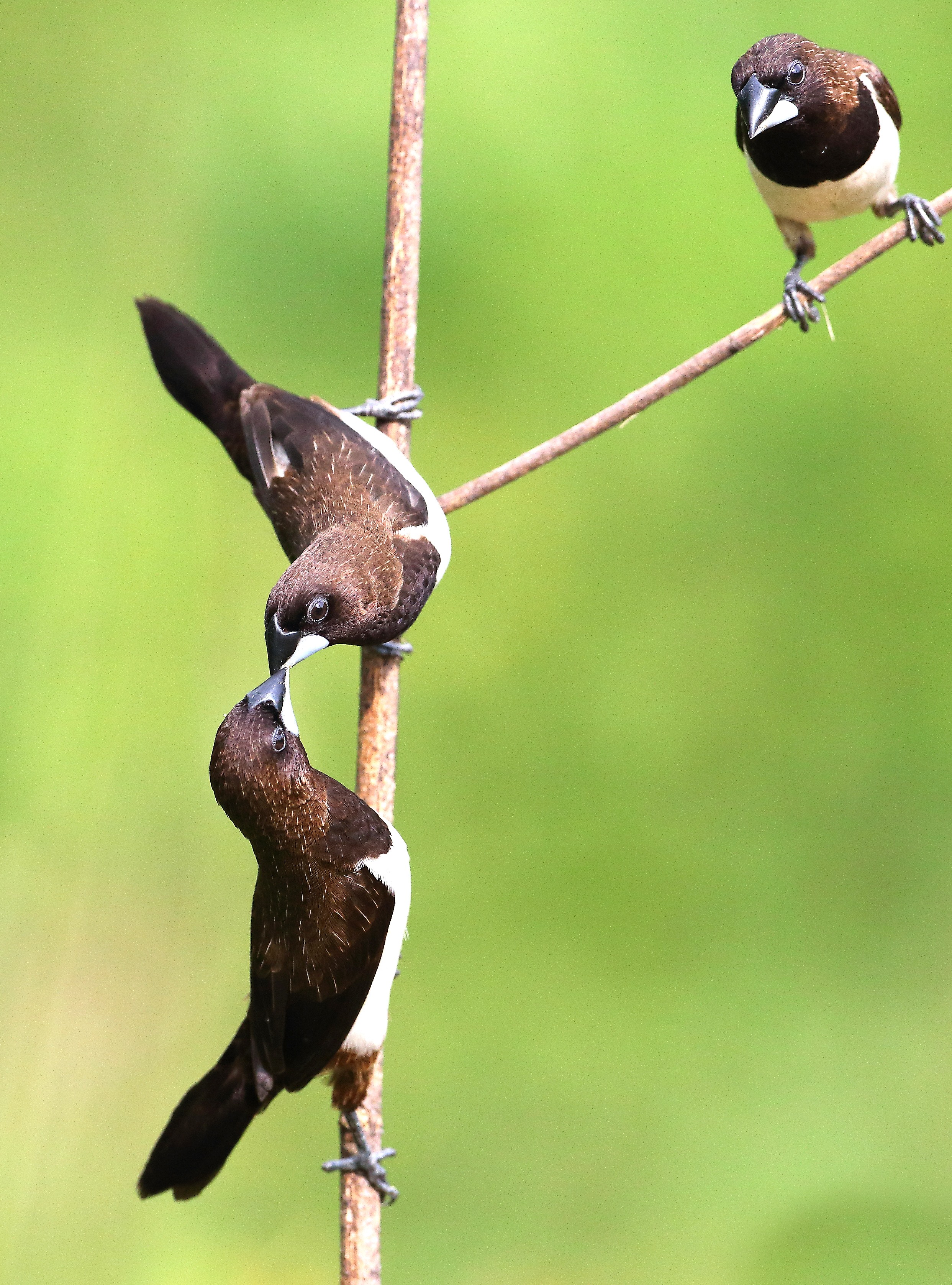
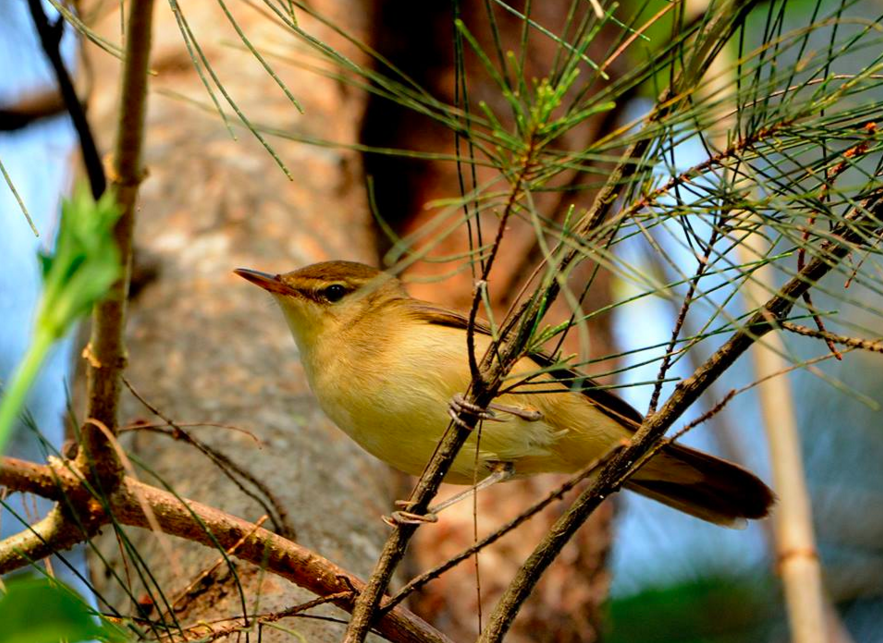
Image by the author

I recently came across an Oxford professor’s blog that revolves mostly around conservation and birding, and one of his posts was particularly interesting to me. In it, Professor Paul Jepson discusses the increasing presence of photography in the British birding sphere, and what bird photography means for the hobby of birding/birdwatching. I encourage you to read his article (I’ll put a link below), but will first share one idea that Jepson brings up toward the end of the piece, and which was very thought-provoking:

Bird photography is part of the socio-technological assembly that is shaping futures. If birdwatching is to be a cultural force in the twenty-first century, our bird reserves will need to embrace developments and directions in digital technologies. … My thought experiment imagines a system of pay-for nature hides with an observation tower, like the one in Muritz National Park outside Berlin, as its centre piece. Birding has a strong ‘nature as a public good’ mentality. While many bird photographers agree with this principle, they are also willing to pay for entry to the facilities and special places that enable them to get the shot they desire. Nature hides are popping up across Britain and 2017 hide day rates are £75 for the opportunity to photograph Common Kestrels Falco tinnunculus, £99 for Kingfishers and £150 for Black Grouse.

Although I enjoy taking photos of birds and sharing them online, I do not consider myself a bird photographer, partly because I don’t have the specialized gear (my camera is a point-and-shoot model, though its exceptional 65x optical zoom is useful for bird photos). That being said, Continue reading