
If, like those of us who contribute to this platform, you had been following the standoff mentioned in this article, and following the Bundys as a sidenote, this article is worth a read. The author Jennifer Percy gives full voice, as far as we can tell, to the concerns of the people from that region and specifically their opposition to all aspects of the federal government other than the military. The last three paragraphs of the article are particularly chilling but getting there is a worthy journey:
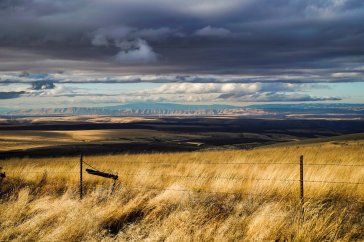
The landscape of eastern Oregon has little in common with the state’s Pacific Coast. Credit Peter van Agtmael/Magnum, for The New York Times
I took the eastern route from Idaho, on a day of freezing rain, over the Strawberry Mountains, into the broad John Day River Basin, in Oregon. I was used to empty places. Most of my childhood was spent in this region of eastern Oregon, in remote areas of the sagebrush desert or in the volcanic mountains with their jagged peaks and old-growth forests. My family moved away just before I entered high school, and I never returned; I’ve felt in romantic exile ever since. This part of America that had once belonged to my childhood became the spotlight of national news in the winter of 2016, when the Malheur National Wildlife Refuge — an old childhood haunt — became the scene of a cowboy takeover. The takeover began as a protest in the town of Burns after two ranchers were sentenced to prison for arsons on federal land. The ranchers, Dwight and Steven Hammond, caught the attention of the Nevada rancher Ammon Bundy, who thought the punishment unfair. Bundy and a crowd of nearly 300 marchers paraded through Burns, and a splinter group eventually took over the Malheur headquarters. For 41 days, they refused to leave, protesting federal ownership of public lands, which they considered unlawful and abusive. I didn’t understand what had happened since I left, why so many people seemed so disillusioned and angry.
Joe Cronin on his ranch in the Malheur National Forest, in October. Credit Peter van Agtmael/Magnum, for The New York Times
The ground was snow-covered when I visited John Day last winter and the temperature below freezing. I was there to attend a meeting organized by Jeanette Finicum, the widow of LaVoy Finicum, an Arizona rancher who was shot and killed by government agents a year earlier. LaVoy was a leader of the Malheur occupation. He left the refuge for a speaking engagement in John Day with plans to return, but he was shot three times at an F.B.I. roadblock. For that reason, his widow was calling this event “The Meeting That NEVER Happened.” Continue reading


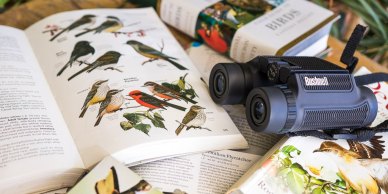 I spent a week testing nine of the most-recommended and best-selling bird guides at Mount Auburn Cemetery—the first garden cemetery in the US—and Fresh Pond in Cambridge, Massachusetts, both of which are hotspots, or popular public birding locations, on the online birding database






 Organikos