Werner, Syme & Darwin

Nijhuis-The-Book-That-Colored-Charles-Darwins-World-Secondary-Featured

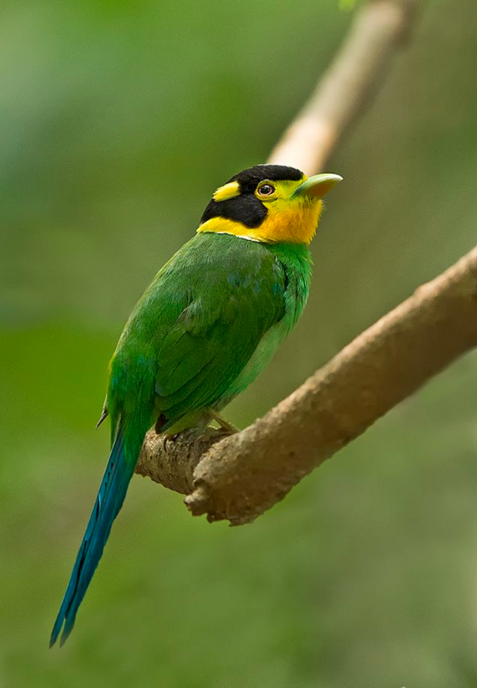
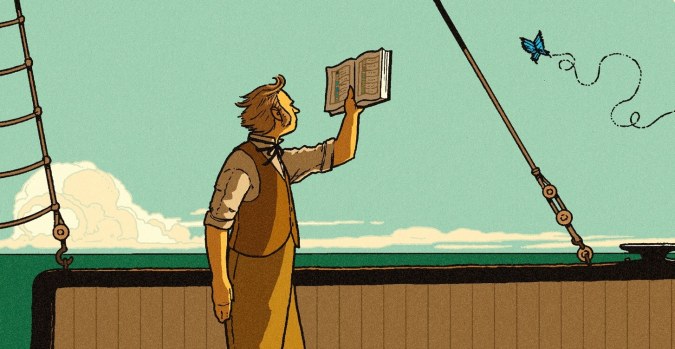
In his nearly five years aboard H.M.S. Beagle, Charles Darwin catalogued a dizzying array of new creatures. But how to show them to the people back home? Illustration by R. Fresson

9781588346216

It is a fine way to start a new week, thinking of a young person setting sail, and to narrow the focus of that thought, consider color.  We appreciate the notice by Michelle Nijhuis in the current issue of the New Yorker magazine about the upcoming re-issuing of this book, and her comment about it is welcome. Less welcome is the fact that if you click on her link to the book, or search on the title of the book with a fresh search, you will be directed to Amazon. At least if you are searching from the USA. Even from a USA-based search you can find alternatives, but from sources in places such as this excellent shop in the UK, or this one in Scandinavia. With that in mind, if the review below makes you think about purchasing the book, please consider clicking the image to the left which will link you to a bookstore in the USA that is offering it for pre-sale. Either way, enjoy this for now:

The Book That Colored Charles Darwin’s World

“I had been struck by the beautiful colour of the sea when seen through the chinks of a straw hat,” Charles Darwin wrote, in late March, 1832, as H.M.S. Beagle threaded its way through the Abrolhos Shoals, off the Brazilian coast. The water, he wrote, was “Indigo with a little Azure blue,” while the sky above was “Berlin with [a] little Ultra marine.”

Nomen1Darwin, then twenty-three, was only three months into the nearly five-year adventure that would transform his life and, eventually, the way that humans saw themselves and other species. As the voyage’s so-called scientific person, he would collect masses of rocks, fossils, animals, and plants, periodically shipping his specimens to Cambridge in containers ranging from barrels to pillboxes. Like other naturalists of his time, though, his primary documentary tool was the written word, and during the voyage he drew many of his words from a slim volume called “Werner’s Nomenclature of Colours,” published in 1814 by the Scottish artist Patrick Syme.

Nomen2Syme’s guide, a facsimile of which will be released in early February by Smithsonian Books, contains samples, names, and descriptions of a hundred and ten colors, ranging from Snow White to Asparagus Green to Arterial Blood Red to, finally, Blackish Brown. Based on a color-naming system developed in the late eighteenth century by the German mineralogist Abraham Werner, the guide is full of geological comparisons: Grayish White is likened to granular limestone, Brownish Orange to Brazilian topaz. Syme, a flower painter and art teacher, added comparisons from the living world. To Werner’s eyes, the Berlin Blue that Darwin saw in the Atlantic sky resembled a sapphire; to Syme, the wing feathers of a jay. Continue reading
Snowy Owl Zen

Every now and then, it is good to stop and smell the roses, which if you are a snowy owl looks like the scene above. Thanks to National Public Radio (USA) for bringing this to our attention:

26910960-2198855830128396-432316509509887686-ojpg-a9671d74dae41869

Facebook | Gary Cranfield

Gary Cranfield recorded the video last weekend while he was out on a walk with his girlfriend, Betsy Waterman, along Lake Ontario near Oswego, N.Y.

“There are usually sightings this time of year and historically there have been snowy owls in this place for years and we decided to check it out,” Cranfield, 69, told Syracuse.com.

You can watch the results of that wintry expedition above. And for those of you out there worrying, Waterman assures us the bird was not stuck — they watched it chill for 30(!) minutes on the floe before it flew away to another one.

And to David Figura for this original report:

Continue reading

A Community Of Immigrants Prevails

Michaud-Coogans-Bar.gif

Coogan’s faced a rent increase so extreme that it could not be misconstrued as a negotiating ploy. The response from the neighborhood was swift and overwhelming. Animation by Christopher Hopkins-Ward

Jim Dwyer, a New York Times reporter who we have only had reason to feature once in these pages, should have remained on our radar once we saw his attention to one of our heroes, Chuck Feeney. In particular, if we had snooped around one year ago after reading that article, we would have found this. Interesting fellow, beyond his journalistic talents. But he dropped off our radar, and for the last year we have probably missed many stories that would fit in these pages. Case in point, he wrote a story a couple weeks ago that failed to capture our attention.

And what a failure, though we might be forgiven the mistake. In the early paragraphs he mentions that the bar at the center of the story is closing because its landlord, a hospital, has plans for the building where the bar is located. That sounds not only ho-hum, but perhaps like progress; hospitals are the most communitarian of institutions, right? We correct that now:

Coogan’s, an Uptown Stalwart, Makes Its Last Stand

Lionfish Management, Practitioner Exchange

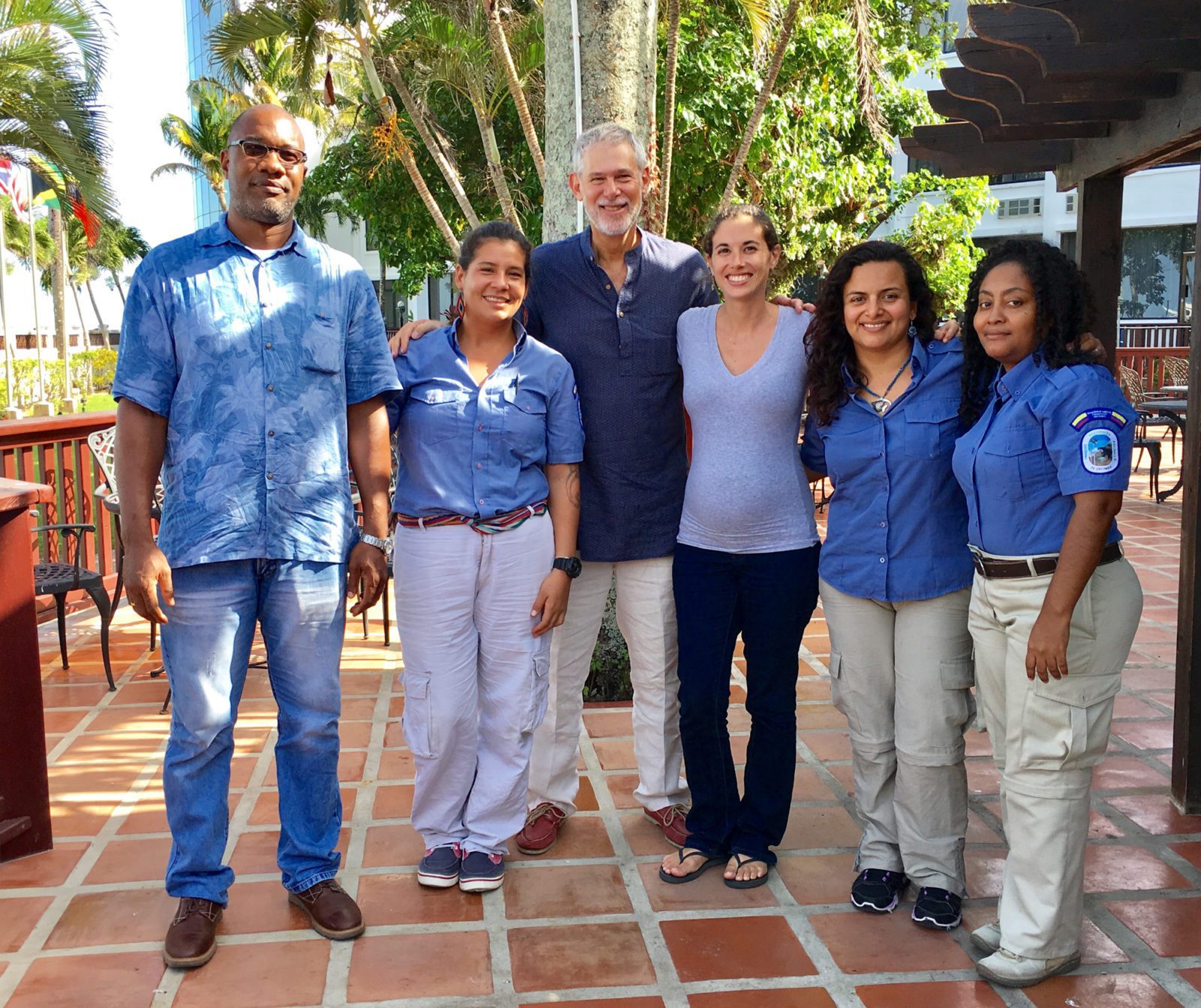
The four Colombian exchange delegates with Phil Karp and Jen Chapman, Blue Ventures’ Country Coordinator in Belize.

As in other fields of capacity building for development there is a growing recognition within the marine conservation community of the power of practitioner–practitioner exchange. Whether they take the form of ‘barefoot’ exchanges between fishers, or more formal exchanges involving Marina Protected Area (MPA) managers and policymakers, such exchanges are emerging as an extremely effective way of sharing, replicating, adapting and scaling up successful solutions to the challenges of marine protection and avoiding repetition of unsuccessful approaches. Practitioner exchanges are particularly effective for sharing ‘how to’ or tacit knowledge about solutions, as such tips and tricks tend not be fully recorded in written descriptions or case studies.

Practitioner exchange as a form of capacity building represents a departure from more traditional approaches such as technical assistance or deployment of expert advisors. In the latter case, external experts are relied on to share successful solutions with which they are familiar only through research, and may therefore lack a complete understanding of the full range of factors and potential pitfalls that could influence the successful implementation of an approach elsewhere.

Read more about Blue Ventures sharing the temporary fisheries closure model through community exchange.

Blue Ventures has been very active in practitioner exchanges for some time, focused on sharing its pioneering work on the use of periodic, short-term fishery closures as an effective solution to balancing species conservation and livelihoods.  Continue reading

Smaller Footprints, Step By Step

5120x

Thanks to Chris Goodall for this quick check-list, mostly relevant to northern clime folks:

How to reduce your carbon footprint

From cutting down on meat to contacting your local representatives and investing in clean energy, here are 15 ways to help reduce global carbon emissions Continue reading

1491, 1493 & 2048

1920 (1).jpg

Ulises Fariñas

We have appreciated Charles C. Mann since our earliest awareness of his historical work when we started this platform in 2011. Now, he peers into the future, and we cannot close our eyes to the prospects he raises in this futurist epic in the upcoming edition of the Atlantic:

Can Planet Earth Feed 10 Billion People?

Humanity has 30 years to find out.

All parents remember the moment when they first held their children—the tiny crumpled face, an entire new person, emerging from the hospital blanket. I extended my hands and took my daughter in my arms. I was so overwhelmed that I could hardly think.

Afterward I wandered outside so that mother and child could rest. It was three in the morning, late February in New England. There was ice on the sidewalk and a cold drizzle in the air. As I stepped from the curb, a thought popped into my head: When my daughter is my age, almost 10 billion people will be walking the Earth. I stopped midstride. I thought, How is that going to work? Continue reading

The Big Carbon Footprint For Mining Virtual Currency

merlin_76857994_5a73f5ad-7404-4ded-9163-c32094dae9b8-master675

A computer server farm in Iceland, dedicated to mining Bitcoin. Credit Richard Perry/The New York Times

Thanks to the New York Times for this story on how much electricity is required to create virtual currencies:

SAN FRANCISCO — Creating a new Bitcoin requires electricity. A lot of it.

merlin_126054002_a85682ec-bfd6-4e56-9357-292d1a1b4fe2-master768

An employee at a Bitmain facility in Inner Mongolia, one of the biggest Bitcoin farms in the world. Credit Giulia Marchi for The New York Times

In the virtual currency world this creation process is called “mining.” There is no physical digging, since Bitcoins are purely digital. But the computer power needed to create each digital token consumes at least as much electricity as the average American household burns through in two years, according to figures from Morgan Stanley and Alex de Vries, an economist who tracks energy use in the industry.

The total network of computers plugged into the Bitcoin network consumes as much energy each day as some medium-size countries — which country depends on whose estimates you believe. And the network supporting Ethereum, the second-most valuable virtual currency, gobbles up another country’s worth of electricity each day. Continue reading
Animalism, Eel Episode


Thanks to the Atlantic’s Ed Yong for this four minutes of wonder:

It’s a remote control.
 It’s a tracking device.
 It can deliver shocks of up to 600 volts. You think the electric eel is shocking? You haven’t seen anything yet. In this episode of Animalism hosted by The Atlantic science writer Ed Yong, we investigate the subtle and sinister ways of the electric eel.

Environmental Impact From Microwave Ovens

totalenvironmentThree scientists at the University of Manchester have shared their findings in a journal whose title we had not been aware of, but are glad to know is looking out for us all:

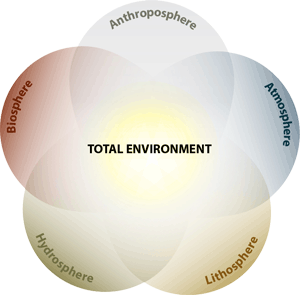
1-s2.0-S0048969717X00259-cov150hScience of the Total Environment is an international journal for publication of original research on the total environment, which includes the atmospherehydrospherebiospherelithosphere, and anthroposphere.

Since most readers of our pages likely use this type of oven on a daily basis, it seems worthy of a moment to read their findings as abstracted below:

Environmental assessment of microwaves and the effect of European energy efficiency and waste management legislation

Authored by Alejandro Gallego-Schmid, Joan Manuel F.Mendoza & Adisa Azapagic

130 M microwaves in the EU consume 9.4 TWh of electricity annually.

First LCA for microwaves to estimate the environmental effects of EU regulation

Standby Regulation will reduce impacts by 4–9% by 2020; WEEE Directive by ~ 0.3%.

Decarbonisation of electricity will reduce most impacts by 6–24% by 2020.

Eco-design regulation for microwaves should be developed to reduce resource use.

More than 130 million microwaves are affected by European Union (EU) legislation which is aimed at reducing the consumption of electricity in the standby mode (‘Standby Regulation’) and at more sustainable management of end-of-life electrical and electronic waste (‘WEEE Directive’). Continue reading
Alternatives To Dairy

19OATLY-1-master768.gif

Photo illustration by Tracy Ma/The New York Times; Alamy (hands)

ripple-cereal_vert-25580ec96d4795beae7106681f5f2dc412d7886d-s400-c85

Ripple’s pea-based milk contains 8 grams of protein per cup, the same amount as in a cup of cow’s milk.
Whitney Pipkin/NPR

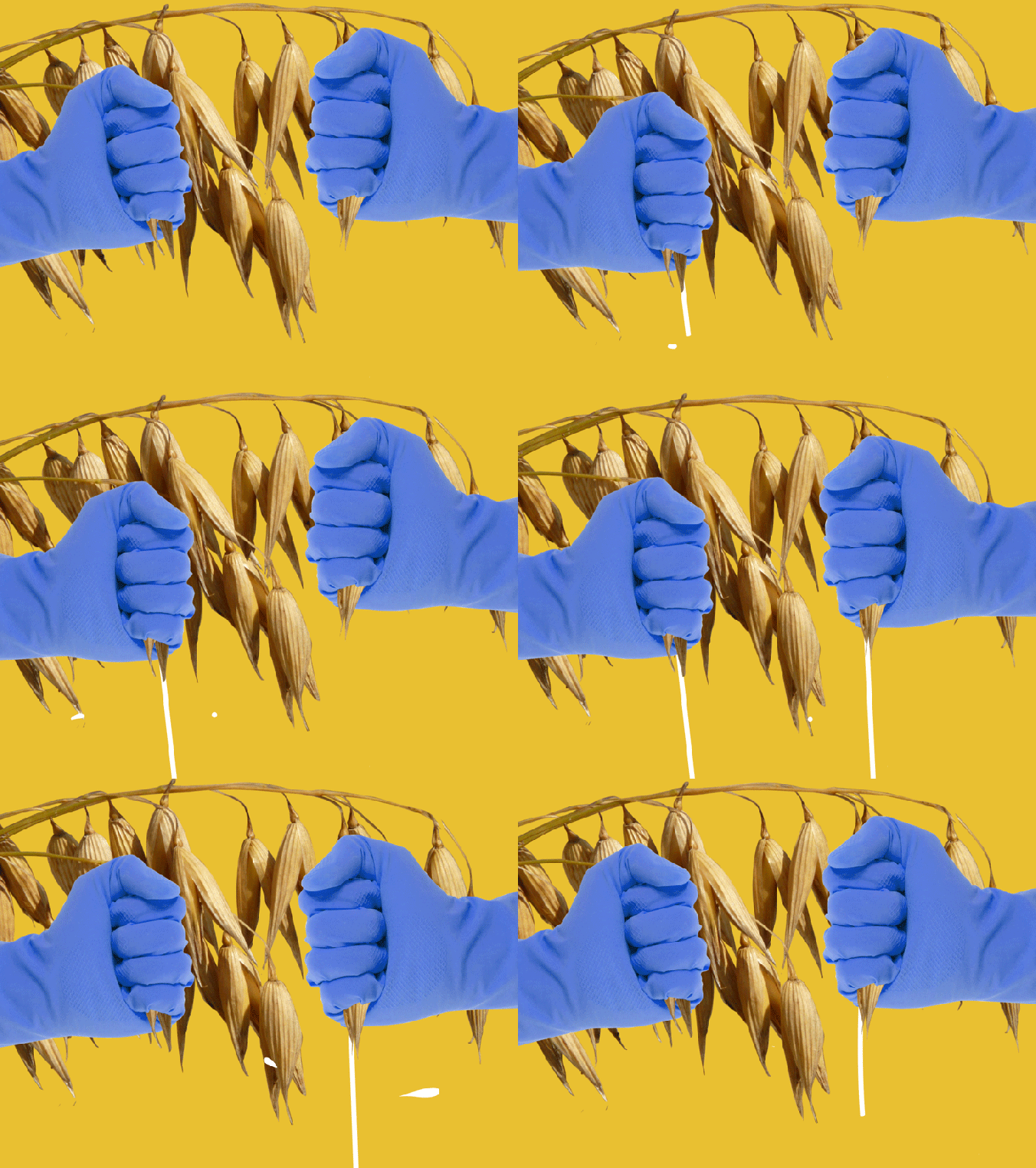
This article on the subject of a new pea-based dairy alternative–not just milk for coffee or cereal but also thicker items like Greek-style yoghurt–reported by National Public Radio (USA), reminded us of the great gif showing the milking of oats. Which reminded us to read that article too. Both worth a read:

When did finding something to put in your coffee get so complicated?

For the lactose-intolerant or merely dairy-averse, there are more alternatives to good ol’ American cow’s milk than ever. First there were powdered “creamers,” with their troublesome corn syrup solids. Then came soy, which may come closest to the real thing in nutrients and consistency. Grocery stores now stock an army of nut milks — almond, cashew, hazelnut, macadamia, you name it — which can be too grainy, too thin or frankly too flavorful. Pea milk? Sounds like a kindergarten taunt. Coconut and rice milk are basically water. Hemp milk? For the birds … and the hippies. Continue reading