
Tacacori, Costa Rica
Tacacori, Costa Rica
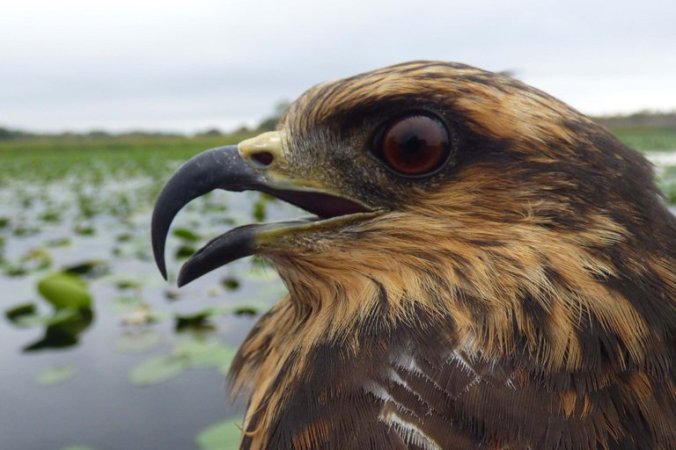
A North American snail kite in Florida. Researchers say the bird species has rapidly evolved larger beaks and bodies to eat a larger, invasive snail. CreditRobert Fletcher/University of Florida
Things Looked Bleak Until These Birds Rapidly Evolved Bigger Beaks
The invasive snails are two to five times larger than the native species, and young kites with larger bills that were able to feed on them were more likely to survive their first year. Credit Robert Fletcher/University of Florida
Conservationists have been sounding the alarm over invasive species for years, warning of the damage they can cause to habitats and native animals. But in Florida, an invasive snail might be helping an endangered bird species come back from the brink, researchers say.
The population of North American snail kites — birds that use curved beaks and long claws to dine on small apple snails in the Florida Everglades — had been dwindling for years, from 3,500 in 2000 to just 700 in 2007. Things began to look particularly bleak in 2004, when a portion of the Everglades was invaded by a species of larger snail that the birds had historically struggled to eat. Ornithologists assumed the shift would hasten the snail kite’s decline. Continue reading
Bangalore, Karnataka
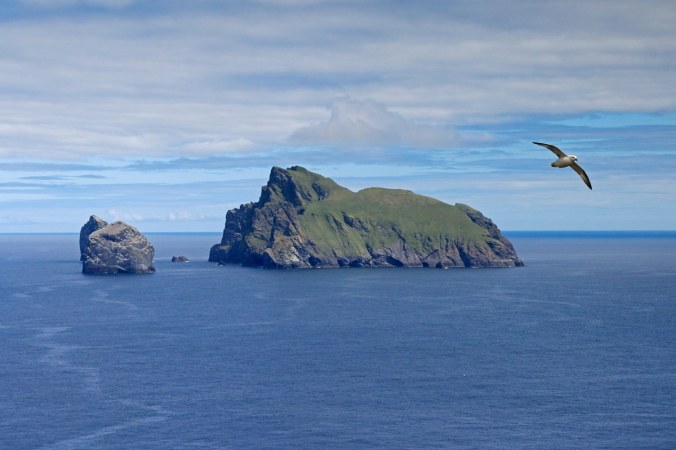
A northern fulmar in flight near Boreray, an uninhabited island in the archipelago of St. Kilda. Photograph by Philip Mugridge / Alamy
A beautiful several minutes of historical reading, thanks to Fergus McIntosh:
A Trip to St. Kilda, Scotland’s Lost Utopia in the Sea
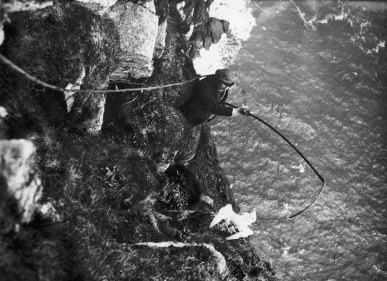
In 1877, George Seton, a visitor to the tiny Scottish archipelago of St. Kilda, observed that the men living there had an unusual physiological characteristic. “The great toes of the cragsmen are widely separated from the others, from the circumstance of their frequently resting their entire weight on that part of the foot in climbing,” Seton wrote. These men with prehensile feet were residents of the most remote settlement in the British Isles, forty miles out in the North Atlantic, where seabirds, garnered from the towering cliffs, formed the major part of their diet. A hundred years after Seton, another visitor wrote that “even today a boat setting out for St. Kilda is by no means assured of reaching its destination.”
A St. Kildan hunts seabirds on the cliffs of Hirta, May 26, 1923. Photograph by Trinity Mirror / Mirrorpix / Alamy
These were unnerving words to recall as I stood, clad in oilskins and a lifejacket, on the pier at Uig, on the Isle of Skye, at seven o’clock one morning in August. Though the air was cold and still, the sky a smooth overcast, the captain of our small boat assured us that the ocean swell would make the journey to the islands uncomfortable, and that the weather could worsen at any moment. Continue reading
Jamnagar, Gujarat
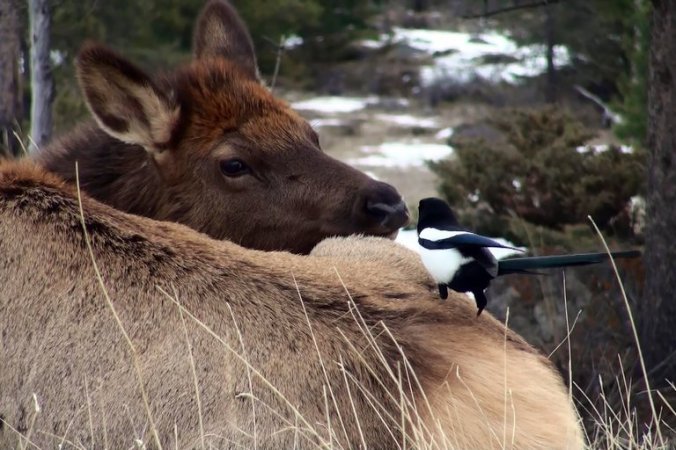
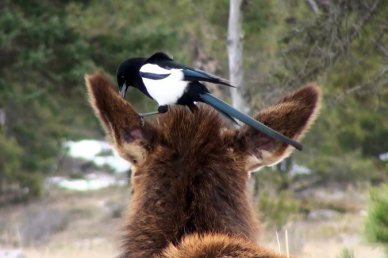
A magpie on an elk in Alberta, Canada, looking for winter ticks. Credit Rob Found
Thanks to the Trilobites feature on the New York Times website for this story of collaborative friendliness between species:
Chances are that’s a shy elk looking back at a bold magpie, in the photograph above.
Scientists wonder if shy elk compensate for their bashfulness by accepting the grooming magpies. Credit Rob Found
They get along, so to speak, because the elk needs grooming and the magpie is looking for dinner. But they may have never entered into this partnership if it weren’t for their particular personalities, suggests a study published Wednesday in Biology Letters.
Let’s start with the elk. In Canada’s western province of Alberta, they’ve been acting strange. Some have quit migrating, opting to hang around towns with humans who protect them from predators like wolves. Others still migrate. Continue reading
Tumling, Nepal
Each day we scan the news for stories that will help make sense of the environmental challenges facing humanity, with special attention to potential solutions and collective action taken to rise up to those challenges. Earlier this year we declined to link out to this story that was a collection of doomsday scenarios:

Dinokeng Game Reserve, Pretoria, SA
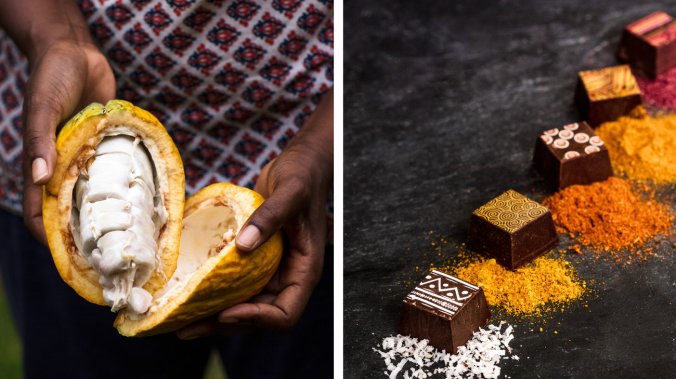
Left, a ripe cacao pod. Right, truffles from Midunu chocolates contain spices and flavors from all over Africa. Midunu Chocolates
Thanks to Amy E. Robertson and National Public Radio (USA) for telling the story of Midunu, a brief excerpt of which is sampled below:
One Woman’s Quest To Tell ‘The African Story Through Chocolate’
…While working in Senegal, Atadika joined forces with two more food-loving friends, and created a pop-up restaurant that was wildly popular. After dipping her toes in the culinary world for a couple of years, she finally took the plunge. In 2014, Atadika resigned from the UN, moved back to her native Ghana and began cooking full time.
Atadika started with catering and pop-up dinners. “It wasn’t my plan to do chocolates,” she says. “But whatever I do in food I look at in terms of adding value, and chocolate just kind of popped in, because we have this cocoa but we weren’t really processing it at the level we should be.” Midunu Chocolates was born. Continue reading
Gallon Jug Estate, Belize
Lisa Friedman appears twice on today’s landing page of the newspaper she works for, once as co-host on a video, below, about Alaska; and again as host of an equally important story in the form of an interview, also captured on this video titled Jerry Brown on How to Fix Global Warming.

How can policymakers fight climate change in the face of political headwinds? Gov. Jerry Brown of California addresses that question at ClimateTECH, a conference from The New York Times, in a conversation with Thomas L. Friedman. By THE NEW YORK TIMES on Publish DateNovember 29, 2017. Photo by Friedemann Vogel/European Pressphoto Agency. Watch in Times Video »

Tumling, Nepal
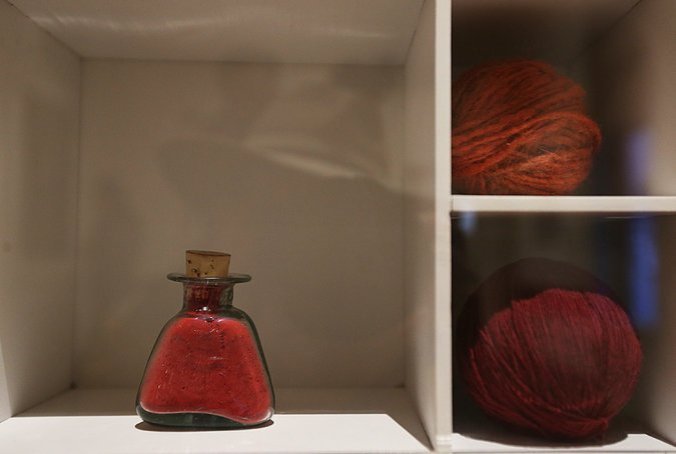
A jar of dye and some red yarn colored by cochineal, part of the Mexico City show. Credit Marco Ugarte/Associated Press
Colors used in dyes and paints in earlier centuries came from various organic and inorganic sources, and this particular red comes from an insect. An exhibit with this “Mexican red,” highlighting the relationship between nature’s sources, artists and their patrons, strikes us as as good a reason as any to curate a show:

Van Gogh’s “Bedroom in Arles, Third Version” (end of September 1889), which uses cochineal. The artist likened the color to the “red of wine.” Credit Musée d’Orsay, Paris
MEXICO CITY — Along with silver and gold, the first ships that sailed from the New World after the Spanish Conquest carried another treasure: a natural dye that produced a red so intense that European artists quickly embraced it as their own.
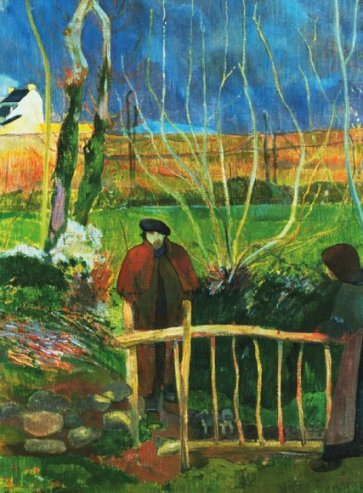
“Bonjour, Monsieur Gauguin” (1889), by Gauguin, is on display in “Mexican Red,” though its use of cochineal has not been confirmed. Credit Hammer Museum, Los Angeles
The trade in this dye reaped vast riches for the Spanish crown and supplied the crimson palette that would color the sacred and secular art of Europe for more than three centuries.
An exhibition that runs through Feb. 4 at this city’s Palace of Fine Arts, “Mexican Red, the Cochineal in Art,” traces the journey of the color from the highlands of pre-Hispanic Mesoamerica to Europe. There, it became increasingly associated with the projection of power in the 17th and 18th centuries. Cochineal fell into decline in the 19th century, as synthetic dyes were introduced, but was sought out later by the Impressionists. Continue reading

Desert National Park, Jaisalmer, Rajasthan

Collin Waldoch Illustration by Tom Bachtell
We linked out to stories about bike-sharing when it was relatively new in New York. This week, an enchanting short note on a peddler of angelic behavior, and a couple examples of people who have pedaled accordingly:
Hacking the Citi Bike Points System
A program offers modest benefits to riders who help rebalance the city’s network of bicycles. One man outdid its expectations.
By Ian Parker
On a recent Monday, Glenn Reinhart, a former salesman of chemicals for the cosmetics industry, and now, in his mid-fifties, a freelance karate instructor with a fair amount of leisure time, took twenty-two rides on Citi Bikes, one after another, and then went out to breakfast in Chelsea. He had arranged to meet Collin Waldoch, who runs Bike Angels, the Citi Bike program that awards points, redeemable for extended membership and other modest benefits (a commemorative pin; a white bike key), to riders who help the company rebalance its network of twelve thousand bikes. Angels earn points for taking bikes from full stations and parking them at empty ones. A ride from one to the other might earn two or three points. When the scheme was launched, this spring, Waldoch thought that someone might, in the course of a year, earn five hundred points. By the fall, Glenn Reinhart had earned nearly eight thousand—twice as many as anyone else—and Waldoch sent him an e-mail and invited him to breakfast. Continue reading
Sattal, Uttarakhand

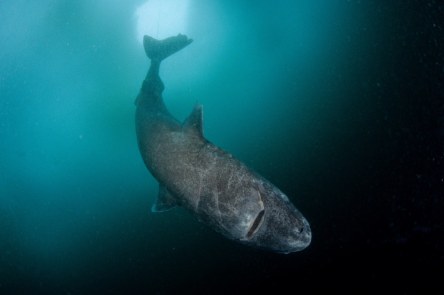
Using carbon dating and a new method involving proteins in the lens of the eye, Danish scientists have unravelled the mystery of how long Greenland sharks live. Photograph by WaterFrame / Alamy
Apart from Romantic poets and their wannabes, who would wish for elegance at the expense of longevity? Thanks to M. R. O’Connor for this inelegantly titled post:
Greenland sharks are among nature’s least elegant inventions. Lumpish, with stunted pectoral fins that they use for ponderously slow swimming in cold and dark Arctic waters, they have blunt snouts and gaping mouths that give them an unfortunate, dull-witted appearance. Continue reading
Kotagiri, Tamil Nadu
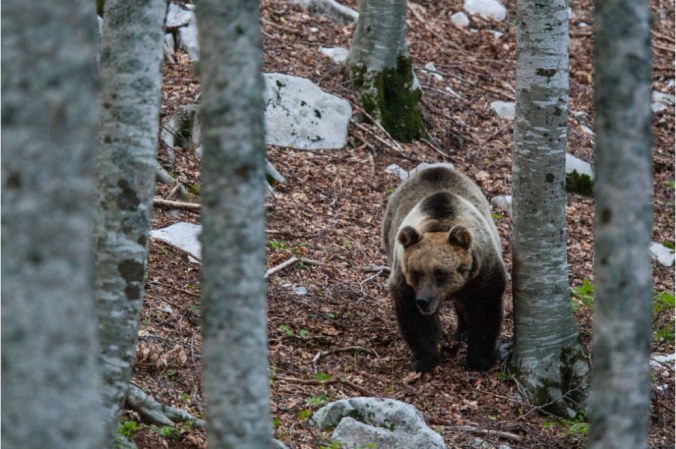
Salviamo L’Orso is committed to conserving the critically endangered Marsican brown bear (pictured here in its central Apennines habitat), and has already won many grants for its grassroots projects. Bruno D’Amicis / Rewilding Europe
It has been some time since we regularly featured news on the topic of rewilding. This announcement is as good a reason as any to revisit rewilding:
A Salviamo l’Orso project titled “Let’s take action for the Bear” was approved for funding by members of EOCA in early November, together with four other proposals from around the world.
With only 50 to 60 individuals remaining, all living in a relatively small area of the Central Apennines, the endemic Marsican brown bear (Ursus arctos marsicanus) is today critically endangered. The Salviamo l’Orso project, which comprises four conservation activities, will enhance the habitat of these magnificent animals and hopefully help them to expand their home range. Continue reading



 Organikos