
Ukhimath, Uttarakhand
Ukhimath, Uttarakhand
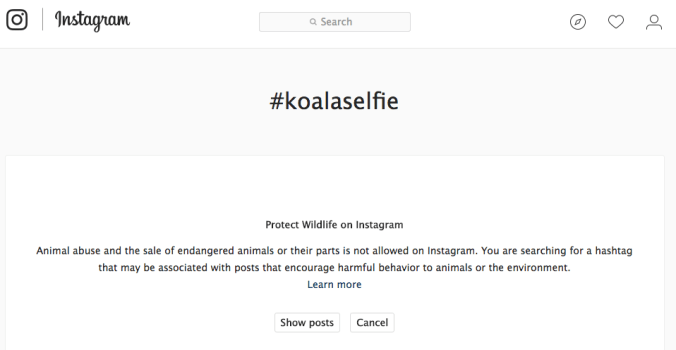
This is the message that now appears on Instagram if you search for a hashtag like #koalaselfie
I post on Instagram a couple times a month, but I often browse pictures on the app at least once a day. I can’t say that I’ve encountered photos like those described in the NatGeo article below, but I’m still thankful that Instagram is taking action to try to keep it that way, by pointing out to people using certain hashtags involving wildlife that the animals may be suffering behind the scenes:
Instagram is rife with photos of cute wild animals—including the exotic and endangered. A picture of someone hugging a sloth or showing off a pet tiger cub is just a click away on the massively popular photo-sharing platform, which serves 800 million users.
But starting [December 4th], searches for a wide range of wildlife hashtags will trigger a notification informing people of the behind-the-scenes animal abuse that makes some seemingly innocent wildlife photos possible.
Instagram will now deliver a pop-up message whenever someone searches or clicks on a hashtag like “#slothselfie.” The message reads, in part, “You are searching for a hashtag that may be associated with posts that encourage harmful behavior to animals or the environment.”

Zuluk, Sikkim
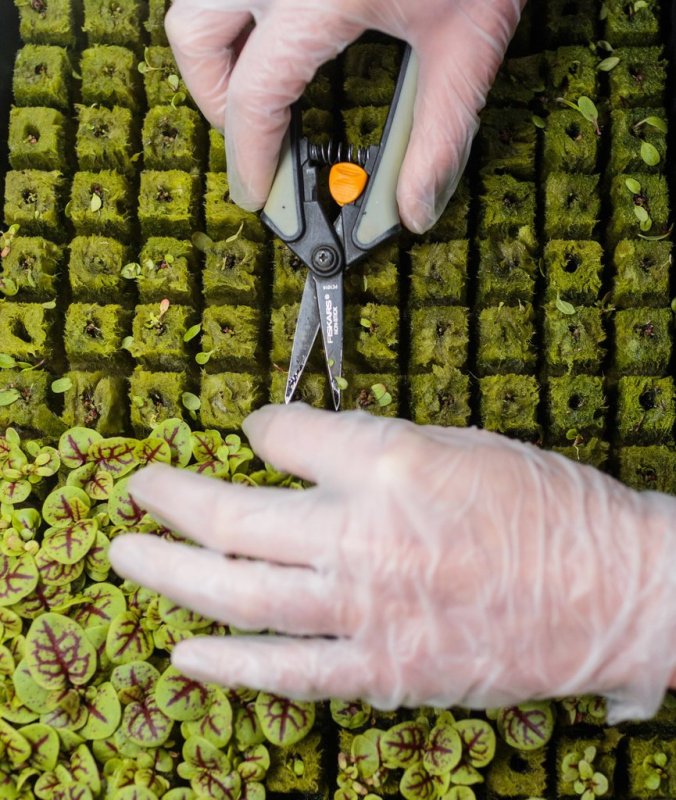
At Farm.One, a hydroponic garden in TriBeCa, red-veined sorrel is prepared for a delivery. Credit Sarah Blesener for The New York Times
We have posted on urban farming and related topics numerous times since 2011, and hydroponics as its own topic of interest plenty of times as well. Culinary and/or gastronomic topics as related to agriculture are a magnitude of order more represented in these pages. Finally, they are combined for us in one amazing article, thanks to Alyson Krueger. If you only have time to look at the photos, those alone are worth the click:
Herbs From the Underground
Farm.One just opened an indoor rare herb and flower garden in a TriBeCa basement, and many prominent chefs are flocking to it.
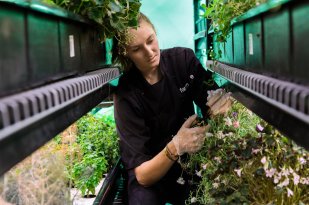
Katherine Chester, a farm hand at Farm.One, harvests for a morning delivery. Credit Sarah Blesener for The New York Times
In the basement of a loft-style building in TriBeCa that houses a vet, a dog swimming pool, an eye-and-ear infirmary, and a two-Michelin-starred restaurant, there is a working farm.
Farm.One is a hydroponic facility, which means that the plants do not grow in soil. Many of these farms are located indoors, in controlled environments, with artificial lighting.
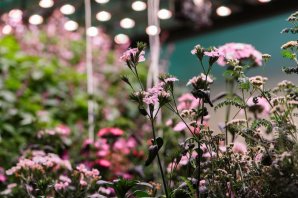
Amazon neon cherry dianthus and neon rose magic dianthus. Credit Sarah Blesener for The New York Times
The new two-room space, which opened in November in a former cycling studio for high-altitude training and an old storage area, is only 1200 square feet. There is no fresh air or natural light; there is not even a window. Yet the venue can grow around 580 varieties of rare herbs and flowers (200 at a time) that supply New York’s top restaurants. Le Turtle, Le Coucou, Mission Chinese Food, and The Pool get regular deliveries from Farm.One, sometimes several times a week. Continue reading

Dinokeng Game Reserve, Pretoria, SA
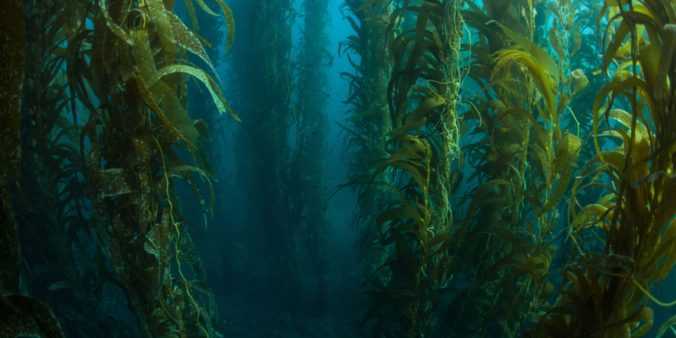
Kelp forest commentary is not new to our pages, but much more frequently the generic category seaweed has been highlighted for its farming potential. We have apparently not give sufficient attention to the specific value of natural kelp forests. Thanks to Yale 360 and science writer Alastair Bland for this story:
As Oceans Warm, the World’s Kelp Forests Begin to Disappear
The progression of the destruction of a kelp forest in Tasmania by urchins, photo 1/3.
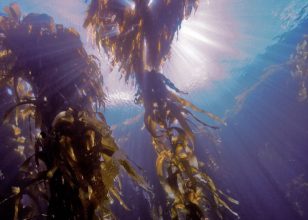
Kelp forests — luxuriant coastal ecosystems that are home to a wide variety of marine biodiversity — are being wiped out from Tasmania to California, replaced by sea urchin barrens that are nearly devoid of life.
A steady increase in ocean temperatures — nearly 3 degrees Fahrenheit in recent decades — was all it took to doom the once-luxuriant giant kelp forests of eastern Australia and Tasmania: Thick canopies that once covered much of the region’s coastal sea surface have wilted in intolerably warm and nutrient-poor water.
The progression of the destruction of a kelp forest in Tasmania by urchins, photo 2/3.
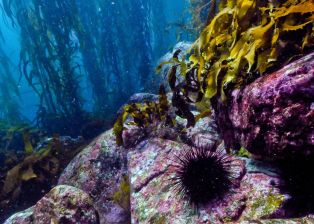
Then, a warm-water sea urchin species moved in. Voracious grazers, the invaders have mowed down much of the remaining vegetation and, over vast areas, have formed what scientists call urchin barrens, bleak marine environments largely devoid of life.
Today, more than 95 percent of eastern Tasmania’s kelp forests — luxuriant marine environments that provide food and shelter for species at all levels of the food web — are gone. With the water still warming rapidly and the long-spine urchin spreading southward in the favorable conditions, researchers see little hope of saving the vanishing ecosystem.
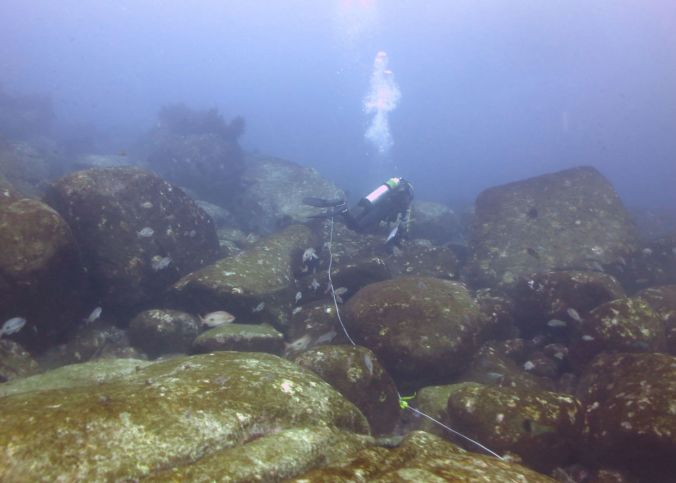 The progression of the destruction of a kelp forest in Tasmania by urchins, photo 3/3. The Australian island state has lost more than 95 percent its kelp forests in recent decades. COURTESY OF SCOTT LING Continue reading

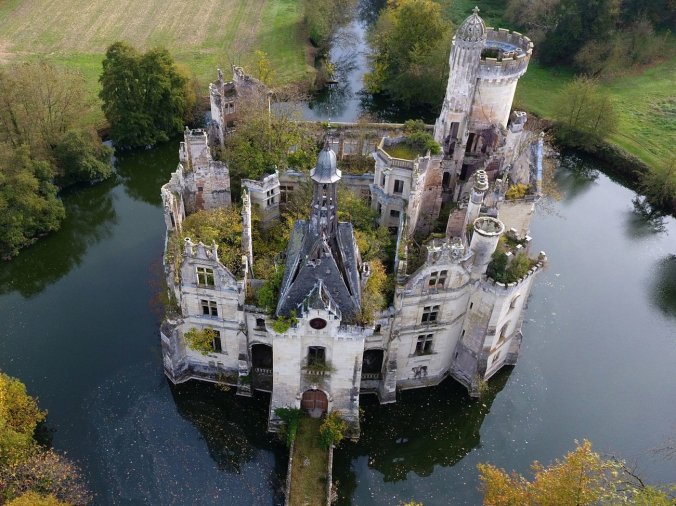
The ruined castle of La Mothe-Chandeniers in central western France. The crowdfunding site Dartagnans organized an effort to buy the chateau for 500,000 euros. Guillaume Souvant/AFP/Getty Images
Thanks to National Public Radio (USA) for this signal that trust, the cement of civilization, is alive and well in some quarters:
7,500 Strangers Just Bought A Crumbling French Chateau Together
It’s late 2017. By now, crowdfunding has been used to finance films, board games, classical music, scientific research and infertility treatments.
Add this to the list of things bought with collective purchasing power: A chateau in the French countryside, complete with moat.
Mais oui!
The platform used to raise the funds announced on Friday that the castle had been purchased by milliers d’internautes – that is, thousands of Internet users, who each paid at least 50 euros (about $60) to “adopt” the chateau and help restore it. In just 40 days, the site raised the 500,000 euros it needed to buy it. Continue reading
Valparai, Tamil Nadu
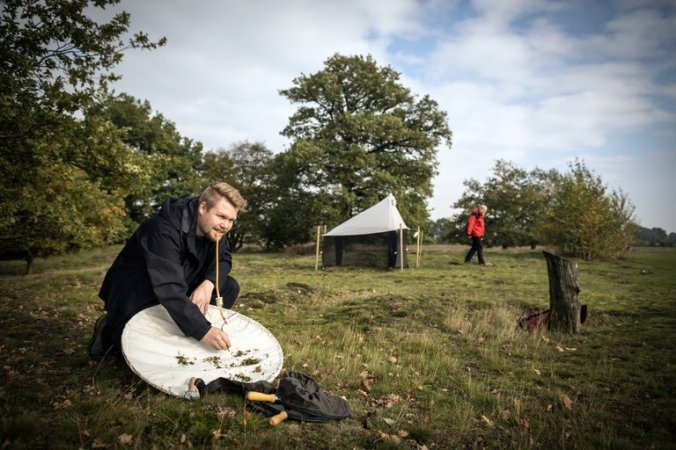
Thomas Hörren, a member of the Entomological Society Krefeld, collecting beetles from a soil sample. CreditGordon Welters for The New York Times
Thanks to Sally McGrane for this important article:
KREFELD, Germany — In a nature preserve in western Germany, an elderly gentleman approached a tent-like structure that was in fact a large trap for flying insects. Peering through thick eyeglasses, the 75-year-old retired chemist checked the plastic bottle attached at the top, filled with alcohol and bugs.
Then, with a glance at the clear, late-autumn sky, the man, Heinz Schwan, recalled comparing a 2013 haul from a trap like this one to samples taken in the same place some 20 years earlier. The drop was huge: “75 percent,” Mr. Schwan, a caterpillar lover, said.
Alarmed, the group of local insect enthusiasts Mr. Schwan is co-chairman of ran similar tests in different locations the next year. And the next year. And the next. Continue reading

Tacacori, Costa Rica
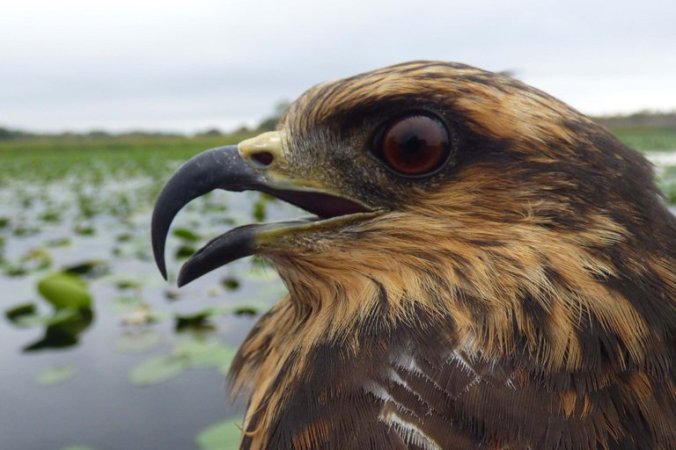
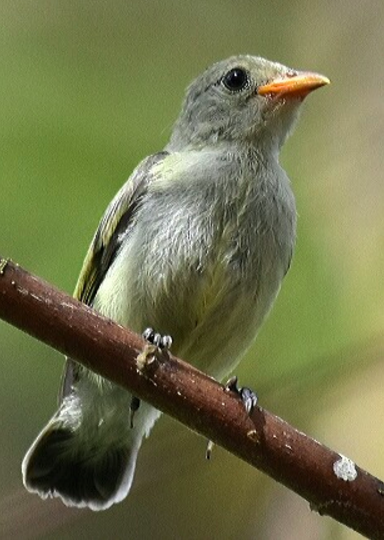
A North American snail kite in Florida. Researchers say the bird species has rapidly evolved larger beaks and bodies to eat a larger, invasive snail. CreditRobert Fletcher/University of Florida
Things Looked Bleak Until These Birds Rapidly Evolved Bigger Beaks
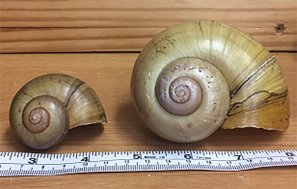
The invasive snails are two to five times larger than the native species, and young kites with larger bills that were able to feed on them were more likely to survive their first year. Credit Robert Fletcher/University of Florida
Conservationists have been sounding the alarm over invasive species for years, warning of the damage they can cause to habitats and native animals. But in Florida, an invasive snail might be helping an endangered bird species come back from the brink, researchers say.
The population of North American snail kites — birds that use curved beaks and long claws to dine on small apple snails in the Florida Everglades — had been dwindling for years, from 3,500 in 2000 to just 700 in 2007. Things began to look particularly bleak in 2004, when a portion of the Everglades was invaded by a species of larger snail that the birds had historically struggled to eat. Ornithologists assumed the shift would hasten the snail kite’s decline. Continue reading
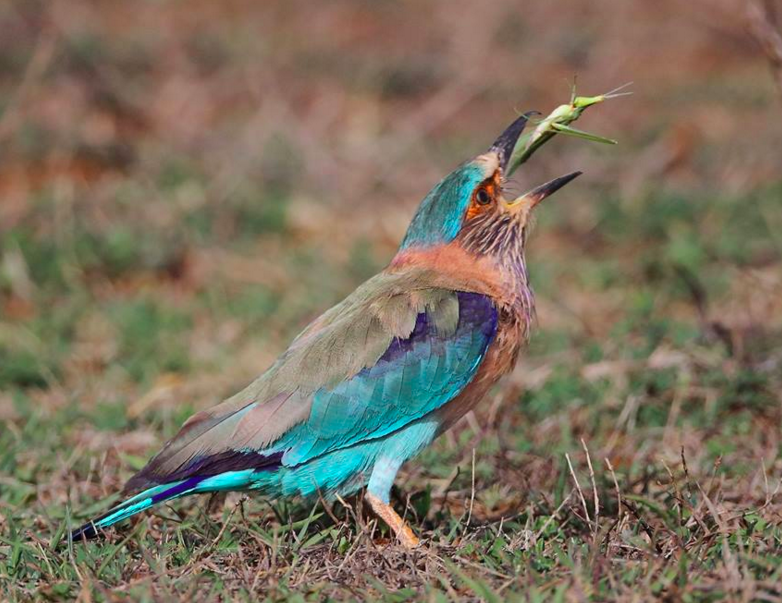
Bangalore, Karnataka
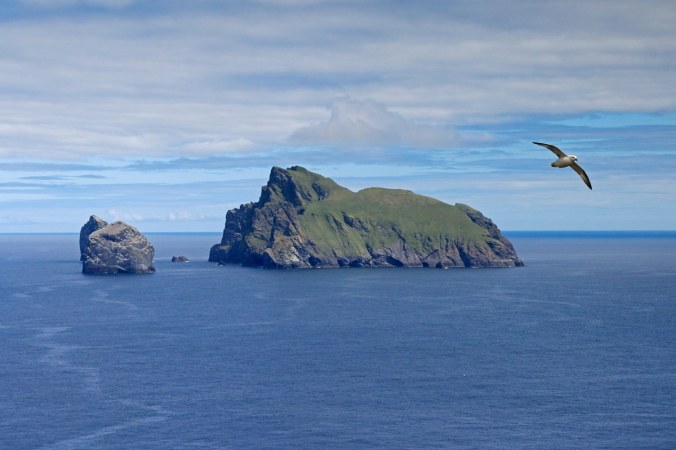
A northern fulmar in flight near Boreray, an uninhabited island in the archipelago of St. Kilda. Photograph by Philip Mugridge / Alamy
A beautiful several minutes of historical reading, thanks to Fergus McIntosh:
A Trip to St. Kilda, Scotland’s Lost Utopia in the Sea
In 1877, George Seton, a visitor to the tiny Scottish archipelago of St. Kilda, observed that the men living there had an unusual physiological characteristic. “The great toes of the cragsmen are widely separated from the others, from the circumstance of their frequently resting their entire weight on that part of the foot in climbing,” Seton wrote. These men with prehensile feet were residents of the most remote settlement in the British Isles, forty miles out in the North Atlantic, where seabirds, garnered from the towering cliffs, formed the major part of their diet. A hundred years after Seton, another visitor wrote that “even today a boat setting out for St. Kilda is by no means assured of reaching its destination.”
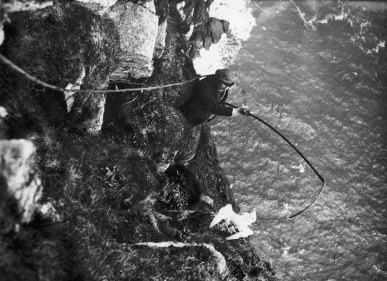
A St. Kildan hunts seabirds on the cliffs of Hirta, May 26, 1923. Photograph by Trinity Mirror / Mirrorpix / Alamy
These were unnerving words to recall as I stood, clad in oilskins and a lifejacket, on the pier at Uig, on the Isle of Skye, at seven o’clock one morning in August. Though the air was cold and still, the sky a smooth overcast, the captain of our small boat assured us that the ocean swell would make the journey to the islands uncomfortable, and that the weather could worsen at any moment. Continue reading
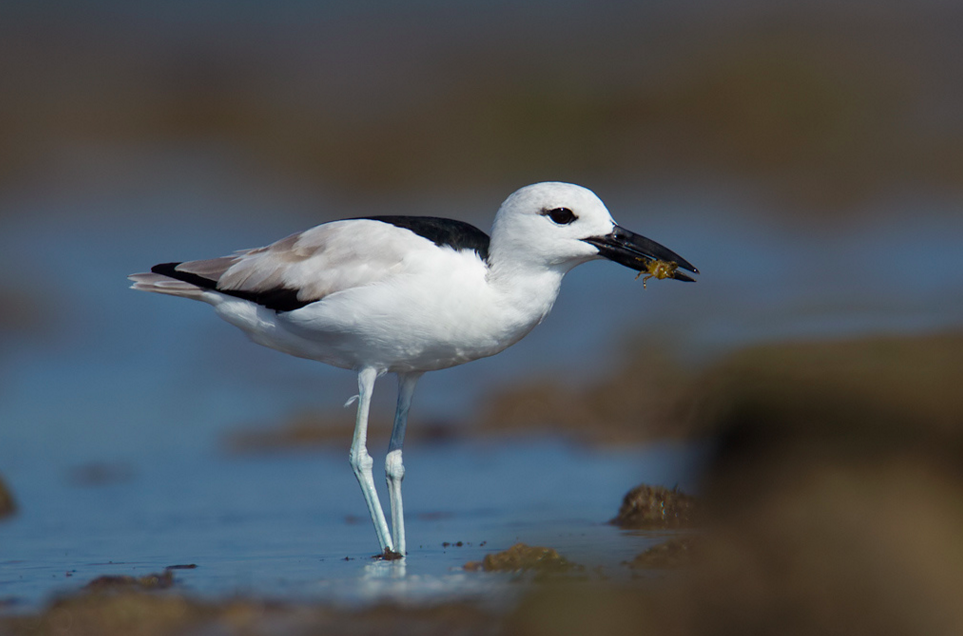
Jamnagar, Gujarat
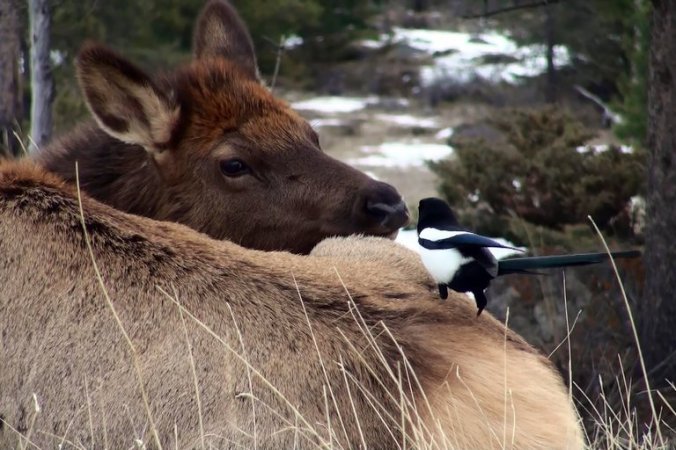
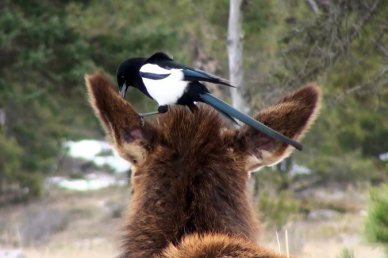
A magpie on an elk in Alberta, Canada, looking for winter ticks. Credit Rob Found
Thanks to the Trilobites feature on the New York Times website for this story of collaborative friendliness between species:
Chances are that’s a shy elk looking back at a bold magpie, in the photograph above.
Scientists wonder if shy elk compensate for their bashfulness by accepting the grooming magpies. Credit Rob Found
They get along, so to speak, because the elk needs grooming and the magpie is looking for dinner. But they may have never entered into this partnership if it weren’t for their particular personalities, suggests a study published Wednesday in Biology Letters.
Let’s start with the elk. In Canada’s western province of Alberta, they’ve been acting strange. Some have quit migrating, opting to hang around towns with humans who protect them from predators like wolves. Others still migrate. Continue reading
Tumling, Nepal
Each day we scan the news for stories that will help make sense of the environmental challenges facing humanity, with special attention to potential solutions and collective action taken to rise up to those challenges. Earlier this year we declined to link out to this story that was a collection of doomsday scenarios:

Dinokeng Game Reserve, Pretoria, SA
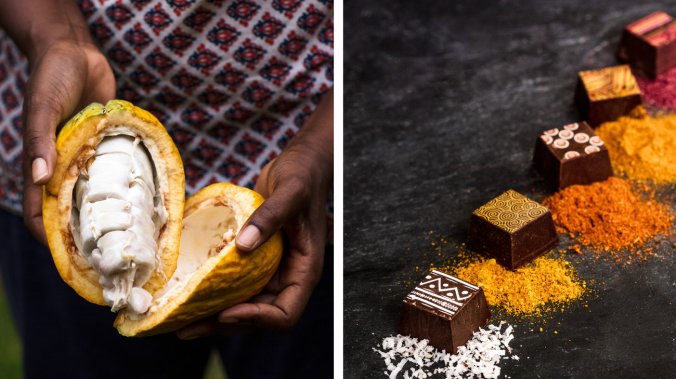
Left, a ripe cacao pod. Right, truffles from Midunu chocolates contain spices and flavors from all over Africa. Midunu Chocolates
Thanks to Amy E. Robertson and National Public Radio (USA) for telling the story of Midunu, a brief excerpt of which is sampled below:
One Woman’s Quest To Tell ‘The African Story Through Chocolate’
…While working in Senegal, Atadika joined forces with two more food-loving friends, and created a pop-up restaurant that was wildly popular. After dipping her toes in the culinary world for a couple of years, she finally took the plunge. In 2014, Atadika resigned from the UN, moved back to her native Ghana and began cooking full time.
Atadika started with catering and pop-up dinners. “It wasn’t my plan to do chocolates,” she says. “But whatever I do in food I look at in terms of adding value, and chocolate just kind of popped in, because we have this cocoa but we weren’t really processing it at the level we should be.” Midunu Chocolates was born. Continue reading

 Organikos