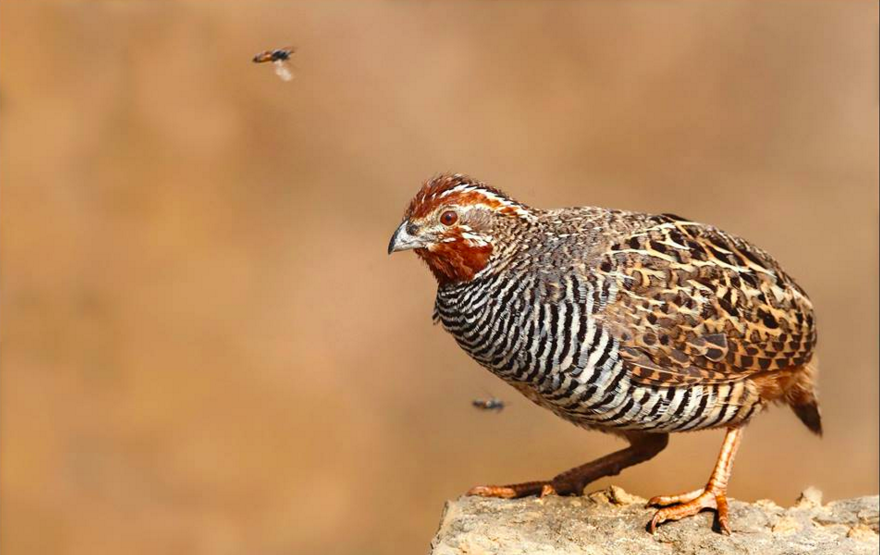
Bangalore, Karnataka
Bangalore, Karnataka

For all their tough-on-carbon rhetoric, Governor Jerry Brown, of California, and other leaders are ignoring a key component of the fight against global warming. Photograph by Lukas Schulze / Getty
The song Kermit used to sing was cute. Until it was no longer cute. Saying it is not easy is a vast understatement in an era when bombast reigns. Bill McKibben, who we probably highlight more in these pages than any other single author, reminds us of this every time we read what he has to say. If you can call it a luxury, McKibben is more free to speak truth to power than a normally standup politician, who sometimes will take a position that pure activists are correct to oppose. Case in point, here is an erstwhile leader who pure activists will not allow to have it both ways:
Why Governor Jerry Brown Was Booed at the Bonn Climate Summit
Spare a little pity for Jerry Brown. The California governor has been standing up admirably to Donald Trump on many issues, but especially on climate change—even threatening to launch scientific satellites to replace the ones that Washington wants to ground. This week, he’s in Bonn, Germany, at the global climate talks, spearheading the drive to show that America’s states and cities have not forsaken the promises made last year in Paris. On Saturday, barely a minute into his big prime-time talk, Brown was rewarded for his pains with booing. He was visibly startled when demonstrators interrupted his speech and began chanting, “Keep it in the ground!” Continue reading
Raleigh, NC, USA
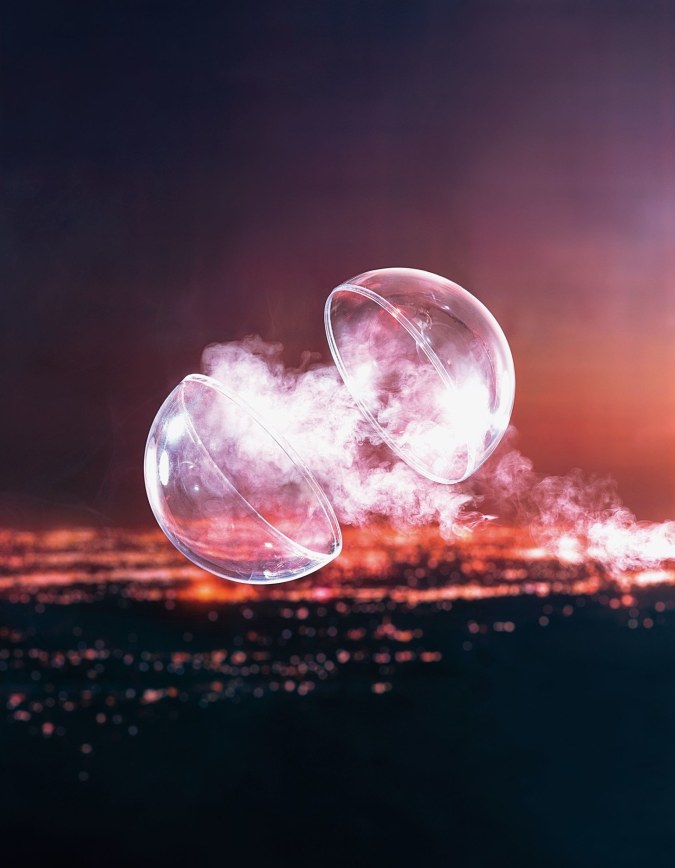
Carbon-dioxide removal could be a trillion-dollar enterprise, because it not only slows the rise in CO2 but reverses it. Photo-Illustration by Thomas Albdorf for The New Yorker
If you read the caption to the photo above, and then the first sentence of the story it headlines, you could come away with the thrilling sense that there is an entrepreneurial opportunity associated with climate change. There is something reassuring about the fact that Bill Gates has made some bets in this realm. Pasted below is also the last paragraph of the story. We recommend reading the whole long-form reporting that goes in between:
Can Carbon-Dioxide Removal Save the World?
CO2 could soon reach levels that, it’s widely agreed, will lead to catastrophe.

Leimhakong, Manipur

Malaka Gharib/NPR
Thanks to National Public Radio (USA) for bringing this to our attention:
Is It Insulting To Call This A ‘Hut’?
The complaints came in shortly after we ran a story on a government aid program that gave cash to the poor in Zambia. The piece included a profile of a young woman who, along with her husband, had used the money to start a business that had lifted their family to a level self-sufficiency they’d never enjoyed before.
Several readers — okay, just two, but still, it made us take note! — wrote to take issue with my use of the word “hut” to describe the family’s dwelling. Continue reading
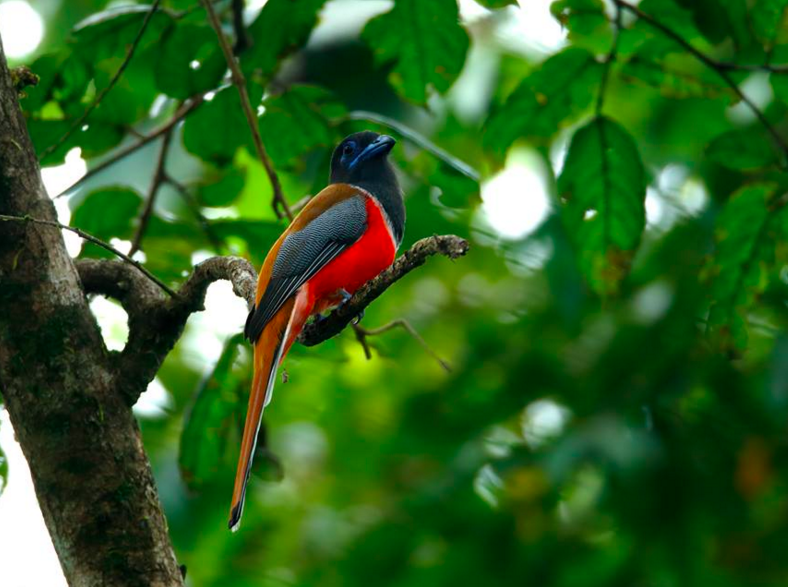
male – Bondla Wildlife Sanctuary, Goa

Yesterday’s post, linking to an article from the same source, combines with this one to confirm that some venerable members of the “mainstream media” see an audience (us, for example) for green-leaning reporting. Then we found this, about a remarkable Norwegian silence-hunter who has gone to the ends of the earth; and now finds himself in the East Village of New York City. Instead of featuring that story, this one below is must-read on the topic of quietude:
Lessons in Stillness From One of the Quietest Places on Earth
In the wilderness of Washington State’s Hoh Rain Forest, a poet searches for the rare peace that true silence can offer.
THE OLYMPIC NATIONAL PARK stretches down coastal Washington and east toward Seattle on a thumb of land known as the Olympic Peninsula, some 60 miles long by 90 miles wide. Around a three-hour ride by car from Seattle, it feels much farther, as if you have passed into an otherworldly realm. Within it are volcanic beaches scattered with the remains of massive Sitka spruces, evergreen-crowded mountains, broad, flat valleys and the Hoh Rain Forest, through which 12 miles of hiking trails and the glacier-formed Hoh River run. The Park, in total nearly a million acres, is home to what may be the most complex ecosystem in the United States, teeming with big-leaf maples, lichens, alders, liverworts, Monkey flowers, licorice ferns, club mosses, herbs, grasses and shrubs of remarkable abundance. Today, thanks to federal protections, it is home to some of the largest remaining stands of old-growth forest in the continental U.S. Continue reading
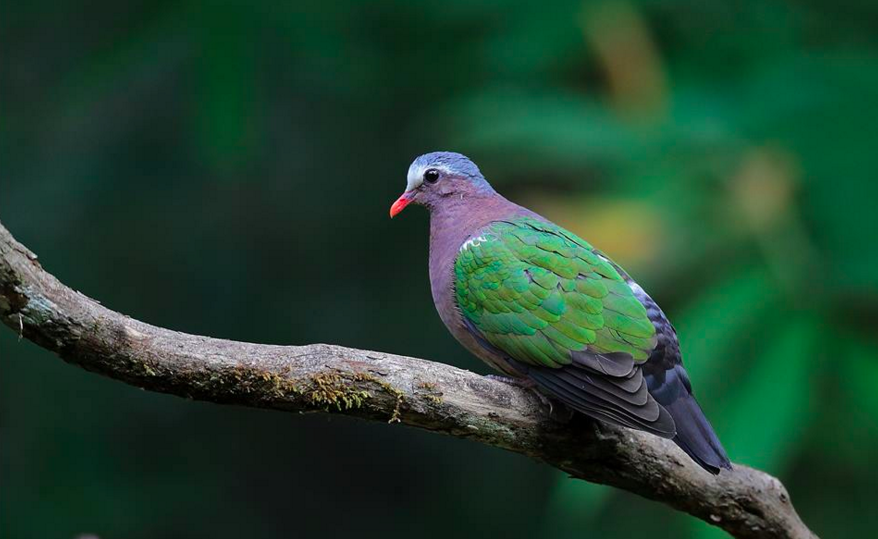
State Bird of Tamil Nadu
Dandeli, Karnataka

The upper Colville River and headwaters on Alaska’s North Slope | Joel Sartore
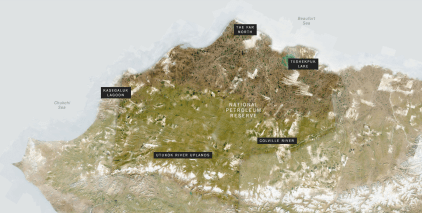 Thanks to Christopher Solomon, contributing editor at Outside magazine, for this important story published in the New York Times. The interactive element highlighting each ecosystem, followed by migration visuals drive home the extremity and unprecedented nature of the policies that the federal government of the United States of America is now promoting.
America’s Wildest Place Is Open for Business
Several years ago a mapping expert pinpointed the most remote place in the Lower 48 states. The spot was in the southeast corner of Yellowstone National Park, 20 miles from the nearest road. Roman Dial read the news and wasn’t much impressed. To him, 20 miles — the distance a hungry man could walk in a long day — didn’t seem very remote at all.
Mr. Dial is a professor of biology and mathematics at Alaska Pacific University in Anchorage, and a National Geographic explorer. He decided to figure out the most remote place in the entire nation. His calculations led him to the northwest corner of Alaska, where the continent tilts toward the Arctic Ocean. The spot lay on the Ipnavik River on the North Slope, 119 miles west of the Haul Road (otherwise known as the Dalton Highway), which brings supplies and roughnecks to the oil fields at Prudhoe Bay. Continue reading
Chan Chich Lodge, Belize

Farmer Doug Thomas holds rice © Drew Kelly for The Nature Conservancy
Thanks to Cara Byington and her colleagues at Cool Green Science:
When They Said They Wanted to Rethink Agriculture, They Meant It
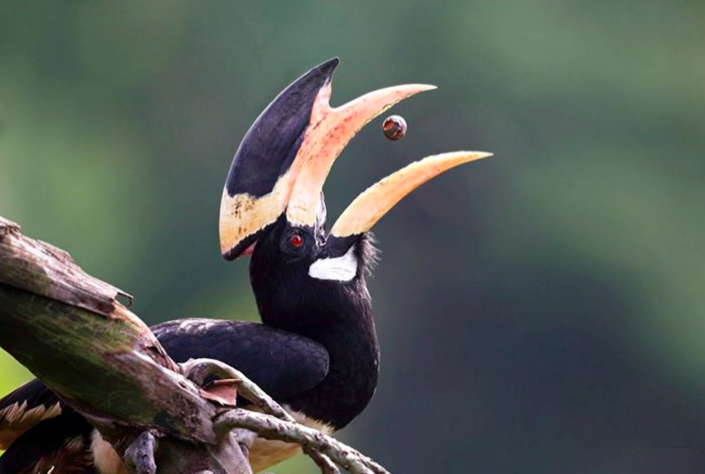
Mapusa, Goa
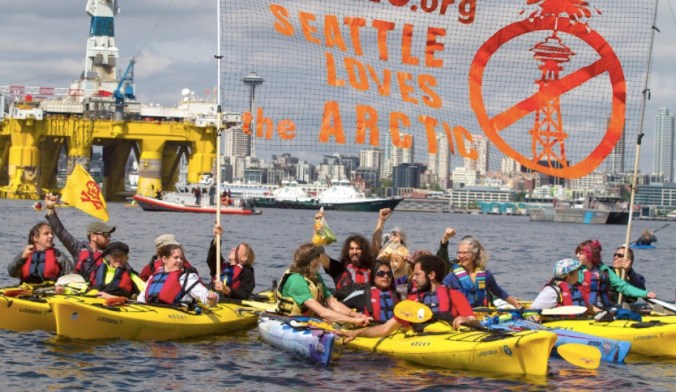
Environmental activists in kayaks protest the arrival of the Polar Pioneer, an oil drilling rig owned by Shell Oil, in Seattle. Backbone Campaign / Flickr
A book by one of our favorite activists being reviewed, in the form of an interview, with one of the greats of decent, thoughtful media:
Moyers and McKibben: What to Do When Time Is Running Out for the Planet
By Bill Moyers
Penguin Press, 2017
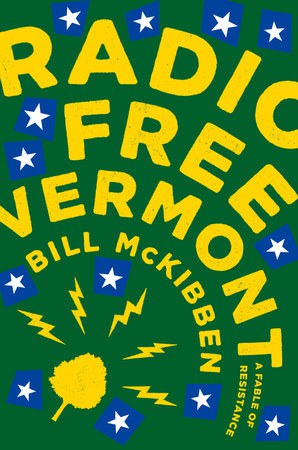
I wasn’t one of the 50,766 participants who finished the New York City Marathon last weekend. Instead, I spent the average marathon finish time of 4:39:07 to read a book—obviously a small book. In the interest of disclosure, I didn’t even start the race, but that’s another and even shorter story than Radio Free Vermont, the book from which I did occasionally look up and out the window to check on the stream of marathoners passing our apartment, their faces worn and haggard.
A shame, I thought, that I couldn’t go outside and hand each one a copy of the book that had kept me smiling throughout the day while also restoring my soul; I was sure the resilience would quickly have returned to weary feet and sore muscles now draped in aluminum foil for healing’s sake. I admire those athletes, but wouldn’t have traded their run for my read, because Radio Free Vermont is funny, very funny, all the more so considering the author is one of the more serious men on the planet—the planet he has spent his adult life trying to save. Continue reading

Vijayapura, Karnataka

Kyren Zimmerman and Tobias — a Labrador retriever who specializes in sniffing out the invasive Argentine ant — on Santa Cruz Island, in the Channel Islands National Park. Credit Gary Andrew/The Nature Conservancy
Ants are the masters of the planet we live on. There is no escaping that. But if these dogs can protect us from some of the more sinister ants, we have these trainers to thank:
A Very Good Dog Hunts Very Bad Ants
Tobias is a Labrador retriever with one job: sniffing out invasive Argentine ants wherever they hide. He’s really good at it, and with his help, a fragile island ecosystem may be spared a repeat inundation with the pests.
Santa Cruz Island is 25 miles off the coast of Southern California, part of Channel Islands National Park. The island’s rich, rugged environment — which includes more than 1,000 kinds of plants and animals, including the bald eagle and the island fox — is threatened by Argentine ants, one of the world’s most successful and wily invasive species. Continue reading

Sattal, Uttarakhand

The social and vocal interactions of a colony of fruit bats competing for position in a sleeping cluster. By LEE HARTEN on Publish DateOctober 31, 2017. Photo by Mickey Samuni-Blank.
Yesterday’s topic touched on a taboo of sorts, but in the interest of furthering our understanding of one of the most remarkable organisms on the planet; today, likewise, thanks to Steph Yin for her note on creatures sometimes considered creepy but whose environmental services are remarkably valuable:
Teaching Bats to Say ‘Move Out of My Way’ in Many Dialects
I was raised by grandparents who spoke only Mandarin, so I did not speak English until I went to preschool in Philadelphia. There, guided by English-speaking teachers and surrounded by toddlers babbling in loose English, I adopted the new language quickly.
Young bats may not be so different. Continue reading

Maasai Mara National Reserve, Kenya

A forest floor dark honey fungus, or Armillaria ostoyae. The “Humongous Fungus,” living beneath the soil in Oregon sends these fruiting bodies, or mushrooms, above ground to disperse spores. Credit Arterra/UIG, via Getty Images
The Science section of the New York Times is a dependable source of occasionally brilliant ecological findings (amidst the more common overdoses of dark and dreary news) and this one helps start a new week on solid ground:
The Humongous Fungus and the Genes That Made It That Way
A new genetic analysis reveals the tactics that helped fungi in the Armillaria genus get so good at expanding and killing host plants.
Thousands of years ago, two microscopic spores spawned and created a monster. It grew — up to three feet a year — sending out dark, gnarly, threadlike organs called rhizomorphs that explored the subterranean darkness, foraging for food. Now it’s a nebulous body, a tangled mat beneath the Oregon soil that occupies an area the size of three Central Parks and may weigh as much as 5,000 African elephants.
Its scientific name is Armillaria ostoyae, but you can call it The Humongous Fungus. It’s the largest known terrestrial organism on the planet, according to the United States Forest Service.
Continue reading
 Organikos