
Pangot, Uttarakhand
Pangot, Uttarakhand

‘Hope, courage and anger’: The Indigenous Guardians of the Forest caravan to Bonn, in front of the French National Assembly in Paris last week. Photograph: Jonathan Watts for the Guardian
Thanks once again to the Guardian for sharing these stories from the front line.
‘For us, the land is sacred’: on the road with the defenders of the world’s forests
Of the many thousands of participants at the Bonn climate conference which begins on 6 November, there will arguably be none who come with as much hope, courage and anger as the busload of indigenous leaders who have been criss-crossing Europe over the past two weeks, on their way to the former German capital.
The 20 activists on the tour represent forest communities that have been marginalised over centuries but are now increasingly recognised as important actors against climate change through their protection of carbon sinks.
In the run-up to the United Nations talks, they have been visiting the UK, France, Belgium, the Netherlands and Germany, talking to city leaders, environment NGOs and youth groups. Their aim is to build support for their role as forest defenders – a role that frequently puts them odds with agribusiness, mining companies and public security. The Observer caught up with them on the road to Paris.
“We have been looking after the forest for thousands of years. We know how to protect them,” said Candida Dereck Jackson, vice president of the National Indigenous Alliance in Honduras, as she outlined the principal demands of the group: respect for land rights, recognition of crimes against the environment, direct negotiations over forest protection, decriminalisation of indigenous activists, and free, prior and informed consent before any development by outsiders. Continue reading

Carara National Park, Costa Rica

What a great book, seriously.
When Cory Doctorow says it so simply, we take him at his word. Trendy, pretty shiny things can invoke laughter as well as wonder. As mentioned in yesterday’s post, there is plenty to laugh at in the growing obsessions with precious food, among other social phenomena; and Robin Sloan’s new book may be the best compilation, as this review in Mother Jones makes clear:
And here are our favorite Sourdough food trend send-ups:
1. Hipster bakers. Sourdough‘s protagonist Lois learns to bake after reading The Soul of Sourdough, written by a young baker, Everett Broom, “with a thick black beard below a face so clean and cherubic it made the beard appear glued on.” The bread bible recounts Broom’s “flameout as a professional skateboarder, his addiction to a home-cooked drug known as spaz rocks, and finally his retreat to a bread-baking shack on the beach.” Continue reading

Pangot, Uttarakhand
 The publisher’s blurb starts with an annoying claim, as if there is one chef better than all others in the world, that illustrates why foodie-ism is less and less linked to on this platform. Nonetheless, the book sounds worthy of attention:
Massimo Bottura, the world’s best chef, prepares extraordinary meals from ordinary and sometimes ‘wasted’ ingredients inspiring home chefs to eat well while living well.
‘These dishes could change the way we feed the world, because they can be cooked by anyone, anywhere, on any budget. To feed the planet, first you have to fight the waste’, Massimo Bottura
Bread is Gold is the first book to take a holistic look at the subject of food waste, presenting recipes for three-course meals from 45 of the world’s top chefs, including Daniel Humm, Mario Batali, René Redzepi, Alain Ducasse, Joan Roca, Enrique Olvera, Ferran & Albert Adrià and Virgilio Martínez. These recipes, which number more than 150, turn everyday ingredients into inspiring dishes that are delicious, economical, and easy to make.
We remember the genesis of this from a story by Adam Robb a couple of years ago:
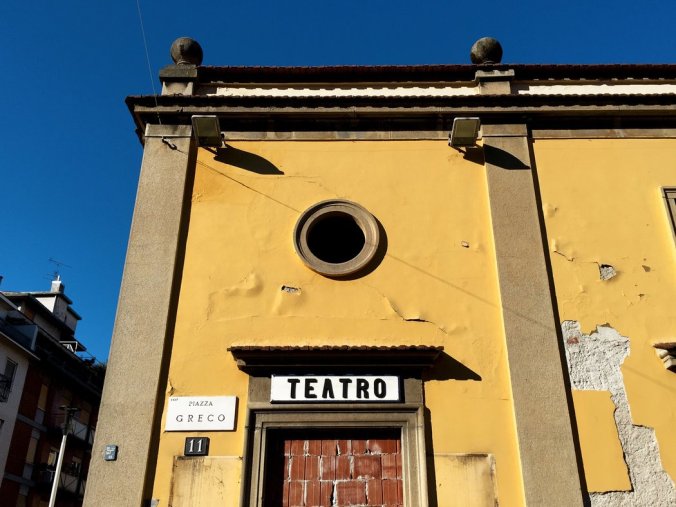
The renovated Refettorio Ambrosiano in Milan’s Greco neighborhood will house a charity event organized by chef Massimo Bottura during Expo Milano 2015. Credit Adam Robb
Massimo Bottura’s Pope Francis-Approved Refectory, and Recipe to Turn Stale Bread Into Gold
Italy’s most progressive exhibition of sustainable cooking commences this Thursday, when the Michelin-starred chef Massimo Bottura throws open the doors of Refettorio Ambrosiano, the once-derelict theater repurposed to educate and feed the refugees and working poor who reside far across town from the multinational pavilions welcoming culinary tourists to this summer’s Expo Milano 2015. Continue reading

Valparai, Tamil Nadu

Roasted pumpkin tacos from chef Wes Avila’s cookbook, Guerrilla Tacos. Dylan James Ho and Jeni Afuso/Courtesy of Ten Speed Press
Thanks to Mandalit del Barco and the National Public Radio (USA) folks at the salt for this book review that has special resonance to those of us with immigrant street vendor heritage:
‘Guerrilla Tacos’: Street Food With A High-End Pedigree
How many taco trucks do you know that not only have a cookbook but a theme song? Wes Avila’s Guerrilla Tacos truck does – and has once again made food critic Jonathan Gold’s influential list of favorite Los Angeles eateries.
Five years ago, Avila was working as a sous chef at a pop up restaurant called Le Comptoir. It was only open four days a week, and Avila says he wasn’t making enough money to cover his rent. So he bought a simple food cart. He used his last $167 on ingredients. Then he and a friend began selling tacos in the arts district in downtown Los Angeles without the required health department permits.
“We were kind of bending the law, not necessarily breaking the law. We had to move around so we wouldn’t get caught — you know, like guerrilla warfare,” Avila says. “That’s why we had that name, because we’d be in random alleys, random streets, being kind of renegade like that.” Continue reading

Uttarakhand
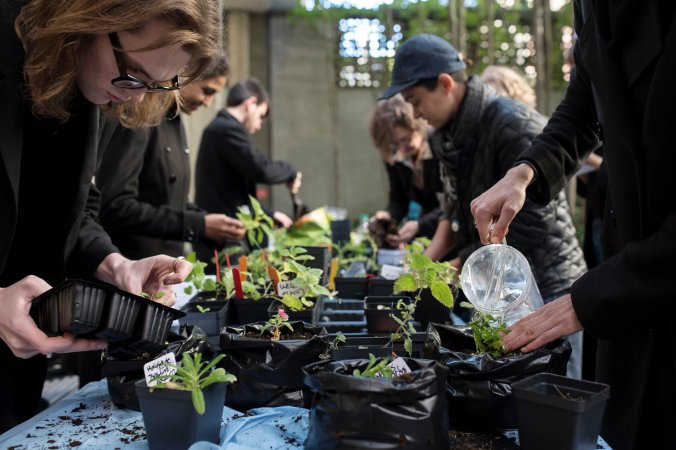
New School students and faculty repotting seedlings on campus in preparation for the exhibition.
Search on the three words “seeds of change” on this platform and you will find dozens of stories dealing with topics like botanical hazard initiatives or innovative approaches to flora conservation and/or climate change and some of the radical plans made to prepare for it that we have linked to over the years. Type the same three words into your favorite search engine and the topics are much more diverse. The three words are also the name of an evolving exhibition, and the subject of an article that mixes art, academia and activism:
A Seed Artist Germinates History
An exhibition using plants brought to New York in ships’ ballast illuminates the city’s hidden past using stinging nettle, milk thistle and amaranth. Continue reading

Jim Corbett National Park, Uttarakhand

The British visionary Samuel Palmer drew “Oak Tree and Beech, Lullingstone Park,” ca. 1828, using pen and ink, graphite, and watercolor. Thaw Collection; The Morgan Library & Museum
We try not to judge a book by its cover, but if the sample above is any indication this looks like a show worth visiting:
Five Centuries of Drawings at the Morgan
From a study of drapery by a German artist circa 1480 to an Ellsworth Kelly collage from 1976, the collection is almost unbearably excellent.
The almost unbearably excellent show “Drawn to Greatness: Master Drawings from the Thaw Collection” begins with a love story. In 1954, the dealer Eugene Thaw—the son of a heating contractor and a high-school teacher, from Washington Heights—had a prescient assistant who suggested that he start buying art for himself. Continue reading

feeding chicks (Athoor, Dindigul, Tamil Nadu)

An African subject, for a second day in a row; thanks to Andrew McCarthy and the New York Times for this:
Up Close With the Tribes of Ethiopia’s Imperiled Omo Valley
Both dams and overtourism threaten the Omo Valley. But a sustainable travel initiative offers an intimate experience with local peoples. Continue reading

Sattal, Uttarakhand
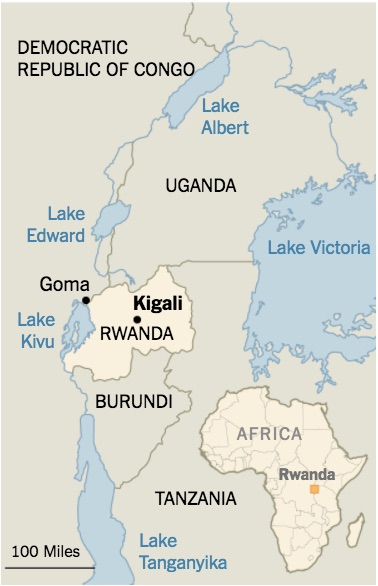
By The New York Times
Thanks to the New York Times for this success story from a small country in Africa that has been working its way steadfastly to global leadership, quietly but surely for the last decade-plus. Eliminating plastic bags from a country seems impossible, until you read how it was done:
GISENYI, Rwanda — They are sometimes tucked into bras, hidden in underwear or coiled tightly around a smuggler’s arms.
They’re not narcotics or even the illegally mined gold and diamonds that frequently make it across the border into Rwanda. But they are, at least in the eyes of Egide Mberabagabo, a watchful border guard, every bit as nefarious.
The offending contraband? Plastic bags.
“They’re as bad as drugs,” said Mr. Mberabagabo, one of a dozen border officials whose job it is to catch smugglers and dispose of the illicit plastic he finds. Continue reading

Sims Park, Ooty, Tamil Nadu
Thanks to Kurt Anderson for bringing this to our attention with this conversation (you need to listen to the interview to have a jolting recollection of dignified conversation, which hopefully serves as a perfect preview for the film), blurbed on Studio 360’s landing page at Slate under the title Sugar Mouth with this simple sentence:
Artists Agnès Varda and JR were born 55 years apart but have a lot in common—and they made a lovely film, Faces Places.
The PRI landing page for this episode is more informative, showing the host with the guests as well as plenty of relevant links and images: Continue reading

male – Tumling, Nepal
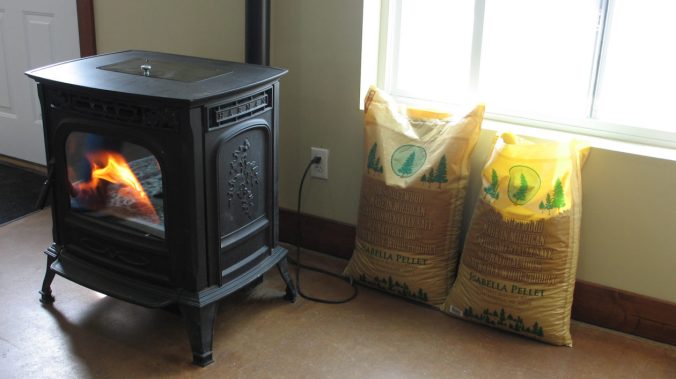
A wood stove burns with pellet fuel. Photo © U.S. Department of Agriculture / Flickr through a CC BY 2.0 license
Thanks to Cool Green Science for this reminder about the use of wood and related biomass as fuel throughout human history, and its implications for today’s climate change challenges:
As long as the Clean Power Plan is still in place, electric utilities are looking for ways to clean up their carbon dioxide emissions to the atmosphere and prevent global changes in climate. Some utilities are switching to natural gas, which emits lower amounts of carbon dioxide (CO2) per unit of energy generated. However, natural gas is not without its own problems.
Humans used firewood for thousands of years, during a period with little change in the concentration of CO2 in the atmosphere. So some utilities are looking toward the burning of wood, also known as biomass or biogenic energy, to generate power. This is an interesting “throw back” to an earlier time when firewood was used widely for heat, light, and early industrial processes. But, there is a reason why we switched to coal, which has greater energy content per unit weight.
It is natural to think that burning firewood would have a minor effect on atmospheric CO2. Continue reading
 Organikos