
female – Chopta, Uttarakhand
female – Chopta, Uttarakhand

A swallow-tailed kite and 12 other birds painted by Lunar New Year.

Tricolored Heron by Federico Massa a.k.a. iena cruz. Photo: Mila Tenaglia
Murals with birds always capture our attention; we cannot resist linking to such initiatives when they are cleverly conceived, elegantly executed, and perfectly placed. Enjoy this epic series, a fitting tribute to the National Audubon Society:
Where Birds Meet Art . . . After Dark
Photo: Mike Fernandez/Audubon
The Audubon Mural Project is a collaboration between the National Audubon Society and Gitler & Gallery to create murals of climate-threatened birds throughout John James Audubon’s old Harlem‐based neighborhood in New York City. The project is inspired by the legacy of the great American bird artist and pioneering ornithologist and is energized by Audubon’s groundbreaking Birds and Climate Change Report, which reveals at least half of all North American birds are threatened by a warming climate. The project commissions artists to paint murals of each of the report’s 314 species, and has been widely covered in the media, including most recently by The New York Times.
Thanks to the Editorial Board of the New York Times for reminding us of this:

Louise Jones, with her husband, Gabe, working on a mural of an evening grosbeak. Credit Photographs by Karsten Moran for The New York Times
In his final years, John James Audubon, the celebrated 19th-century painter of bird life, lived in rustic uptown Manhattan in a house by the Hudson where some of his final paintings were of urban rats that caught his eye. Continue reading
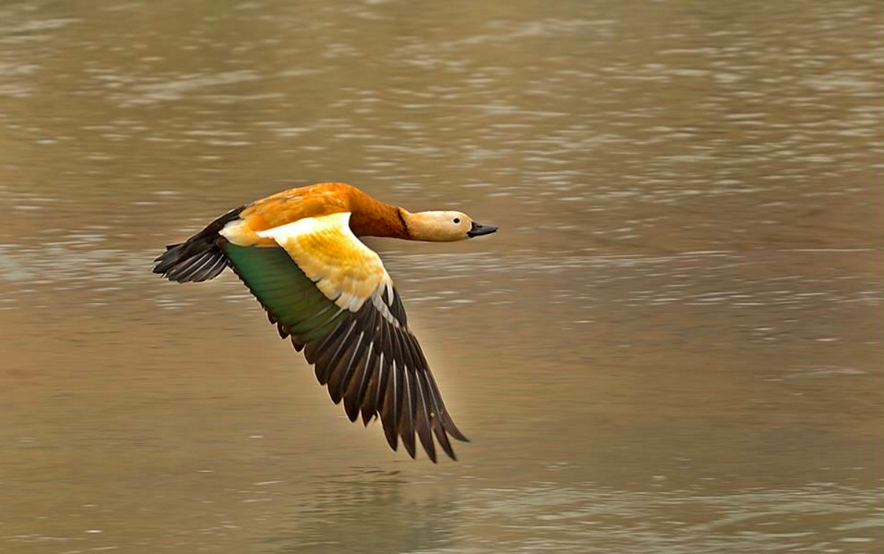
Tso Kar Lake, Leh Ladakh, Kashmir
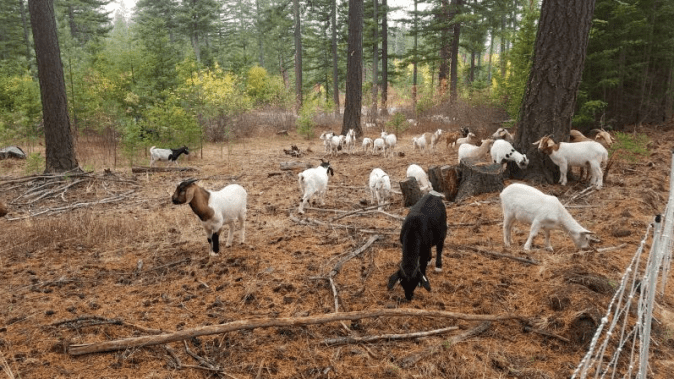
Image: Renee Lewis
Goats have appeared on these pages in various guises, including being part of urban park maintenance. Thanks to environmental reporter Renee Lewis and the Earther.com for sharing this good news fire prevention story.
Firefighting Goats Devour Fuel Across the West Before it can Burn
Roslyn, WA—After one of the worst fire seasons in recent memory in the Pacific Northwest this summer—with the unforgettable smoke-pocalypse that socked in the region with thick smoke for weeks—a new tool is being added fight against wildfires: goats.
“More and more, people are looking at goats as a tool for fire suppression,” said Craig Madsen of Healing Hooves, a company based in Edwall, Washington, that maintains a herd of about 250 goats that are used for natural vegetation management.The goats bleated loudly and walked towards Madsen as we approached the plot of land where the herd was busy grazing.
“The goats are complaining because of the rain,” Madsen said, as a cool, fall shower began.
Madsen stood under the overhang of the trailer he uses to to transport the herd, across the road from the land where the goats were grazing. The guard dog, Gigi, sat under a tree keeping watch as the goats—bucks, does, and kids—worked together to devour everything within reach.
Every car that drove by stopped to look at the unusual sight, and many asked Madsen about what he was doing out there with all those goats.

Juvenile – Cali, Colombia

ILLUSTRATION BY LUISA RIVERA/YALE E360
Thanks to Jim Robbins at Yale 360 for this:
Beyond Biodiversity: A New Way of Looking at How Species Interconnect
In a development that has important implications for conservation, scientists are increasingly focusing not just on what species are present in an ecosystem, but on the roles that certain key species play in shaping their environment. Continue reading
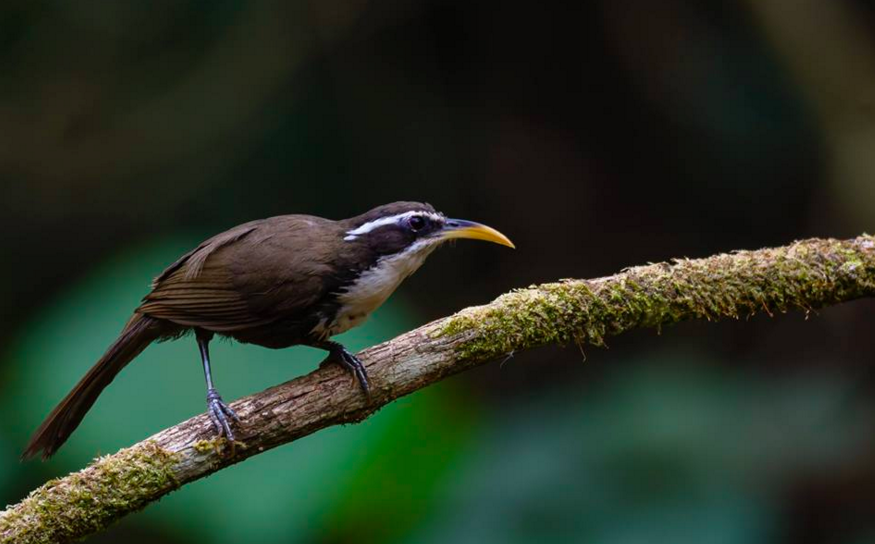
Dandeli Wildlife Sanctuary, Karnataka

A preview of the film. By NATIONAL GEOGRAPHIC on Publish DateOctober 18, 2017.Image courtesy of Internet Video Archive. Watch in Times Video »
Several of us contributing to this platform have had the opportunity to meet her, and can attest to what Melena Ryzyk says below. There really are not sufficiently powerful words to describe her, but we link out to those stories that try. It may be that photography or film offer the best medium for understanding and more fully appreciating her work. Click above for the trailer, or click the title below to read the review of this film, high on our list for viewing:

Sattal, Uttarakhand

Dale Ross, the mayor of Georgetown, Texas, says the decision to source all the town’s energy from renewable resources was based in cold-eyed pragmatism. Photograph: Katie Hayes Luke for the Guardian
This is what America’s eco city of the future looks like
Georgetown mayor Dale Ross is ‘a good little Republican’ – but ever since his city weaned itself off fossil fuels, he has become a hero to environmentalists Continue reading
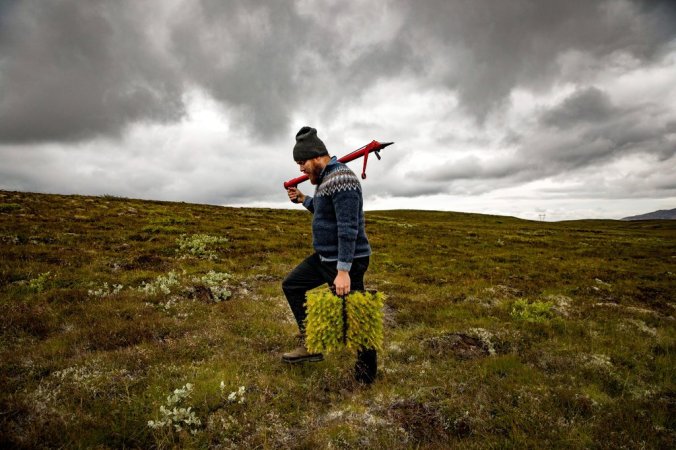
Jon Asgeir Jonsson, who works for a private forestry association, with larch saplings in western Iceland.
It’s never easy being green, but especially millennia after deforestation. Thanks to Henry Fountain and the New York Times:
Vikings Razed the Forests. Can Iceland Regrow Them?
GUNNARSHOLT, Iceland — With his flats of saplings and a red planting tool, Jon Asgeir Jonsson is a foot soldier in the fight to reforest Iceland, working to bring new life to largely barren landscapes.
The country lost most of its trees more than a thousand years ago, when Viking settlers took their axes to the forests that covered one-quarter of the countryside. Now Icelanders would like to get some of those forests back, to improve and stabilize the country’s harsh soils, help agriculture and fight climate change. Continue reading

Bharatpur Bird Sanctuary, Rajasthan

Image via Audubon.org, by Nick Dunlop
We last mentioned murmurations about three years ago, linking to slideshows from the Guardian that covered European Starlings in the UK. And in our Bird of the Day feature we have shared photos of seven different species of starlings from around Europe and Asia, but somehow none of those species was the European Starling, which is an invasive species in North America (and at least some of Central America as well), but still a good-looking bird.
In this video, there are fantastic moments where the enormous flocks of European Starlings in Napa Valley, California form incredible shapes, largely because they’re being chased by Peregrine Falcons and other raptors.
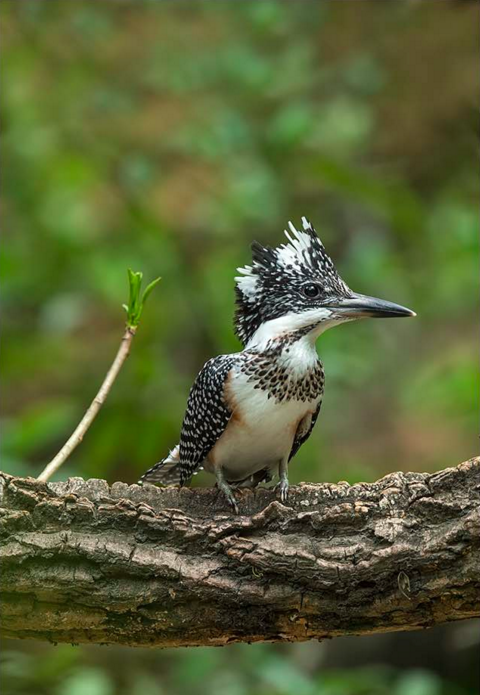
Sattal, Uttarakhand

Square Roots, on the site of the former Pfizer building in South Williamsburg, Brooklyn, where produce is grown in 10 shipping containers using only enhanced water and LEDs. Credit Benjamin Norman for The New York Times
Ruffled feathers of slow food pioneers aside, Kimbal Musk’s projects focus on the link between food and community and his passion to make real food accessible to more people.
Kimbal Musk, 45, got rich working in tech alongside his older brother, Elon. Now he wants to do for food what his brother has done for electric cars and space travel.
Although Mr. Musk has food ventures humming along in Colorado, where he lives, as well as in big cities like Chicago and Los Angeles, he has become enamored of places like Tennessee, Indiana and Ohio — parts of the country he believes are the ripest for a revolution in eating and agriculture…
Mr. Musk is promoting a philosophy he calls “real food,” which nourishes the body, the farmer and the planet. It doesn’t sound much different than what writers like Michael Pollan and everyone who has ever helped start a farmers’ market or community garden have preached for years.
But Mr. Musk has big ideas about what the Silicon Valley crowd likes to call the food space, which is as exciting to him as the internet was in 1995. “We’ve never seen this kind of innovation around food,” he said.
In short, he wants to create a network of business, educational and agricultural ventures big enough to swing the nation’s food system back to one based on healthy, local food grown on chemical-free farms.
“Food is this beautiful gift we give each other three times a day,” he’ll often tell a crowd, “but you couldn’t design a worse food system than what we have.”

Mishmi, Arunachal Pradesh

Thanks to the Guardian for this update on the current state of the art of wind power, and it is good to see Britain in the lead:
Wild is the wind: the resource that could power the world
Wind isn’t just mysterious, destructive and exhilarating – capturing just 2% of it would solve the planet’s energy needs at a stroke. And as the windiest country in Europe, Britain is at the forefront of this green revolution Continue reading
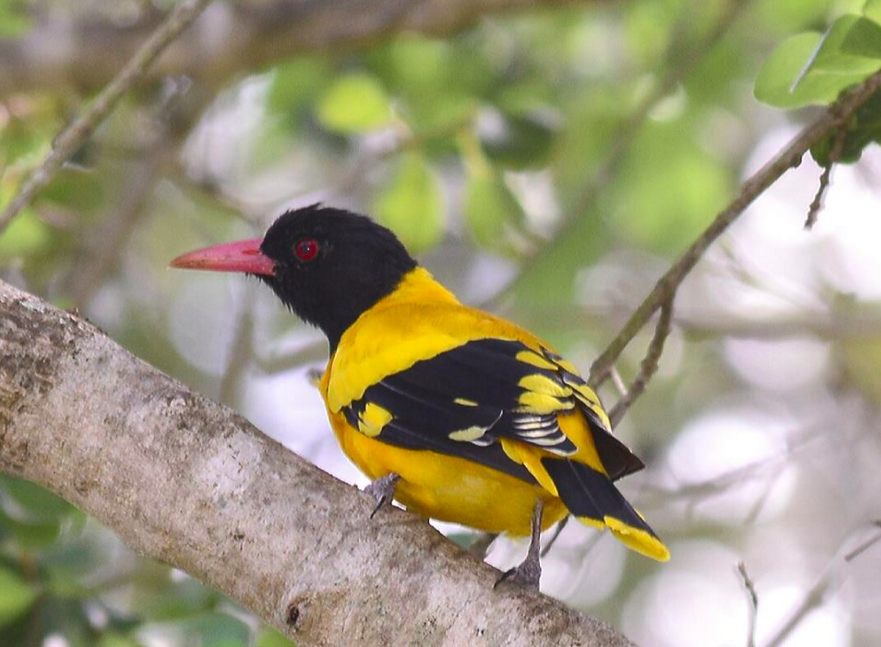
Masinagudi, Tamil Nadu
 I am now learning more about cacao, and its end use, the sweet we all adore. The rise in artisanal cacao farming, as we have noted on occasion, can have important implications for conservation. Whether you are a chocoholic or just a casual dabbler in the sweet bi-product of cacao, this report deserves your attention (click on the image to go to the source):
Chocolate is everywhere. It is the afternoon pick-me-up, the sensual indulgence, the accoutrement to seduction. Lovers gift truffles, skiers sip on rich hot chocolate, and connoisseurs savor the tiniest, richest bite of single origin dark chocolate. The ancient Aztecs believed that chocolate was an aphrodisiac, and the emperor Montezuma was reported to gorge himself on chocolate in advance of his trysts. Continue reading
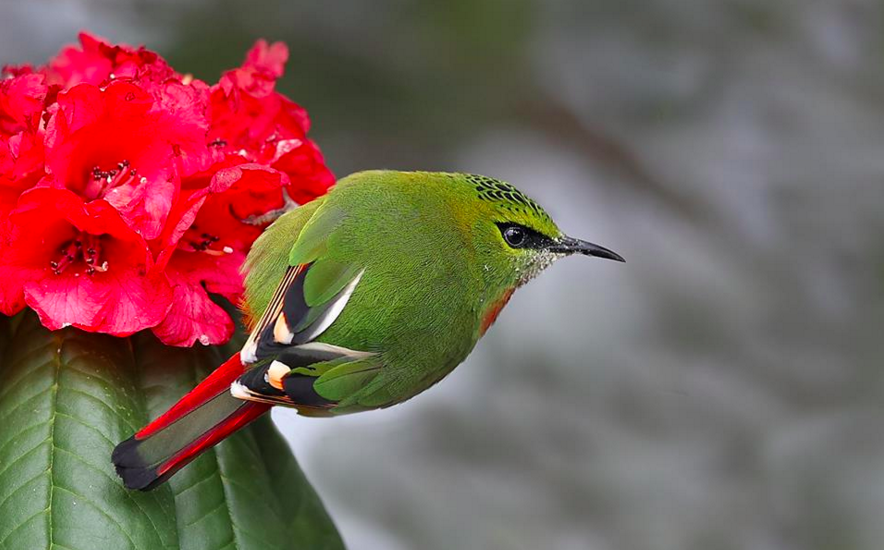
Tumling, Nepal

 Organikos