
Bharatpur Bird Sanctuary, Rajasthan
Bharatpur Bird Sanctuary, Rajasthan

Image via Audubon.org, by Nick Dunlop
We last mentioned murmurations about three years ago, linking to slideshows from the Guardian that covered European Starlings in the UK. And in our Bird of the Day feature we have shared photos of seven different species of starlings from around Europe and Asia, but somehow none of those species was the European Starling, which is an invasive species in North America (and at least some of Central America as well), but still a good-looking bird.
In this video, there are fantastic moments where the enormous flocks of European Starlings in Napa Valley, California form incredible shapes, largely because they’re being chased by Peregrine Falcons and other raptors.
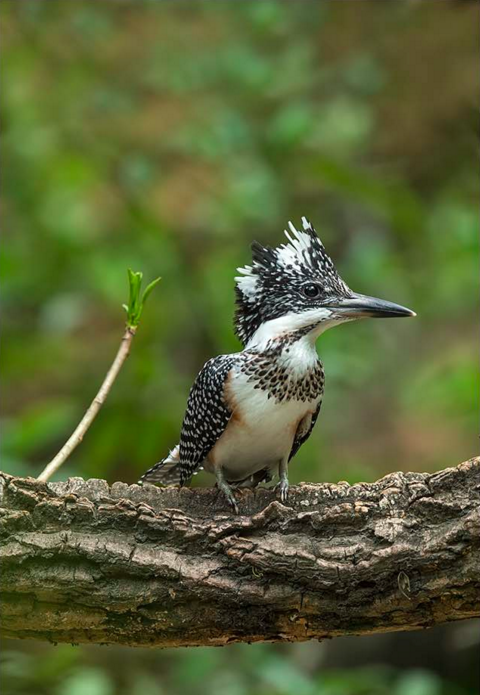
Sattal, Uttarakhand
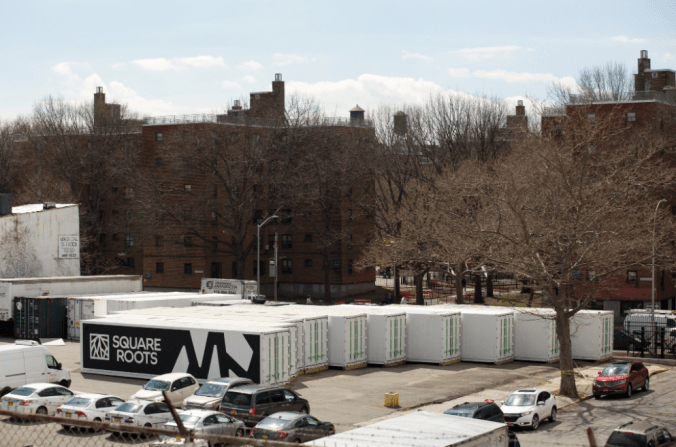
Square Roots, on the site of the former Pfizer building in South Williamsburg, Brooklyn, where produce is grown in 10 shipping containers using only enhanced water and LEDs. Credit Benjamin Norman for The New York Times
Ruffled feathers of slow food pioneers aside, Kimbal Musk’s projects focus on the link between food and community and his passion to make real food accessible to more people.
Kimbal Musk, 45, got rich working in tech alongside his older brother, Elon. Now he wants to do for food what his brother has done for electric cars and space travel.
Although Mr. Musk has food ventures humming along in Colorado, where he lives, as well as in big cities like Chicago and Los Angeles, he has become enamored of places like Tennessee, Indiana and Ohio — parts of the country he believes are the ripest for a revolution in eating and agriculture…
Mr. Musk is promoting a philosophy he calls “real food,” which nourishes the body, the farmer and the planet. It doesn’t sound much different than what writers like Michael Pollan and everyone who has ever helped start a farmers’ market or community garden have preached for years.
But Mr. Musk has big ideas about what the Silicon Valley crowd likes to call the food space, which is as exciting to him as the internet was in 1995. “We’ve never seen this kind of innovation around food,” he said.
In short, he wants to create a network of business, educational and agricultural ventures big enough to swing the nation’s food system back to one based on healthy, local food grown on chemical-free farms.
“Food is this beautiful gift we give each other three times a day,” he’ll often tell a crowd, “but you couldn’t design a worse food system than what we have.”

Mishmi, Arunachal Pradesh
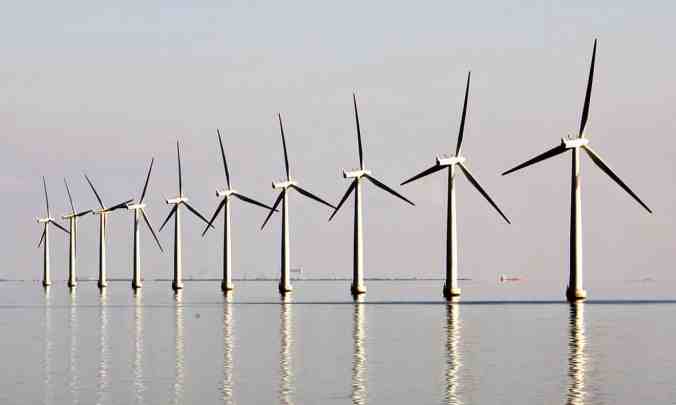
Thanks to the Guardian for this update on the current state of the art of wind power, and it is good to see Britain in the lead:
Wild is the wind: the resource that could power the world
Wind isn’t just mysterious, destructive and exhilarating – capturing just 2% of it would solve the planet’s energy needs at a stroke. And as the windiest country in Europe, Britain is at the forefront of this green revolution Continue reading
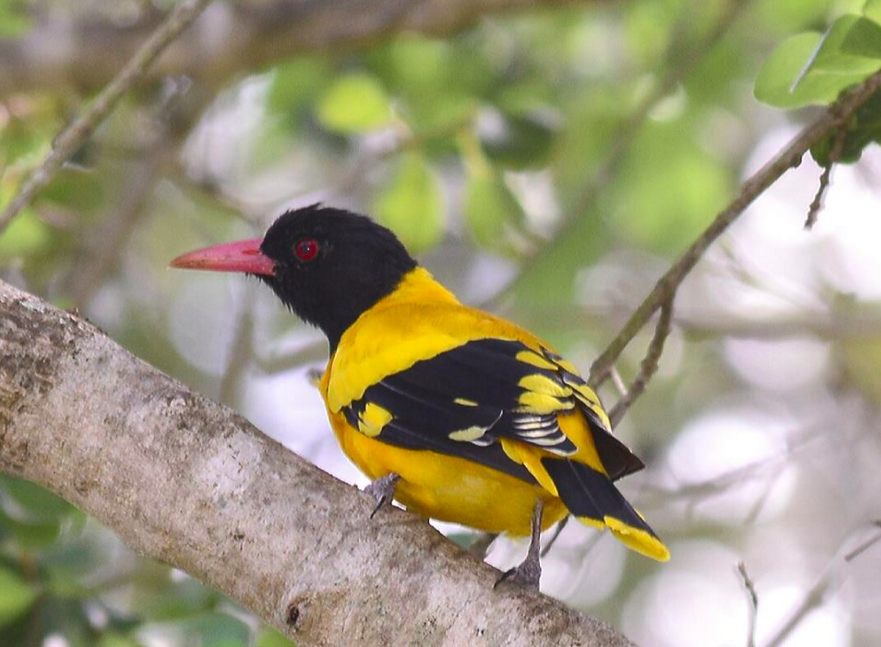
Masinagudi, Tamil Nadu
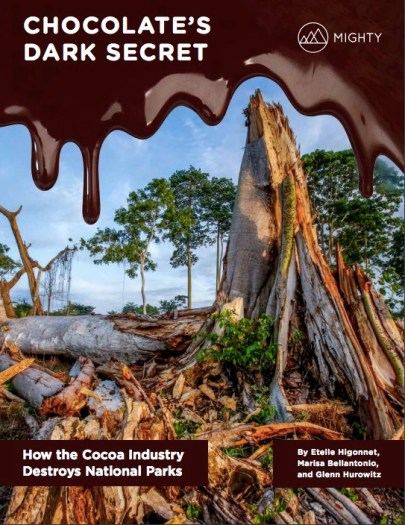 I am now learning more about cacao, and its end use, the sweet we all adore. The rise in artisanal cacao farming, as we have noted on occasion, can have important implications for conservation. Whether you are a chocoholic or just a casual dabbler in the sweet bi-product of cacao, this report deserves your attention (click on the image to go to the source):
Chocolate is everywhere. It is the afternoon pick-me-up, the sensual indulgence, the accoutrement to seduction. Lovers gift truffles, skiers sip on rich hot chocolate, and connoisseurs savor the tiniest, richest bite of single origin dark chocolate. The ancient Aztecs believed that chocolate was an aphrodisiac, and the emperor Montezuma was reported to gorge himself on chocolate in advance of his trysts. Continue reading
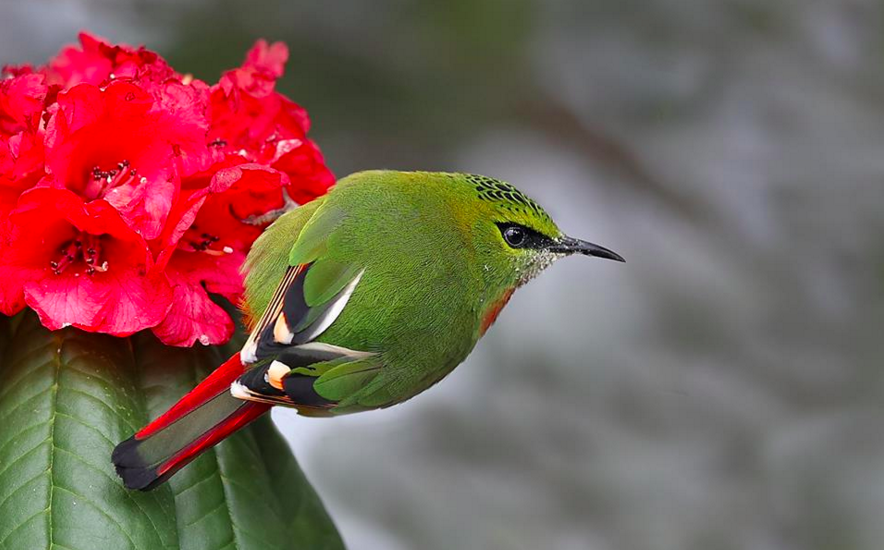
Tumling, Nepal
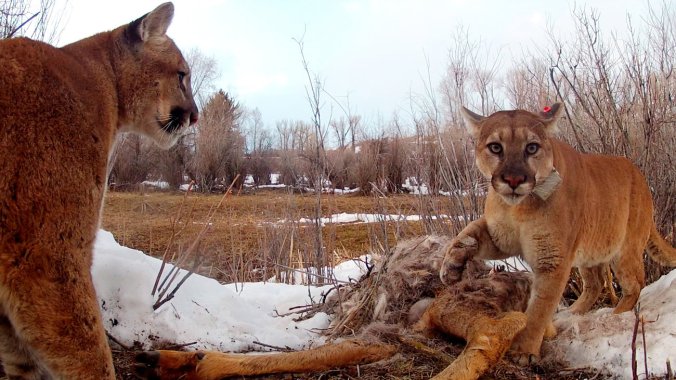
Adult female with young male coming in (without collar) to her kill. Mark Elbroch/Panthera/Science
Thanks to National Public Radio (USA) for this latest news on one of our favorite species:
Supposedly solitary pumas actually hang out with their fellow big cats quite often, frequently coming together and hissing and snarling before settling down to share a delicious elk carcass.
That’s the startling discovery made by scientists who recently tracked 13 pumas — also called mountain lions or cougars — and set up cameras at kill sites. They recorded dozens of peaceful social interactions between these elusive felines. Continue reading

Kadamakudy Backwaters, Kerala
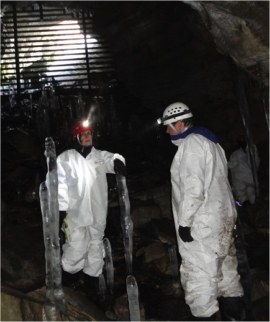
Photograph courtesy the author
Finally, the author we link out to with frequency (respectfully and affectionately noting her role in highlighting doom on the horizon), has offered a photo of herself in the setting of one of her stories. It is a cave with a story to tell, and while the story is not one we want to hear it is one we must ponder. That is why we keep linking out to her writing.
This is among her best short offerings, written originally to be a speech, with the creature below featured in compelling manner:
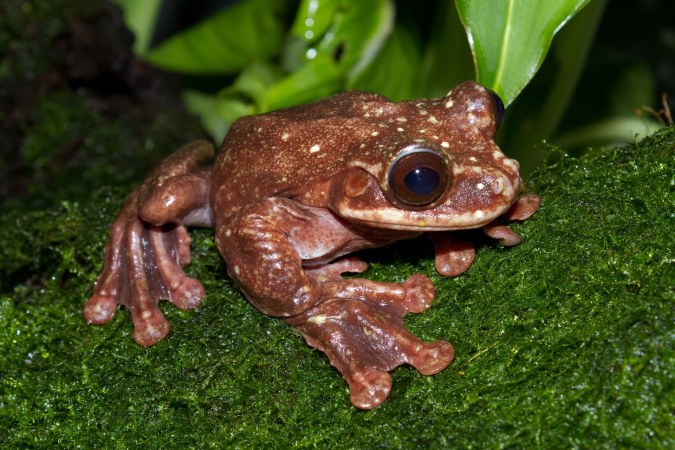
A Rabbs’ fringe-limbed tree frog. Photograph by Brian Gratwicke / Flickr
The Fate of Earth
Humanity’s survival on this planet seems more uncertain than ever. But what happens when we look at ourselves through other creatures’ eyes?
Yesterday evening, at Manhattan’s New School, the New Yorker staff writer Elizabeth Kolbert delivered the second annual Jonathan Schell Memorial Lecture on the Fate of the Earth, an event established by the Nation Institute in honor of the late Jonathan Schell, a longtime New Yorker staff writer, and named for “The Fate of the Earth,” a series of articles that Schell wrote for the magazine in 1982 and later published as a book. Kolbert’s remarks have been edited for length. Continue reading

Castle Rock, Karnataka
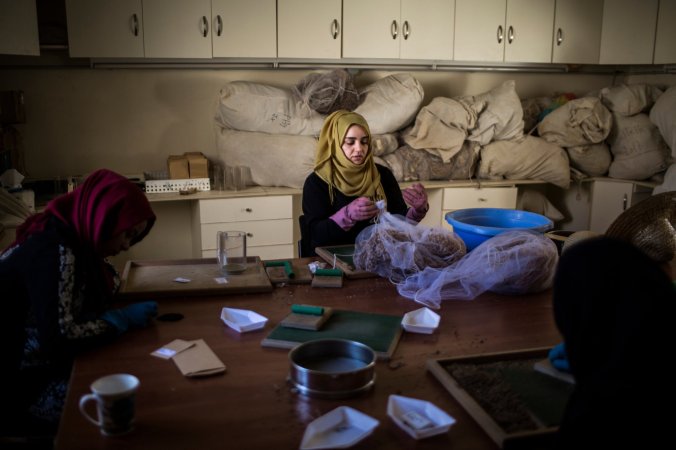
Lebanese workers at the seed bank in Terbol. Mr. Shehadeh’s organization, Icarda, moved operations out of Syria after the war broke out. Credit Diego Ibarra Sanchez for The New York Times
How a Seed Bank, Almost Lost in Syria’s War, Could Help Feed a Warming Planet
TERBOL, Lebanon — Ali Shehadeh, a seed hunter, opened the folders with the greatest of care. Inside each was a carefully dried and pressed seed pod: a sweet clover from Egypt, a wild wheat found only in northern Syria, an ancient variety of bread wheat. He had thousands of these folders stacked neatly in a windowless office, a precious herbarium, containing seeds foraged from across the hot, arid and increasingly inhospitable region known as the Fertile Crescent, the birthplace of farming.
Mr. Shehadeh is a plant conservationist from Syria. He hunts for the genes contained in the seeds we plant today and what he calls their “wild relatives” from long ago. His goal is to safeguard those seeds that may be hardy enough to feed us in the future, when many more parts of the world could become as hot, arid and inhospitable as it is here. But searching for seeds that can endure the perils of a hotter planet has not been easy. It has thrown Mr. Shehadeh and his organization, the International Center for Agricultural Research in the Dry Areas, or Icarda, squarely at a messy intersection of food, weather and war.
Icarda, though it received no state funding, was once known as a darling of the Syrian government. Based in Aleppo, its research had helped to make Syria enviably self-sufficient in wheat production. But a drive to produce thirsty crops also drained Syria’s underground water over the years, and it was followed by a crippling drought that helped to fuel the protests that erupted into armed revolt against the government in 2011.Icarda, in turn, became a casualty of the war. By 2014, the fighting drew closer to its headquarters in Aleppo and its sprawling field station in nearby Tal Hadya. Icarda’s trucks were stolen. Generators vanished. Most of the fat-tailed Awassi sheep, bred to produce more milk and require less water, were looted and eaten. Mr. Shehadeh and the other scientists eventually sent out what they could — including a few of the sheep — and fled, joining half the country’s population in exile. Continue reading
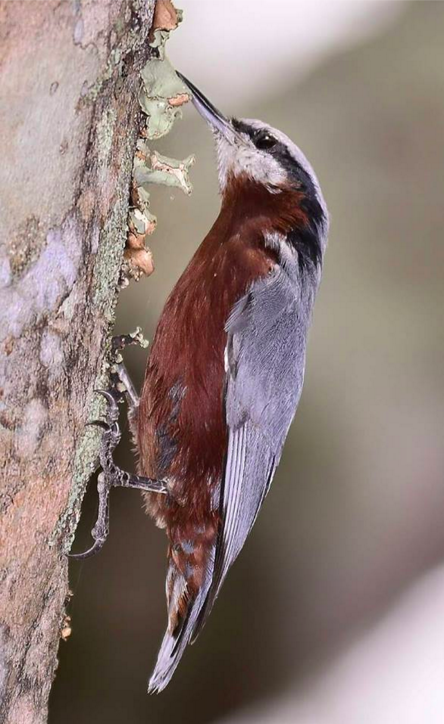
Masinagudi, Tamil Nadu
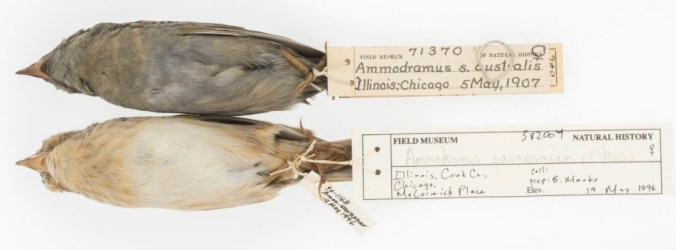
Grasshopper sparrow specimens from 1907, top, and 1996. Credit Carl Fuldner and Shane DuBay
A fascinating story appears in the Science section of the New York Times this week. It is a reminder of the progress made over the last century in cleaning up the air in North America. Birds are key to the evidential trail in telling the story. The title is one of the most unappealing we have seen in ages, but science is not all sweetness and light:
The Dirty Secrets Saved in Dead Birds’ Feathers
Tucked away in the drawers of natural history museums across America’s Rust Belt, thousands of dead birds carry dirty secrets from America’s polluted past.
The specimens that were put away around the start of the 20th century are far grimier than the ones from more recent decades. And now, climate scientists and historians can thank museum curators for not having tidied them up before storing them. Continue reading

Mapusa, Goa
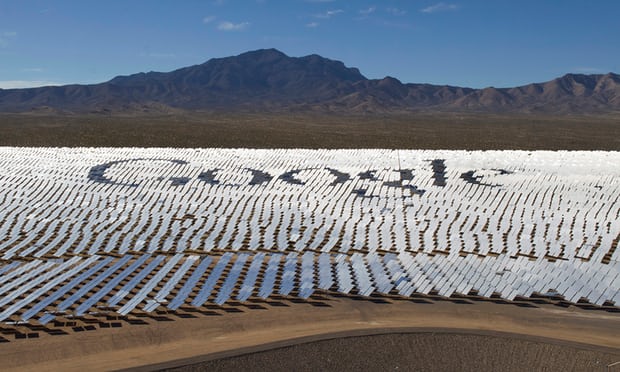
The Google logo is spelled out in heliostats (mirrors that track the sun and reflect the sunlight onto a central receiving point) during a tour of the Ivanpah Solar Electric Generating System in the Mojave Desert near the California-Nevada border February 13, 2014. The project, a partnership of NRG, BrightSource, Google and Bechtel, is the world’s largest solar thermal facility and uses 347,000 sun-facing mirrors to produce 392 Megawatts of electricity, enough energy to power more than 140,000 homes. Photograph: Steve Marcus/Reuters
The often maligned Calvin Coolidge quote the “Business of America is Business” takes on a positive note when we consider that in the current political climate many corporations are stepping up where the federal administration falls short.
American companies are still investing in renewable energy
After the November elections, many of us in the climate and energy fields were rightfully fearful. What would happen to international agreements to cut greenhouse gases? What would happen to funding for climate research? What would happen to the green energy revolution?
In most instances, Trump is worse than we could have imagined. But in one special area, the president may not matter. That is in the growth of corporate purchasing of renewable energy. It turns out there are factors that even he cannot stop that make choosing renewable energy an easy decision for many companies.
New evidence about the unstoppable renewable energy wave recently came out in a report that was released by Apex Clean Energy and the GreenBiz Group. These groups surveyed corporations to determine their future plans on renewable energy installation and adoption. They wanted to know whether these plans had changed in the past few years and what motivated their decisions to implement renewable energy strategies. The outcome of this survey is available here for people who want to read the entire document.
The groups surveyed 153 major corporations (both public and private), whose combined revenue was in excess of $250 million. Among these companies, 84% are “actively pursuing or considering purchasing renewable energy over the next 5-10 years.” Surprisingly, they found that 43% of the corporations intend to be more aggressive in their pursuit of renewable energy in the next two years. 87% of those actively pursuing renewable energy purchases stated that the election had no impact on their decision.
In fact, 11% were more inclined to purchase renewable energy. Continue reading

Bengaluru, Karnataka
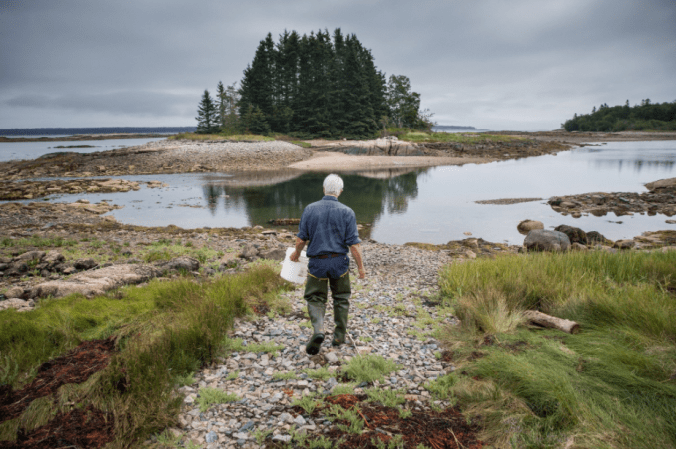
Families in small town, coastal Maine have been fisherfolk for generations, but waters warm and fish patterns change, many are looking at alternative livelihoods. Joe Young, pictured above, is diversifying into oyster and kelp farming in addition to his dockside cafe that where he sells lobster rolls, lobster dinners and, now, his homegrown oysters.
A FISHERMAN TRIES FARMING
COREA, Me. — The boats start up around 3:30 in the morning, stirring the village with the babble of engines before they motor out to sea. They will return hours later, loaded with lobster.
Joe Young’s boat has not gone out lately. Instead, he puts on waders and sloshes into the salt pond behind his house, an inlet where water rushes in and out with the tides. After a lifetime with most of his income tied to what he finds in the sea, this lobsterman — and sixth-generation fisherman — is trying his hand at something new. He is farming oysters. Continue reading
 Organikos