If You Happen To Be In New York City

171106_r30835

The British visionary Samuel Palmer drew “Oak Tree and Beech, Lullingstone Park,” ca. 1828, using pen and ink, graphite, and watercolor. Thaw Collection; The Morgan Library & Museum

We try not to judge a book by its cover, but if the sample above is any indication this looks like a show worth visiting:

Five Centuries of Drawings at the Morgan

From a study of drapery by a German artist circa 1480 to an Ellsworth Kelly collage from 1976, the collection is almost unbearably excellent.

The almost unbearably excellent show “Drawn to Greatness: Master Drawings from the Thaw Collection” begins with a love story. In 1954, the dealer Eugene Thaw—the son of a heating contractor and a high-school teacher, from Washington Heights—had a prescient assistant who suggested that he start buying art for himself. Continue reading


Ethiopian Development Puzzles

Omo

An African subject, for a second day in a row; thanks to Andrew McCarthy and the New York Times for this:

Up Close With the Tribes of Ethiopia’s Imperiled Omo Valley

Both dams and overtourism threaten the Omo Valley. But a sustainable travel initiative offers an intimate experience with local peoples. Continue reading

All In, Eliminating Plastic Bags, Rwanda Is A Leader

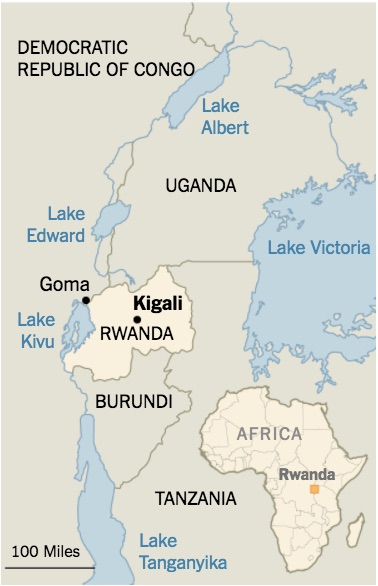
RWANDAmap

By The New York Times

Thanks to the New York Times for this success story from a small country in Africa that has been working its way steadfastly to global leadership, quietly but surely for the last decade-plus. Eliminating plastic bags from a country seems impossible, until you read how it was done:

GISENYI, Rwanda — They are sometimes tucked into bras, hidden in underwear or coiled tightly around a smuggler’s arms.

They’re not narcotics or even the illegally mined gold and diamonds that frequently make it across the border into Rwanda. But they are, at least in the eyes of Egide Mberabagabo, a watchful border guard, every bit as nefarious.

The offending contraband? Plastic bags.

“They’re as bad as drugs,” said Mr. Mberabagabo, one of a dozen border officials whose job it is to catch smugglers and dispose of the illicit plastic he finds. Continue reading

Faces, Places & Dignified Conversation

Thanks to Kurt Anderson for bringing this to our attention with this conversation (you need to listen to the interview to have a jolting recollection of dignified conversation, which hopefully serves as a perfect preview for the film), blurbed on Studio 360’s landing page at Slate under the title Sugar Mouth with this simple sentence:

Artists Agnès Varda and JR were born 55 years apart but have a lot in common—and they made a lovely film, Faces Places.

The PRI landing page for this episode is more informative, showing the host with the guests as well as plenty of relevant links and images: Continue reading

Biogenics In The 21st Century

6244231598_03912d5619_o-1260x708

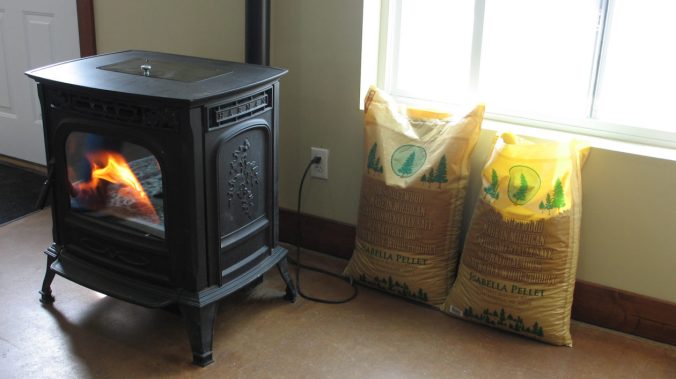
A wood stove burns with pellet fuel. Photo © U.S. Department of Agriculture / Flickr through a CC BY 2.0 license

Thanks to Cool Green Science for this reminder about the use of wood and related biomass as fuel throughout human history, and its implications for today’s climate change challenges:

As long as the Clean Power Plan is still in place, electric utilities are looking for ways to clean up their carbon dioxide emissions to the atmosphere and prevent global changes in climate. Some utilities are switching to natural gas, which emits lower amounts of carbon dioxide (CO2) per unit of energy generated. However, natural gas is not without its own problems.

Humans used firewood for thousands of years, during a period with little change in the concentration of CO2 in the atmosphere. So some utilities are looking toward the burning of wood, also known as biomass or biogenic energy, to generate power. This is an interesting “throw back” to an earlier time when firewood was used widely for heat, light, and early industrial processes. But, there is a reason why we switched to coal, which has greater energy content per unit weight.

It is natural to think that burning firewood would have a minor effect on atmospheric CO2. Continue reading

Birds + Artists + Spraypaint = Audubon Murals

25audb10-superJumbo

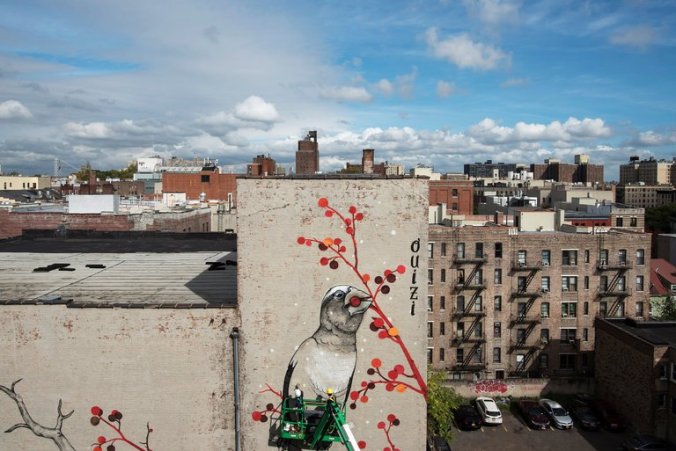
A swallow-tailed kite and 12 other birds painted by Lunar New Year.

cruz_wall

Tricolored Heron by Federico Massa a.k.a. iena cruz. Photo: Mila Tenaglia

Murals with birds always capture our attention; we cannot resist linking to such initiatives when they are cleverly conceived, elegantly executed, and perfectly placed. Enjoy this epic series, a fitting tribute to the National Audubon Society:

Where Birds Meet Art . . . After Dark

mikefernandez_black_chinned_hummingbird_web

Photo: Mike Fernandez/Audubon

The Audubon Mural Project is a collaboration between the National Audubon Society and Gitler & Gallery to create murals of climate-threatened birds throughout John James Audubon’s old Harlem‐based neighborhood in New York City. The project is inspired by the legacy of the great American bird artist and pioneering ornithologist and is energized by Audubon’s groundbreaking Birds and Climate Change Report, which reveals at least half of all North American birds are threatened by a warming climate. The project commissions artists to paint murals of each of the report’s 314 species, and has been widely covered in the media, including most recently by The New York Times.

Thanks to the Editorial Board of the New York Times for reminding us of this:

25audb1-master768

Louise Jones, with her husband, Gabe, working on a mural of an evening grosbeak. Credit Photographs by Karsten Moran for The New York Times

In his final years, John James Audubon, the celebrated 19th-century painter of bird life, lived in rustic uptown Manhattan in a house by the Hudson where some of his final paintings were of urban rats that caught his eye. Continue reading

Hooved Fire Prevention

Image: Renee Lewis

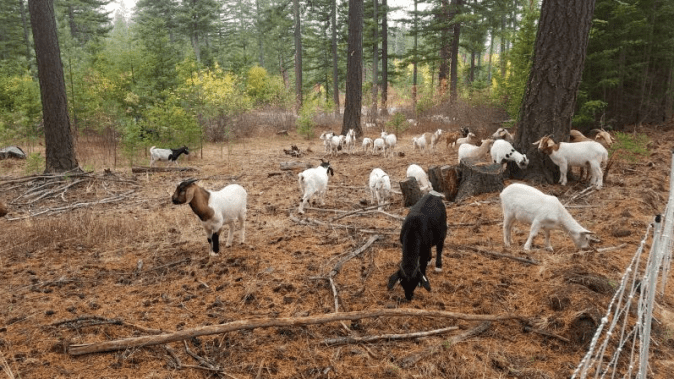
Goats have appeared on these pages in various guises, including being part of urban park maintenance. Thanks to environmental reporter Renee Lewis and the Earther.com for sharing this good news fire prevention story.

Firefighting Goats Devour Fuel Across the West Before it can Burn

Roslyn, WA—After one of the worst fire seasons in recent memory in the Pacific Northwest this summer—with the unforgettable smoke-pocalypse that socked in the region with thick smoke for weeks—a new tool is being added fight against wildfires: goats.

“More and more, people are looking at goats as a tool for fire suppression,” said Craig Madsen of Healing Hooves, a company based in Edwall, Washington, that maintains a herd of about 250 goats that are used for natural vegetation management.

The goats bleated loudly and walked towards Madsen as we approached the plot of land where the herd was busy grazing.

“The goats are complaining because of the rain,” Madsen said, as a cool, fall shower began.

Madsen stood under the overhang of the trailer he uses to to transport the herd, across the road from the land where the goats were grazing. The guard dog, Gigi, sat under a tree keeping watch as the goats—bucks, does, and kids—worked together to devour everything within reach.

Every car that drove by stopped to look at the unusual sight, and many asked Madsen about what he was doing out there with all those goats.

Continue reading

Biodiversity From Another Perspective

lrivera-species-yale

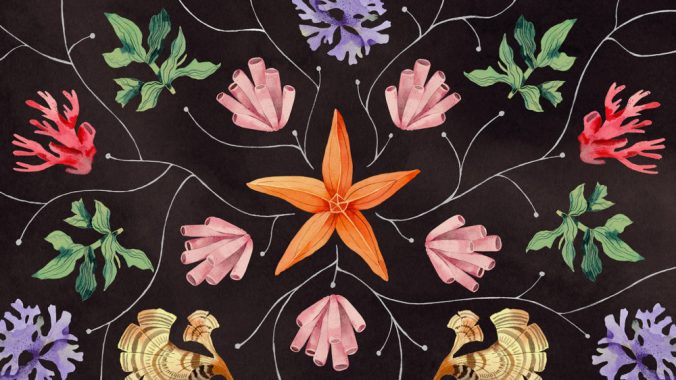
ILLUSTRATION BY LUISA RIVERA/YALE E360

Thanks to Jim Robbins at Yale 360 for this:

Beyond Biodiversity: A New Way of Looking at How Species Interconnect

In a development that has important implications for conservation, scientists are increasingly focusing not just on what species are present in an ecosystem, but on the roles that certain key species play in shaping their environment. Continue reading

Jane Goodall Then And Now

Jane

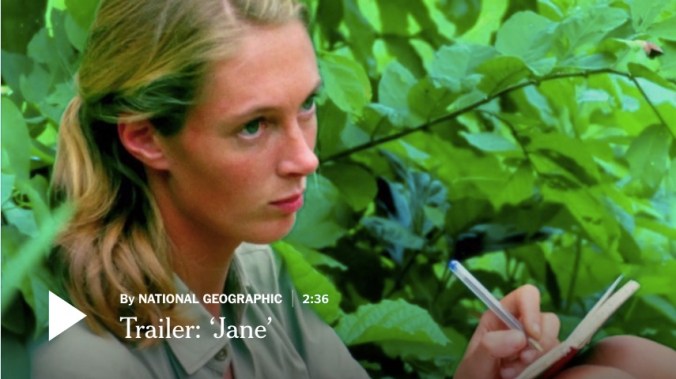
A preview of the film. By NATIONAL GEOGRAPHIC on Publish DateOctober 18, 2017.Image courtesy of Internet Video Archive. Watch in Times Video »

Several of us contributing to this platform have had the opportunity to meet her, and can attest to what Melena Ryzyk says below. There really are not sufficiently powerful words to describe her, but we link out to those stories that try.  It may be that photography or film offer the best medium for understanding and more fully appreciating her work. Click above for the trailer, or click the title below to read the review of this film, high on our list for viewing:

Jane Goodall’s Unparalleled Life, in Never-Before-Seen Footage

If you ever meet Jane Goodall and well up with overwhelmed joy, you won’t be alone. “I make everybody cry,” said Dr. Goodall, the primatologist and conservationist. “The Jane effect.” Continue reading

Environmental Leadership Born Of Cold-Eyed Pragmatism

Dale Ross, the mayor of Georgetown, Texas, says the decision to source all the town’s energy from renewable resources was based in cold-eyed pragmatism. Photograph: Katie Hayes Luke for the Guardian

This is what America’s eco city of the future looks like

Georgetown mayor Dale Ross is ‘a good little Republican’ – but ever since his city weaned itself off fossil fuels, he has become a hero to environmentalists Continue reading

Regenerating Biodiversity Is Hard Work In The Best Of Circumstances

merlin-to-scoop-126602513-337561-jumbo

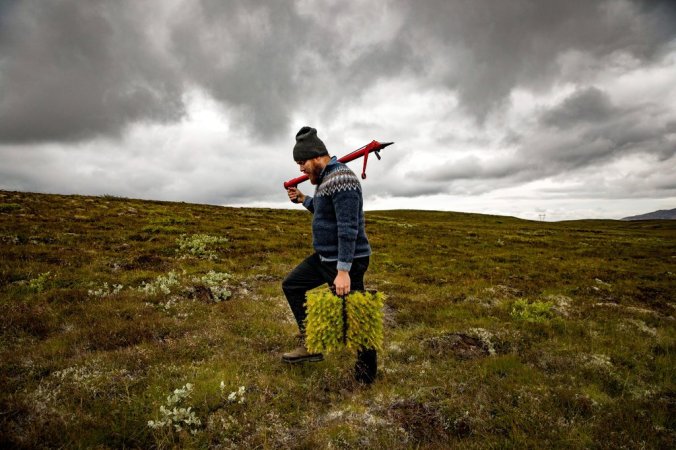
Jon Asgeir Jonsson, who works for a private forestry association, with larch saplings in western Iceland.

It’s never easy being green, but especially millennia after deforestation. Thanks to Henry Fountain and the New York Times:

Vikings Razed the Forests. Can Iceland Regrow Them?

GUNNARSHOLT, Iceland — With his flats of saplings and a red planting tool, Jon Asgeir Jonsson is a foot soldier in the fight to reforest Iceland, working to bring new life to largely barren landscapes.

The country lost most of its trees more than a thousand years ago, when Viking settlers took their axes to the forests that covered one-quarter of the countryside. Now Icelanders would like to get some of those forests back, to improve and stabilize the country’s harsh soils, help agriculture and fight climate change. Continue reading