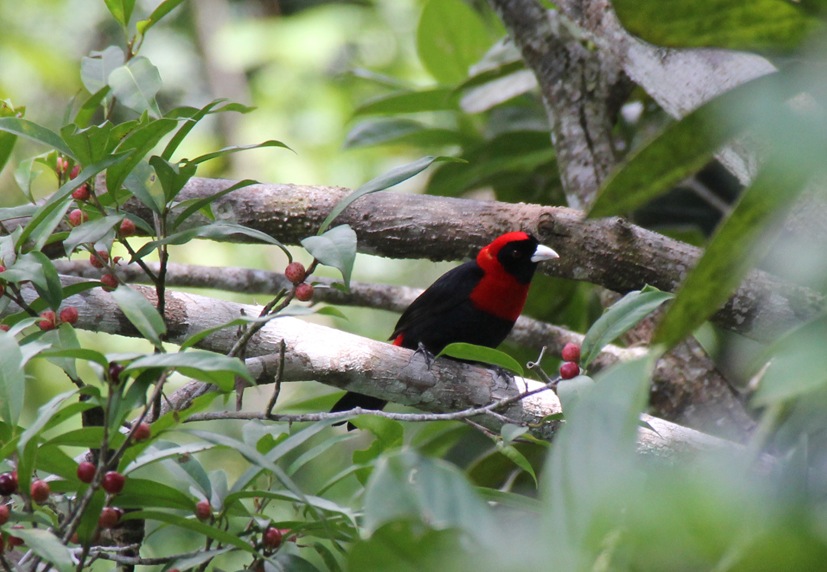
Photo credit: Stephen Crafts
Rio Blanco National Park, Belize
Photo credit: Stephen Crafts
Rio Blanco National Park, Belize
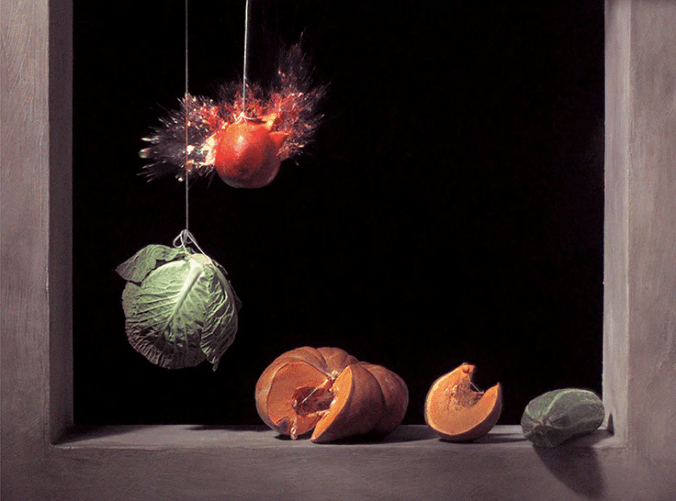
Ori Gersht’s Off Balance, 2006. Photograph: Ori Gersht/Aperture.org
I highly recommend this combination of retro covers from classic food and homemaking publications, stylized food presentations and deconstructed recipe imagery. Guaranteed to make you smile. (Check below the jump for more of my personal favorites.)
Repast lives: a history of food photography – in pictures
In this taster from her new book Feast for the Eyes, curator and writer Susan Bright brings into focus the rich history of food in pictures. From Man Ray to Cindy Sherman and Martin Parr, it is an artful exploration of how the edible vastly exceeds the simple things we put on our plates.
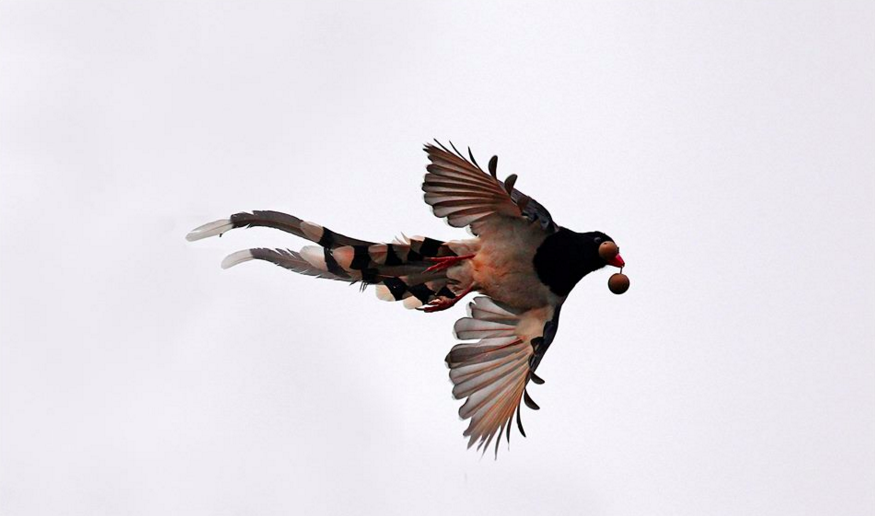
Pangot, Uttarakhand
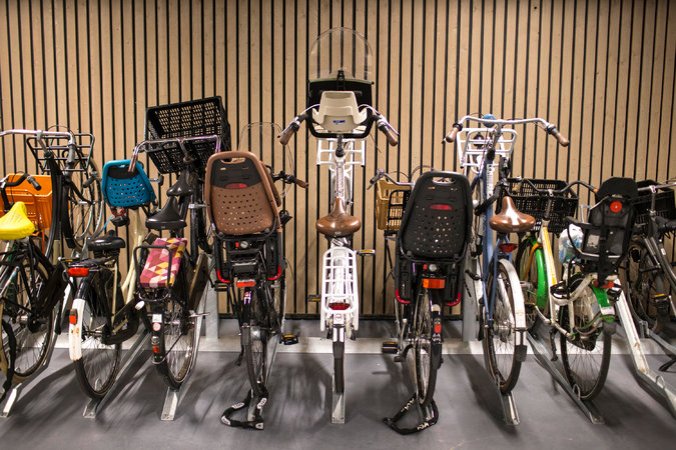
A special section in Utrecht’s new underground bike parking garage is for bigger bikes, which usually have children’s seats attached. Credit Ilvy Njiokiktjien for The New York Times
If You Build It, the Dutch Will Pedal

As fast as Utrecht can build underground bike parking garages, most spots are taken. Credit Ilvy Njiokiktjien for The New York Times
The city recently surpassed Amsterdam in a widely respected ranking of bike-friendly cities and is now second only to Copenhagen, which is more than twice its size. Continue reading

Tiruchirappalli, Tamil Nadu
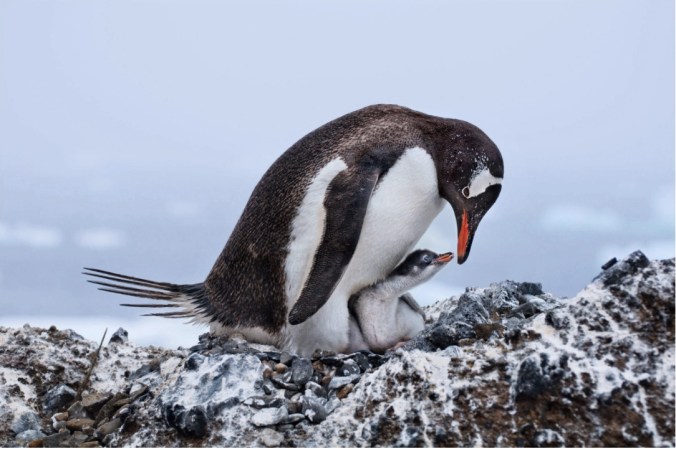
Gentoo Penguins. Photo: Deborah Albert/Audubon Photography Awards
Thanks to the judges who chose the Grand Prize Winner (above) in this year’s contest, among an impossibly great selection:
The more than 5,500 photos entered in this year’s contest, our eighth, show birdlife at its most vivid, vulnerable, formidable, and elegant. Photographers from 49 states and eight Canadian provinces submitted images in three categories: professional, amateur, and youth. While it wasn’t easy whittling those down, the following seven images proved exceptional. The category winners, in addition to garnering cash and trip prizes, are being displayed within the 2017 Nature’s Best Photography Exhibition at the Smithsonian National Museum of Natural History. Continue reading

Jageshwar, Uttarakhand
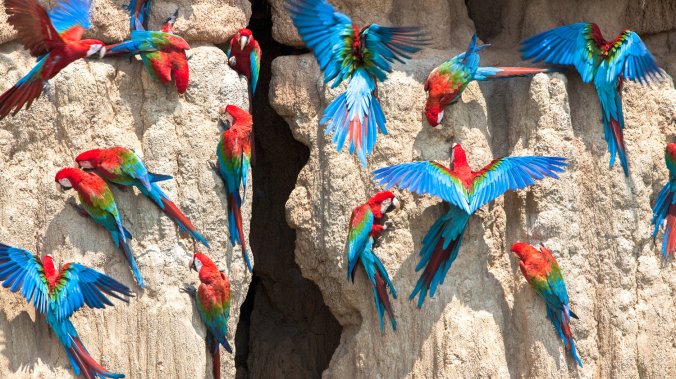
Parrots at an exposed cliff in Peru, where they gather to eat clay, which is richer in sodium than plants in the area. Frans Lemmens/Getty Images
Thanks to Carolyn Beans and the salt colleagues at National Public Radio (USA) for this:
Why Do Parrots (And People) Eat Clay?
The parrots of Southeastern Peru crave an earthy delicacy: dirt. At the Colorado clay lick, a cliff face rising above the Tambopata River in the western Amazon Basin, parrots — often hundreds at a time from up to 18 species — gather each day to feast on sun-hardened clay. Continue reading

Gallon Jug Estate, Orange Walk District, Belize
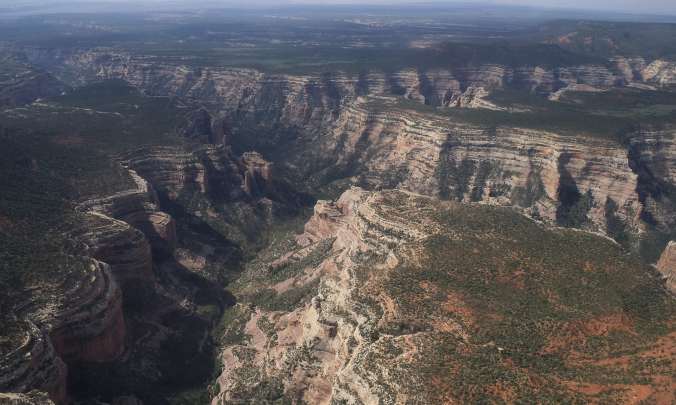
Arch Canyon, within Bears Ears national monument in Utah. Bears Ears is under threat from the Trump administration. Photograph: Francisco Kjolseth/AP
More examples of corporate social responsibility and activist collaboration taking the higher ground position over flawed public policy.
Native Americans and environmental advocates get help from outdoor retailers as they battle proposal to change monuments’ boundaries
Environmental activists, Native American groups and a coalition of outdoor retailers have vowed to redouble their efforts to protect public lands, after the US interior secretary, Ryan Zinke, recommended on Thursday that Donald Trump change the boundaries of a “handful” of national monuments.
“Secretary Zinke’s recommendation is an insult to tribes,” said Carleton Bowekaty, co-chairman of the Inter-Tribal Coalition, which asked Barack Obama to create the Bears Ears monument in Utah in 2015, citing increasing thefts and vandalism at more than 100,000 native cultural sites in the area.
Millions of petitioners have joined an urgently assembled advocacy effort to dissuade the Trump administration from moving against the monuments. On Friday, the outdoor retailer Patagonia, which spearheaded the industry initiative, said the group would continue its efforts. Continue reading

male – Baja California Sur, Mexico

Partnering with programs like the Atlanta Community Food Bank Garden Program and the Cornell Lab of Ornithology to bring bird friendly and healthy food education to youngsters connects well with our ethos. Citizen Science participation starts early. We hope our readers will share with public and private K-12 schools!
SCHOOL GARDEN GRANTS to grow healthy, happy, nature-connected kids!
School gardens provide an exciting context for cross-disciplinary learning and a wonderful opportunity to engage students in hands-on activities, project-based learning, and citizen science. Kids benefit from gardens in academic, physical, emotional, social, and behavioral ways. We are excited to support teachers’ efforts to engage kids in outdoor learning and all its benefits!
We will award 20 grants to teachers within the United States who strive to take the classroom outside, reconnect students with the natural world, and teach them valuable concepts and skills that integrate across all subjects. In partnership with our amazing sponsor, Alaska Fertilizer, we’re thrilled to support 20 teachers with a $500-$2,000 grant, gardening supplies, and BirdSleuth’s Habitat Connections kit. Funds can support a new garden or the revitalization of an existing one. In addition to funding food/veggie gardens, preference will be given to bird, pollinator, native habitat, rain, and other natural projects. Continue reading
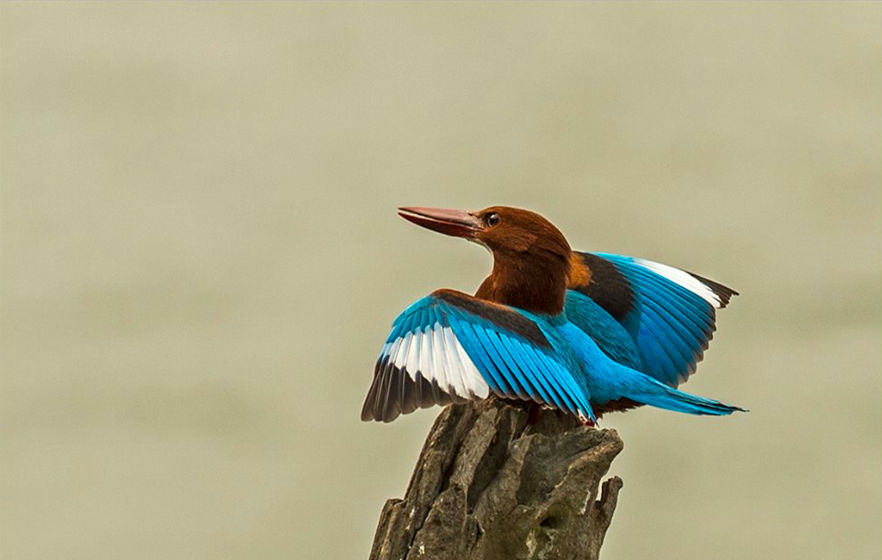
Jim Corbett National Park, Uttarakhand
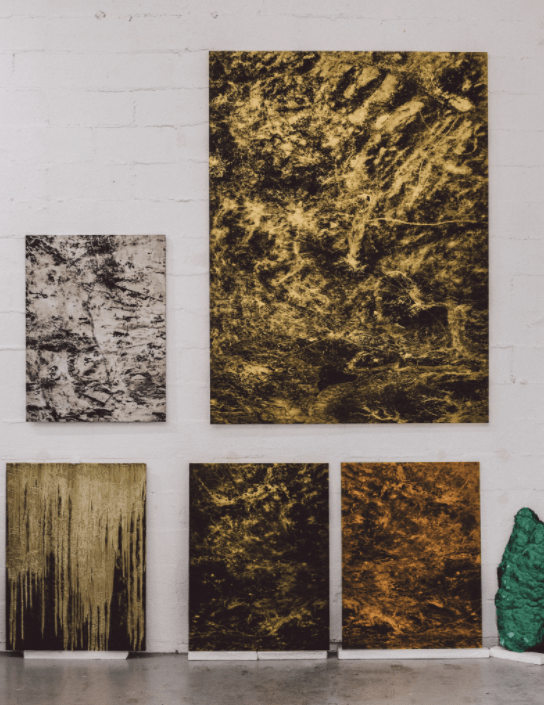
A series by Mr. Guariglia depicting the impacts of agriculture and mining on the Asian continent. The shimmering panels are layered with gold and other precious-metal leaf, gesso and acrylic ink. Below right is botryoidal slab of malachite from a mine in Africa. Credit Nathan Bajar for The New York Times
Tapping into a long, intertwined history of “photographers depicting nature with an eye to its fragility”, multimedia artist Justin Brice Guariglia translates his unprecedented access to NASA mission flights to visually quantify what is currently coined the Anthropocene Era.
Readers lucky enough to have the opportunity to view his coming exhibition, at the Norton Museum of Art in West Palm Beach, Fla., from Sept. 5 to Jan. 7 should do so!
Earlier this year at the Telluride Mountainfilm Festival, the artist Justin Brice Guariglia fell into conversation with a stranger.
“I got stuck on a gondola ride with a climate change denier,” Mr. Guariglia said recently. The stranger clearly had no idea who he was dealing with.
Not only had Mr. Guariglia previously talked his way into joining a NASA scientific mission over Greenland so that he could photograph melting polar ice caps. He also had even created a mobile app called After Ice, which allows users to take a selfie that is overlaid with a watery filter indicating the sea level projected in their geo-tagged location in the 2080s.
So when the man on the gondola said the earth’s warming temperatures were just part of a cycle, Mr. Guariglia recalled, “I took off my jacket and I said, ‘Does this look like a cycle to you?’” Continue reading
Bengaluru, Karnataka

A collection of Gowin’s photographs from “Mariposas Nocturnas,” taken in February, 2007, at the Integral Forest Otonga, El Reventador, and Otongachi Reserve, in Ecuador.Photographs by Emmet Gowin / Pace/MacGill Gallery / © Emmet and Edith Gowin
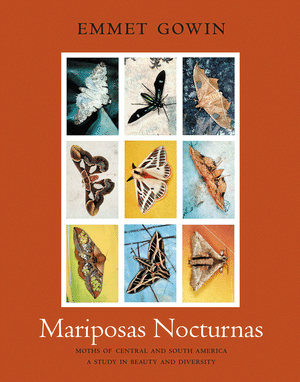 We have occasionally “discovered” the inspirational aspect of moths in all their variations, but had not thought so much of their beauty. Thanks to Andrea K. Scott for bringing our attention to the photography of Emmet Gowin, whose “Mariposas Nocturnas: Moths of Central and South America, A Study in Beauty and Diversity” will be published this month by Princeton University Press. Also we thank her for mentioning that an exhibition of Emmet Gowin’s work will be shown at Pace/McGill Gallery from September 28th through January 6th, 2018:
The moth doesn’t enjoy the same charmed reputation as its lepidopteran cousin, the butterfly. Continue reading
(Mishmi, Arunachal Pradesh)
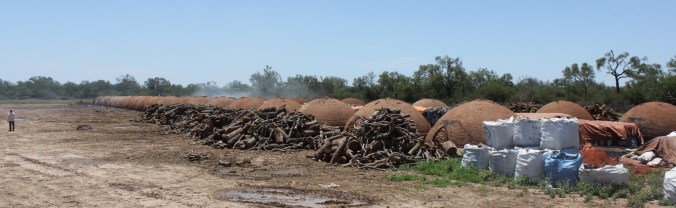
Bricapar charcoal facility at Teniente Ochoa ©Earthsight
The picture above, and the picture below, will suffice if you do not have the half hour required to read the details. Earthsight is a non-profit organization that uses in-depth investigations to expose environmental and social crime, injustice and the links to global consumption. One such investigation provides these images, and it is worth a read, especially if you are in Europe and you use charcoal for barbecue. Thanks to the folks in the Guardian’s Environment team for bringing the report and its consequences to our attention.

Figure 1: Jaguar photographed in the Gran Chaco forest ©Hugo Santa Cruz & Fundación Yaguareté
Choice Cuts
How European & US BBQs are fuelled by a hidden deforestation crisis in South America
Summary
On a vast, hot plateau in Paraguay, in the centre of South America, lies a little-known environmental crisis, and a dirty secret that can be traced to the supermarkets of Europe.
The dry tropical forests of the Chaco are being destroyed faster than any other forests on earth. The trees felled as a result of the advance of industrial agriculture into pristine wilderness are being turned into charcoal to feed demand in Europe.
Described by David Attenborough as “one of the last great wilderness areas in the world”,[1] the Chaco is home to a plethora of precious wildlife and one of the world’s last tribes living in voluntary isolation, the Ayoreo. Continue reading

Blue Creek rice fields, Orange Walk District, Belize
Photograph by Simone Lueck for The New Yorker
Although our most consistent feature suggests obsession (yesterday completing the 72nd month and 2,217 dailies in a row of bird photos, we know how it looks), we are anything but obsessed. That word implies trouble. We are looking for anti-trouble. We mostly post stories and images that imply reduction of trouble–through more information, and better quality of information, and useful case studies in trouble management.
This has led us to post 8,500 times (including this one) covering dozens of themes over the years. Usually several per day. Recently, in addition to our daily bird photo we are trying to post just once per day on something that highlights a remarkable example or explanation of any of those themes. Taste of place is on our minds now, more than anything else. So it is time for another restaurant review. Thanks to the reliably concise Nicolas Niarchos for this opening line:
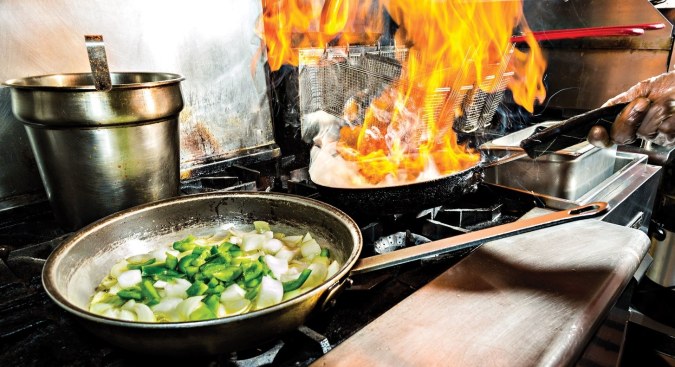
In the nineteen-nineties, the late, great writer Denis Johnson once followed a group of Somalis across the border from Ethiopia and into the heart of their turbulent country. One of the images that endures from the piece he wrote afterward is of Somali food—“chunks of goat and spaghetti”—and of his narrator being taught “how to eat pasta the Somali way, without utensils, taking a shock of it in his right hand, turning it this way and that and gathering the long strands up into his palm, and then shoving it into his face.” Continue reading
 Organikos