
Valparai, Tamil Nadu
Valparai, Tamil Nadu

Wade Dooley, in Albion, Iowa, uses less fertilizer than most farmers because he grows rye and alfalfa, along with corn and soybeans. “This field [of rye] has not been fertilized at all,” he says.
Dan Charles/NPR
Does ‘Sustainability’ Help The Environment Or Just Agriculture’s Public Image?
Brent Deppe is taking me on a tour of the farm supply business, called Key Cooperative, that he helps to manage in Grinnell, Iowa. We step though the back door of one warehouse, and our view of the sky is blocked by a gigantic round storage tank, painted white.
“This is the liquid nitrogen tank,” Deppe explains. “It’s a million-and-a-half gallon tank.” Continue reading
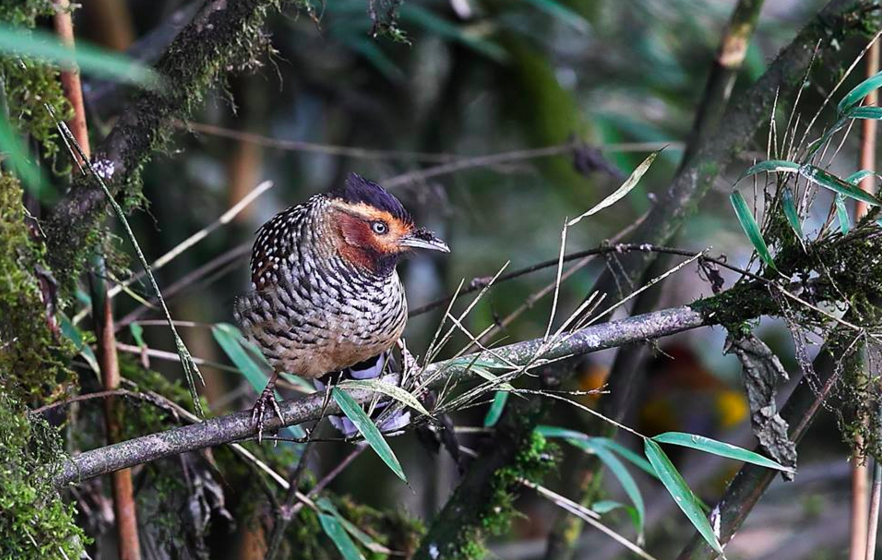
Tumling, Nepal
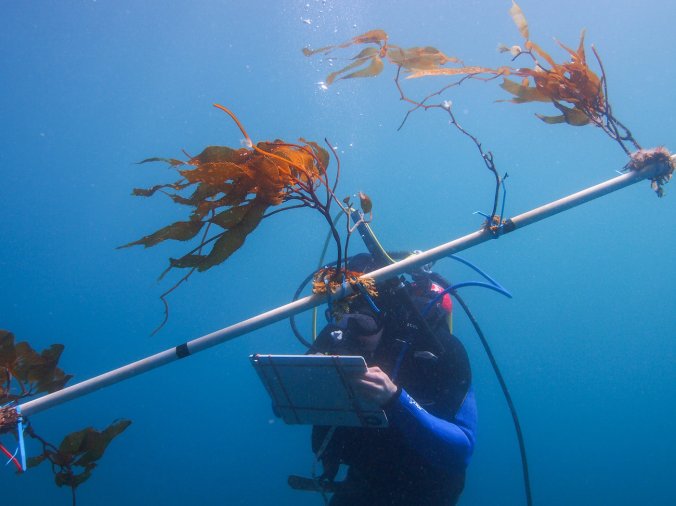
Kelp plants grow on a 30-foot-long, white PVC pole suspended in the water. If this is successful, instead of just one row, there would be a whole platform, hundreds of meters across and hundreds of meters deep, full of kelp plants. Courtesy of David Ginsburg/Wrigley Institute
Farming seaweed, using the power of the sun and the vast resources of the oceans, is a topic we expect to be featuring more of in these pages, and whether considering it as food or fuel we know the folks at the salt will be one of our primary sources delivering the goods:
The push for renewable energy in the U.S. often focuses on well-established sources of electricity: solar, wind and hydropower. Off the coast of California, a team of researchers is working on what they hope will become an energy source of the future — macroalgae, otherwise known as kelp.
The Pacific Coast is known for its vast kelp forests. It’s one of the fastest-growing plants on Earth, and farming it requires no fertilizer, fresh water, pesticides, or arable land. “It can grow 2 to 3 feet per day,” says Diane Kim, one of the scientists running the kelp research project at the University of Southern California. Continue reading

Bangalore, Karnataka
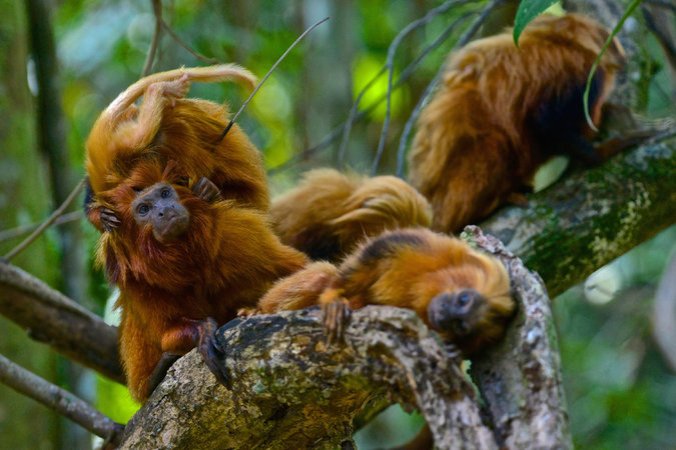
The golden lion tamarin has been observed passing through some of these corridors, an encouraging early sign for researchers. Credit Kike Calvo, via Associated Press
Thanks to Brad Plumer and the commitment of the New York Times to continue covering the complex topic of climate change in interesting, and sometimes hopeful ways:
Stitching Together Forests Can Help Save Species, Study Finds
In the 1980s, an ecologist named Thomas Lovejoy conducted an unusual experiment in Brazil’s Amazon rain forest. As loggers moved in with chain saws to clear trees for cattle pasture north of Manaus, he asked them to leave untouched several small “islands” of forest to see how the animals within them fared.
The results were unsettling. Continue reading
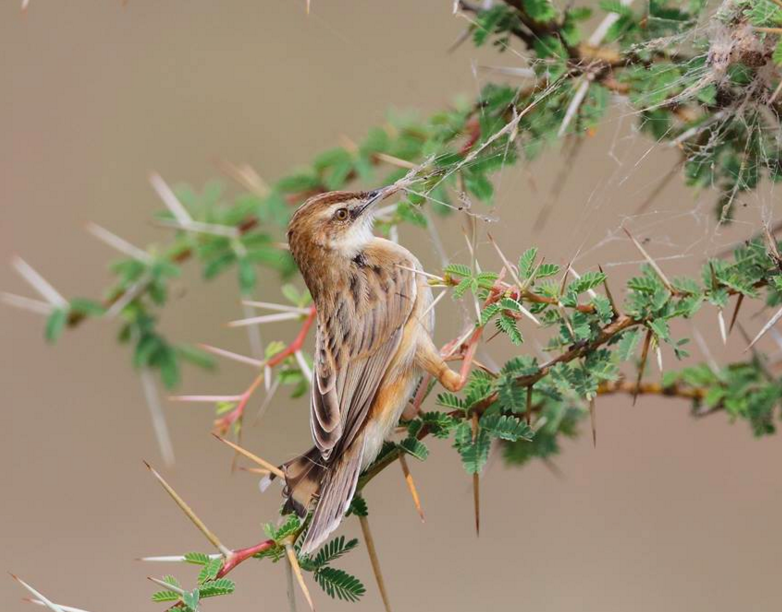
Bangalore, Karnataka
 On September 25, 2017 the Berkley Center for New Media is presenting “World Without Mind: The Existential Threat of Big Tech” that has our attention:
Franklin Foer reveals the existential threat posed by big tech and offers a toolkit to fight their pervasive influence. Elegantly tracing the intellectual history of computer science—from Descartes and the enlightenment to Alan Turing to Stuart Brand and the hippie origins of today’s Silicon Valley—Foer exposes the dark underpinnings of our most idealistic dreams for technology. The corporate ambitions of Google, Facebook, Apple, and Amazon, he argues, are trampling longstanding liberal values, especially intellectual property and privacy. This is a nascent stage in the total automation and homogenization of social, political, and intellectual life. By reclaiming our private authority over how we intellectually engage with the world, we have the power to stem the tide. At stake is nothing less than who we are, and what we will become. In this talk, Foer explains not just the looming existential crisis but the imperative of resistance.
 That got our attention at the same time as this book did, thanks to Elizabeth Kolbert’s review in this week’s New Yorker:
…Taplin, who until recently directed the Annenberg Innovation Lab, at the University of Southern California, started out as a tour manager. He worked with Judy Collins, Bob Dylan, and the Band, and also with George Harrison, on the Concert for Bangladesh. In “Move Fast and Break Things,” Taplin draws extensively on this experience to illustrate the damage, both deliberate and collateral, that Big Tech is wreaking. Consider the case of Levon Helm. He was the drummer for the Band, and, though he never got rich off his music, well into middle age he was supported by royalties.
This is not a mainstay theme in these pages, but we have felt compelled from time to time to pass along an informative read on a topic that seems likely to continue growing in importance.
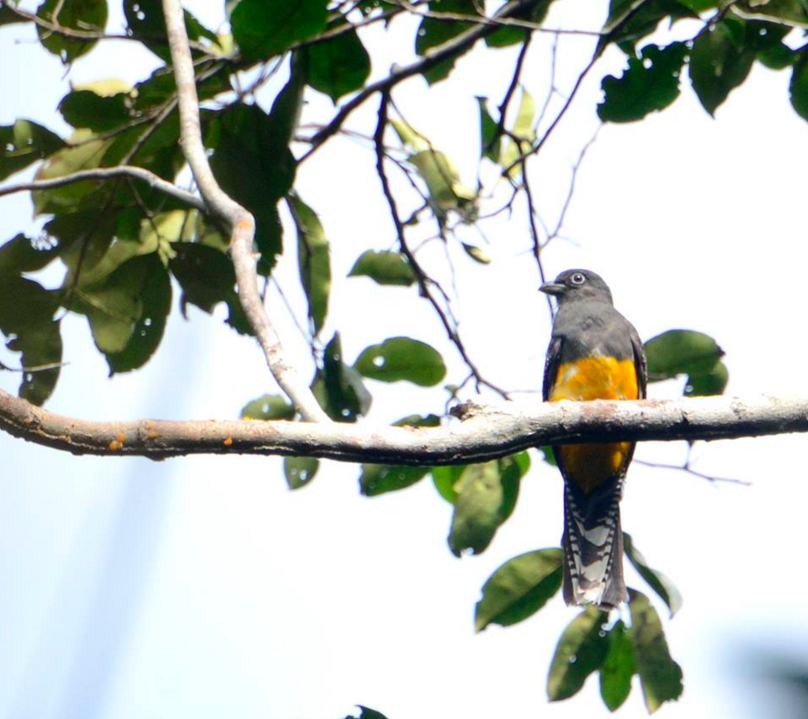
Rio Preto de Eva, Brazil
 I’ve posted previously about the lionfish invasion that is threatening coral reef and other marine ecosystems throughout the Caribbean, Gulf of Mexico, and Southern Atlantic Seaboard of the United States.
Much has been made of the spectacular invasive success of the two species of Indo-Pacific lionfish that have established themselves throughout the Wider Caribbean. Not only are the invaders being found at population densities more than ten times those typical in their native range, but they also have been found to grow more rapidly, reaching sexual maturity more quickly, and growing to greater size than do their Indo-Pacific cousins.
Several studies have looked at the genetic make-up of invasive lionfish and have concluded that the populations found in the Gulf of Mexico, Caribbean, and Southeastern seaboard of the United States are all closely related, stemming back to fewer than ten females. Continue reading
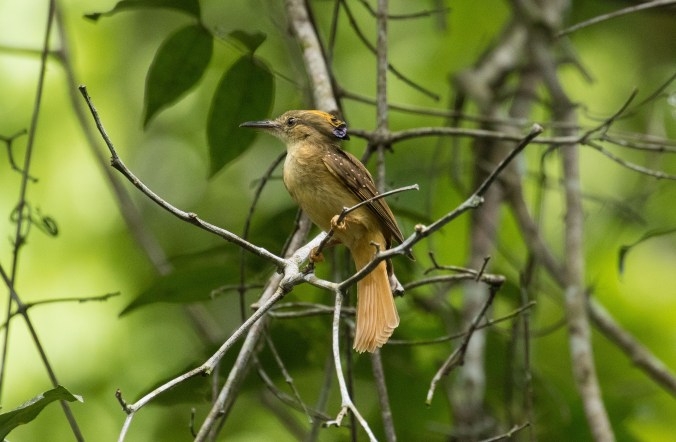
Chan Chich Lodge, Orange Walk District, Belize
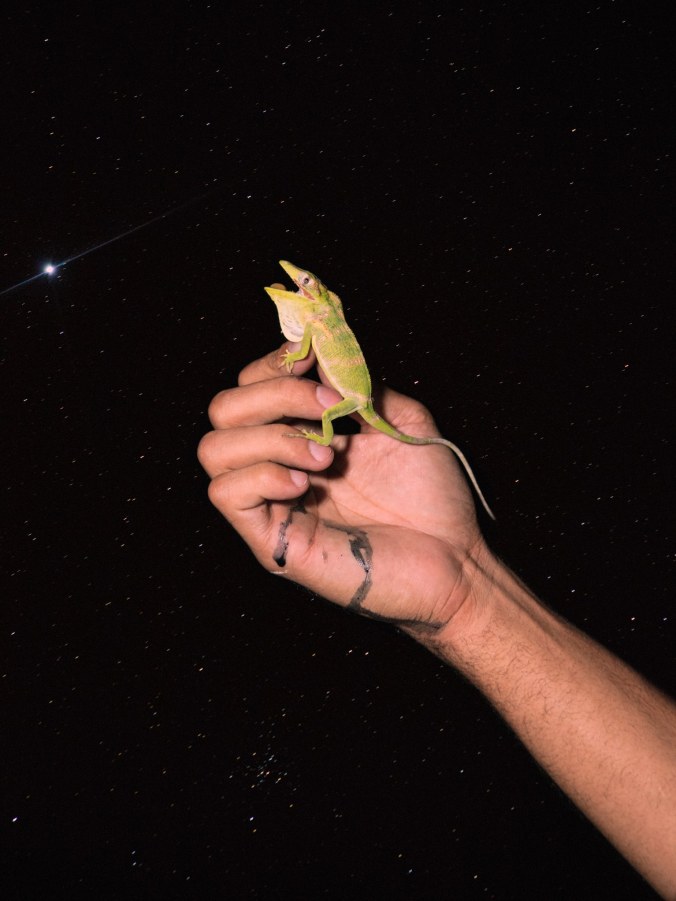
Photograph by Balarama Heller
Thanks to José Ginarte, a digital photo editor at The New Yorker, for this unusual reminder of the python invasion in the Everglades:
Chasing Pythons in the Everglades, and Finding an Eerie Dreamscape
Two and a half years ago, the photographer Balarama Heller began venturing into the Florida Everglades at night, shining his flashlight and pushing through underbrush, in the hope of photographing an invasive predator that has disrupted the local ecology: the Burmese python. Continue reading
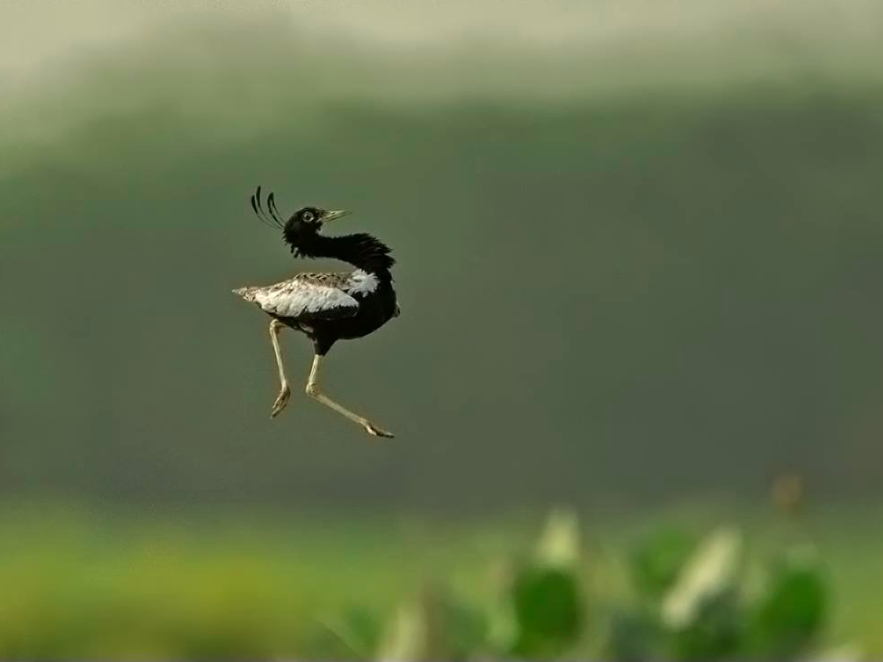
Satna, Madhya Pradesh
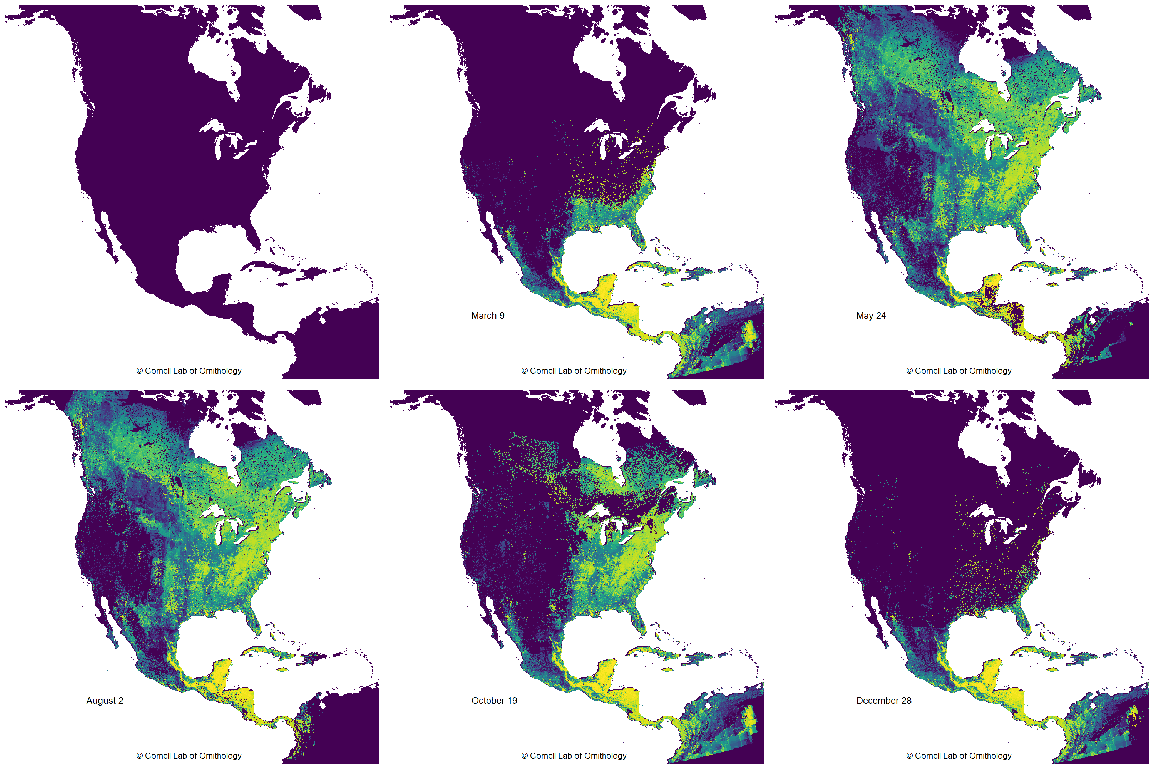
This animation shows where the 21 species in the study occur during each week of the year. Brighter colors (yellows) indicate more species are present than darker areas (blues and purples); overall, the species spend more time in Central American wintering grounds than on their northern breeding grounds. Map and animation by Frank La Sorte.
Once again eBird data and the Cornell Lab of Ornithology studies highlight the importance of forest conservation for species survival, as seen in Climate Change Or Habitat Loss? Study Weighs Future Priorities For Conserving Forest Migrants:
Birds are among the first to let us know when the environment is out of whack. But predicting what might happen to bird populations is tricky. Studies often focus on a single issue or location: breeding grounds or wintering grounds, changes in climate, loss of habitat. But in the real world, nothing occurs in isolation. A new study just published in the journal Global Change Biology pulls the pieces together. Continue reading
Bangalore, Karnataka
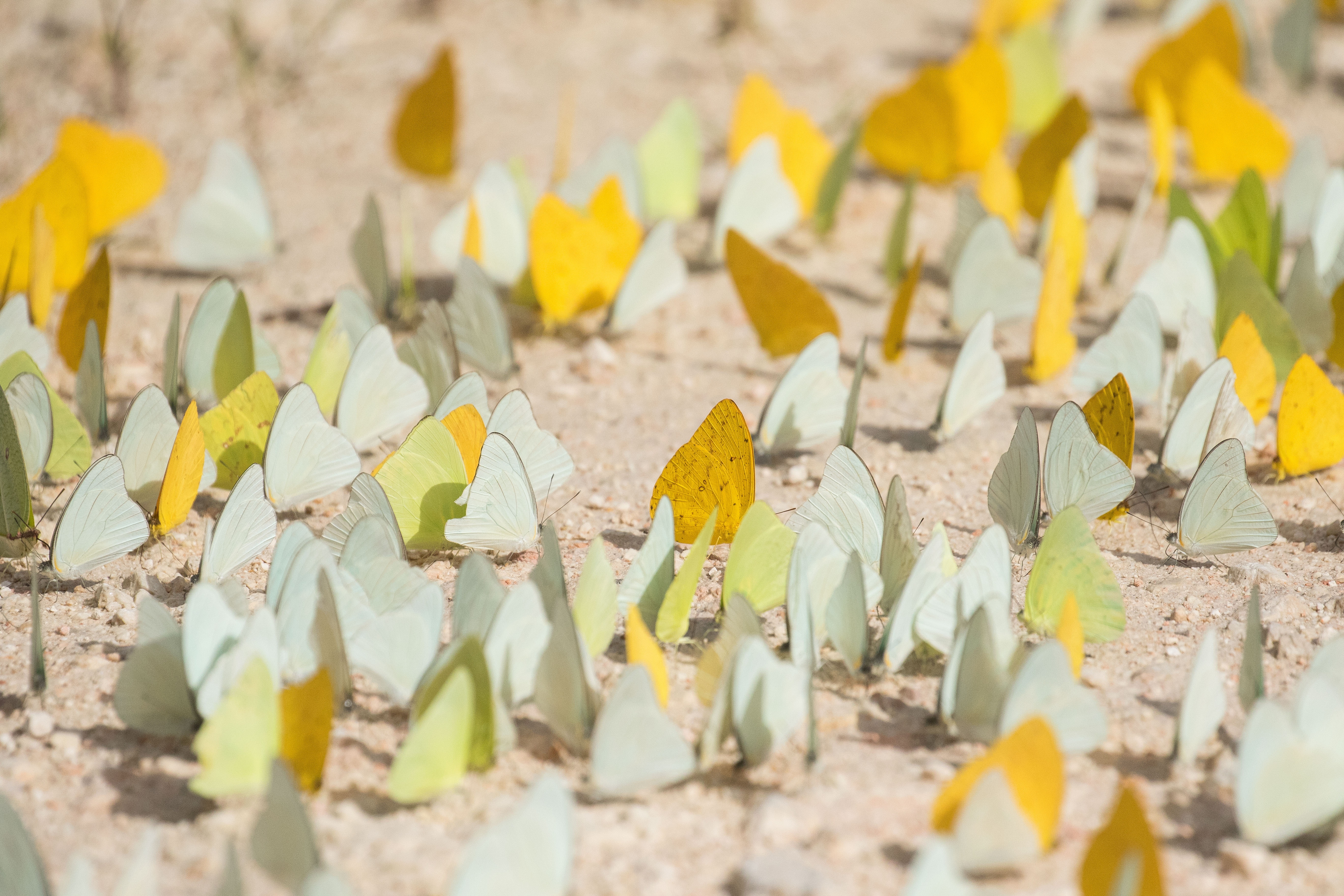
photo credits: Richard Kostecke
The sources we frequent for stories of interest appears to proclaim it butterfly season. So it’s incredibly timely that contributor Richard Kostecke should have sent us these beautiful photos of Sulfurs and Whites “puddling” along the road to Chan Chich Lodge. Continue reading

Lamanai Maya Site, Orange Walk District, Belize

For a second day in a row, a butterfly story catches our attention. Small stories of unexpected good fortune are always welcome:
Rare butterfly spotted in Scotland for the first time since 1884
Elusive and endangered white-letter hairstreak discovered in a field in the Scottish borders could become the 34th species to live and breed in the country Continue reading

Valparai, Tamil Nadu

Interstate 35, which stretches from Minnesota to Mexico, lies in the heart of the monarchs’ migration route.
Thanks to Janet Marinelli and the team at YaleEnvironment360:
Can the Monarch Highway Help Save a Butterfly Under Siege?
The population of North American monarch butterflies has plummeted from 1 billion to 33 million in just two decades. Now, a project is underway to revive the monarch by making an interstate highway the backbone of efforts to restore its dwindling habitat. Continue reading
 Organikos