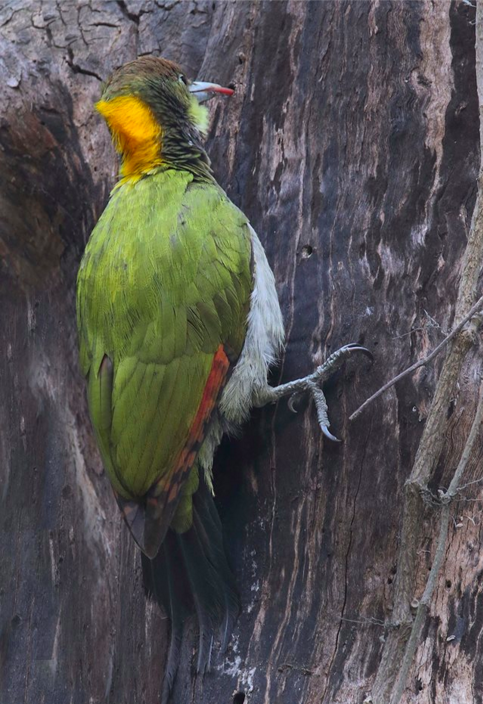
Smith Island’s Odd, Earned Confidence

170522_Smith Island selects-018.jpg

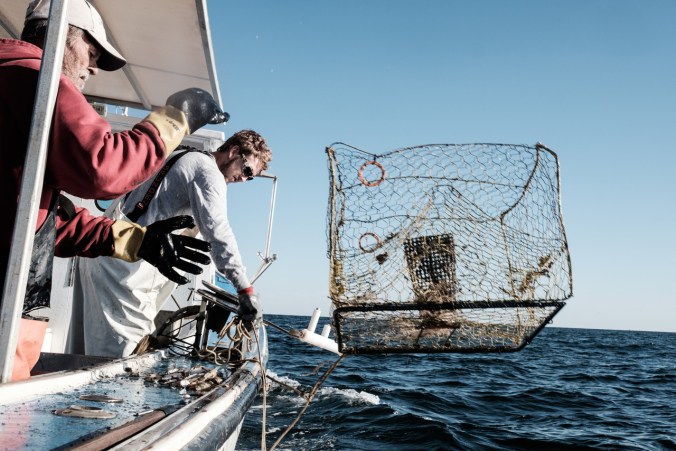
Tyler G. Tyler, right, pulls crab pots at the start of blue crab season. ALL PHOTOS AND VIDEO: ROB KUNZIG

Not worried about the future that climate change has in store for us? Does not sound too cool, or smart. But then, hmmm. Maybe these folks are on to something. Thanks to Atlas Obscura:

Maryland’s Smith Island, Home to a Vanishing Dialect and Rising Sea Levels

Despite climate scientists’ predictions, the laid-back inhabitants aren’t too concerned. Continue reading

Diversifying & Betting The Farm

060617_COSTCO_Corn_2.jpg

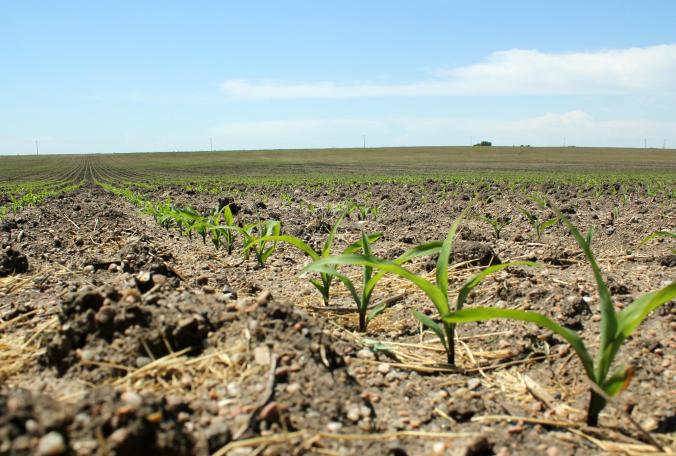
Mueller plans to build his chicken barns in the corner of this corn field just south of his home. His barns would house “breeders,” the hens that lay the eggs that will hatch to be raised for meat. Credit Grant Gerlock / Harvest Public Media

Thanks to Harvest Public Media for this story on diversification that some farms take on in order to take advantage of growing demand, and open space:

The Gamble Of The Farmers That Raise Our Chicken

Tim Mueller has raised corn and soybeans on 530 acres near the city of Columbus, Nebraska, for decades, but today he is planning to take a big gamble.

The big box retailer Costco is building a new chicken processing plant in Fremont, about an hour from Mueller’s farm. The company plans for the plant to slaughter 2 million birds per week. To raise all those chickens, the company is recruiting about 120 farmers to sign on as contract poultry farmers.

Mueller wants in. But to do that, he plans to take out a massive $2 million loan to finance the construction of four chicken barns. Continue reading

El Capitan Never Disappoints

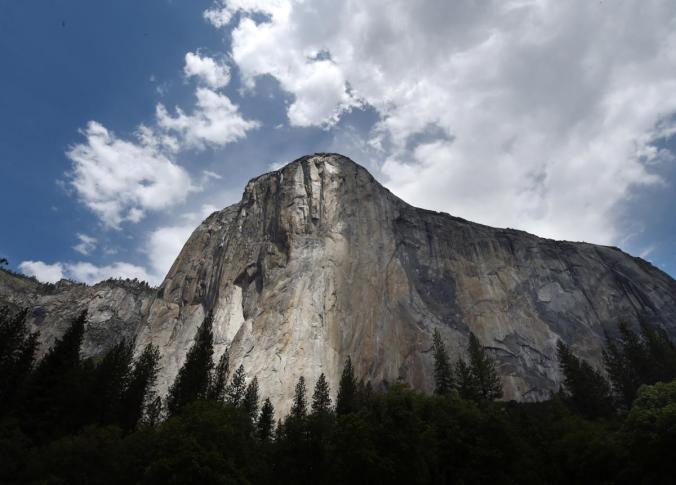
Mackinnon-Alex-Honnold-Perfect-Climb-Featured-1200

El Capitan, the towering stone heart of Yosemite National Park and a sweep of golden granite reaching twenty-seven hundred feet into the sky. PHOTOGRAPH BY MARK RALSTON / AFP / GETTY

I am not a climber and I do not generally favor extreme sports where someone else has to come in and clean up after an adventurer’s misfortune. I am in awe in this case, and so make an exception. It never bores me to look again at the image above. But it electrifies me more than usual when it accompanies a story like this one:

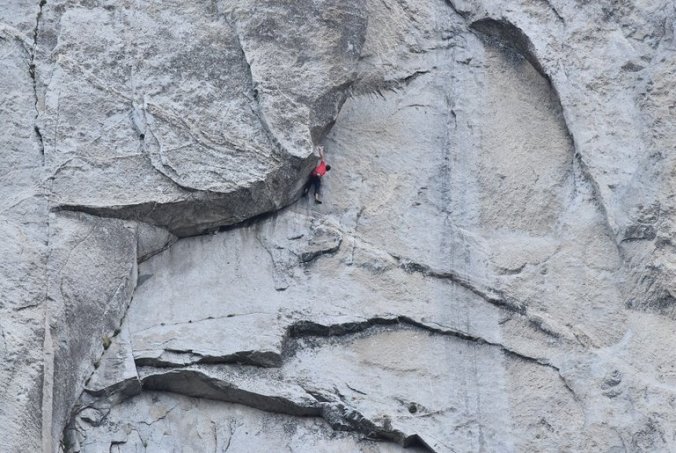
…Four hours later, that lone figure, the thirty-one-year-old professional climber Alex Honnold, had completed the first ascent of El Cap in the free-solo style. In other words, he had climbed the cliff alone and without a rope or protective equipment of any kind. Had he fallen, he would have died.

The achievement had long been predicted but never quite accepted as possible. The iconic face of El Capitan—photographed by Ansel Adams, praised by John Muir as “the most sublime feature of the Valley”—has long been the proving ground for American rock climbing. It has been climbed at incredible speeds and via routes of extraordinary difficulty; a ropeless ascent was the last “big psychological breakthrough” that remained, as Peter Croft, who completed groundbreaking free solos in the nineteen-eighties and nineties, put it. There was no real competition to be the first to meet the challenge. Either Honnold would do it, or he would leave it to future generations. Or he would try, fail, and fall…

A sports writer for the New York Times titles it perfectly:
10duaneWeb-master768.jpg

Alex Honnold at the 1,000-foot level of his free-solo climb of El Capitan. CreditTom Evans

El Capitan, My El Capitan

Alex Honnold woke up in his Dodge van last Saturday morning, drove into Yosemite Valley ahead of the soul-destroying traffic and walked up to the sheer, smooth and stupendously massive 3,000-foot golden escarpment known as El Capitan, the most important cliff on earth for rock climbers…
Ammonia, Who Knew?

4617875064_daab01704d_o-1260x708

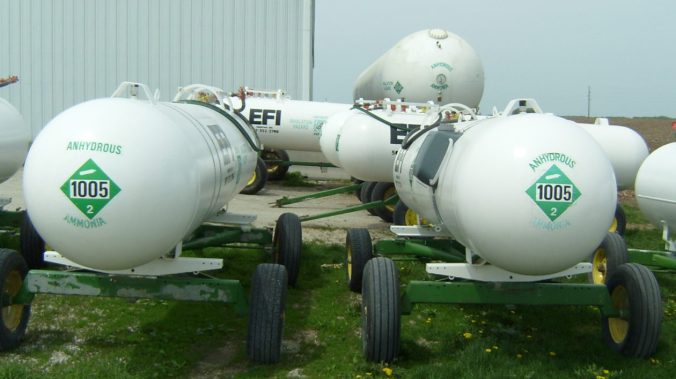
Anhydrous ammonia. Photo © Thirteen Of Clubs / Flickr through a Creative Commons license

Recognizing its utility as a household cleaner, especially to remove grease, ammonia has a smell that is familiar to most of us. But, nearly all of the annual industrial production of ammonia goes into other products, especially nitrogen fertilizer. Some farms inject ammonia directly into the soil. Others apply urea or ammonium phosphate fertilizers made from ammonia. All aim to supplement the availability of nitrogen for crop growth. Not all the ammonia gets into the crop. Inadvertent losses of nitrogen from fertilizers to the atmosphere account for about ten percent of fertilizer applications across the USA. Some nitrogen is also lost in the runoff to streams and rivers. Continue reading

Lost & Found, Lizard Edition

Holloway-Lizard-1200

For nearly two centuries, Varanus douarrha was an enigma. Now it has been resurrected. PHOTOGRAPH COURTESY VALTER WEIJOLA

In our book, lost and found is normally half glass full (versus half empty) new that we enjoy sharing, and this one counts as more than half full due to the intrigue of the history and the odd charisma of the creature:

A LIZARD LOST AT SEA MAKES ITS RETURN

By Marguerite Holloway

On June 27, 1824, a trading vessel en route from Mauritius to England was caught in a powerful gale. For ten days, winds pounded the King George IV until it could no longer hold together. In three perilous traverses, a small rescue boat shuttled those aboard to a beach near the Cape of Good Hope. “Neither myself nor the passengers have saved a single article,” the captain later wrote. “Probably they may cast up in time.” Amid the lost cargo—mostly sugar, cotton, and cloves—were three cases of scientific specimens. Continue reading

Sustainable Education

outdoor compost rendering CCL

To me, conservation tourism isn’t just about facilitating guest experiences in nature, but rather, it is about ensuring that guests walk away from their experience having gained a new appreciation for the systems they have interacted with. When I first spoke with Crist about spending my summer at Chan Chich, we mostly discussed working on developing a hydroponic food production system at the lodge. Not only would this system serve as a food supplier for the kitchen, but would also have an interactive educational aspect so guests could learn about the process. While this project is still a focal point of my internship, sustainability isn’t just about improving one aspect of a system, just like good conservation tourism is about having a medley of experiences.

When strengthening both the guest experience and sustainable operations at Chan Chich, it isn’t enough to just focus on what is going in to the kitchen. Rather, it is essential to focus on what is coming out of the kitchen as well.

Sustainable waste management has been important to the operations at Chan Chich for some time now. However, never before has these processes been visible to guests. While the hydroponic project is still under development, applying the project’s ideas of sustainable technology and guest education to waste management in the meantime is highly beneficial.

The result?

Continue reading

Atlas Obscura, Miscellanea

AtlasObsc.jpg

Bumblebees pollinating flowers during the study. NICOLE MILLER-STRUTTMANN

The story connected to the photo above is worth the few minutes, just as the dozens of other bee stories you will find in these pages have been. After reading it I started exploring the site where I found it. Finally. I see that Amie linked to and commented on this story reported in Atlas Obscura last year. I remember reading her post and then going to the source, as I did each of several other times when we have featured their work in these pages.

For well over two years we linked to their stories without any of our individual names attributed to the commentary on the story being linked to. When a post on our site has no name other than La Paz Group it just means here is our kind of story, enjoy. When a post has one of our names on it, it means the same thing only with more attention to detail. Today I finally had reason to explore Atlas Obscura, and realize that as much as I am committed to what we do and our communication about that work and related miscellanea, I might be just as happy doing what they are doing:

Atlas Obscura is the definitive guide to the world’s wondrous and curious places

In an age where everything seems to have been explored and there is nothing new to be found, we celebrate a different way of looking at the world. If you’re searching for miniature cities, glass flowers, books bound in human skin, gigantic flaming holes in the ground, bone churches, balancing pagodas, or homes built entirely out of paper, the Atlas Obscura is where you’ll find them.

Atlas Obscura is a collaborative project. We depend on our far-flung community of explorers (like you!) to help us discover amazing, hidden spots, and share them with the world. If you know of a curious place that’s not already in the Atlas, let us know.

There is plenty out there to discover, so let’s start looking!

Snorkeling in Cabo Pulmo

We’ve mentioned Cabo Pulmo here several times in the context of marine conservation, as well as from a personal visit. Although I still haven’t had a chance to go out on a scuba diving expedition here, a couple weeks ago Jocelyn and I were able to accompany some Villa del Faro guests on a snorkeling trip outfitted by Cabo Pulmo Sport Center, which is run by members of the Castro family mentioned in the posts linked above. The tour took two hours, but I’ve condensed the experience into almost fifteen minutes of video that I took on a rented GoPro:

Continue reading

Southern Roots Run Deep

Ms. Gomez grew up pulling mangoes from the trees and buying sugar cane from the vendors gathered outside her parochial school. Evan Sung for The New York Times

While Crist may have had the good fortune to enjoy a taste of Kerala with Asha Gomez during travel away from our home there, I was busy exploring the market byways for local ingredients and food ways. What a fascinating story to hear that Asha is actually experiencing that same sense of discovery and exploration within her own home state.

It looks like Crist might have gotten his wish for Asha to come to Kerala, after all!

A Chef’s Quest in India: Win Respect for Its Cooking

“I think I had disconnected myself from this place in some way by saying for so long that the U.S. was home,” said Ms. Gomez, 47, who had moved from the Indian state of Kerala to the state of Michigan as a teenager. “There is still so much a part of me here. I think I had forgotten that.”

Ms. Gomez had come to this land of ports, tea estates and spice gardens not only to reconnect with a part of herself, but also to find new ways to use her camera-ready personality and kitchen chops to lasso Kerala’s beautiful food culture and drag it back to the United States.

“I have to remove people from the mentality that all Indian food should be clumped up into nine dishes that are not really Indian dishes,” she said. “Not all Indian food belongs on a buffet line at $4.99. Indian food is 5,000 years of tradition and history, and it belongs right up there with French cuisine.”

Her frustration over American interpretations of the beloved coconut-scented fish curries, dosas and carefully layered beef biryanis of her homeland echoes the lament of countless cooks who have immigrated from countries like China, Mexico or Vietnam only to find their food mangled to meet the limitations of a new country’s palate and relegated to its cheap-eats guides.

“I wish I could say to every immigrant cook in America, ‘Why do you think your food should be any less than any other cuisine that comes from anywhere else in the world?’” Ms. Gomez said. Continue reading

Model Mad, Mayors

07pedutoWeb-1496845647065-master315.jpg

Mayor Bill Peduto of Pittsburgh, left, and Mayor Ann Hidalgo, of Paris, are outspoken supporters of the Paris climate accord. Credit Justin Merriman for The New York Times (Peduto); Christophe Ena/Associated Press

She has been featured in these pages due to her creative approach to governance more than once. We are happy to see Ann Hidalgo again, this time providing another example of the “don’t just get angry–do something with creative ferocity” ethos implied in these constant observations of model mad. And we are especially grateful for the joint commentary with Pittsburgh Mayor Bill Peduto, who we hope to see more of:

…Though separated by an ocean and a language, we share a desire to do what is best for our citizens and our planet. That means putting aside parochial politics and embracing the global challenge of fighting climate change. In doing so, we can create a cleaner, healthier, more prosperous world for Parisians, Pittsburghers and everyone else on the planet. Continue reading

Paul Nicklen Way North & Way South

PhotogArctic.jpg

Paul Nicklen/Paul Nicklen Gallery

I listened to this interview while walking the trails at Chan Chich Lodge this morning, so had no photos to look at. And yet, it was vivid. And highly relevant to what we do here. I will let you listen to get what I mean.

Six photos accompany this story on the Fresh Air website, and those are curated for the podcast. If you only have time for photos click over to Paul Nicklin’s website, but the interview with him is worth every one of the 48 minutes. If you only have ten minutes to listen, go to 22:30 and if you do not find yourself bursting into a mix of laughter and other unidentified emotions, let me know; it means one of us may need some professional help:

Polar Photographer Shares His View Of A Ferocious But Fragile Ecosystem

Conservation photographer Paul Nicklen has spent more than two decades documenting the ice and wildlife in some of the most inhospitable places on Earth — the Arctic and the Antarctic. Continue reading

Rancher’s Life In The High Plains

4681.jpg

The scale of the cattle farming at Gallon Jug is modest compared with the tradition of grazing on public lands typical of ranching in the western USA. But they share some common ground such as the horse-based cowboy (note below that women are also in the saddle in some places such as Montana). Something not discussed in the ideological battles over public lands that got to a boiling point in the last couple years–the intangible patrimony of a way of life–is worth a couple minutes of your consideration and this article lays it out, part of a series the Guardian is running:

In Montana, land transfer threatens the American rancher’s way of life

Ranchers in the west have been struggling for decades. Now a new threat looms: public land might be taken away from them Continue reading

Organic, Bird-Friendly Cold Brew Coffee At Chan Chich Lodge

07COLDBREW1-master1050-v2

At All Day, a coffee shop in Miami that’s on the must-visit list of coffee fanatics, cold brew is the foundation of the menu. Credit John Van Beekum for The New York Times

Apparently it is iced coffee season up north. It is intern season here at Chan Chich Lodge. Maybe an intersection? Emily, from an agriculture and environmental engineering background, and Alana who is an aspiring sustainable hospitality developer are off to the races, as they say. They were out in the forest yesterday with GPS tools, a GIS mapping app and the assistance of Migde and Hector on the trails, developing a more scientific way of estimating the incidence of Ramon trees in our 30,000 acres.

More on that from them. But more on coffee from me. We have been cultivating an estate coffee unique to Belize, organic and as bird-friendly as you will find. Let’s add cold brew to your list of summer experimentation? Migde and Hector, aka bartender and waiter and therefore defacto coffee baristas, will be setting up the instrumentation in the kitchen.

How Cold Brew Changed the Coffee Business

Continue reading

Blue Heart of the Planet

The United Nations Ocean Conference is underway to support the implementation of Sustainable Development Goal 14: Conserve and sustainably use the oceans, seas and marine resources for sustainable development.

The importance of collaboration between public and private sectors to brainstorm innovative solutions to environmental issues is becoming increasingly clear, as is the reality that states and local governments will be the stronger voices for climate activism.

The health of the planet and our oceans are interchangeable, and Sylvia Earle has been the spokesperson for that truth for decades.

Take the extra 18+ minutes to listen to her 2009 TED Prize Talk here.


Biomimetic Yarn-Bombing

Image © 2016 CHOI+SHINE

I’ve long been fascinated with urban space art installations in general, and fibre based pieces in particular. Somehow I missed hearing about the Singapore based i Light Marina Bay Light Art Festival in March, but I’m happy to have discovered it now.

The festival is an annual event, and this year’s theme of Biomimicry and Sustainability strike multiple chords. London/Seoul based architectural firm Choi+Shine created The Urchins for this site specific installation. 

This project is inspired by sea urchin shells, which are enclosed yet light weight, delicate and open.  Their textured and permeable surface interacting with light creates openness, while the pattern’s mathematical repetition brings visual rhythm and harmony.  Against light, the sea urchin natural form reveals one of the most spectacular patterns found in nature. Continue reading