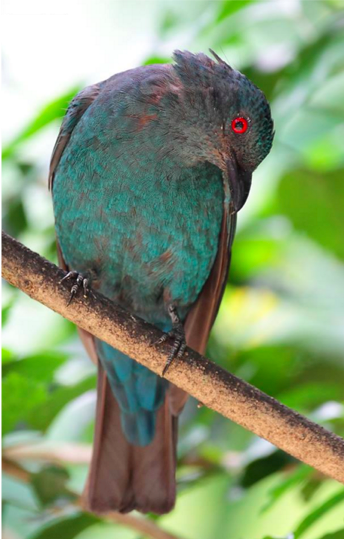
female – Western Ghats, Kerala
female – Western Ghats, Kerala
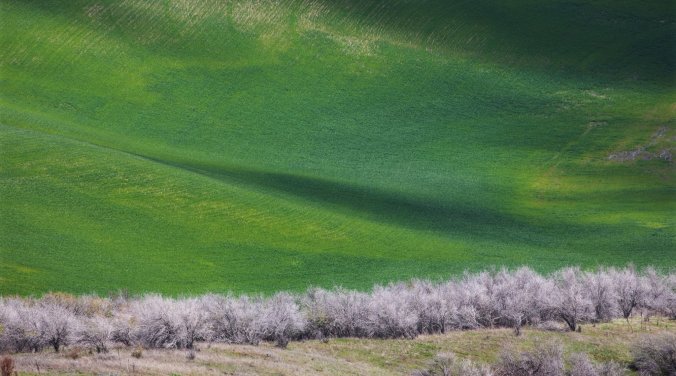
The remnant of an old apple orchard among wheat fields in Steptoe Butte State Park in Washington. Credit Ruth Fremson/The New York Times
Yesterday magic happened. After sharing in the morning a quick mention of why my thoughts are on agriculture, I was walking with a member of Chan Chich Lodge’s groundskeeping team to review some work he had completed. On the way, we encountered a tree showering small fruits onto the ground. Fragrant. I asked him what it was and he said a word I did not recognize that sounded like “yo”.
About the size of a blueberry but not a berry, nor resembling anything I could identify. Until I opened it and its inside looked exactly like that of my favorite fruit. And then I realized my colleague had said higo, the Spanish word for fig. He then told me that in his village the old Mayans use this to make a flour, something they have done since olden times. He paused a moment, a bit of reverie I could tell, and then he continued about how the tortilla made from this is the best. It’s got me thinking. Thanks to Kirk Johnson for this second unexpected pleasure of a story:
Hunting Down the Lost Apples of the Pacific Northwest
STEPTOE, Wash. — David Benscoter honed his craft as an investigator for the F.B.I. and the United States Treasury, cornering corrupt politicians and tax evaders. The lost apple trees that he hunts down now are really not so different. People and things, he said, tend to hide in plain sight if you know how and where to look. Continue reading
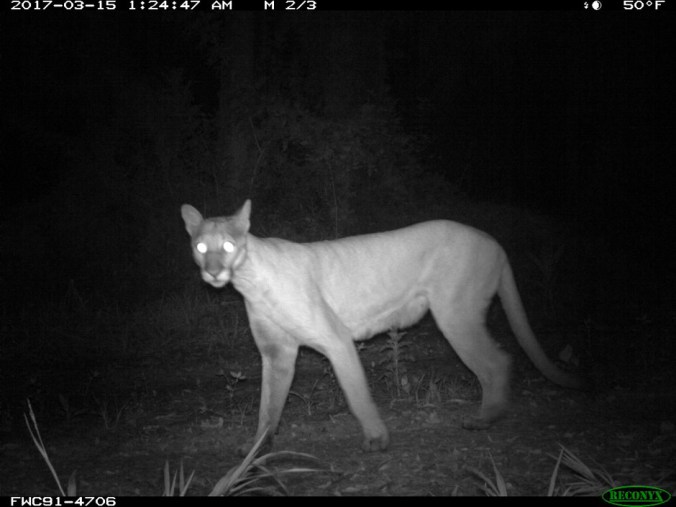
As Florida panthers have begun to multiply, they’ve been forced to search for new home ranges. PHOTOGRAPH COURTESY FLORIDA FISH AND WILDLIFE / FLICKR
Rewilding is a topic I started linking to as a matter of solidarity. While based in south India, I had plenty of exposure to residual evidence of the complicated–sometimes resplendently beautiful and other times brutally tragic–relationship between mankind and wild animals as played out over millennia, and still evolving. So I have kept an eye open for these stories, and have posted so many times on the topic that it might give the impression that it is a thing. As if it is happening more or better than it is really happening. But it is happening so I will keep the links coming.
Now I am in Belize most of the year, where the man-cat relationship is also millennia old, and as constant challenge as ever. But I am seeing it from well within the confines of Chan Chich Lodge and its surrounding hundreds of thousands of acres of healthy cat habitat. I know there are big cats in the USA, but not enough. That is why this story is a thrill. Dexter Filkins, never yet cited in these pages but whose reporting I depend on for other kinds of stories, was not a byline I expected to see on this story, but thanks to him for it:
For years, the Florida panther, a majestic creature that lurks in and around the forests of the ovbnm,./, has teetered on the edge of permanent disappearance. Closely related to the mountain lion, the panther once roamed across much of the South, but the ever-advancing modern world pushed it into a tiny corner of Southwest Florida. By the late nineteen-seventies, fewer than thirty survived.
Since then, the panther has been coming back, helped by a government- and privately backed expansion of its habitat. Florida panthers are now thought to number around two hundred. Indeed, there are so many big cats in the Everglades that they are venturing out in search of new territory. Continue reading
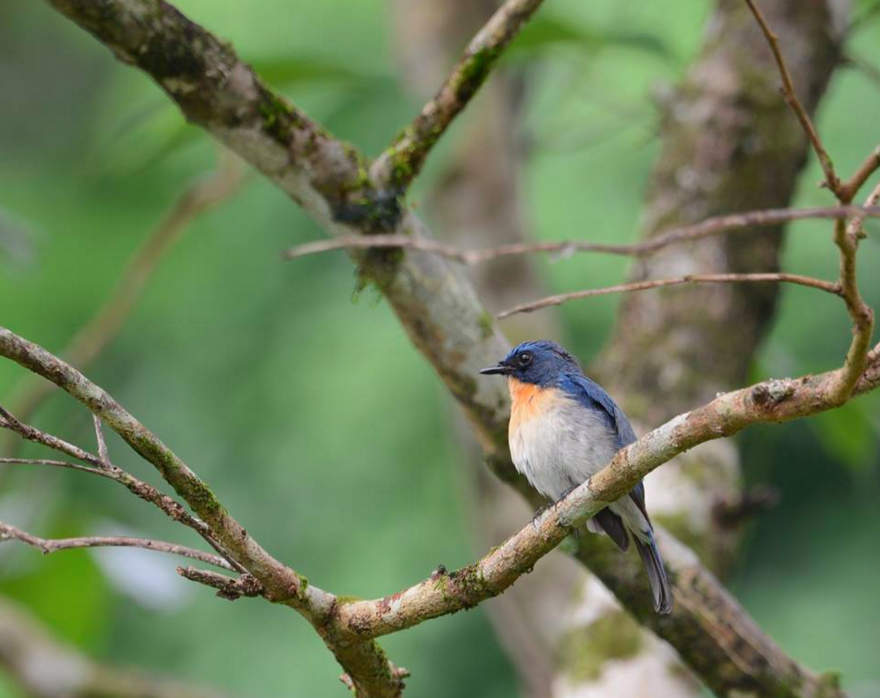
Thattekad Bird Sanctuary, Kerala

A view of Manhattan from the roof of the Bridge building on the Cornell Tech campus on Roosevelt Island. Photo VINCENT TULLO
When Cornell University competed in 2011 to develop an applied science and engineering campus in New York City, part of its pitch was that it would construct an academic building that would at least approach making as much energy as it used in a year, a concept known as net zero. It won. Then came the hard work of making that vision happen at the campus, known as Cornell Tech. Continue reading

I am back at Chan Chich, with one goal before I start focusing on my plan to go to graduate school. A recurring theme in my work for La Paz Group, especially at Xandari, has been the intersection of birds and coffee. And now I have some months to think about how this may relate to what I will study in graduate school. One of the programs I am considering applying to is the Masters in Environmental Management at the Yale School of Forestry. Can I link what I have learned while working to what I would study there? If so, maybe I could link that to what I do after grad school.
This other post today reminds me of the value of geeking out from time to time. Most of my attention to coral reef comes from Phil Karp’s posts on this platform and I admit to preferring stories featuring real people and their entrepreneurial approaches to conservation. But science is the other best friend of conservation. Today my attention is turning to coffee, in advance of the arrival this week of an intern coming from Cornell University’s College of Agriculture and Life Sciences.
Just one of the many topics for an intern, with science and research on her side, to help us tackle over the next ten weeks, bird-friendly coffee has been on been on my mind since last year but I have been waiting for the perfect moment to focus. Nothing like the arrival of an intern to focus your mind. And so today in my task-oriented wanderings I came across this website (click the banner above), which I loved immediately for sharing this news on capsules, but the rest of the site is a great resource for present purposes as well:
A short round-up of coffee news.
- Keurig is finally designing a more eco-friendly K-cup, Washington Post. I have written many times about K-Cups: the excess waste, when the company said they were recyclable but they really weren’t, as well as the high cost and better alternatives. Continue reading
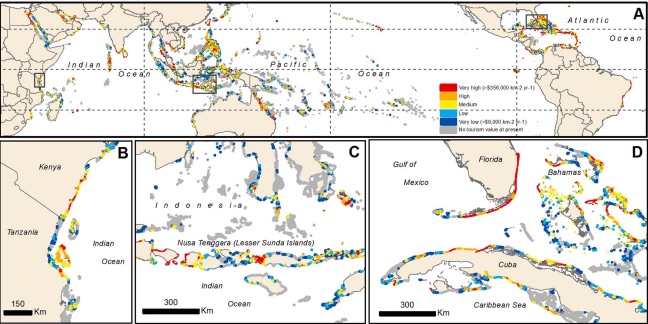
Economic value of coral reefs for tourism (A). This figure summarises the combined dollar values of expenditures for on-reef and reef-adjacent tourism. Reefs without assigned tourism value are grey; all other reefs present values binned into quintiles. Lower panels show Kenya and Tanzania (B), South-central Indonesia (C), and Northern Caribbean, with part of Florida, Cuba and the Bahamas (D). (Further maps can be seen in Appendix A and online at maps.oceanwealth.org
A country that depends on its coral reef to attract visitors, as Belize does, has every reason to pay attention to the various sciences paying attention to those reefs. Mostly marine biologists, perhaps, but also economists. Geeks and wonks are heroically gathering information, processing it, publishing it and if not for The Nature Conservancy’s efforts some of us might not ever see it.
The August, 2017 issue of Marine Policy, an academic journal, carries the article “Mapping the global value and distribution of coral reef tourism” by the scientists Mark Spalding, Lauretta Burke, Spencer A. Wood, Joscelyne Ashpole, James Hutchison, and Philine zu Ermgassen and TNC’s Cool Green Science has a summary in common language. Also they complement the academic illustration above with one of their own:
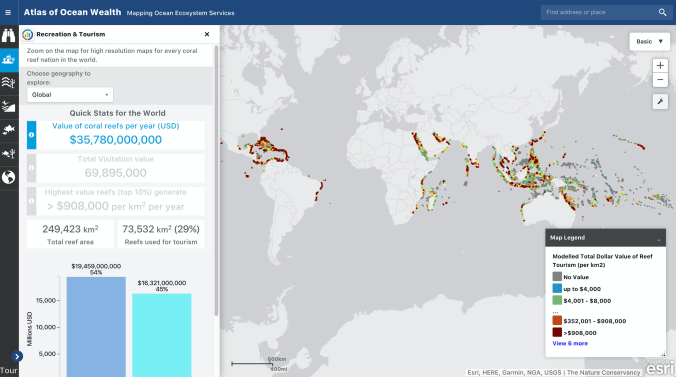
Screen shot from the Atlas of Ocean Wealth showing global reef value to tourism. © The Nature Conservancy
If it’s true that people reveal their true values by how they spend their money, coral reefs are very valuable indeed. In fact, according to a new study in the Journal Marine Policy coral reef tourism generates $36 billion (U.S) in global value every year. Continue reading

Bhadra Tiger Reserve, Karnataka
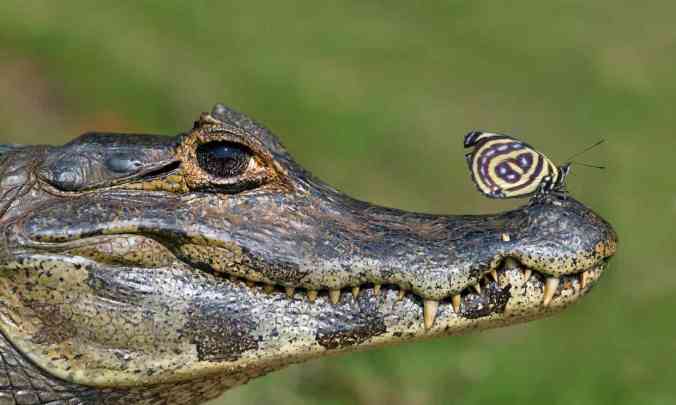
Serro Ricardo Franco is in one of the world’s biggest and most diverse ecological reserves. But reality on the ground is different, putting many animals at risk, such as Yacare caiman and giant river otters. Photograph: Angelo Gandolfi/Getty Images/Nature Picture Library
Sometimes, sitting in a glass house, reading the news makes me want to throw a stone. The glass house where I live includes a farm in an extremely biodiverse area. It is surrounded by nearly half a million acres where logging happens. But there is farming, as you can read about in the news below, and there are plenty of better ways of farming; there are loggers like those in the news below, and there are forests where extraction happens according to standards such as those set and enforced by the Forest Stewardship Council.
Instead of throwing a stone, I get up every day and make sure the glass around here is as transparent as possible, because we can demonstrate a better way of supplying food, of harvesting wood, and doing so with the protection of wildlife in constant view. Meanwhile, I do read the news from elsewhere and continue to share it here (thanks to the Guardian’s Jonathan Watts in Vila Bela da Santíssima Trindade for this one):
Wild Amazon faces destruction as Brazil’s farmers and loggers target national park
The Sierra Ricardo Franco park was meant to be a conservation area protecting rare wildlife
To understand why the Brazilian government is deliberately losing the battle against deforestation, you need only retrace the bootmarks of the Edwardian explorer Percy Fawcett along the Amazonian border with Bolivia.
During a failed attempt to cross a spectacular tabletop plateau here in 1906, the adventurer nearly died on the first of his many trips to South America. Back then, the area was so far from human habitation, the foliage so dense and the terrain so steep that Fawcett and his party came close to starvation.
He returned home with tales of a towering, inaccessible mesa teeming with wildlife and irrigated by secret waterfalls and crystalline rivers. By some accounts, this was one of the stories that inspired his friend Arthur Conan Doyle to write The Lost World about a fictional plateau jutting high above the jungle that served as a sanctuary for species long since extinct elsewhere. Continue reading
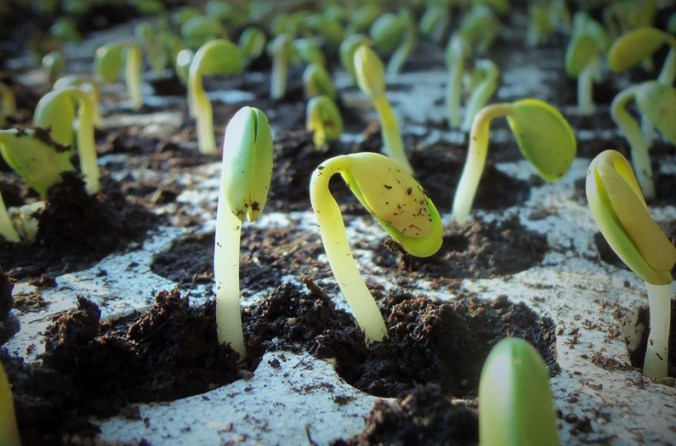
Image: jcesar2015 via Pixabay
Anthropocene’s Emma Bryce has summarized the science of Building a better soybean:
What will it take to build crops that can withstand future climate changes? A group of plant biologists think they might be on to a solution for soybeans. Using genetic engineering, they’ve created a plant whose yields remain unaffected by high-stress conditions. The key lies in a genetic tweak that makes the plant overexpress a particular enzyme, which is thought to boost the efficiency of their photosynthesis cycle and enhance seed production. Continue reading

male – Herman, Nebraska
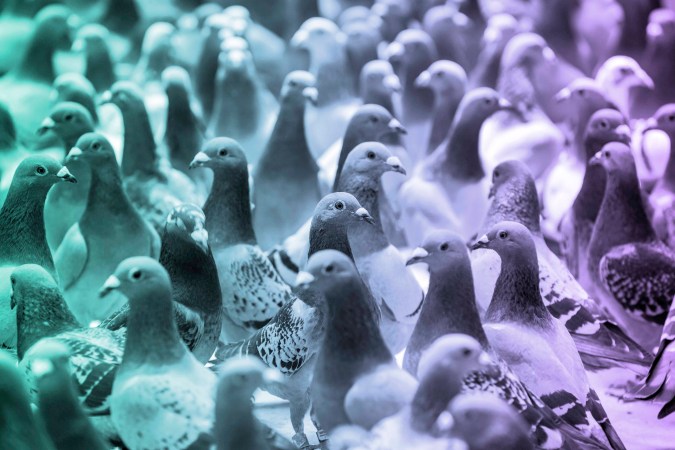
There are two dynamic illustrations in this piece by David Samuels that cannot be replicated here, but are worth visiting the website of The Atavist for, so the images above and below are placeholders. Anyway, the words are the thing so I take a paragraph from near the end as an example of why to read this:
…In the 1970s in Brooklyn, where I grew up, pigeons were everywhere, which is probably why I am here. Some of my earliest gray-scale memories include pigeons, which fluttered and occasionally nested on the windowsill of the first place I was aware enough of to call home, a housing project near the Brooklyn Bridge built for working families like mine. There was a bona fide pigeon coop on the roof of a building nearby, like in the famous scene from On the Waterfront. Sometimes I could see a man on the roof waving a flag, which in my imagination was red but in fact could have been any color. The pigeons he guided back to their loft every night were a promise of safety that New York City in the 1970s was obviously unable to keep, which is why my parents moved to the suburbs, where the birds in the trees outside my window twittered and cooed in foreign tongues that signified nothing…
I am not surprised that this is the article on their website that I gravitated to. The author wrote an item in the New Yorker at a time when I was just completing many years of work in Montenegro and Croatia, and I knew the landscape he was describing well, and still he brought the place alive for me in a way that living there had not. He does not need photos, gifs, or other illustrations to make his words dance better. And in this piece he does something even more magical, providing a correction for me.
Seven years in south India had at least one unexpected effect on me, and it is embarrassing. I developed a passionate dislike for pigeons. Pigeons caused continuous problems in one of the properties we developed and managed, an urban location pigeons loved as much as people. And pigeons express their love in messy ways, so they became my bane. At our home, pigeons would coo on the window sill and I remember that at the time I posted this, which was peak pigeon problem, my enthusiasm for conservation was red hot but I had an unwanted, guilty ability to imagine why passenger pigeons disappeared. Reading David Samuels just now, I have snapped out of that.
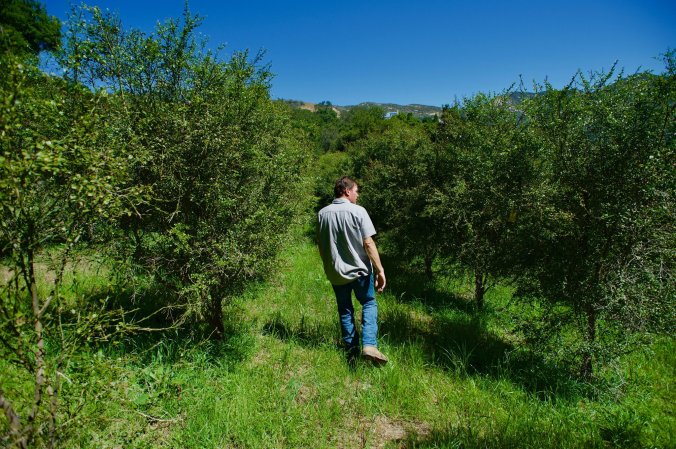
Jay Ruskey is one of the first farmers to be growing coffee commercially in California. His coffee plants share the farm with avocado and cherimoya trees and passion fruit vines. Credit Morgan Maassen for The New York Times
It always seemed that California could grow just about anything, so why did it take so long for this to happen? Thanks to Stephanie Strom for this story in the New York Times:
GOLETA, Calif. — There is a new crop growing in Southern California’s famous avocado groves — coffee.
About two dozen farms between San Diego and here, just outside Santa Barbara, are nurturing coffee bushes under the canopies of old avocado trees, in what may be the first serious effort in the United States to commercialize coffee grown outside Hawaii, home of Kona coffees. Continue reading
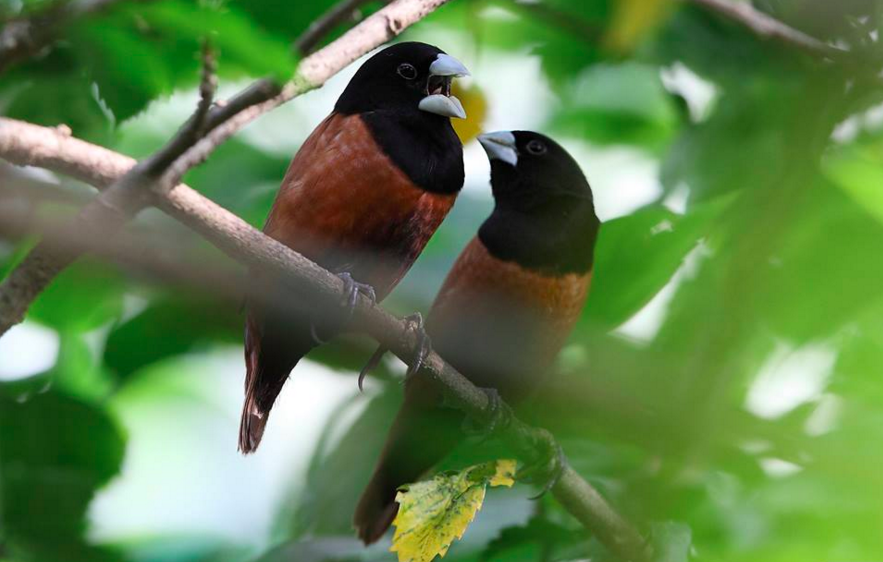
Bangalore, Karnataka
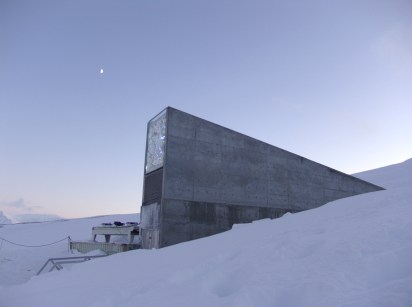
The Svalbard Global Seed Vault in Norway. (Credit: Mari Tefre/Svalbard Globale frøhvelv)
Our favorite doomsday machine, which we never tire of hearing about and sharing on this platform each time it has demonstrated its visionary worthiness, is back in the news. Discover Magazine brought this to our attention today: Continue reading
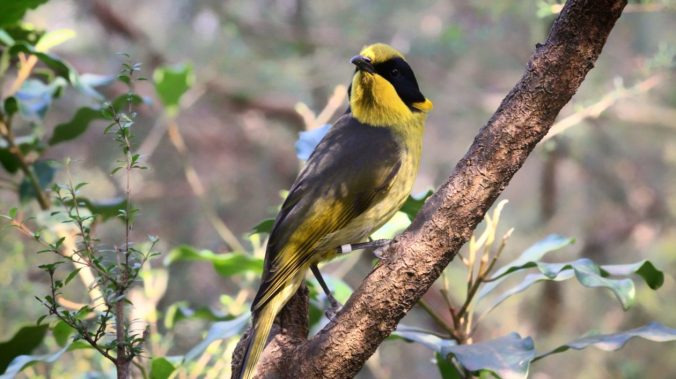
The Helmeted Honeyeater, a subspecies of the Yellow-tufted Honeyeater and the state bird of Victoria. Photo © Dylan Sanusi-Goh / Wikimedia Commons
Thanks to the Nature Conservancy for its conservation and scientific work in Australia, and for this finding shared on Cool Green Science:
…Recognizable common names are often critical for species protection, but subspecies miss out on this public perception benefit. A new paper argues that standardized English names are key to conservation success for Australia’s fantastic avifauna, and creates a definitive list for every subspecies on the continent. Continue reading

Munduruku people demonstrate in front of the Brazilian Ministry of Mines and Energy, calling for the suspension of construction of the Belo Monte hydroelectric plant. Photograph: Lunae Parracho/Reuters
Thanks to John Vidal and the Guardian for this coverage in Latin America:
The rains had been monumental throughout April 2014. By early May, the operators of the 219 MW Cachoeira Caldeirão dam being built in Brazil’s remote Amapá state knew that levels on the Araguari river were dangerously high. If some water was not released fast, the whole thing might collapse. There would be no danger to people because any run-off would be absorbed by two other dams downstream, the hydropower company thought.
But communications failed and no one warned the small town of Ferreira Gomes, nestled on the banks of the Araguari nearly 50km away. Continue reading

Gallon Jug Estate, Belize
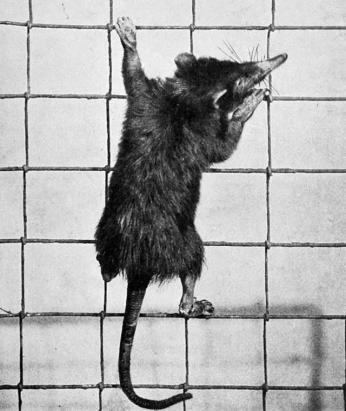
In a new paper, researchers argue that oddball animals like the Cuban solenodon should be more aggressively protected. COURTESY NEW YORK ZOOLOGICAL SOCIETY / WIKIMEDIA COMMONS
Our focus is on developing and managing entrepreneurial opportunities to protect natural areas. More protection is better than less, we naturally assume. That is why we are intrigued by this blurb about a new scientific finding: “a small but strategic increase in protected lands could triple the amount of bird and mammal species preserved worldwide.”
The headline to this short item–CONSERVATIONISTS COULD BE SAVING MORE BIODIVERSITY IN LESS SPACE–has us clicking, and we thank the New Yorker’s commitment to science writing, and specifically Michelle Nijhuis for it:
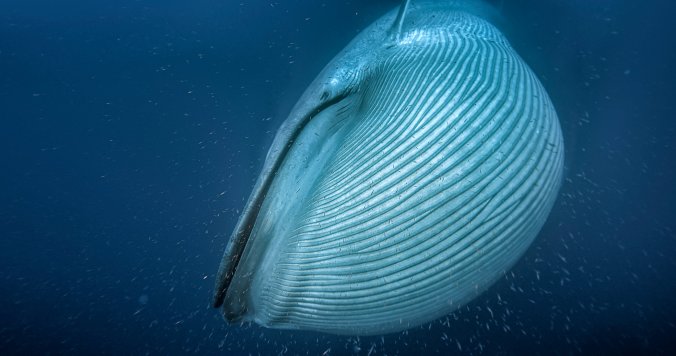
A blue whale off the coast of California. CreditSilverbackFilms/BBC
Ed Yon’g posting on the Atlantic website pursued the same natural history question as Nicholas St. Fleur’s How Whales Became the Biggest Animals on the Planet, and both science writers provide their specific source as seen here in the Times article:
…In a study published Tuesday in the journal Proceedings of the Royal Society B, a team of researchers investigated gigantism in baleen whales, the filter-feeding leviathans that include blue whales, bowhead whales and fin whales. The marine mammals became jumbo-size relatively recently, they found, only within the past 4.5 million years. The cause? A climatic change that allowed the behemoths to binge-eat…
The number of written words in both is about the same, and the quality of writing is comparable, but the photos in the Times article magnify the words there by, it seems, a thousand times, which explains why we are linking to another whale scale story a second day in a row:
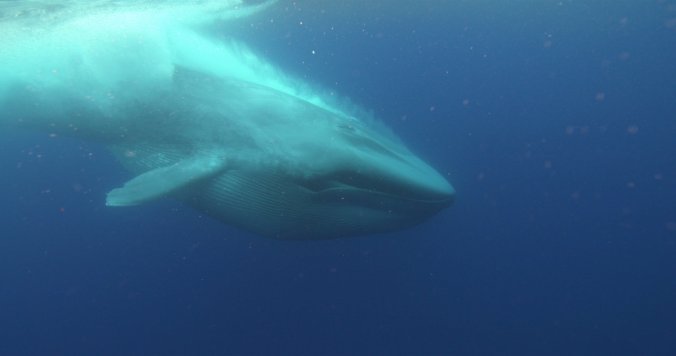
Baleen whales became big around the same time as when ice sheets began covering the Northern Hemisphere. CreditSilverbackFilms/BBC
 Organikos